Digestion and Absorption of
Carbohydrate
Dr. Herat D. Soni
Assistant professor
Rural medical college
Loni
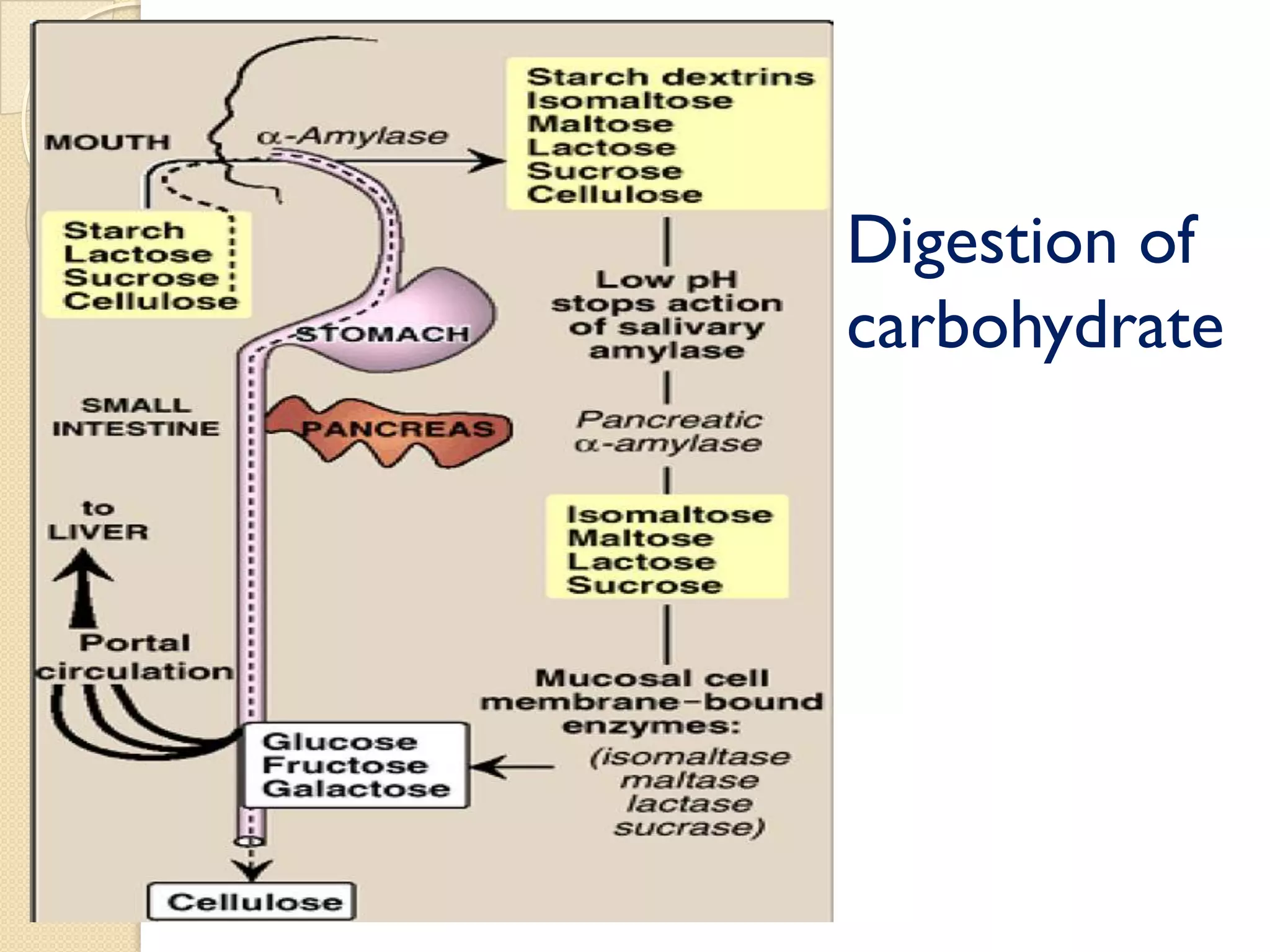
Digestion of
carbohydrate
 In the diet, carbohydrates are present as
complex polysaccharides (starch,
glycogen), and to a minor extent, as
disaccharides (sucrose and lactose).
 They are hydrolyzed to monosaccharide
units in the gastrointestinal tract.
 The process of digestion starts in mouth
by the salivary alpha-amylase.
 However, the time available for
digestion in the mouth is limited, because
the gastric hydrochloric acid will inhibit
the action of salivary amylase.
 In the pancreatic juice another alpha-
amylase is available, which will hydrolyze
the alpha-1,4 glycosidic linkages randomly,
so as to produce smaller subunits like
maltose, isomaltose, dextrins and
branched or unbranched oligosaccharides.
 The cells of brush border of intestine
contain the enzymes, sucrase, maltase,
isomaltase and lactase.
 They hydrolyze the corresponding
disaccharides into component
monosaccharides, which are then
absorbed.
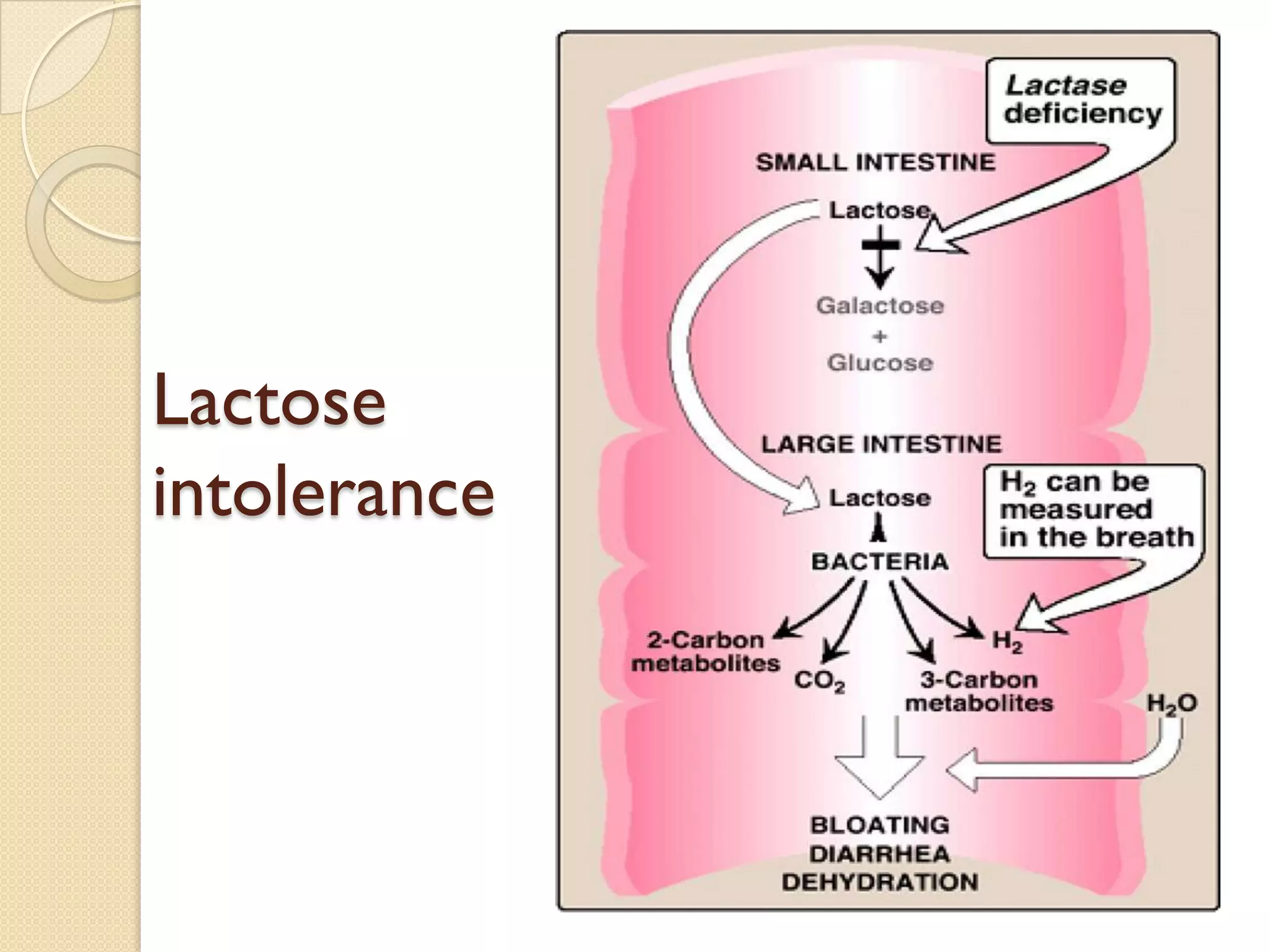
Lactose
intolerance
ABSORPTION
Only monosaccharides
are absorbed by the
intestine
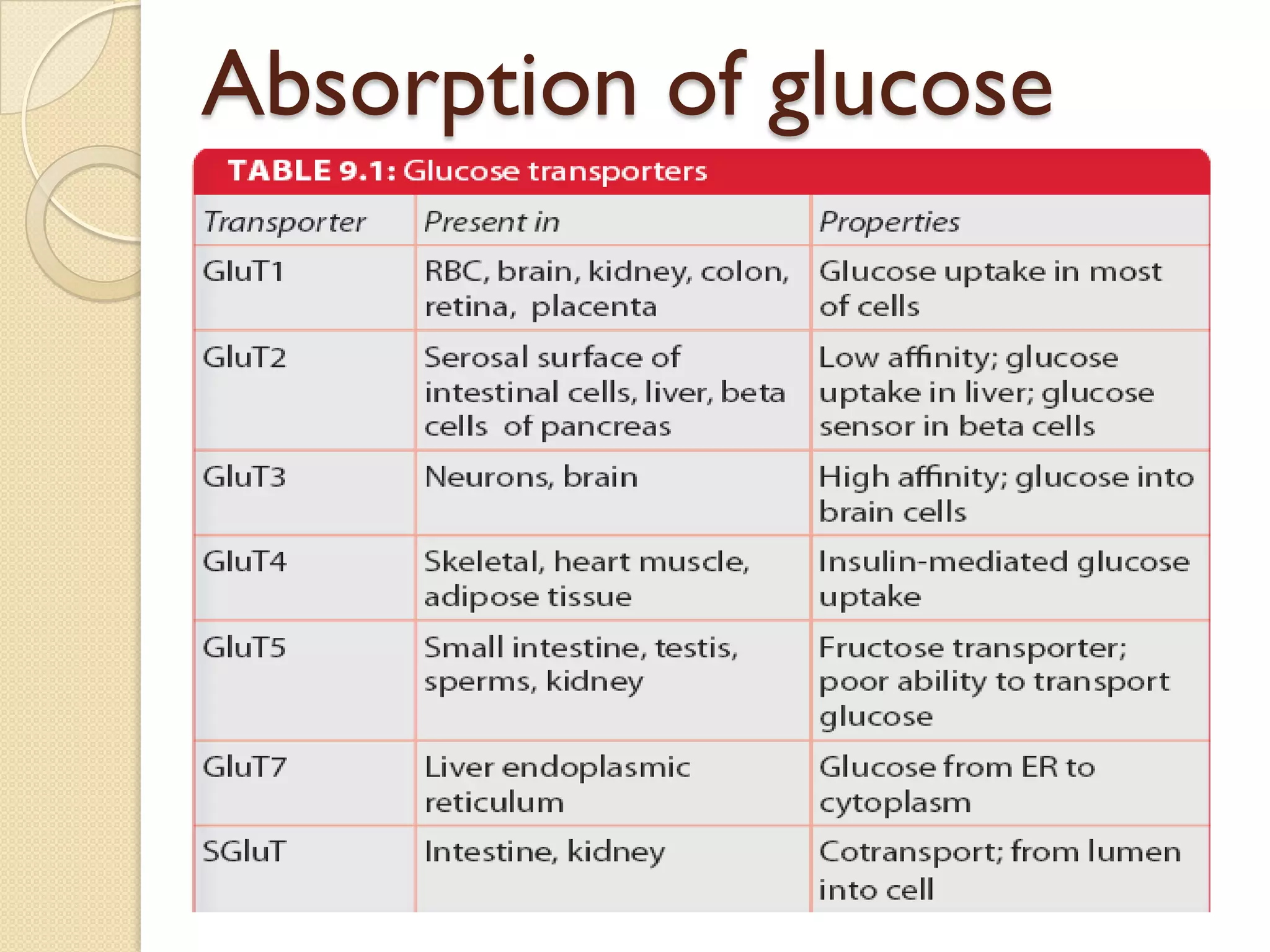
Absorption of glucose
Co-transport from Lumen to
Intestinal Cell
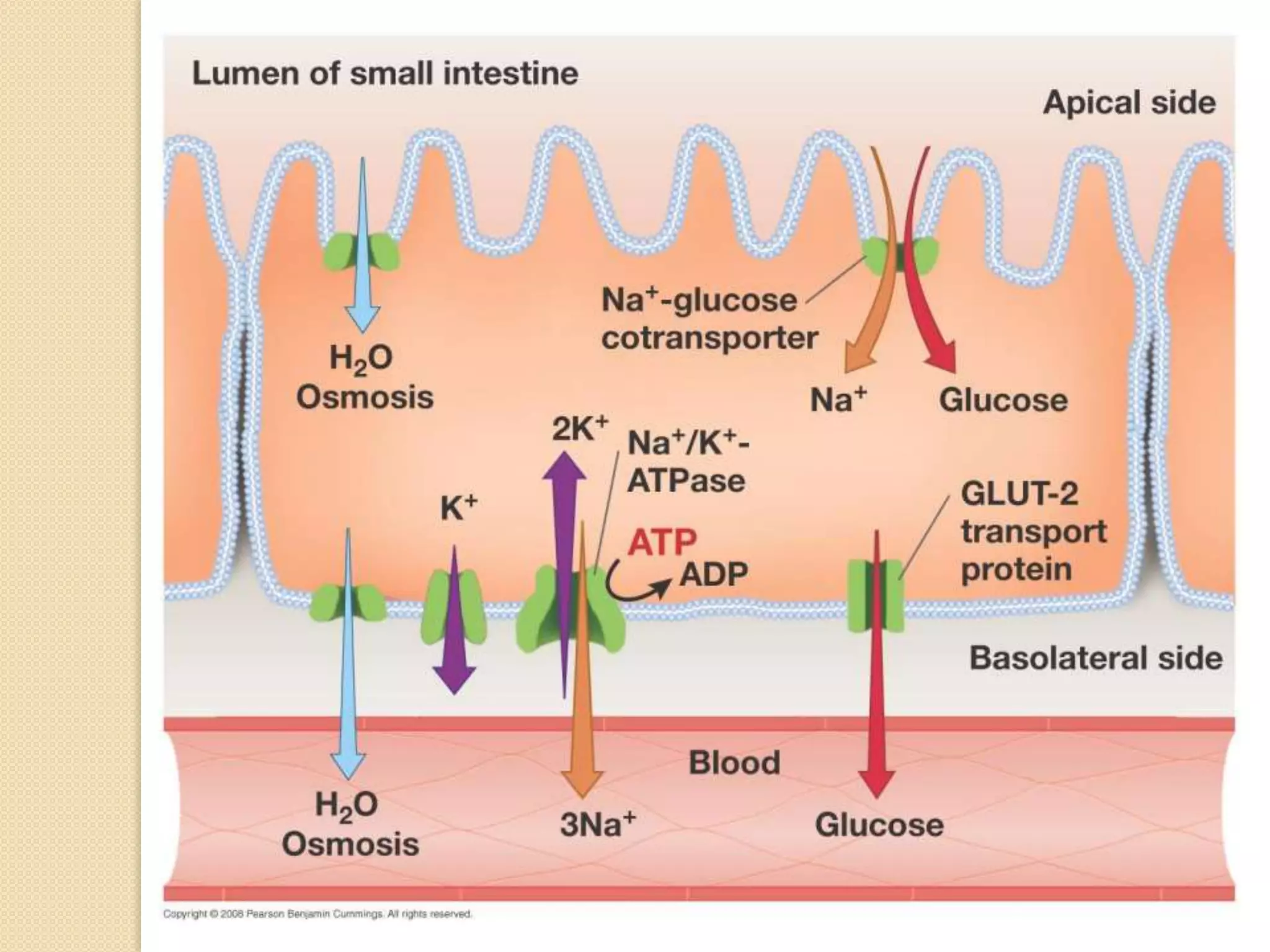
 This process is mediated by Sodium
Dependent Glucose Transporter-1 (SGluT-1).
Absorption from intestinal lumen into
intestinal cell is by co transport mechanism
(secondary active transport).
 A membrane bound carrier protein is
involved, which carries glucose, along with
sodium.This sodium is later expelled by the
sodium pump with utilization of energy. So
energy is needed indirectly.
Another Uniport System Releases
Glucose into Blood
 Intestinal cells release glucose into blood
stream by the carrier mechanism called
GlucoseTransporterType 2 (GluT2).
 This transporter is not dependent on
sodium. It is a uniport, facilitated diffusion
system.
 GluT2 is present in intestinal epithelial
cells, liver cells, beta cells of pancreas and
kidney.
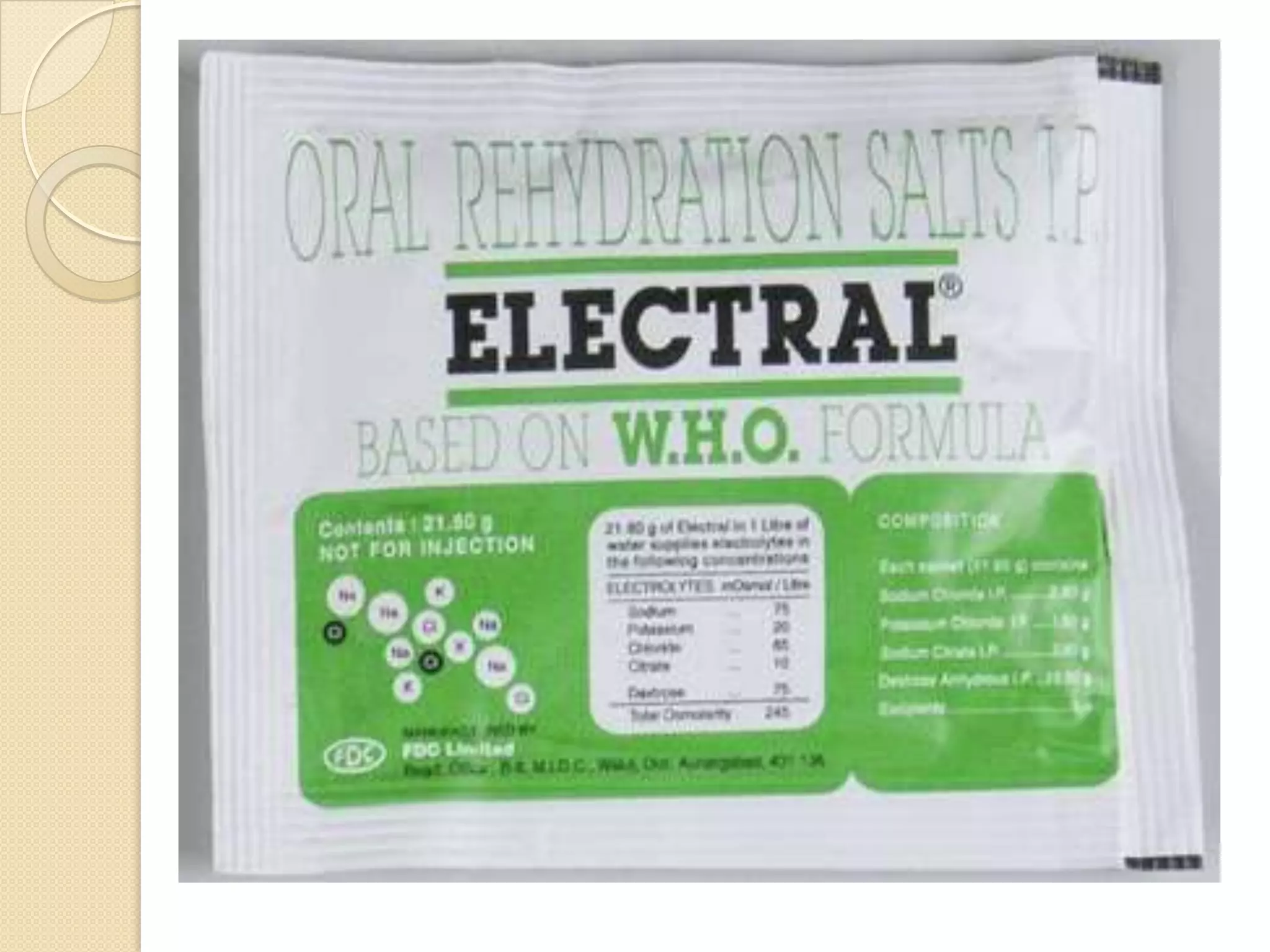
Oral rehydration solution(ORS)
Given in treatment of diarrhea.
Contains sodium and glucose.
Sodium drags glucose and water
with it and provide rehydration
and energy to cells.
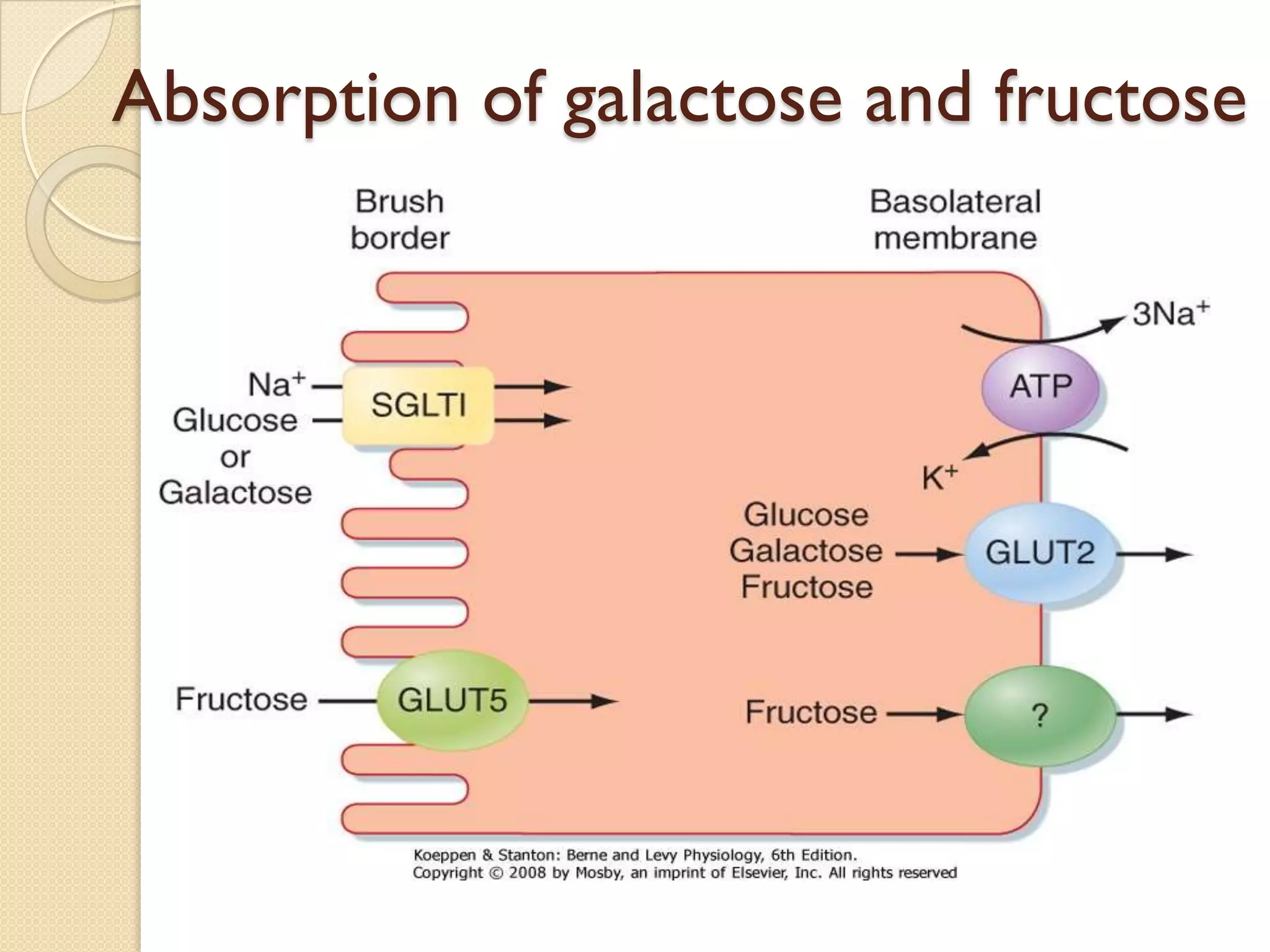
Absorption of galactose and fructose
Thank
you
Any questions?

Digestion and absorption of carbohydrate

  • 1.
    Digestion and Absorptionof Carbohydrate Dr. Herat D. Soni Assistant professor Rural medical college Loni
  • 2.
  • 3.
     In thediet, carbohydrates are present as complex polysaccharides (starch, glycogen), and to a minor extent, as disaccharides (sucrose and lactose).  They are hydrolyzed to monosaccharide units in the gastrointestinal tract.  The process of digestion starts in mouth by the salivary alpha-amylase.  However, the time available for digestion in the mouth is limited, because the gastric hydrochloric acid will inhibit the action of salivary amylase.
  • 4.
     In thepancreatic juice another alpha- amylase is available, which will hydrolyze the alpha-1,4 glycosidic linkages randomly, so as to produce smaller subunits like maltose, isomaltose, dextrins and branched or unbranched oligosaccharides.  The cells of brush border of intestine contain the enzymes, sucrase, maltase, isomaltase and lactase.  They hydrolyze the corresponding disaccharides into component monosaccharides, which are then absorbed.
  • 5.
  • 6.
  • 7.
  • 9.
    Co-transport from Lumento Intestinal Cell  This process is mediated by Sodium Dependent Glucose Transporter-1 (SGluT-1). Absorption from intestinal lumen into intestinal cell is by co transport mechanism (secondary active transport).  A membrane bound carrier protein is involved, which carries glucose, along with sodium.This sodium is later expelled by the sodium pump with utilization of energy. So energy is needed indirectly.
  • 10.
    Another Uniport SystemReleases Glucose into Blood  Intestinal cells release glucose into blood stream by the carrier mechanism called GlucoseTransporterType 2 (GluT2).  This transporter is not dependent on sodium. It is a uniport, facilitated diffusion system.  GluT2 is present in intestinal epithelial cells, liver cells, beta cells of pancreas and kidney.
  • 11.
    Oral rehydration solution(ORS) Givenin treatment of diarrhea. Contains sodium and glucose. Sodium drags glucose and water with it and provide rehydration and energy to cells.
  • 13.
  • 14.