Role of Diffusion and
Adoption of Innovations
in Agricultural
Development
Rajinder Kaur Kalra
Professor and Head (Retired)
PAU Ludhiana 9814067709
Diffusion
Process by which innovations spread
to the members of a social system.
Diffusion process
• Spread of a new idea from its source of
invention to its ultimate users or adopters.
Adoption
decision to make full use of a new
idea. In other words the adoption
process is the mental process through
which an individual passes from first
hearing about an innovation to final
adoption.
Adoption process
• Decision making process goes through a
number of mental stages before making a
final decision to adopt an innovation
Innovation
 An idea, practice or object that is perceived
as new by an individual
 Perception: activity through which an
individual become aware of objects around
oneself and of event taking place
Diffusion of Innovation
 Innovation spread within the social system
called diffusion
 An innovation however, diffusion within the
social system through its adoption by
individual and groups
Elements in diffusion process
 Innovation
 Communication channels
 Time
 Social system
 System norms
 Opinion leadership and change agents
Types of innovation decisions
 Optional innovation-decision
 Collective innovation
 Authority innovation
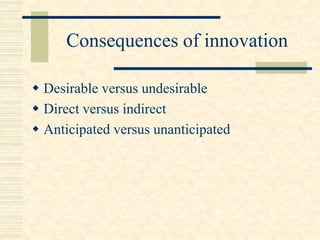
Consequences of innovation
 Desirable versus undesirable
 Direct versus indirect
 Anticipated versus unanticipated
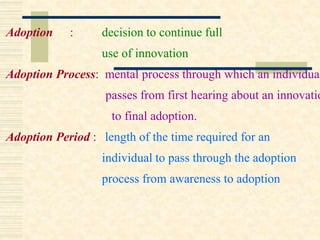
Adoption : decision to continue full
use of innovation
Adoption Process: mental process through which an individual
passes from first hearing about an innovatio
to final adoption.
Adoption Period : length of the time required for an
individual to pass through the adoption
process from awareness to adoption
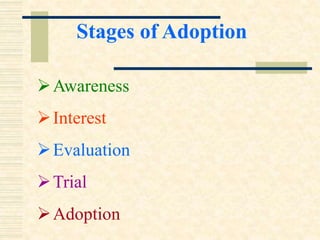
Stages of Adoption
Awareness
Interest
Evaluation
Trial
Adoption
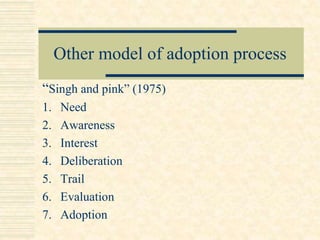
Other model of adoption process
“Singh and pink” (1975)
1. Need
2. Awareness
3. Interest
4. Deliberation
5. Trail
6. Evaluation
7. Adoption
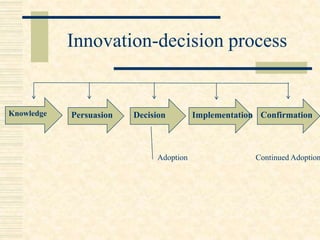
Innovation-decision process
Knowledge Persuasion Decision Implementation Confirmation
Adoption Continued Adoption
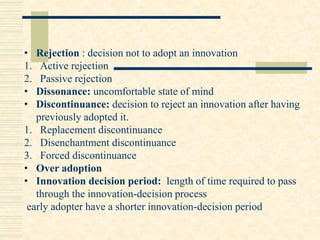
• Rejection : decision not to adopt an innovation
1. Active rejection
2. Passive rejection
• Dissonance: uncomfortable state of mind
• Discontinuance: decision to reject an innovation after having
previously adopted it.
1. Replacement discontinuance
2. Disenchantment discontinuance
3. Forced discontinuance
• Over adoption
• Innovation decision period: length of time required to pass
through the innovation-decision process
early adopter have a shorter innovation-decision period
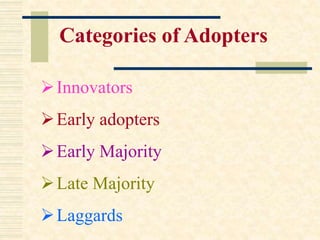
Categories of Adopters
Innovators
Early adopters
Early Majority
Late Majority
Laggards
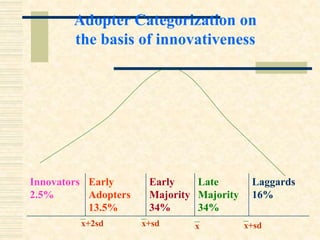
Innovators
2.5%
Early
Adopters
13.5%
Early
Majority
34%
Late
Majority
34%
Laggards
16%
Adopter Categorization on
the basis of innovativeness
x+2sd x+sd x x+sd
Attribute of innovation
 Relative Advantage: degree to which an
innovation is perceived as better than the idea it
supersedes.
 Compatibility: degree to which an innovation is
perceived consistent with the existing values, past
experiences and need of the receives.
 Complexity: degree to which an innovation is
perceived as relatively difficult to understand and
use.
• Trailability: degree to which an innovation may be
experimented with on a limited basis before deciding to adopt.
• Observability: degree to which the results of an innovation are
visible/observable, demonstrable and communicable to farmers
• Predictability: degree or certainty of receiving expected
benefits from the adoption of an innovation
Factors influencing adoption of
innovation
 Personal Factors
1. Age
2. Education
3. Psychological characteristics
4. Values and attributes
 Situational Factor
1. Nature of the practices
2. Farm income
3. Size of farm
4. Tenure status
5. Level of living
 Social factor
1. Social values
THANKS

Diffusion and adoption

  • 1.
    Role of Diffusionand Adoption of Innovations in Agricultural Development Rajinder Kaur Kalra Professor and Head (Retired) PAU Ludhiana 9814067709
  • 2.
    Diffusion Process by whichinnovations spread to the members of a social system.
  • 3.
    Diffusion process • Spreadof a new idea from its source of invention to its ultimate users or adopters.
  • 4.
    Adoption decision to makefull use of a new idea. In other words the adoption process is the mental process through which an individual passes from first hearing about an innovation to final adoption.
  • 5.
    Adoption process • Decisionmaking process goes through a number of mental stages before making a final decision to adopt an innovation
  • 6.
    Innovation  An idea,practice or object that is perceived as new by an individual  Perception: activity through which an individual become aware of objects around oneself and of event taking place
  • 7.
    Diffusion of Innovation Innovation spread within the social system called diffusion  An innovation however, diffusion within the social system through its adoption by individual and groups
  • 8.
    Elements in diffusionprocess  Innovation  Communication channels  Time  Social system  System norms  Opinion leadership and change agents
  • 9.
    Types of innovationdecisions  Optional innovation-decision  Collective innovation  Authority innovation
  • 10.
    Consequences of innovation Desirable versus undesirable  Direct versus indirect  Anticipated versus unanticipated
  • 11.
    Adoption : decisionto continue full use of innovation Adoption Process: mental process through which an individual passes from first hearing about an innovatio to final adoption. Adoption Period : length of the time required for an individual to pass through the adoption process from awareness to adoption
  • 12.
  • 13.
    Other model ofadoption process “Singh and pink” (1975) 1. Need 2. Awareness 3. Interest 4. Deliberation 5. Trail 6. Evaluation 7. Adoption
  • 14.
    Innovation-decision process Knowledge PersuasionDecision Implementation Confirmation Adoption Continued Adoption
  • 15.
    • Rejection :decision not to adopt an innovation 1. Active rejection 2. Passive rejection • Dissonance: uncomfortable state of mind • Discontinuance: decision to reject an innovation after having previously adopted it. 1. Replacement discontinuance 2. Disenchantment discontinuance 3. Forced discontinuance • Over adoption • Innovation decision period: length of time required to pass through the innovation-decision process early adopter have a shorter innovation-decision period
  • 16.
    Categories of Adopters Innovators Earlyadopters Early Majority Late Majority Laggards
  • 17.
  • 18.
    Attribute of innovation Relative Advantage: degree to which an innovation is perceived as better than the idea it supersedes.  Compatibility: degree to which an innovation is perceived consistent with the existing values, past experiences and need of the receives.  Complexity: degree to which an innovation is perceived as relatively difficult to understand and use.
  • 19.
    • Trailability: degreeto which an innovation may be experimented with on a limited basis before deciding to adopt. • Observability: degree to which the results of an innovation are visible/observable, demonstrable and communicable to farmers • Predictability: degree or certainty of receiving expected benefits from the adoption of an innovation
  • 20.
    Factors influencing adoptionof innovation  Personal Factors 1. Age 2. Education 3. Psychological characteristics 4. Values and attributes  Situational Factor 1. Nature of the practices 2. Farm income
  • 21.
    3. Size offarm 4. Tenure status 5. Level of living  Social factor 1. Social values
  • 22.