Role of feedback in communication,
difficulties in getting feedback and
methods encouraging feedback
Dr Rajinder Kaur Kalra
Professor and Head (Retired)
Dept of Extension Education
PAU, Ludhiana
Feedback in communication
Concept of Feedback
 The reactions of the receivers in response to
stimulus – message
 The response may be verbal or non verbal
 Favorable or unfavorable
 Feedback gives an idea to the sender that
how effectively he has communicated
 Helps in enhancing the rate of adoption
 Free feedback promote
 understanding
 Acceptance
 Retention of knowledge
Who is good listener
 Being a good listener means focussing on
the person who is speaking but rather just
to hear them out
 Good listeners play a more passive speaking
role in the conversation but
 They actively engage with the other person
using body languages and follow up
questions
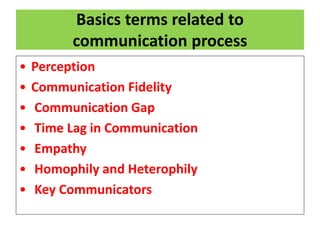
Basics terms related to
communication process
• Perception
• Communication Fidelity
• Communication Gap
• Time Lag in Communication
• Empathy
• Homophily and Heterophily
• Key Communicators
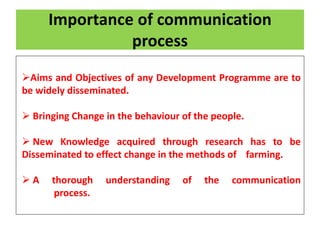
Importance of communication
process
Aims and Objectives of any Development Programme are to
be widely disseminated.
 Bringing Change in the behaviour of the people.
 New Knowledge acquired through research has to be
Disseminated to effect change in the methods of farming.
 A thorough understanding of the communication
process.
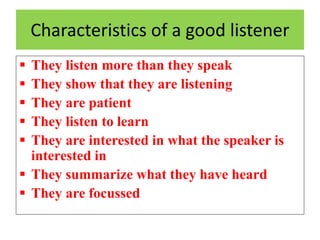
Characteristics of a good listener
 They listen more than they speak
 They show that they are listening
 They are patient
 They listen to learn
 They are interested in what the speaker is
interested in
 They summarize what they have heard
 They are focussed
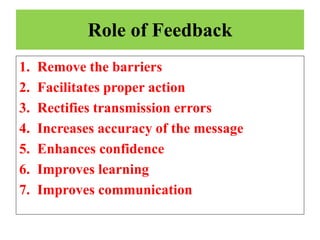
Role of Feedback
1. Remove the barriers
2. Facilitates proper action
3. Rectifies transmission errors
4. Increases accuracy of the message
5. Enhances confidence
6. Improves learning
7. Improves communication
Problems in getting Feedback
1. Limitation of the channel
2. Shyness of the receiver
3. Discouragement by the communicator
4. Socio economic barriers
5. Untimely message
6. Language and cultural barriers
7. Selective listening
Encouraging Feedback
1. Don't get defensive rather encourage
constructive feedback from the receiver
2. Encourage the shy members of the audience
to participate in the discussion
3. Up date your knowledge
4. Do not ignore non verbal cues
5. Try to attract the attention of the non
attentive members
6. Feedback is solicited rather than imposed
Encouraging Feedback
7. Share information rather than giving advice
8. Don't delay feedback It should be timely and
quick
9. Negative reaction to threatening feedback be
avoided
10. Gather information from many sources
11. Avoid misunderstanding
12. Repeat the message to add clarifications
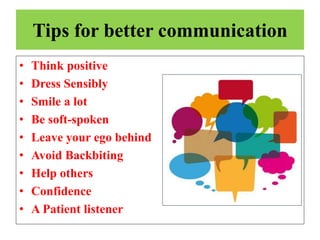
Tips for better communication
• Think positive
• Dress Sensibly
• Smile a lot
• Be soft-spoken
• Leave your ego behind
• Avoid Backbiting
• Help others
• Confidence
• A Patient listener
The art of communication
is the language of
leadership.
James Hume
THANK YOU
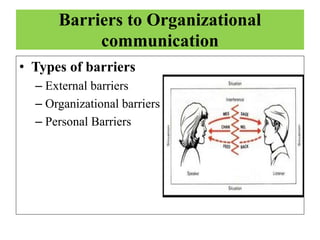
Barriers to Organizational
communication
• Types of barriers
– External barriers
– Organizational barriers
– Personal Barriers
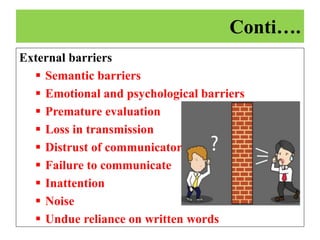
External barriers
 Semantic barriers
 Emotional and psychological barriers
 Premature evaluation
 Loss in transmission
 Distrust of communicator
 Failure to communicate
 Inattention
 Noise
 Undue reliance on written words
Conti….
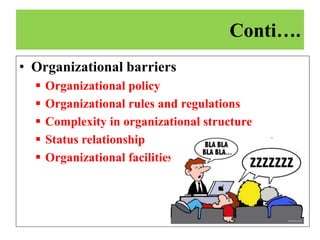
• Organizational barriers
 Organizational policy
 Organizational rules and regulations
 Complexity in organizational structure
 Status relationship
 Organizational facilities
Conti….
• Personal Barriers
Barriers regarding superiors
 Attitude of superiors
 Fear of challenge to authority
 Insistent of proper challenge
 Lack of confidence in subordinates
 Ignoring communication sometimes
Conti….
– Barriers regarding subordinates
–Unwillingness to communicate
–Lack of suitable incentives
Conti….
THANK YOU

Feedback in communication

  • 1.
    Role of feedbackin communication, difficulties in getting feedback and methods encouraging feedback Dr Rajinder Kaur Kalra Professor and Head (Retired) Dept of Extension Education PAU, Ludhiana
  • 2.
    Feedback in communication Conceptof Feedback  The reactions of the receivers in response to stimulus – message  The response may be verbal or non verbal  Favorable or unfavorable  Feedback gives an idea to the sender that how effectively he has communicated
  • 3.
     Helps inenhancing the rate of adoption  Free feedback promote  understanding  Acceptance  Retention of knowledge
  • 4.
    Who is goodlistener  Being a good listener means focussing on the person who is speaking but rather just to hear them out  Good listeners play a more passive speaking role in the conversation but  They actively engage with the other person using body languages and follow up questions
  • 5.
    Basics terms relatedto communication process • Perception • Communication Fidelity • Communication Gap • Time Lag in Communication • Empathy • Homophily and Heterophily • Key Communicators
  • 6.
    Importance of communication process Aimsand Objectives of any Development Programme are to be widely disseminated.  Bringing Change in the behaviour of the people.  New Knowledge acquired through research has to be Disseminated to effect change in the methods of farming.  A thorough understanding of the communication process.
  • 7.
    Characteristics of agood listener  They listen more than they speak  They show that they are listening  They are patient  They listen to learn  They are interested in what the speaker is interested in  They summarize what they have heard  They are focussed
  • 8.
    Role of Feedback 1.Remove the barriers 2. Facilitates proper action 3. Rectifies transmission errors 4. Increases accuracy of the message 5. Enhances confidence 6. Improves learning 7. Improves communication
  • 9.
    Problems in gettingFeedback 1. Limitation of the channel 2. Shyness of the receiver 3. Discouragement by the communicator 4. Socio economic barriers 5. Untimely message 6. Language and cultural barriers 7. Selective listening
  • 10.
    Encouraging Feedback 1. Don'tget defensive rather encourage constructive feedback from the receiver 2. Encourage the shy members of the audience to participate in the discussion 3. Up date your knowledge 4. Do not ignore non verbal cues 5. Try to attract the attention of the non attentive members 6. Feedback is solicited rather than imposed
  • 11.
    Encouraging Feedback 7. Shareinformation rather than giving advice 8. Don't delay feedback It should be timely and quick 9. Negative reaction to threatening feedback be avoided 10. Gather information from many sources 11. Avoid misunderstanding 12. Repeat the message to add clarifications
  • 12.
    Tips for bettercommunication • Think positive • Dress Sensibly • Smile a lot • Be soft-spoken • Leave your ego behind • Avoid Backbiting • Help others • Confidence • A Patient listener
  • 13.
    The art ofcommunication is the language of leadership. James Hume
  • 14.
  • 15.
    Barriers to Organizational communication •Types of barriers – External barriers – Organizational barriers – Personal Barriers
  • 16.
    External barriers  Semanticbarriers  Emotional and psychological barriers  Premature evaluation  Loss in transmission  Distrust of communicator  Failure to communicate  Inattention  Noise  Undue reliance on written words Conti….
  • 17.
    • Organizational barriers Organizational policy  Organizational rules and regulations  Complexity in organizational structure  Status relationship  Organizational facilities Conti….
  • 18.
    • Personal Barriers Barriersregarding superiors  Attitude of superiors  Fear of challenge to authority  Insistent of proper challenge  Lack of confidence in subordinates  Ignoring communication sometimes Conti….
  • 19.
    – Barriers regardingsubordinates –Unwillingness to communicate –Lack of suitable incentives Conti….
  • 20.