

Course No;GPBR 314
Cource Title;Principles of Seed Technology
Topic; Seed Marketing
Submitted to Submitted by
Dr. V.Umesh Kumar NAA/18-02
Asst Professor NAA/18-10
Dept of Genetics and Plant Breeding NAA/18-41
BSc
Agiculture 3rd
Year
N.S Agricultural college
(ANGRAU)
Seed Marketing refers to the actual acquisition
and selling of packed seeds,intermediate
storage,delivery and sales pomotional activities.
It comprises of
1.Demand Forecasts
2.Marketing Structure
3.Arangements for storage of seeds
4.Sales promotional Activities
5.Economics of seed production and seed pricing
 The principal in making demand forecasts is that the
seed supply keeps pace with seed demand in terms of
quantity,quality,price,place and time.
 The following factors must consider;
a. Total cultivable area,seed rate,seed multiplication ratio
b. Impact of extension efforts
c. Current area under high yielding varieties,amount of
seed sold in last year
d. Cultivator peferences for varieties,package size,quality
e. Number and size of competitors
f. Kinds of publicity and sales promotion
g. Climate of the area where seed is marketed.
1.Demand Forecasts
The demand of high quality seed for self pollinated crops is
normally not higher than 25 to 30% of the total requirement
for areas under irrigated,and high fertile conditions.
Uses of demand forecasts;
i. Long term demand indicates in terms of quality,quantity and
prices,how to invest,how to organize maketing.
ii. Intermediate range demand forecasts helps to make
necessary actions to minimize profits by balancing
production and sales.
iii. Short term demand forecasts includes production planning
and scheduling,determination of targets and quotas for
dealers and salesman,modifications of prices,policies.
 Establishment of effective channel of seed distribution.
 Depends on needs of seed company.
 Present status of seed distribution;
a.Farmers to Farmer distribution;
Farmers obtain their requirements from neighbours
either on cash or exhange.
b.Distribution by cooperatives;
Procurement of seeds by cooperatives and its
subsequent distribution.
c.Distribution by Departments of Agriculture;
Seeds are purchased by the Govt, and distributed
through Dist Agricultual and Block Developmental officers.
2.Marketing Structure
d. Distribution of seeds by Non Govt Agencies;
Distributed through netwok of seed distributers and
seed dealers.
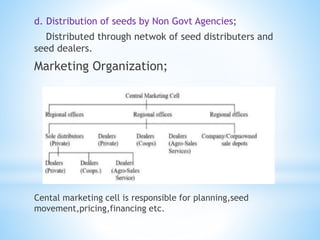
Marketing Organization;
Cental marketing cell is responsible for planning,seed
movement,pricing,financing etc.
Regional officers are responsible for seed supply,expansion
into new market areas.
Dealers involved in selling agricultural inputs.
3.Arrangements for proper storage of seeds;
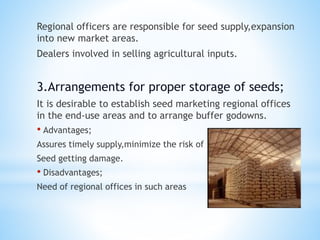
It is desirable to establish seed marketing regional offices
in the end-use areas and to arrange buffer godowns.
• Advantages;
Assures timely supply,minimize the risk of
Seed getting damage.
• Disadvantages;
Need of regional offices in such areas
4.Sales Generation Activities;
A sound and effective sales programme must be based on
judicious use of three basic tools,i.e.,advertising,publicity
and public relations.
Promotional Media;
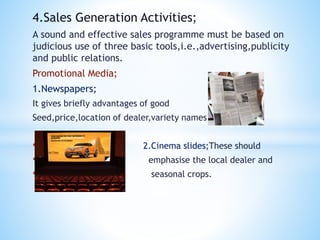
1.Newspapers;
It gives briefly advantages of good
Seed,price,location of dealer,variety names
• 2.Cinema slides;These should
• emphasise the local dealer and
• seasonal crops.
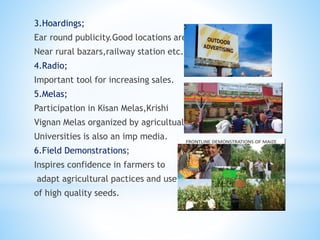
3.Hoardings;
Ear round publicity.Good locations are
Near rural bazars,railway station etc.
4.Radio;
Important tool for increasing sales.
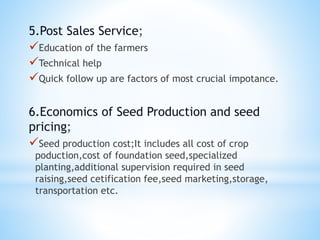
5.Melas;
Participation in Kisan Melas,Krishi
Vignan Melas organized by agricultual
Universities is also an imp media.
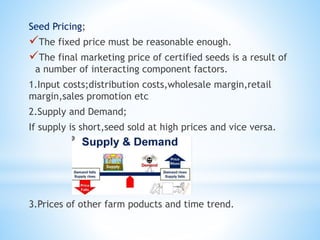
6.Field Demonstrations;
Inspires confidence in farmers to
adapt agricultural pactices and use
of high quality seeds.
5.Post Sales Service;
Education of the farmers
Technical help
Quick follow up are factors of most crucial impotance.
6.Economics of Seed Production and seed
pricing;
Seed production cost;It includes all cost of crop
poduction,cost of foundation seed,specialized
planting,additional supervision required in seed
raising,seed cetification fee,seed marketing,storage,
transportation etc.
Seed Pricing;
The fixed price must be reasonable enough.
The final marketing price of certified seeds is a result of
a number of interacting component factors.
1.Input costs;distribution costs,wholesale margin,retail
margin,sales promotion etc
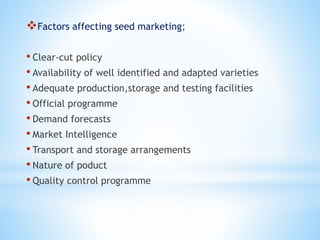
2.Supply and Demand;
If supply is short,seed sold at high prices and vice versa.
3.Prices of other farm poducts and time trend.
Factors affecting seed marketing;
• Clear-cut policy
• Availability of well identified and adapted varieties
• Adequate production,storage and testing facilities
• Official programme
• Demand forecasts
• Market Intelligence
• Transport and storage arrangements
• Nature of poduct
• Quality control programme
seed marketing

seed marketing

  • 2.
    Course No;GPBR 314 CourceTitle;Principles of Seed Technology Topic; Seed Marketing Submitted to Submitted by Dr. V.Umesh Kumar NAA/18-02 Asst Professor NAA/18-10 Dept of Genetics and Plant Breeding NAA/18-41 BSc Agiculture 3rd Year N.S Agricultural college (ANGRAU)
  • 3.
    Seed Marketing refersto the actual acquisition and selling of packed seeds,intermediate storage,delivery and sales pomotional activities. It comprises of 1.Demand Forecasts 2.Marketing Structure 3.Arangements for storage of seeds 4.Sales promotional Activities 5.Economics of seed production and seed pricing
  • 4.
     The principalin making demand forecasts is that the seed supply keeps pace with seed demand in terms of quantity,quality,price,place and time.  The following factors must consider; a. Total cultivable area,seed rate,seed multiplication ratio b. Impact of extension efforts c. Current area under high yielding varieties,amount of seed sold in last year d. Cultivator peferences for varieties,package size,quality e. Number and size of competitors f. Kinds of publicity and sales promotion g. Climate of the area where seed is marketed. 1.Demand Forecasts
  • 5.
    The demand ofhigh quality seed for self pollinated crops is normally not higher than 25 to 30% of the total requirement for areas under irrigated,and high fertile conditions. Uses of demand forecasts; i. Long term demand indicates in terms of quality,quantity and prices,how to invest,how to organize maketing. ii. Intermediate range demand forecasts helps to make necessary actions to minimize profits by balancing production and sales. iii. Short term demand forecasts includes production planning and scheduling,determination of targets and quotas for dealers and salesman,modifications of prices,policies.
  • 6.
     Establishment ofeffective channel of seed distribution.  Depends on needs of seed company.  Present status of seed distribution; a.Farmers to Farmer distribution; Farmers obtain their requirements from neighbours either on cash or exhange. b.Distribution by cooperatives; Procurement of seeds by cooperatives and its subsequent distribution. c.Distribution by Departments of Agriculture; Seeds are purchased by the Govt, and distributed through Dist Agricultual and Block Developmental officers. 2.Marketing Structure
  • 7.
    d. Distribution ofseeds by Non Govt Agencies; Distributed through netwok of seed distributers and seed dealers. Marketing Organization; Cental marketing cell is responsible for planning,seed movement,pricing,financing etc.
  • 8.
    Regional officers areresponsible for seed supply,expansion into new market areas. Dealers involved in selling agricultural inputs. 3.Arrangements for proper storage of seeds; It is desirable to establish seed marketing regional offices in the end-use areas and to arrange buffer godowns. • Advantages; Assures timely supply,minimize the risk of Seed getting damage. • Disadvantages; Need of regional offices in such areas
  • 9.
    4.Sales Generation Activities; Asound and effective sales programme must be based on judicious use of three basic tools,i.e.,advertising,publicity and public relations. Promotional Media; 1.Newspapers; It gives briefly advantages of good Seed,price,location of dealer,variety names • 2.Cinema slides;These should • emphasise the local dealer and • seasonal crops.
  • 10.
    3.Hoardings; Ear round publicity.Goodlocations are Near rural bazars,railway station etc. 4.Radio; Important tool for increasing sales. 5.Melas; Participation in Kisan Melas,Krishi Vignan Melas organized by agricultual Universities is also an imp media. 6.Field Demonstrations; Inspires confidence in farmers to adapt agricultural pactices and use of high quality seeds.
  • 11.
    5.Post Sales Service; Educationof the farmers Technical help Quick follow up are factors of most crucial impotance. 6.Economics of Seed Production and seed pricing; Seed production cost;It includes all cost of crop poduction,cost of foundation seed,specialized planting,additional supervision required in seed raising,seed cetification fee,seed marketing,storage, transportation etc.
  • 12.
    Seed Pricing; The fixedprice must be reasonable enough. The final marketing price of certified seeds is a result of a number of interacting component factors. 1.Input costs;distribution costs,wholesale margin,retail margin,sales promotion etc 2.Supply and Demand; If supply is short,seed sold at high prices and vice versa. 3.Prices of other farm poducts and time trend.
  • 13.
    Factors affecting seedmarketing; • Clear-cut policy • Availability of well identified and adapted varieties • Adequate production,storage and testing facilities • Official programme • Demand forecasts • Market Intelligence • Transport and storage arrangements • Nature of poduct • Quality control programme