Adoption of Innovation and
its model
Submitted by,
Dr. Balaraj BL
Ph.D Scholar
Roll No. 1672
Submitted to,
Dr. Hema Tripathi
Pr, Scientist and PC
I.V.R.I
Adoption
• Adoption
Decision to make full use of an innovation as the best
course of action available.
• Adoption process (Micro process)
Decision making process, goes through a number of
mental stages before making a final decision to adopt
an innovation.
Wilkening (1953)
• Adoption of innovation as a process composed of
learning, deciding and acting over a period of time.
• The adoption of a specific practice is not the result
of a single decision to act but series of action and
thought decision.
Four stages in adoption
Obtaining information
Conviction
Trial
Adoption.
Stages in Adoption Process
• The decision to adopt an innovation,
“is not normally a single, instantaneous act”
• But it is a decision-making process.
• Steps in Decision-Making: (Johnson & Haver, 1955)
Observing the problem
Analysis
Deciding available course of action
Taking one course
Accepting the consequence
Stages in Adoption Process
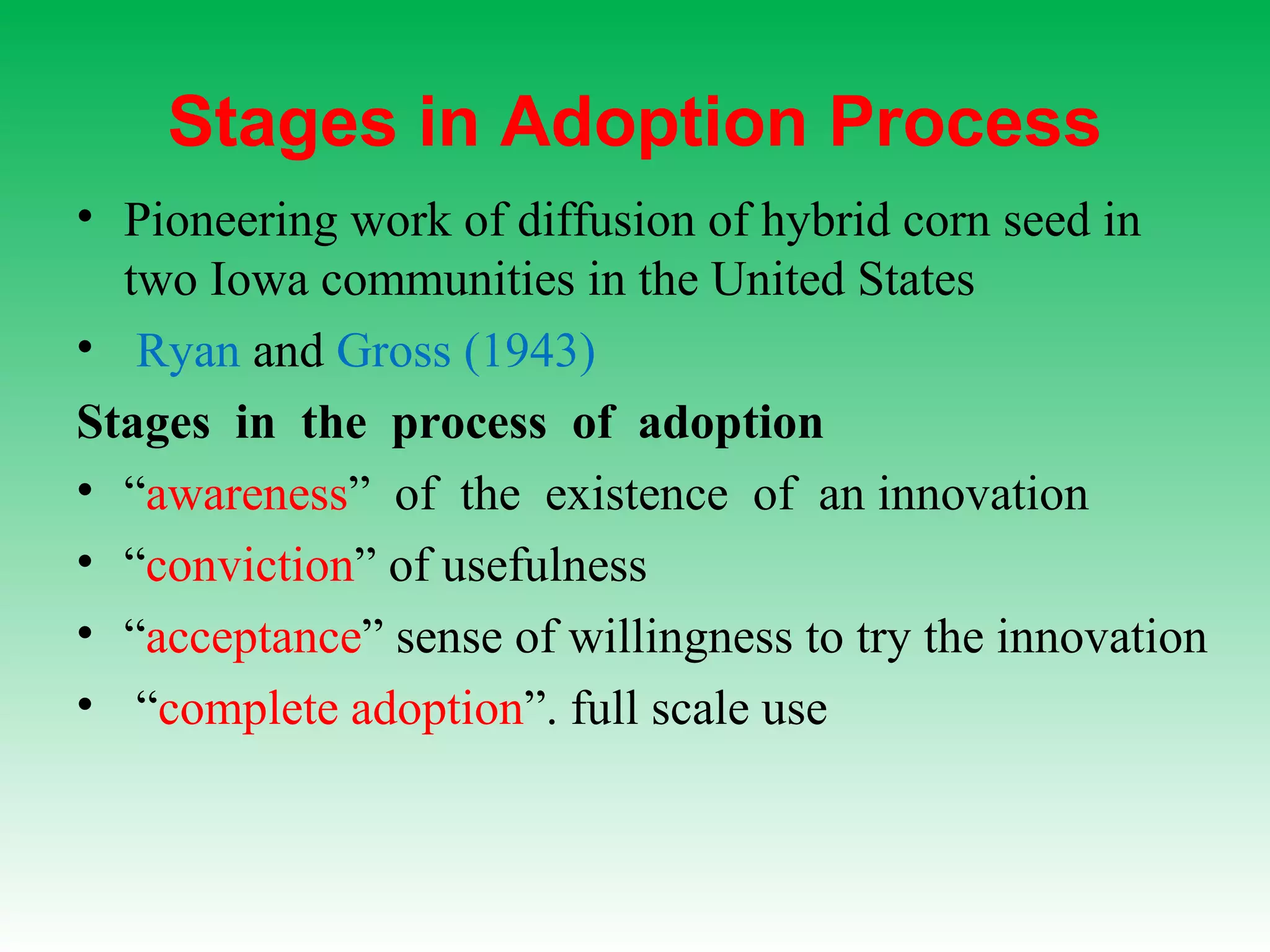
• Pioneering work of diffusion of hybrid corn seed in
two Iowa communities in the United States
• Ryan and Gross (1943)
Stages in the process of adoption
• “awareness” of the existence of an innovation
• “conviction” of usefulness
• “acceptance” sense of willingness to try the innovation
• “complete adoption”. full scale use
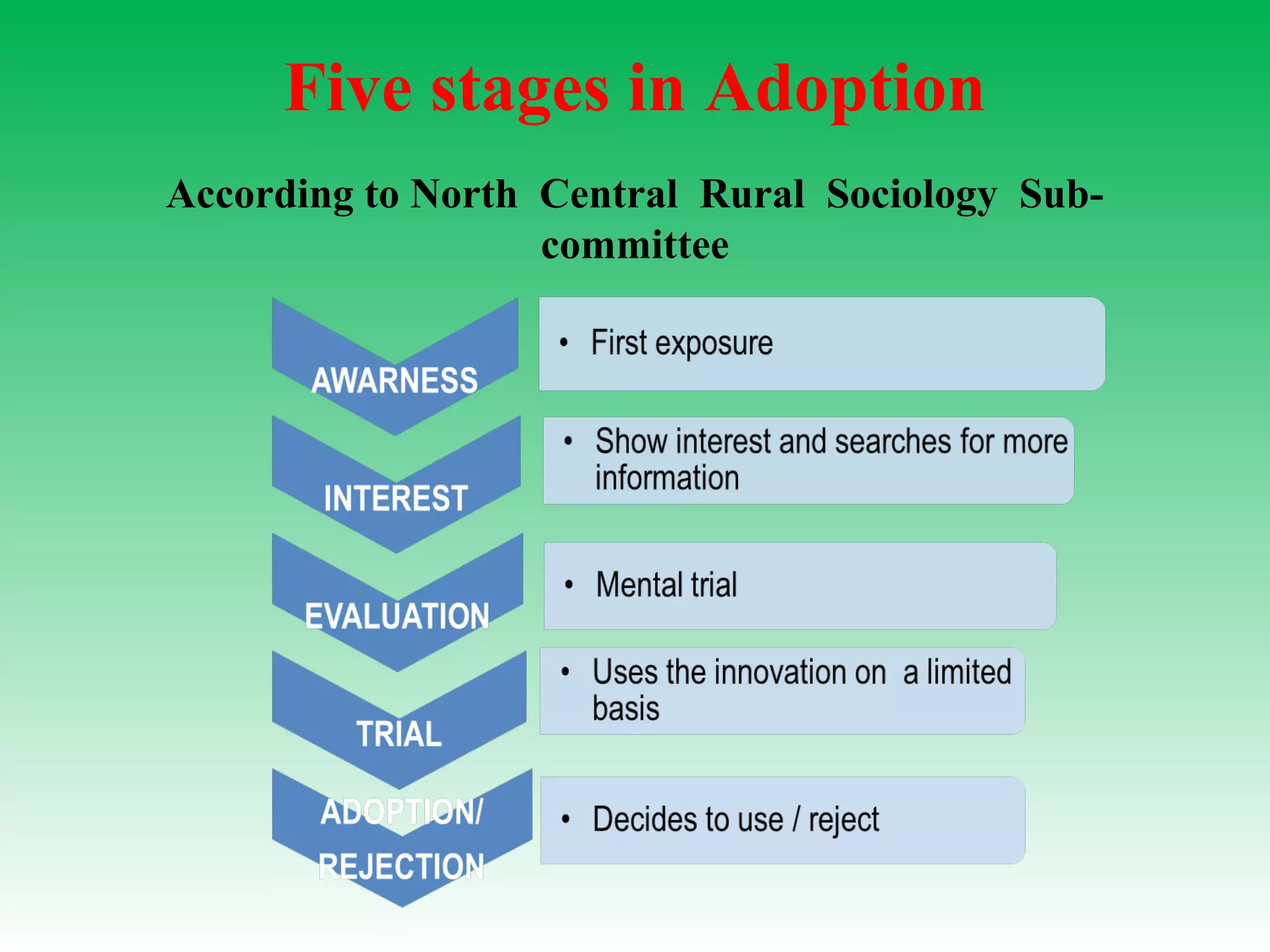
Five stages in Adoption
According to North Central Rural Sociology Sub-
committee
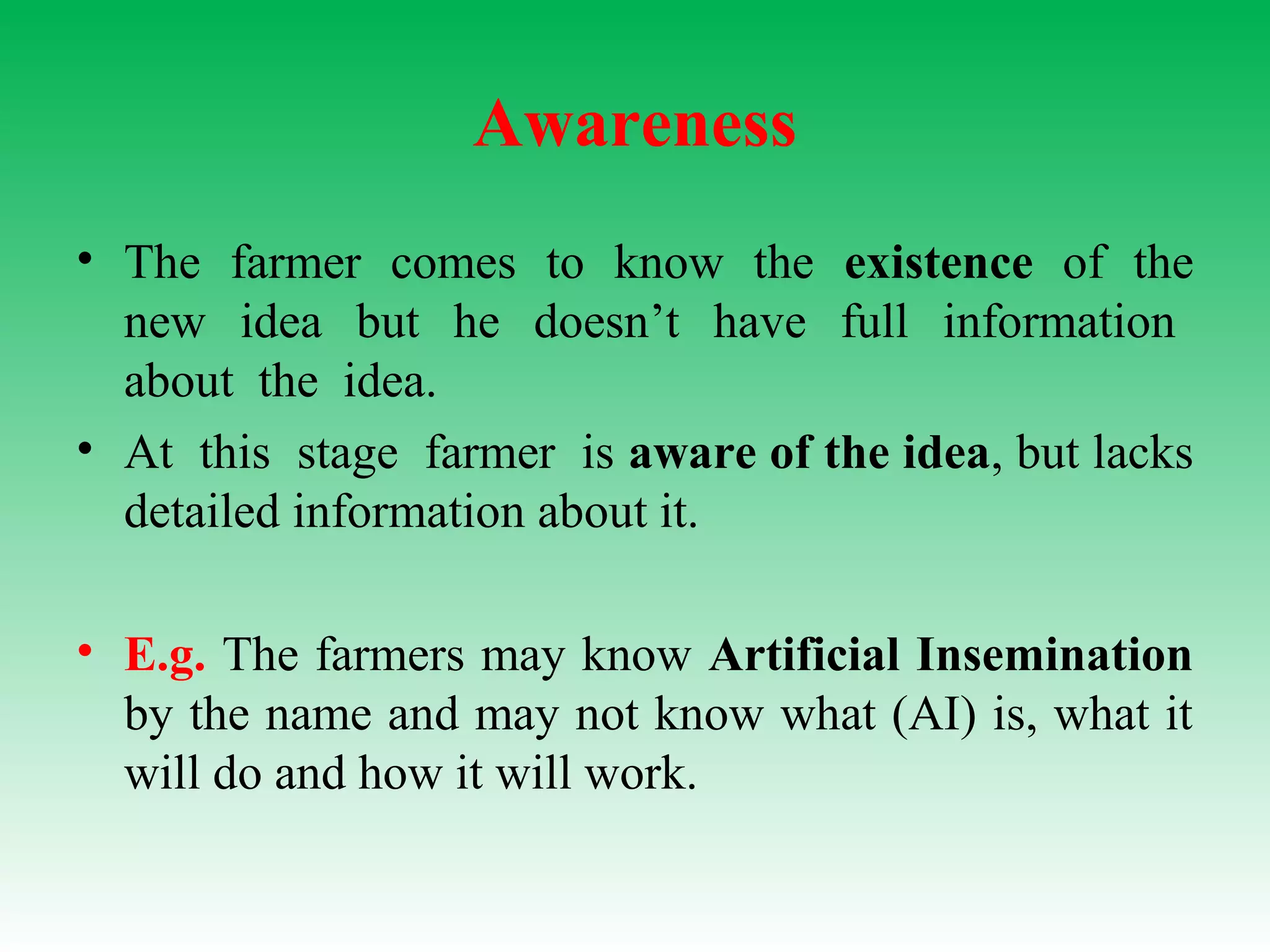
Awareness
• The farmer comes to know the existence of the
new idea but he doesn’t have full information
about the idea.
• At this stage farmer is aware of the idea, but lacks
detailed information about it.
• E.g. The farmers may know Artificial Insemination
by the name and may not know what (AI) is, what it
will do and how it will work.
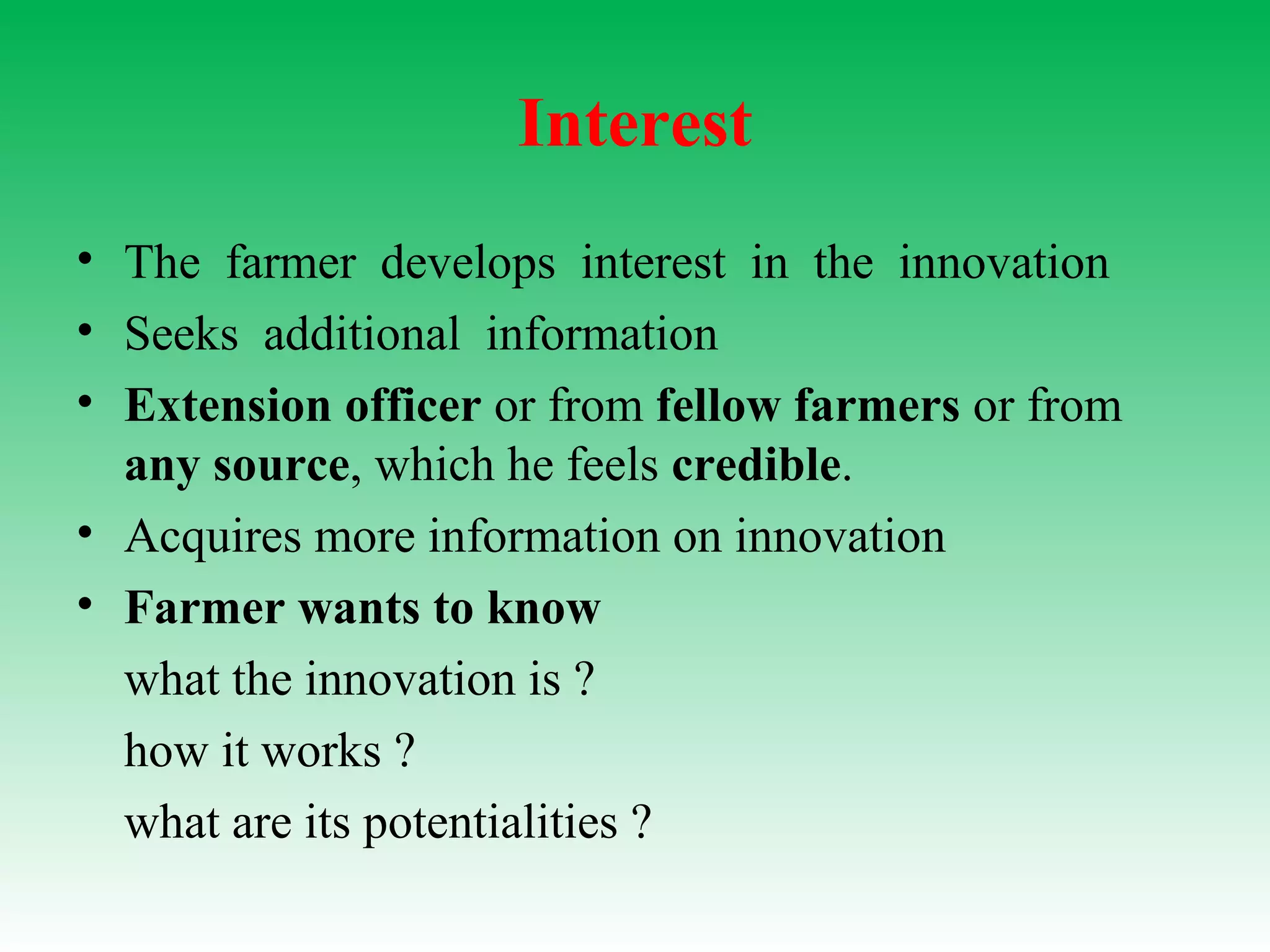
Interest
• The farmer develops interest in the innovation
• Seeks additional information
• Extension officer or from fellow farmers or from
any source, which he feels credible.
• Acquires more information on innovation
• Farmer wants to know
what the innovation is ?
how it works ?
what are its potentialities ?
Evaluation
• Mental application of the new idea in the present
and anticipated future situations
• Decides whether or not to try it.
• Judges the utility of the innovation.
• Assessment, whether the idea is applicable to own
situation.
• If applied what would be the result.
Trial
• Farmers may not take up any new idea at first
instance at large scale because doesn’t want to take
risk
• Farmer applies the new idea on a small scale
• Determine its utility or feasibility & applicability
• Practical evaluation of an innovation.
Adoption
• If satisfied with the performance of the new idea
• Uses the new idea continuously on a full scale.
• Innovation becomes a part of normal farming activity.
• The farmer takes final decision and applies the
innovation in a scale appropriate to own situation on
a continued basis.
Other model of adoption stages
• The stages of adoption are dynamic and not static.
(Singh, 1965)
• The five stages do not occur with all the adopters
• All the practices sequence is not always the same
• Some times one stage appears more than once
• In some cases some stages are short
• Some stages seem to be skipped
• May jump from evaluation to adoption stage
• No clear-cut differences: capsules and looks like a
unit act.
Seven-stage model of the adoption
process.
• Need
• Awareness
• Interest
• Deliberation
• Trial
• Evaluation and
• Adoption.
• NEED:
Difference between what is and what ought to be.
Farmer wishes to change his existing practice or to get
more yield/income.
• AWARENESS:
Farmer just comes to know about an innovation
without knowing the details of it.
• INTEREST:
Farmer makes an attempt to know more about the
innovation.
• DELIBERATION:
Possibility of application of the innovation under
own conditions.
Seeks advice of opinion leaders observe the
performance at different places and discusses with the
members of family.
Farmer then takes a decision to try out or reject the
idea.
• TRIAL:
Puts the practice on a limited scale to observe the
performance under own conditions.
• EVALUATION:
Farmer observes performance of the innovation on
various dimensions.
Collects data on the performance of the
innovation on others situation.
Compares performance of new with old one
Calculates input – output, risks, uncertainties etc.
• ADOPTION:
Farmer takes the decision to extend the use of
the innovation on a continued basis.
Adoption and its Model

Adoption and its Model

  • 1.
    Adoption of Innovationand its model Submitted by, Dr. Balaraj BL Ph.D Scholar Roll No. 1672 Submitted to, Dr. Hema Tripathi Pr, Scientist and PC I.V.R.I
  • 2.
    Adoption • Adoption Decision tomake full use of an innovation as the best course of action available. • Adoption process (Micro process) Decision making process, goes through a number of mental stages before making a final decision to adopt an innovation.
  • 3.
    Wilkening (1953) • Adoptionof innovation as a process composed of learning, deciding and acting over a period of time. • The adoption of a specific practice is not the result of a single decision to act but series of action and thought decision. Four stages in adoption Obtaining information Conviction Trial Adoption.
  • 4.
    Stages in AdoptionProcess • The decision to adopt an innovation, “is not normally a single, instantaneous act” • But it is a decision-making process. • Steps in Decision-Making: (Johnson & Haver, 1955) Observing the problem Analysis Deciding available course of action Taking one course Accepting the consequence
  • 5.
    Stages in AdoptionProcess • Pioneering work of diffusion of hybrid corn seed in two Iowa communities in the United States • Ryan and Gross (1943) Stages in the process of adoption • “awareness” of the existence of an innovation • “conviction” of usefulness • “acceptance” sense of willingness to try the innovation • “complete adoption”. full scale use
  • 6.
    Five stages inAdoption According to North Central Rural Sociology Sub- committee
  • 7.
    Awareness • The farmercomes to know the existence of the new idea but he doesn’t have full information about the idea. • At this stage farmer is aware of the idea, but lacks detailed information about it. • E.g. The farmers may know Artificial Insemination by the name and may not know what (AI) is, what it will do and how it will work.
  • 8.
    Interest • The farmerdevelops interest in the innovation • Seeks additional information • Extension officer or from fellow farmers or from any source, which he feels credible. • Acquires more information on innovation • Farmer wants to know what the innovation is ? how it works ? what are its potentialities ?
  • 9.
    Evaluation • Mental applicationof the new idea in the present and anticipated future situations • Decides whether or not to try it. • Judges the utility of the innovation. • Assessment, whether the idea is applicable to own situation. • If applied what would be the result.
  • 10.
    Trial • Farmers maynot take up any new idea at first instance at large scale because doesn’t want to take risk • Farmer applies the new idea on a small scale • Determine its utility or feasibility & applicability • Practical evaluation of an innovation.
  • 11.
    Adoption • If satisfiedwith the performance of the new idea • Uses the new idea continuously on a full scale. • Innovation becomes a part of normal farming activity. • The farmer takes final decision and applies the innovation in a scale appropriate to own situation on a continued basis.
  • 12.
    Other model ofadoption stages • The stages of adoption are dynamic and not static. (Singh, 1965) • The five stages do not occur with all the adopters • All the practices sequence is not always the same • Some times one stage appears more than once • In some cases some stages are short • Some stages seem to be skipped • May jump from evaluation to adoption stage • No clear-cut differences: capsules and looks like a unit act.
  • 13.
    Seven-stage model ofthe adoption process. • Need • Awareness • Interest • Deliberation • Trial • Evaluation and • Adoption.
  • 14.
    • NEED: Difference betweenwhat is and what ought to be. Farmer wishes to change his existing practice or to get more yield/income. • AWARENESS: Farmer just comes to know about an innovation without knowing the details of it. • INTEREST: Farmer makes an attempt to know more about the innovation.
  • 15.
    • DELIBERATION: Possibility ofapplication of the innovation under own conditions. Seeks advice of opinion leaders observe the performance at different places and discusses with the members of family. Farmer then takes a decision to try out or reject the idea. • TRIAL: Puts the practice on a limited scale to observe the performance under own conditions.
  • 16.
    • EVALUATION: Farmer observesperformance of the innovation on various dimensions. Collects data on the performance of the innovation on others situation. Compares performance of new with old one Calculates input – output, risks, uncertainties etc. • ADOPTION: Farmer takes the decision to extend the use of the innovation on a continued basis.