Unanticipated difficult tracheal intubation-
                    during routine induction of anaesthesia in an adult patient

                Direct                                        Any                                       Call
                laryngoscopy                                  problems                                  for help

Plan A: Initial tracheal intubation plan

     Direct laryngoscopy - check:
     Neck flexion and head extension
     Laryngoscope technique and vector                     Not more
     External laryngeal manipulation -                     than 4 attempts,
                                                                                  succeed
                                                           maintaining:                                        Tracheal intubation
     by laryngoscopist                                     (1) oxygenation
     Vocal cords open and immobile                         with face mask and
     If poor view: Introducer (bougie) -                   (2) anaesthesia
     seek clicks or hold-up                                                                         Verify tracheal intubation
     and/or Alternative laryngoscope                                                                (1) Visual, if possible
                                                                                                    (2) Capnograph
                  failed intubation                                                                 (3) Oesophageal detector
                                                                                                    "If in doubt, take it out"
Plan B: Secondary tracheal intubation plan


                                                                        Confirm: ventilation, oxygenation,
            ILMATM or LMATM                                             anaesthesia, CVS stability and muscle
            Not more than 2 insertions            succeed               relaxation - then fibreoptic tracheal intubation
            Oxygenate and ventilate                                     through IMLATM or LMATM - 1 attempt
                                                                        If LMATM, consider long flexometallic,nasal
                failed oxygenation                                      RAE or microlaryngeal tube
         (e.g. SpO2 < 90% with FiO2 1.0)                                Verify intubation and proceed with surgery
               via ILMATM or LMATM
                                                                                 failed intubation via ILMATM or LMATM
Plan C: Maintenance of oxygenation, ventilation,
postponement of surgery and awakening


        Revert to face mask
        Oxygenate and ventilate
        Reverse non-depolarising relaxant                     succeed                       Postpone surgery
        1 or 2 person mask technique                                                        Awaken patient
        (with oral ± nasal airway)

          failed ventilation and oxygenation


Plan D: Rescue techniques for
"can't intubate, can't ventilate" situation

                         Difficult Airway Society Guidelines Flow-chart 2004 (use with DAS guidelines paper)

Difficult airway guidelines

  • 1.
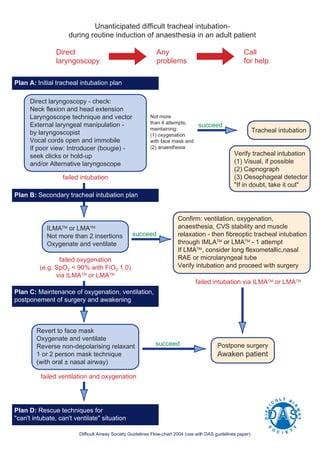
    Unanticipated difficult trachealintubation- during routine induction of anaesthesia in an adult patient Direct Any Call laryngoscopy problems for help Plan A: Initial tracheal intubation plan Direct laryngoscopy - check: Neck flexion and head extension Laryngoscope technique and vector Not more External laryngeal manipulation - than 4 attempts, succeed maintaining: Tracheal intubation by laryngoscopist (1) oxygenation Vocal cords open and immobile with face mask and If poor view: Introducer (bougie) - (2) anaesthesia seek clicks or hold-up Verify tracheal intubation and/or Alternative laryngoscope (1) Visual, if possible (2) Capnograph failed intubation (3) Oesophageal detector "If in doubt, take it out" Plan B: Secondary tracheal intubation plan Confirm: ventilation, oxygenation, ILMATM or LMATM anaesthesia, CVS stability and muscle Not more than 2 insertions succeed relaxation - then fibreoptic tracheal intubation Oxygenate and ventilate through IMLATM or LMATM - 1 attempt If LMATM, consider long flexometallic,nasal failed oxygenation RAE or microlaryngeal tube (e.g. SpO2 < 90% with FiO2 1.0) Verify intubation and proceed with surgery via ILMATM or LMATM failed intubation via ILMATM or LMATM Plan C: Maintenance of oxygenation, ventilation, postponement of surgery and awakening Revert to face mask Oxygenate and ventilate Reverse non-depolarising relaxant succeed Postpone surgery 1 or 2 person mask technique Awaken patient (with oral ± nasal airway) failed ventilation and oxygenation Plan D: Rescue techniques for "can't intubate, can't ventilate" situation Difficult Airway Society Guidelines Flow-chart 2004 (use with DAS guidelines paper)