DIFFICULT AIRWAY
MANAGEMENT IN ICU
DR VISHAL KR KANDHWAY
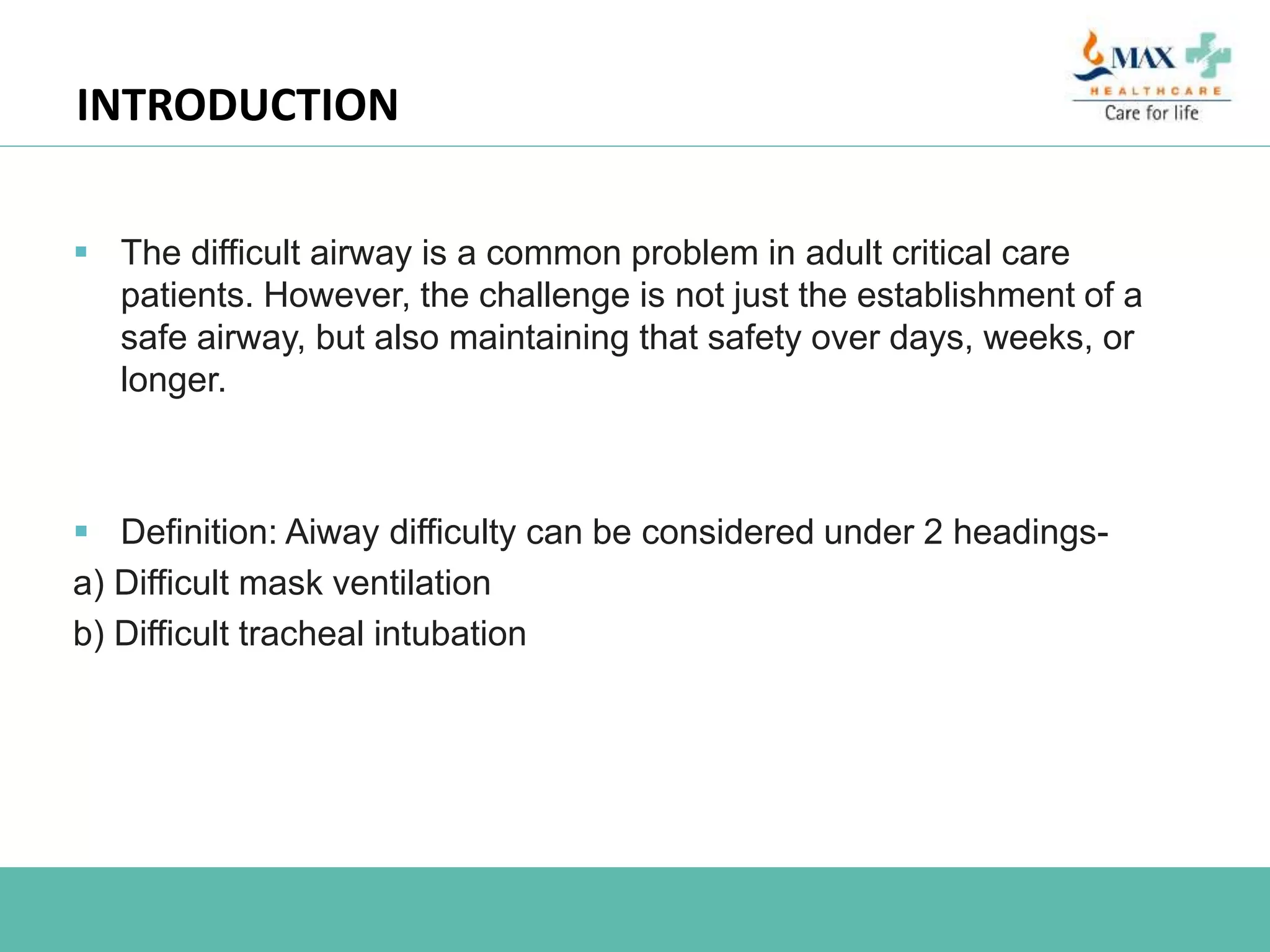
INTRODUCTION
 The difficult airway is a common problem in adult critical care
patients. However, the challenge is not just the establishment of a
safe airway, but also maintaining that safety over days, weeks, or
longer.
 Definition: Aiway difficulty can be considered under 2 headings-
a) Difficult mask ventilation
b) Difficult tracheal intubation
 These may be encountered together or in isolation.
 DMV can be defined as the inability of an unassisted anesthesiologist
a) to maintain oxygen saturation, measured by pulse oximetry, >92%; or
b) to prevent or reverse signs of inadequate ventilation during positive-pressure mask
ventilation under general anesthesia.
 Difficult tracheal intubation (DTI) is tracheal intubation requiring “multiple intubation
attempts in the presence or absence of tracheal pathology“. However, there is no
universal definition and because the expertise of the intubator, the equipment used, and
the number of attempts made may vary.
 DTI may be the result of difficulty in visualization of the larynx—termed difficult direct
laryngoscopy or anatomic abnormality (distortion or narrowing of the larynx or trachea)
 Factors leading to difficult intubation in ICU:
1) Remote location
2) Patient factors: hypoxic, obtunded, combative or all three.
3) Unstable physiology: pre-existing hypoxia, ventilation-perfusion
mismatch, lack of cardiorespiratory reserve.
RSI is considered adequate in these patients.
 Managing the Difficult Airway
This has been considered under three headings:
a) the anticipated difficult airway;
b) the unanticipated difficult airway;
c) the difficult airway resulting in a “cannot
intubate and cannot ventilate”
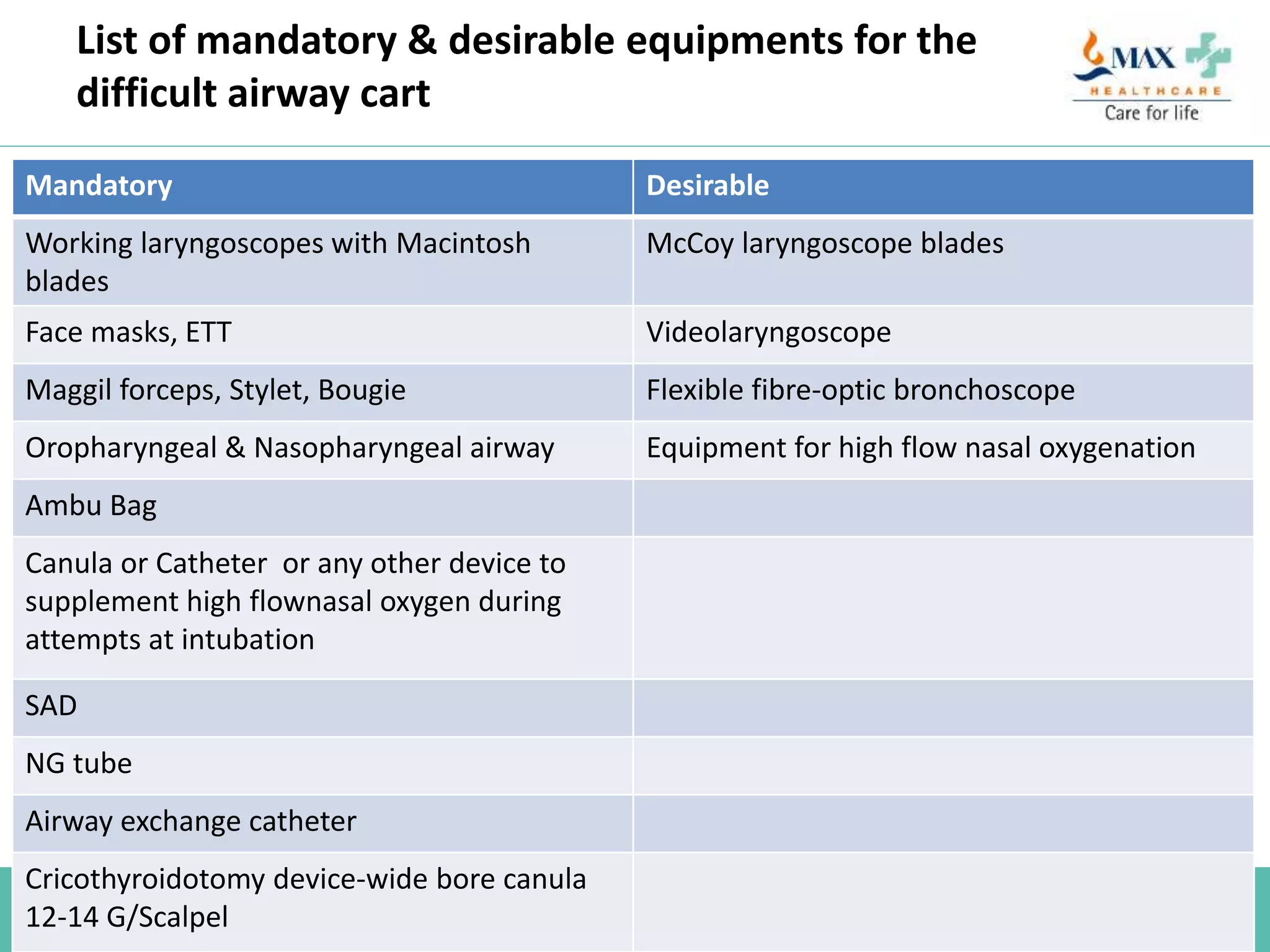
List of mandatory & desirable equipments for the
difficult airway cart
Mandatory Desirable
Working laryngoscopes with Macintosh
blades
McCoy laryngoscope blades
Face masks, ETT Videolaryngoscope
Maggil forceps, Stylet, Bougie Flexible fibre-optic bronchoscope
Oropharyngeal & Nasopharyngeal airway Equipment for high flow nasal oxygenation
Ambu Bag
Canula or Catheter or any other device to
supplement high flownasal oxygen during
attempts at intubation
SAD
NG tube
Airway exchange catheter
Cricothyroidotomy device-wide bore canula
12-14 G/Scalpel
Intubation Under Anesthesia
 Despite the safety advantage of awake intubation in these patients
, anesthesia before attempted orotracheal intubation may be viewed as more
appropriate.
 Involves short acting agents or the slow administration of the iv agents like
Propofol.
Fiberoptic intubation
 Awake fiberoptic intubation is the technique of choice with an informed,
prepared patient and a trained operator.
 The technique ensures spontaneous respiration and maintainance of upper
airway tone.
 Psychological preparation is essential.
 Short acting agents include short acting BZP, opioids and iv agents.
 Supplemental oxygen should be provided, through the contralateral nostril.
 Topical anesthetic agents include lignocaine.
 Anesthesia of the vocal cords and upper trachea is usually provided by a
“spray as you go” technique using 2% lignocaine.
 Another technique is superior laryngeal and recurrent laryngeal nerve block.
 Advantages:
– This technique allows direct visualization of the airway
– Direct confirmation of ETT placement
– Can be done awake
 Disadvantages:
– Expensive, requires care and skill
– View may be hampered by blood or secretions
Fibreoptic Bronchoscope
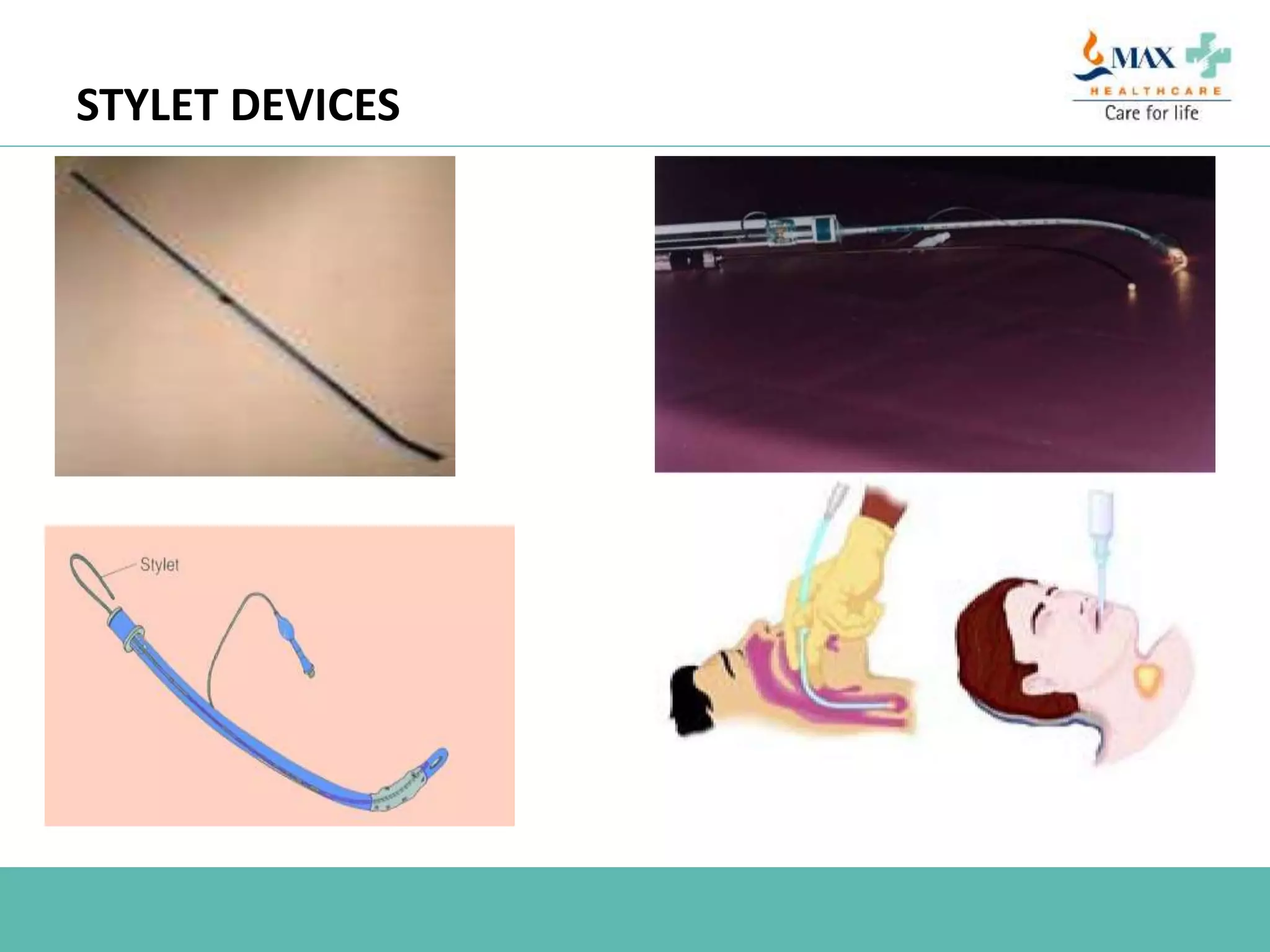
Stylet
 The stylet is a smooth, malleable metal or plastic rod
 placed inside an ETT to adjust the curvature, typically into a J or “hockey
stick” shape to allow the tip of the ETT to be directed through a poorly
visualized or unseen glottis.
 The stylet must not project beyond the end of the ETT to avoid potential
airway injury.
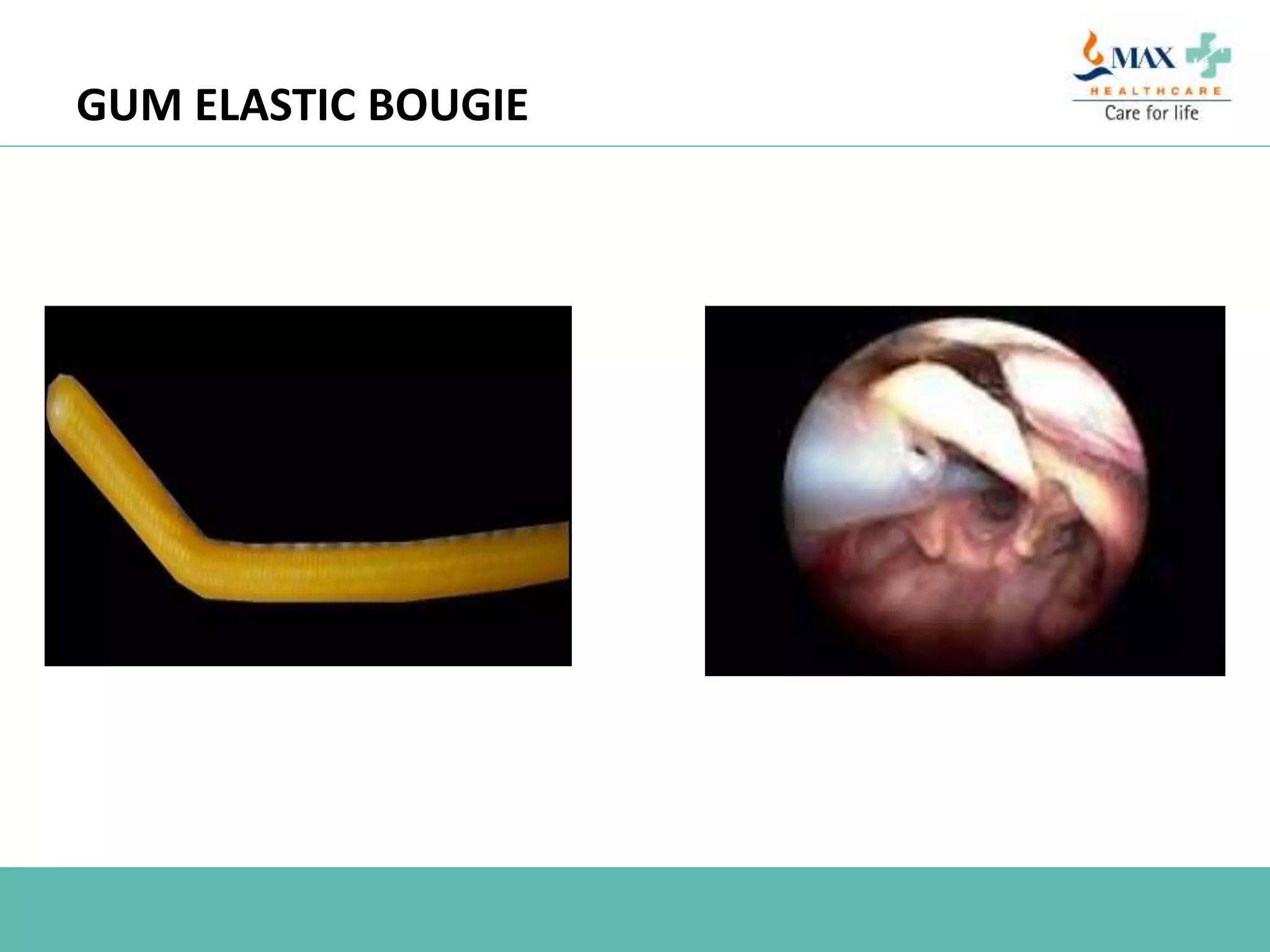
Bougie
The gum elastic bougie is a blunt-ended, malleable rod that may be passed
through the poorly or non-visualized larynx by putting a J-shaped bend at
the tip and passing it “blindly” in the midline upward beyond the base of the
epiglottis.
The ETT can then be “rail-roaded” over the bougie, which is then
withdrawn.
STYLET DEVICES
GUM ELASTIC BOUGIE
Light wand
 The light wand is a malleable fiberoptic light source on which an ETT can be
mounted and subsequently railroaded into the trachea when the light source
has passed beyond the glottis.
 Advantage: Facilitates blind tracheal intubation, used in conjunction with
LMA or as part of a combined technique with a fiberoptic scope.
 Disadvantage: need for low ambient light, contraindicated in patients with
known abnormal upper airway anatomy and those in whom detectable
transillumination is unlikely to be adequately achieved.
Supraglottic Devices
 Supraglottic devices are the suitable alternative to endotracheal
intubation, Useful when endotracheal intubation has failed
 Suitable for use by those with limited experience with endotracheal
intubation
 Should be immediately available for every difficult airway situation
 Various types available
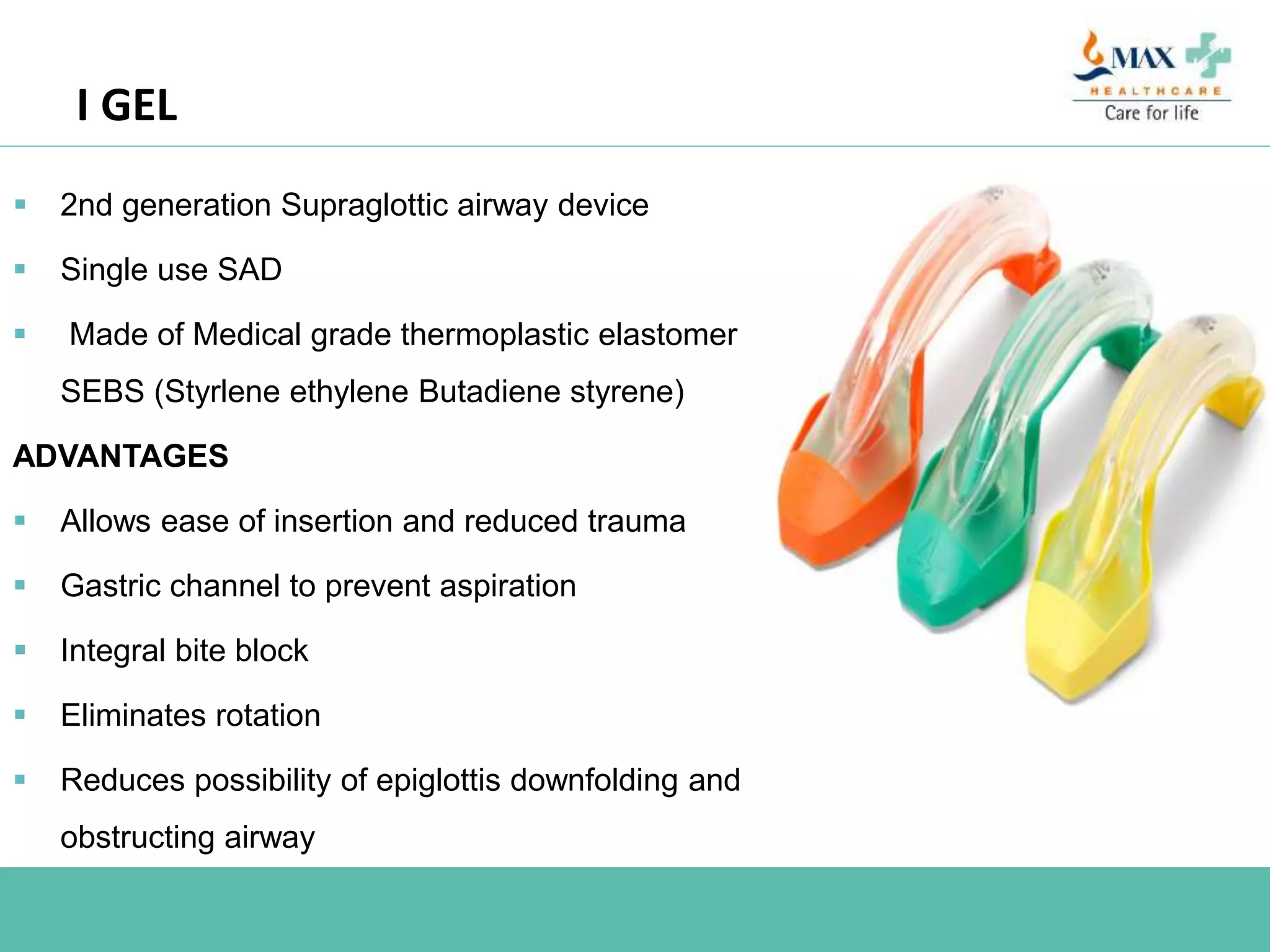
I GEL
 2nd generation Supraglottic airway device
 Single use SAD
 Made of Medical grade thermoplastic elastomer
SEBS (Styrlene ethylene Butadiene styrene)
ADVANTAGES
 Allows ease of insertion and reduced trauma
 Gastric channel to prevent aspiration
 Integral bite block
 Eliminates rotation
 Reduces possibility of epiglottis downfolding and
obstructing airway
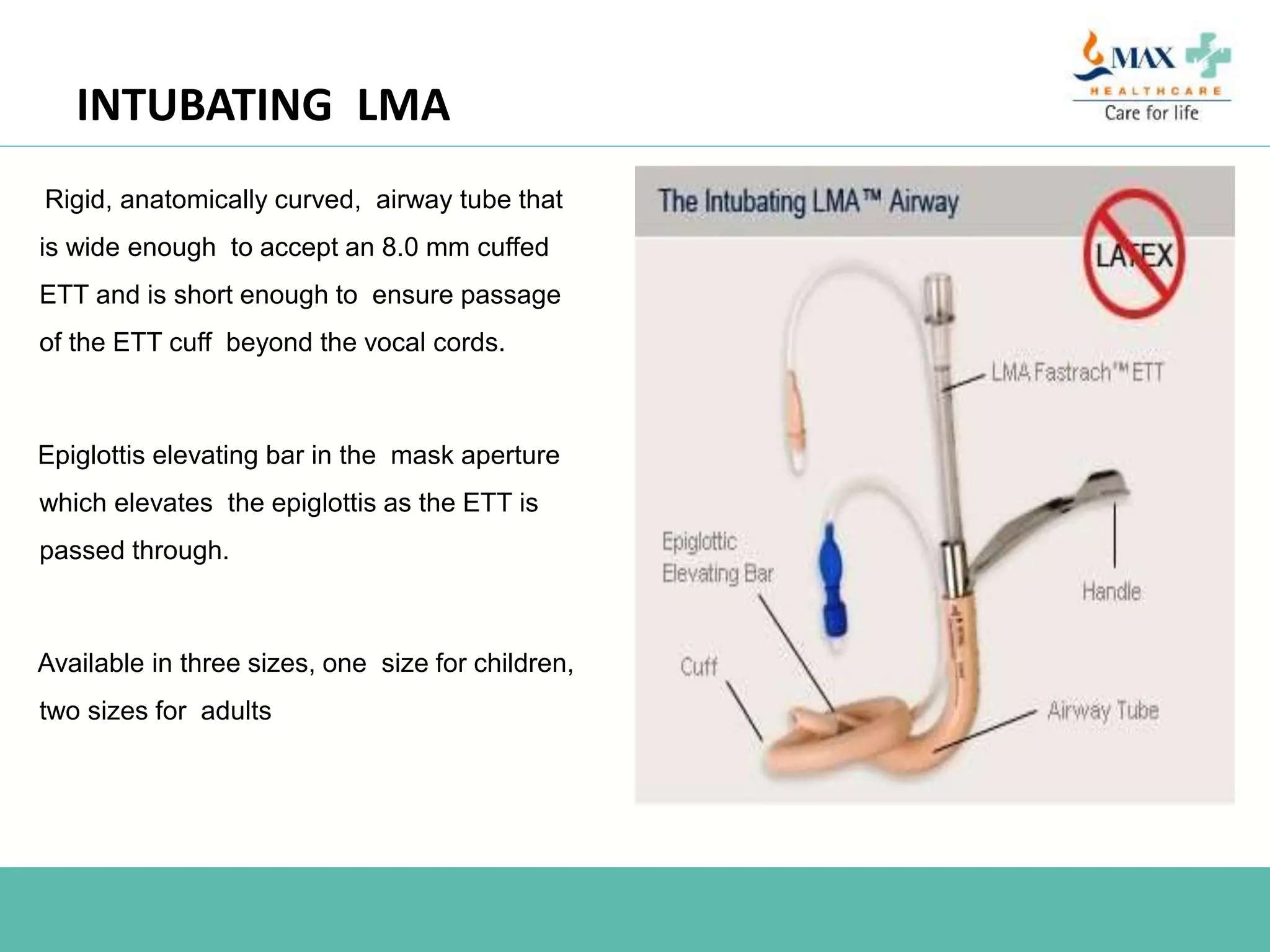
INTUBATING LMA
Rigid, anatomically curved, airway tube that
is wide enough to accept an 8.0 mm cuffed
ETT and is short enough to ensure passage
of the ETT cuff beyond the vocal cords.
Epiglottis elevating bar in the mask aperture
which elevates the epiglottis as the ETT is
passed through.
Available in three sizes, one size for children,
two sizes for adults
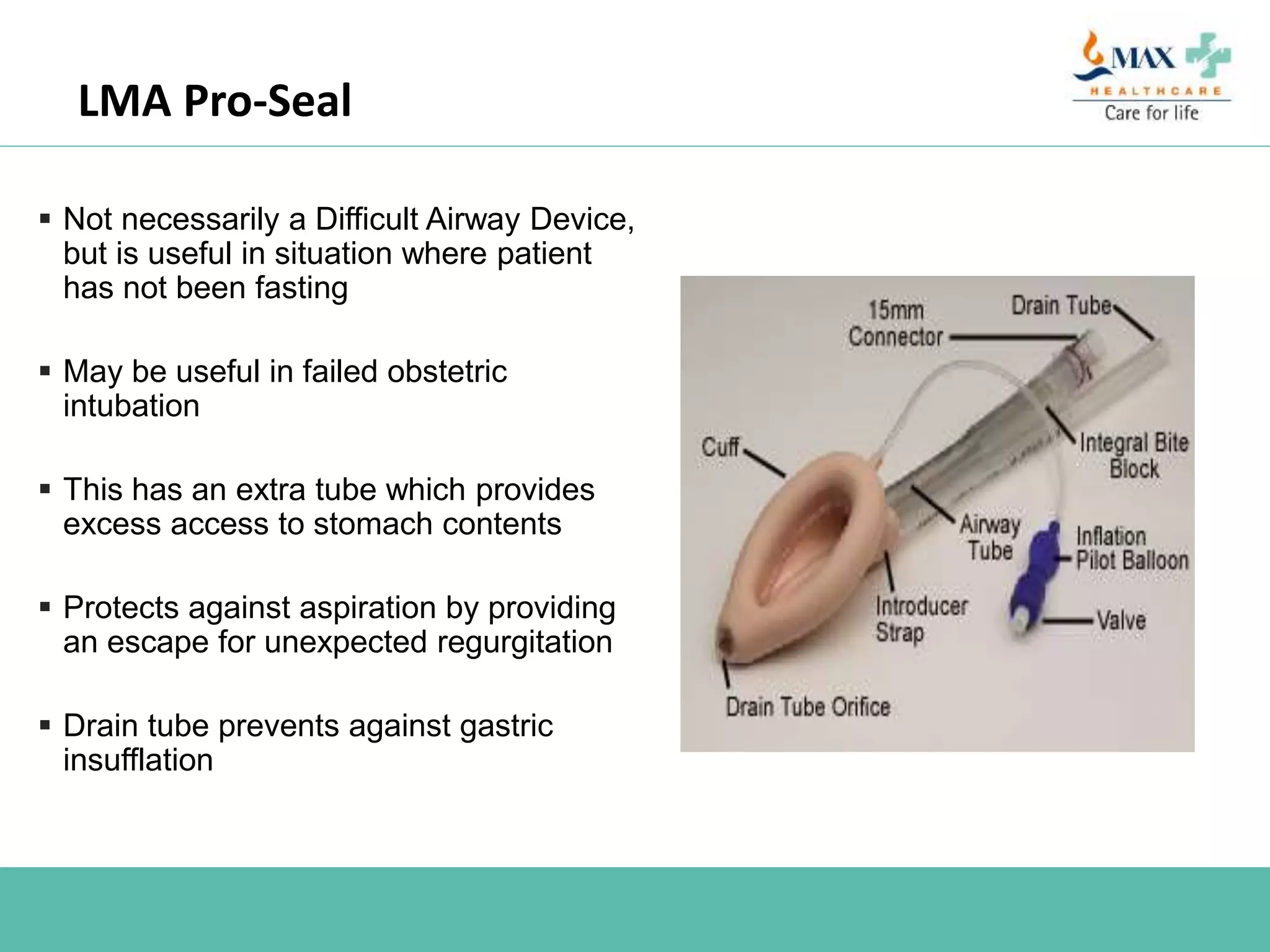
LMA Pro-Seal
 Not necessarily a Difficult Airway Device,
but is useful in situation where patient
has not been fasting
 May be useful in failed obstetric
intubation
 This has an extra tube which provides
excess access to stomach contents
 Protects against aspiration by providing
an escape for unexpected regurgitation
 Drain tube prevents against gastric
insufflation
LMA Supreme™
 Quite new to the market, combines all the
best features of all previous LMA except
you can’t intubate through it
 The SLMA is easily and rapidly inserted,
providing a reliable airway and a good
airway seal
 Rates of failure, manipulations required
and complications are very low.
 Can be used when tracheal intubation fails
in non-fasted patients
 Useful in “failed intubation” and the “can’t
intubate-can’t ventilate” situation
COMBITUBE
 The Combitube is a combined esophageal obturator and tracheal tube and is usually
inserted blindly.
 Whether the “tracheal” lumen is placed in the trachea or esophagus,
 the Combitube will allow ventilation of the lungs and give partial protection against
aspiration.
 In many situations, the Combitube is a (less widely used) alternative to the LMA,
including the “cannot intubate- cannot ventilate” situation.
 Disadvantages include the inability to suction the trachea when placed in the
esophagus (the most common position). Insertion may also cause trauma and is
contraindicated in patients with known esophageal pathology, intact laryngeal
reflexes, or in those who have ingested caustic substances
ESOPHAGEAL- TRACHEAL COMBITUBE
Useful as emergency airway
Esophageal balloon minimizes aspiration
FAILURE TO INTUBATE & FAILURE TO VENTILATE
 This is an absolute emergency and a grave threat to life. To ensure all involved
perform at their best, it is important to remain calm and follow an appropriate
algorithm. The options are to find a satisfactory method of ventilation without
intubation (“noninvasive”) or to perform a cricothyroidotomy or (potentially)
tracheostomy. Reduced to its simplest, the options are
a) check the basics to see if intubating conditions can be improved
b) use of a supraglottic airway
c) perform a cricothyroidotomy
SURGICAL AIRWAY
 The indication for a surgical airway is inability to intubate the trachea in a patient who
requires it and the techniques available are cricothyroidotomy or tracheostomy.
 Cricothyroidotomy may be performed using three techniques: needle, wire-guided
percutaneous, or surgical.
Pre-oxygenation and apnoeic techniques to
maintain oxygenation
 Preoxygenation with 20-25 degree head up position and continuous
positive airway pressure – delays onset of hypoxia
 Nasal oxygenation during efforts of securing endotracheal tube –
increases the apnoeic time
Choice of laryngoscope blades
 There are over 50 types of curved and straight laryngoscope blades of
varying sizes. In patients with a large lower jaw or “deep
pharynx,” the view at laryngoscopy may be improved significantly by using a
size 4 Mackintosh blade (rather than the more common size 3) to ensure the
tip of the blade reaches the base of the vallecula to facilitate optimal elevation
of the epiglottis. Other blades, for example, McCoy (a curved Mackin-tosh-type
blade with a laryngoscopist controlled hinged portion just proximal to the tip),
may be advantageous in specific situations.
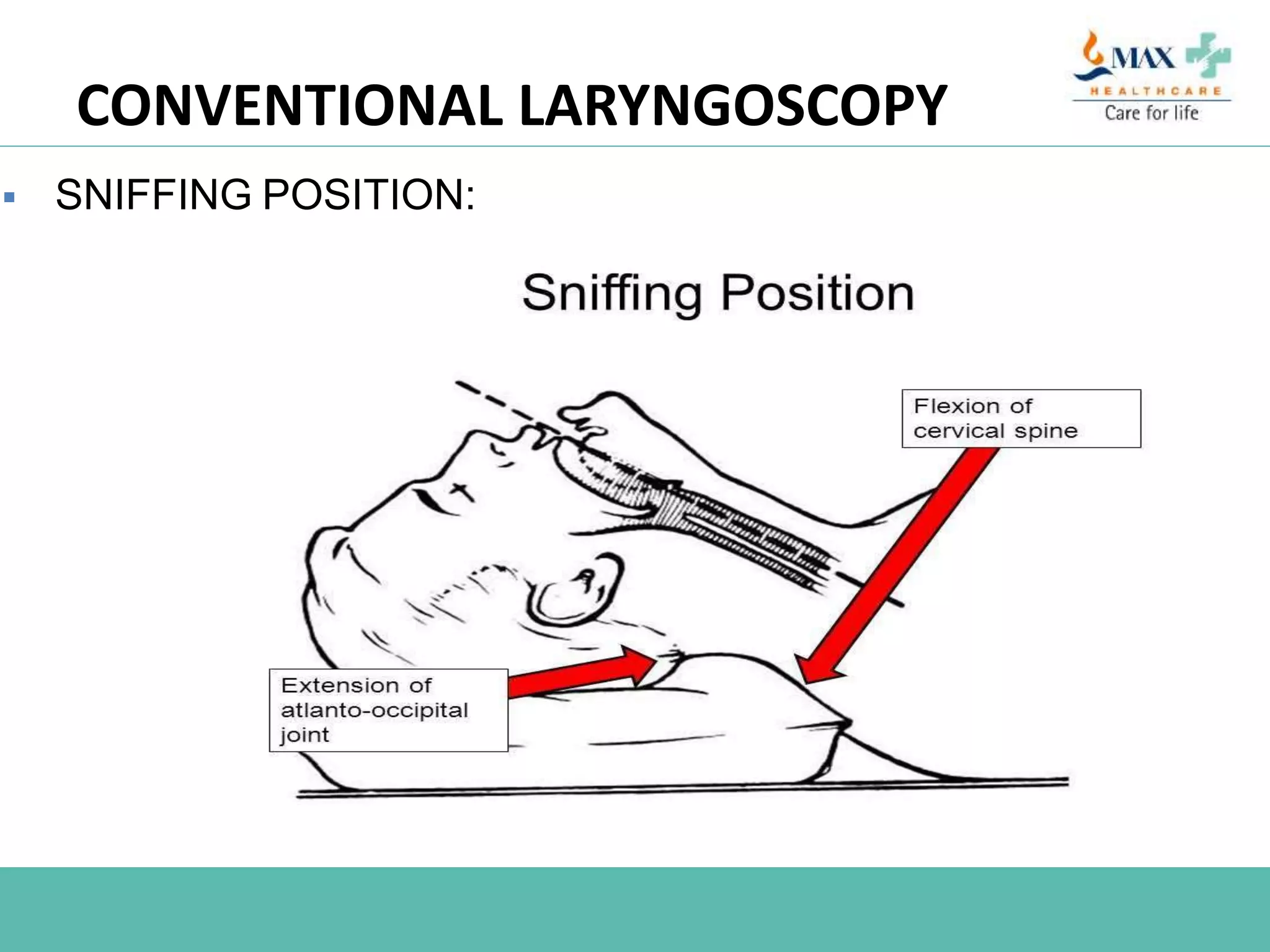
 SNIFFING POSITION:
CONVENTIONAL LARYNGOSCOPY
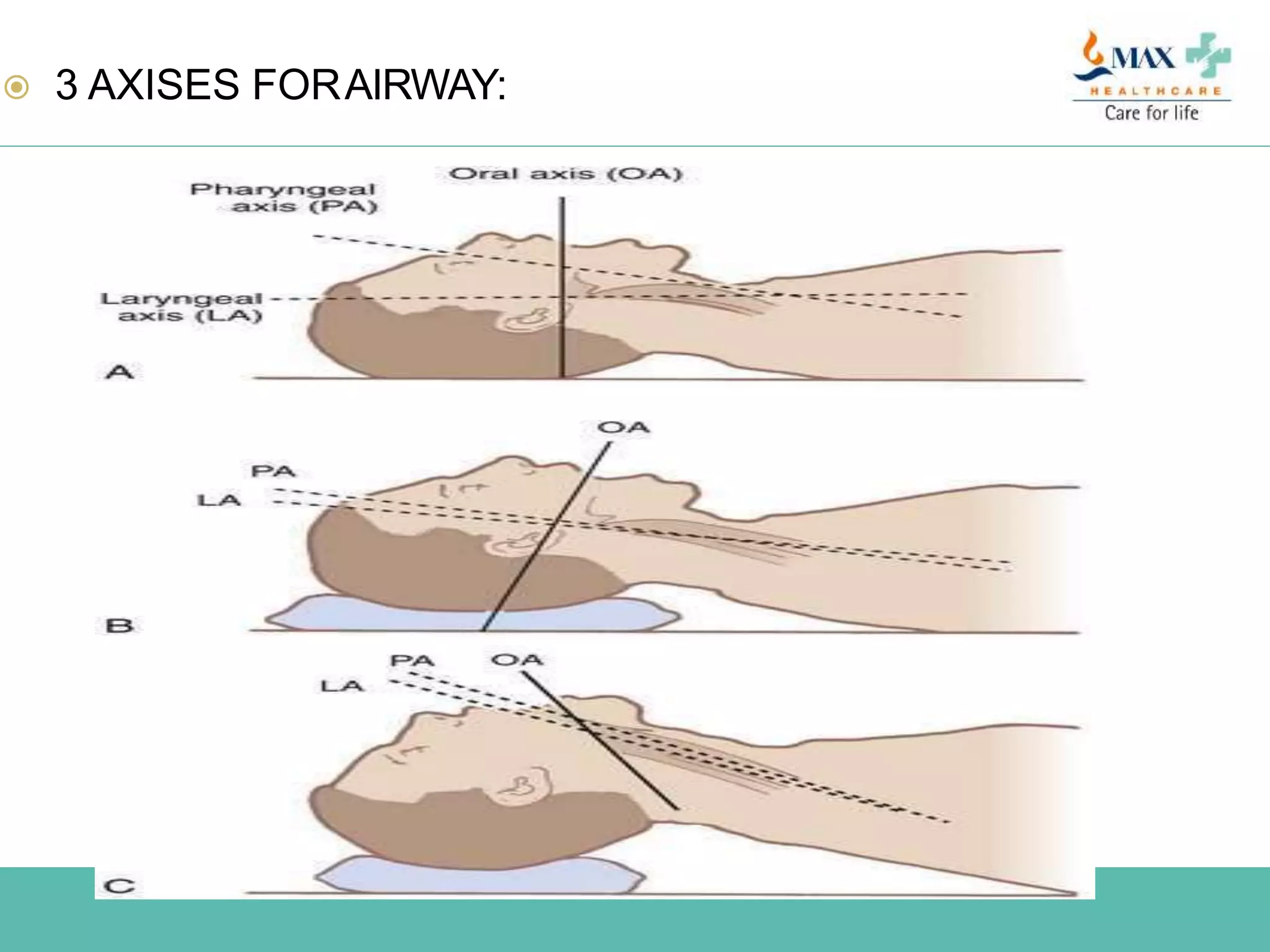
 3 AXISES FORAIRWAY:
LARYNGOSCOPY:
 A difficult laryngoscopic view is found (i.e. Cormack and Lehane Grade III or IV),
then it is reasonable to have one further “best” attempt at Laryngoscopy which
should consist of the following components:
• an attempt by an experienced laryngoscopist,
• an optimal patient head and neck position
• external laryngeal manipulation,
• consider adjuncts to Laryngoscopy,
• consider a single change of laryngoscope blade size and type,
• consider using a smaller sized endotracheal tube.
Difficult direct laryngoscopy
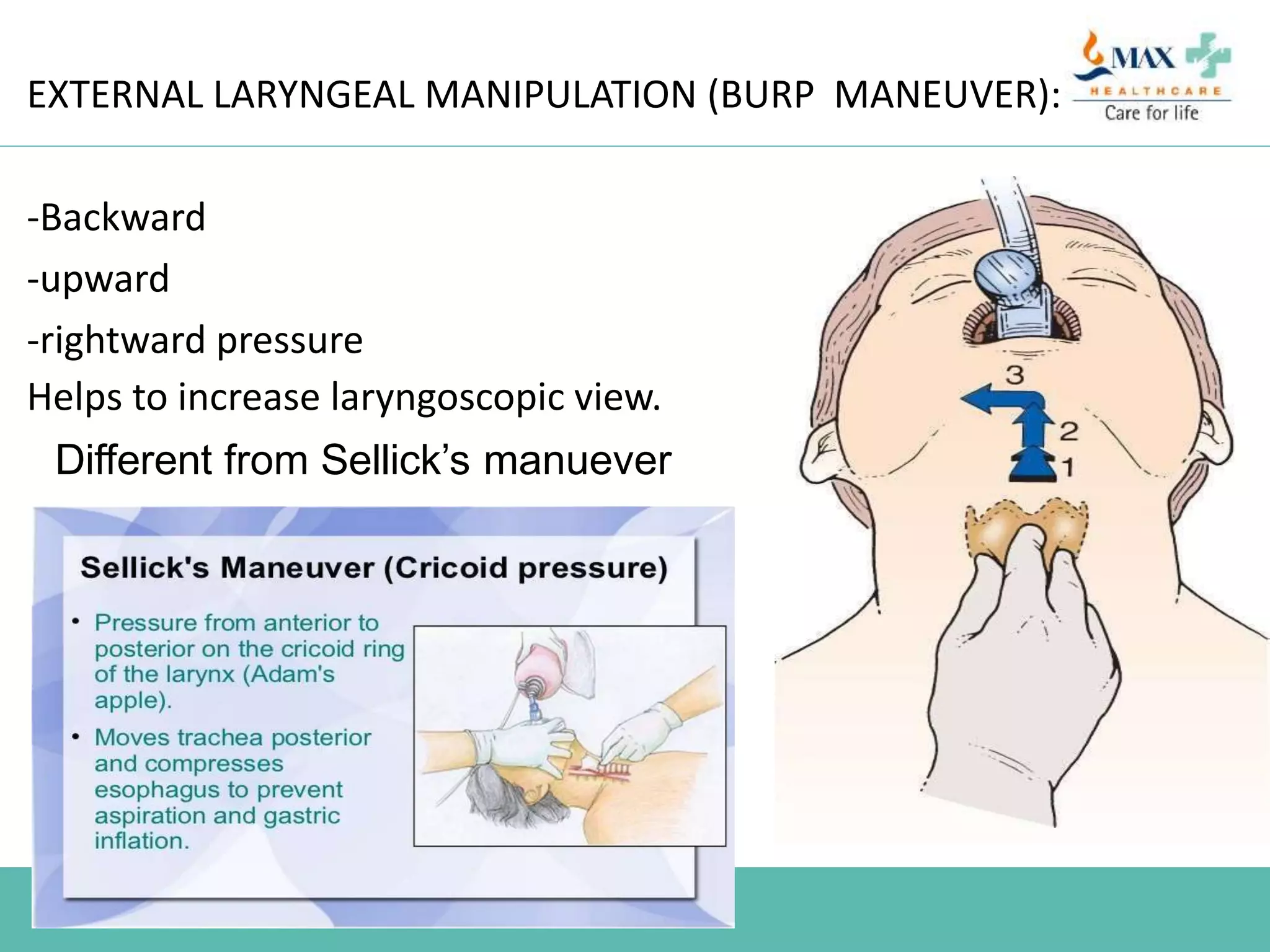
EXTERNAL LARYNGEAL MANIPULATION (BURP MANEUVER):
--
-Backward
-upward
-rightward pressure
Helps to increase laryngoscopic view.
Different from Sellick’s manuever
MILLER BLADES (STRAIGHT)
The Miller blades are
commonly used for infants.
It is easier to visualize the
glottis using these blades
than the Macintosh blade in
infants, due to the larger
size of the epiglottis relative
to that of the glottis.
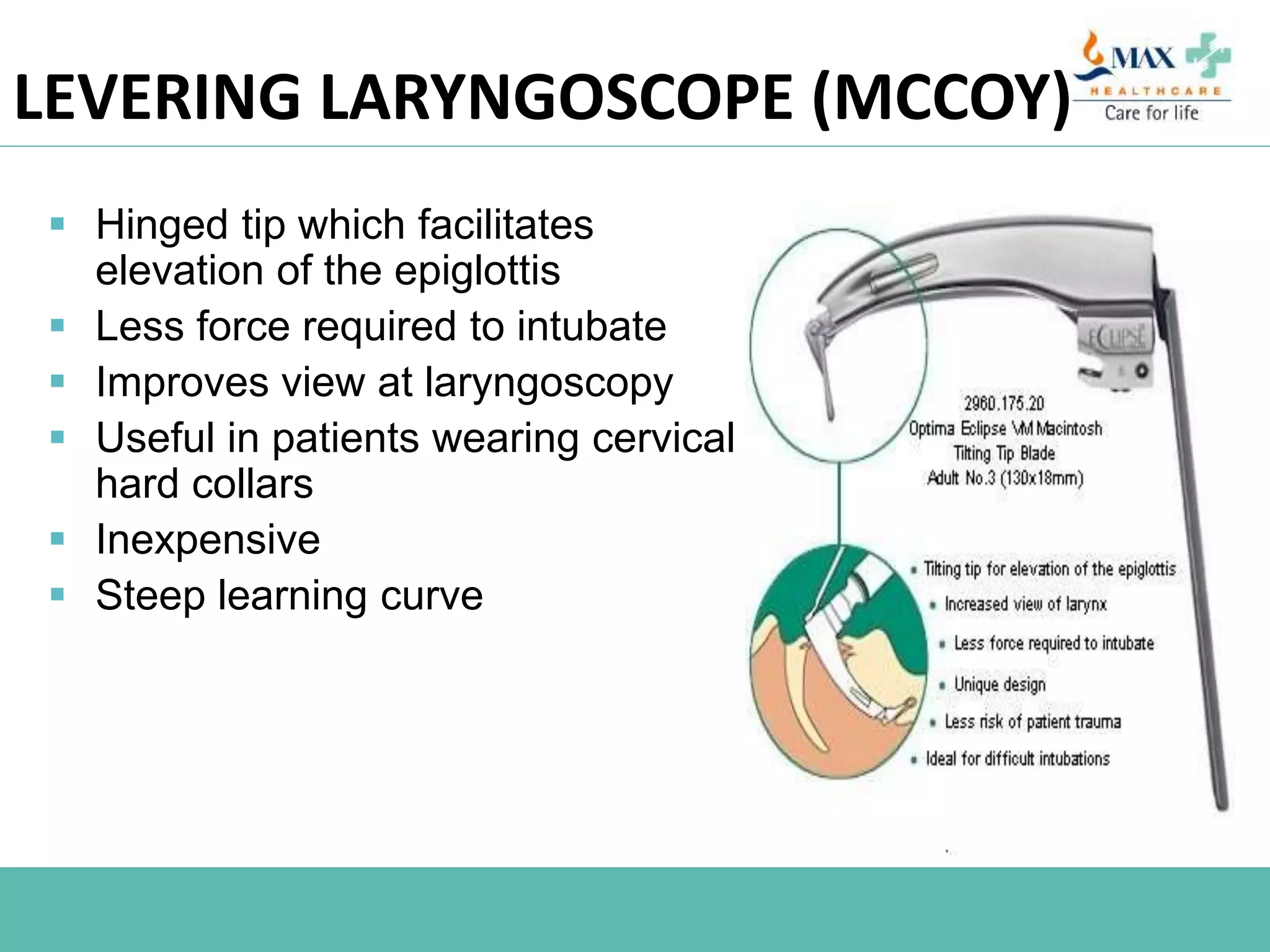
LEVERING LARYNGOSCOPE (MCCOY)
 Hinged tip which facilitates
elevation of the epiglottis
 Less force required to intubate
 Improves view at laryngoscopy
 Useful in patients wearing cervical
hard collars
 Inexpensive
 Steep learning curve
VIDEOLARYNGOSCOPES
Un-channelled videolaryngoscopes
 These devices can facilitate
visualization of the larynx when it
is not possible to do so with a
conventional blade.
 To achieve actual intubation the
ET tube has to be loaded onto a
stylet, then navigated into the field
of view of the videolaryngoscope,
and finally advanced into the
laryngeal inlet.
Eg: Glidescope and C-Mac®
Types of videolaryngoscopes
Videolaryngoscopes are either of the un-channelled or channelled type:
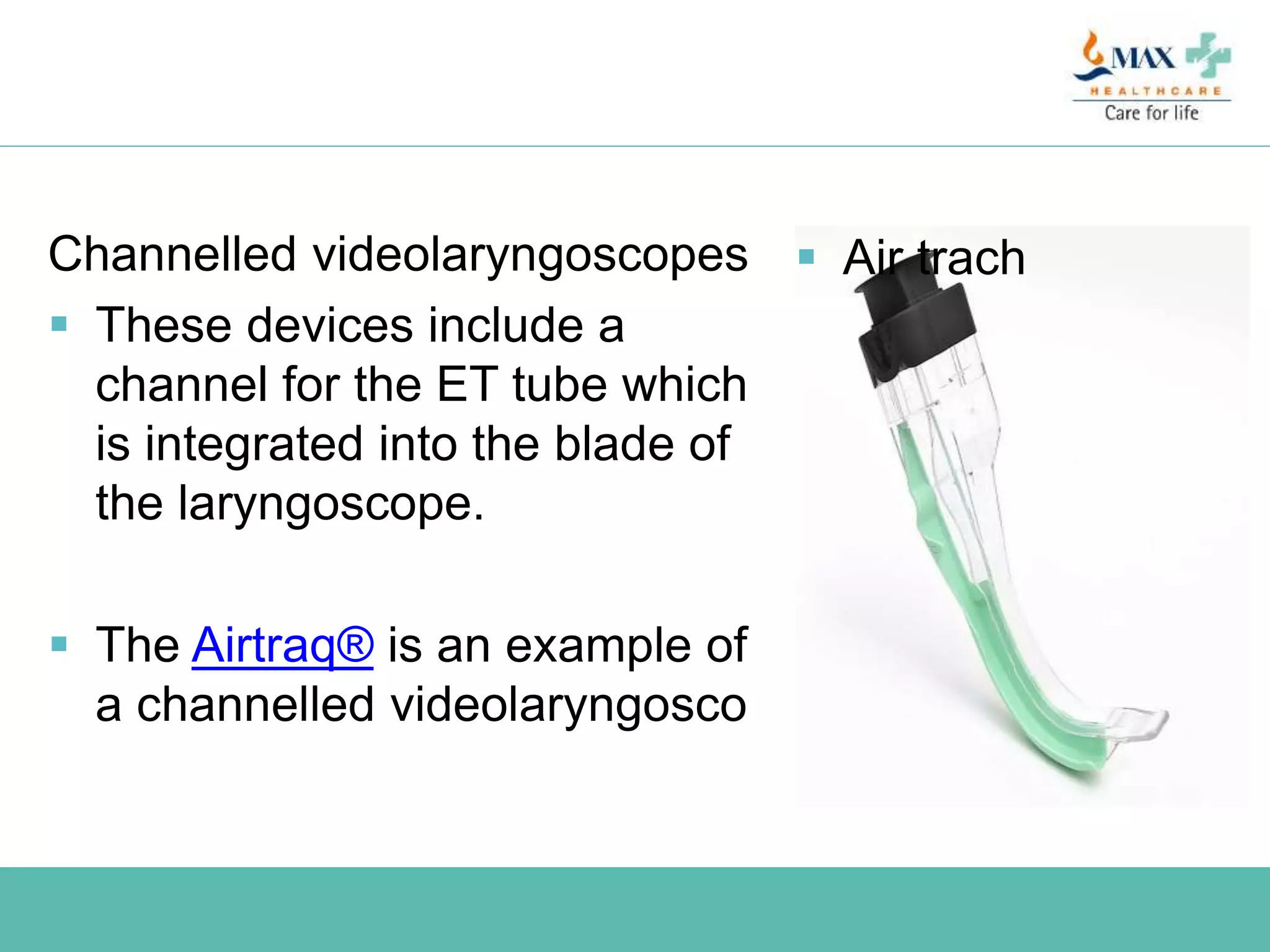
Channelled videolaryngoscopes
 These devices include a
channel for the ET tube which
is integrated into the blade of
the laryngoscope.
 The Airtraq® is an example of
a channelled videolaryngosco
 Air trach
ADVANTAGES
 Better laryngeal view
 Shorter duration of intubation time
 Reduced mucosal injury
 Reduced external manipulation
 Bigger screen
Bullard rigid fiberoptic
laryngoscope
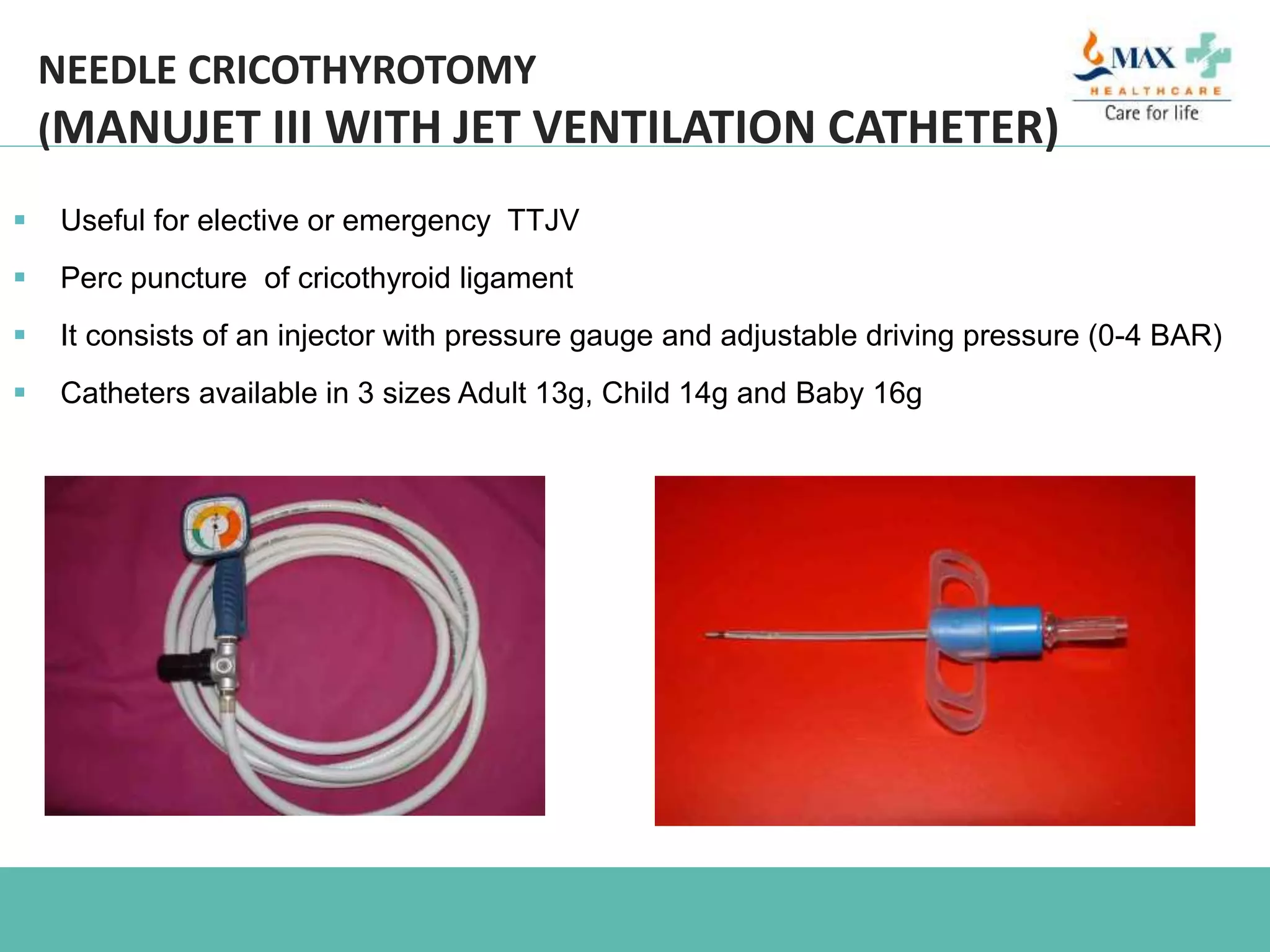
NEEDLE CRICOTHYROTOMY
(MANUJET III WITH JET VENTILATION CATHETER)
 Useful for elective or emergency TTJV
 Perc puncture of cricothyroid ligament
 It consists of an injector with pressure gauge and adjustable driving pressure (0-4 BAR)
 Catheters available in 3 sizes Adult 13g, Child 14g and Baby 16g
TRANSTRACHEAL JET VENTILATION (TTJV)
 Jet ventilation using either specialized ventilator or high pressure driven valve
circuit via a catheter passed through the cricothyroid membrane
 Similar technique to previous
 Disadvantages
 Requires high pressure gas source
 May cause subcutaneous emphysema, pneumo-mediastinum, pneumothorax or
other types of barotrauma
 Uses:
 Emergency ventilation in the can’t intubate can’t ventilate scenario
CRICOTHYROTOMY CATHETER
(MELKER CUFFED/ QUICKTRACH)
 Syringe
 18g Introducer Needles
(5cm & 7cm)
 Guidewire
 Curved Dilator
 Airway Catheter
LARGE CANNULAE CRICOTHYROTOMY
 Used for emergency airway access when conventional ett intubation cannot be
performed
 Percutaneous entry ( seldinger ) technique via cricothyroid membrane
 Dilate the tract and tracheal entrance site to permit passage of the emergency
airway
 Cuffed catheter to protect and control airway
Thank You

Difficult airway management

  • 1.
    DIFFICULT AIRWAY MANAGEMENT INICU DR VISHAL KR KANDHWAY
  • 2.
    INTRODUCTION  The difficultairway is a common problem in adult critical care patients. However, the challenge is not just the establishment of a safe airway, but also maintaining that safety over days, weeks, or longer.  Definition: Aiway difficulty can be considered under 2 headings- a) Difficult mask ventilation b) Difficult tracheal intubation
  • 3.
     These maybe encountered together or in isolation.  DMV can be defined as the inability of an unassisted anesthesiologist a) to maintain oxygen saturation, measured by pulse oximetry, >92%; or b) to prevent or reverse signs of inadequate ventilation during positive-pressure mask ventilation under general anesthesia.  Difficult tracheal intubation (DTI) is tracheal intubation requiring “multiple intubation attempts in the presence or absence of tracheal pathology“. However, there is no universal definition and because the expertise of the intubator, the equipment used, and the number of attempts made may vary.  DTI may be the result of difficulty in visualization of the larynx—termed difficult direct laryngoscopy or anatomic abnormality (distortion or narrowing of the larynx or trachea)
  • 4.
     Factors leadingto difficult intubation in ICU: 1) Remote location 2) Patient factors: hypoxic, obtunded, combative or all three. 3) Unstable physiology: pre-existing hypoxia, ventilation-perfusion mismatch, lack of cardiorespiratory reserve. RSI is considered adequate in these patients.
  • 5.
     Managing theDifficult Airway This has been considered under three headings: a) the anticipated difficult airway; b) the unanticipated difficult airway; c) the difficult airway resulting in a “cannot intubate and cannot ventilate”
  • 6.
    List of mandatory& desirable equipments for the difficult airway cart Mandatory Desirable Working laryngoscopes with Macintosh blades McCoy laryngoscope blades Face masks, ETT Videolaryngoscope Maggil forceps, Stylet, Bougie Flexible fibre-optic bronchoscope Oropharyngeal & Nasopharyngeal airway Equipment for high flow nasal oxygenation Ambu Bag Canula or Catheter or any other device to supplement high flownasal oxygen during attempts at intubation SAD NG tube Airway exchange catheter Cricothyroidotomy device-wide bore canula 12-14 G/Scalpel
  • 7.
    Intubation Under Anesthesia Despite the safety advantage of awake intubation in these patients , anesthesia before attempted orotracheal intubation may be viewed as more appropriate.  Involves short acting agents or the slow administration of the iv agents like Propofol.
  • 8.
    Fiberoptic intubation  Awakefiberoptic intubation is the technique of choice with an informed, prepared patient and a trained operator.  The technique ensures spontaneous respiration and maintainance of upper airway tone.  Psychological preparation is essential.  Short acting agents include short acting BZP, opioids and iv agents.  Supplemental oxygen should be provided, through the contralateral nostril.  Topical anesthetic agents include lignocaine.  Anesthesia of the vocal cords and upper trachea is usually provided by a “spray as you go” technique using 2% lignocaine.  Another technique is superior laryngeal and recurrent laryngeal nerve block.
  • 9.
     Advantages: – Thistechnique allows direct visualization of the airway – Direct confirmation of ETT placement – Can be done awake  Disadvantages: – Expensive, requires care and skill – View may be hampered by blood or secretions
  • 10.
  • 11.
    Stylet  The styletis a smooth, malleable metal or plastic rod  placed inside an ETT to adjust the curvature, typically into a J or “hockey stick” shape to allow the tip of the ETT to be directed through a poorly visualized or unseen glottis.  The stylet must not project beyond the end of the ETT to avoid potential airway injury.
  • 12.
    Bougie The gum elasticbougie is a blunt-ended, malleable rod that may be passed through the poorly or non-visualized larynx by putting a J-shaped bend at the tip and passing it “blindly” in the midline upward beyond the base of the epiglottis. The ETT can then be “rail-roaded” over the bougie, which is then withdrawn.
  • 13.
  • 14.
  • 16.
    Light wand  Thelight wand is a malleable fiberoptic light source on which an ETT can be mounted and subsequently railroaded into the trachea when the light source has passed beyond the glottis.  Advantage: Facilitates blind tracheal intubation, used in conjunction with LMA or as part of a combined technique with a fiberoptic scope.  Disadvantage: need for low ambient light, contraindicated in patients with known abnormal upper airway anatomy and those in whom detectable transillumination is unlikely to be adequately achieved.
  • 18.
    Supraglottic Devices  Supraglotticdevices are the suitable alternative to endotracheal intubation, Useful when endotracheal intubation has failed  Suitable for use by those with limited experience with endotracheal intubation  Should be immediately available for every difficult airway situation  Various types available
  • 19.
    I GEL  2ndgeneration Supraglottic airway device  Single use SAD  Made of Medical grade thermoplastic elastomer SEBS (Styrlene ethylene Butadiene styrene) ADVANTAGES  Allows ease of insertion and reduced trauma  Gastric channel to prevent aspiration  Integral bite block  Eliminates rotation  Reduces possibility of epiglottis downfolding and obstructing airway
  • 20.
    INTUBATING LMA Rigid, anatomicallycurved, airway tube that is wide enough to accept an 8.0 mm cuffed ETT and is short enough to ensure passage of the ETT cuff beyond the vocal cords. Epiglottis elevating bar in the mask aperture which elevates the epiglottis as the ETT is passed through. Available in three sizes, one size for children, two sizes for adults
  • 21.
    LMA Pro-Seal  Notnecessarily a Difficult Airway Device, but is useful in situation where patient has not been fasting  May be useful in failed obstetric intubation  This has an extra tube which provides excess access to stomach contents  Protects against aspiration by providing an escape for unexpected regurgitation  Drain tube prevents against gastric insufflation
  • 23.
    LMA Supreme™  Quitenew to the market, combines all the best features of all previous LMA except you can’t intubate through it  The SLMA is easily and rapidly inserted, providing a reliable airway and a good airway seal  Rates of failure, manipulations required and complications are very low.  Can be used when tracheal intubation fails in non-fasted patients  Useful in “failed intubation” and the “can’t intubate-can’t ventilate” situation
  • 24.
    COMBITUBE  The Combitubeis a combined esophageal obturator and tracheal tube and is usually inserted blindly.  Whether the “tracheal” lumen is placed in the trachea or esophagus,  the Combitube will allow ventilation of the lungs and give partial protection against aspiration.  In many situations, the Combitube is a (less widely used) alternative to the LMA, including the “cannot intubate- cannot ventilate” situation.  Disadvantages include the inability to suction the trachea when placed in the esophagus (the most common position). Insertion may also cause trauma and is contraindicated in patients with known esophageal pathology, intact laryngeal reflexes, or in those who have ingested caustic substances
  • 25.
    ESOPHAGEAL- TRACHEAL COMBITUBE Usefulas emergency airway Esophageal balloon minimizes aspiration
  • 26.
    FAILURE TO INTUBATE& FAILURE TO VENTILATE  This is an absolute emergency and a grave threat to life. To ensure all involved perform at their best, it is important to remain calm and follow an appropriate algorithm. The options are to find a satisfactory method of ventilation without intubation (“noninvasive”) or to perform a cricothyroidotomy or (potentially) tracheostomy. Reduced to its simplest, the options are a) check the basics to see if intubating conditions can be improved b) use of a supraglottic airway c) perform a cricothyroidotomy
  • 27.
    SURGICAL AIRWAY  Theindication for a surgical airway is inability to intubate the trachea in a patient who requires it and the techniques available are cricothyroidotomy or tracheostomy.  Cricothyroidotomy may be performed using three techniques: needle, wire-guided percutaneous, or surgical.
  • 28.
    Pre-oxygenation and apnoeictechniques to maintain oxygenation  Preoxygenation with 20-25 degree head up position and continuous positive airway pressure – delays onset of hypoxia  Nasal oxygenation during efforts of securing endotracheal tube – increases the apnoeic time
  • 29.
    Choice of laryngoscopeblades  There are over 50 types of curved and straight laryngoscope blades of varying sizes. In patients with a large lower jaw or “deep pharynx,” the view at laryngoscopy may be improved significantly by using a size 4 Mackintosh blade (rather than the more common size 3) to ensure the tip of the blade reaches the base of the vallecula to facilitate optimal elevation of the epiglottis. Other blades, for example, McCoy (a curved Mackin-tosh-type blade with a laryngoscopist controlled hinged portion just proximal to the tip), may be advantageous in specific situations.
  • 30.
  • 31.
     3 AXISESFORAIRWAY:
  • 32.
  • 33.
     A difficultlaryngoscopic view is found (i.e. Cormack and Lehane Grade III or IV), then it is reasonable to have one further “best” attempt at Laryngoscopy which should consist of the following components: • an attempt by an experienced laryngoscopist, • an optimal patient head and neck position • external laryngeal manipulation, • consider adjuncts to Laryngoscopy, • consider a single change of laryngoscope blade size and type, • consider using a smaller sized endotracheal tube. Difficult direct laryngoscopy
  • 34.
    EXTERNAL LARYNGEAL MANIPULATION(BURP MANEUVER): -- -Backward -upward -rightward pressure Helps to increase laryngoscopic view. Different from Sellick’s manuever
  • 36.
    MILLER BLADES (STRAIGHT) TheMiller blades are commonly used for infants. It is easier to visualize the glottis using these blades than the Macintosh blade in infants, due to the larger size of the epiglottis relative to that of the glottis.
  • 37.
    LEVERING LARYNGOSCOPE (MCCOY) Hinged tip which facilitates elevation of the epiglottis  Less force required to intubate  Improves view at laryngoscopy  Useful in patients wearing cervical hard collars  Inexpensive  Steep learning curve
  • 38.
    VIDEOLARYNGOSCOPES Un-channelled videolaryngoscopes  Thesedevices can facilitate visualization of the larynx when it is not possible to do so with a conventional blade.  To achieve actual intubation the ET tube has to be loaded onto a stylet, then navigated into the field of view of the videolaryngoscope, and finally advanced into the laryngeal inlet. Eg: Glidescope and C-Mac® Types of videolaryngoscopes Videolaryngoscopes are either of the un-channelled or channelled type:
  • 39.
    Channelled videolaryngoscopes  Thesedevices include a channel for the ET tube which is integrated into the blade of the laryngoscope.  The Airtraq® is an example of a channelled videolaryngosco  Air trach
  • 40.
    ADVANTAGES  Better laryngealview  Shorter duration of intubation time  Reduced mucosal injury  Reduced external manipulation  Bigger screen
  • 41.
  • 42.
    NEEDLE CRICOTHYROTOMY (MANUJET IIIWITH JET VENTILATION CATHETER)  Useful for elective or emergency TTJV  Perc puncture of cricothyroid ligament  It consists of an injector with pressure gauge and adjustable driving pressure (0-4 BAR)  Catheters available in 3 sizes Adult 13g, Child 14g and Baby 16g
  • 43.
    TRANSTRACHEAL JET VENTILATION(TTJV)  Jet ventilation using either specialized ventilator or high pressure driven valve circuit via a catheter passed through the cricothyroid membrane  Similar technique to previous  Disadvantages  Requires high pressure gas source  May cause subcutaneous emphysema, pneumo-mediastinum, pneumothorax or other types of barotrauma  Uses:  Emergency ventilation in the can’t intubate can’t ventilate scenario
  • 44.
    CRICOTHYROTOMY CATHETER (MELKER CUFFED/QUICKTRACH)  Syringe  18g Introducer Needles (5cm & 7cm)  Guidewire  Curved Dilator  Airway Catheter
  • 45.
    LARGE CANNULAE CRICOTHYROTOMY Used for emergency airway access when conventional ett intubation cannot be performed  Percutaneous entry ( seldinger ) technique via cricothyroid membrane  Dilate the tract and tracheal entrance site to permit passage of the emergency airway  Cuffed catheter to protect and control airway
  • 47.