Downloaded 28 times
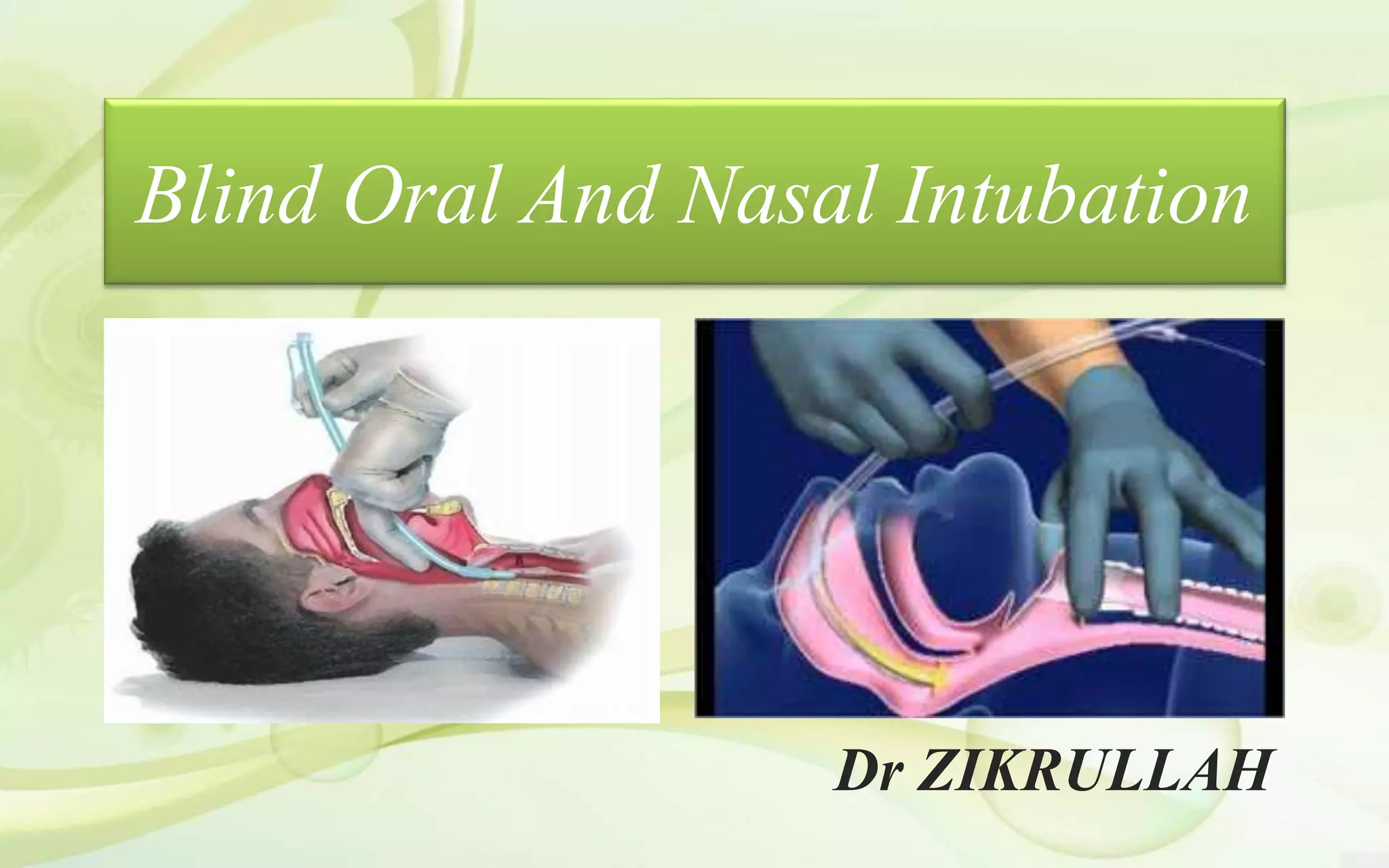






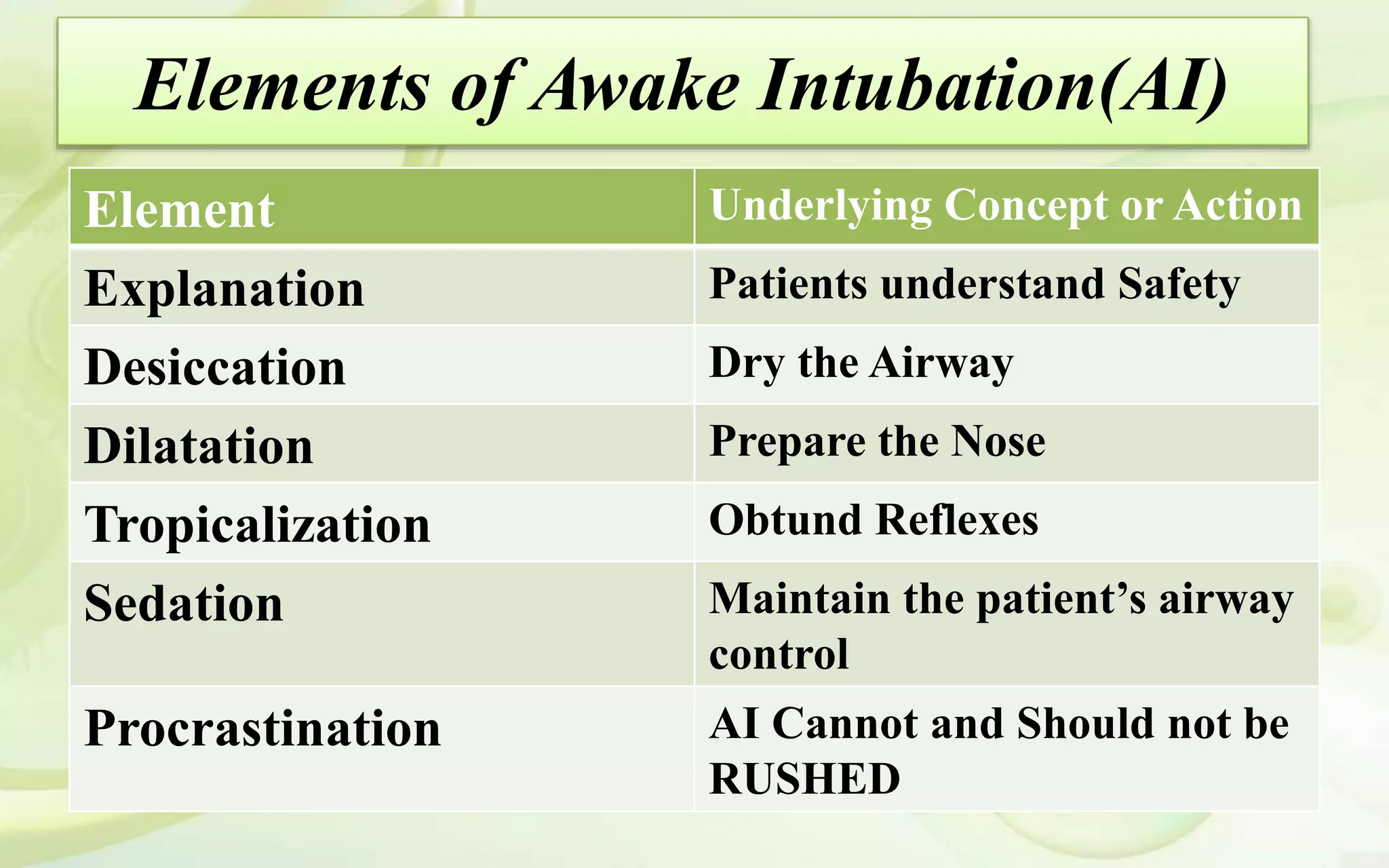





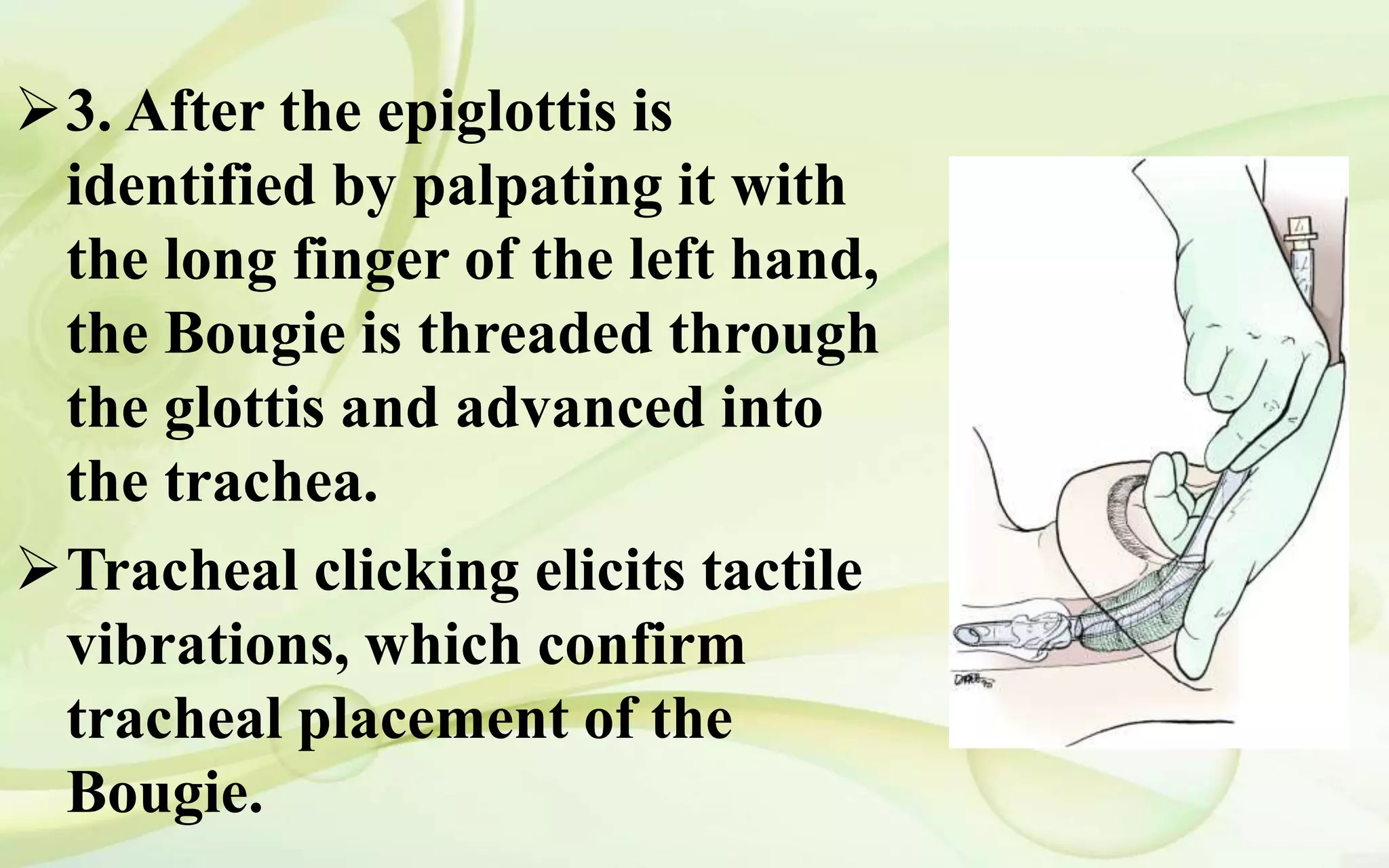

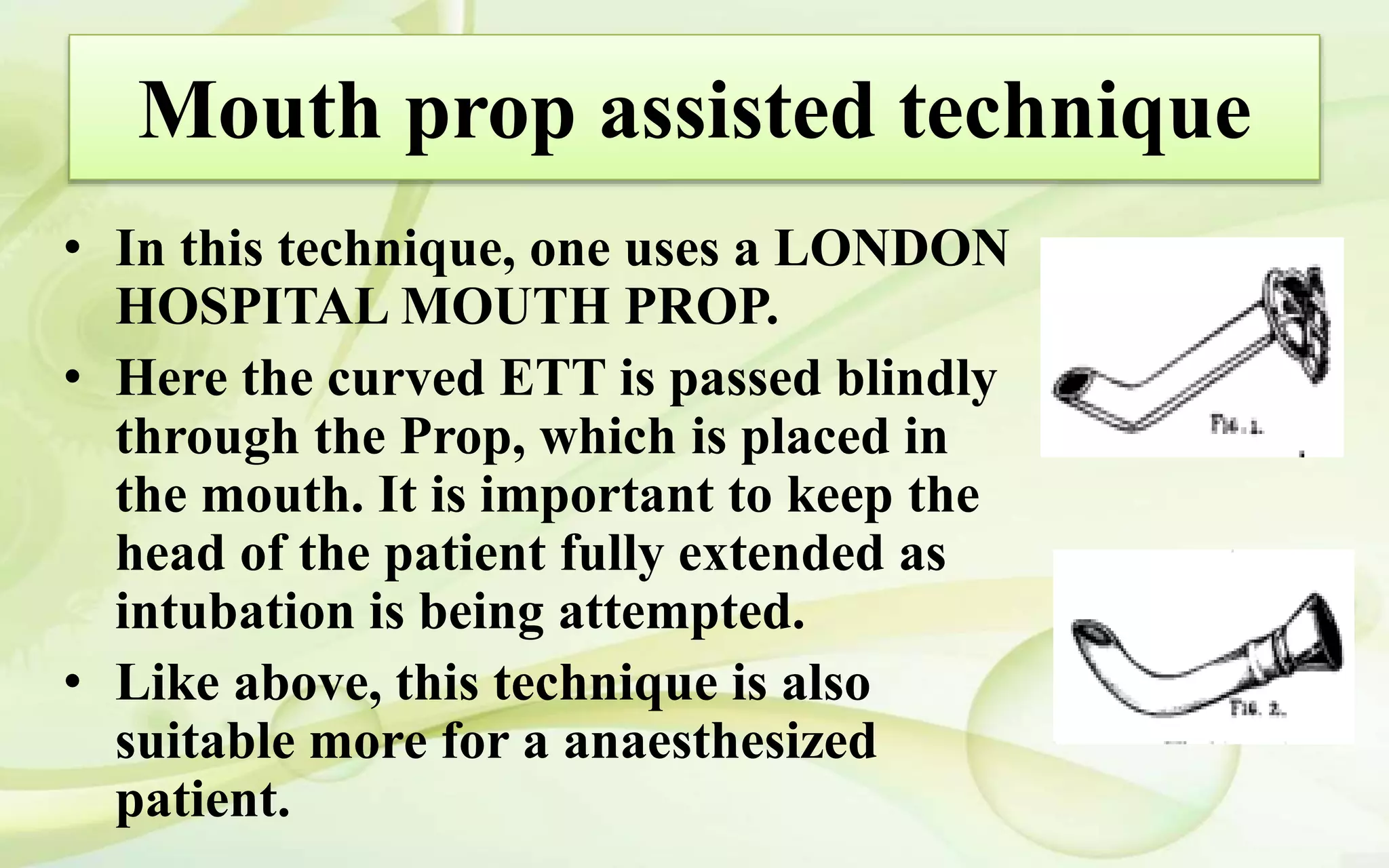











This document discusses blind oral and nasal intubation techniques. It notes that fiberoptic intubation has disadvantages and may not be available everywhere. Proper training in blind intubation techniques is important to reduce complications when advanced airway equipment is unavailable. Several blind intubation methods are described, including using a bougie, the operator's thumb, or a mouth prop to guide the endotracheal tube. Awake blind intubation requires patient preparation and sedation. Nasal intubation has specific indications and considerations. Overall the document provides guidance on performing blind intubations when direct laryngoscopy is not possible.


