1 
DIALYSIS AND 
ULTRAFILTRATION
2
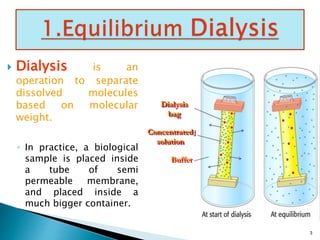
 Dialysis is an 
operation to separate 
dissolved molecules 
based on molecular 
weight. 
◦ In practice, a biological 
sample is placed inside 
a tube of semi 
permeable membrane, 
and placed inside a 
much bigger container. 
Dialysis 
bag 
Concentrated 
solution 
Buffer 
3
1. Only small molecules diffuse through the collodion 
membrane. 
2. At equilibrium, the concentration of small molecules is 
the same inside and outside the membrane. 
3. Macromolecules remain in the bag. 
4
 The only two variables in this method are: 
1. The type of membrane (most common are 
cellophane & cellulose) 
2. The size of pores or the molecular weight cut 
off. 
Only molecules or ions smaller than MWCO 
will move out of the dialysis bag. 
5
Advantage of dialysis 
1. Dialysis is still in use today for it is very simple and is still 
the only way to deal with large-volume samples. 
2. characterization of a candidate drug in serum binding 
assays or detailed study of antigen-antibody interactions 
3. proves to be the most accurate method available. 
4. inexpensive and easy to perform 
6
Disadvantage of dialysis 
 Slow process several hours for completion, and thus, has 
been replaced by gel filtration for most applications. 
Other forms of dialysis includes flow-dialysis and 
pressure-dialysis 
7
8 
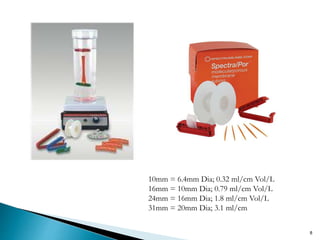
10mm = 6.4mm Dia; 0.32 ml/cm Vol/L 
16mm = 10mm Dia; 0.79 ml/cm Vol/L 
24mm = 16mm Dia; 1.8 ml/cm Vol/L 
31mm = 20mm Dia; 3.1 ml/cm
1. Removal of salts and low molecular weight compounds 
2. Buffer exchange 
3. Concentration of macromolecules 
4. Purification of biotechnological products 
5. Medical applications: kidney dialysis and Haemodialysis 
9
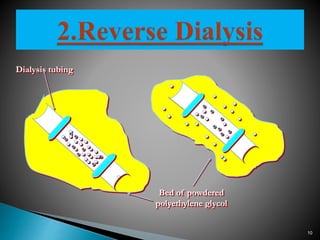
Dialysis tubing 
Bed of powdered 
polyethylene glycol 
10
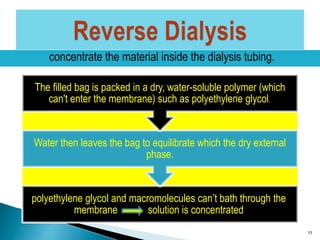
concentrate the material inside the dialysis tubing. 
The filled bag is packed in a dry, water-soluble polymer (which 
can't enter the membrane) such as polyethylene glycol. 
Water then leaves the bag to equilibrate which the dry external 
phase. 
polyethylene glycol and macromolecules can’t bath through the 
membrane solution is concentrated 
11
We must be careful when using reverse dialysis, this is 
because: 
1. Equilibrium is never reached. 
2. Water and salts are continually removed until the sample 
is totally dry. 
3. Most macromolecules become irreversibly bound to the 
dialysis tubing and hence, for all practical purposes they 
are lost. 
12
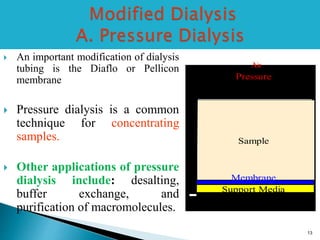
 An important modification of dialysis 
tubing is the Diaflo or Pellicon 
membrane 
 Pressure dialysis is a common 
technique for concentrating 
samples. 
 Other applications of pressure 
dialysis include: desalting, 
buffer exchange, and 
purification of macromolecules. 
Air 
Sample 
Support Media 
outlet 
Pressure 
Membrane 
13
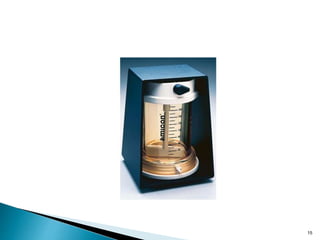
 The basic design is ultra filtration cell. 
 There are a wide variety of filters to choose from 
(materials and cut off limits). 
 The applied pressure can be gas (N2) pressure, 
centrifugation, or mechanical forces. 
 They have very thin polymer membranes. (0.1-1.0 
m). 
14
15
 Their pore size range from 2A-100A 
 The flow rate through these membranes is 
very low, so they are operated under 
pressure. 
 Either small or large molecules can be 
purified in this way 
16
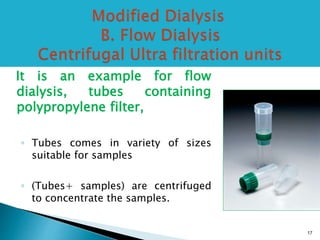
It is an example for flow 
dialysis, tubes containing 
polypropylene filter, 
◦ Tubes comes in variety of sizes 
suitable for samples 
◦ (Tubes+ samples) are centrifuged 
to concentrate the samples. 
17
◦ Simple, easy, and rapid 
◦ No stirring or foaming by N2 
◦ High quality materials to minimize non-specific 
binding 
18
◦ Concentrating and desalting of biological 
samples, especially small-volume 
samples 
◦ Buffer exchange 
19
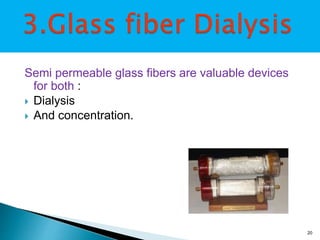
Semi permeable glass fibers are valuable devices 
for both : 
 Dialysis 
 And concentration. 
20
 They are fibers whose glass walls contain pores of 
controlled size 
 Molecules smaller than the pores pass freely 
through the wall of the fiber . 
 These fibers are usually used in bundles, thus 
providing a very large surface area. 
21
22
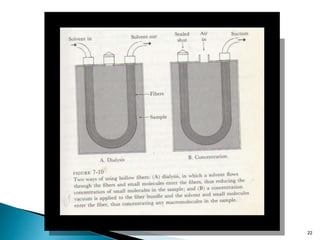
 A solvent flows through the fibers, a small 
molecules enter the fibers 
 Thus reducing the concentration of small 
molecules in the sample (purification) 
23
 Vacuum is applied to the filter bundle and the 
solvent and small molecules enter the fibers 
 Thus, concentrating any macromolecules in the 
sample 
24
25

Dialysis lecture 3

  • 1.
    1 DIALYSIS AND ULTRAFILTRATION
  • 2.
  • 3.
     Dialysis isan operation to separate dissolved molecules based on molecular weight. ◦ In practice, a biological sample is placed inside a tube of semi permeable membrane, and placed inside a much bigger container. Dialysis bag Concentrated solution Buffer 3
  • 4.
    1. Only smallmolecules diffuse through the collodion membrane. 2. At equilibrium, the concentration of small molecules is the same inside and outside the membrane. 3. Macromolecules remain in the bag. 4
  • 5.
     The onlytwo variables in this method are: 1. The type of membrane (most common are cellophane & cellulose) 2. The size of pores or the molecular weight cut off. Only molecules or ions smaller than MWCO will move out of the dialysis bag. 5
  • 6.
    Advantage of dialysis 1. Dialysis is still in use today for it is very simple and is still the only way to deal with large-volume samples. 2. characterization of a candidate drug in serum binding assays or detailed study of antigen-antibody interactions 3. proves to be the most accurate method available. 4. inexpensive and easy to perform 6
  • 7.
    Disadvantage of dialysis  Slow process several hours for completion, and thus, has been replaced by gel filtration for most applications. Other forms of dialysis includes flow-dialysis and pressure-dialysis 7
  • 8.
    8 10mm =6.4mm Dia; 0.32 ml/cm Vol/L 16mm = 10mm Dia; 0.79 ml/cm Vol/L 24mm = 16mm Dia; 1.8 ml/cm Vol/L 31mm = 20mm Dia; 3.1 ml/cm
  • 9.
    1. Removal ofsalts and low molecular weight compounds 2. Buffer exchange 3. Concentration of macromolecules 4. Purification of biotechnological products 5. Medical applications: kidney dialysis and Haemodialysis 9
  • 10.
    Dialysis tubing Bedof powdered polyethylene glycol 10
  • 11.
    concentrate the materialinside the dialysis tubing. The filled bag is packed in a dry, water-soluble polymer (which can't enter the membrane) such as polyethylene glycol. Water then leaves the bag to equilibrate which the dry external phase. polyethylene glycol and macromolecules can’t bath through the membrane solution is concentrated 11
  • 12.
    We must becareful when using reverse dialysis, this is because: 1. Equilibrium is never reached. 2. Water and salts are continually removed until the sample is totally dry. 3. Most macromolecules become irreversibly bound to the dialysis tubing and hence, for all practical purposes they are lost. 12
  • 13.
     An importantmodification of dialysis tubing is the Diaflo or Pellicon membrane  Pressure dialysis is a common technique for concentrating samples.  Other applications of pressure dialysis include: desalting, buffer exchange, and purification of macromolecules. Air Sample Support Media outlet Pressure Membrane 13
  • 14.
     The basicdesign is ultra filtration cell.  There are a wide variety of filters to choose from (materials and cut off limits).  The applied pressure can be gas (N2) pressure, centrifugation, or mechanical forces.  They have very thin polymer membranes. (0.1-1.0 m). 14
  • 15.
  • 16.
     Their poresize range from 2A-100A  The flow rate through these membranes is very low, so they are operated under pressure.  Either small or large molecules can be purified in this way 16
  • 17.
    It is anexample for flow dialysis, tubes containing polypropylene filter, ◦ Tubes comes in variety of sizes suitable for samples ◦ (Tubes+ samples) are centrifuged to concentrate the samples. 17
  • 18.
    ◦ Simple, easy,and rapid ◦ No stirring or foaming by N2 ◦ High quality materials to minimize non-specific binding 18
  • 19.
    ◦ Concentrating anddesalting of biological samples, especially small-volume samples ◦ Buffer exchange 19
  • 20.
    Semi permeable glassfibers are valuable devices for both :  Dialysis  And concentration. 20
  • 21.
     They arefibers whose glass walls contain pores of controlled size  Molecules smaller than the pores pass freely through the wall of the fiber .  These fibers are usually used in bundles, thus providing a very large surface area. 21
  • 22.
  • 23.
     A solventflows through the fibers, a small molecules enter the fibers  Thus reducing the concentration of small molecules in the sample (purification) 23
  • 24.
     Vacuum isapplied to the filter bundle and the solvent and small molecules enter the fibers  Thus, concentrating any macromolecules in the sample 24
  • 25.