 After desalting, the crude oil is pumped
through a series of heat exchanger and its
temperature raised to about 550°F (288°C ) by
heat exchange with product and reflux
streams.
 It is then further heated to about 750°F
(399°C ) in a furnace and charged to flash
zone of atmospheric fractionators.
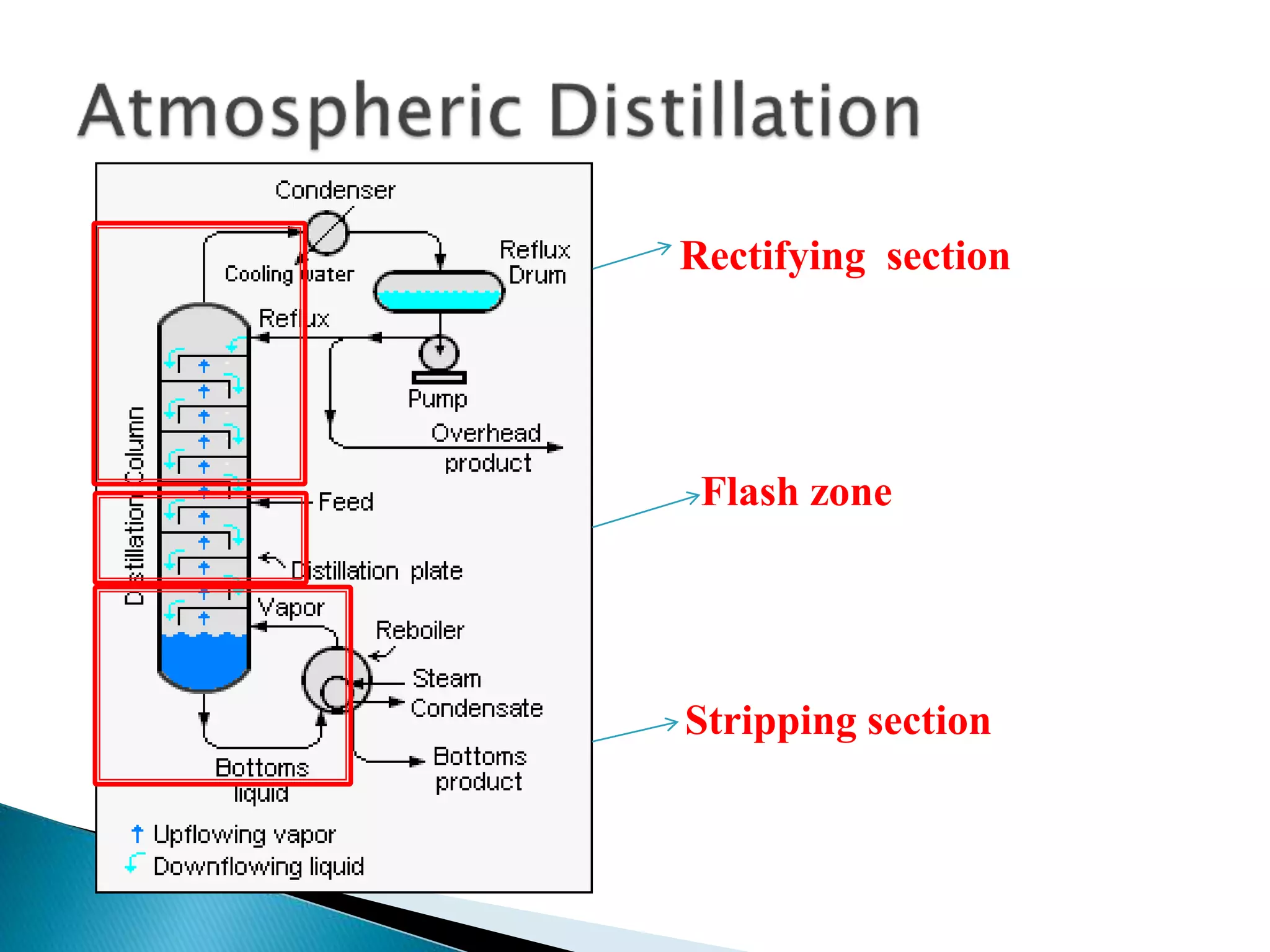
Rectifying section
Flash zone
Stripping section
 Reboilers are heat exchangers typically used
to provide heat to the bottom of
industrial distillation columns.
 They boil the liquid from the bottom of a
distillation column to generate vapors
which are returned to the column to drive
the distillation separation.
 In this reboiler type, steam flows
through the tube bundle and exits
as condensate.
 The liquid from the bottom of the
tower, commonly called
the bottoms, flows through the
shell side.
 There is a retaining wall separating
the tube bundle from the reboiler
section so that the tube bundle is
kept covered with liquid.
 The vapour moves up the
column, and as it exits the top of
the unit, it is cooled by
a condenser.
 The condensed liquid is stored
in a holding vessel known as the
reflux drum.
 Some of this liquid is recycled
back to the top of the column
called the reflux.
 The condensed liquid that is
removed from the system is
known as the top product.
 Temperature above 370-380 °C is not
favourable in atmospheric column as high
molecular weight compounds in crude will go
thermal cracking and form coke.
 Formation of coke will result in plugging
tubes
 Therefore residue from atm column is sent to
vacuum distillation column.
 In Vacuum distillation the pressure is reduced
to less than its vapor pressure (usually less
than atmospheric pressure) causing
evaporation of the most volatile liquid(s)
(those with the lowest boiling points).
 This distillation method works on the
principle that boiling occurs when the vapor
pressure of a liquid exceeds the ambient
pressure.
Distillation

Distillation

  • 2.
     After desalting,the crude oil is pumped through a series of heat exchanger and its temperature raised to about 550°F (288°C ) by heat exchange with product and reflux streams.  It is then further heated to about 750°F (399°C ) in a furnace and charged to flash zone of atmospheric fractionators.
  • 4.
  • 5.
     Reboilers areheat exchangers typically used to provide heat to the bottom of industrial distillation columns.  They boil the liquid from the bottom of a distillation column to generate vapors which are returned to the column to drive the distillation separation.
  • 6.
     In thisreboiler type, steam flows through the tube bundle and exits as condensate.  The liquid from the bottom of the tower, commonly called the bottoms, flows through the shell side.  There is a retaining wall separating the tube bundle from the reboiler section so that the tube bundle is kept covered with liquid.
  • 7.
     The vapourmoves up the column, and as it exits the top of the unit, it is cooled by a condenser.  The condensed liquid is stored in a holding vessel known as the reflux drum.  Some of this liquid is recycled back to the top of the column called the reflux.  The condensed liquid that is removed from the system is known as the top product.
  • 9.
     Temperature above370-380 °C is not favourable in atmospheric column as high molecular weight compounds in crude will go thermal cracking and form coke.  Formation of coke will result in plugging tubes  Therefore residue from atm column is sent to vacuum distillation column.
  • 10.
     In Vacuumdistillation the pressure is reduced to less than its vapor pressure (usually less than atmospheric pressure) causing evaporation of the most volatile liquid(s) (those with the lowest boiling points).  This distillation method works on the principle that boiling occurs when the vapor pressure of a liquid exceeds the ambient pressure.