WHY? Know the specific pathophysiology Know the natural history (prognosticate) Inform patient of the diagnosis Appropriate investigation Treatment Communication within medical profession DIAGNOSTIC PROCESS IN PRIMARY CARE
‘ Disease-centered diagnosis’ ‘ Patient-centered diagnosis’ –  includes the patient’s thoughts and feelings concerning their complaints
WHAT IF WE CANNOT MAKE A DIAGNOSIS? sometimes impossible to make a diagnosis ‘ diagnosis’ then can be expressed in the form of the patient’s problems Nature of Primary Care Front line of medicine Undifferentiated symptoms Varying degrees of severity Using time as a waiting tool
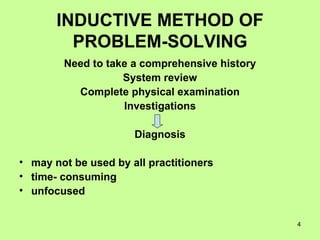
INDUCTIVE METHOD OF PROBLEM-SOLVING Need to take a comprehensive history System review Complete physical examination Investigations Diagnosis may not be used by all practitioners time- consuming unfocused
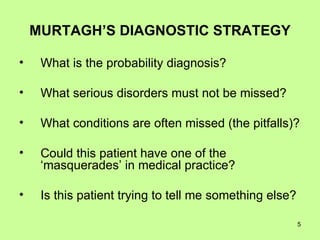
MURTAGH’S DIAGNOSTIC STRATEGY What is the probability diagnosis? What serious disorders must not be missed? What conditions are often missed (the pitfalls)? Could this patient have one of the ‘masquerades’ in medical practice? Is this patient trying to tell me something else?
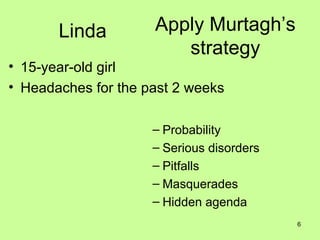
Apply Murtagh’s strategy Probability Serious disorders Pitfalls Masquerades Hidden agenda Linda 15-year-old girl Headaches for the past 2 weeks
Serious ‘not to be missed’ conditions Neoplasia, especially malignancy HIV infection/AIDS Asthma Severe infections, especially: Meningoencephalitis Septicaemia Epiglottis Infective endocarditis Coronary disease Myocardial infarction Unstable angina Arrthymias Imminent or potential suicide Intracerebral lesions, eg SAH Ectopic pregnancy
Classic pitfalls   Abscess (hidden) Allergies Candida infection Chronic fatigue syndrome Domestic abuse including child abuse Drugs Herpes zoster Faecal impaction Foreign bodies Malnutrition (unsuspected) Menopause syndrome Migraine (atypical variants) Pregnancy (early) Seizure disorders Urinary infection
Seven primary masquerades Depression Diabetes mellitus Drugs Iatrogenic Self-abuse Alcohol Narcotics Nicotine Others Anemia Thyroid and other endocrine disorders Hyperthyroidism Hypothyroidism Spinal dysfunction Urinary infection
Is the patient trying to tell me something? Family conflict Sick or deceased friends/relatives Fear of malignancy STDS/HIV Impending “heart attack” Sexual problem
The exceptional potential in each primary care consultation [Stott & Davis] A ACUTE presenting problems B BEHAVIORAL modification of health seeking behaviours C CHRONIC continuing problems D DISEASE PREVENTION opportunistic health promotion
Puan Esah is a 53-year-old housewife who has come to see the doctor with runny nose and low grade fever for 2 days. She has been taking honey to soothe her throat. She is a known diabetic patient. A – acute – runny nose and fever B – behavioural – honey C – chronic – diabetes D – disease prevention – hypertension, menopause

Diagnostic Process

  • 1.
    WHY? Know thespecific pathophysiology Know the natural history (prognosticate) Inform patient of the diagnosis Appropriate investigation Treatment Communication within medical profession DIAGNOSTIC PROCESS IN PRIMARY CARE
  • 2.
    ‘ Disease-centered diagnosis’‘ Patient-centered diagnosis’ – includes the patient’s thoughts and feelings concerning their complaints
  • 3.
    WHAT IF WECANNOT MAKE A DIAGNOSIS? sometimes impossible to make a diagnosis ‘ diagnosis’ then can be expressed in the form of the patient’s problems Nature of Primary Care Front line of medicine Undifferentiated symptoms Varying degrees of severity Using time as a waiting tool
  • 4.
    INDUCTIVE METHOD OFPROBLEM-SOLVING Need to take a comprehensive history System review Complete physical examination Investigations Diagnosis may not be used by all practitioners time- consuming unfocused
  • 5.
    MURTAGH’S DIAGNOSTIC STRATEGYWhat is the probability diagnosis? What serious disorders must not be missed? What conditions are often missed (the pitfalls)? Could this patient have one of the ‘masquerades’ in medical practice? Is this patient trying to tell me something else?
  • 6.
    Apply Murtagh’s strategyProbability Serious disorders Pitfalls Masquerades Hidden agenda Linda 15-year-old girl Headaches for the past 2 weeks
  • 7.
    Serious ‘not tobe missed’ conditions Neoplasia, especially malignancy HIV infection/AIDS Asthma Severe infections, especially: Meningoencephalitis Septicaemia Epiglottis Infective endocarditis Coronary disease Myocardial infarction Unstable angina Arrthymias Imminent or potential suicide Intracerebral lesions, eg SAH Ectopic pregnancy
  • 8.
    Classic pitfalls Abscess (hidden) Allergies Candida infection Chronic fatigue syndrome Domestic abuse including child abuse Drugs Herpes zoster Faecal impaction Foreign bodies Malnutrition (unsuspected) Menopause syndrome Migraine (atypical variants) Pregnancy (early) Seizure disorders Urinary infection
  • 9.
    Seven primary masqueradesDepression Diabetes mellitus Drugs Iatrogenic Self-abuse Alcohol Narcotics Nicotine Others Anemia Thyroid and other endocrine disorders Hyperthyroidism Hypothyroidism Spinal dysfunction Urinary infection
  • 10.
    Is the patienttrying to tell me something? Family conflict Sick or deceased friends/relatives Fear of malignancy STDS/HIV Impending “heart attack” Sexual problem
  • 11.
    The exceptional potentialin each primary care consultation [Stott & Davis] A ACUTE presenting problems B BEHAVIORAL modification of health seeking behaviours C CHRONIC continuing problems D DISEASE PREVENTION opportunistic health promotion
  • 12.
    Puan Esah isa 53-year-old housewife who has come to see the doctor with runny nose and low grade fever for 2 days. She has been taking honey to soothe her throat. She is a known diabetic patient. A – acute – runny nose and fever B – behavioural – honey C – chronic – diabetes D – disease prevention – hypertension, menopause