
DPP – 4 Inhibitors :
Mechanism of Action& Role
in DM - 2 Management
Dr. Arun Sharma
BRIEF INTRODUCTION : T2DM
 Prevalent chronic healthcare disease with a significant
global disease burden.
 Achieving specific glycemic goals substantially
reduces morbidity & have made the effective treatment
of hyperglycemia a top priority.
 Intensive glycemic control has a powerful beneficial
effect on diabetes-specific complications.
 Development of new classes of blood glucose-
lowering medications has increased the number of
treatment options.
DPP-4 Inhibitors : A Novel
approach in T2DM Management
 DPP 4 inhibitors inhibit the breakdown of Incretin peptide hormones
and increase the Incretin effect in patients with type 2 DM.
 Their development was based on observations that factors
secreted from gut participated in regulation of pancreatic endocrine
secretion.These gut factors were termed “Incretins”.
 Two Incretin peptide hormones have been identified in
humans,namely Glucose dependent insulin releasing polypeptide
(GIP) and Glucagon like peptide -1 (GLP-1)
 Incretins are rapidly inactivated by dipeptidyl peptidase-4 (DPP-4).
The DPP-4 inhibitors prolong the action of endogenous incretins,
enhancing the first-phase insulin response.
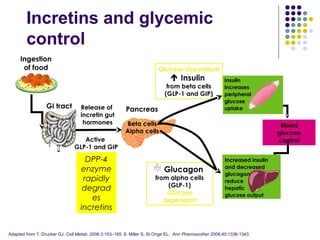
Incretins and glycemic
control
Adapted from 7. Drucker DJ. Cell Metab. 2006;3:153–165. 8. Miller S, St Onge EL. Ann Pharmacother 2006;40:1336-1343.
Active
GLP-1 and GIP
Release of
incretin gut
hormones
Pancreas
Blood
glucose
control
GI tract
 Glucagon
from alpha cells
(GLP-1)
Glucose
dependent
Alpha cells
Increased insulin
and decreased
glucagon
reduce
hepatic
glucose output
Glucose dependent
 Insulin
from beta cells
(GLP-1 and GIP)
Beta cells
Insulin
increases
peripheral
glucose
uptake
Ingestion
of food
DPP-4
enzyme
rapidly
degrad
es
incretins
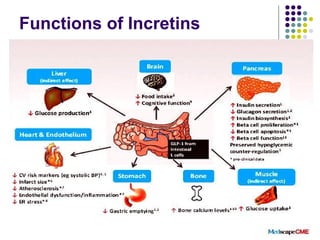
Functions of Incretins
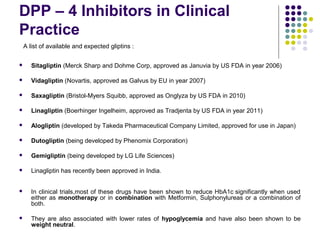
DPP – 4 Inhibitors in Clinical
Practice
A list of available and expected gliptins :
 Sitagliptin (Merck Sharp and Dohme Corp, approved as Januvia by US FDA in year 2006)
 Vidagliptin (Novartis, approved as Galvus by EU in year 2007)
 Saxagliptin (Bristol-Myers Squibb, approved as Onglyza by US FDA in 2010)
 Linagliptin (Boerhinger Ingelheim, approved as Tradjenta by US FDA in year 2011)
 Alogliptin (developed by Takeda Pharmaceutical Company Limited, approved for use in Japan)
 Dutogliptin (being developed by Phenomix Corporation)
 Gemigliptin (being developed by LG Life Sciences)
 Linagliptin has recently been approved in India.
 In clinical trials,most of these drugs have been shown to reduce HbA1c significantly when used
either as monotherapy or in combination with Metformin, Sulphonylureas or a combination of
both.
 They are also associated with lower rates of hypoglycemia and have also been shown to be
weight neutral.
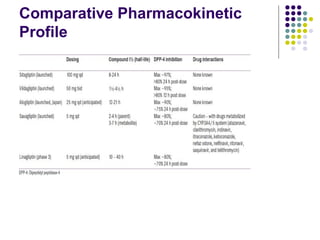
Comparative Pharmacokinetic
Profile
Advantages of Using DPP – 4
Inhibitors
 As Monotherapy : Shown to be equally efficacious as compared to other
antidiabetic agents with added advantage of lesser incidence of
hypoglycemia and being weight neutral.
 As Initiation Therapy : Can be safely coupled with Metformin as an Inititaion
therapy as per the latest guidelines (ADA guideline)
 Insulin dose can be reduced if given with gliptins as a combination therapy.
 No significant drug – drug interaction with other drugs so can be given
safely with anti-hypertensives,anti-hyperlipidemics & antibiotics.
 Cardiac friendly profile :Studies suggest that DPP-4 inhibitors have a
cardiovascular friendly profile. Preclinical studies have suggested
endothelial benefit, anti-atherosclerotic effects and blood pressure lowering
effects.
Advantages of Using DPP – 4
Inhibitors : Continued
 Safe in Hepatic Inefficiency : For patients with hepatic
insufficiency, except for vildagliptin, no dose adjustment
is necessary for gliptins.
 Safe in Renal Insufficiency :Linagliptin is safe in renal
insufficiency.Other gliptins can be used safely with dose
adjustments.
 Well Tolerated in most people with not much significant
adverse event profile.
Conclusion
 Need for newer medications in T2DM
Management.
 DPP - 4 Inhibitors offer a promising treatment
modality in T2DM.
 Need for continued research to evaluate long
term safety and adverse event profile in
patients.
References
 Indian Journal Of Endocrinology &
Metabolism 2011 Oct-Dec; 15(4): 298–308.
 www.Diabetesincontrol.com
 www.diabetesjournals.org
 www.qjmed.oxfordjournals.org
THANK YOU
Dr. Arun Sharma
M.B.B.S.

Dpp – 4 inhibitors

  • 1.
    DPP – 4Inhibitors : Mechanism of Action& Role in DM - 2 Management Dr. Arun Sharma
  • 2.
    BRIEF INTRODUCTION :T2DM  Prevalent chronic healthcare disease with a significant global disease burden.  Achieving specific glycemic goals substantially reduces morbidity & have made the effective treatment of hyperglycemia a top priority.  Intensive glycemic control has a powerful beneficial effect on diabetes-specific complications.  Development of new classes of blood glucose- lowering medications has increased the number of treatment options.
  • 3.
    DPP-4 Inhibitors :A Novel approach in T2DM Management  DPP 4 inhibitors inhibit the breakdown of Incretin peptide hormones and increase the Incretin effect in patients with type 2 DM.  Their development was based on observations that factors secreted from gut participated in regulation of pancreatic endocrine secretion.These gut factors were termed “Incretins”.  Two Incretin peptide hormones have been identified in humans,namely Glucose dependent insulin releasing polypeptide (GIP) and Glucagon like peptide -1 (GLP-1)  Incretins are rapidly inactivated by dipeptidyl peptidase-4 (DPP-4). The DPP-4 inhibitors prolong the action of endogenous incretins, enhancing the first-phase insulin response.
  • 4.
    Incretins and glycemic control Adaptedfrom 7. Drucker DJ. Cell Metab. 2006;3:153–165. 8. Miller S, St Onge EL. Ann Pharmacother 2006;40:1336-1343. Active GLP-1 and GIP Release of incretin gut hormones Pancreas Blood glucose control GI tract  Glucagon from alpha cells (GLP-1) Glucose dependent Alpha cells Increased insulin and decreased glucagon reduce hepatic glucose output Glucose dependent  Insulin from beta cells (GLP-1 and GIP) Beta cells Insulin increases peripheral glucose uptake Ingestion of food DPP-4 enzyme rapidly degrad es incretins
  • 5.
  • 6.
    DPP – 4Inhibitors in Clinical Practice A list of available and expected gliptins :  Sitagliptin (Merck Sharp and Dohme Corp, approved as Januvia by US FDA in year 2006)  Vidagliptin (Novartis, approved as Galvus by EU in year 2007)  Saxagliptin (Bristol-Myers Squibb, approved as Onglyza by US FDA in 2010)  Linagliptin (Boerhinger Ingelheim, approved as Tradjenta by US FDA in year 2011)  Alogliptin (developed by Takeda Pharmaceutical Company Limited, approved for use in Japan)  Dutogliptin (being developed by Phenomix Corporation)  Gemigliptin (being developed by LG Life Sciences)  Linagliptin has recently been approved in India.  In clinical trials,most of these drugs have been shown to reduce HbA1c significantly when used either as monotherapy or in combination with Metformin, Sulphonylureas or a combination of both.  They are also associated with lower rates of hypoglycemia and have also been shown to be weight neutral.
  • 7.
  • 8.
    Advantages of UsingDPP – 4 Inhibitors  As Monotherapy : Shown to be equally efficacious as compared to other antidiabetic agents with added advantage of lesser incidence of hypoglycemia and being weight neutral.  As Initiation Therapy : Can be safely coupled with Metformin as an Inititaion therapy as per the latest guidelines (ADA guideline)  Insulin dose can be reduced if given with gliptins as a combination therapy.  No significant drug – drug interaction with other drugs so can be given safely with anti-hypertensives,anti-hyperlipidemics & antibiotics.  Cardiac friendly profile :Studies suggest that DPP-4 inhibitors have a cardiovascular friendly profile. Preclinical studies have suggested endothelial benefit, anti-atherosclerotic effects and blood pressure lowering effects.
  • 9.
    Advantages of UsingDPP – 4 Inhibitors : Continued  Safe in Hepatic Inefficiency : For patients with hepatic insufficiency, except for vildagliptin, no dose adjustment is necessary for gliptins.  Safe in Renal Insufficiency :Linagliptin is safe in renal insufficiency.Other gliptins can be used safely with dose adjustments.  Well Tolerated in most people with not much significant adverse event profile.
  • 10.
    Conclusion  Need fornewer medications in T2DM Management.  DPP - 4 Inhibitors offer a promising treatment modality in T2DM.  Need for continued research to evaluate long term safety and adverse event profile in patients.
  • 11.
    References  Indian JournalOf Endocrinology & Metabolism 2011 Oct-Dec; 15(4): 298–308.  www.Diabetesincontrol.com  www.diabetesjournals.org  www.qjmed.oxfordjournals.org
  • 12.
    THANK YOU Dr. ArunSharma M.B.B.S.

Editor's Notes

  • #5 Drucker DJ. The biology of incretin hormones. Cell Metabolism 2006;3:153-165. Miller S, St Onge EL. Sitagliptin: A dipeptidyl peptidase IV inhibitor for the treatment of type 2 diabetes. Ann Pharmacother 2006;40:1336-1343.