BIPOLAR
DISORDER
BIPOLAR
DISORDER
Bipolar disorder is
characterized by
mood swings from
profound depression
to extreme
euphoria(mania) with
intervening period of
normalcy
DEFINITION
• BPAD is characterized by recurrent
episodes of mania and depression in
the same patient at different times
.Typically the patient experiences
extreme heights (mania/hypomania)
alternating with extreme lows
(depression), Interspersed between the
heights and lows are the periods of
normal mood.
CLASSIFICATION
• F31.0- BPAD, current episode mania
• F31.1- BPAD, current episode mania without
psychotic symptoms
• 31.2- BPAD, current episode mania with psychotic
symptoms
• F31.3- BPAD, current episode mild or moderate
depression
• F31.4- BPAD, current episode severe depression
without psychotic symptoms
• F31.5- BPAD, current episode severe depression with
psychotic symptoms
• F31.6- BPAD, current episode mixed.
ETIOLOGY
• Etiology of Bipolar depression
– Biological theories
• Genetics
• Biochemical influences
• Neuro endocrine disturbances
• Physiological influences
Etiology of Bipolar depression
• Psychosocial theories
– Psychoanalytic Theory
– Behavioral theory
– Sociological theory
– Cognitive theory
ETIOLOGY OF BIPOLAR MANIA
• Biological theories
• Psychosocial theories
BIPOLAR DISORDER MIXED
• symptom presentation includes rapidly
alternating moods - sadness , irritability
, euphoria, accompanied by symptoms
associated with depression and mania.
• This disturbance is severe enough to
cause marked impairment in social and
occupational functioning .Require
hospitalization
• Psychotic features present .
BIPOLAR 1 DISORDER
• Manic and depressive episodes
BIPOLAR 2 DISORDER
• Hypo manic and depressed
CYCLOTHYMIC DISORDER
• Characterized by short periods of mild
depression alternating with short
periods of hypomania; between the
manic and depressive episode there will
be brief periods of normal mood occur.
• Manic and depressive episode is short
and less severe than those in bipolar 1
and bipolar 2 disorder.
CLINICAL FEATURES
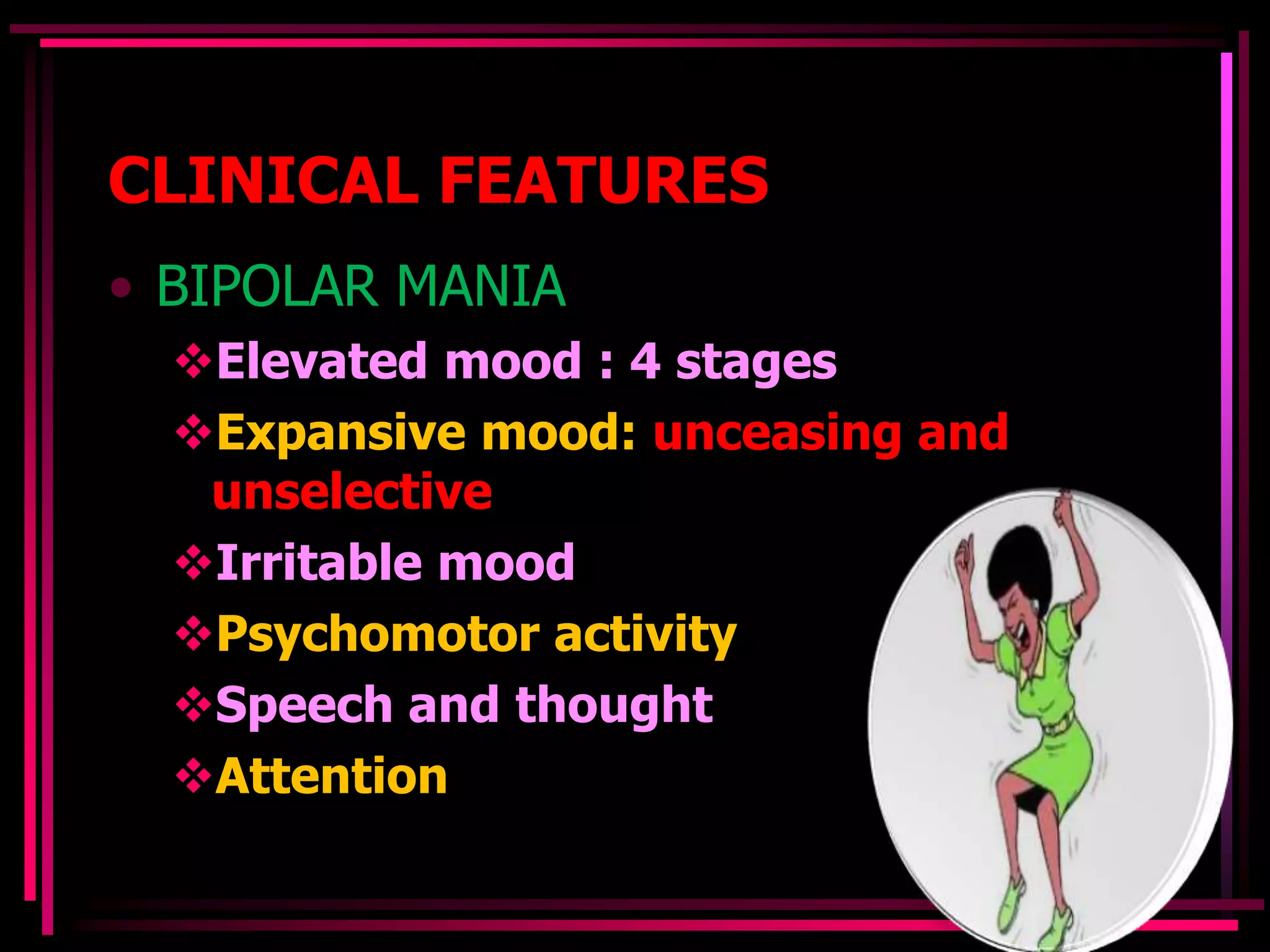
• BIPOLAR MANIA
Elevated mood : 4 stages
Expansive mood: unceasing and
unselective
Irritable mood
Psychomotor activity
Speech and thought
Attention
CLINICAL FEATURES
• BIPOLAR DEPRESSION
– DEPRESSED MOOD
– DEPRESSIVE COGNITIONS
• Hopelessness
• Helplessness
• Worthlessness
• Unreasonable guilty feeling
• Self blame
BIPOLAR DEPRESSION
• SUICIDAL THOUGHTS:
• PSYCHOMOTOR ACTIVITY:
– Psychomotor retardation
– Thinks, walks and acts slowly
– Monotonous
– Delay in answering questions
BIPOLAR DEPRESSION
• Somatic symptoms
– Significant decrease in appetite or weight
– Early morning awakening
– Pervasive lack of interest and lack of reactivity to
pleasurable stimuli
– Posture is stooped
– Reddened eyes from crying
– Persons look 10 years older than their
chronological age.
– Constipation and anorexia
– dry mouth, headache, sleep disturbance, fatigue
and lowered libido
DIAGNOSIS
• ICD 10 diagnostic criteria
• Based on signs and symptoms
COURSE OF ILLNESS
• Average manic episode lasts for 3-4
months and a depressive episode lasts
for 4-9 months.
TREATMENT
NURSING MANAGEMENT
ASSESSMENT
NURSING DIAGNOSIS
• DEPRESSIVE EPISODE
• MANIC EPISODE
THANK YOU

Bipolar disorder

  • 1.
  • 2.
    BIPOLAR DISORDER Bipolar disorder is characterizedby mood swings from profound depression to extreme euphoria(mania) with intervening period of normalcy
  • 3.
    DEFINITION • BPAD ischaracterized by recurrent episodes of mania and depression in the same patient at different times .Typically the patient experiences extreme heights (mania/hypomania) alternating with extreme lows (depression), Interspersed between the heights and lows are the periods of normal mood.
  • 4.
    CLASSIFICATION • F31.0- BPAD,current episode mania • F31.1- BPAD, current episode mania without psychotic symptoms • 31.2- BPAD, current episode mania with psychotic symptoms • F31.3- BPAD, current episode mild or moderate depression • F31.4- BPAD, current episode severe depression without psychotic symptoms • F31.5- BPAD, current episode severe depression with psychotic symptoms • F31.6- BPAD, current episode mixed.
  • 5.
    ETIOLOGY • Etiology ofBipolar depression – Biological theories • Genetics • Biochemical influences • Neuro endocrine disturbances • Physiological influences
  • 6.
    Etiology of Bipolardepression • Psychosocial theories – Psychoanalytic Theory – Behavioral theory – Sociological theory – Cognitive theory
  • 7.
    ETIOLOGY OF BIPOLARMANIA • Biological theories • Psychosocial theories
  • 8.
    BIPOLAR DISORDER MIXED •symptom presentation includes rapidly alternating moods - sadness , irritability , euphoria, accompanied by symptoms associated with depression and mania. • This disturbance is severe enough to cause marked impairment in social and occupational functioning .Require hospitalization • Psychotic features present .
  • 9.
    BIPOLAR 1 DISORDER •Manic and depressive episodes
  • 10.
    BIPOLAR 2 DISORDER •Hypo manic and depressed
  • 11.
    CYCLOTHYMIC DISORDER • Characterizedby short periods of mild depression alternating with short periods of hypomania; between the manic and depressive episode there will be brief periods of normal mood occur. • Manic and depressive episode is short and less severe than those in bipolar 1 and bipolar 2 disorder.
  • 12.
    CLINICAL FEATURES • BIPOLARMANIA Elevated mood : 4 stages Expansive mood: unceasing and unselective Irritable mood Psychomotor activity Speech and thought Attention
  • 13.
    CLINICAL FEATURES • BIPOLARDEPRESSION – DEPRESSED MOOD – DEPRESSIVE COGNITIONS • Hopelessness • Helplessness • Worthlessness • Unreasonable guilty feeling • Self blame
  • 14.
    BIPOLAR DEPRESSION • SUICIDALTHOUGHTS: • PSYCHOMOTOR ACTIVITY: – Psychomotor retardation – Thinks, walks and acts slowly – Monotonous – Delay in answering questions
  • 15.
    BIPOLAR DEPRESSION • Somaticsymptoms – Significant decrease in appetite or weight – Early morning awakening – Pervasive lack of interest and lack of reactivity to pleasurable stimuli – Posture is stooped – Reddened eyes from crying – Persons look 10 years older than their chronological age. – Constipation and anorexia – dry mouth, headache, sleep disturbance, fatigue and lowered libido
  • 16.
    DIAGNOSIS • ICD 10diagnostic criteria • Based on signs and symptoms
  • 17.
    COURSE OF ILLNESS •Average manic episode lasts for 3-4 months and a depressive episode lasts for 4-9 months.
  • 18.
  • 19.
  • 20.
  • 21.
  • 22.
  • 23.