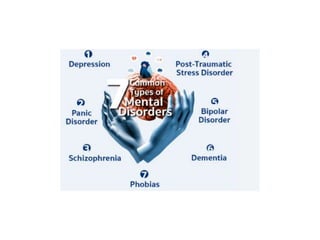
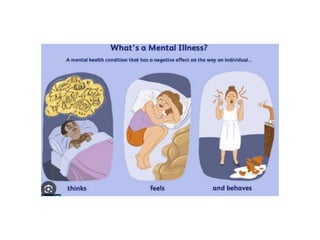
Psychiatric Disorders
Presented by Miss Sudipta Roy
Associate Professor
East Point College of Pharmacy Bangalore
Depression.
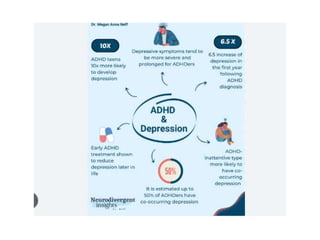
• Depression is an illness marked by feeling of
sadness , worthlessness or hopelessness, as well as
problems concentrating and remembering details.
• Depression is a mood disorder that causes a
persistent feeling of sadness and loss of interest.
Also called major depressive disorder or clinical
depression , it affects how you feel , think and
behave and can lead to a variety of emotional and
physical problems.
What is depression?
• Depression is a common but serious illness
• Pathology depression refers to change in mood state.
• Depression means feelings of blue or extreme sadness
that can last for a longer time .
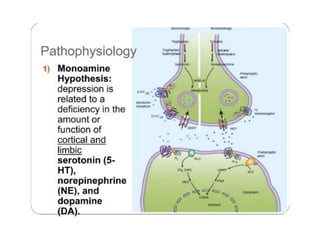
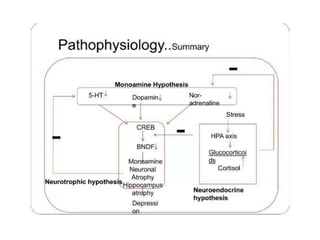
• Depression is precipitated due to deficiency of
monoamines neurotransmitters.
• Neurotransmitters : Nor adrenaline , Serotonine ,
Dopamine , 5-Hydroxy tryptophan (5-HT)
• Major depression is characterized by symptoms like sad
mood , loss of interest and pleasure , low energy ,
worthlessness , guilt, psychomotor retardation, chage in
mode of sleep , suicidal thought.
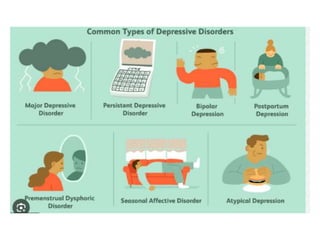
• Types of Depression.
• Bipolar Disorder.
• Major depressive disorder and persistent
depressive disorder are the primary types of
depression.
• A person who experiences alternating states of
depression and mania (abnormal elevation of mood
) or hypomania (distinct, though not necessarily
abnormal elevation of mood ) is said to suffer from
bipolar disorder.
• Major depressive disorder.
• Major depressive disorder is characterized by
severe symptoms that disruptthe individual's daily
life , typically with effects on appetite , sleep , work
or the ability to enjoy life.
• Episodes of major depression at any age and may
occur once or multiple times in an affected person's
life.
• Persistent depressive disorder :
• Persistent depressive disorder involves symptoms
that last two more years , sometimes marked by
episodes of major depression.
• Postpartum depression:
• Postpartum depression develops in women in the
period following childbirth symptoms include anxiety
, a lack of interest in caring for the infant , and
feelings of sadness , hopelessness or inadequacy.
• Postpartum depression is longer lasting and more
severe than that 'baby blues' a common condition
among women after childbirth that typically
involves mood swings , feelings of sadness and
crying spells.
• Psychotic depression.
• Psychotic depression arises against a background of
psychosis , which may involve symptoms of
delusion, hallucinations or paranoia.
• Seasonal affective disorder.
• Seasonal affective disorder is characterized by the
onset of depressive symptoms in autumn and winter ,
which are alleviated with increased exposure to natural
light in spring and summer.
• Cyclothymic disorder.
• Cyclothymic disorder is often described as a milder
form of bipolar disorder.
• The person experiences chronic fluctuating moods over
at least two years, involving periods of hypomania (a
mild to moderate level of mania) and periods of
depressive symptoms, with very short periods (no more
than two months ) of normality between.
• The duration of symptoms are shorter , less severe
and not as regular and therefore don't fit the
criteria of bipolar disorder or major depression.
• Dysthymic disorder :
• The symptoms of dysthymia are similar to those of
major depression but are less severe.
• However , in the case of dysthymia , symptoms last
longer.
• A person has to have this milder depression for
more than two years to be diagnosed with
dysthymia.
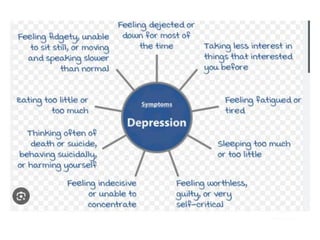
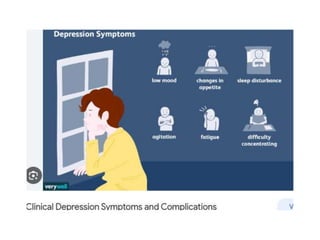
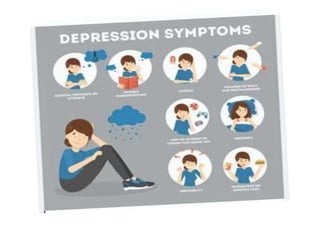
• Clinical Manifestation.
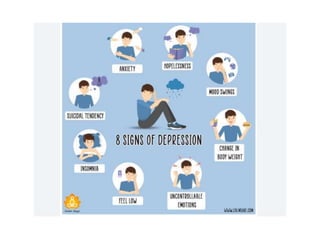
• Depression symptoms can vary from mild to severe
and can include :
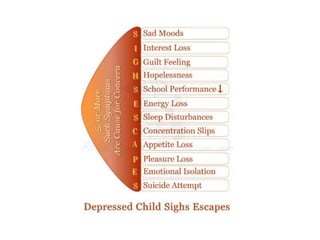
• Persistent sad , anxious or empty mood.
• Feeling of hopelessness or pessimism
• Irritability
• Feeling of guilt , worthlessness or helplessness
• Loss of interest or pleasure in hobbies and activities
• Decreased energy or fatigue
• Moving or talking more slowly
• Feeling restlessness or having trouble sitting still
• Difficulty concentrating , remembering or making
decisions
• Difficulty sleeping , early morning awakening or
oversleeping
• Appetite and or weight changes
• Thoughts of death or suicide or suicide attempts
• Aches or pains , headaches , cramps or digestive
problems without a clear physical cause and or that
do not ease even with treatment.
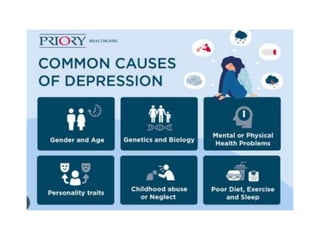
• Etiology.
• It's not known exactly what causes depression. As with
many mental disorders , a variety of factors may be
involved , such as :
• Biological differences : People with depression appear to
have physical changes in their brains.The significance of
these changes is still uncertain , but may eventually help
pinpoint causes.
• Brain chemistry : Neurotransmitters are naturally
occurring brain chemicals that likely play a role in
depression . Recent research indicates that changes in the
function and effect of these neurotransmitters and how
they interact with neurocircuits involved in maintaining
mood stability may play a significant role in depression
and its treatment.
• Hormones :
• Changes in the body's blance of hormones may be
involved in causing or triggering depression.
Hormone changes can result with pregnancy and
during the weeks or months after delivery
(postpartum) and from thyroid problems ,
menopause or number of other conditions.
• Inherited traits :
• Depression is more common in peolple whose
blood relatives also have this condition .
Reaserchers are trying to find genes that may be
involved in causing depression.
• Pathophysiology.
• Even though there are numerous studies
attempting to shed light on the pathophysiology of
depression , it still remains exclusive . There are
diverse theories on the pathogenesis of depression
most based on meaurement of indirect markers ,
post-mortem studies and neuro-imaging
techniques -
• A) Neural circuitry of depression :
• Various structural and functional studies report
abnormalities in the ares of the brain that are
responsible for the regulation of mood , reward
• Post-mortem and neuro-imaging studies have
reported morphological changes indicated by
reductions in grey-matter volume and glial density
in the prefrontal cortex and the hippocampus.
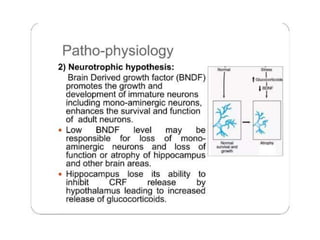
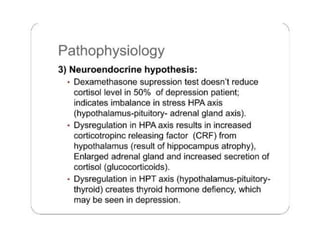
• The decline in hippocampal function , which is
believed to have an ihibitory effect on the
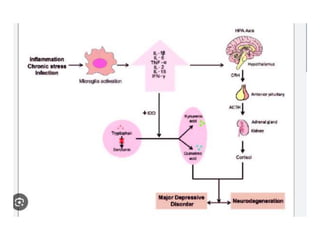
hypothalamic-pituitary-adrenal (HPA) axis , could
potentially be responsible for the hypercortisolemia
seen in depression.
• The mesolimbic dopamine system that consists of the
nucleus accumbens (NAc)
• and the ventral tegmental area (VTA) also are believe
to play a role in the pathogenesis of depression.
• These brain regions mediate the reward response to
pleasurable stimuli such as food , sex , and even
drugs .Therefore , a peculiar lack of pleasure in
depressed pateints can possibly be explained as a
dysfunction in this brain reward circuit.
• Stress response circuits.
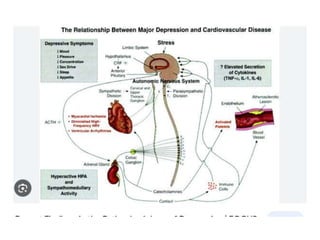
• Chronic stress and hyperactivity of the HPA axis
(causing chronic hypercortisolemia) have been
hypothesized to play a prominent role in the
incidence of depression and even in recurrence
after complete remission.
• Structural brain abnormalities have been
documented in patients with elevated levels of
corticosteroids .
• One of the brain structures affected is the
amygdala , area of the brain involved in mainly
regulating emotional reactivity and to some degree
• Another brain region shown to decrease in size
with chronic administration of corticosteroids is the
hippocamus , area of the brain that is believed to
exert an inhibitory signal to the HPA axis.
• Chroni stress :
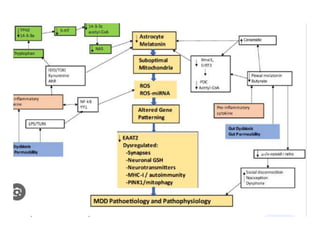
• However , chronic stress has been shown to alter
the expression of genes regulating antioxidant
systems , such as superoxide dismutases (SODs) ,
catalase , glutathione peroxidase , glutathione
reductase and NADH oxidase.
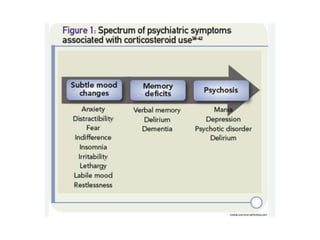
• Moreover , animal studies uncovered that
treatment with glucocorticoids because elevation in
the level reactive oxygen species (ROS) both in vitro
and in the brains of animals , while also down-
regulating various antioxidant enzyme and inducing
depression like behaviour.
• Genetic Genetic vulnerability and environmental
interaction :
• In depression there is a complex gene-
environmental interaction occurs that alters an
idividual response to stressful life situations . No
single gene polymorphism (having multiple forms)
• Non Pharmacilogical Management :
• Depression is not generally considered to be
preventable . It's hard to recognize what causes it ,
which means preventing it is more difficult.
• But once you have experienced a depressive
episode , you may be better prepared to prevent a
future episode by learning which lifestyle changes
and treatments are helpful .
• Techniques that may help include :
• Regular exercise
• Getting plety of sleep
• Othes :
• Pscychotherapy :
• Psychotherapy (or talk therapy) has an excellent track record
of helping people with depressive order . A good
relationship with a therapist can help improve outcmes.
• A few example include
• Cognitive behavioral therapy (CBT) has a strong research
base to show it helps with symptoms of depression.This
therapy helps assess and change negative thinking patterns
associated with depression . The goal of this structural
therapy is to recognize negative thoughts and to teach
coping strategies. CBT is often time-limited and may be
limited to 8-16 sessions in some instances.
• Interpersonal therapy (PT) focuses on improving
problems in personal relationships and other
changes in life that may be contributing to
depressive disorder. Therapies teach individals to
evaluate their interactions and to mprove how they
relate to others . IPT is often time-limited like CBT.
• Psychodynamic therapy is a therapeutic approach
rooted in recognizing and understanding negative
patterns of behaviour and feelings that are rooted
in past experiences and working to resolve them.
• Psycho education and support groups.
• Psycho education involves teaching individuals
about their illness , how to treat it and how to
recognize sign of relapse. Family psycho edication is
also helpful for family members who want to
undersstand what their loved one is experiencing.
• Support groups , meanwhile , provide participants
an opportunity to share experiences and coping
strategies . Support groups may be for the person
with mental health condition , for family /friends or
a combination of both . Mental health professionals
lead some support groups , but groups can also be
• Pharmacological Management :
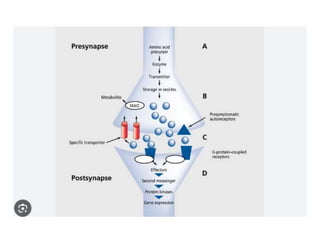
• Selective serotonin reuptake inhibitors (SSRIs) act
on serotonin , a brain chemical . They are the most
common medications prescribed for depression
drugs including Fluroxetine, Sertraline , Paroxetine ,
Citalopram and Escitalpora.SSRIs work by blocking
(inhibiting) reuptake , meaning more serotonin is
available to pass further messages between nearby
nerve cells.
• Serotonin and norepinephrine reuptake inhibitors
(SNRIs) are the second most common
antidepressants . These medications increase
serotonin and norepinephrine . Venlafazine ,
Desvenlafazine , Duloxetine are SNRIs they work by
stop the reuptake of both serotonin and
norepinephrine. The reuptake process reduces the
availability of neurotransmitters because the brain
reabsorbs them.
• Norepinephrine-dopamine reuptake inhibitors
(NDRIs) increase dopamine and norepinephrine
• . Bupropion (Wellbutrin) is a popular NDRI
medication which causes fewer (and different ) side
effects than other antidepressants . For people ,
bupropion causes anxiety symptoms , but for
others it is an effective treatment for anxiety.
• Mitrazapine (Remeron) targets specific serotonin
and norepinephrine receptors in the brain , thus
indirectly increasing the activity of several brain
circuits . Mitrazapine is used less often than newer
antidepressants (SSRIs, SNRIs and bupropion)
because it is associated with more weight gain ,
sedation and sleepiness. However , it appears to be
less likely to result in insomnia , sexual side effects
and nausea than SSRIs and SNRIs.
• Second generation Antipsychotics (SGAs) :
• or atypical antipsychotics treat schizophrenia , acute
mania , bipolar disorder and bipolar mania and other
metal illness. SGAs can be used for treatment-resistant
depression. Drugs such as Aripiprazole , Quetiapine .
• Tricyclic Antidepressants (TCAs) :
• are older medications, seldom used today as initial
treatment for depression . They work similarly to SNRI
but have more side effects . They are sometimes used
when other antidepressants have not worked . TCAs
may also ease chronic pain . Drugs used as TCAs are
Amitriptyline , Desipramine
• Doxepin, Imipramine, Nortriptyline and Protriptyline.
• Manoamine oxidase inhibitors (MAOIs) are less
used today because newer , more effective
medications with fewer side effects have been
found . These medications can never be used in
combination with SSRIs . MAOIs can sometimes be
effective for people who do not respond to other
medications . Phenelzine ,
• Isocarboxazid , Tranylcypromine sulfate , Selegiline
patch.
• Brain stimulation therapies.
• For some , brain stimulation therapies may be
effective , typically after other treatments have not
been effective -
• Electroconvulsiv Therapy (ECT) involves
transmitting short electrical impulses into the brain
. ECT does cause some side effects , including
memory loss . Individuals should understand the
risks and benefits of this intervention before
beginining a treatment trial.
• Repetitive Transcranial Magnetic Stimulation
(rTMS) :
• is a relatively new type of brain stimulation that
uses a magnet instead of an electrical current to
activate the brain . It is not effective as a
maintenance treatment.
• Vagus Nerve Stimulation (VNS) has a complex
history . For a fuller understanding of this
treatment , read the NMH summary of this and
other brain stimulation interventions.
• Complementary and Alternative Medicine (CAM) :
• Exercise : Studies show that aerobic exercise can
help treat mild depression because it increases
endorphins and stimulates norepinephrine , which
can improve a person's mood.
• Folate some studies have shown that when people
with depression lack folate (also called folic acid or
vitamin B9), they may not receiving the full benefit
from any antidepressants they may be taking.
Anxiety.
• Introduction.
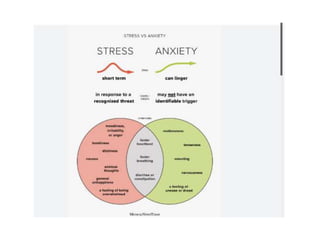
• Anxiety is a pathological state characterized by a
feeling of dread accompanied by somatic signs that
indicate a hyperactive autonomic nervous system . It
is differentiated from fear which is a response to a
known and reasonable cause.
• The Americal Psychological Association (APA) defines
anxiety as " an emotion characterized by feelings of
tension , worried thoughts and physical changes like
increased blood pressure.
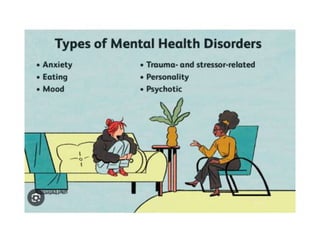
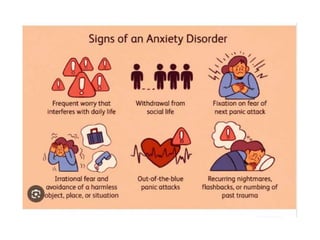
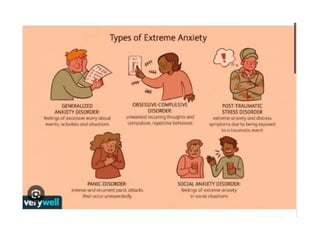
• Anxiety Disorder.
• Panic Disorder
• Specific phobia
• Social anxiety disorder (SAD)
• Generalized anxiety disorder (GAD)
• Obessive - compulsive disorder (OCD)
• Substances - induced anxiety disorder
• Clinical Manifestation.
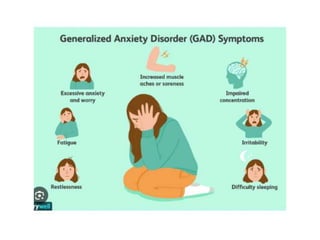
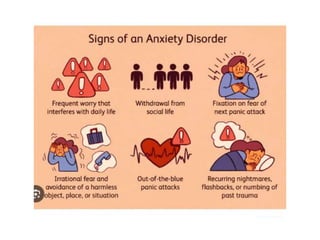
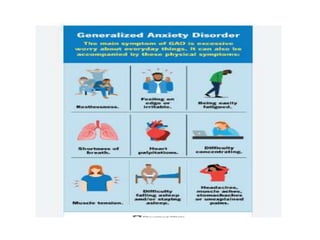
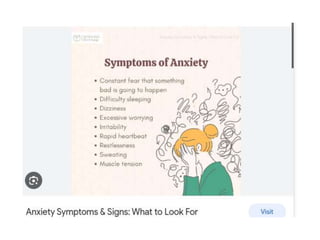
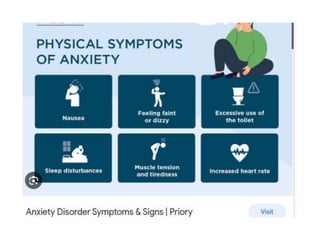
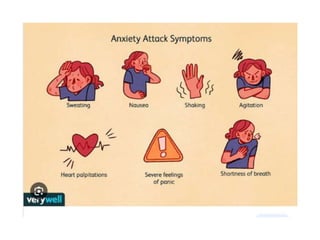
• Common anxiety signs and symptoms include :
• Feeling Nervous , restless or more
• Having a sense of impending danger , panic or doom
• Having an increased heart rate
• Breathing rapidly (hyperventilation)
• Sweating
• Trembling
• Feeling weak or tired
• Trouble concentrating or thinking about anything other than the present
worry
• Having trouble sleeping
• Experiencing gastrointestinal (GI) problems
• Having difficulty controlling worry
• Having the urge to avoid things that trigger anxiety
Etiology.
• The causes of anxiety disorders are complicated . Many might occur
at once , some may lead to others and some may lead to others and
some might not lead to an anxiety disorder unless another is
present.
• Possible causes include :
• Environmental stressors , such as difficulties at work , relationship
problems , or family issues.
• Genetics as people who have family members with an anxiety
disorder are more likely to experience one themselves.
• Medical factors , such as the symptoms of a different disease , the
effects of a medication or the stress of an intensive surgery or
prolonged recovery.
• Brain chemistry , as psychologists define may anxiety disorders as
misalignments of hormones and electrical signals in the brain.
• Withdrawal from an illicit substance , the effects of which might
intensify the impact of other possible causes
• Pathophysiology.
• Anxiety occurs when there is a disturbance of the
arousal system in the brain . Arousal is maintained
by at least three interconnected systems , a general
arousal system , an 'emotional' arousal system and
an endocrine /autonomic arousal system. Excessive
activity in this system, due to internal or external
stresses , can lead to a state of hyper arousal as
seen in an anxiety. These arousal systems activate
somatic responses to arousal , such as increased
muscle tone , increased sympathetic acivity and
increased output of anterior and posterior pitutary
• Inappropriate increase in autonomic activity are
often associated with anxiety states , the resulting
symptoms (palpitation , sweating , tremor etc) may
initiate a vicious circle that increase the anxiety.
• Several neurotransmitters have been implicated in
the arousal system :
• Acetylcholine is the main transmitter maintain
general arousal .
• Noradrenergic and serotonergic are associated with
emotional arousal activity .
• Drugs which antagonized such activity have
• In addition , the inhibitory neurotransmitter an in
butyric acid (GABA) exerts an inhibitory control on
other tranmitter pathways and increased GABA
activity may have a protective effect against
excessive stress reactions.
• Many drugs which increase GABA activity such as
the benzodiazipines are potent anxiolytic.
• Non pharmacological Management :
• 1. Psyco education (stress management, sleep
hygiene etc)
• Short term counseling
• Psychotherapy (Cognitive Behavioral Therapy : CBT)
• Meditation
• Exercise
• Pharmacological Management.
• Treatment for anxiety disorders often requires
multiple approaches :
• 1. Psychotherapy : Psychological therapies (taking
therapies) are generally cosidered first time
treatments in all anxiety disorders because they may
provide a longer lasting responses and lower relapse
rates than pharmacotherapy .
• The most supporting evidence in anxiety disorders is
cognitive behavioral therapy (CBT).
• Pharmacotherapy :
• Benzodiazepines :
• Benzodiazepines are commonly prescribed to
provide immidiate releif of the symptoms of severe
anxiety.
• All benzodiazepines have sedative/hypnotic
,anxiolytic amnesic , muscular relaxtant and
anticonvulsant actions with minor differences in
the relative potency of these effects.
• A number of different benzodiazepines are
available such as alprazolam , chlordiazepoxide ,
• Antidepressant Drugs .
• Antidepressants can provide long term treatment
option for those with an anxiety disorders. They are
recommended for those who are unable to commit
or have not responded to psycholgical therapies.
• In addition antidepressants are cosidered first line
treatment option either alone or in combination
with moderate or sevre impairment.
• Selective serotonin reuptake inhibitors SSRI.
• The selective serotonin reuptake inhibitors (SSRI)
have a broad anxiolytic effect and are considered the
first drug option in GAD, panic disorders , PTSD and
OCD.
• Initial Worsening of symptoms is common when
starting an SSRI inanxiety , so begining with half the
dose than that used in depression is recommended
as is reasoning the patient that thus is usually only
experienced for the first few weeks of trearment.
• Trycyclic Antideoressants :
• Certain TCAs such as clomipramine , imipramine and amitrptyline are
efficacious in some anxiety disorder.
• Particular concern is the TCA's cardiac toxicity in overdose which relegates
their use to scond line following the failure of SSRI.
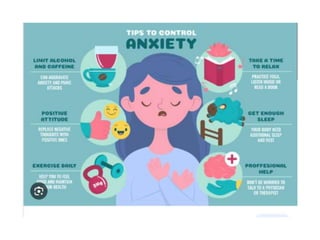
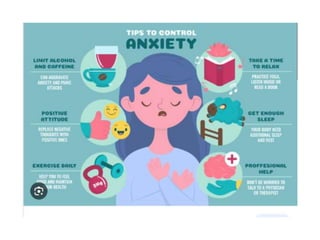
• Prevention .
• There is no way to predict for certain what will cause someone to develop
an anxiety disorder , but you can take steps to reorder the impact of
symptoms if you are anxious .
• Get help early , Anxiety , like many other mental conditions can be harder to
treat if you wait .
• Stay active . Participate in activation that you enjoy and that make you feel
good about yourself . Enjoy social interaction and caring relationships ,
which can lessen your worries.
• Avoid Alcohol or drug use : Alcohol and drug use can cause or worsen
anxiety. If you are addicted to any of these substances , quitting can make
you anxious . If you can not quit on your own , see your doctor or find a
support group to help you.
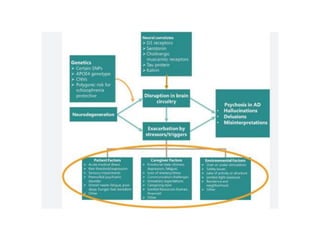
Psychosis.
• Introduction.
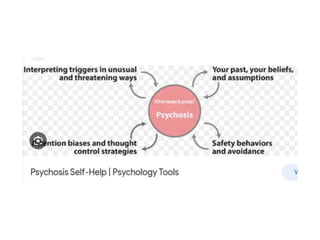
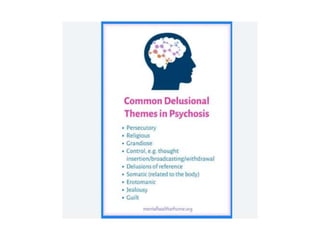
• A serious mental illness that causes hallucinations ,
delusions , faults in judgements and other such
processes is called psychosis. The term refers to a
Greek worst psych which means soul or breath.
Pathofunctional and pathomorphological changes
with the body accomany psychosis. The anatomical
structures of neuron cerebral substances is
affected.
• In other words , psychosis happens when a person
has forgotten the essence of his life, and the person
has designed their view of life , which is not shared
by others . The primary symptoms of psychosis
compromise of delusions and hallucinations. That
means a person is in a state of imagination and he
thinks that he is living in that image rather than
actual reality.
• The person who has psychosis tends to commit
suicide or have suicidal tendencies. The change in
the function of the brain usually causes delusions
and hallucinations.
• That means a person is in a state of imagination and he thinks
that he is living in that image rather than actual reality.
• The person who has psychosis happens when a person has
forgotten the essence of his life, and the person has designed
their view of life , which is not shared by others . The primary
symptoms of psychosis comprise of delusions and hallucinations .
That means a person is in a state of imagination and he thinks
that he is living in that image rather than actual reality.
• The peson who has psychosis tends too commit suicide or have
suicidal tendencies . The change in the function of the brain
usually causes delusions and hallucinations.That means a person
is in state of imagination, and he thinks that he is in that image
rather than actual reality.
• This person who has psychosis tends to commit suicide or have
suicidal tendencies. The change in the function of the brain
usually causes delusions and halluvinations.
Types of Psychosis.
• Acute and chronic organic brain syndromes
(cognitive disorders) Such as delirium and dementia
with psychotic features , some toxic or pathological
basis can often be defined. Prominent features are
confusion , disorientation , defective memory ,
disorganized thought and behaviour.
• Functional Disorders : No underlying cause can be
defined , memory and orientation ar mostly
retained but emotion , thought , reasoning and
behaviour are seriously altered.
• Schizophrenia : Literally meaning ''Split Brain''
schizophrenia is a type of pscychosis that is characterized
by persistent - longer than six months - psychotic
symptoms that are generally accompanied by a decline in
the sufferer's ability to function in society.
• Paranoid states with marked persecutory or other kinds
of fixed delusions (false beliefs) and loss of insight into
the abnormality .
• Mood (affective ) disorders : The primary symptoms is
change in mood state , may manifest as -
• Mania - Irritable mood , reduced sleep , hyperactivity ,
uncontrollable thought and speech , may be associated
with reckless or violent behaviour or
• Depression-sadness , loss of interest and pleasure ,
worthlessness , guilt , physical and mental slowing ,
melancholia , self-destructive ideation.
• Bipolar illness-Bipolar Disorder is characterized by
disturbed moods and extremes of manic behavior
followed by crushing lows , oe depression that may
be accompanied by auditory hallucinations.
Clinical Manifestations.
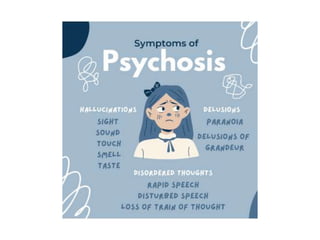
• Psychosis affects the way a person thinks , feels and
behaves. The experience of pychosis varies greatly
from person to person.Psychosis can come on
suddenly or can develop very gradually. The
symptoms of psychosis are often categorized as
either ''positive'' or ''negative''.
• Positive symptoms : Are those that add to or distort
the person's normal functioning . They include :
• Delusions (False beleifs that are firmly held and are
out of keeping with the person's culture )
• Hallucinations (hearing , seeing , tasting , smelling
or feeling something that is not actually there)
• Disorganized speech , thoughts or behaviour (e.g.
switching rapidly between subjects in speaking ,
finding it hard to concentrate or follow a
conversation , being able to complete everyday
tasks)
• Negative symptoms :
• It involves normal functioning becoming lost or
reduced . They may include :
• Restricted emotional and facial expression
• Restricted speech and verbal fluency
• Difficulty generating ideas or thoughts
• Reduced ability to begin tasks
• Reduced socialization and motivation.
• Other symptoms .
• Cognitive symptoms such as difficulties with attention, concentration
and memory
• Mood chages
• Suicidal thoughts or behavior
• Substance abuse
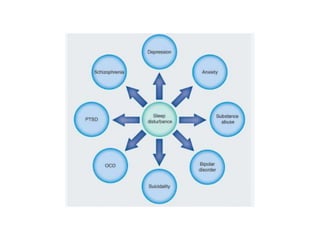
• Sleep disturbances
• Etiology:
• Alcoholic hallucinations/Alcohol induced psychosis.
• Psychosis induced by amphetamines or other substances
• Acute psychotic disorder
• Schizophrenia
• Bipolar Disorder
• Delusional Disorder
• Depression with psychotic features -
• Delirium
• Dementia
• Head injury
• Pathophysiology :
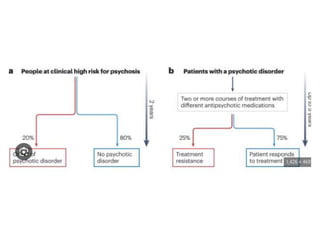
• The pathophysiology of pscychosis is not fully
determined. Currently , the most prevalent theory of
the mechanisms behind psychotic episodes is a
dysregulation of the central dopaminergic pathways
leading to increased dopamine.
• This theory is based upon the mechanism of action
of antipsychotic drugs which aim to reduce the
positive symptoms of schizophrenia.
• Positive symptoms are associated with an increase
of dopamine neurotransmossion while negative
symptoms result from decreased dopaminargic
activity. Newer research has shown medications
targetting serotonin and other neurotransmitters
have been equally effective to older medications
targetting solely dopamine receptors.
• Non Pharmacological Treatment :
• Antipsychotic medicines are usually recommended
as the first treatment for psychosis. They work by
blocking the effect of dopamine , a chemical that
transmits messages in the brain . Antipsychotics
can usually reduce feelings of anxiety within a few
hours of use , but they may take several days or
weeks to reduce psychotic symptoms , such as
hallucinations or delusional thoughts.
• Antipsychotics can be taken by mouth (orally) or given
as an injection . There are several slow release
antipsychotics , where you only need an injection every
1 to 4 weeks.
• Typical and atypical antipsychotic medications are used
when a person experiences loss of contact with the
world around them and disturbances with their thoghts
and perceptions of reality. It is imperative that physical
therapists understand the potential adverse effects of
these drigs and that they might interfere with the
physical therapy itself . Keeping a vigilant watch
serious side effects , maintaining patient safety and
staying up to date on popular medications are all
requirements of a great therapist.
• Typical Antipsychotics .
• 1950 marked the birth of the
psychopharmacological era with the introduction of
typical (first generation ) antipsychotic drugs. Prior
to their introduction, psychiatric patients were
treated with electrotherapy , insulin comas and
frontal lobotomises. Their discovery intriduced
extensive research for the treatment of psychosis
and increased the number of new pharmaceutical
options.
• The side effect profile for typical antipsychotics includes
sedation, hypotension , anticholinergic drugs, and
extrapyramidal symptoms.
• Atypical Antipsychotics.
• In 1900 , the approval and implementation of clozapine
for treatment-resistant schizophrenia gave birth to the
atypical (second generation) antipsychotics. The reduced
extrapyramidal effects of these proved beneficial for
psychosis , decreasing the prevalence of conditions like
tardive dyskinesia.
• The side effects profile for typical antipsychotics includes
sedation, dizziness , weight pain , menstrual and sexual
dysfunction , myicarditis and extrapyramidal side effects.
• Drugs used.
• Typical Antipsychotics.
• Haloperidol
• Chlorpromazine
• Atypical Antipsychotics.
• Aripiprazole
• Clozapine.
Psychiatric Disorders-WPS Office 1.pptx

Psychiatric Disorders-WPS Office 1.pptx

  • 1.
    Psychiatric Disorders Presented byMiss Sudipta Roy Associate Professor East Point College of Pharmacy Bangalore
  • 2.
    Depression. • Depression isan illness marked by feeling of sadness , worthlessness or hopelessness, as well as problems concentrating and remembering details. • Depression is a mood disorder that causes a persistent feeling of sadness and loss of interest. Also called major depressive disorder or clinical depression , it affects how you feel , think and behave and can lead to a variety of emotional and physical problems.
  • 3.
    What is depression? •Depression is a common but serious illness • Pathology depression refers to change in mood state. • Depression means feelings of blue or extreme sadness that can last for a longer time . • Depression is precipitated due to deficiency of monoamines neurotransmitters. • Neurotransmitters : Nor adrenaline , Serotonine , Dopamine , 5-Hydroxy tryptophan (5-HT) • Major depression is characterized by symptoms like sad mood , loss of interest and pleasure , low energy , worthlessness , guilt, psychomotor retardation, chage in mode of sleep , suicidal thought.
  • 4.
    • Types ofDepression. • Bipolar Disorder. • Major depressive disorder and persistent depressive disorder are the primary types of depression. • A person who experiences alternating states of depression and mania (abnormal elevation of mood ) or hypomania (distinct, though not necessarily abnormal elevation of mood ) is said to suffer from bipolar disorder.
  • 5.
    • Major depressivedisorder. • Major depressive disorder is characterized by severe symptoms that disruptthe individual's daily life , typically with effects on appetite , sleep , work or the ability to enjoy life. • Episodes of major depression at any age and may occur once or multiple times in an affected person's life.
  • 6.
    • Persistent depressivedisorder : • Persistent depressive disorder involves symptoms that last two more years , sometimes marked by episodes of major depression. • Postpartum depression: • Postpartum depression develops in women in the period following childbirth symptoms include anxiety , a lack of interest in caring for the infant , and feelings of sadness , hopelessness or inadequacy.
  • 7.
    • Postpartum depressionis longer lasting and more severe than that 'baby blues' a common condition among women after childbirth that typically involves mood swings , feelings of sadness and crying spells. • Psychotic depression. • Psychotic depression arises against a background of psychosis , which may involve symptoms of delusion, hallucinations or paranoia.
  • 8.
    • Seasonal affectivedisorder. • Seasonal affective disorder is characterized by the onset of depressive symptoms in autumn and winter , which are alleviated with increased exposure to natural light in spring and summer. • Cyclothymic disorder. • Cyclothymic disorder is often described as a milder form of bipolar disorder. • The person experiences chronic fluctuating moods over at least two years, involving periods of hypomania (a mild to moderate level of mania) and periods of depressive symptoms, with very short periods (no more than two months ) of normality between.
  • 9.
    • The durationof symptoms are shorter , less severe and not as regular and therefore don't fit the criteria of bipolar disorder or major depression. • Dysthymic disorder : • The symptoms of dysthymia are similar to those of major depression but are less severe. • However , in the case of dysthymia , symptoms last longer. • A person has to have this milder depression for more than two years to be diagnosed with dysthymia.
  • 10.
    • Clinical Manifestation. •Depression symptoms can vary from mild to severe and can include : • Persistent sad , anxious or empty mood. • Feeling of hopelessness or pessimism • Irritability • Feeling of guilt , worthlessness or helplessness • Loss of interest or pleasure in hobbies and activities • Decreased energy or fatigue • Moving or talking more slowly
  • 11.
    • Feeling restlessnessor having trouble sitting still • Difficulty concentrating , remembering or making decisions • Difficulty sleeping , early morning awakening or oversleeping • Appetite and or weight changes • Thoughts of death or suicide or suicide attempts • Aches or pains , headaches , cramps or digestive problems without a clear physical cause and or that do not ease even with treatment.
  • 12.
    • Etiology. • It'snot known exactly what causes depression. As with many mental disorders , a variety of factors may be involved , such as : • Biological differences : People with depression appear to have physical changes in their brains.The significance of these changes is still uncertain , but may eventually help pinpoint causes. • Brain chemistry : Neurotransmitters are naturally occurring brain chemicals that likely play a role in depression . Recent research indicates that changes in the function and effect of these neurotransmitters and how they interact with neurocircuits involved in maintaining mood stability may play a significant role in depression and its treatment.
  • 13.
    • Hormones : •Changes in the body's blance of hormones may be involved in causing or triggering depression. Hormone changes can result with pregnancy and during the weeks or months after delivery (postpartum) and from thyroid problems , menopause or number of other conditions. • Inherited traits : • Depression is more common in peolple whose blood relatives also have this condition . Reaserchers are trying to find genes that may be involved in causing depression.
  • 14.
    • Pathophysiology. • Eventhough there are numerous studies attempting to shed light on the pathophysiology of depression , it still remains exclusive . There are diverse theories on the pathogenesis of depression most based on meaurement of indirect markers , post-mortem studies and neuro-imaging techniques - • A) Neural circuitry of depression : • Various structural and functional studies report abnormalities in the ares of the brain that are responsible for the regulation of mood , reward
  • 15.
    • Post-mortem andneuro-imaging studies have reported morphological changes indicated by reductions in grey-matter volume and glial density in the prefrontal cortex and the hippocampus. • The decline in hippocampal function , which is believed to have an ihibitory effect on the hypothalamic-pituitary-adrenal (HPA) axis , could potentially be responsible for the hypercortisolemia seen in depression.
  • 16.
    • The mesolimbicdopamine system that consists of the nucleus accumbens (NAc) • and the ventral tegmental area (VTA) also are believe to play a role in the pathogenesis of depression. • These brain regions mediate the reward response to pleasurable stimuli such as food , sex , and even drugs .Therefore , a peculiar lack of pleasure in depressed pateints can possibly be explained as a dysfunction in this brain reward circuit.
  • 17.
    • Stress responsecircuits. • Chronic stress and hyperactivity of the HPA axis (causing chronic hypercortisolemia) have been hypothesized to play a prominent role in the incidence of depression and even in recurrence after complete remission. • Structural brain abnormalities have been documented in patients with elevated levels of corticosteroids . • One of the brain structures affected is the amygdala , area of the brain involved in mainly regulating emotional reactivity and to some degree
  • 18.
    • Another brainregion shown to decrease in size with chronic administration of corticosteroids is the hippocamus , area of the brain that is believed to exert an inhibitory signal to the HPA axis. • Chroni stress : • However , chronic stress has been shown to alter the expression of genes regulating antioxidant systems , such as superoxide dismutases (SODs) , catalase , glutathione peroxidase , glutathione reductase and NADH oxidase.
  • 19.
    • Moreover ,animal studies uncovered that treatment with glucocorticoids because elevation in the level reactive oxygen species (ROS) both in vitro and in the brains of animals , while also down- regulating various antioxidant enzyme and inducing depression like behaviour. • Genetic Genetic vulnerability and environmental interaction : • In depression there is a complex gene- environmental interaction occurs that alters an idividual response to stressful life situations . No single gene polymorphism (having multiple forms)
  • 20.
    • Non PharmacilogicalManagement : • Depression is not generally considered to be preventable . It's hard to recognize what causes it , which means preventing it is more difficult. • But once you have experienced a depressive episode , you may be better prepared to prevent a future episode by learning which lifestyle changes and treatments are helpful . • Techniques that may help include : • Regular exercise • Getting plety of sleep
  • 21.
    • Othes : •Pscychotherapy : • Psychotherapy (or talk therapy) has an excellent track record of helping people with depressive order . A good relationship with a therapist can help improve outcmes. • A few example include • Cognitive behavioral therapy (CBT) has a strong research base to show it helps with symptoms of depression.This therapy helps assess and change negative thinking patterns associated with depression . The goal of this structural therapy is to recognize negative thoughts and to teach coping strategies. CBT is often time-limited and may be limited to 8-16 sessions in some instances.
  • 22.
    • Interpersonal therapy(PT) focuses on improving problems in personal relationships and other changes in life that may be contributing to depressive disorder. Therapies teach individals to evaluate their interactions and to mprove how they relate to others . IPT is often time-limited like CBT. • Psychodynamic therapy is a therapeutic approach rooted in recognizing and understanding negative patterns of behaviour and feelings that are rooted in past experiences and working to resolve them.
  • 23.
    • Psycho educationand support groups. • Psycho education involves teaching individuals about their illness , how to treat it and how to recognize sign of relapse. Family psycho edication is also helpful for family members who want to undersstand what their loved one is experiencing. • Support groups , meanwhile , provide participants an opportunity to share experiences and coping strategies . Support groups may be for the person with mental health condition , for family /friends or a combination of both . Mental health professionals lead some support groups , but groups can also be
  • 24.
    • Pharmacological Management: • Selective serotonin reuptake inhibitors (SSRIs) act on serotonin , a brain chemical . They are the most common medications prescribed for depression drugs including Fluroxetine, Sertraline , Paroxetine , Citalopram and Escitalpora.SSRIs work by blocking (inhibiting) reuptake , meaning more serotonin is available to pass further messages between nearby nerve cells.
  • 25.
    • Serotonin andnorepinephrine reuptake inhibitors (SNRIs) are the second most common antidepressants . These medications increase serotonin and norepinephrine . Venlafazine , Desvenlafazine , Duloxetine are SNRIs they work by stop the reuptake of both serotonin and norepinephrine. The reuptake process reduces the availability of neurotransmitters because the brain reabsorbs them.
  • 26.
    • Norepinephrine-dopamine reuptakeinhibitors (NDRIs) increase dopamine and norepinephrine • . Bupropion (Wellbutrin) is a popular NDRI medication which causes fewer (and different ) side effects than other antidepressants . For people , bupropion causes anxiety symptoms , but for others it is an effective treatment for anxiety.
  • 27.
    • Mitrazapine (Remeron)targets specific serotonin and norepinephrine receptors in the brain , thus indirectly increasing the activity of several brain circuits . Mitrazapine is used less often than newer antidepressants (SSRIs, SNRIs and bupropion) because it is associated with more weight gain , sedation and sleepiness. However , it appears to be less likely to result in insomnia , sexual side effects and nausea than SSRIs and SNRIs.
  • 28.
    • Second generationAntipsychotics (SGAs) : • or atypical antipsychotics treat schizophrenia , acute mania , bipolar disorder and bipolar mania and other metal illness. SGAs can be used for treatment-resistant depression. Drugs such as Aripiprazole , Quetiapine . • Tricyclic Antidepressants (TCAs) : • are older medications, seldom used today as initial treatment for depression . They work similarly to SNRI but have more side effects . They are sometimes used when other antidepressants have not worked . TCAs may also ease chronic pain . Drugs used as TCAs are Amitriptyline , Desipramine • Doxepin, Imipramine, Nortriptyline and Protriptyline.
  • 29.
    • Manoamine oxidaseinhibitors (MAOIs) are less used today because newer , more effective medications with fewer side effects have been found . These medications can never be used in combination with SSRIs . MAOIs can sometimes be effective for people who do not respond to other medications . Phenelzine , • Isocarboxazid , Tranylcypromine sulfate , Selegiline patch.
  • 30.
    • Brain stimulationtherapies. • For some , brain stimulation therapies may be effective , typically after other treatments have not been effective - • Electroconvulsiv Therapy (ECT) involves transmitting short electrical impulses into the brain . ECT does cause some side effects , including memory loss . Individuals should understand the risks and benefits of this intervention before beginining a treatment trial.
  • 31.
    • Repetitive TranscranialMagnetic Stimulation (rTMS) : • is a relatively new type of brain stimulation that uses a magnet instead of an electrical current to activate the brain . It is not effective as a maintenance treatment. • Vagus Nerve Stimulation (VNS) has a complex history . For a fuller understanding of this treatment , read the NMH summary of this and other brain stimulation interventions.
  • 32.
    • Complementary andAlternative Medicine (CAM) : • Exercise : Studies show that aerobic exercise can help treat mild depression because it increases endorphins and stimulates norepinephrine , which can improve a person's mood. • Folate some studies have shown that when people with depression lack folate (also called folic acid or vitamin B9), they may not receiving the full benefit from any antidepressants they may be taking.
  • 33.
    Anxiety. • Introduction. • Anxietyis a pathological state characterized by a feeling of dread accompanied by somatic signs that indicate a hyperactive autonomic nervous system . It is differentiated from fear which is a response to a known and reasonable cause. • The Americal Psychological Association (APA) defines anxiety as " an emotion characterized by feelings of tension , worried thoughts and physical changes like increased blood pressure.
  • 34.
    • Anxiety Disorder. •Panic Disorder • Specific phobia • Social anxiety disorder (SAD) • Generalized anxiety disorder (GAD) • Obessive - compulsive disorder (OCD) • Substances - induced anxiety disorder
  • 35.
    • Clinical Manifestation. •Common anxiety signs and symptoms include : • Feeling Nervous , restless or more • Having a sense of impending danger , panic or doom • Having an increased heart rate • Breathing rapidly (hyperventilation) • Sweating • Trembling • Feeling weak or tired • Trouble concentrating or thinking about anything other than the present worry • Having trouble sleeping • Experiencing gastrointestinal (GI) problems • Having difficulty controlling worry • Having the urge to avoid things that trigger anxiety
  • 36.
    Etiology. • The causesof anxiety disorders are complicated . Many might occur at once , some may lead to others and some may lead to others and some might not lead to an anxiety disorder unless another is present. • Possible causes include : • Environmental stressors , such as difficulties at work , relationship problems , or family issues. • Genetics as people who have family members with an anxiety disorder are more likely to experience one themselves. • Medical factors , such as the symptoms of a different disease , the effects of a medication or the stress of an intensive surgery or prolonged recovery. • Brain chemistry , as psychologists define may anxiety disorders as misalignments of hormones and electrical signals in the brain. • Withdrawal from an illicit substance , the effects of which might intensify the impact of other possible causes
  • 37.
    • Pathophysiology. • Anxietyoccurs when there is a disturbance of the arousal system in the brain . Arousal is maintained by at least three interconnected systems , a general arousal system , an 'emotional' arousal system and an endocrine /autonomic arousal system. Excessive activity in this system, due to internal or external stresses , can lead to a state of hyper arousal as seen in an anxiety. These arousal systems activate somatic responses to arousal , such as increased muscle tone , increased sympathetic acivity and increased output of anterior and posterior pitutary
  • 38.
    • Inappropriate increasein autonomic activity are often associated with anxiety states , the resulting symptoms (palpitation , sweating , tremor etc) may initiate a vicious circle that increase the anxiety. • Several neurotransmitters have been implicated in the arousal system : • Acetylcholine is the main transmitter maintain general arousal . • Noradrenergic and serotonergic are associated with emotional arousal activity . • Drugs which antagonized such activity have
  • 39.
    • In addition, the inhibitory neurotransmitter an in butyric acid (GABA) exerts an inhibitory control on other tranmitter pathways and increased GABA activity may have a protective effect against excessive stress reactions. • Many drugs which increase GABA activity such as the benzodiazipines are potent anxiolytic.
  • 40.
    • Non pharmacologicalManagement : • 1. Psyco education (stress management, sleep hygiene etc) • Short term counseling • Psychotherapy (Cognitive Behavioral Therapy : CBT) • Meditation • Exercise
  • 41.
    • Pharmacological Management. •Treatment for anxiety disorders often requires multiple approaches : • 1. Psychotherapy : Psychological therapies (taking therapies) are generally cosidered first time treatments in all anxiety disorders because they may provide a longer lasting responses and lower relapse rates than pharmacotherapy . • The most supporting evidence in anxiety disorders is cognitive behavioral therapy (CBT).
  • 42.
    • Pharmacotherapy : •Benzodiazepines : • Benzodiazepines are commonly prescribed to provide immidiate releif of the symptoms of severe anxiety. • All benzodiazepines have sedative/hypnotic ,anxiolytic amnesic , muscular relaxtant and anticonvulsant actions with minor differences in the relative potency of these effects. • A number of different benzodiazepines are available such as alprazolam , chlordiazepoxide ,
  • 43.
    • Antidepressant Drugs. • Antidepressants can provide long term treatment option for those with an anxiety disorders. They are recommended for those who are unable to commit or have not responded to psycholgical therapies. • In addition antidepressants are cosidered first line treatment option either alone or in combination with moderate or sevre impairment.
  • 44.
    • Selective serotoninreuptake inhibitors SSRI. • The selective serotonin reuptake inhibitors (SSRI) have a broad anxiolytic effect and are considered the first drug option in GAD, panic disorders , PTSD and OCD. • Initial Worsening of symptoms is common when starting an SSRI inanxiety , so begining with half the dose than that used in depression is recommended as is reasoning the patient that thus is usually only experienced for the first few weeks of trearment.
  • 45.
    • Trycyclic Antideoressants: • Certain TCAs such as clomipramine , imipramine and amitrptyline are efficacious in some anxiety disorder. • Particular concern is the TCA's cardiac toxicity in overdose which relegates their use to scond line following the failure of SSRI. • Prevention . • There is no way to predict for certain what will cause someone to develop an anxiety disorder , but you can take steps to reorder the impact of symptoms if you are anxious . • Get help early , Anxiety , like many other mental conditions can be harder to treat if you wait . • Stay active . Participate in activation that you enjoy and that make you feel good about yourself . Enjoy social interaction and caring relationships , which can lessen your worries. • Avoid Alcohol or drug use : Alcohol and drug use can cause or worsen anxiety. If you are addicted to any of these substances , quitting can make you anxious . If you can not quit on your own , see your doctor or find a support group to help you.
  • 46.
    Psychosis. • Introduction. • Aserious mental illness that causes hallucinations , delusions , faults in judgements and other such processes is called psychosis. The term refers to a Greek worst psych which means soul or breath. Pathofunctional and pathomorphological changes with the body accomany psychosis. The anatomical structures of neuron cerebral substances is affected.
  • 47.
    • In otherwords , psychosis happens when a person has forgotten the essence of his life, and the person has designed their view of life , which is not shared by others . The primary symptoms of psychosis compromise of delusions and hallucinations. That means a person is in a state of imagination and he thinks that he is living in that image rather than actual reality. • The person who has psychosis tends to commit suicide or have suicidal tendencies. The change in the function of the brain usually causes delusions and hallucinations.
  • 48.
    • That meansa person is in a state of imagination and he thinks that he is living in that image rather than actual reality. • The person who has psychosis happens when a person has forgotten the essence of his life, and the person has designed their view of life , which is not shared by others . The primary symptoms of psychosis comprise of delusions and hallucinations . That means a person is in a state of imagination and he thinks that he is living in that image rather than actual reality. • The peson who has psychosis tends too commit suicide or have suicidal tendencies . The change in the function of the brain usually causes delusions and hallucinations.That means a person is in state of imagination, and he thinks that he is in that image rather than actual reality. • This person who has psychosis tends to commit suicide or have suicidal tendencies. The change in the function of the brain usually causes delusions and halluvinations.
  • 49.
    Types of Psychosis. •Acute and chronic organic brain syndromes (cognitive disorders) Such as delirium and dementia with psychotic features , some toxic or pathological basis can often be defined. Prominent features are confusion , disorientation , defective memory , disorganized thought and behaviour. • Functional Disorders : No underlying cause can be defined , memory and orientation ar mostly retained but emotion , thought , reasoning and behaviour are seriously altered.
  • 50.
    • Schizophrenia :Literally meaning ''Split Brain'' schizophrenia is a type of pscychosis that is characterized by persistent - longer than six months - psychotic symptoms that are generally accompanied by a decline in the sufferer's ability to function in society. • Paranoid states with marked persecutory or other kinds of fixed delusions (false beliefs) and loss of insight into the abnormality . • Mood (affective ) disorders : The primary symptoms is change in mood state , may manifest as - • Mania - Irritable mood , reduced sleep , hyperactivity , uncontrollable thought and speech , may be associated with reckless or violent behaviour or
  • 51.
    • Depression-sadness ,loss of interest and pleasure , worthlessness , guilt , physical and mental slowing , melancholia , self-destructive ideation. • Bipolar illness-Bipolar Disorder is characterized by disturbed moods and extremes of manic behavior followed by crushing lows , oe depression that may be accompanied by auditory hallucinations.
  • 52.
    Clinical Manifestations. • Psychosisaffects the way a person thinks , feels and behaves. The experience of pychosis varies greatly from person to person.Psychosis can come on suddenly or can develop very gradually. The symptoms of psychosis are often categorized as either ''positive'' or ''negative''. • Positive symptoms : Are those that add to or distort the person's normal functioning . They include : • Delusions (False beleifs that are firmly held and are out of keeping with the person's culture )
  • 53.
    • Hallucinations (hearing, seeing , tasting , smelling or feeling something that is not actually there) • Disorganized speech , thoughts or behaviour (e.g. switching rapidly between subjects in speaking , finding it hard to concentrate or follow a conversation , being able to complete everyday tasks)
  • 54.
    • Negative symptoms: • It involves normal functioning becoming lost or reduced . They may include : • Restricted emotional and facial expression • Restricted speech and verbal fluency • Difficulty generating ideas or thoughts • Reduced ability to begin tasks • Reduced socialization and motivation.
  • 55.
    • Other symptoms. • Cognitive symptoms such as difficulties with attention, concentration and memory • Mood chages • Suicidal thoughts or behavior • Substance abuse • Sleep disturbances • Etiology: • Alcoholic hallucinations/Alcohol induced psychosis. • Psychosis induced by amphetamines or other substances • Acute psychotic disorder • Schizophrenia • Bipolar Disorder • Delusional Disorder
  • 56.
    • Depression withpsychotic features - • Delirium • Dementia • Head injury • Pathophysiology : • The pathophysiology of pscychosis is not fully determined. Currently , the most prevalent theory of the mechanisms behind psychotic episodes is a dysregulation of the central dopaminergic pathways leading to increased dopamine.
  • 57.
    • This theoryis based upon the mechanism of action of antipsychotic drugs which aim to reduce the positive symptoms of schizophrenia. • Positive symptoms are associated with an increase of dopamine neurotransmossion while negative symptoms result from decreased dopaminargic activity. Newer research has shown medications targetting serotonin and other neurotransmitters have been equally effective to older medications targetting solely dopamine receptors.
  • 58.
    • Non PharmacologicalTreatment : • Antipsychotic medicines are usually recommended as the first treatment for psychosis. They work by blocking the effect of dopamine , a chemical that transmits messages in the brain . Antipsychotics can usually reduce feelings of anxiety within a few hours of use , but they may take several days or weeks to reduce psychotic symptoms , such as hallucinations or delusional thoughts.
  • 59.
    • Antipsychotics canbe taken by mouth (orally) or given as an injection . There are several slow release antipsychotics , where you only need an injection every 1 to 4 weeks. • Typical and atypical antipsychotic medications are used when a person experiences loss of contact with the world around them and disturbances with their thoghts and perceptions of reality. It is imperative that physical therapists understand the potential adverse effects of these drigs and that they might interfere with the physical therapy itself . Keeping a vigilant watch serious side effects , maintaining patient safety and staying up to date on popular medications are all requirements of a great therapist.
  • 60.
    • Typical Antipsychotics. • 1950 marked the birth of the psychopharmacological era with the introduction of typical (first generation ) antipsychotic drugs. Prior to their introduction, psychiatric patients were treated with electrotherapy , insulin comas and frontal lobotomises. Their discovery intriduced extensive research for the treatment of psychosis and increased the number of new pharmaceutical options.
  • 61.
    • The sideeffect profile for typical antipsychotics includes sedation, hypotension , anticholinergic drugs, and extrapyramidal symptoms. • Atypical Antipsychotics. • In 1900 , the approval and implementation of clozapine for treatment-resistant schizophrenia gave birth to the atypical (second generation) antipsychotics. The reduced extrapyramidal effects of these proved beneficial for psychosis , decreasing the prevalence of conditions like tardive dyskinesia. • The side effects profile for typical antipsychotics includes sedation, dizziness , weight pain , menstrual and sexual dysfunction , myicarditis and extrapyramidal side effects.
  • 62.
    • Drugs used. •Typical Antipsychotics. • Haloperidol • Chlorpromazine • Atypical Antipsychotics. • Aripiprazole • Clozapine.