The formation of features in the
upper course of a River
Key Terms
• Abrasion- the scraping, scouring and rubbing
action of materials carried along by a river (load).
Rivers carry rock fragments in the flow of the
water and in doing so wear away the bed and the
banks in a “sandpaper” effect.
• Hydraulic action: The sheer force of water on the
river bank forces air to become trapped and
pressurised into cracks in the rock. Over time this
constant pressure of air being compressed into
the rock will eventually lead to it cracking.
Waterfall
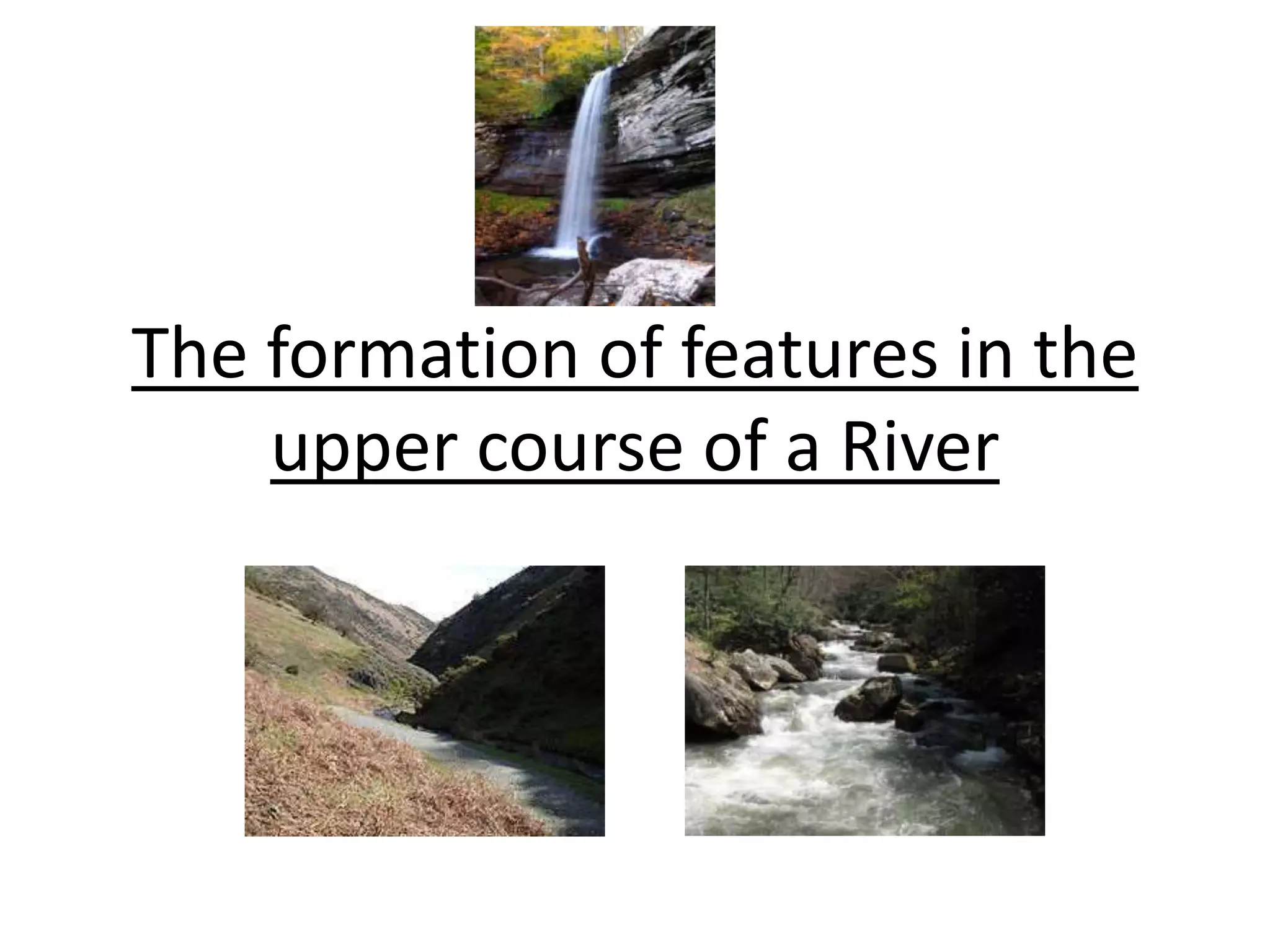
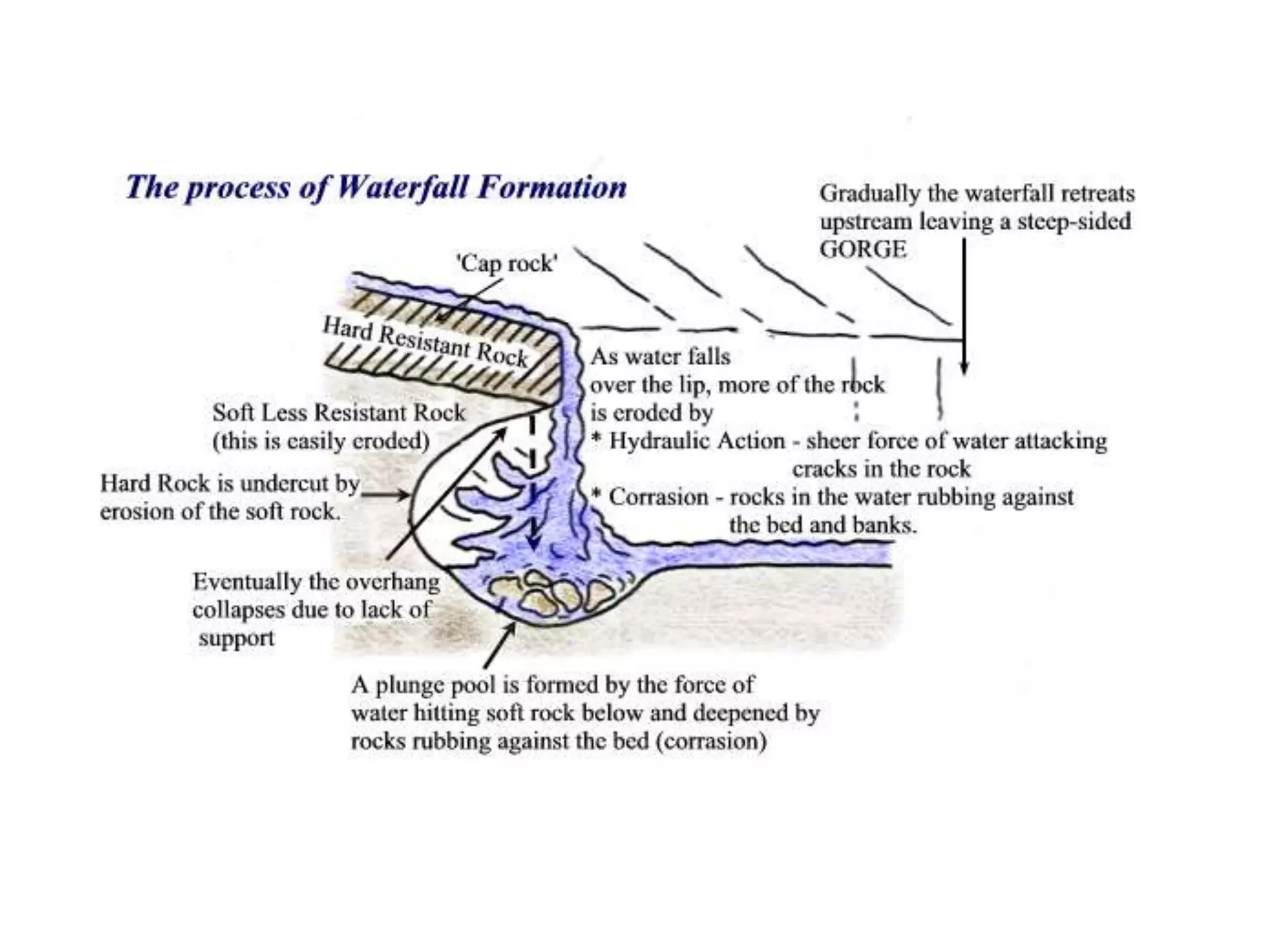
• A waterfall forms when a river, after flowing over relatively resistant,
meets a band of less resistant rock. As the water approaches the brink
of the falls, velocity increases due to an increase in hydraulic radius.
This is because water in front loses contact with the bed and the
banks. There is an increase in velocity because there is less friction
between the bed and the banks. The underlying softer rock is worn
away as water falls onto it. In time, the harder rock may become
undercut and eventually collapse due to the effects of gravity. Some of
this collapsed rock may be swirled around at the foot of the falls
mainly at times of high discharge.
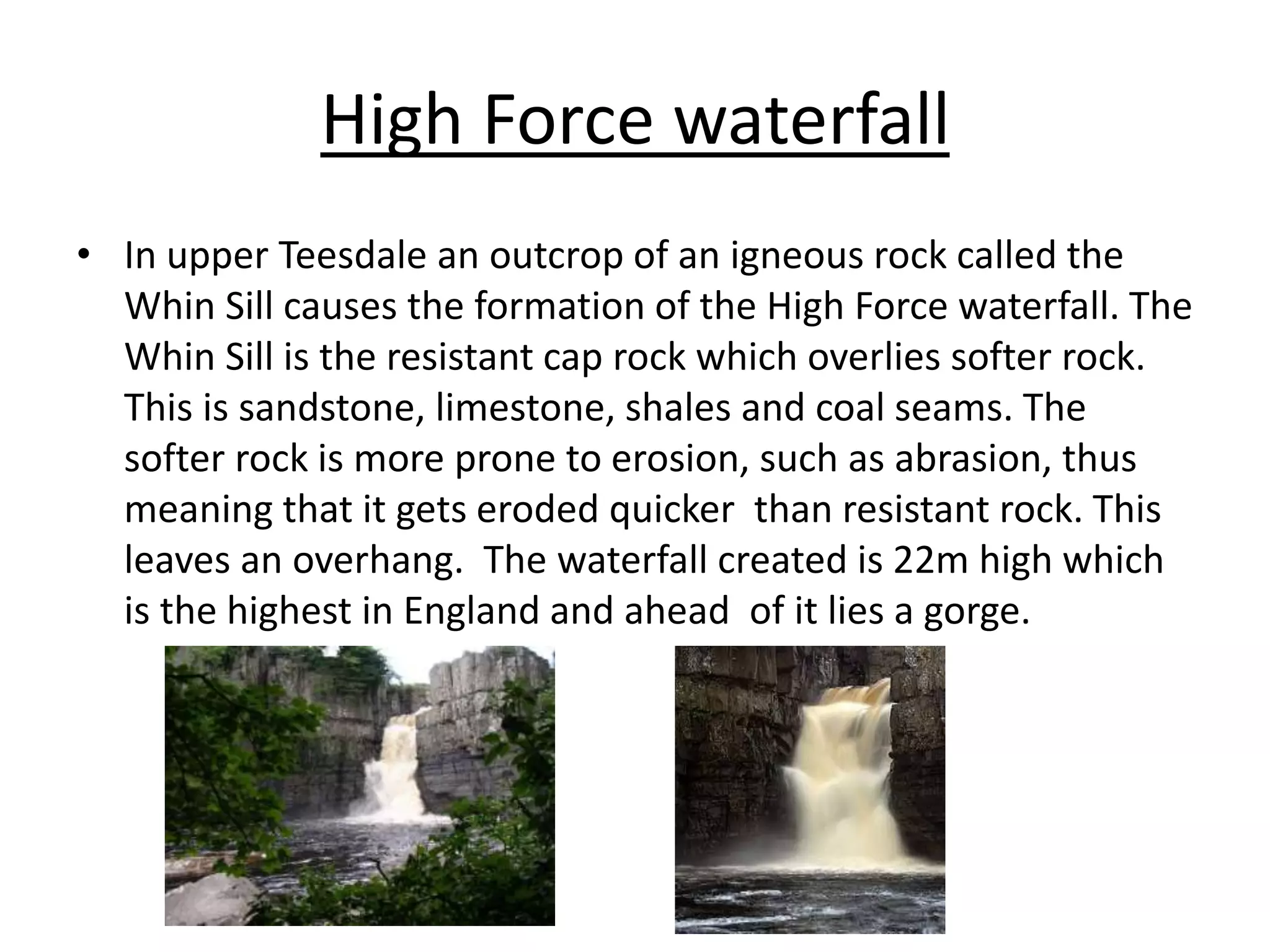
High Force waterfall
• In upper Teesdale an outcrop of an igneous rock called the
Whin Sill causes the formation of the High Force waterfall. The
Whin Sill is the resistant cap rock which overlies softer rock.
This is sandstone, limestone, shales and coal seams. The
softer rock is more prone to erosion, such as abrasion, thus
meaning that it gets eroded quicker than resistant rock. This
leaves an overhang. The waterfall created is 22m high which
is the highest in England and ahead of it lies a gorge.
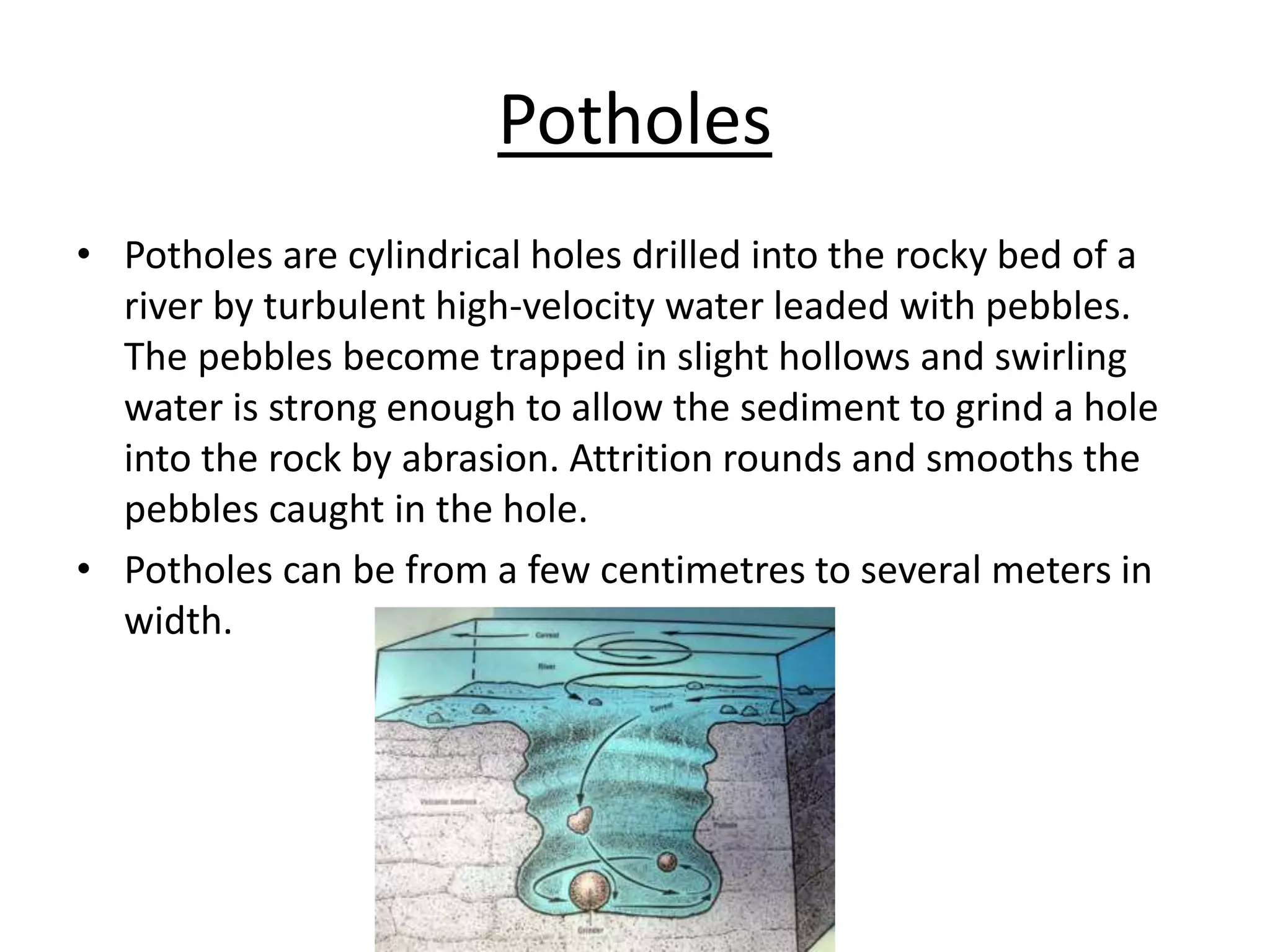
Potholes
• Potholes are cylindrical holes drilled into the rocky bed of a
river by turbulent high-velocity water leaded with pebbles.
The pebbles become trapped in slight hollows and swirling
water is strong enough to allow the sediment to grind a hole
into the rock by abrasion. Attrition rounds and smooths the
pebbles caught in the hole.
• Potholes can be from a few centimetres to several meters in
width.
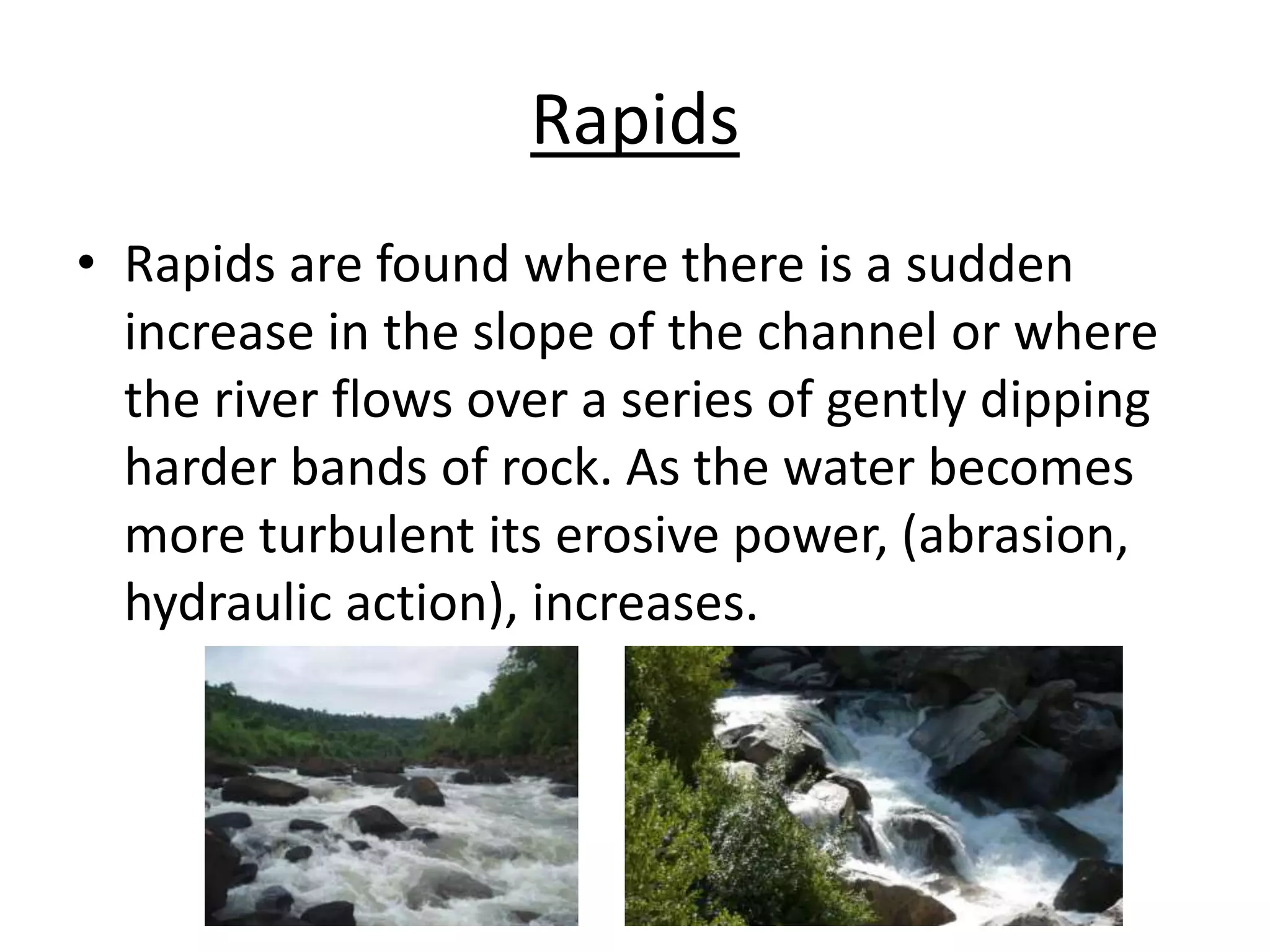
Rapids
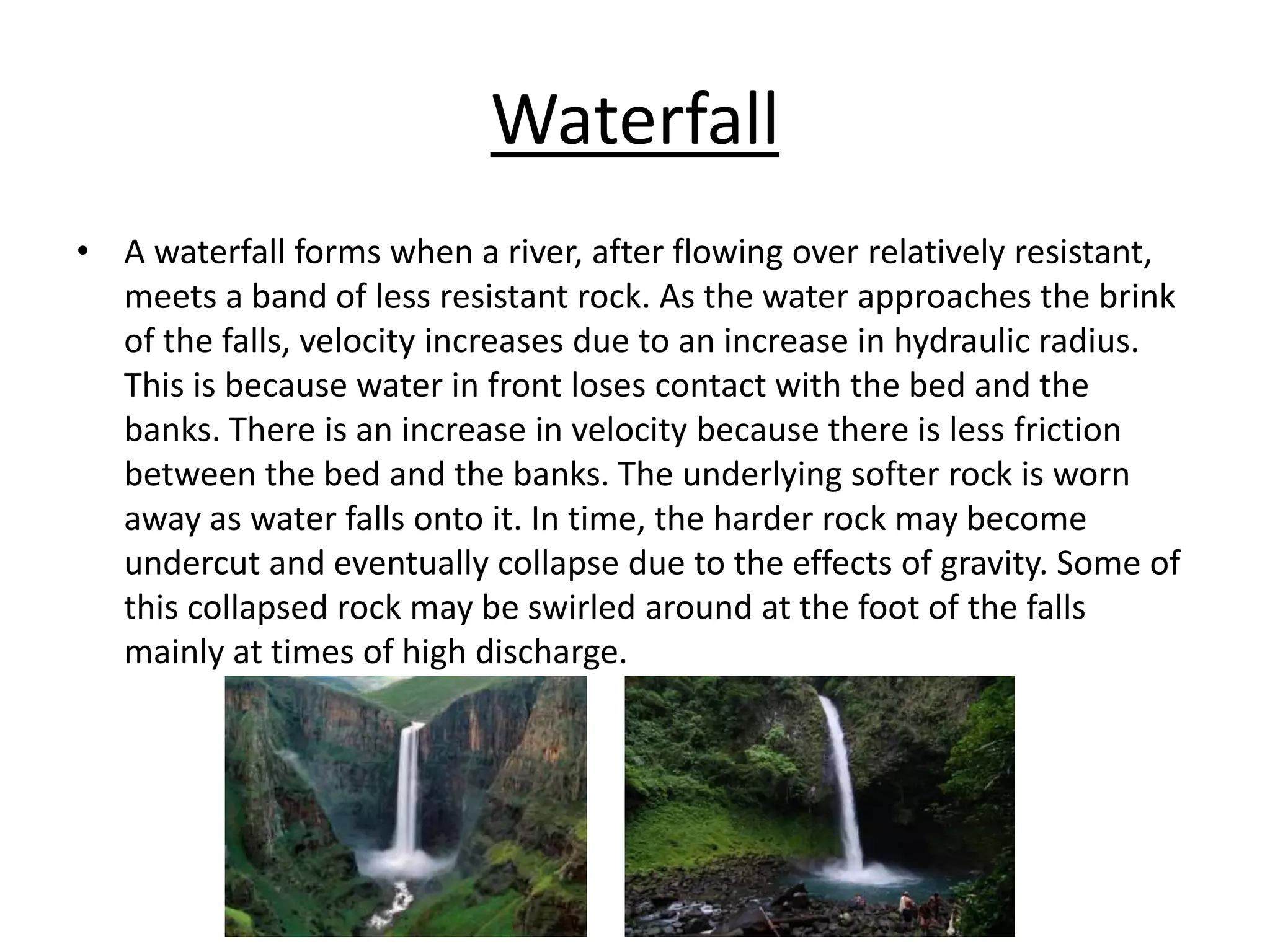
• Rapids are found where there is a sudden
increase in the slope of the channel or where
the river flows over a series of gently dipping
harder bands of rock. As the water becomes
more turbulent its erosive power, (abrasion,
hydraulic action), increases.
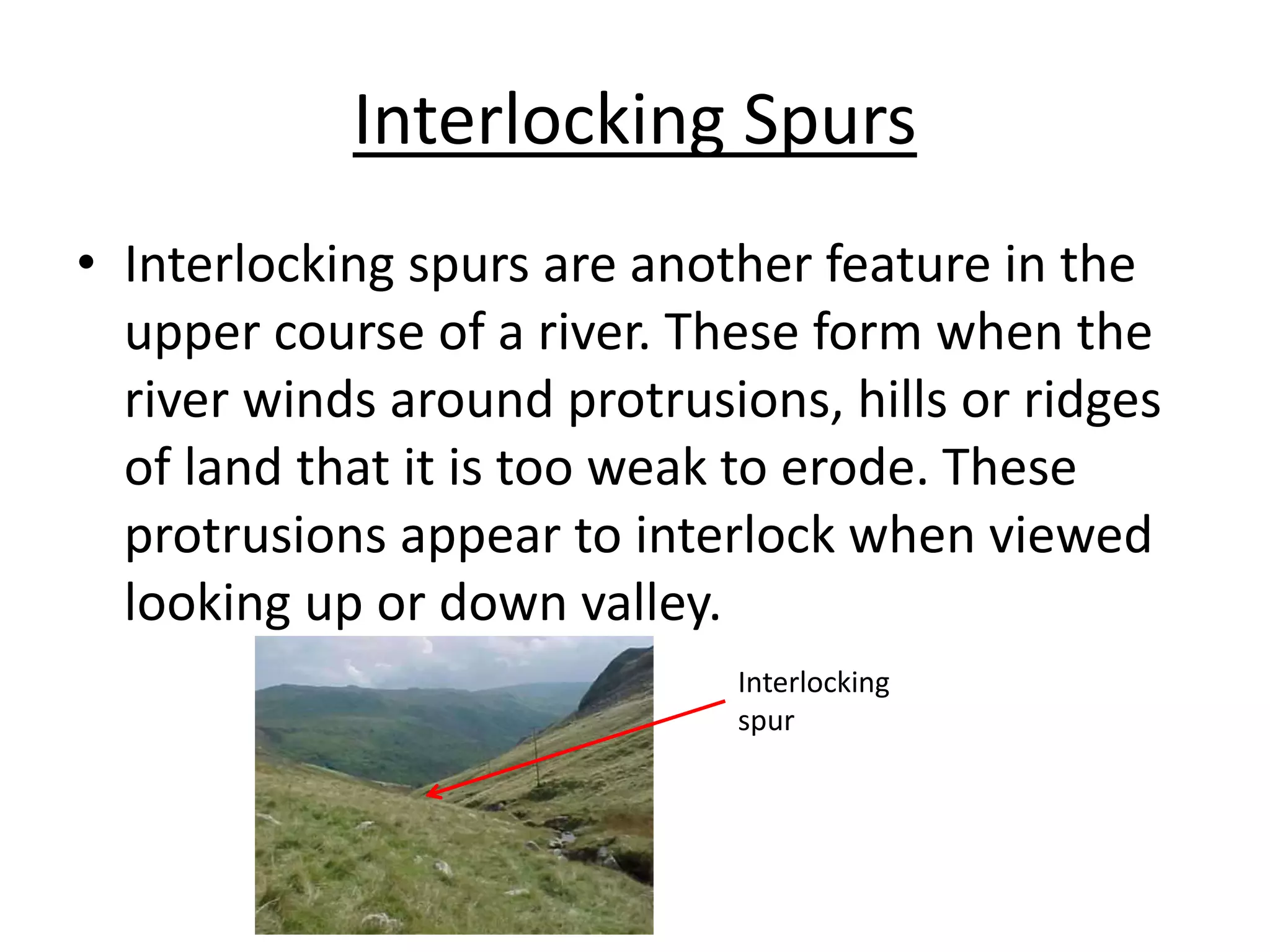
Interlocking Spurs
• Interlocking spurs are another feature in the
upper course of a river. These form when the
river winds around protrusions, hills or ridges
of land that it is too weak to erode. These
protrusions appear to interlock when viewed
looking up or down valley.
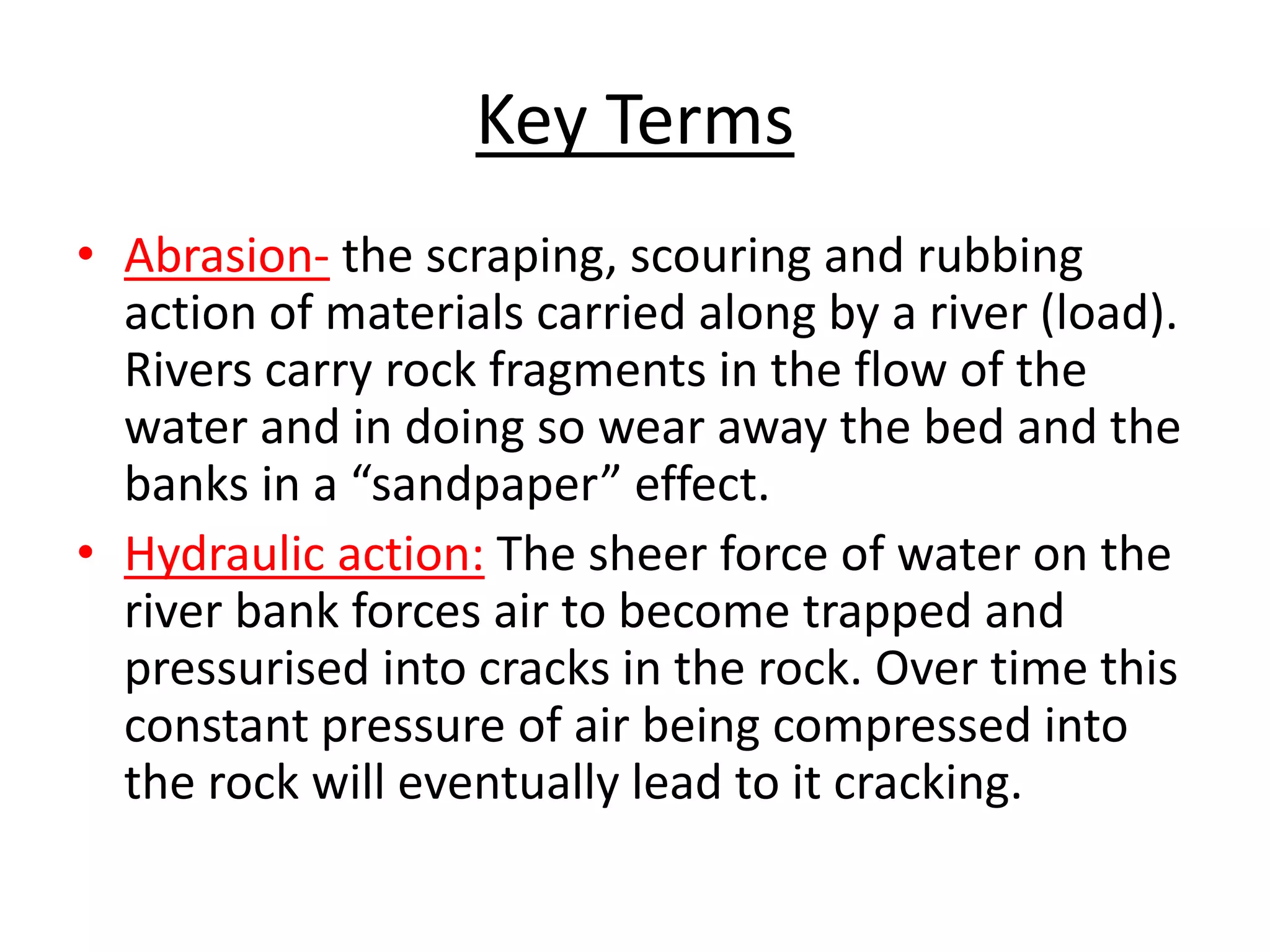
Interlocking
spur

The formation of features in the upper course

  • 1.
    The formation offeatures in the upper course of a River
  • 2.
    Key Terms • Abrasion-the scraping, scouring and rubbing action of materials carried along by a river (load). Rivers carry rock fragments in the flow of the water and in doing so wear away the bed and the banks in a “sandpaper” effect. • Hydraulic action: The sheer force of water on the river bank forces air to become trapped and pressurised into cracks in the rock. Over time this constant pressure of air being compressed into the rock will eventually lead to it cracking.
  • 3.
    Waterfall • A waterfallforms when a river, after flowing over relatively resistant, meets a band of less resistant rock. As the water approaches the brink of the falls, velocity increases due to an increase in hydraulic radius. This is because water in front loses contact with the bed and the banks. There is an increase in velocity because there is less friction between the bed and the banks. The underlying softer rock is worn away as water falls onto it. In time, the harder rock may become undercut and eventually collapse due to the effects of gravity. Some of this collapsed rock may be swirled around at the foot of the falls mainly at times of high discharge.
  • 5.
    High Force waterfall •In upper Teesdale an outcrop of an igneous rock called the Whin Sill causes the formation of the High Force waterfall. The Whin Sill is the resistant cap rock which overlies softer rock. This is sandstone, limestone, shales and coal seams. The softer rock is more prone to erosion, such as abrasion, thus meaning that it gets eroded quicker than resistant rock. This leaves an overhang. The waterfall created is 22m high which is the highest in England and ahead of it lies a gorge.
  • 6.
    Potholes • Potholes arecylindrical holes drilled into the rocky bed of a river by turbulent high-velocity water leaded with pebbles. The pebbles become trapped in slight hollows and swirling water is strong enough to allow the sediment to grind a hole into the rock by abrasion. Attrition rounds and smooths the pebbles caught in the hole. • Potholes can be from a few centimetres to several meters in width.
  • 7.
    Rapids • Rapids arefound where there is a sudden increase in the slope of the channel or where the river flows over a series of gently dipping harder bands of rock. As the water becomes more turbulent its erosive power, (abrasion, hydraulic action), increases.
  • 8.
    Interlocking Spurs • Interlockingspurs are another feature in the upper course of a river. These form when the river winds around protrusions, hills or ridges of land that it is too weak to erode. These protrusions appear to interlock when viewed looking up or down valley. Interlocking spur