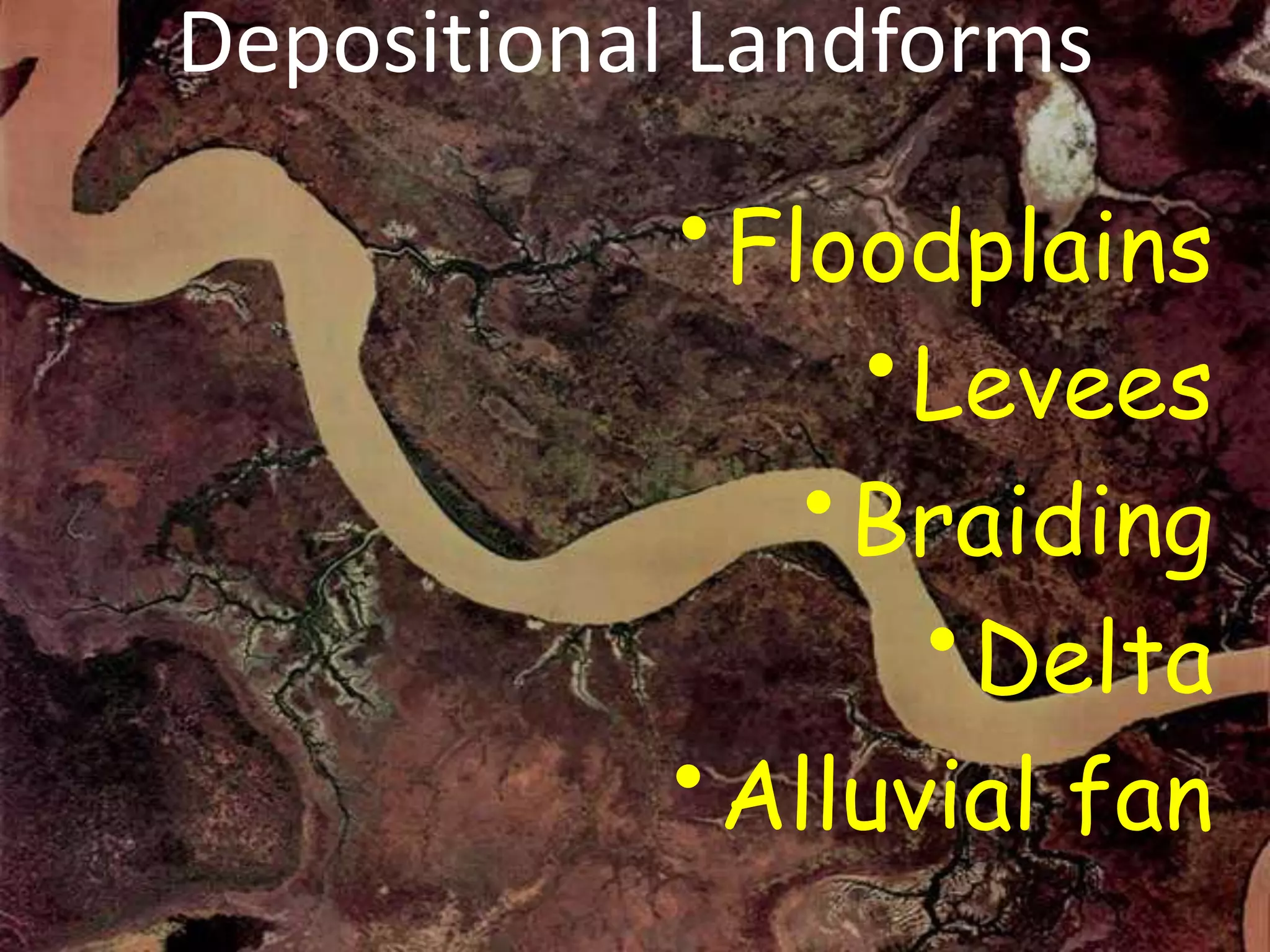
Depositional Landforms
•Floodplains
•Levees
• Braiding
•Delta
•Alluvial fan
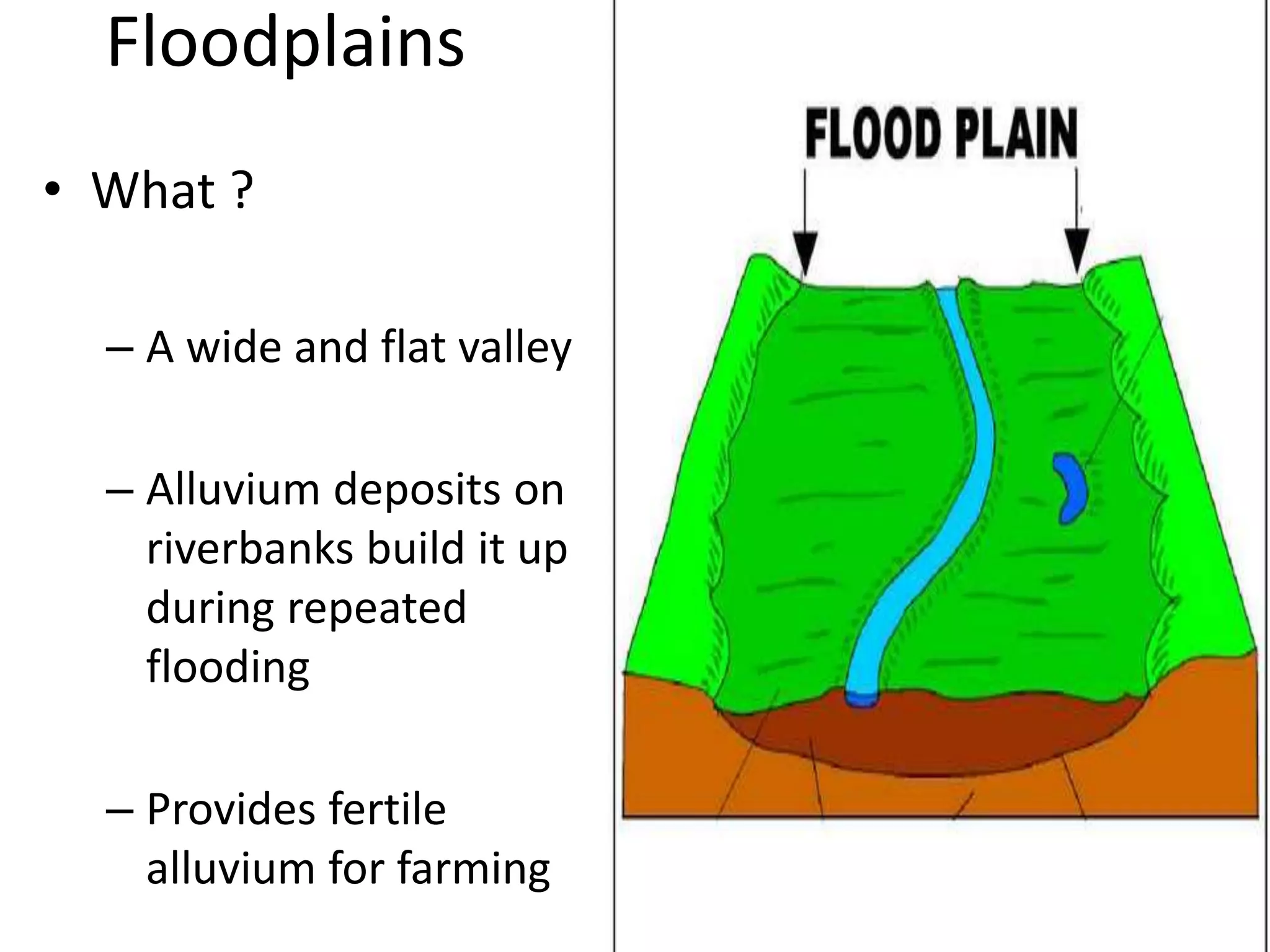
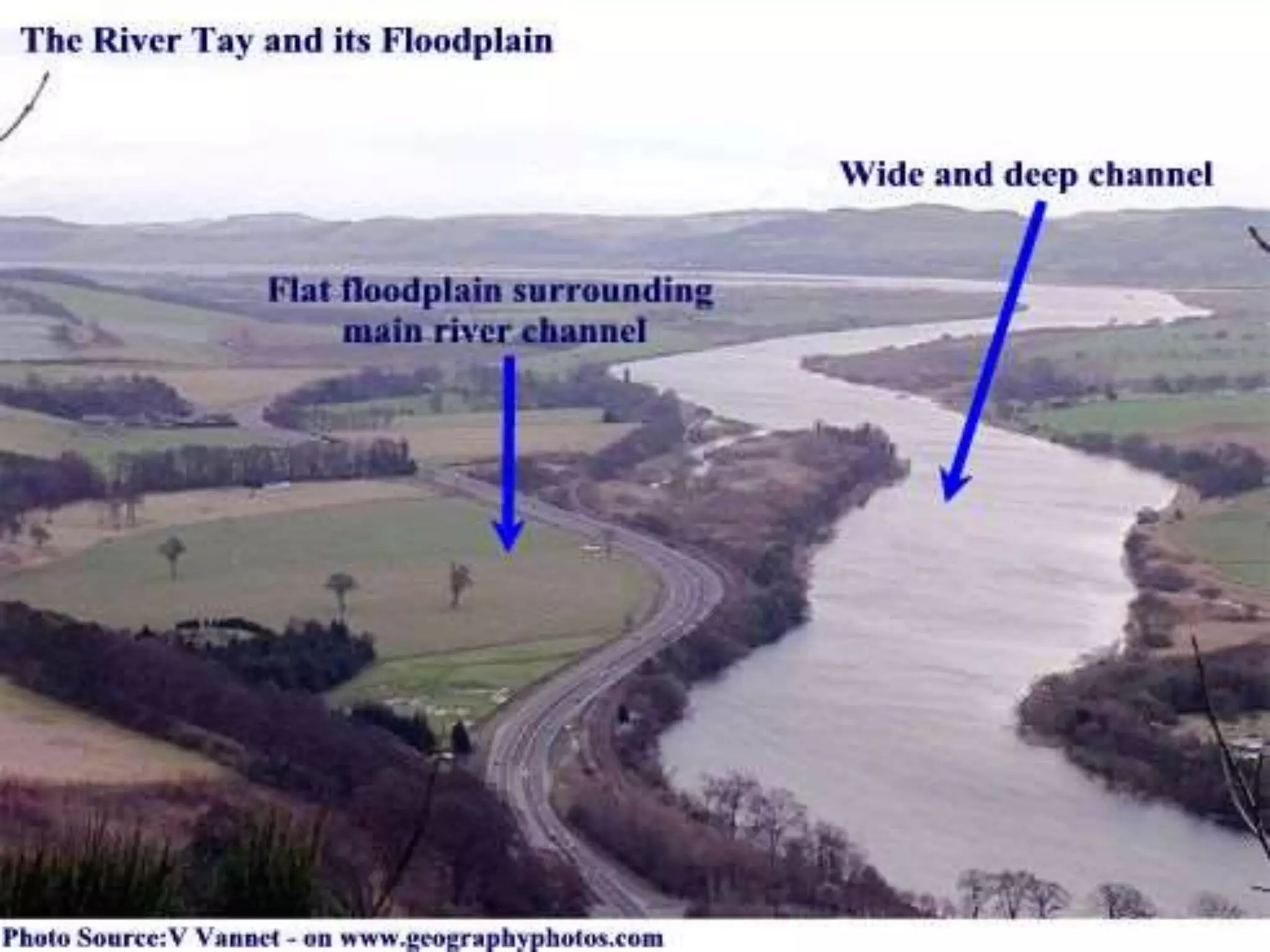
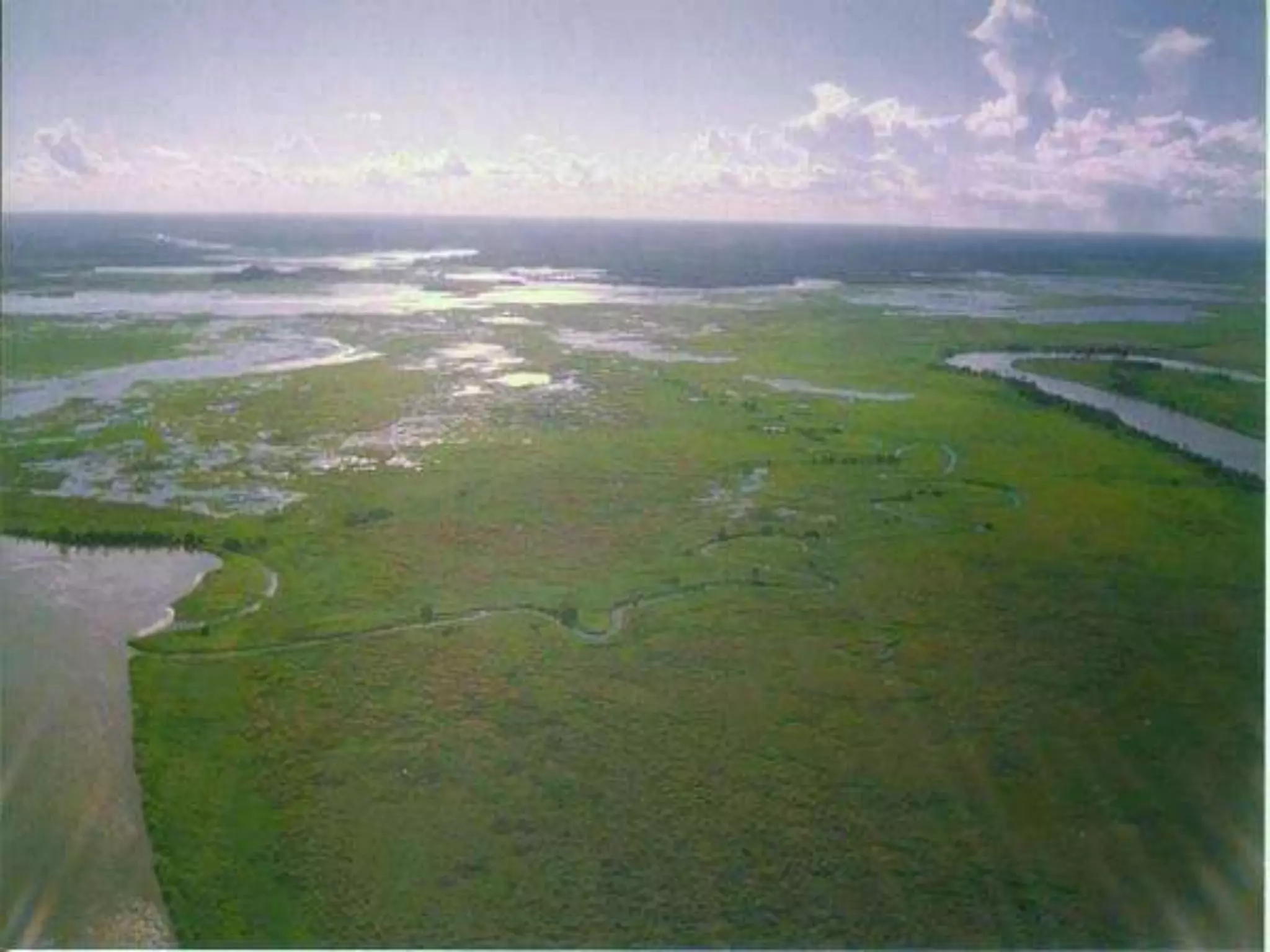
Floodplains
• What ?
– A wide and flat valley
– Alluvium deposits on
riverbanks build it up
during repeated
flooding
– Provides fertile
alluvium for farming
How?
• Form when river overflows its banks during
flooding and spread large amount of sediment
over the banks
• When flood subsides or over, there is a decrease
in volume so that river deposits its load.
• Repeated flooding result in materials deposited
on the riverbanks forming a floodplain
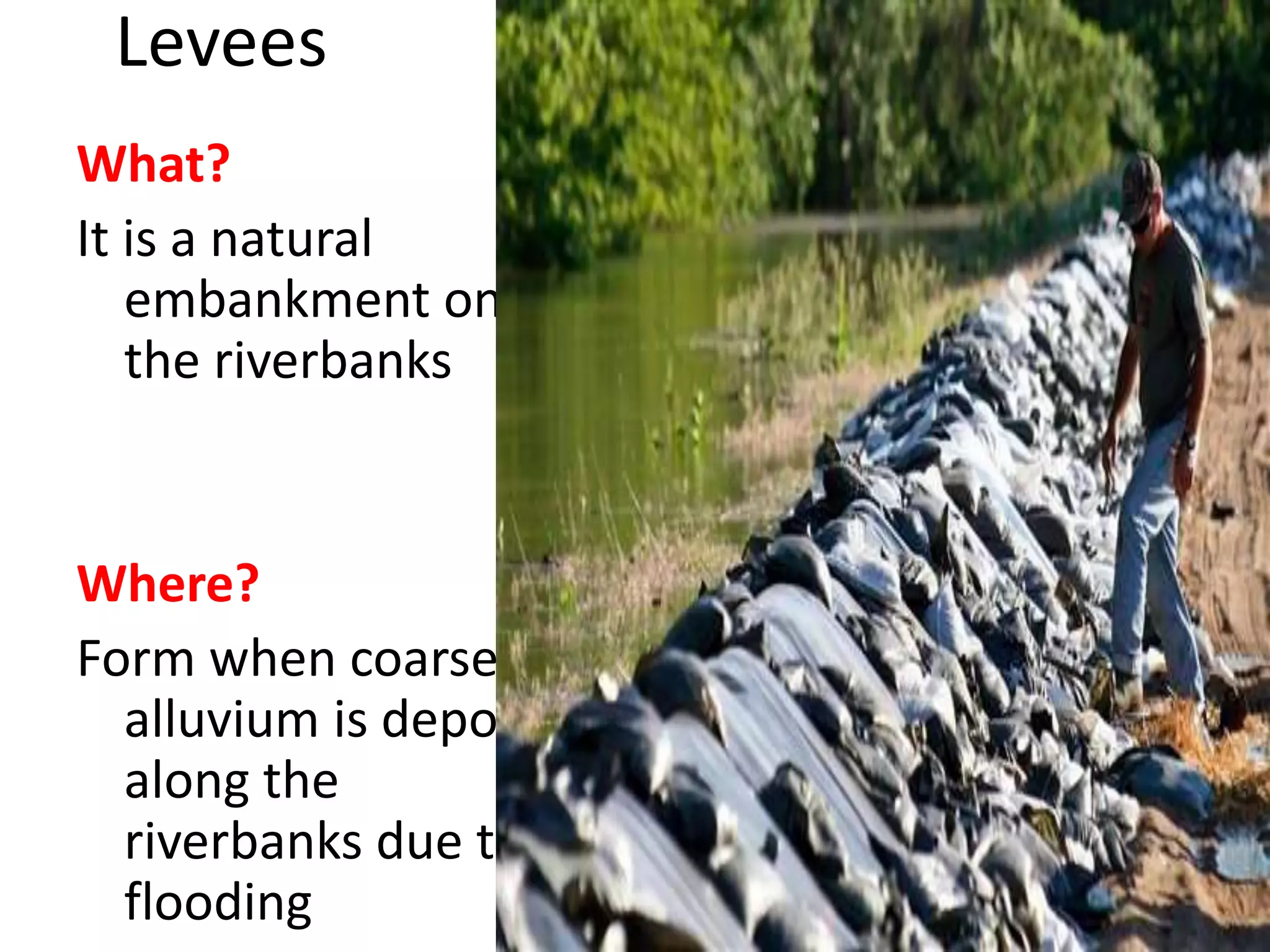
Levees
What?
It is a natural
embankment on
the riverbanks
Where?
Form when coarser
alluvium is deposit
along the
riverbanks due to
flooding
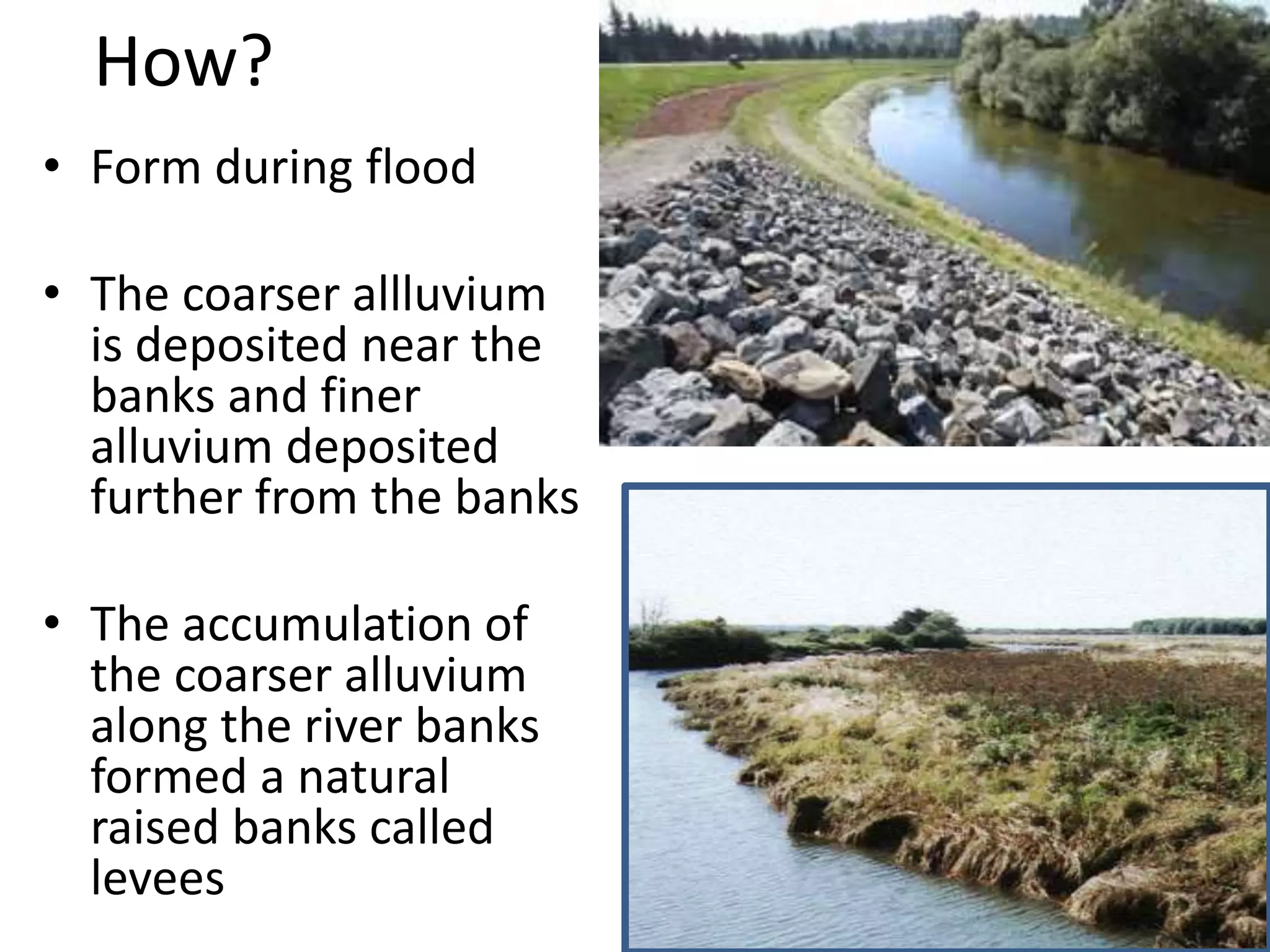
How?
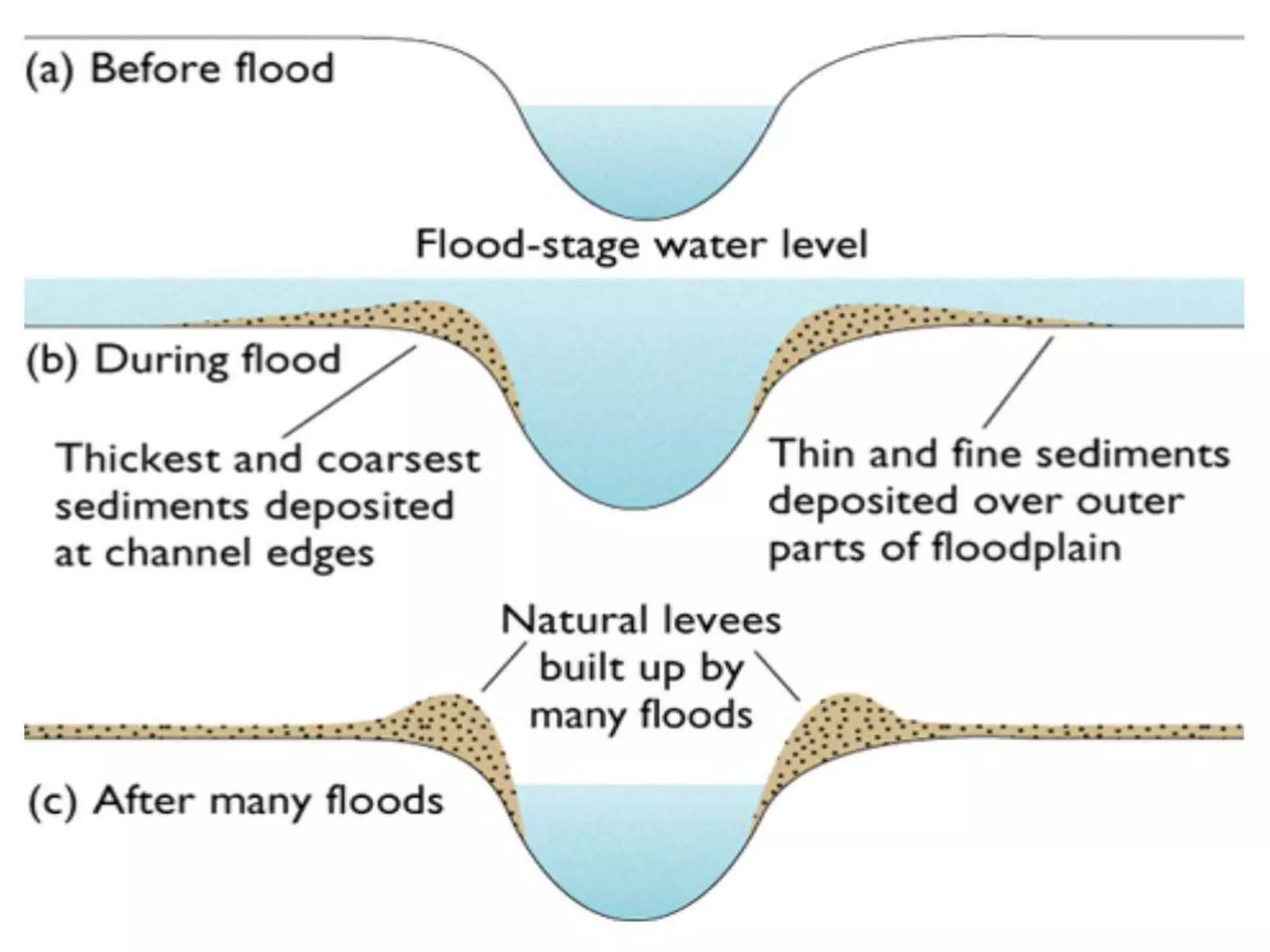
• Form during flood
• The coarser allluvium
is deposited near the
banks and finer
alluvium deposited
further from the banks
• The accumulation of
the coarser alluvium
along the river banks
formed a natural
raised banks called
levees
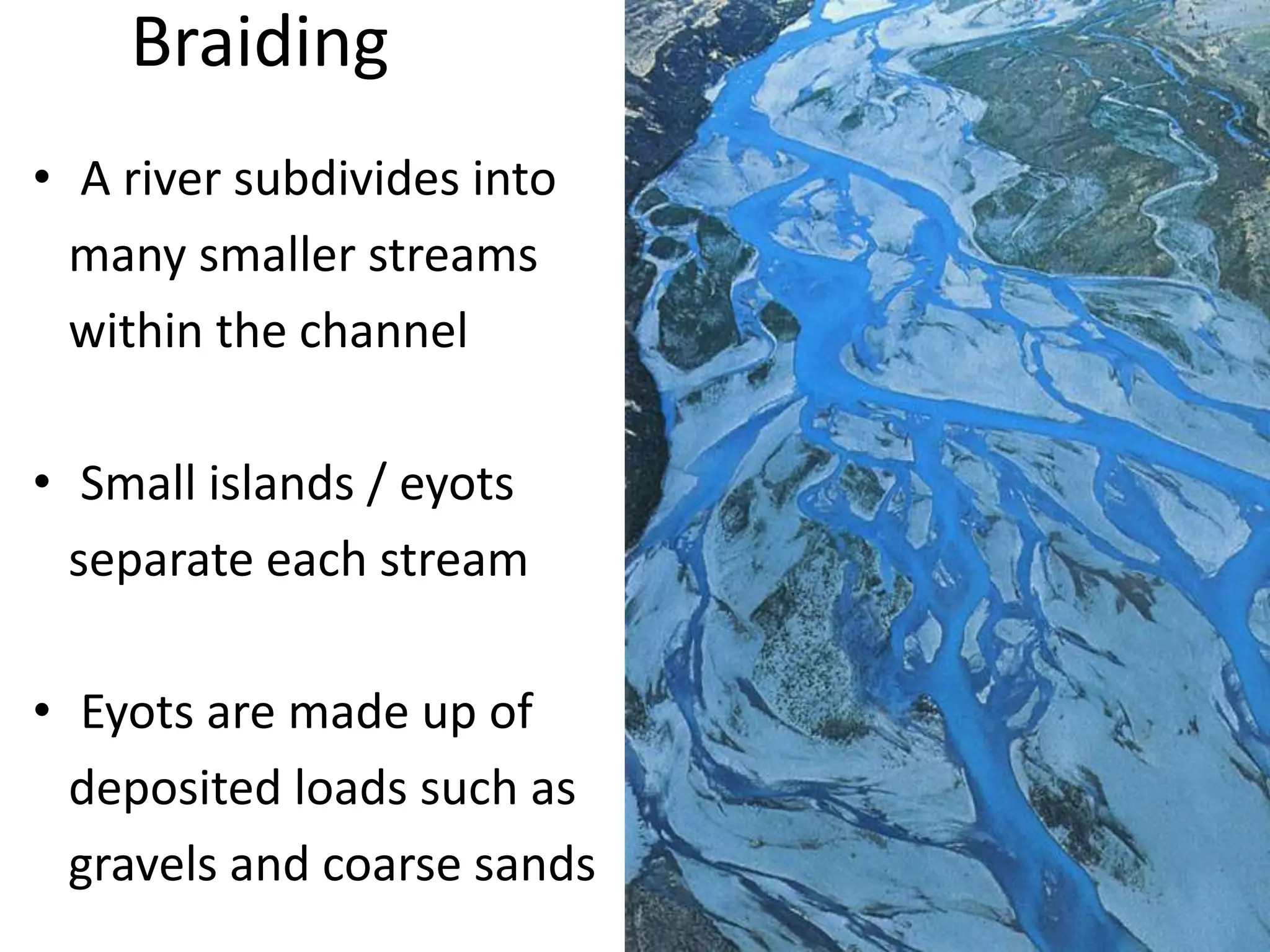
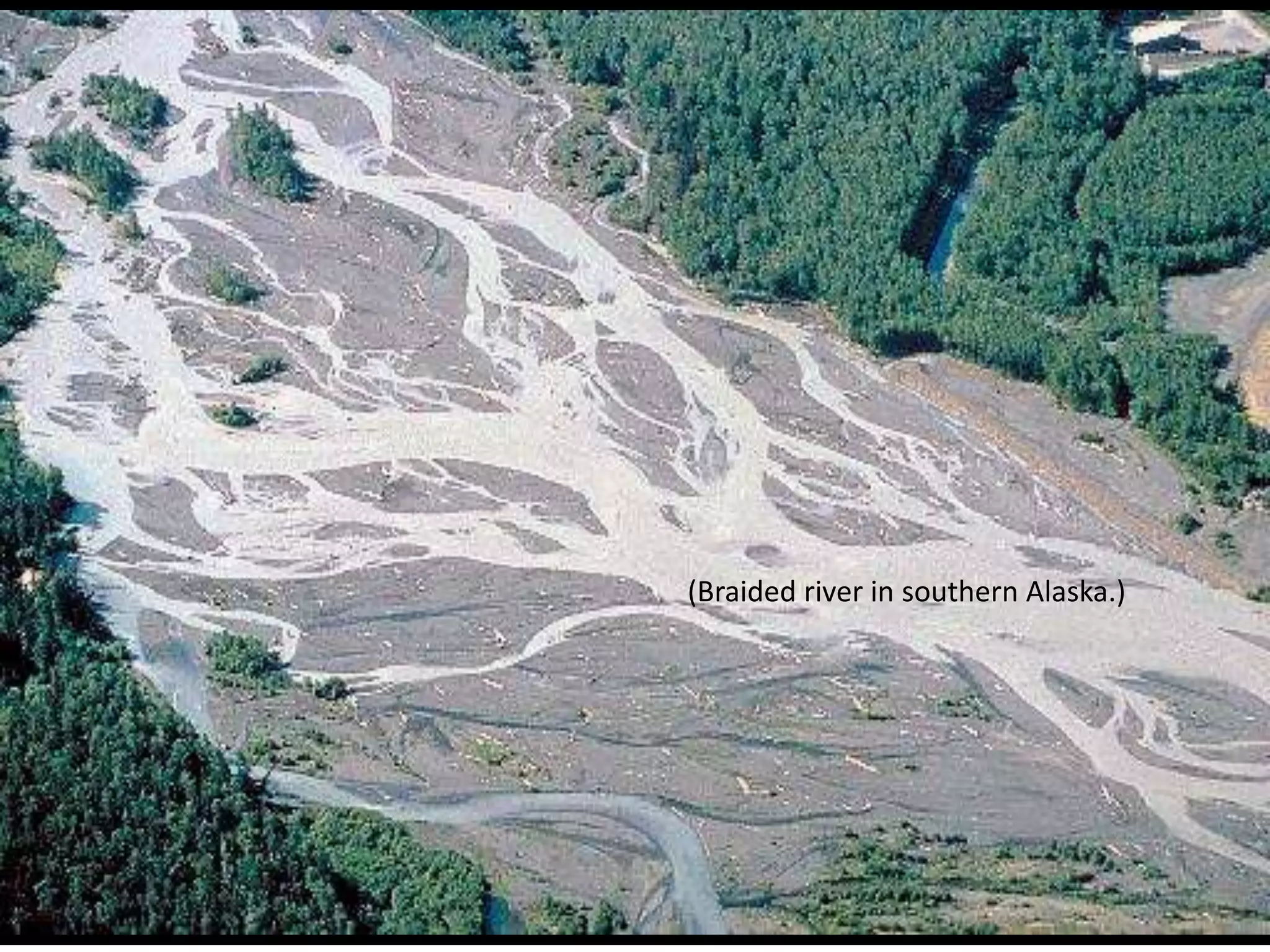
Braiding
• A river subdivides into
many smaller streams
within the channel
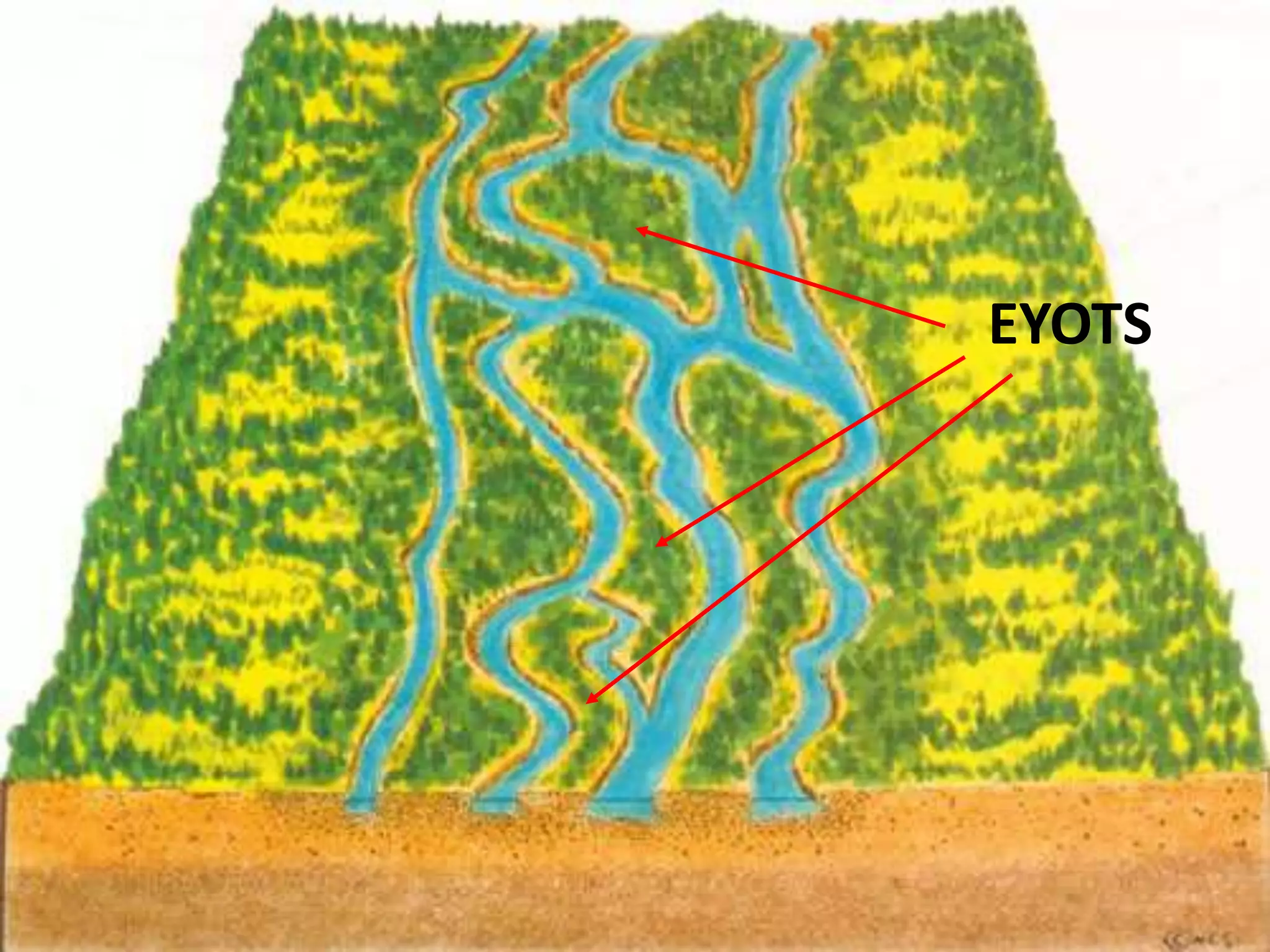
• Small islands / eyots
separate each stream
• Eyots are made up of
deposited loads such as
gravels and coarse sands
How?
• Depends on load-discharge relationship
• Short period of the year, some rivers carry a
heavy load which the rivers have difficulty in
removing
• When the river level falls rapidly, competence
and capacity reduced – channel deposit
materials within the channel
• Channel become broad and shallow with a low
hydraulic radius
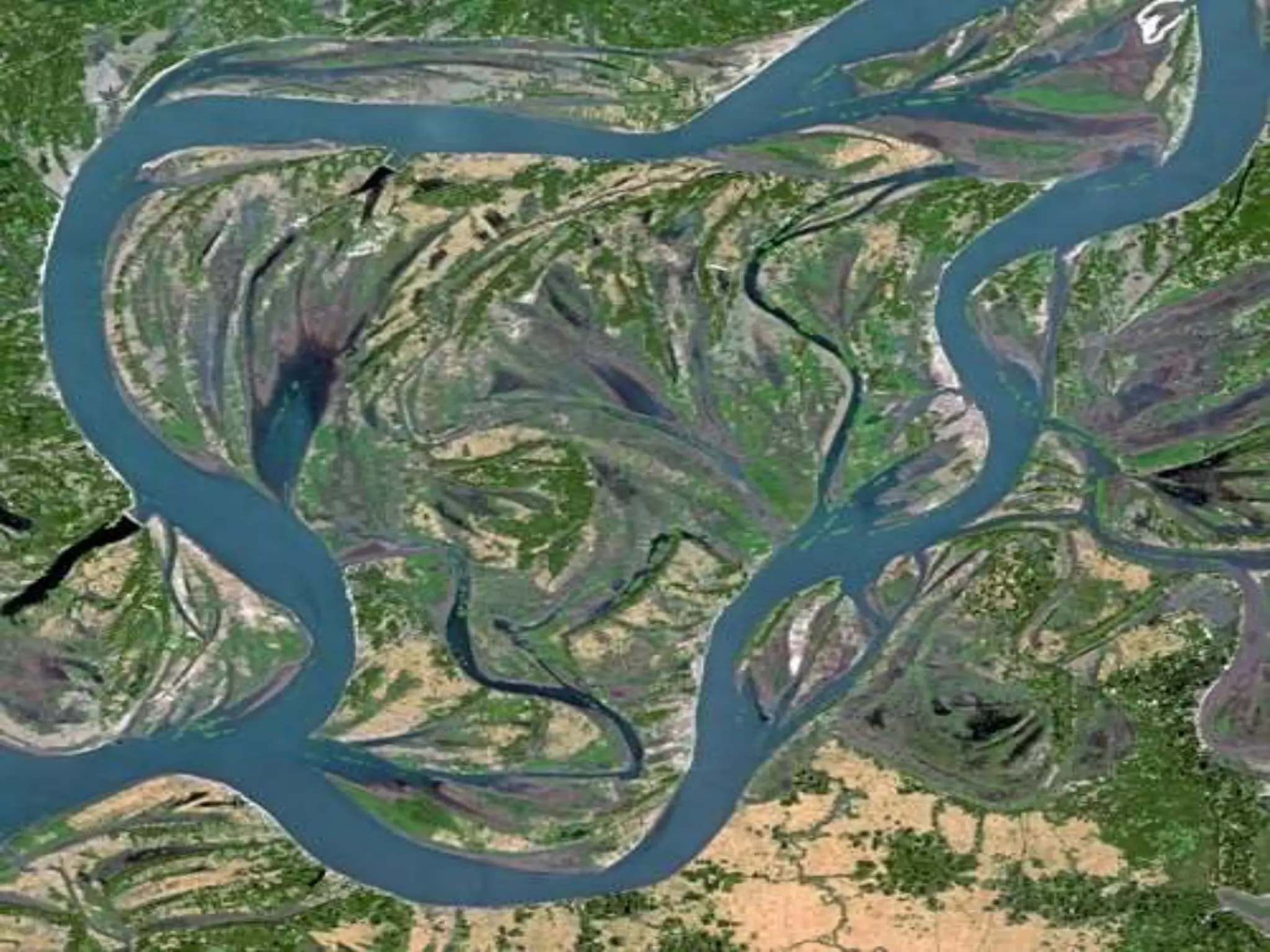
(Braided river in southern Alaska.)
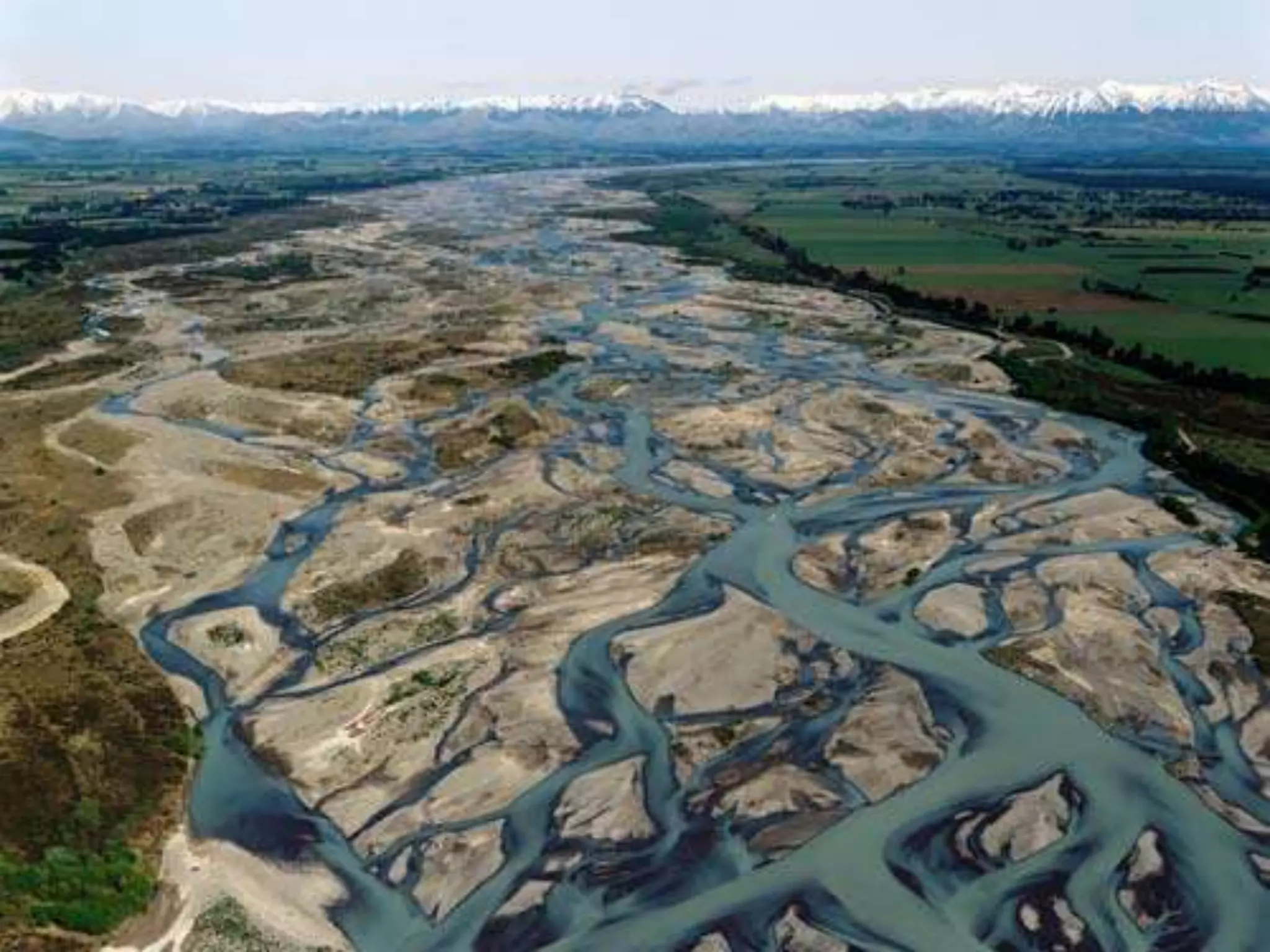
EYOTS
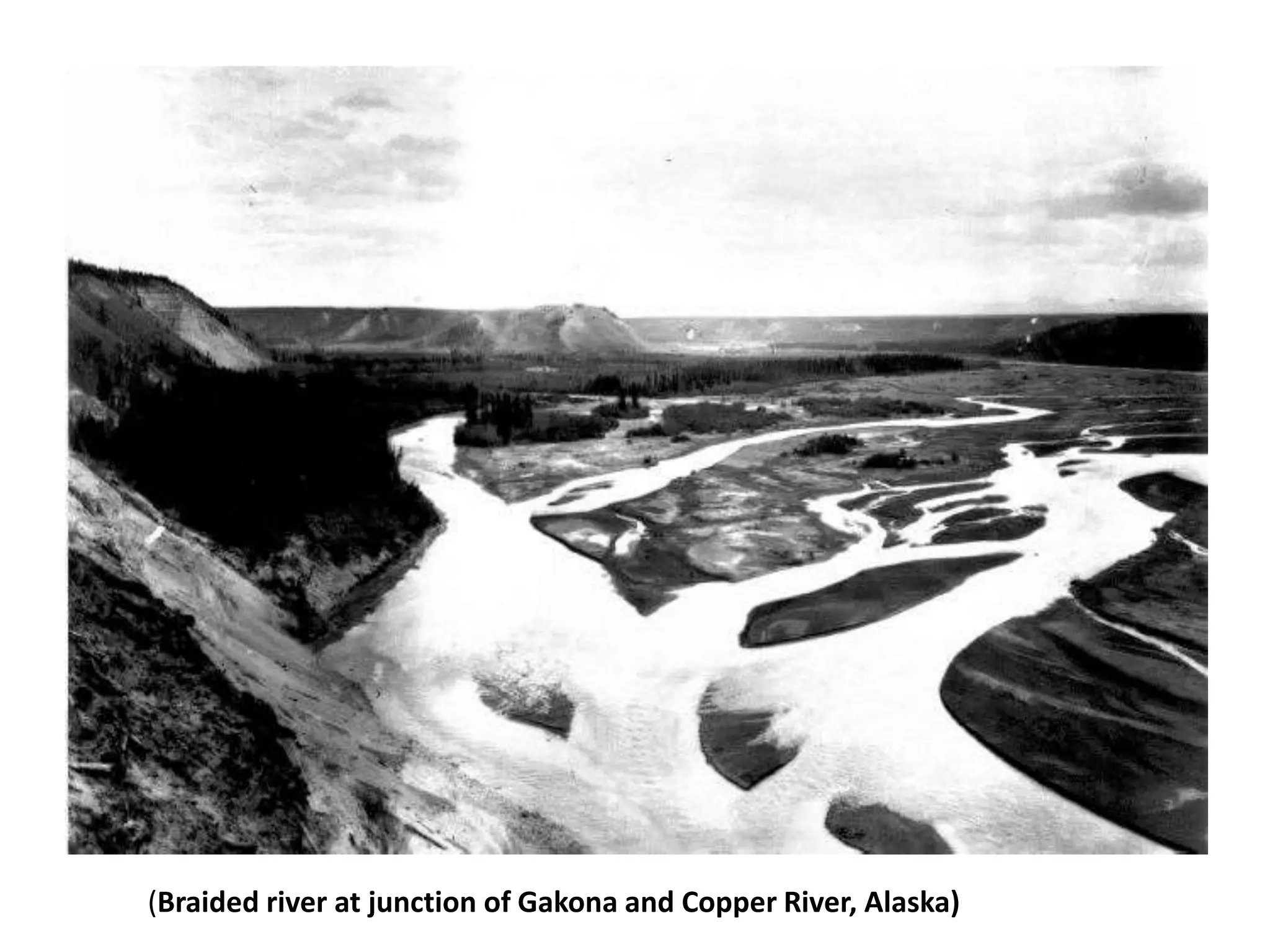
(Braided river at junction of Gakona and Copper River, Alaska)
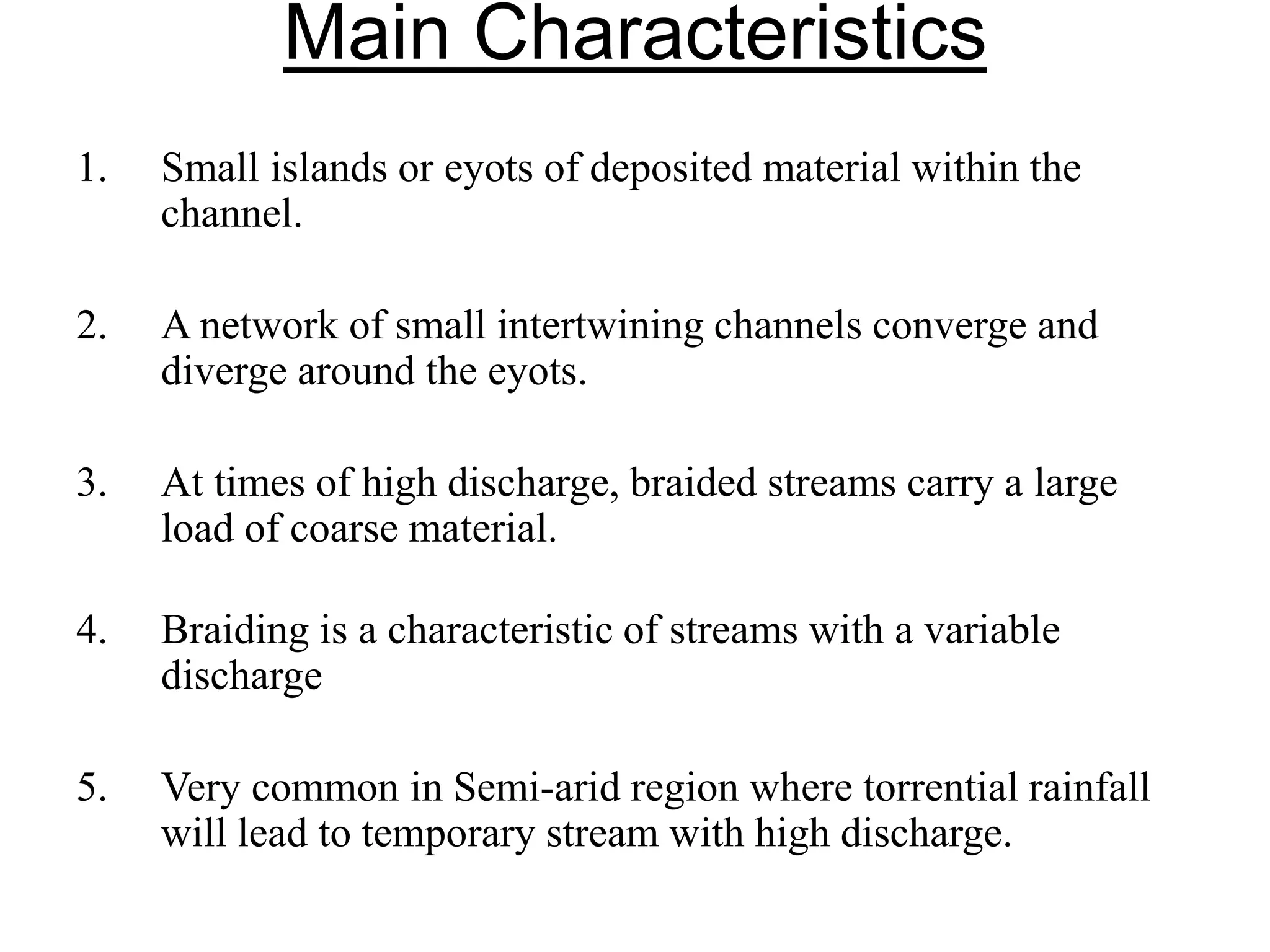
Main Characteristics
1. Small islands or eyots of deposited material within the
channel.
2. A network of small intertwining channels converge and
diverge around the eyots.
3. At times of high discharge, braided streams carry a large
load of coarse material.
4. Braiding is a characteristic of streams with a variable
discharge
5. Very common in Semi-arid region where torrential rainfall
will lead to temporary stream with high discharge.
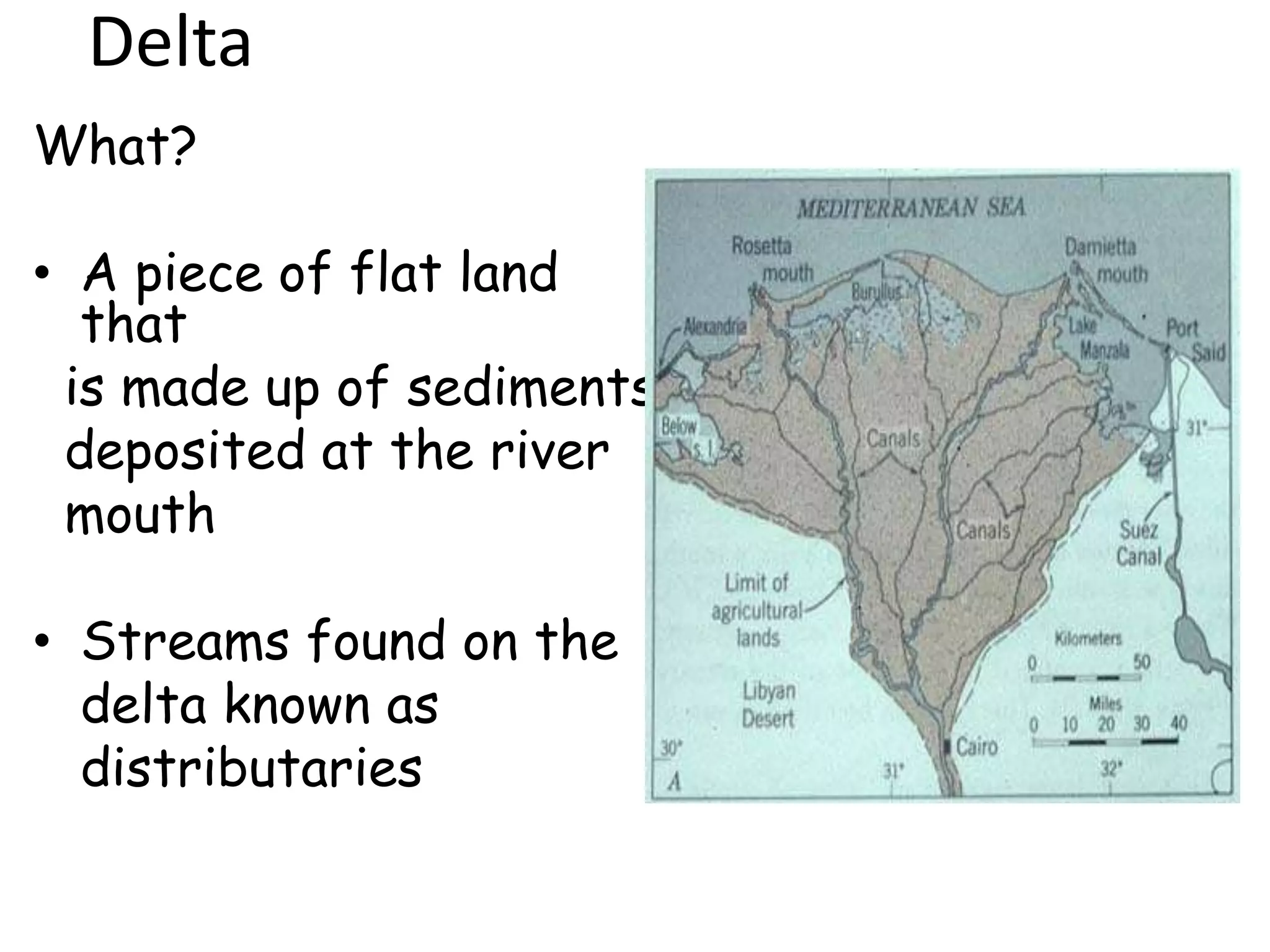
Delta
What?
• A piece of flat land
that
is made up of sediments
deposited at the river
mouth
• Streams found on the
delta known as
distributaries
• Flocculation occurs as fresh water mixes with
salt water - e.g where a river flows into the
sea -(then called brackish water), and is the
process by which tiny particles in suspension
like clay and silt (which under normal fresh
water conditions would likely never fall out of
suspension) coagulate with the salt in the
water by chemical reaction and become heavy
enough to ‘sink’ and be deposited
Flocculation
Typical Conditions:
• Calm and shallow seawater with gentle slope
• River deposits its load at the river mouth
• Wave in the sea is weak and sheltered coast
• More deposition due to active erosion in the
upper course
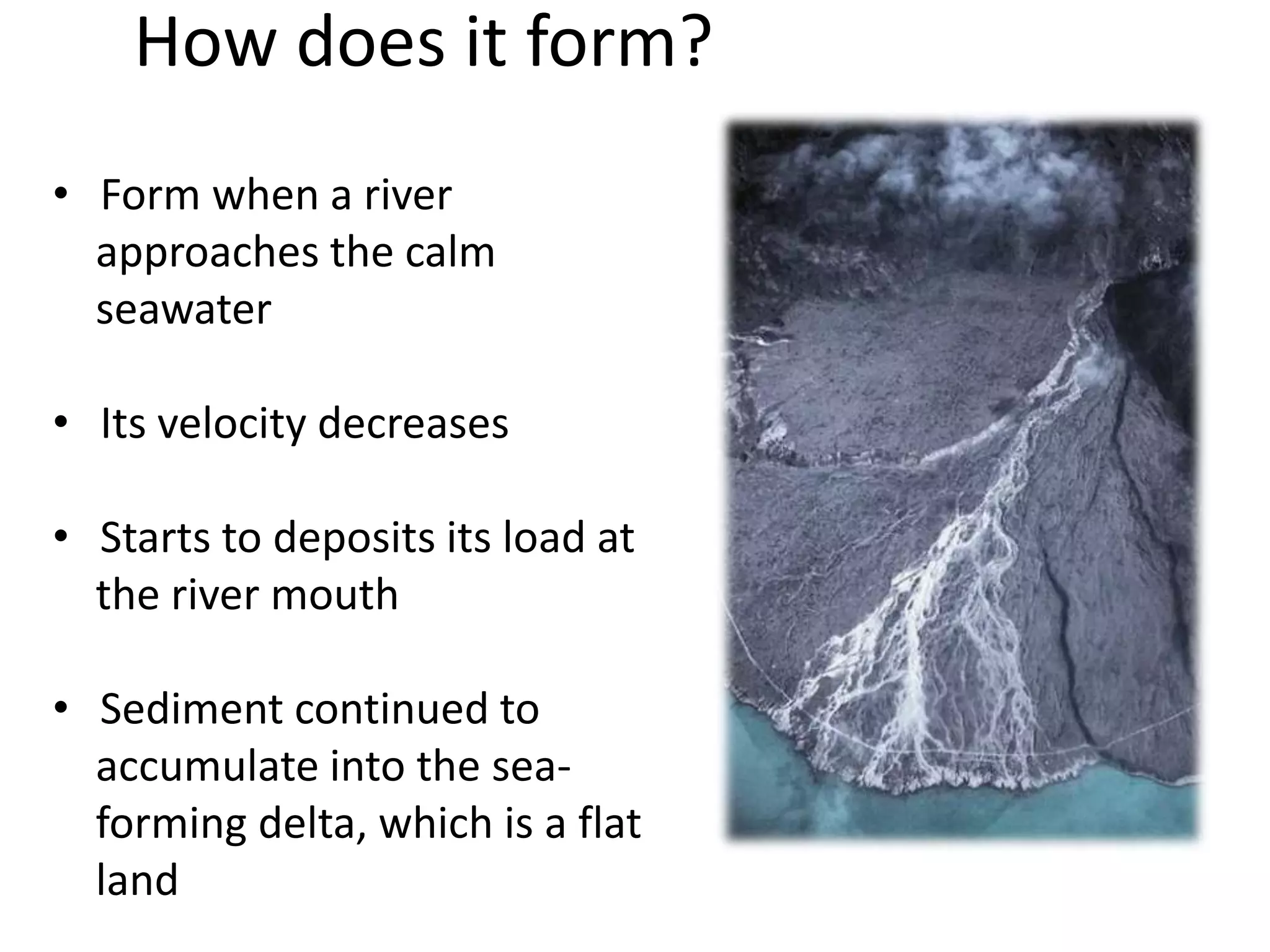
How does it form?
• Form when a river
approaches the calm
seawater
• Its velocity decreases
• Starts to deposits its load at
the river mouth
• Sediment continued to
accumulate into the sea-
forming delta, which is a flat
land
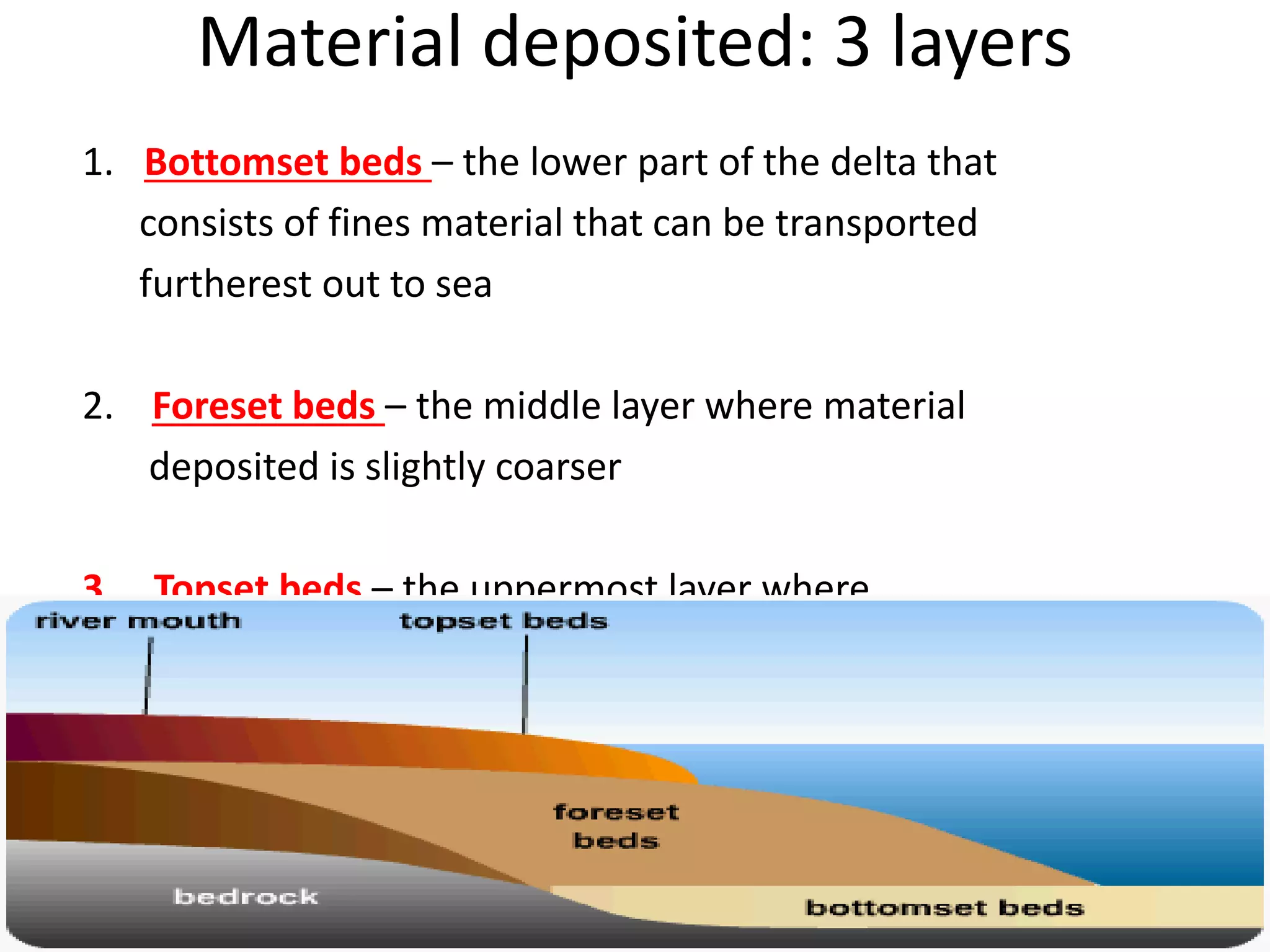
Material deposited: 3 layers
1. Bottomset beds – the lower part of the delta that
consists of fines material that can be transported
furtherest out to sea
2. Foreset beds – the middle layer where material
deposited is slightly coarser
3. Topset beds – the uppermost layer where
coarsest particles settle first
• Delta’s can be categorised into three main
shapes
– Arcuate
– Birds Foot
– Cuspate
Types of Delta
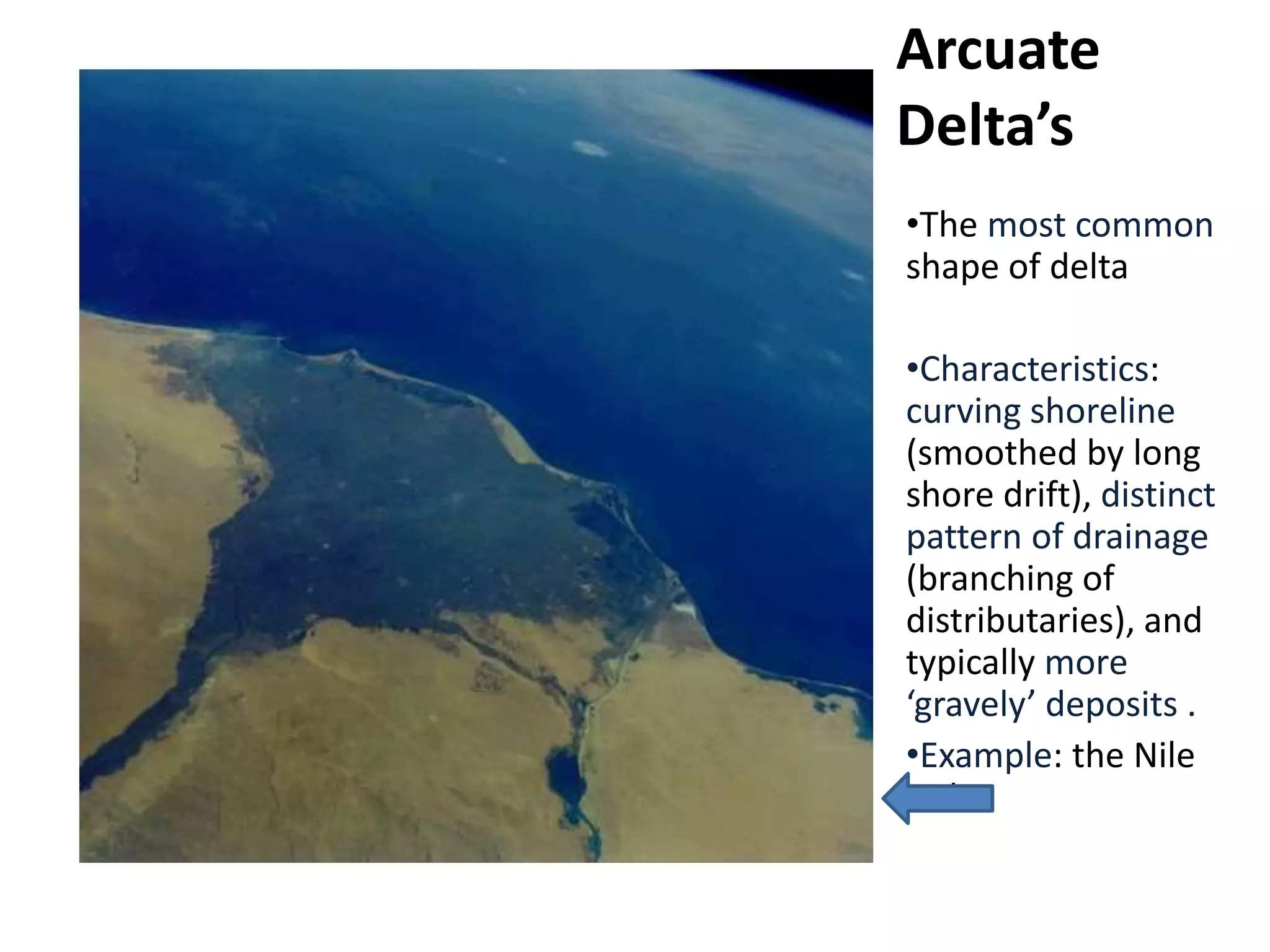
•The most common
shape of delta
•Characteristics:
curving shoreline
(smoothed by long
shore drift), distinct
pattern of drainage
(branching of
distributaries), and
typically more
‘gravely’ deposits .
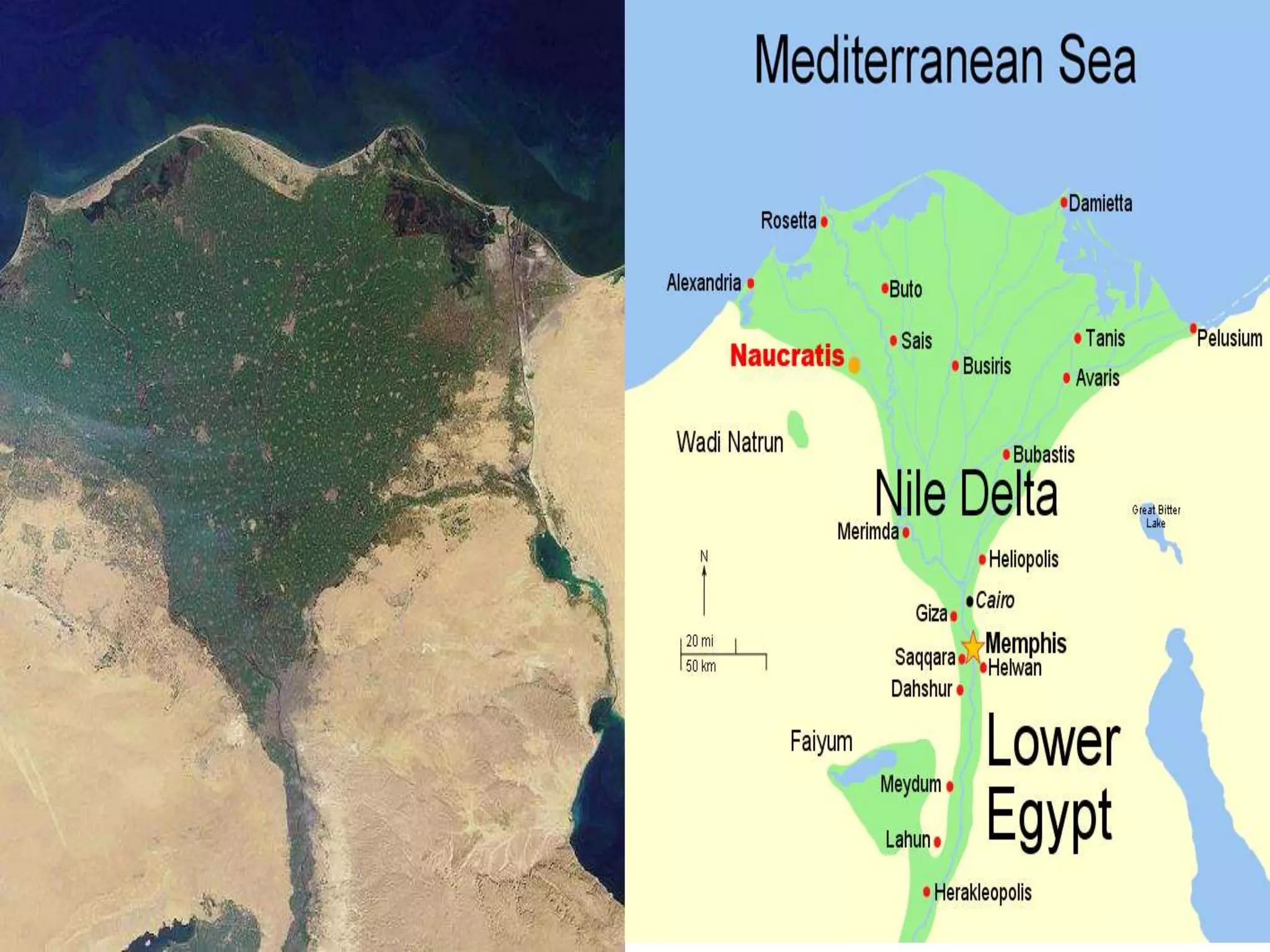
•Example: the Nile
Delta
Arcuate
Delta’s
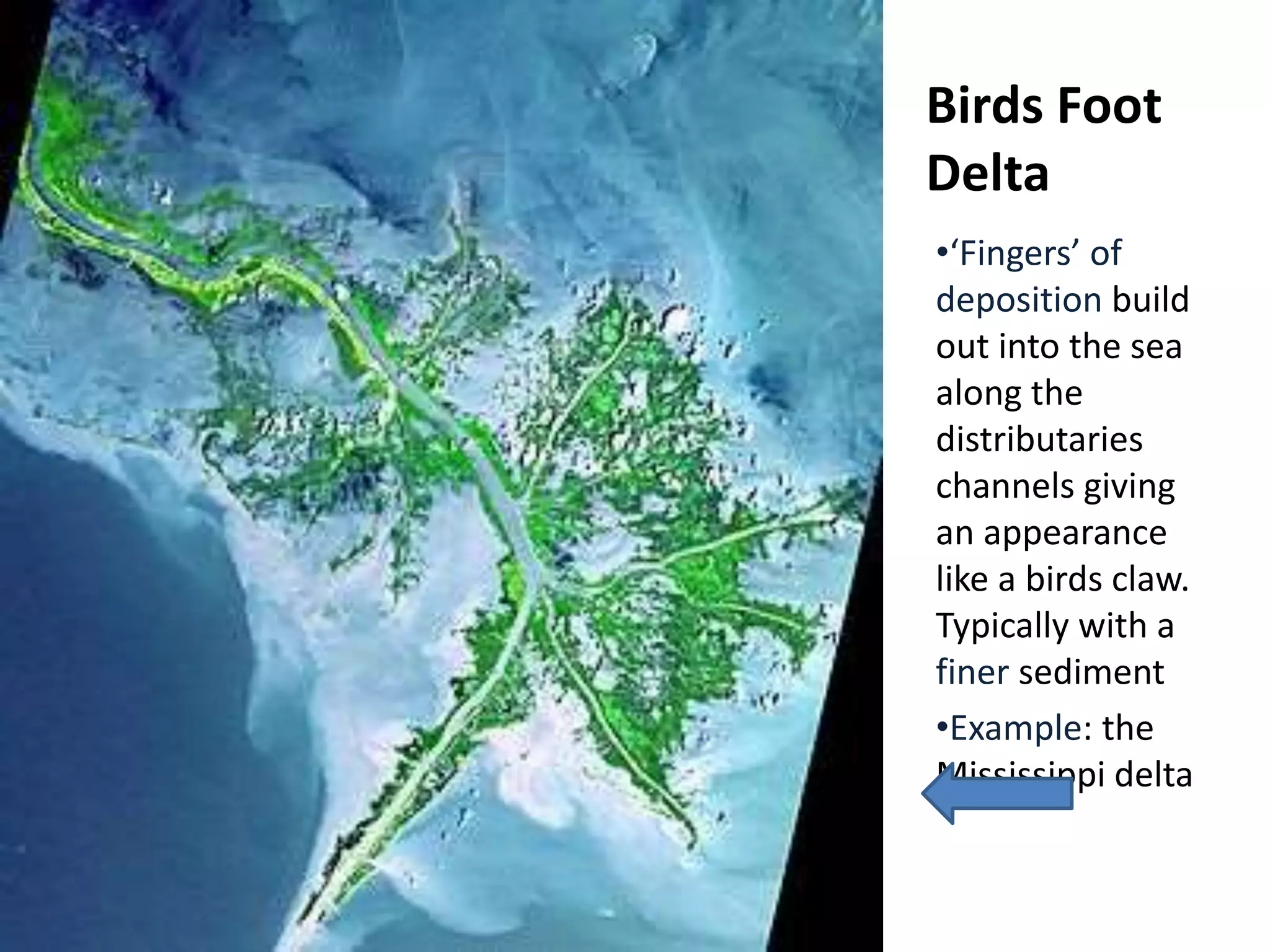
•‘Fingers’ of
deposition build
out into the sea
along the
distributaries
channels giving
an appearance
like a birds claw.
Typically with a
finer sediment
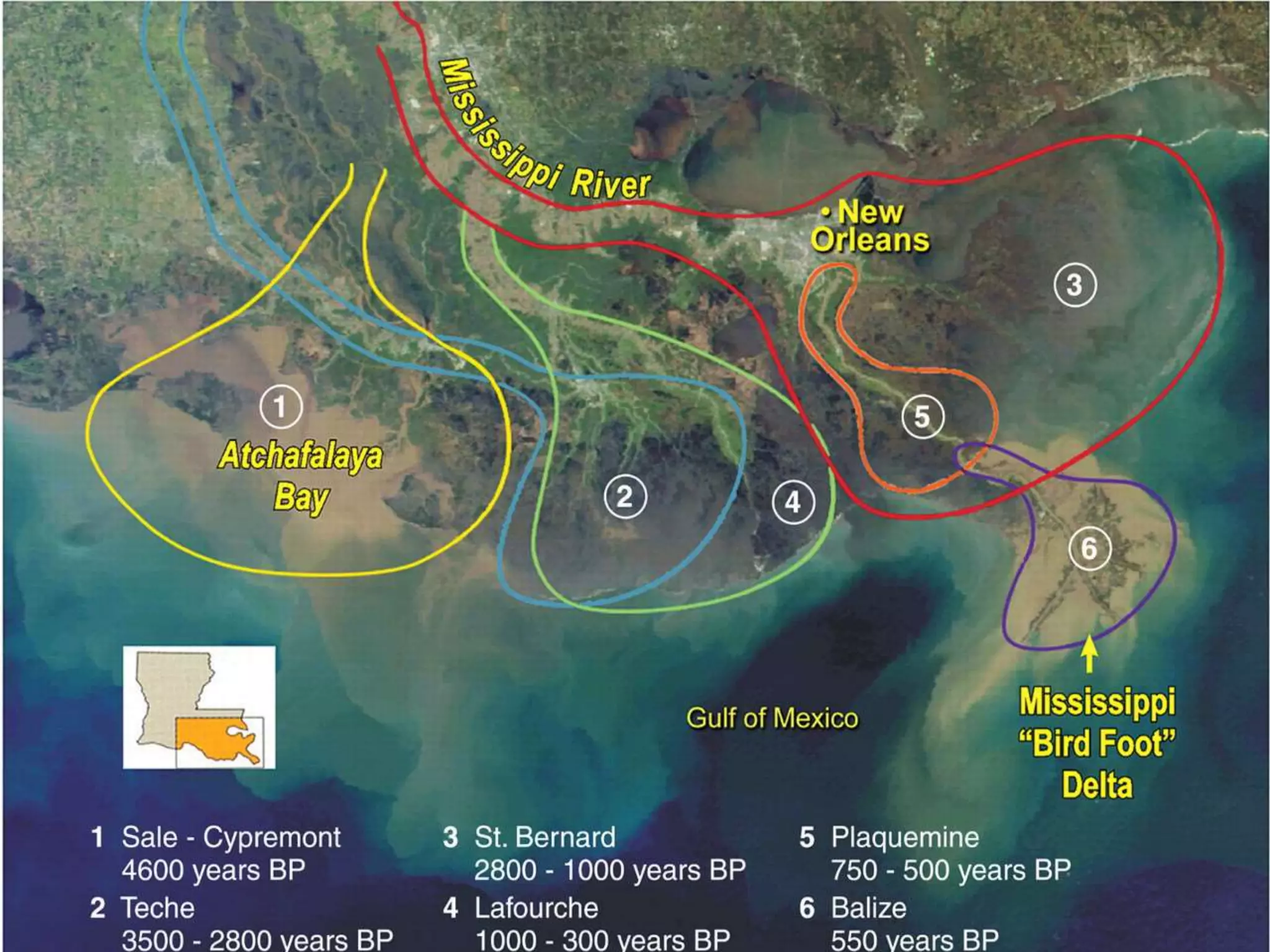
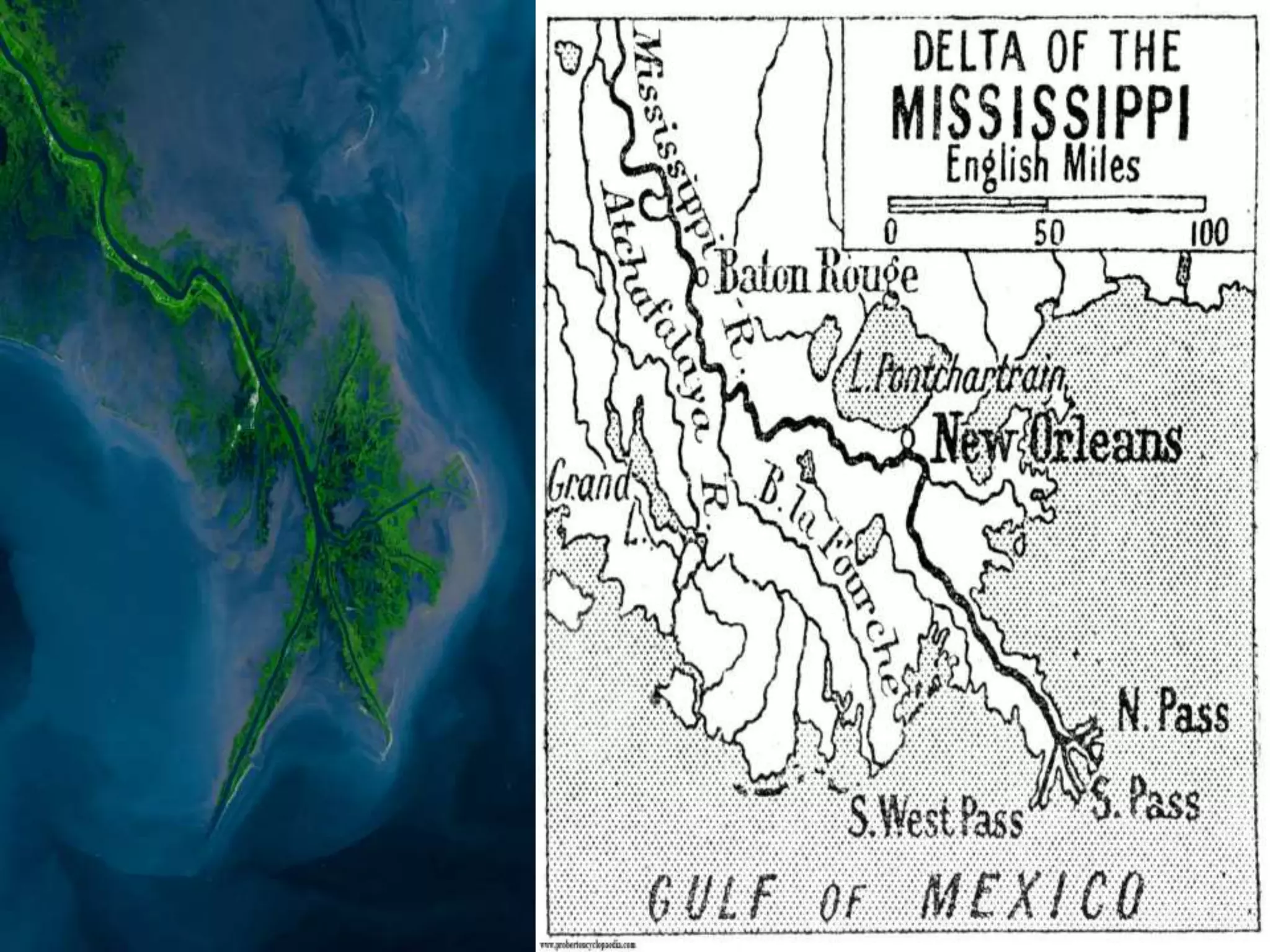
•Example: the
Mississippi delta
Birds Foot
Delta
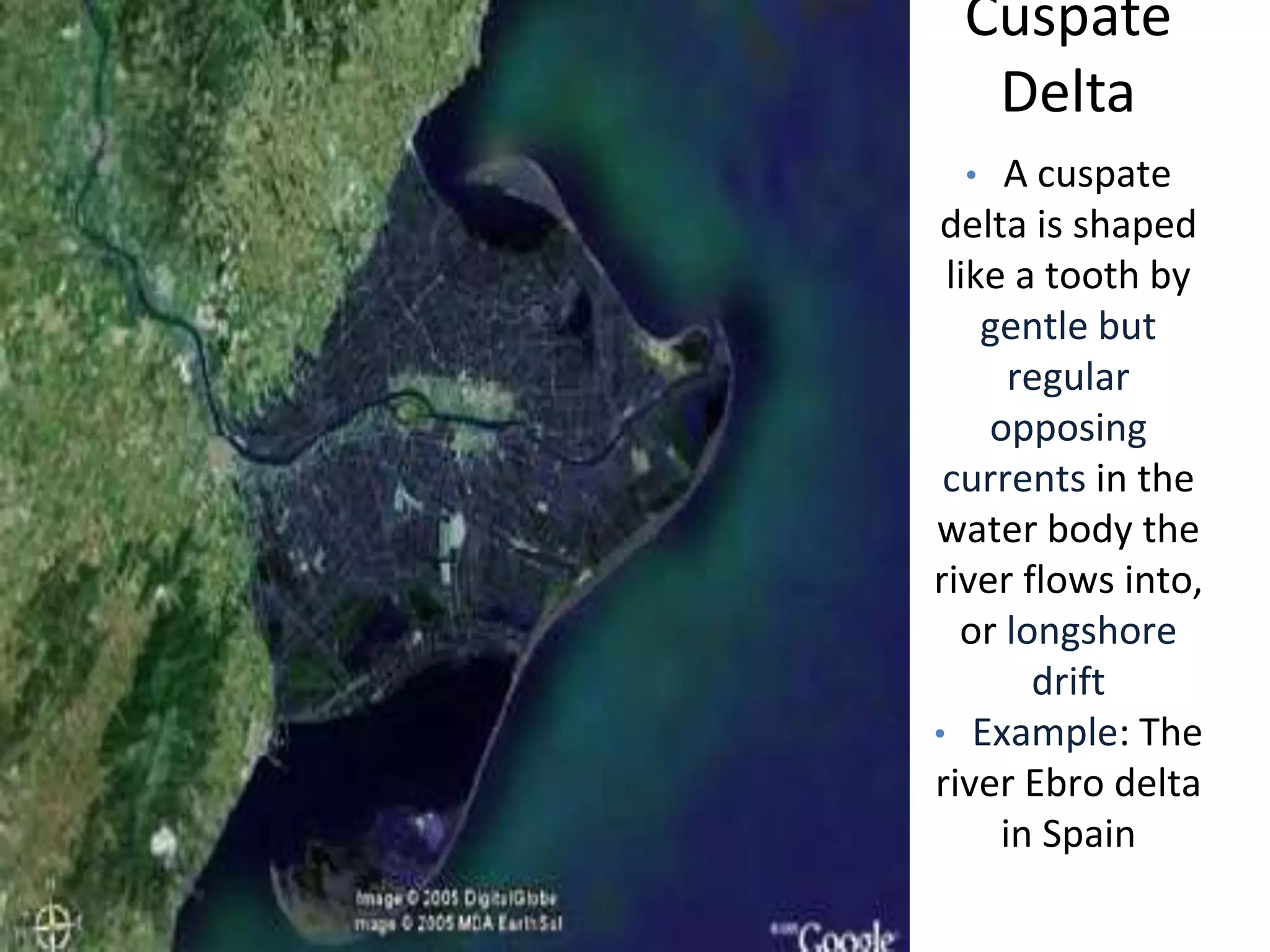
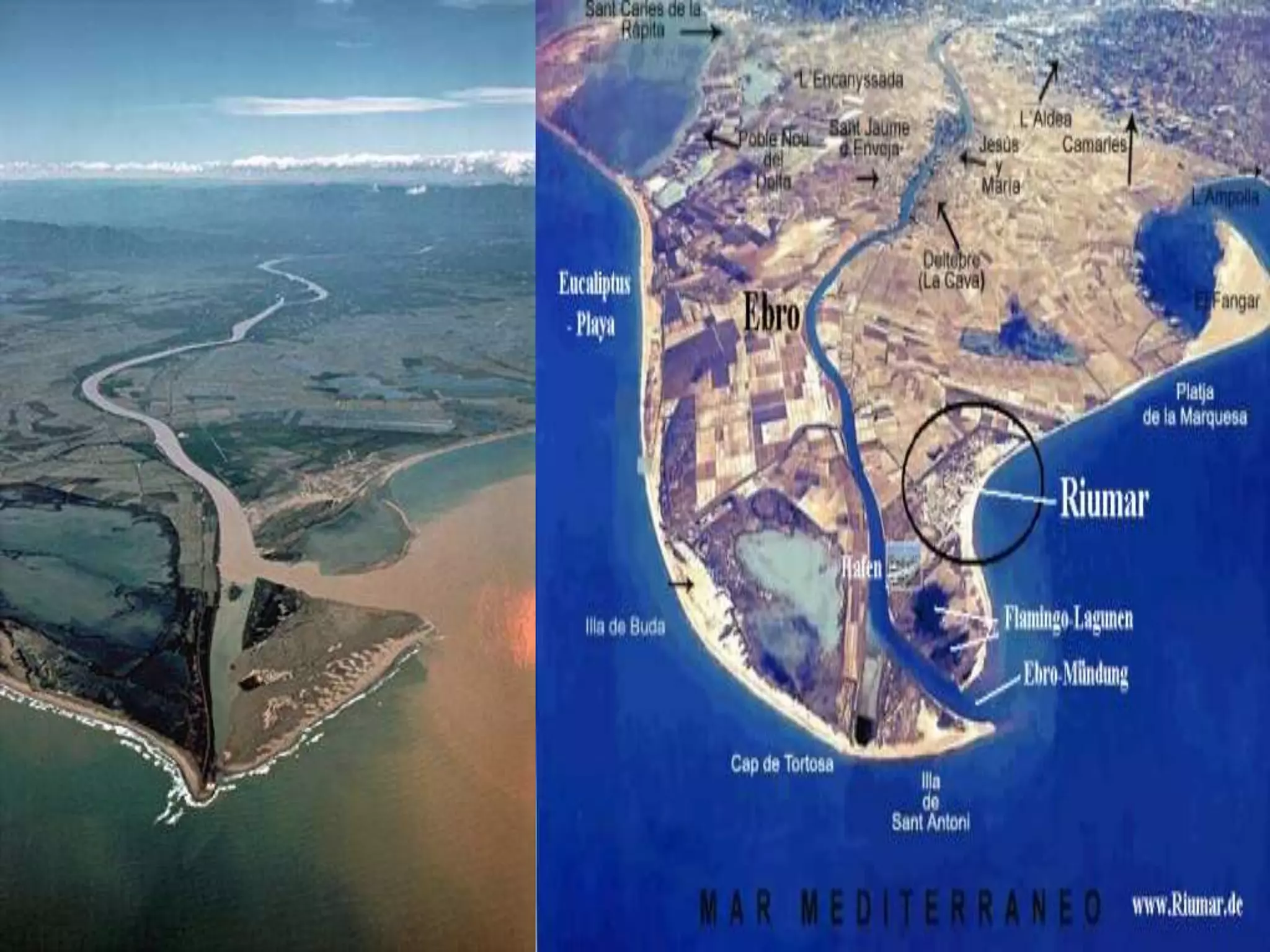
• A cuspate
delta is shaped
like a tooth by
gentle but
regular
opposing
currents in the
water body the
river flows into,
or longshore
drift
• Example: The
river Ebro delta
in Spain
Cuspate
Delta
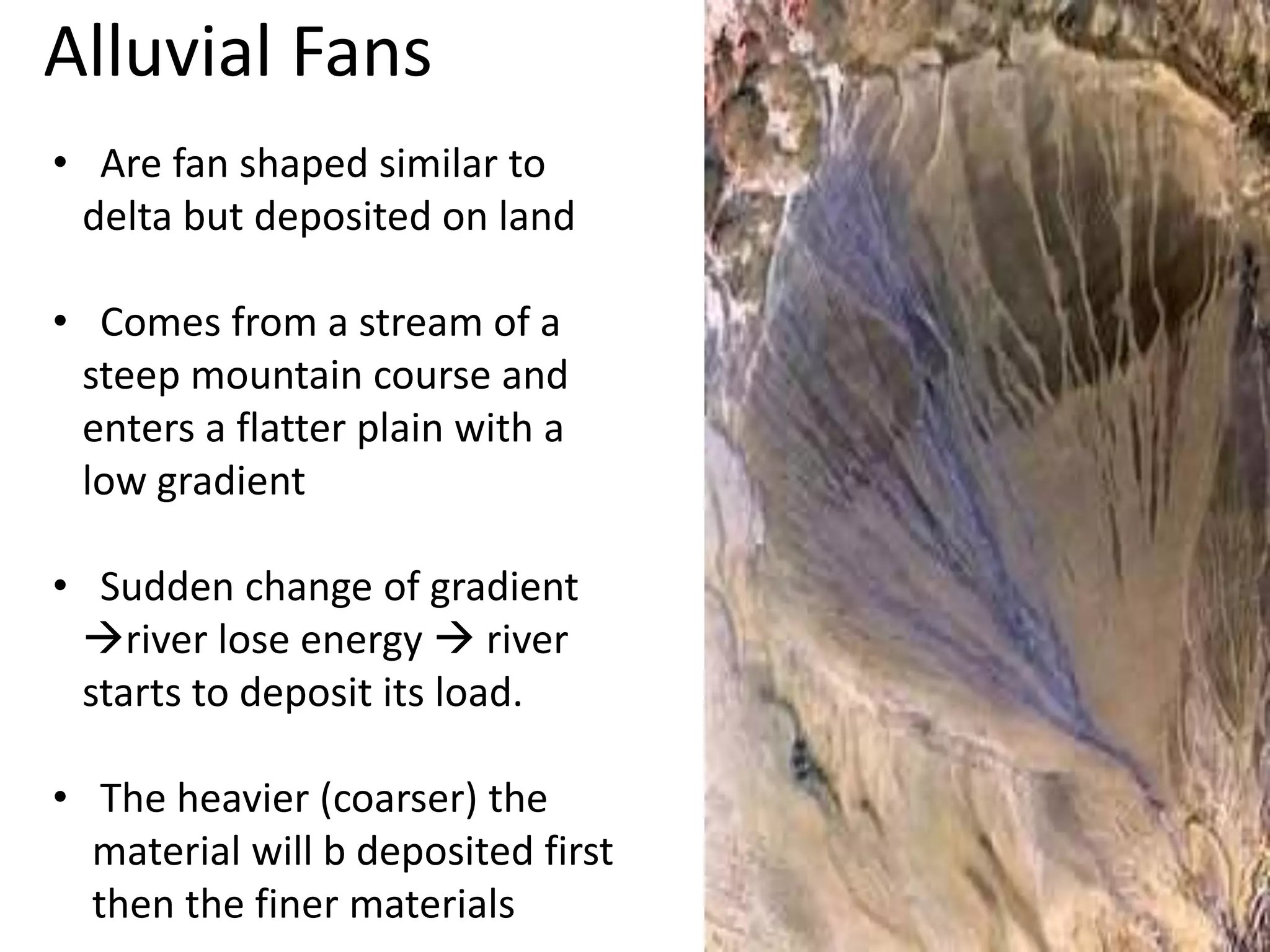
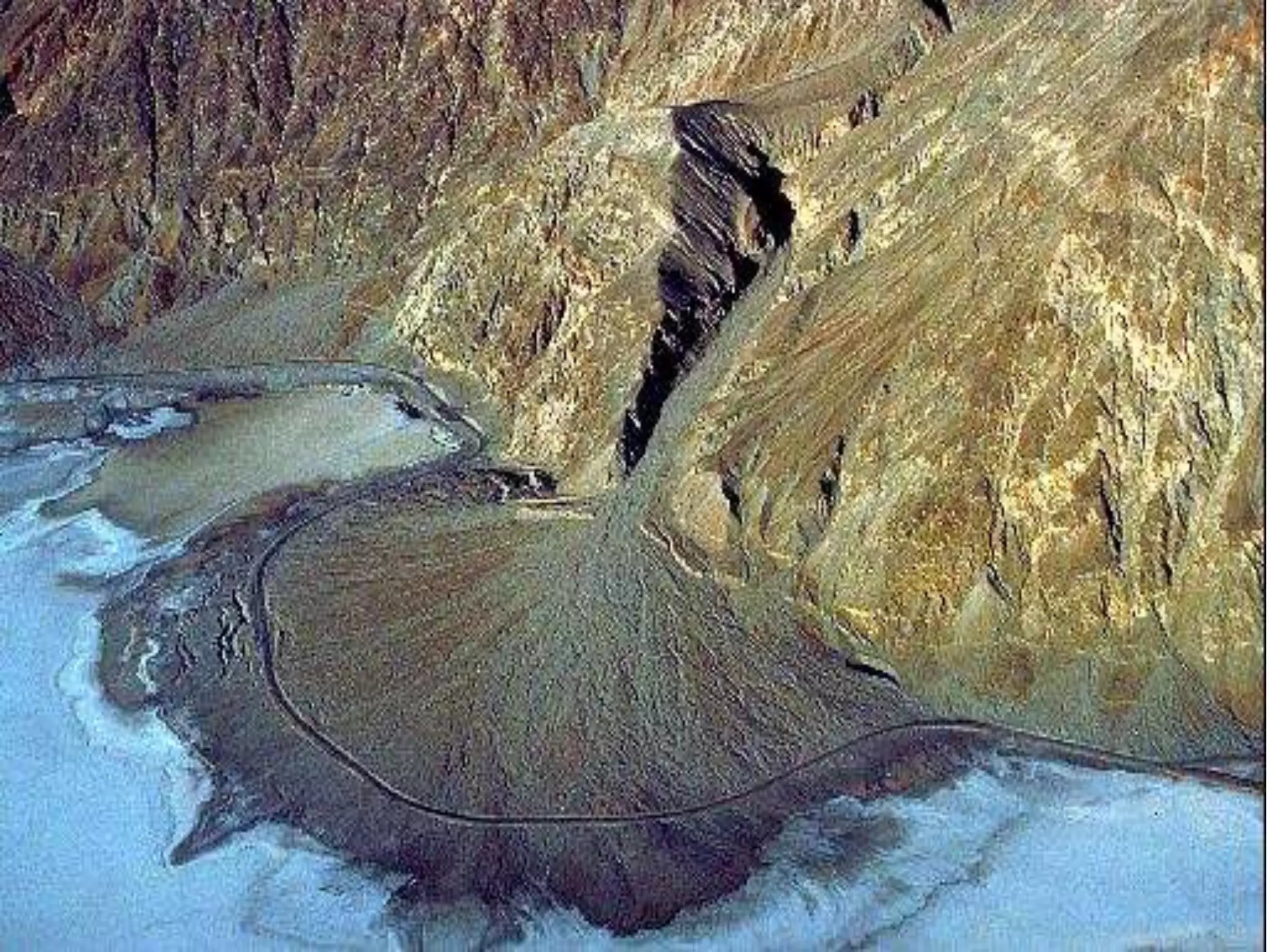
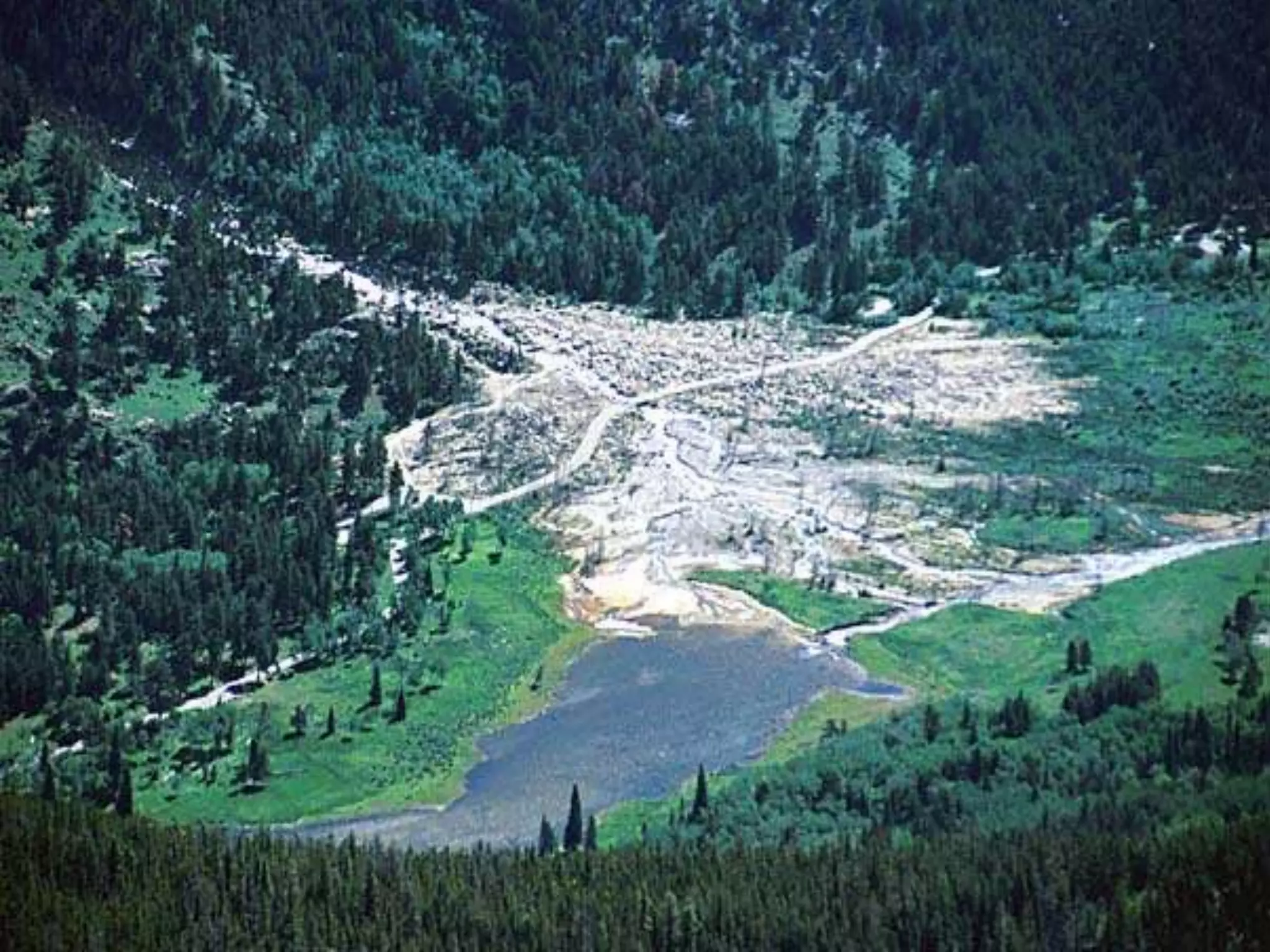
Alluvial Fans
• Are fan shaped similar to
delta but deposited on land
• Comes from a stream of a
steep mountain course and
enters a flatter plain with a
low gradient
• Sudden change of gradient
river lose energy  river
starts to deposit its load.
• The heavier (coarser) the
material will b deposited first
then the finer materials
Depositional landforms

Depositional landforms

  • 1.
  • 2.
    Floodplains • What ? –A wide and flat valley – Alluvium deposits on riverbanks build it up during repeated flooding – Provides fertile alluvium for farming
  • 4.
    How? • Form whenriver overflows its banks during flooding and spread large amount of sediment over the banks • When flood subsides or over, there is a decrease in volume so that river deposits its load. • Repeated flooding result in materials deposited on the riverbanks forming a floodplain
  • 6.
    Levees What? It is anatural embankment on the riverbanks Where? Form when coarser alluvium is deposit along the riverbanks due to flooding
  • 7.
    How? • Form duringflood • The coarser allluvium is deposited near the banks and finer alluvium deposited further from the banks • The accumulation of the coarser alluvium along the river banks formed a natural raised banks called levees
  • 9.
    Braiding • A riversubdivides into many smaller streams within the channel • Small islands / eyots separate each stream • Eyots are made up of deposited loads such as gravels and coarse sands
  • 12.
    How? • Depends onload-discharge relationship • Short period of the year, some rivers carry a heavy load which the rivers have difficulty in removing • When the river level falls rapidly, competence and capacity reduced – channel deposit materials within the channel • Channel become broad and shallow with a low hydraulic radius
  • 13.
    (Braided river insouthern Alaska.)
  • 14.
  • 15.
    (Braided river atjunction of Gakona and Copper River, Alaska)
  • 16.
    Main Characteristics 1. Smallislands or eyots of deposited material within the channel. 2. A network of small intertwining channels converge and diverge around the eyots. 3. At times of high discharge, braided streams carry a large load of coarse material. 4. Braiding is a characteristic of streams with a variable discharge 5. Very common in Semi-arid region where torrential rainfall will lead to temporary stream with high discharge.
  • 17.
    Delta What? • A pieceof flat land that is made up of sediments deposited at the river mouth • Streams found on the delta known as distributaries
  • 18.
    • Flocculation occursas fresh water mixes with salt water - e.g where a river flows into the sea -(then called brackish water), and is the process by which tiny particles in suspension like clay and silt (which under normal fresh water conditions would likely never fall out of suspension) coagulate with the salt in the water by chemical reaction and become heavy enough to ‘sink’ and be deposited Flocculation
  • 19.
    Typical Conditions: • Calmand shallow seawater with gentle slope • River deposits its load at the river mouth • Wave in the sea is weak and sheltered coast • More deposition due to active erosion in the upper course
  • 20.
    How does itform? • Form when a river approaches the calm seawater • Its velocity decreases • Starts to deposits its load at the river mouth • Sediment continued to accumulate into the sea- forming delta, which is a flat land
  • 21.
    Material deposited: 3layers 1. Bottomset beds – the lower part of the delta that consists of fines material that can be transported furtherest out to sea 2. Foreset beds – the middle layer where material deposited is slightly coarser 3. Topset beds – the uppermost layer where coarsest particles settle first
  • 22.
    • Delta’s canbe categorised into three main shapes – Arcuate – Birds Foot – Cuspate Types of Delta
  • 23.
    •The most common shapeof delta •Characteristics: curving shoreline (smoothed by long shore drift), distinct pattern of drainage (branching of distributaries), and typically more ‘gravely’ deposits . •Example: the Nile Delta Arcuate Delta’s
  • 25.
    •‘Fingers’ of deposition build outinto the sea along the distributaries channels giving an appearance like a birds claw. Typically with a finer sediment •Example: the Mississippi delta Birds Foot Delta
  • 28.
    • A cuspate deltais shaped like a tooth by gentle but regular opposing currents in the water body the river flows into, or longshore drift • Example: The river Ebro delta in Spain Cuspate Delta
  • 30.
    Alluvial Fans • Arefan shaped similar to delta but deposited on land • Comes from a stream of a steep mountain course and enters a flatter plain with a low gradient • Sudden change of gradient river lose energy  river starts to deposit its load. • The heavier (coarser) the material will b deposited first then the finer materials