
Er. Nawaraj Bhandari
Topic 9
Database Design
Systems Analysis & Development
 Systems Analysis
The art of understanding and documenting the requirements of a
given set of users within the context of an organization.
 Systems Development
The development of the whole system from beginning to end. This
might include a database, applications, a network etc.
Approaches to System Development
 There are many different approaches to systems development.
1. Traditional systems development lifecycle (SDLC) or ‘waterfall’
approach
2. Iterative approaches
 Understanding requirements is vital to being able to produce a
finished system that meets the business needs of an organization.
Waterfall Approach
 Traditional systems development lifecycle (SDLC)
 Also known as Generic(Common) Systems Development Lifecycle
 This involves a complete set of steps that a team follows.
 The fundamental idea is to divide the development process into a
series of phases or stages, each of which finishes before the next one
starts.
 This process is often viewed as a cascade of steps, which is why it has
been called the waterfall approach.
Waterfall Approach
1. Strategy and planning
2. Feasibility study
3. Systems analysis (or analysis)
4. Design
5. Implementation
6. Maintenance
Waterfall Approach
Problems with Waterfall Approach
 Users have not communicated requirements properly
 Users have not understood their own needs
 Analyst misunderstood
 Omission
Prototypes and Prototyping
 Prototype – a first or original example of something from which others
have or will be developed
 Prototyping – the process whereby a model is built of part of the
system and user feedback on it is gathered. Part of the requirements
gathering process
 Note: a prototype is a thing. Prototyping is something we do.
Iteration
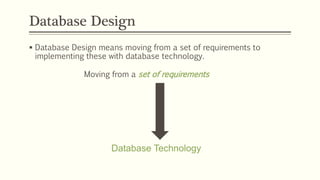
Database Design
 Database Design means moving from a set of requirements to
implementing these with database technology.
Moving from a set of requirements
Database Technology
Phases of Database Design
 Conceptual design
 Logical design
 Physical design
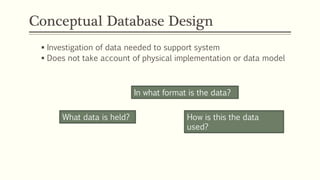
Conceptual Database Design
 Investigation of data needed to support system
 Does not take account of physical implementation or data model
What data is held?
In what format is the data?
How is this the data
used?
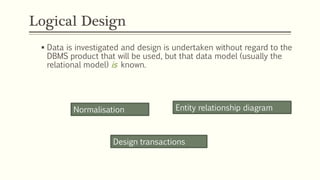
Logical Design
 Data is investigated and design is undertaken without regard to the
DBMS product that will be used, but that data model (usually the
relational model) is known.
Normalisation Entity relationship diagram
Design transactions
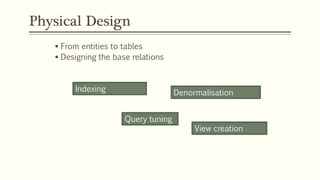
Physical Design
 From entities to tables
 Designing the base relations
Indexing Denormalisation
Query tuning
View creation
Case Tools
 Computer Aided Software Engineering tools
 Design tools: Visio
 Documentation tools : word processing software
 Code generators : Mysql Workbench, Sql developer, Sql server
management studio etc.
ANY QUESTIONS?

Database Design

  • 1.
    Er. Nawaraj Bhandari Topic9 Database Design
  • 2.
    Systems Analysis &Development  Systems Analysis The art of understanding and documenting the requirements of a given set of users within the context of an organization.  Systems Development The development of the whole system from beginning to end. This might include a database, applications, a network etc.
  • 3.
    Approaches to SystemDevelopment  There are many different approaches to systems development. 1. Traditional systems development lifecycle (SDLC) or ‘waterfall’ approach 2. Iterative approaches  Understanding requirements is vital to being able to produce a finished system that meets the business needs of an organization.
  • 4.
    Waterfall Approach  Traditionalsystems development lifecycle (SDLC)  Also known as Generic(Common) Systems Development Lifecycle  This involves a complete set of steps that a team follows.  The fundamental idea is to divide the development process into a series of phases or stages, each of which finishes before the next one starts.  This process is often viewed as a cascade of steps, which is why it has been called the waterfall approach.
  • 5.
    Waterfall Approach 1. Strategyand planning 2. Feasibility study 3. Systems analysis (or analysis) 4. Design 5. Implementation 6. Maintenance
  • 6.
  • 7.
    Problems with WaterfallApproach  Users have not communicated requirements properly  Users have not understood their own needs  Analyst misunderstood  Omission
  • 8.
    Prototypes and Prototyping Prototype – a first or original example of something from which others have or will be developed  Prototyping – the process whereby a model is built of part of the system and user feedback on it is gathered. Part of the requirements gathering process  Note: a prototype is a thing. Prototyping is something we do.
  • 9.
  • 10.
    Database Design  DatabaseDesign means moving from a set of requirements to implementing these with database technology. Moving from a set of requirements Database Technology
  • 11.
    Phases of DatabaseDesign  Conceptual design  Logical design  Physical design
  • 12.
    Conceptual Database Design Investigation of data needed to support system  Does not take account of physical implementation or data model What data is held? In what format is the data? How is this the data used?
  • 13.
    Logical Design  Datais investigated and design is undertaken without regard to the DBMS product that will be used, but that data model (usually the relational model) is known. Normalisation Entity relationship diagram Design transactions
  • 14.
    Physical Design  Fromentities to tables  Designing the base relations Indexing Denormalisation Query tuning View creation
  • 15.
    Case Tools  ComputerAided Software Engineering tools  Design tools: Visio  Documentation tools : word processing software  Code generators : Mysql Workbench, Sql developer, Sql server management studio etc.
  • 16.