Disease of lacrimal system
ACQUIRED NLD
• obstruction is the blockage of the lacrimal outflow system that may
be complete or incomplete and will be and as a various degrees of
tearing, discharge and infection.
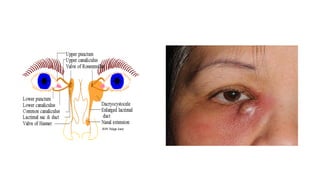
• Exquisite pain, acute distention of lacrimal sac, (dacryolithiasis or
dacryocystitis)
Epidemiology
• Women are two time more affected than men.
• Young adults:
• Canalicular obstruction/ Herpes simplex virus HSV
• Facial trauma (male)
• Middle age: women and smokers
Causes:
• Involutional stenosis: idiopathic cause
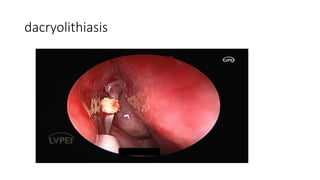
• Dacrolithiasis: cast or stones formation in lacrimal sac
• Trauma: mid face or nasal and sinus surgery
• inflammatory diseases: sarcoidosis, granulomatous disease.
• Neoplasms: lymphoma, squamous cell carcinoma, sinonasal tumors
and also the periorbital radiation therapies for malignancies.
• Dental impaction
• Nasal pathologies
• Chronis sinusitis/rhinitis
Clinical Presentation
• Tearing
• Discharge
• Recurrent dacryocystitis
• Recurrent conjunctivitis
treatment
DCR
dacryolithiasis
Acute dacrocystitis
• Secondary to NLDO
• It can be acute or chronic
• Staphylococcal and streptococcal
• sign and symptom
• Pain, red tender medial canthus swelling
• Associated preseptal cellulitis
• Treatment
• Warm compression
• Oral antibiotics (co-amoxiclav)
• Irrigation and probing
• Incision and drainage
• DCR (infection subside)
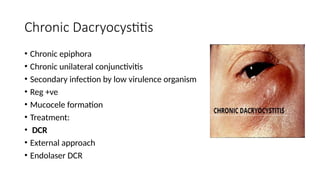
Chronic Dacryocystitis
• Chronic epiphora
• Chronic unilateral conjunctivitis
• Secondary infection by low virulence organism
• Reg +ve
• Mucocele formation
• Treatment:
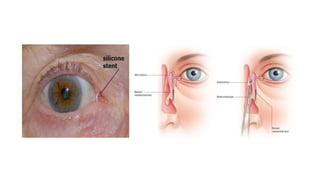
• DCR
• External approach
• Endolaser DCR
Lacrimal gland
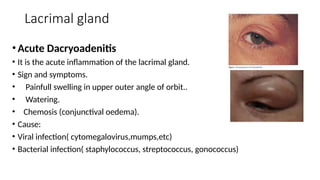
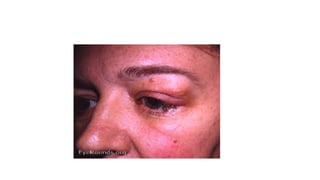
• Acute Dacryoadenitis
• It is the acute inflammation of the lacrimal gland.
• Sign and symptoms.
• Painfull swelling in upper outer angle of orbit..
• Watering.
• Chemosis (conjunctival oedema).
• Cause:
• Viral infection( cytomegalovirus,mumps,etc)
• Bacterial infection( staphylococcus, streptococcus, gonococcus)
• Treatment.
• Hot compression.
• analgesic
• Antibiotic oral,
• Incision for drainage
Chronic Dacryadenitis
• Chronic inflammation
• Causes:
• Infection( TB, SYPHILIS)
• Trauma(
• Autoimmune (Sjogren’s syndrome)
• Tumors (lymphoma)
Clinical presentation
• S shaped curved
• Restricted ocular movements (upward direction)
• Diplopia
• Painless
• Investigation
• Physical examination
• MRI AND CT SCAN
• Treatment: underlying cause
Keratoconjuntivitis sicca( DES 0R DED)
• KCS is a condition where aqueous tear production in insufficient to maintain
normal tear film.
• Causes:
• Congenital alacrima
• Denervation hyposeretion
• Primary sjogren syndrome(autoimmune disorder)
• Secondary SS ( systemic involvement), Rheumatoid arthritis, SLE
• Trauma
• Trachoma
• Tumors
Clinical signs
• Marginal tear strip decreased
• Increased mucous products
• Corneal filaments
• Punctate erosions
• Posterior blepharitis
• Management:
• PUNCTUM PLUGS
• ARTIFICIAL TEARS
• VIT A serums
• Mucolytic agents( acetylcystine)
• Anti inflammatory ( cyclosporine, omega-3)

lacrimal system disease.pptx . . . . . . . .

  • 1.
  • 2.
    ACQUIRED NLD • obstructionis the blockage of the lacrimal outflow system that may be complete or incomplete and will be and as a various degrees of tearing, discharge and infection. • Exquisite pain, acute distention of lacrimal sac, (dacryolithiasis or dacryocystitis)
  • 3.
    Epidemiology • Women aretwo time more affected than men. • Young adults: • Canalicular obstruction/ Herpes simplex virus HSV • Facial trauma (male) • Middle age: women and smokers
  • 4.
    Causes: • Involutional stenosis:idiopathic cause • Dacrolithiasis: cast or stones formation in lacrimal sac • Trauma: mid face or nasal and sinus surgery
  • 5.
    • inflammatory diseases:sarcoidosis, granulomatous disease. • Neoplasms: lymphoma, squamous cell carcinoma, sinonasal tumors and also the periorbital radiation therapies for malignancies. • Dental impaction • Nasal pathologies • Chronis sinusitis/rhinitis
  • 6.
    Clinical Presentation • Tearing •Discharge • Recurrent dacryocystitis • Recurrent conjunctivitis treatment DCR
  • 8.
  • 9.
    Acute dacrocystitis • Secondaryto NLDO • It can be acute or chronic • Staphylococcal and streptococcal • sign and symptom • Pain, red tender medial canthus swelling • Associated preseptal cellulitis
  • 10.
    • Treatment • Warmcompression • Oral antibiotics (co-amoxiclav) • Irrigation and probing • Incision and drainage • DCR (infection subside)
  • 11.
    Chronic Dacryocystitis • Chronicepiphora • Chronic unilateral conjunctivitis • Secondary infection by low virulence organism • Reg +ve • Mucocele formation • Treatment: • DCR • External approach • Endolaser DCR
  • 13.
    Lacrimal gland • AcuteDacryoadenitis • It is the acute inflammation of the lacrimal gland. • Sign and symptoms. • Painfull swelling in upper outer angle of orbit.. • Watering. • Chemosis (conjunctival oedema). • Cause: • Viral infection( cytomegalovirus,mumps,etc) • Bacterial infection( staphylococcus, streptococcus, gonococcus)
  • 14.
    • Treatment. • Hotcompression. • analgesic • Antibiotic oral, • Incision for drainage
  • 15.
    Chronic Dacryadenitis • Chronicinflammation • Causes: • Infection( TB, SYPHILIS) • Trauma( • Autoimmune (Sjogren’s syndrome) • Tumors (lymphoma)
  • 17.
    Clinical presentation • Sshaped curved • Restricted ocular movements (upward direction) • Diplopia • Painless • Investigation • Physical examination • MRI AND CT SCAN • Treatment: underlying cause
  • 18.
    Keratoconjuntivitis sicca( DES0R DED) • KCS is a condition where aqueous tear production in insufficient to maintain normal tear film. • Causes: • Congenital alacrima • Denervation hyposeretion • Primary sjogren syndrome(autoimmune disorder) • Secondary SS ( systemic involvement), Rheumatoid arthritis, SLE • Trauma • Trachoma • Tumors
  • 19.
    Clinical signs • Marginaltear strip decreased • Increased mucous products • Corneal filaments • Punctate erosions • Posterior blepharitis • Management: • PUNCTUM PLUGS • ARTIFICIAL TEARS • VIT A serums • Mucolytic agents( acetylcystine) • Anti inflammatory ( cyclosporine, omega-3)