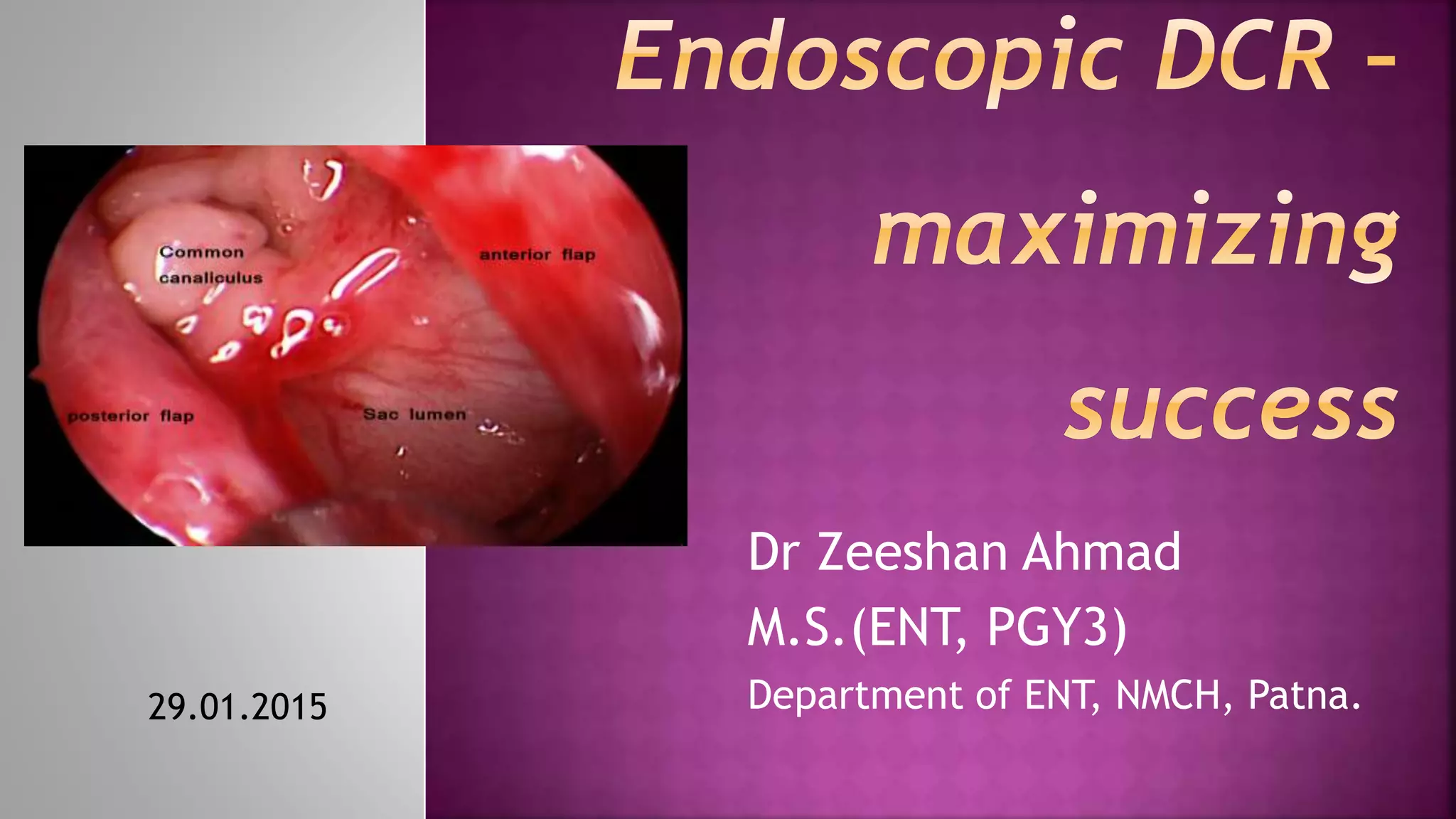

Dr Zeeshan Ahmad
M.S.(ENT, PGY3)
Department of ENT, NMCH, Patna.29.01.2015
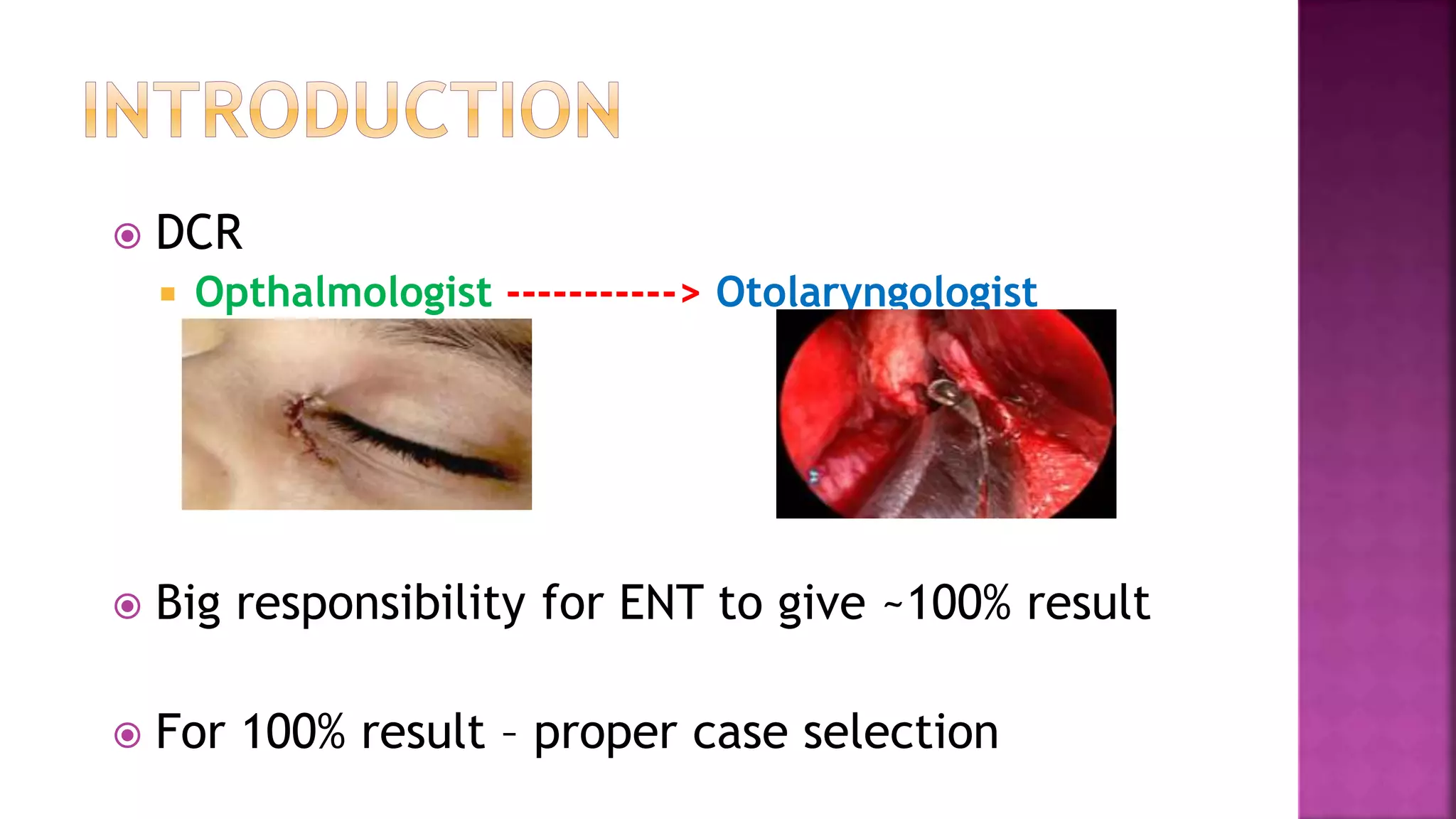
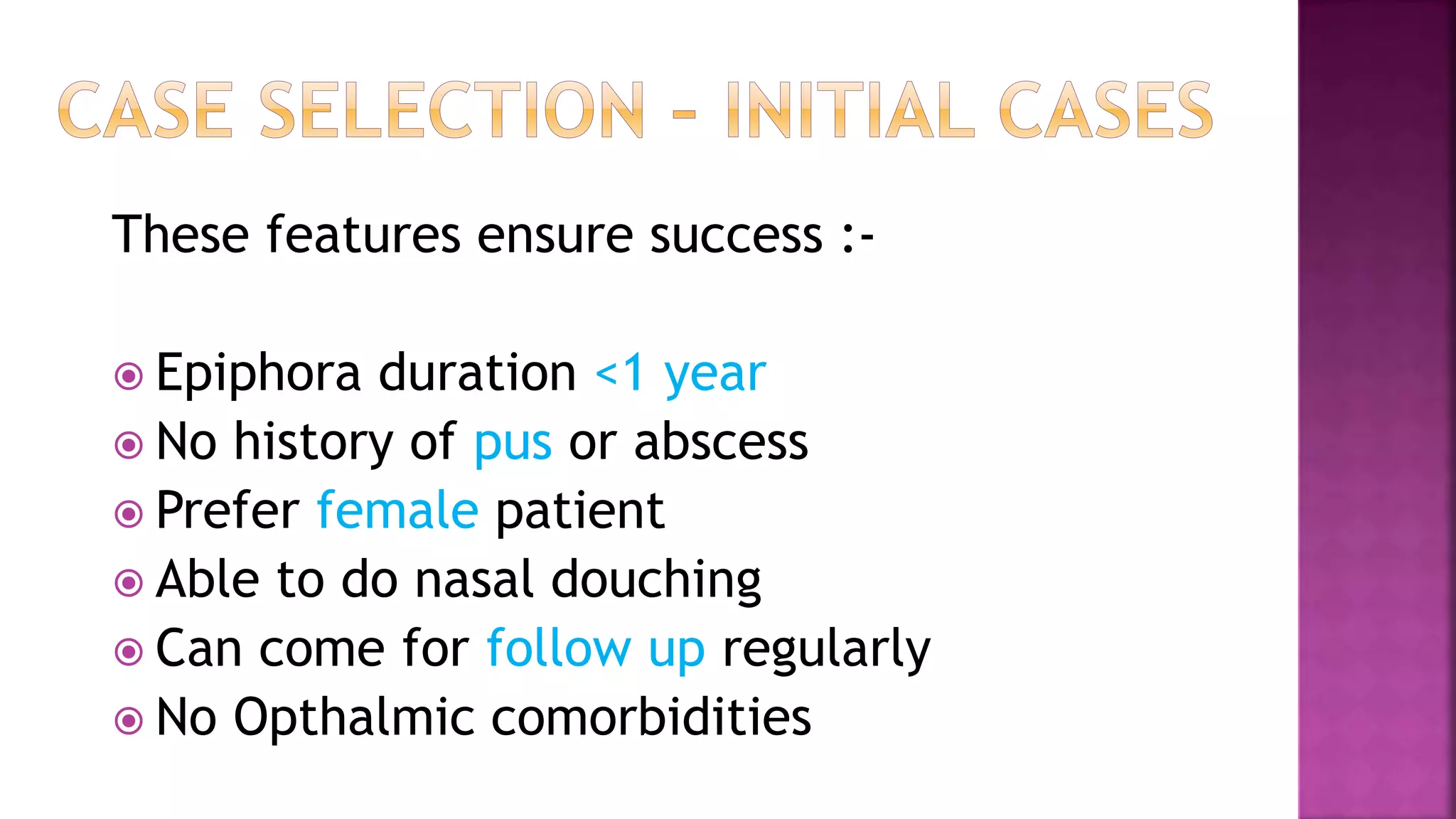
 DCR
 Opthalmologist -----------> Otolaryngologist
 Big responsibility for ENT to give ~100% result
 For 100% result – proper case selection
These features ensure success :-
 Epiphora duration <1 year
 No history of pus or abscess
 Prefer female patient
 Able to do nasal douching
 Can come for follow up regularly
 No Opthalmic comorbidities
These features ensure success :-
 Regurgitation test positive
 Hard stop on probing
 Distended sac
 Syringing yields mucoid material slowly
 DNS to the opposite side
Can do all the cases
But caution is required in following :-
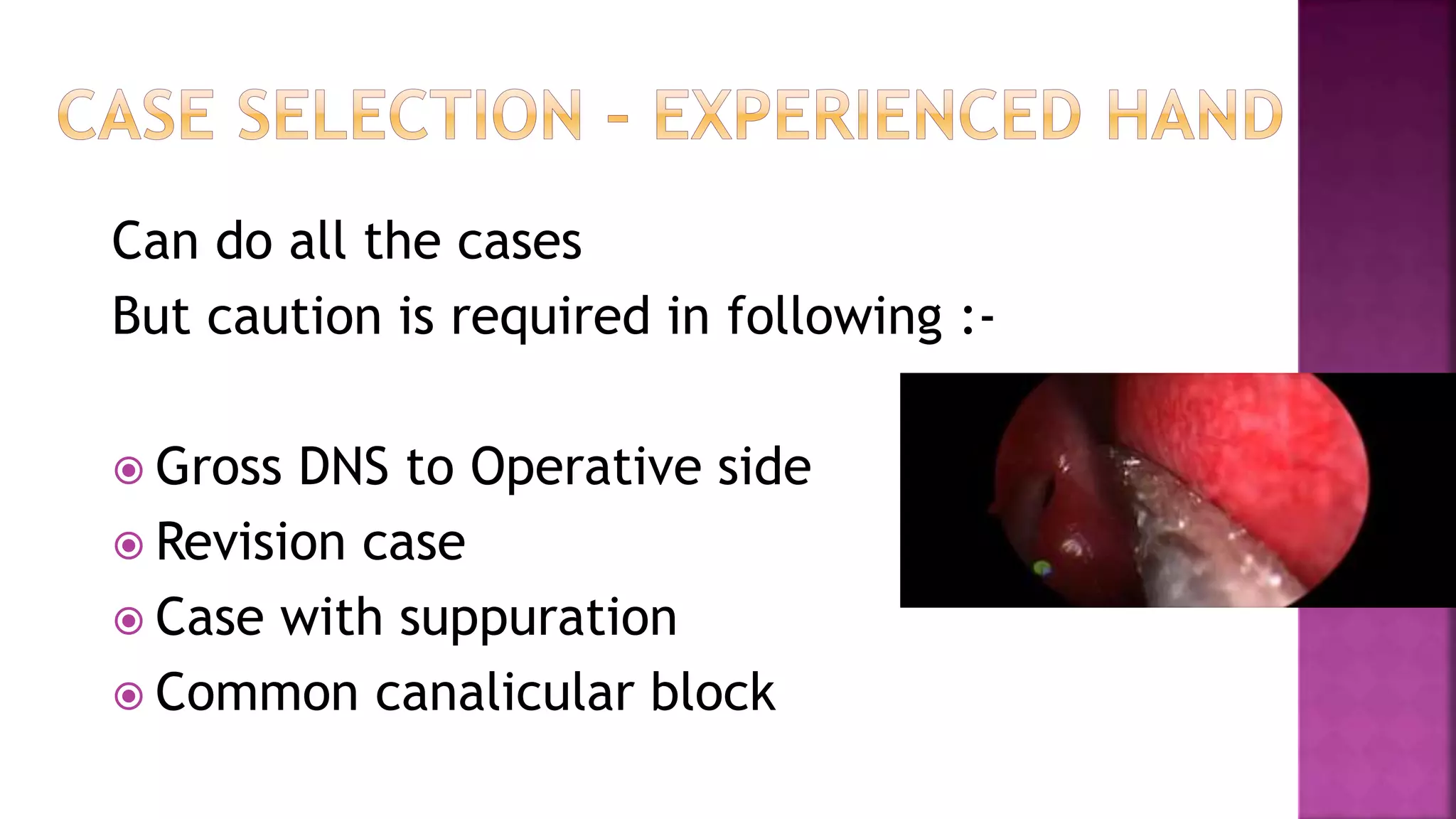
 Gross DNS to Operative side
 Revision case
 Case with suppuration
 Common canalicular block
 Steroid - if too inflamed
 Regular preop syringing
 Antibiotics oral/topical
 Control nasal allergy
 Bone removal – bone removal – bone removal
 Expose upto - sac fundus
 Incise after tenting with lacrimal probe
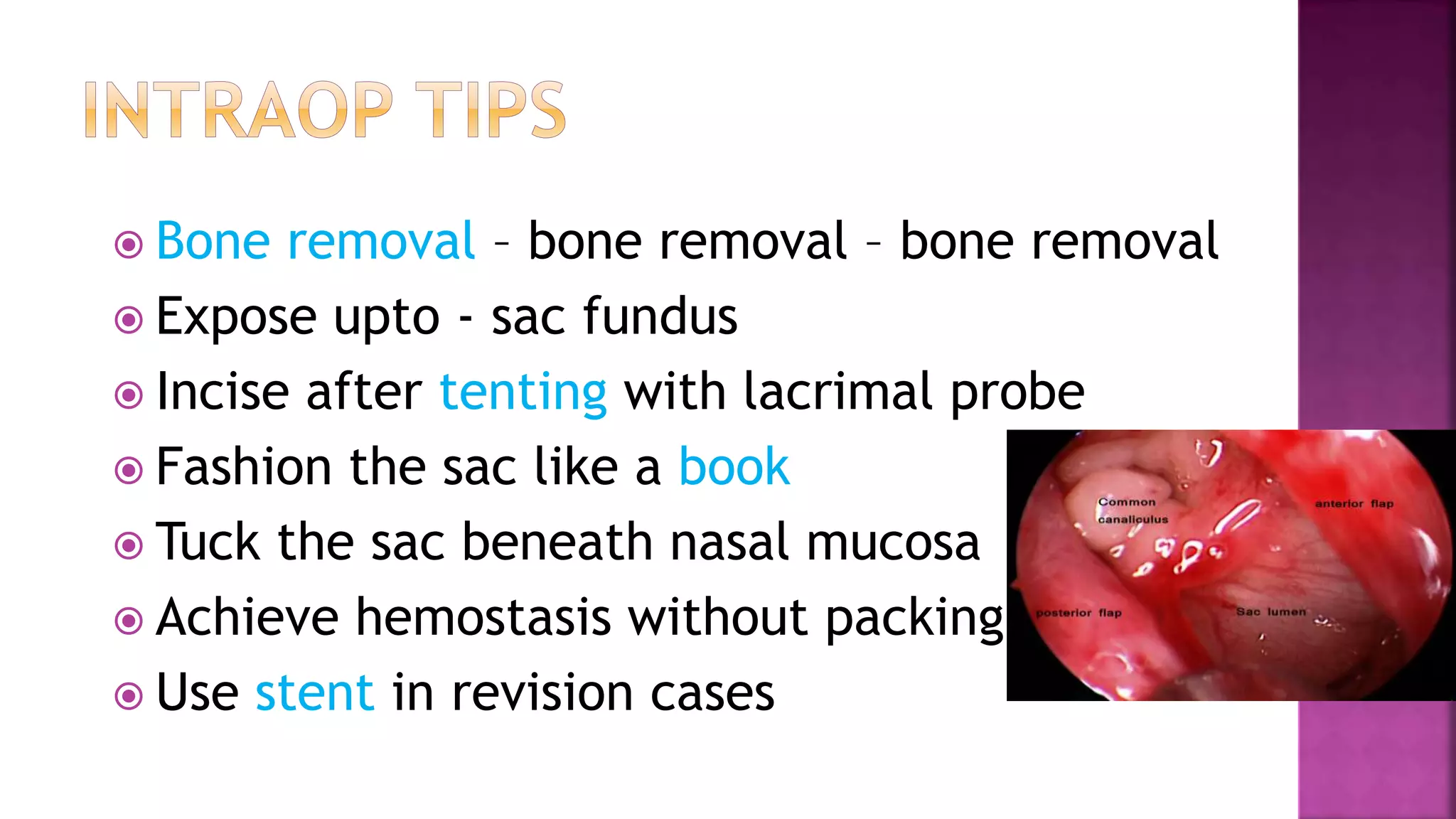
 Fashion the sac like a book
 Tuck the sac beneath nasal mucosa
 Achieve hemostasis without packing
 Use stent in revision cases
 DCR has moved from the hands of
opthalmologists to the Otolaryngologist
 not just because it has scar advantage
 but it is also more physiological and
 epistaxis is better controlled.
 Our series - 14 cases – 2 failures
one due to CC block and other due to
inefficient bone removal.
05.02.15 Dr Sonu Kr Singh
M.S.(ENT,PGY3)
Juvenile Nasopharyngeal
Angiofibroma – origin,
spread, management

Endoscopic dcr - maximizing success Dr Zeeshan Ahmad NMCH Patna

  • 1.
    Dr Zeeshan Ahmad M.S.(ENT,PGY3) Department of ENT, NMCH, Patna.29.01.2015
  • 2.
     DCR  Opthalmologist-----------> Otolaryngologist  Big responsibility for ENT to give ~100% result  For 100% result – proper case selection
  • 3.
    These features ensuresuccess :-  Epiphora duration <1 year  No history of pus or abscess  Prefer female patient  Able to do nasal douching  Can come for follow up regularly  No Opthalmic comorbidities
  • 4.
    These features ensuresuccess :-  Regurgitation test positive  Hard stop on probing  Distended sac  Syringing yields mucoid material slowly  DNS to the opposite side
  • 5.
    Can do allthe cases But caution is required in following :-  Gross DNS to Operative side  Revision case  Case with suppuration  Common canalicular block
  • 6.
     Steroid -if too inflamed  Regular preop syringing  Antibiotics oral/topical  Control nasal allergy
  • 7.
     Bone removal– bone removal – bone removal  Expose upto - sac fundus  Incise after tenting with lacrimal probe  Fashion the sac like a book  Tuck the sac beneath nasal mucosa  Achieve hemostasis without packing  Use stent in revision cases
  • 8.
     DCR hasmoved from the hands of opthalmologists to the Otolaryngologist  not just because it has scar advantage  but it is also more physiological and  epistaxis is better controlled.  Our series - 14 cases – 2 failures one due to CC block and other due to inefficient bone removal.
  • 10.
    05.02.15 Dr SonuKr Singh M.S.(ENT,PGY3) Juvenile Nasopharyngeal Angiofibroma – origin, spread, management