THE EARLY COLD WAR
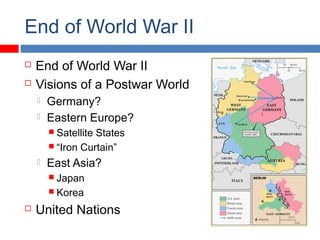
End of World War II
 End of World War II
 Visions of a Postwar World
 Germany?
 Eastern Europe?
 Satellite States
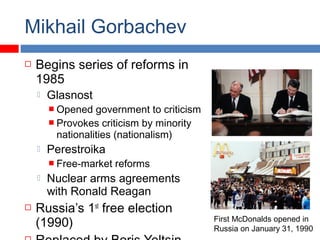
 “Iron Curtain”
 East Asia?
 Japan
 Korea
 United Nations
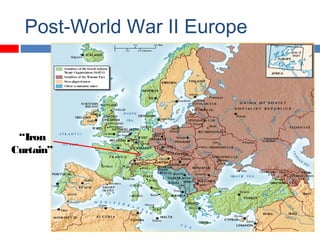
Post-World War II Europe
“Iron
Curtain”
Competing Ideologies
 Command economy
 Dictatorship
 Warsaw Pact
 Comintern
 Gain global
influence
 Acquire natural
resources
 Capitalism (free
market)
 Democracy
 NATO
 Containment
 Gain global influence
 Acquire natural
resources
USSR& EASTERN EUROPE U.S. & WESTERN EUROPE
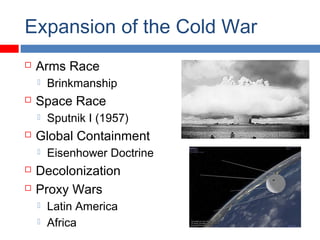
Expansion of the Cold War
 Arms Race
 Brinkmanship
 Space Race
 Sputnik I (1957)
 Global Containment
 Eisenhower Doctrine
 Decolonization
 Proxy Wars
 Latin America
 Africa
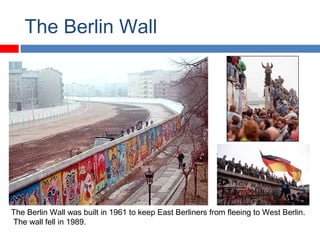
The Berlin Wall
The Berlin Wall was built in 1961 to keep East Berliners from fleeing to West Berlin.
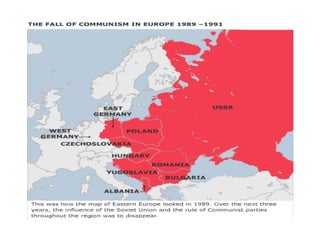
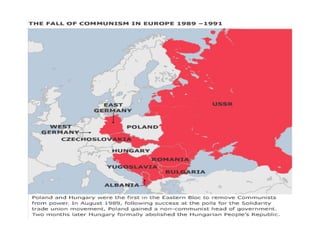
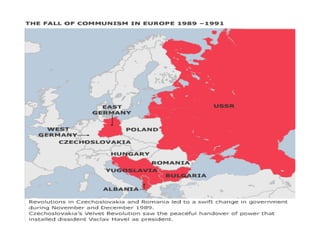
The wall fell in 1989.
Cold War as a Global “War”
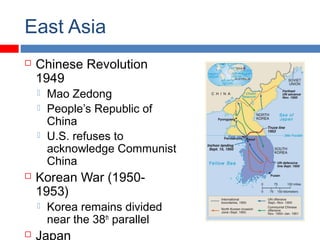
East Asia
 Chinese Revolution
1949
 Mao Zedong
 People’s Republic of
China
 U.S. refuses to
acknowledge Communist
China
 Korean War (1950-
1953)
 Korea remains divided
near the 38th
parallel
 Japan
Southeast Asia
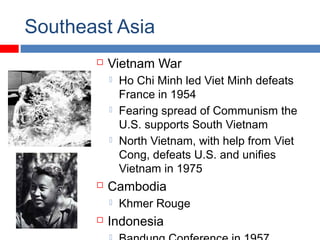
 Vietnam War
 Ho Chi Minh led Viet Minh defeats
France in 1954
 Fearing spread of Communism the
U.S. supports South Vietnam
 North Vietnam, with help from Viet
Cong, defeats U.S. and unifies
Vietnam in 1975
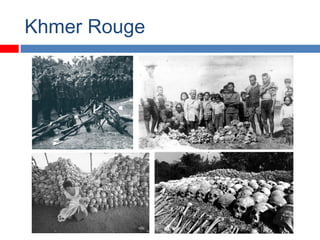
 Cambodia
 Khmer Rouge
 Indonesia

Khmer Rouge
South Asia
 India
 Supporter of Non-Alignment
movement
 Received aid from USSR
 Pakistan
 Received millions of dollars in
economic & military aid due to its
location
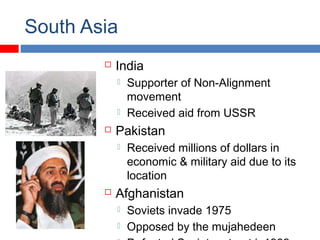
 Afghanistan
 Soviets invade 1975
 Opposed by the mujahedeen
Middle East
 Turkey
 Truman Doctrine
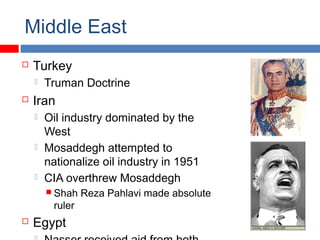
 Iran
 Oil industry dominated by the
West
 Mosaddegh attempted to
nationalize oil industry in 1951
 CIA overthrew Mosaddegh
 Shah Reza Pahlavi made absolute
ruler
 Egypt
Africa
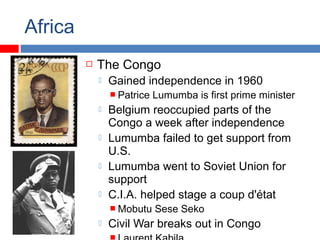
 The Congo
 Gained independence in 1960
 Patrice Lumumba is first prime minister
 Belgium reoccupied parts of the
Congo a week after independence
 Lumumba failed to get support from
U.S.
 Lumumba went to Soviet Union for
support
 C.I.A. helped stage a coup d'état
 Mobutu Sese Seko
 Civil War breaks out in Congo
Latin America
 U.S. attempted to overthrow
countries that attempted to go
Communist
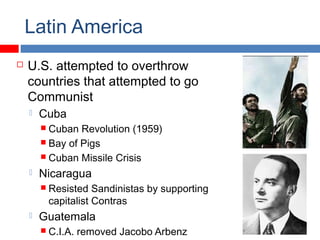
 Cuba
 Cuban Revolution (1959)
 Bay of Pigs
 Cuban Missile Crisis
 Nicaragua
 Resisted Sandinistas by supporting
capitalist Contras
 Guatemala
 C.I.A. removed Jacobo Arbenz
End of the Cold War
End of the Cold War
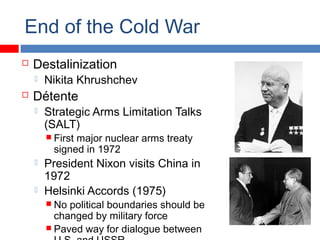
 Destalinization
 Nikita Khrushchev
 Détente
 Strategic Arms Limitation Talks
(SALT)
 First major nuclear arms treaty
signed in 1972
 President Nixon visits China in
1972
 Helsinki Accords (1975)
 No political boundaries should be
changed by military force
 Paved way for dialogue between
Mikhail Gorbachev
 Begins series of reforms in
1985
 Glasnost
 Opened government to criticism
 Provokes criticism by minority
nationalities (nationalism)
 Perestroika
 Free-market reforms
 Nuclear arms agreements
with Ronald Reagan
 Russia’s 1st
free election
(1990) First McDonalds opened in
Russia on January 31, 1990
Cw
Cw
Cw
Cw
Cw
Cw
Cw
Cw

Cw

  • 1.
  • 2.
    End of WorldWar II  End of World War II  Visions of a Postwar World  Germany?  Eastern Europe?  Satellite States  “Iron Curtain”  East Asia?  Japan  Korea  United Nations
  • 3.
    Post-World War IIEurope “Iron Curtain”
  • 4.
    Competing Ideologies  Commandeconomy  Dictatorship  Warsaw Pact  Comintern  Gain global influence  Acquire natural resources  Capitalism (free market)  Democracy  NATO  Containment  Gain global influence  Acquire natural resources USSR& EASTERN EUROPE U.S. & WESTERN EUROPE
  • 5.
    Expansion of theCold War  Arms Race  Brinkmanship  Space Race  Sputnik I (1957)  Global Containment  Eisenhower Doctrine  Decolonization  Proxy Wars  Latin America  Africa
  • 6.
    The Berlin Wall TheBerlin Wall was built in 1961 to keep East Berliners from fleeing to West Berlin. The wall fell in 1989.
  • 7.
    Cold War asa Global “War”
  • 8.
    East Asia  ChineseRevolution 1949  Mao Zedong  People’s Republic of China  U.S. refuses to acknowledge Communist China  Korean War (1950- 1953)  Korea remains divided near the 38th parallel  Japan
  • 9.
    Southeast Asia  VietnamWar  Ho Chi Minh led Viet Minh defeats France in 1954  Fearing spread of Communism the U.S. supports South Vietnam  North Vietnam, with help from Viet Cong, defeats U.S. and unifies Vietnam in 1975  Cambodia  Khmer Rouge  Indonesia 
  • 10.
  • 11.
    South Asia  India Supporter of Non-Alignment movement  Received aid from USSR  Pakistan  Received millions of dollars in economic & military aid due to its location  Afghanistan  Soviets invade 1975  Opposed by the mujahedeen
  • 12.
    Middle East  Turkey Truman Doctrine  Iran  Oil industry dominated by the West  Mosaddegh attempted to nationalize oil industry in 1951  CIA overthrew Mosaddegh  Shah Reza Pahlavi made absolute ruler  Egypt
  • 13.
    Africa  The Congo Gained independence in 1960  Patrice Lumumba is first prime minister  Belgium reoccupied parts of the Congo a week after independence  Lumumba failed to get support from U.S.  Lumumba went to Soviet Union for support  C.I.A. helped stage a coup d'état  Mobutu Sese Seko  Civil War breaks out in Congo
  • 14.
    Latin America  U.S.attempted to overthrow countries that attempted to go Communist  Cuba  Cuban Revolution (1959)  Bay of Pigs  Cuban Missile Crisis  Nicaragua  Resisted Sandinistas by supporting capitalist Contras  Guatemala  C.I.A. removed Jacobo Arbenz
  • 15.
    End of theCold War
  • 16.
    End of theCold War  Destalinization  Nikita Khrushchev  Détente  Strategic Arms Limitation Talks (SALT)  First major nuclear arms treaty signed in 1972  President Nixon visits China in 1972  Helsinki Accords (1975)  No political boundaries should be changed by military force  Paved way for dialogue between
  • 17.
    Mikhail Gorbachev  Beginsseries of reforms in 1985  Glasnost  Opened government to criticism  Provokes criticism by minority nationalities (nationalism)  Perestroika  Free-market reforms  Nuclear arms agreements with Ronald Reagan  Russia’s 1st free election (1990) First McDonalds opened in Russia on January 31, 1990