28.4 The Soviet Union Under Stalin
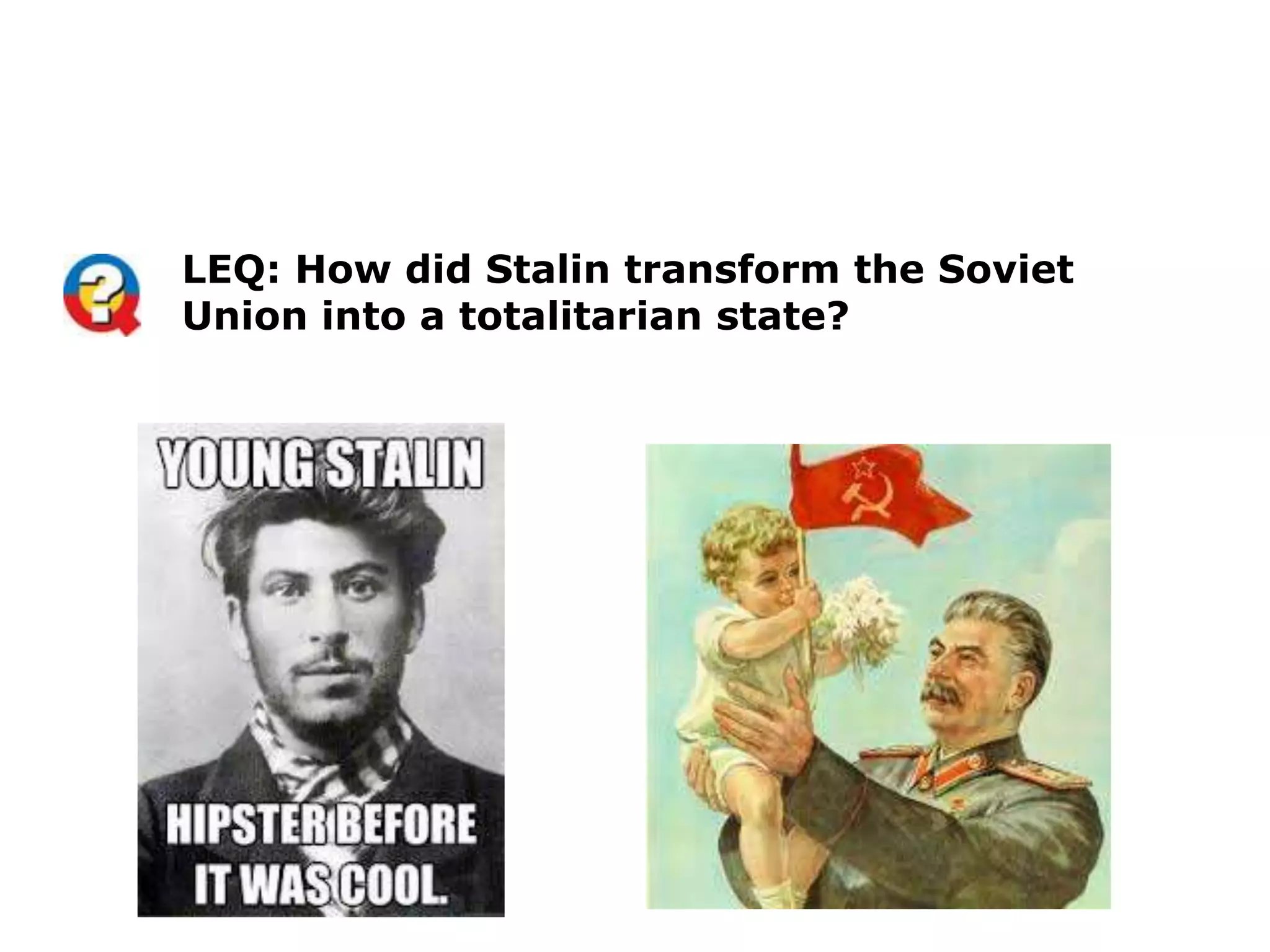
LEQ: How did Stalin transform the Soviet
Union into a totalitarian state?
• Build up heavy industry
• Improve transportation
• Increase farm output
The Soviet Union under Stalin became a
totalitarian state controlled by a powerful and
complex bureaucracy.
He brought all economic activity under government
control, calling it a command economy, the opposite
of a capitalist system.
In 1928, he
imposed the
first of several
“five-year
plans” to:
• command economy – an economy in which government officials
make all basic economic decisions
Between 1928 and 1939, the Soviet Union
experienced tremendous growth in industry.
The government:
• Built large factories
• Built hydroelectric
power stations
• Created huge industrial
complexes
• Improved oil, coal, and
steel production
• Expanded mining
• Built new railroads
Even with Stalin’s push to industrialize the nation,
overall the standard of living remained low.
Central planning
was often inefficient,
causing shortages
in some areas and
surpluses in others.
• Consumer products
were scarce.
• Wages were low.
• Workers were forbidden
to strike.
• Workers’ movements
were restricted.
Stalin also brought agriculture under his
control, but at a terrible cost.
• Peasants had to farm on state-owned farms
or collectives.
• They kept their houses and belonging, but the
livestock and tools were owned by the state.
• The state set prices and controlled supplies.
• collectives – large farms owned and operated by peasants
as a group
The peasants rebelled, causing Stalin to
respond with brutal force.
• He believed the kulaks, wealthy farmers, were
responsible for the resistance.
• He tried to eliminate the kulaks by taking their
land and sending them to labor camps.
• Thousands were killed or died during this purge.
• kulaks – wealthy farmers
The Terror Famine of 1932 was a result of the
government’s efforts to rid the land of the kulaks
and eliminate peasant resistance.
Between 5 and 8 million people died in Ukraine alone.
The government
seized all of the grain
to meet industrial
standards, leaving the
peasants to starve.
Peasants resisted
by growing only
enough grain to
feed themselves.
• Police spies opened private
letters.
• There was no free press.
• Protests were forbidden.
• Critics were sent to the
Gulag, a system of brutal
labor camps.
Stalin’s Communist party used secret police,
torture, and violent purges to ensure obedience.
But Stalin was still fearful that a rival party was plotting
against him.
A Gulag labor camp in 1934
• Gulag – brutal labor camp
In 1934, Stalin launched the Great Purge.
He targeted former
Communist army
heroes, industrial
managers, writers,
and ordinary citizens.
At least 4 million people were purged during the
Stalin years.
He staged a series
of spectacular
“show trials”
to force false
confessions.
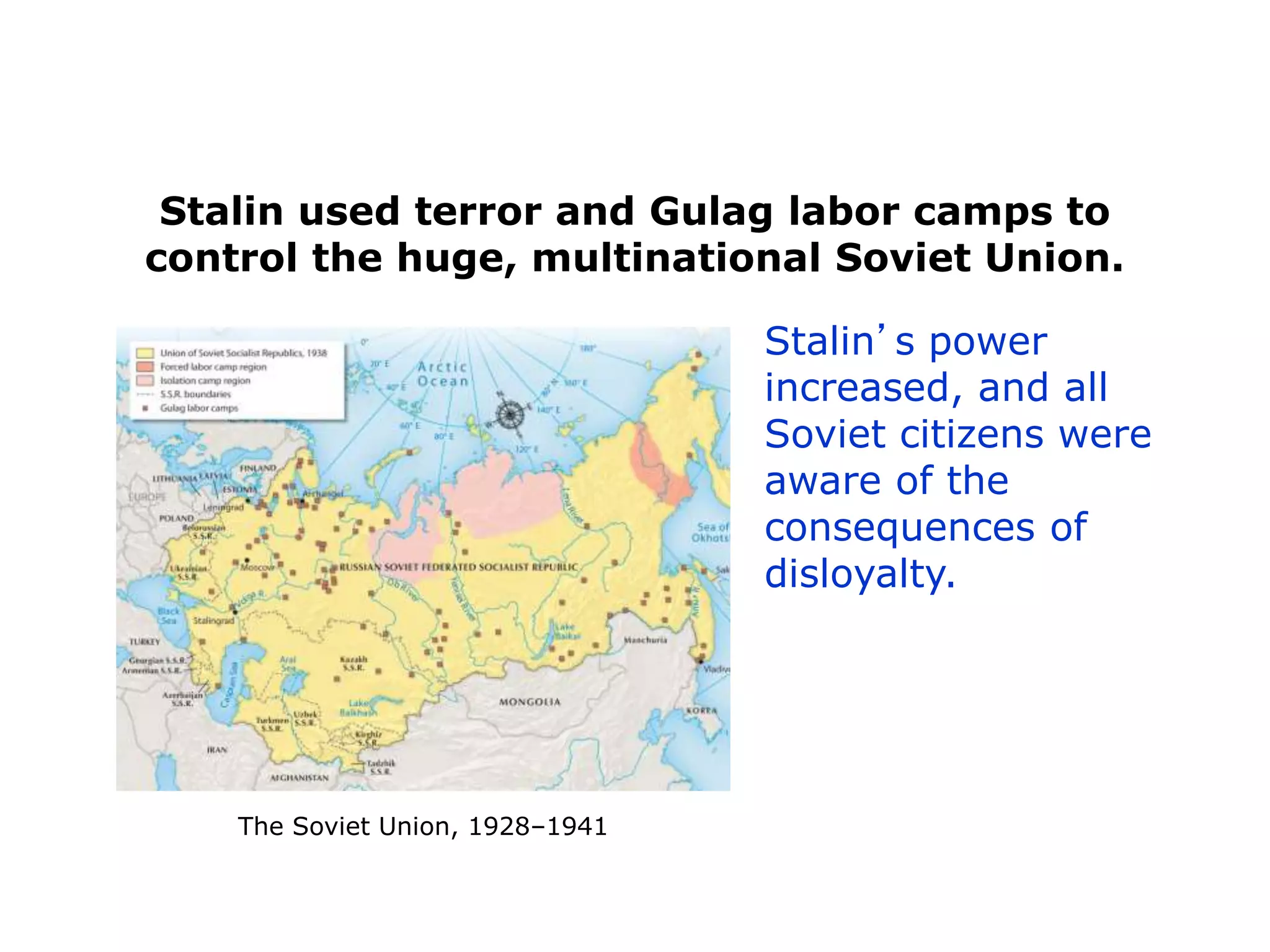
Stalin used terror and Gulag labor camps to
control the huge, multinational Soviet Union.
Stalin’s power
increased, and all
Soviet citizens were
aware of the
consequences of
disloyalty.
The Soviet Union, 1928–1941
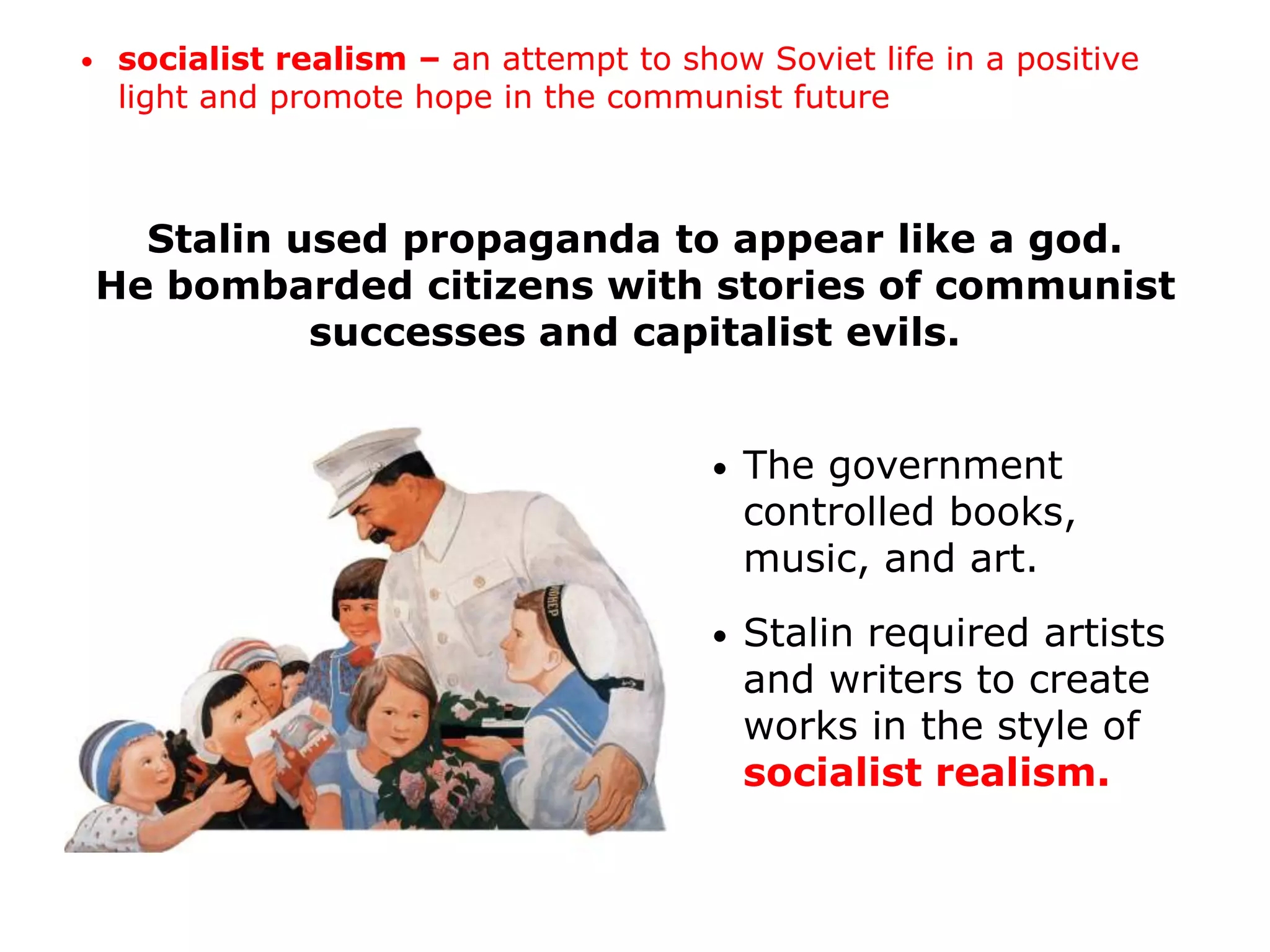
Stalin used propaganda to appear like a god.
He bombarded citizens with stories of communist
successes and capitalist evils.
• The government
controlled books,
music, and art.
• Stalin required artists
and writers to create
works in the style of
socialist realism.
• socialist realism – an attempt to show Soviet life in a positive
light and promote hope in the communist future
• The Russian language had to be used in all schools
and businesses.
• Atheism became an official state policy.
• Catholic, Jewish, and Islamic teachings were
suppressed.
Stalin controlled the cultural life of the Soviet Union
by promoting russification, the process of making of
a culture more Russian.
Any who refused to conform to government expectations
faced persecution.
• russification – making a nationality’s culture more Russian
• atheism – the belief that there is no god
Stalin created a society where a few elite groups
emerged as a new ruling class.
The elite had privileges
unavailable to the rest
of the population.
They lived in the best
apartments and
shopped in special
stores.
The general population had some
privileges they didn’t have before
communism.
Their children attended free
communist schools and participated
in sports, cultural activities, and
political classes.
Elite General Population
• Free medical care
• Free day care
• Inexpensive housing
• Public recreation
In addition, women made gains. By the 1930s,
they were allowed access to education and a wide
range of jobs.
The Soviet
state provided
other benefits
to the general
population.
Between 1917 and 1939, the Soviet Union’s
foreign policy focused on spreading communism
and revolution throughout the world.
• Lenin formed the Comintern, a worldwide communist
organization that aided revolutionary groups.
• Leaders hoped to bolster Soviet security by winning
foreign support.
• Comintern – a communist group whose purpose was to
encourage world-wide revolution
Stalin brought all economic activity under
government control, and he used terror tactics to
control Soviet life.
LEQ: How did Stalin transform the Soviet Union
into a totalitarian state?

28 4 soviet union under stalin

  • 1.
    28.4 The SovietUnion Under Stalin
  • 2.
    LEQ: How didStalin transform the Soviet Union into a totalitarian state?
  • 3.
    • Build upheavy industry • Improve transportation • Increase farm output The Soviet Union under Stalin became a totalitarian state controlled by a powerful and complex bureaucracy. He brought all economic activity under government control, calling it a command economy, the opposite of a capitalist system. In 1928, he imposed the first of several “five-year plans” to: • command economy – an economy in which government officials make all basic economic decisions
  • 4.
    Between 1928 and1939, the Soviet Union experienced tremendous growth in industry. The government: • Built large factories • Built hydroelectric power stations • Created huge industrial complexes • Improved oil, coal, and steel production • Expanded mining • Built new railroads
  • 5.
    Even with Stalin’spush to industrialize the nation, overall the standard of living remained low. Central planning was often inefficient, causing shortages in some areas and surpluses in others. • Consumer products were scarce. • Wages were low. • Workers were forbidden to strike. • Workers’ movements were restricted.
  • 6.
    Stalin also broughtagriculture under his control, but at a terrible cost. • Peasants had to farm on state-owned farms or collectives. • They kept their houses and belonging, but the livestock and tools were owned by the state. • The state set prices and controlled supplies. • collectives – large farms owned and operated by peasants as a group
  • 7.
    The peasants rebelled,causing Stalin to respond with brutal force. • He believed the kulaks, wealthy farmers, were responsible for the resistance. • He tried to eliminate the kulaks by taking their land and sending them to labor camps. • Thousands were killed or died during this purge. • kulaks – wealthy farmers
  • 8.
    The Terror Famineof 1932 was a result of the government’s efforts to rid the land of the kulaks and eliminate peasant resistance. Between 5 and 8 million people died in Ukraine alone. The government seized all of the grain to meet industrial standards, leaving the peasants to starve. Peasants resisted by growing only enough grain to feed themselves.
  • 9.
    • Police spiesopened private letters. • There was no free press. • Protests were forbidden. • Critics were sent to the Gulag, a system of brutal labor camps. Stalin’s Communist party used secret police, torture, and violent purges to ensure obedience. But Stalin was still fearful that a rival party was plotting against him. A Gulag labor camp in 1934 • Gulag – brutal labor camp
  • 10.
    In 1934, Stalinlaunched the Great Purge. He targeted former Communist army heroes, industrial managers, writers, and ordinary citizens. At least 4 million people were purged during the Stalin years. He staged a series of spectacular “show trials” to force false confessions.
  • 11.
    Stalin used terrorand Gulag labor camps to control the huge, multinational Soviet Union. Stalin’s power increased, and all Soviet citizens were aware of the consequences of disloyalty. The Soviet Union, 1928–1941
  • 12.
    Stalin used propagandato appear like a god. He bombarded citizens with stories of communist successes and capitalist evils. • The government controlled books, music, and art. • Stalin required artists and writers to create works in the style of socialist realism. • socialist realism – an attempt to show Soviet life in a positive light and promote hope in the communist future
  • 13.
    • The Russianlanguage had to be used in all schools and businesses. • Atheism became an official state policy. • Catholic, Jewish, and Islamic teachings were suppressed. Stalin controlled the cultural life of the Soviet Union by promoting russification, the process of making of a culture more Russian. Any who refused to conform to government expectations faced persecution. • russification – making a nationality’s culture more Russian • atheism – the belief that there is no god
  • 14.
    Stalin created asociety where a few elite groups emerged as a new ruling class. The elite had privileges unavailable to the rest of the population. They lived in the best apartments and shopped in special stores. The general population had some privileges they didn’t have before communism. Their children attended free communist schools and participated in sports, cultural activities, and political classes. Elite General Population
  • 15.
    • Free medicalcare • Free day care • Inexpensive housing • Public recreation In addition, women made gains. By the 1930s, they were allowed access to education and a wide range of jobs. The Soviet state provided other benefits to the general population.
  • 16.
    Between 1917 and1939, the Soviet Union’s foreign policy focused on spreading communism and revolution throughout the world. • Lenin formed the Comintern, a worldwide communist organization that aided revolutionary groups. • Leaders hoped to bolster Soviet security by winning foreign support. • Comintern – a communist group whose purpose was to encourage world-wide revolution
  • 17.
    Stalin brought alleconomic activity under government control, and he used terror tactics to control Soviet life. LEQ: How did Stalin transform the Soviet Union into a totalitarian state?