

Ancy mariam babu
    Vit university
 the need of multimedia secure
  transmission
 need of more security
 What is cryptography…???
   CRYPTOGRAPHY IS THE SCIENCE
    OF INFORMATION SECURITY
   The word is derived from
    greek kryptos means hidden
   Cryptography includes the
    techniques such as
    microdotes, merging words
    with images, other ways to
    hide information in storage
    or transit
   Objectives of cryptography
    are
          confidentiality
          integrity
          authentication
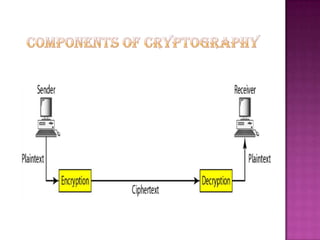
 Encryption  : it is the process of
  converting a plain text into
  (unrecognizable) cipher text.
 For strong encryption: two attributes
   -confusion
   -diffussion
 Decryption: it is the process of
  changing back the cipher text to
  plain text.
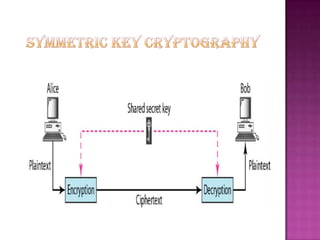
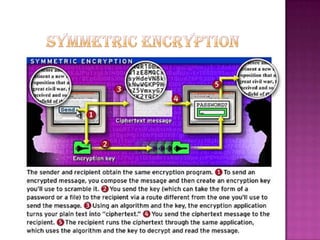
   A single common key is used for encode and decode
    of messages
   Both sender and receiver must know the common
    key
   The common key need to be exchange before hand
    by some other secure method
   Symmetric key encryption is fast and simple
   But the key management is impractical
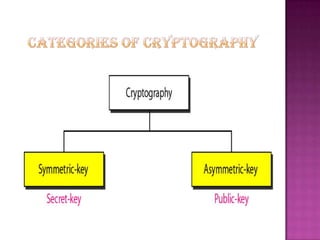
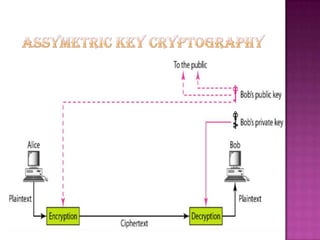
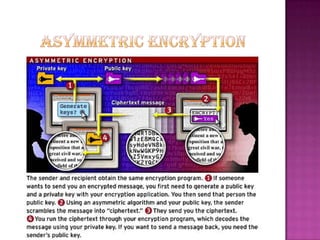
 Two different key is used for
  encryption and decryption
 Public key is used for encryption and
  private key is used for decryption
 Each user has a public key and
  corresponding private key.
   Encryption is the
    process of converting
    plain text into cipher
    text.
   Done by using
    encryption
    algorithms
   Key is used
   Two types:
     -Asymmetric
      -symmetric
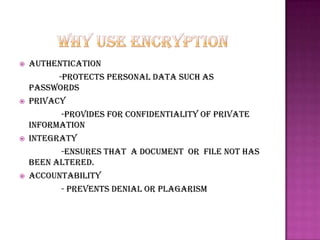
   Authentication
          -protects personal data such as
    passwords
   Privacy
           -provides for confidentiality of private
    information
   Integraty
           -ensures that a document or file not has
    been altered.
   Accountability
           - prevents denial or plagarism
 Web browser encryption
 Email encryption
 Hard drive encryption
 Operating system protection
   Encryption on video
   Twotypes
       - independent encryption
        -joint compression and encryption
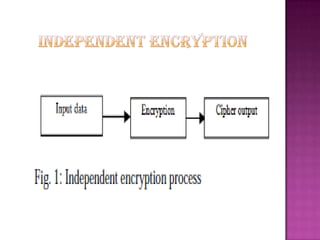
 Both encryption and compression done
  seperatly
 Any compression standard can use for
  compression
 For encryption, can use either
    lightweight encription
               or
    heavyweight encryption
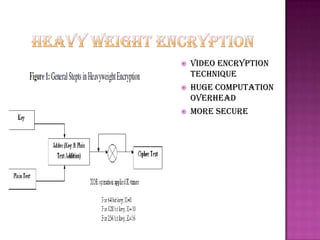
   Video encryption
    technique
   Huge computation
    overhead
   More secure
   Examples
   Des:
        - data encryption standard for electronic
    encryption
         -short key length and symmetric key block
    cipher
   Aes:
          -advanced encryption algorithm
          - symmetric key encryption
   Rsa:
          -public key scheme
          - difficulty for factoring large number
          -secure
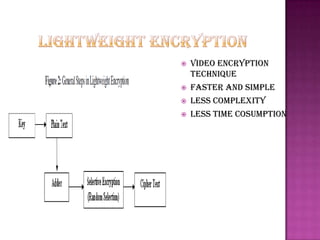
   Video encryption
    technique
   Faster and simple
   Less complexity
   Less time cosumption
   examples
   Rc6
   Idea
   hb2
   Present
   Tea
   Both encryption and compression integrates as a
    single step
   System obtain multiple level of security
   Exaples
    1.vea
    2.rvea
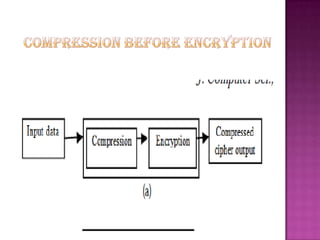
   Two types
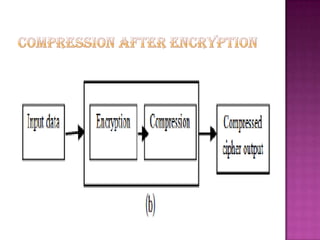
    1.compression before encryption
     2. compression after encryption
Cryptography and  encryption

Cryptography and encryption

  • 1.
    Ancy mariam babu Vit university
  • 2.
     the needof multimedia secure transmission  need of more security  What is cryptography…???
  • 3.
    CRYPTOGRAPHY IS THE SCIENCE OF INFORMATION SECURITY  The word is derived from greek kryptos means hidden  Cryptography includes the techniques such as microdotes, merging words with images, other ways to hide information in storage or transit  Objectives of cryptography are confidentiality integrity authentication
  • 4.
     Encryption : it is the process of converting a plain text into (unrecognizable) cipher text.  For strong encryption: two attributes -confusion -diffussion  Decryption: it is the process of changing back the cipher text to plain text.
  • 7.
    A single common key is used for encode and decode of messages  Both sender and receiver must know the common key  The common key need to be exchange before hand by some other secure method  Symmetric key encryption is fast and simple  But the key management is impractical
  • 9.
     Two differentkey is used for encryption and decryption  Public key is used for encryption and private key is used for decryption  Each user has a public key and corresponding private key.
  • 11.
    Encryption is the process of converting plain text into cipher text.  Done by using encryption algorithms  Key is used  Two types: -Asymmetric -symmetric
  • 14.
    Authentication -protects personal data such as passwords  Privacy -provides for confidentiality of private information  Integraty -ensures that a document or file not has been altered.  Accountability - prevents denial or plagarism
  • 15.
     Web browserencryption  Email encryption  Hard drive encryption  Operating system protection
  • 16.
    Encryption on video  Twotypes - independent encryption -joint compression and encryption
  • 17.
     Both encryptionand compression done seperatly  Any compression standard can use for compression  For encryption, can use either lightweight encription or heavyweight encryption
  • 19.
    Video encryption technique  Huge computation overhead  More secure
  • 20.
    Examples  Des: - data encryption standard for electronic encryption -short key length and symmetric key block cipher  Aes: -advanced encryption algorithm - symmetric key encryption  Rsa: -public key scheme - difficulty for factoring large number -secure
  • 21.
    Video encryption technique  Faster and simple  Less complexity  Less time cosumption
  • 22.
    examples  Rc6  Idea  hb2  Present  Tea
  • 23.
    Both encryption and compression integrates as a single step  System obtain multiple level of security  Exaples 1.vea 2.rvea  Two types 1.compression before encryption 2. compression after encryption