Intranet and Extr anets


           Presentation by :-
           MD NURUDDIN
           KAMAL JAIN


                B.Tech(BIOTECH)
                1st YEAR
                SHARDA
                UNIVERSITY
Intranet
What Is an Intranet?
• An intranet delivers collaboration and coordination
  to employees around the clock
   – Communication system designed by technical staff
   – Focus is the message, not the media


• Normally runs in a client/server environment and a
  local area network configuration

• Separated from other networks by firewalls, a
  means of preventing unauthorized access to the
  company’s internal data or leaks of sensitive
  company information

                   © 2007 Prentice-Hall, Inc            4-3
What is Intranet ?


   Internal company network that uses Internet
    standards (HTML, HTTP & TCP/IP protocols) &
    software.

   Accessed only by authorized persons, especially
    members or employees of the organization
   Intranet = Network + Information Resource +
    Information Services
Intranet Security

Two levels of Security required:

   Internal
    It can be imposed by Public Key Security &
    Encryption Key.

   External
    Through Firewall.
What is Firewall ?

   Security device located between firm’s internal
    network (intranet) & external network (internet).

   Regulates access into & out of a company’s network
    based on a set of rules.

    Note : needs to be upgraded from time to time to check latest
      potential security problems.
Strategic Significance
• A cost-effective way of distributing information
  throughout an organization
• Links employees and managers around the clock
  and automates a lot of intraorganizational traffic
• Makes it possible for a company to gain better
  access to its primary resource - the knowledge
  and experience of decision makers
• Enables easier integration of processes


               © 2007 Prentice-Hall, Inc         4-7
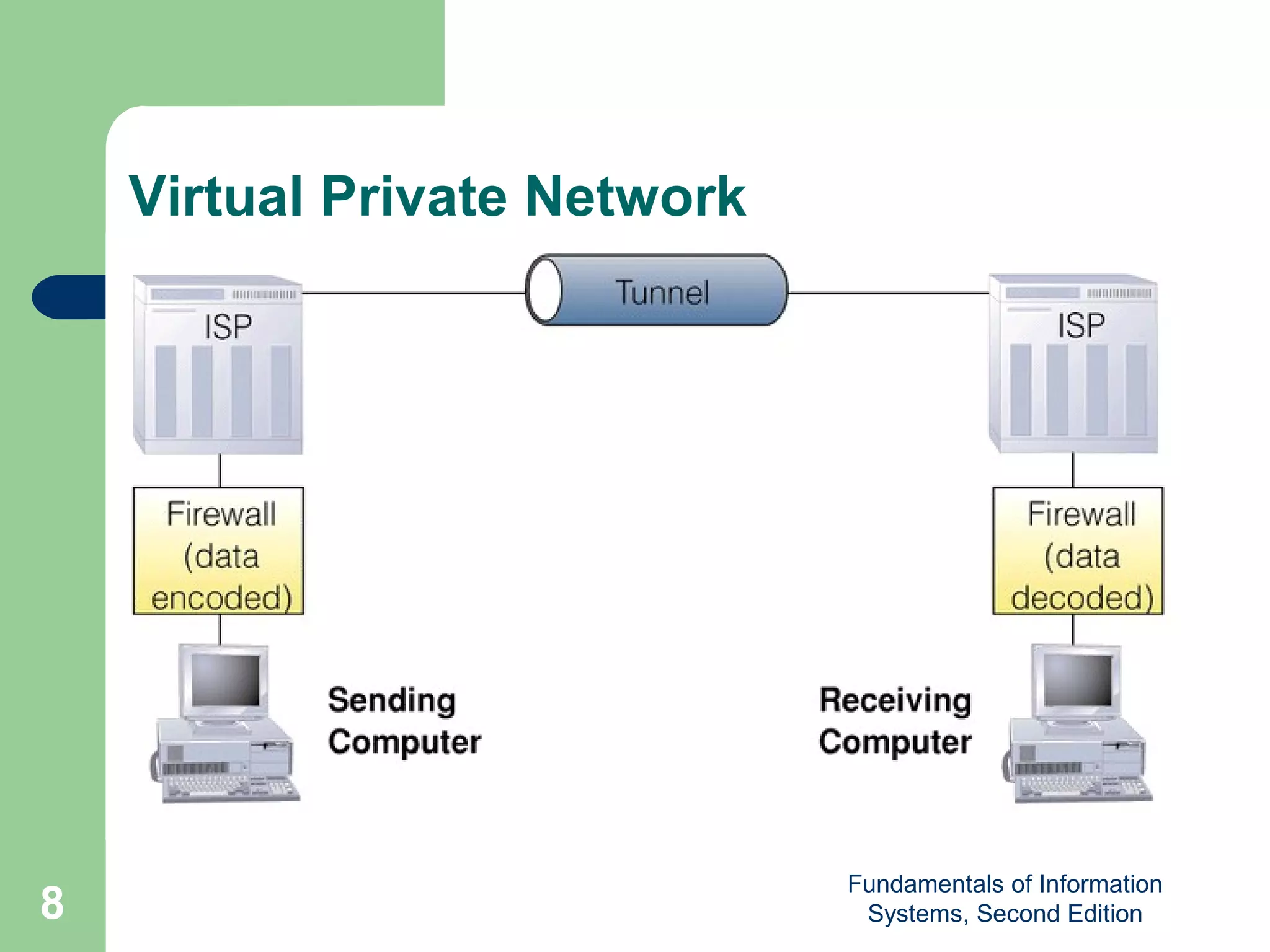
Virtual Private Network


                              Fundamentals of Information
8                              Systems, Second Edition
Applications of Intranet

 Sharing  of company policies/rules &
  regulations
 Sharing of information of common interest
 Access product & customer data
 Launching of personal/departmental home
  pages
 Submission of reports
 Corporate telephone directories
Advantages of intranet

 Fast,easy, low-cost to implement
 Based on open standards
 Connectivity with other systems
 Easy to learn and use
 Hypertext links
 Access to internal and external information
 Improves communication
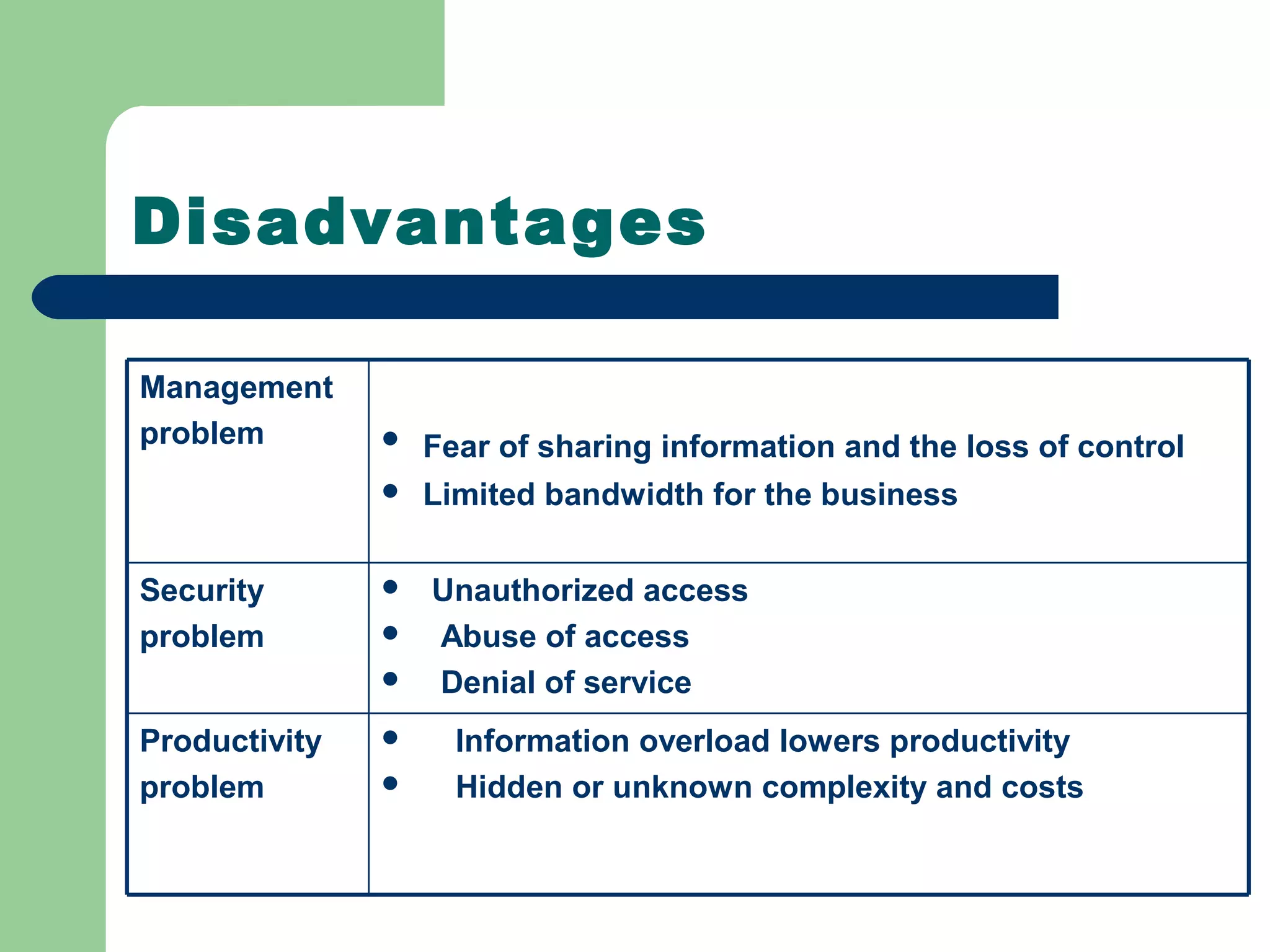
Disadvantages

Management
problem           Fear of sharing information and the loss of control
                  Limited bandwidth for the business


Security          Unauthorized access
problem           Abuse of access
                  Denial of service
Productivity        Information overload lowers productivity
problem             Hidden or unknown complexity and costs
Extrane
t
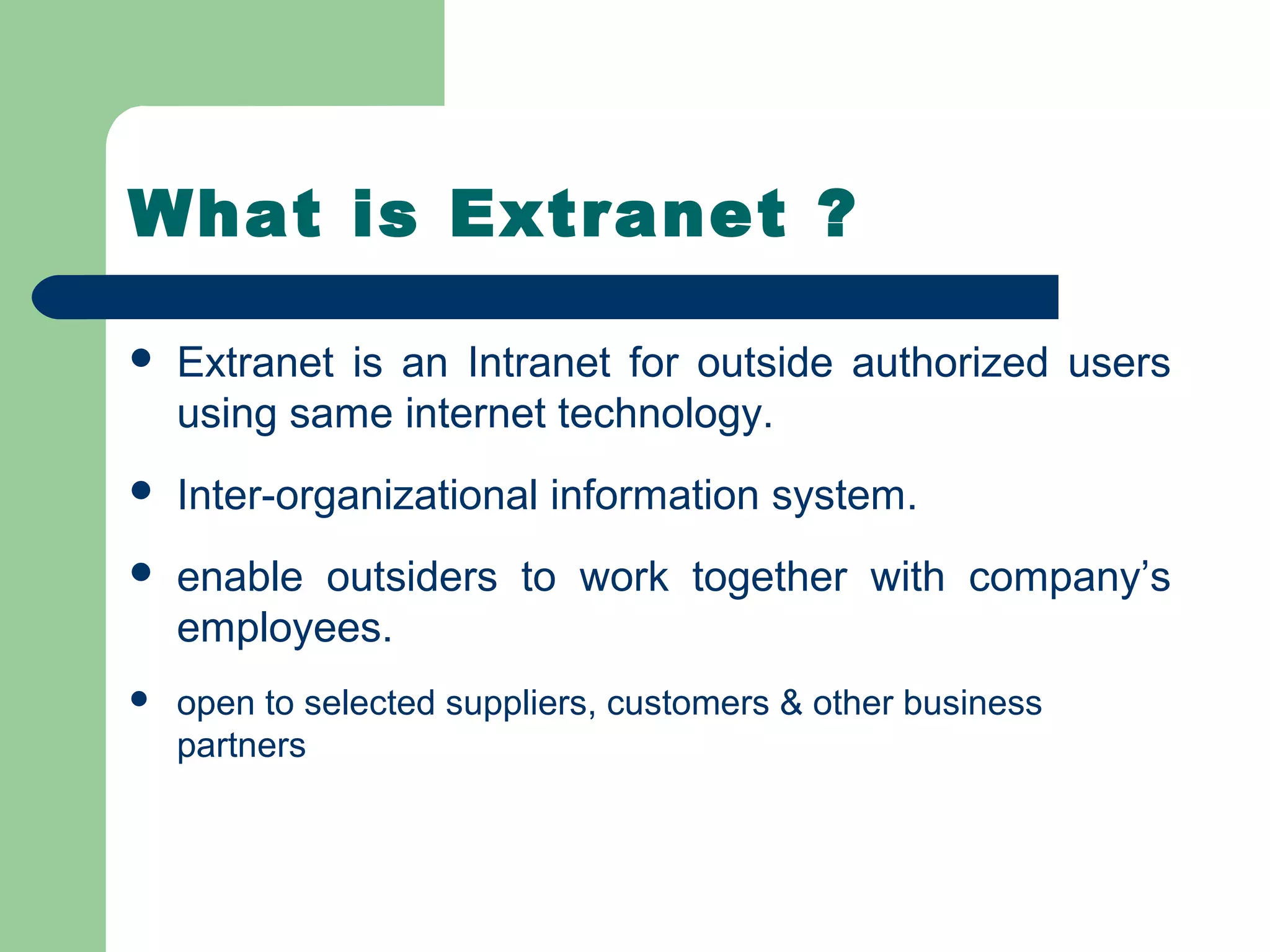
What is Extranet ?

   Extranet is an Intranet for outside authorized users
    using same internet technology.
   Inter-organizational information system.
   enable outsiders to work together with company’s
    employees.
   open to selected suppliers, customers & other business
    partners
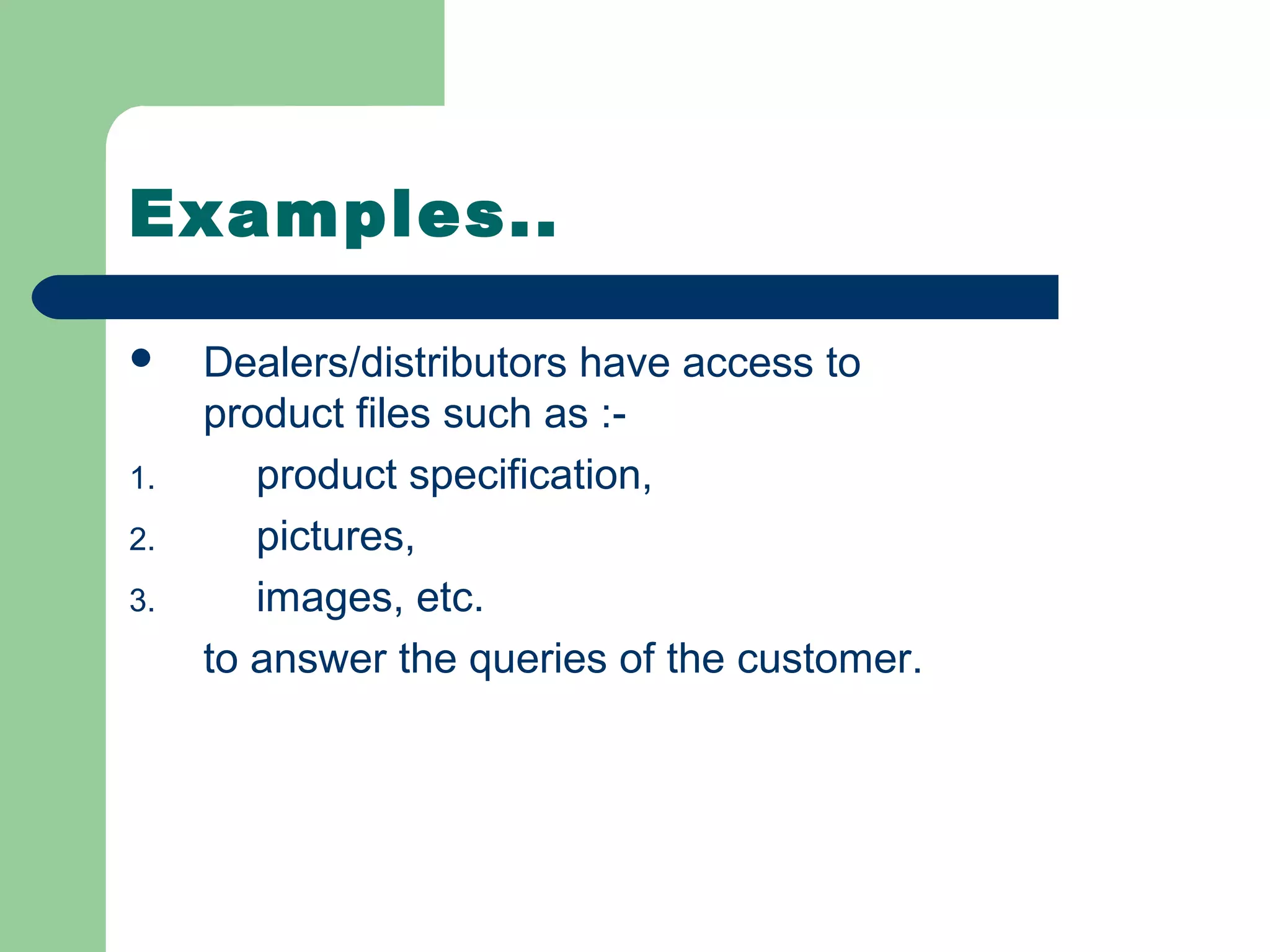
Examples..

    Dealers/distributors have access to
     product files such as :-
1.      product specification,
2.      pictures,
3.      images, etc.
     to answer the queries of the customer.
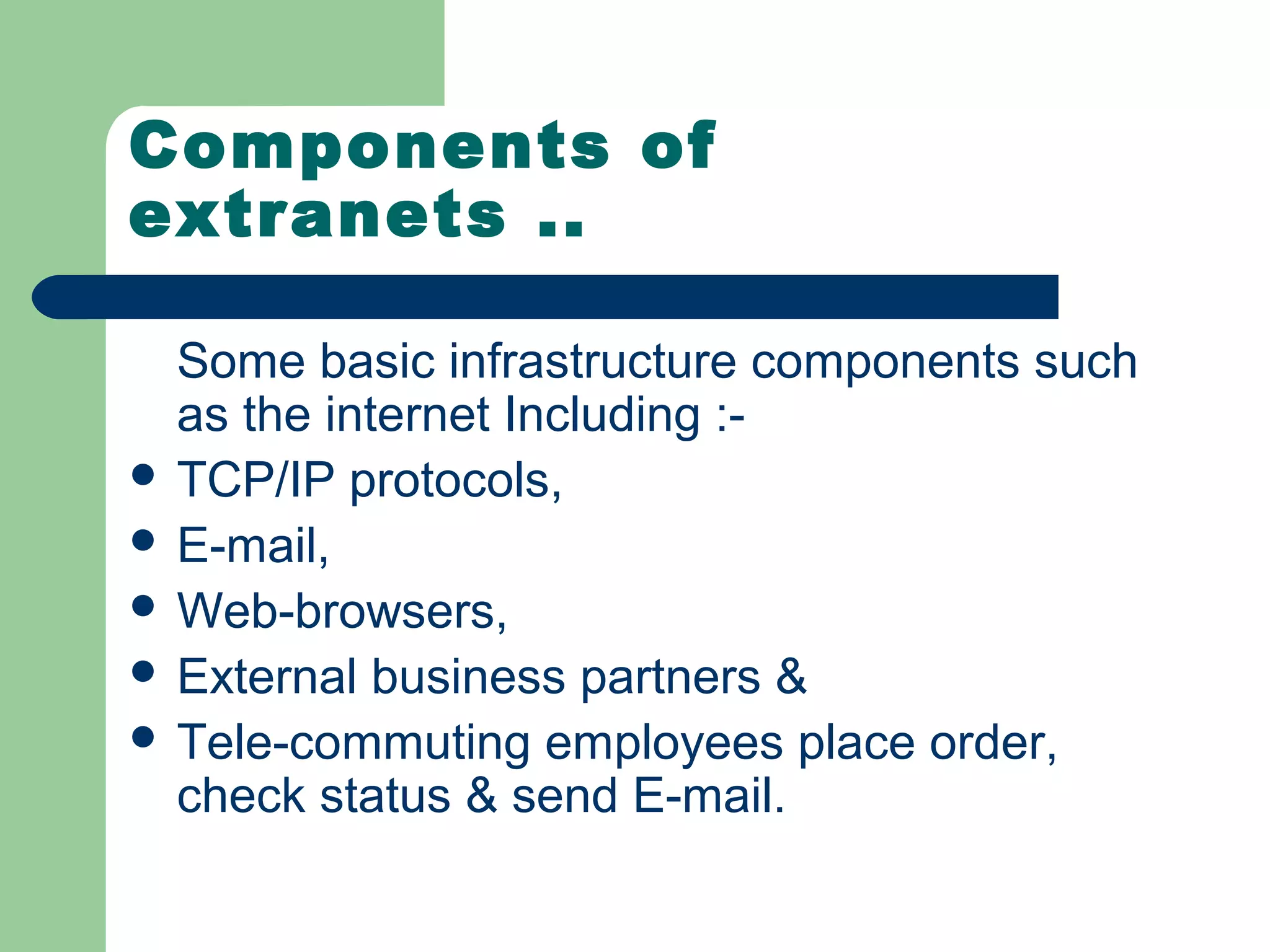
Components of
extranets ..

  Some basic infrastructure components such
  as the internet Including :-
 TCP/IP protocols,
 E-mail,
 Web-browsers,
 External business partners &
 Tele-commuting employees place order,
  check status & send E-mail.
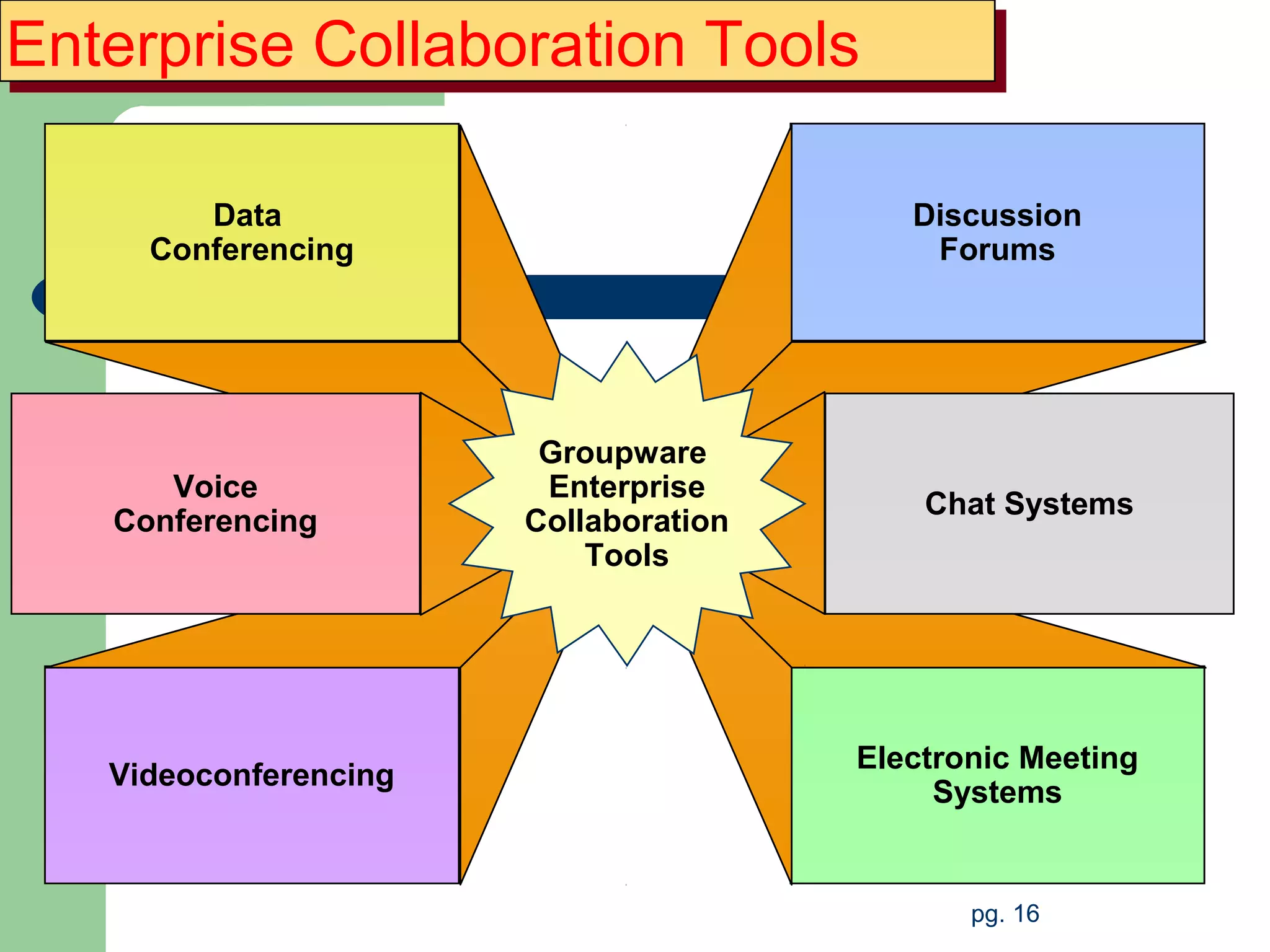
Enterprise Collaboration Tools

        Data                              Discussion
     Conferencing                          Forums


                        Groupware
      Voice             Enterprise
                                           Chat Systems
   Conferencing        Collaboration
                           Tools


                                       Electronic Meeting
   Videoconferencing
                                            Systems


                                              pg. 16
Benefits of Extranet

   Improved quality.
   lower travel costs.
   lower administrative & other overhead costs.
   reduction in paperwork.
   delivery of accurate information on time.
   improved customer service.
   better communication.
   overall improvement in business
    effectiveness.
Disadvantages

   The suppliers & customer who don’t
    have technical knowledge feel problem.
   Faceless contact.
   Information can be misused by other competitors.
   Fraud may be possible.
   Technical Employees are required.
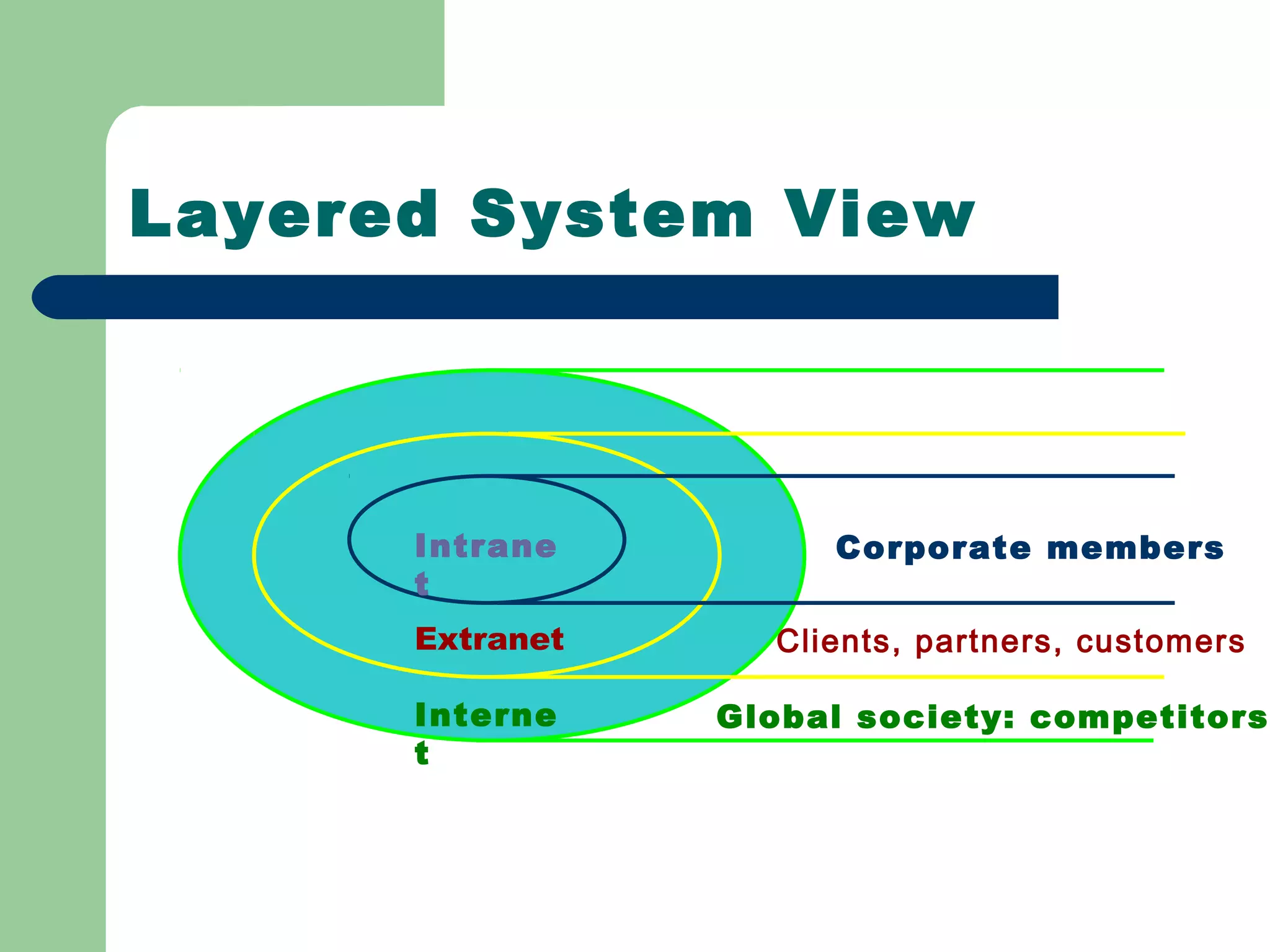
Layered System View


      Intrane         Corporate members
      t
      Extranet     Clients, partners, customers

      Interne    Global society: competitors
      t
Questions
Y ou
  a nk
Th

Intranet and extranet

  • 1.
    Intranet and Extranets Presentation by :- MD NURUDDIN KAMAL JAIN B.Tech(BIOTECH) 1st YEAR SHARDA UNIVERSITY
  • 2.
  • 3.
    What Is anIntranet? • An intranet delivers collaboration and coordination to employees around the clock – Communication system designed by technical staff – Focus is the message, not the media • Normally runs in a client/server environment and a local area network configuration • Separated from other networks by firewalls, a means of preventing unauthorized access to the company’s internal data or leaks of sensitive company information © 2007 Prentice-Hall, Inc 4-3
  • 4.
    What is Intranet?  Internal company network that uses Internet standards (HTML, HTTP & TCP/IP protocols) & software.  Accessed only by authorized persons, especially members or employees of the organization  Intranet = Network + Information Resource + Information Services
  • 5.
    Intranet Security Two levelsof Security required:  Internal It can be imposed by Public Key Security & Encryption Key.  External Through Firewall.
  • 6.
    What is Firewall?  Security device located between firm’s internal network (intranet) & external network (internet).  Regulates access into & out of a company’s network based on a set of rules. Note : needs to be upgraded from time to time to check latest potential security problems.
  • 7.
    Strategic Significance • Acost-effective way of distributing information throughout an organization • Links employees and managers around the clock and automates a lot of intraorganizational traffic • Makes it possible for a company to gain better access to its primary resource - the knowledge and experience of decision makers • Enables easier integration of processes © 2007 Prentice-Hall, Inc 4-7
  • 8.
    Virtual Private Network Fundamentals of Information 8 Systems, Second Edition
  • 9.
    Applications of Intranet Sharing of company policies/rules & regulations  Sharing of information of common interest  Access product & customer data  Launching of personal/departmental home pages  Submission of reports  Corporate telephone directories
  • 10.
    Advantages of intranet Fast,easy, low-cost to implement  Based on open standards  Connectivity with other systems  Easy to learn and use  Hypertext links  Access to internal and external information  Improves communication
  • 11.
    Disadvantages Management problem  Fear of sharing information and the loss of control  Limited bandwidth for the business Security  Unauthorized access problem  Abuse of access  Denial of service Productivity  Information overload lowers productivity problem  Hidden or unknown complexity and costs
  • 12.
  • 13.
    What is Extranet?  Extranet is an Intranet for outside authorized users using same internet technology.  Inter-organizational information system.  enable outsiders to work together with company’s employees.  open to selected suppliers, customers & other business partners
  • 14.
    Examples..  Dealers/distributors have access to product files such as :- 1. product specification, 2. pictures, 3. images, etc. to answer the queries of the customer.
  • 15.
    Components of extranets .. Some basic infrastructure components such as the internet Including :-  TCP/IP protocols,  E-mail,  Web-browsers,  External business partners &  Tele-commuting employees place order, check status & send E-mail.
  • 16.
    Enterprise Collaboration Tools EnterpriseCollaboration Tools Data Discussion Conferencing Forums Groupware Voice Enterprise Chat Systems Conferencing Collaboration Tools Electronic Meeting Videoconferencing Systems pg. 16
  • 17.
    Benefits of Extranet  Improved quality.  lower travel costs.  lower administrative & other overhead costs.  reduction in paperwork.  delivery of accurate information on time.  improved customer service.  better communication.  overall improvement in business effectiveness.
  • 18.
    Disadvantages  The suppliers & customer who don’t have technical knowledge feel problem.  Faceless contact.  Information can be misused by other competitors.  Fraud may be possible.  Technical Employees are required.
  • 19.
    Layered System View Intrane Corporate members t Extranet Clients, partners, customers Interne Global society: competitors t
  • 20.
  • 21.
    Y ou a nk Th