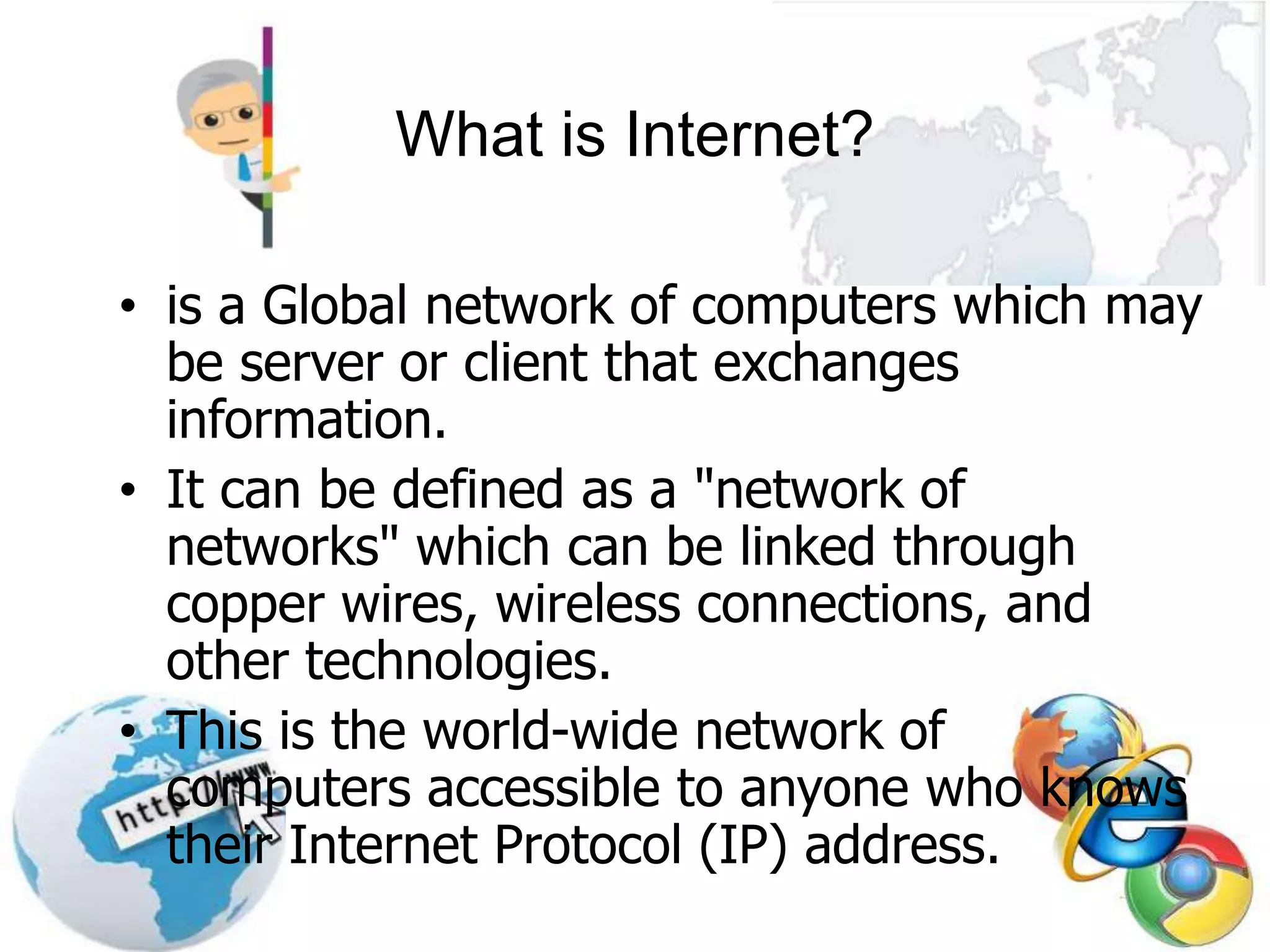
Internet, Intranet and
          Extranet


Presented By:
Jehra Mae M.
  Sevillano
What is Internet?

• is a Global network of computers which may
  be server or client that exchanges
  information.
• It can be defined as a "network of
  networks" which can be linked through
  copper wires, wireless connections, and
  other technologies.
• This is the world-wide network of
  computers accessible to anyone who knows
  their Internet Protocol (IP) address.
What is Intranet?

• The term Intranet is derived from two
  words: ‘Intra’ which means within and
  ‘net’ which means group of interconnected
  computers.
• is a private computer network that uses
  Internet protocols and network connectivity
  to securely share any part of an
  organization's information or operational
  systems with its employees.
• In short, an intranet is private network,
How it is different from Internet?

• The technologies used in Intranet and Internet
  may be same but the main difference between
  them is that the information shared in intranet
  can be access only by authorized persons
  especially members or employees of the
  organization or company where as in internet
  the information is shared world wide with
  any public user to explain in simple terms,
  intranet is private, within the organization while
  internet is public available for global access
Benefits of intranets

• Workforce productivity:
       Intranets can help users to locate and view
  information faster and use app. relevant to their roles
  and responsibilities. With the help of a web browser
  interface, users can access data held in any database
  the organization wants to make available, anytime
  and - subject to security provisions – from anywhere
  within the company workstations, increasing
  employees' ability to perform their jobs faster, more
  accurately, and with confidence that they have the
  right information. It also helps to improve the
  services provided to the users.
• Time:
• Communication:
       Intranets can serve as powerful tools for
  communication within an organization, vertically and
  horizontally. From a communications standpoint,
  intranets are useful to communicate strategic initiatives
  that have a global reach throughout the organization.
  The type of information that can easily be conveyed is
  the purpose of the initiative and what the initiative is
  aiming to achieve, who is driving the initiative, results
  achieved to date, and who to speak to for more
  information. By providing this information on the
  intranet, staff has the opportunity to keep up-to-date
  with the strategic focus of the organization.
• Cost-effective:
       Most organizations have already established TCP/IP
  networks, and the incremental infrastructure cost of
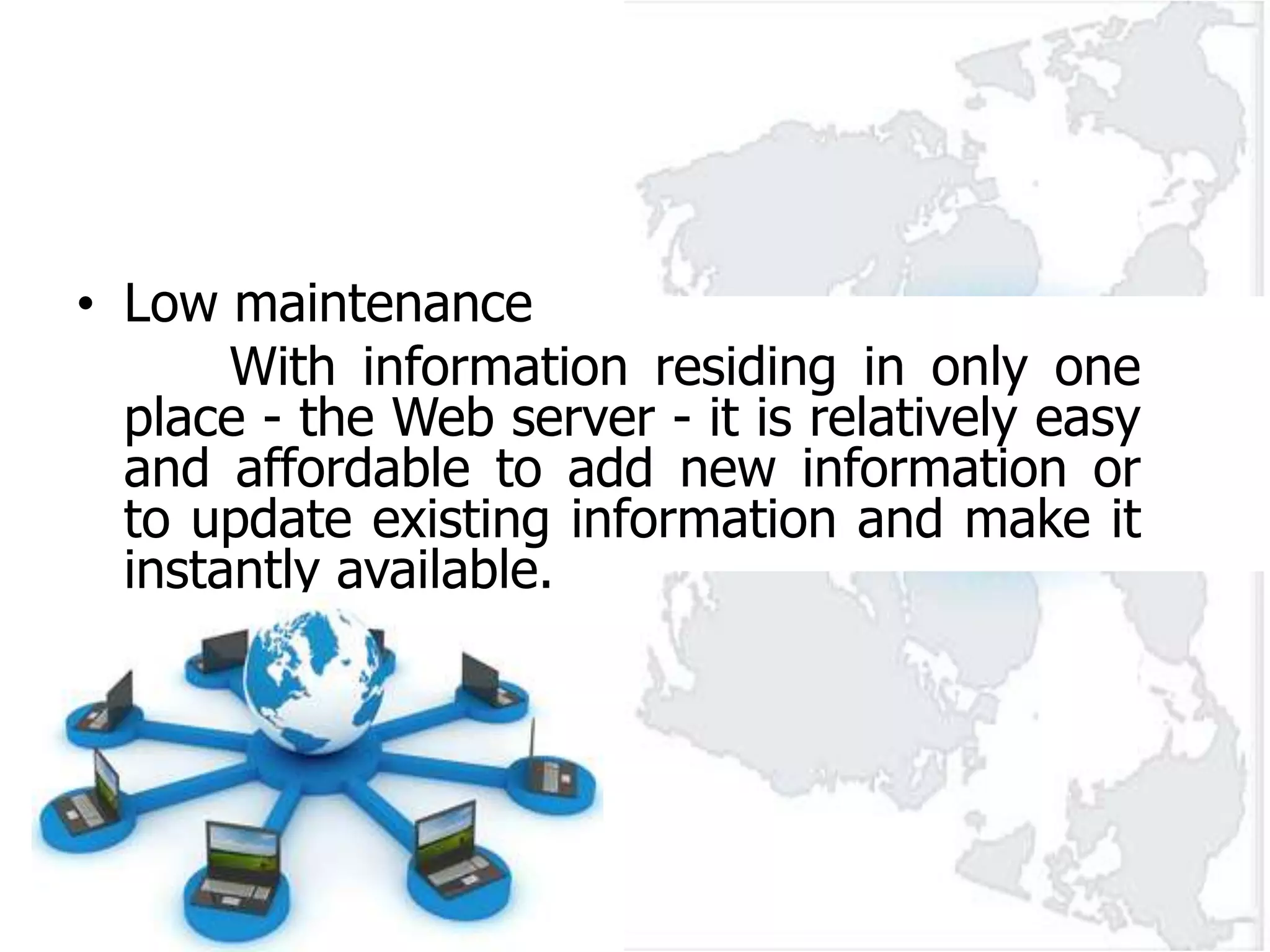
• Low maintenance
       With information residing in only one
  place - the Web server - it is relatively easy
  and affordable to add new information or
  to update existing information and make it
  instantly available.
What is Extranet?

• is an intranet for outside authorized users
  using same internet technologies. The
  outside users are trusted partners of the
  organization who have access to
  information of their interest & concern.
• extends the intranet concept to provide a
  network that connects a company’s
  network to the networks of its business
  partners, selected customers, or suppliers.
How it is different from Intranets?


• Intranets differ from extranet in that the
  former are generally restricted to
  employees of the organization while
  extranets may also be accessed by
  customers, suppliers, or other approved
  parties. Extranets extend a private
  network onto the Internet with special
  provisions for access, authorization and
  authentication.
Types of Extranet
• Public Network Extranet
       exists when an organization allows the public to access
  its intranet from any public network. Security is an issue in
  this configuration, because a public network does not
  provide any security protection.
• Private Network Extranet
       Is a private, leased-line connection bet. Two companies
  that physically connects their intranets to one another. The
  single advantage of this is Security. The single largest
  drawback is Cost.
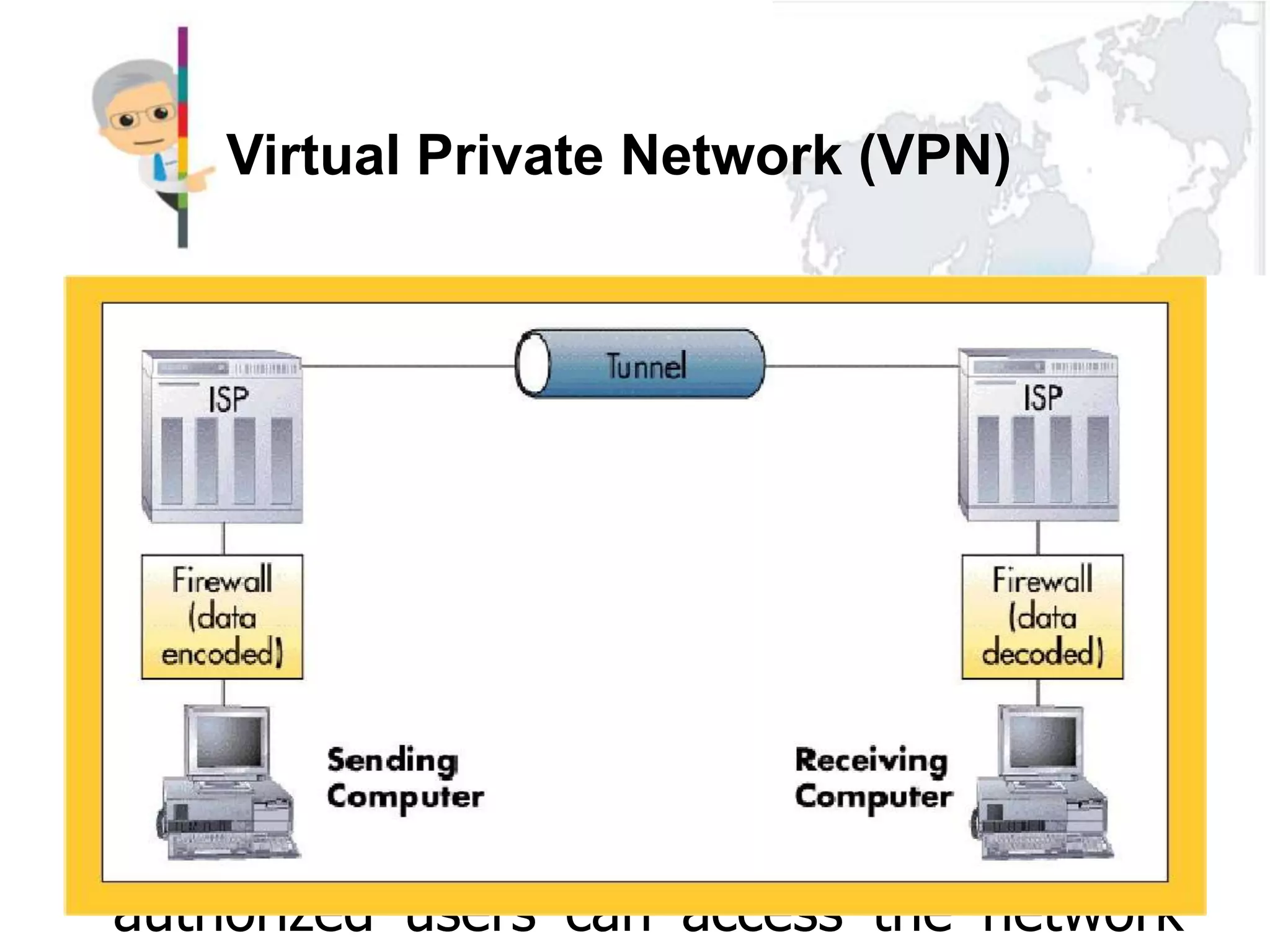
• Virtual Private Network (VPN)
       is a network that uses public networks and their
  protocols to send sensitive data to partners, customers,
Virtual Private Network (VPN)


•      a network that is constructed by using
    public wires to connect nodes.
    -For example, there are a number of
    systems that enable you to create
    networks using the Internet as the
    medium for transporting data. These
    systems use encryption and other security
    mechanisms       to  ensure    that  only
    authorized users can access the network
END
Thank You! 

Internet, intranet and extranet

  • 1.
    Internet, Intranet and Extranet Presented By: Jehra Mae M. Sevillano
  • 2.
    What is Internet? •is a Global network of computers which may be server or client that exchanges information. • It can be defined as a "network of networks" which can be linked through copper wires, wireless connections, and other technologies. • This is the world-wide network of computers accessible to anyone who knows their Internet Protocol (IP) address.
  • 3.
    What is Intranet? •The term Intranet is derived from two words: ‘Intra’ which means within and ‘net’ which means group of interconnected computers. • is a private computer network that uses Internet protocols and network connectivity to securely share any part of an organization's information or operational systems with its employees. • In short, an intranet is private network,
  • 4.
    How it isdifferent from Internet? • The technologies used in Intranet and Internet may be same but the main difference between them is that the information shared in intranet can be access only by authorized persons especially members or employees of the organization or company where as in internet the information is shared world wide with any public user to explain in simple terms, intranet is private, within the organization while internet is public available for global access
  • 5.
    Benefits of intranets •Workforce productivity: Intranets can help users to locate and view information faster and use app. relevant to their roles and responsibilities. With the help of a web browser interface, users can access data held in any database the organization wants to make available, anytime and - subject to security provisions – from anywhere within the company workstations, increasing employees' ability to perform their jobs faster, more accurately, and with confidence that they have the right information. It also helps to improve the services provided to the users. • Time:
  • 6.
    • Communication: Intranets can serve as powerful tools for communication within an organization, vertically and horizontally. From a communications standpoint, intranets are useful to communicate strategic initiatives that have a global reach throughout the organization. The type of information that can easily be conveyed is the purpose of the initiative and what the initiative is aiming to achieve, who is driving the initiative, results achieved to date, and who to speak to for more information. By providing this information on the intranet, staff has the opportunity to keep up-to-date with the strategic focus of the organization. • Cost-effective: Most organizations have already established TCP/IP networks, and the incremental infrastructure cost of
  • 7.
    • Low maintenance With information residing in only one place - the Web server - it is relatively easy and affordable to add new information or to update existing information and make it instantly available.
  • 8.
    What is Extranet? •is an intranet for outside authorized users using same internet technologies. The outside users are trusted partners of the organization who have access to information of their interest & concern. • extends the intranet concept to provide a network that connects a company’s network to the networks of its business partners, selected customers, or suppliers.
  • 9.
    How it isdifferent from Intranets? • Intranets differ from extranet in that the former are generally restricted to employees of the organization while extranets may also be accessed by customers, suppliers, or other approved parties. Extranets extend a private network onto the Internet with special provisions for access, authorization and authentication.
  • 10.
    Types of Extranet •Public Network Extranet exists when an organization allows the public to access its intranet from any public network. Security is an issue in this configuration, because a public network does not provide any security protection. • Private Network Extranet Is a private, leased-line connection bet. Two companies that physically connects their intranets to one another. The single advantage of this is Security. The single largest drawback is Cost. • Virtual Private Network (VPN) is a network that uses public networks and their protocols to send sensitive data to partners, customers,
  • 11.
    Virtual Private Network(VPN) • a network that is constructed by using public wires to connect nodes. -For example, there are a number of systems that enable you to create networks using the Internet as the medium for transporting data. These systems use encryption and other security mechanisms to ensure that only authorized users can access the network
  • 12.