CRISPR-Cas 9 and it’s Applications
Dr. Sammyia Jannat
Department of Biotechnology
University of Kotli Azad Jammu and Kashmir
Pakistan
1
CRISPR-Cas 9
2
Nobel Prize in Chemistry awarded to scientists who
discovered CRISPR-Cas9
• The Royal Swedish Academy of Sciences has decided to award
the Nobel Prize in Chemistry 2020 to Emmanuelle Charpentier
of the Max Planck Unit for the Science of Pathogens, Germany,
and Jennifer Doudna of the University of California, Berkeley,
US. The Nobel Prize is for the development of CRISPR-Cas9, a
method for genome editing.
3
Emmanuelle Charpentier and Jennifer A. Doudna have
discovered one of gene technology’s sharpest tools: the
CRISPR/Cas9 genetic scissors.
Using these, researchers can change the DNA of animals, plants
and microorganisms with extremely high precision. This
technology has had a revolutionary impact on the life sciences, is
contributing to new cancer therapies and may make the dream
of curing inherited diseases come true.
4
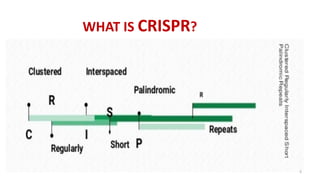
WHAT IS CRISPR?
5
Introduction
• CRISPR technology is a simple and powerful tool for
genomes editing.
• It allows researchers to easily alter DNA sequences and
modify gene function.
• The protein Cas 9 is an enzyme that acts like a pair of
molecular scissors ,capable of cutting strands of DNA .
• These snippets are used by the bacterium to detect and
destroy DNA from further attack by similar viruses.
• CRISPR is like a vaccine because of its mechanism.
6
History
1987
• Researchers find CRISPR sequence in E.coli,but do not
characterize their function.
2000
• CRISPR sequence are found to be common in other
microbes.
2002
• Coined CRISPR name ,defined signature Cas gene.
2007
• First experimental evidence for CRISPR adaptive
immunity.
2012
• Charpentier and Jennifer Doudna discovered
CRISPR.
7
CRISPR mode of action/Mechanism
8
CRISPR
A powerful gene-editing technology is the
biggest game changer to hit biology since PCR.
But with its huge potential come pressing
concerns
The Rise of CRISPR
Ledford. Nature News.
2015
What is it?
 Derived from a natural process found in
bacteria to protect themselves from
pathogens
 Targets genes for editing and regulating
 Comparable to Photoshop
Horizon Licenses Harvard University Gene-Editing Technology. (2013). Drug Discovery & 12
Cas9
nuclease
sgRNA
(single guide
RNA)
To initiate gene modification
Cas9
complex
13
Gene of
Interest
Protospacer
Adjacent
Motif
(PAM)
Target
Sequence
14
Stop
Codon
Non-
Homologous
End Joining
(NHEJ) DNA
repair pathway
15
Summation: crispr/Cas system
sgRNA/
Cas9
complex
binds to
gene
Cas breaks
gene
(double
strand
breaks)
Induced
mutation in
gene
sequence
16
altered gene sequence
Components of CRISPR
• CRISPR Locus
• CRISPR RNA(CrRNA)
• Cas Proteins
• Single Guided RNA
• CRISPR PAM Sequence
17
Cas-9 (CRISPR associated protein 9)
• Is an RNA guided DNA endonuclease
enzyme.
• associated with CRISPR which plays a role
in adaptive immunity system,found in
bacteria Streptococcus pyogenes.
• Cas 9 cut will either be single stranded or
double stranded
• Cas 9 cuts two sequences because it has
two domains
18
Structure
 Cas9
 Cas9 have six domains
 The RecI domain is the largest and is responsible for
binding guide RNA
 The role of the RecII is not yet understood
 The PAM interacting domain responsible for initiating
cleavage activity
 The HNH and RuvC are nuclease domains that cut
single –stranded DNA
19
Single guided RNA
o Guide RNAs are the RNAs that guide the insertion or deletion
of uridine residues
o Single-guide RNA :a version of the naturally occurring two
piece guide RNA complex engineering into a single,continuous
sequence
o The simplified single-guide RNA is used to direct the Cas9
protein to bind and cleave a particular DNA sequence for
genome editing
20
CRISPR PAM Sequence
o The PAM,also known as the protospacer
adjacent motif,is a short specific DNA sequence
(usually 2-6 base pairs in length),that follows the
DNA region targeted for cleavage by the CRISPR
system ,such as CRISPR-Cas9.
o PAM are recognized directly by the
endonuclease protein,rather than its as
associated guide RNA
21
3 types of Cas-9 nucleases
Wild type Cas9
o Can site-specifically cleave
double-stranded
DNA,resulting in the
activation of the double
stranded breaks (DSB)
repair machinery.
o Insertions and/or
deletions
o Precise replacement
mutations
CAS9D10A
o It cleaves only one strand
of DNA
o Only nickase activity
o Target specificity when
loci are targeted by paired
cas9 complexes designed
to generate adjacent DNA
nicks
dCAS9
o Nuclease deficient
cas9
o Inactive cleavage
activity,but do not
prevent DNA binding
o A gene silencing or
activation tool
22
23
Biological mechanism of action of Cas-9
24
25
26
27
28
29
CRISPR-Cas9 design tools
Tool name:
• Breaking-Cas
• GT-Scan
• CASTING
• CCTop
• Synthego design tool etc.
30
31
MECHANISM
Cas9 protein:
Searches for target DNA by binding with sequence
that match its PAM sequence.
Guide RNA:
Have a 5’ end is complementary to the target DNA
sequence.
If the complementary region and the target region
pair properly,the RuvC and HNH nuclease domains
(domains of Cas9) will cut the target DNA.
32
Mechanism
• https://www.youtube.com/watch?v=Be34dclOK38
• https://www.youtube.com/watch?v=IiPL5HgPehs&t=332s
33
Applications of CRISPR in different fields
 Microbiology
 Biomedicine
 Animals
 Agriculture
34
Microbiology
 CRISPR /dCas9-mediated protein imaging
 Fluorescence in-situ hybridization(FISH)use for labeling
genetic loci.
Mechanism of action of CRISPR:
dCas9+yellow/green FP Multicolor CRISPR Complex
This complex bind with genetic loci matching sgRNA
Labeling done.
35
Why protein imaging done?
• Direct visualization of genomic loci facilitates deep
understanding of spatial organization of microbial
genome and gene expression.
• This technique is also effective to
Identify repetitive sequences such as isoenzymes
and RNA
Substantially effect biosynthesis of desired
metabolites
36
Biomedicine
 Epstein Barr Virus (EBV)
CRISPR eradicate viral DNA of EBV
CRISPR is an Anti-herpes virus removing cancer causing EBV
from tumor cells
 Transplantation
Gene editing of mismatching humans or even non-human
mammals as potential organ donors
Editing will reduce risk of immune responses and rejection
when using mismatching organ
37
• In July 2019, CRISPR was used to experimentally treat a patient with a
genetic disorder. The patient was a 34-year-old woman with sickle cell
disease.
• In February 2020, have been progresses on HIV treatments with 60-80% of
the DNA removed in mice and some being completely free from the virus
after edits involving both CRISPR and LASER ART.
• In March 2020, CRISPR-modified virus was injected into a patient's eye in
an attempt to treat Leber congenital amaurosis.
• In the future, CRISPR gene editing could potentially be used to create new
species or revive extinct species from closely related ones.
• CRISPR-based re-evaluations of claims for gene-disease relationships have
led to the discovery of potentially important anomalies
COVID Diagnosis
• CRISPR associated nucleases have shown to be useful as a tool for
molecular testing due to their ability to specifically target nucleic
acid sequences in a high background of non-target sequences. In
2016, the Cas9 nuclease was used to deplete unwanted nucleotide
sequences in next-generation sequencing libraries while requiring
only 250 picograms of initial RNA input.
• Beginning in 2017, CRISPR associated nucleases were also used for
direct diagnostic testing of nucleic acids, down to single molecule
sensitivity.
39
By coupling CRISPR-based diagnostics to additional enzymatic
processes, the detection of molecules beyond nucleic acids is
possible. One example of a coupled technology is SHERLOCK-based
Profiling of IN vitro Transcription (SPRINT). SPRINT can be used to
detect a variety of substances, such as metabolites in patient samples
or contaminants in environmental samples, with high throughput or
with portable point-of-care devices.
Interestingly, CRISPR/Cas platforms are also being explored for
detection and inactivation of the novel coronavirus, SARS-CoV-2.
40
Agriculture
• Potential tool for developing virus
resistance crop variety
• Can be used to eradicate unwanted
species like herbicides resistance
weeds,insect pest
• Developing biotic and abiotic resistant
traits in crop plants
41
• CRISPR technology has been applied in the food and farming
industries to engineer probiotic cultures and to immunize
industrial cultures (for yogurt, for instance) versus infections. It is
also being used in crops to enhance yield, drought tolerance and
nutritional homes.
• By the end of 2014 some 1000 research papers had been published
that mentioned CRISPR. The technology had been used to
functionally inactivate genes in human cell lines and cells, to
study Candida albicans, to modify yeasts used to
make biofuels and to genetically modify crop strains.[169] CRISPR
can also be used to change mosquitos so they cannot transmit
diseases such as malaria. CRISPR-based approaches utilizing Cas12a
have recently been utilized in the successful modification of a
broad number of plant species.
Genome edited products to hit market very soon
without undergoing biosafety trials
Agriculture; crop improvement through genetic engineering and
genomics tools in Pakistan Scenario
•Cotton, raw material for the largest industrial sector
•Rice, the largest export after textile
•Sugarcane, multipurpose crop
•Wheat, engine for food security
•Potato, huge potential for food security
Oil seed crops
Six billion Dollar import, suitable for dry areas
•Canola; dry and marginal lands
•Soybean; Pakistan Nil; India 10 million hectares
•Cotton; RNAi based reduction of gossypol and oil improvement
NIBGE efforts in developing Bt cotton varieties
IR-NIBGE-1524
IR-NIBGE-3701
2005
2006
2007
IR-NIBGE-3
2010
IR-NIBGE-4
2011
Upcoming lines
• Approved for Sindh in 2011
• 20% (2009 & 2010)
• 25% in 2011
• National variety approved in 2010 and 2011
• Drought prone area (2%)
• National variety, approved in 2010 & 11
• 25%, 18% area in 2010, 2011, respectively
• 1-1.2 million bale advantage
IR-FH-901, IR-448 & IR-443
2002
Improved IR-NIBGE-901
• Approved in 2012
• Popular for spring cultivation
• Completed on year in NCBT
• Tolerance to lodging rotenning
Total Approved cotton varieties
1. NIBGE-2—2006
2. IR-NIBGE-1524—2010
3. IR-NIBGE-3701—2010
4. IR-NIBGE-901—2011
5. IR-NIBGE-3—2012
6. NIBGE-115—2012
7. NN-3—2013
IR-NIBGE-5
IR-NIBGE-6
2013
2015
Revolutionary aspects of CRISPR Cas9
• It was stated that
“CRISPR is dramatically accelerating the pace of
research in nearly every biological field”.
 CRISPR Cas9 tool use in the fixing of the donor
organ shortage which one is a revolution in medical
sciences.
 Designer pets and designer babies produced.
46
PROS and CONS
PROS
• Reverse respectively all the
mutations
• Utilize in many different species
• Excellent ability to target any
genomic region.
CONS
• Off target effects
• Mosaic effects
• Ethical &
• social effects on the
society
47
Future perspectives
Economic aspects/economic benefits
• Reduced costs for precise and efficient molecular
breeding
• Eliminate or significantly reduce regulatory
requirements
• Regulation for safe use focuses on characteristics
of plant ,phenotype and intended use
• Alleviate public concerns about gene edited
crops
48
• Summing it all up,CRISPR has its advantages and disadvantages
ranging from ethical concerns
• To being known as the fastest,cheapest and most precise way of
editing genes
• This scientific breakthrough has the ability to eliminate
diseases,solve world hunger, provide unlimited clean energy but
at the same time get out of hand very easily.
• CRISPR has potentially given us direct access code to the source
of life and at the same time given amount of hope to billions of
people
49
Summary
Thank you
50

CRISPR LECTURE.pptx

  • 1.
    CRISPR-Cas 9 andit’s Applications Dr. Sammyia Jannat Department of Biotechnology University of Kotli Azad Jammu and Kashmir Pakistan 1
  • 2.
  • 3.
    Nobel Prize inChemistry awarded to scientists who discovered CRISPR-Cas9 • The Royal Swedish Academy of Sciences has decided to award the Nobel Prize in Chemistry 2020 to Emmanuelle Charpentier of the Max Planck Unit for the Science of Pathogens, Germany, and Jennifer Doudna of the University of California, Berkeley, US. The Nobel Prize is for the development of CRISPR-Cas9, a method for genome editing. 3
  • 4.
    Emmanuelle Charpentier andJennifer A. Doudna have discovered one of gene technology’s sharpest tools: the CRISPR/Cas9 genetic scissors. Using these, researchers can change the DNA of animals, plants and microorganisms with extremely high precision. This technology has had a revolutionary impact on the life sciences, is contributing to new cancer therapies and may make the dream of curing inherited diseases come true. 4
  • 5.
  • 6.
    Introduction • CRISPR technologyis a simple and powerful tool for genomes editing. • It allows researchers to easily alter DNA sequences and modify gene function. • The protein Cas 9 is an enzyme that acts like a pair of molecular scissors ,capable of cutting strands of DNA . • These snippets are used by the bacterium to detect and destroy DNA from further attack by similar viruses. • CRISPR is like a vaccine because of its mechanism. 6
  • 7.
    History 1987 • Researchers findCRISPR sequence in E.coli,but do not characterize their function. 2000 • CRISPR sequence are found to be common in other microbes. 2002 • Coined CRISPR name ,defined signature Cas gene. 2007 • First experimental evidence for CRISPR adaptive immunity. 2012 • Charpentier and Jennifer Doudna discovered CRISPR. 7
  • 8.
    CRISPR mode ofaction/Mechanism 8
  • 10.
    CRISPR A powerful gene-editingtechnology is the biggest game changer to hit biology since PCR. But with its huge potential come pressing concerns
  • 11.
    The Rise ofCRISPR Ledford. Nature News. 2015
  • 12.
    What is it? Derived from a natural process found in bacteria to protect themselves from pathogens  Targets genes for editing and regulating  Comparable to Photoshop Horizon Licenses Harvard University Gene-Editing Technology. (2013). Drug Discovery & 12
  • 13.
    Cas9 nuclease sgRNA (single guide RNA) To initiategene modification Cas9 complex 13
  • 14.
  • 15.
  • 16.
    Summation: crispr/Cas system sgRNA/ Cas9 complex bindsto gene Cas breaks gene (double strand breaks) Induced mutation in gene sequence 16 altered gene sequence
  • 17.
    Components of CRISPR •CRISPR Locus • CRISPR RNA(CrRNA) • Cas Proteins • Single Guided RNA • CRISPR PAM Sequence 17
  • 18.
    Cas-9 (CRISPR associatedprotein 9) • Is an RNA guided DNA endonuclease enzyme. • associated with CRISPR which plays a role in adaptive immunity system,found in bacteria Streptococcus pyogenes. • Cas 9 cut will either be single stranded or double stranded • Cas 9 cuts two sequences because it has two domains 18
  • 19.
    Structure  Cas9  Cas9have six domains  The RecI domain is the largest and is responsible for binding guide RNA  The role of the RecII is not yet understood  The PAM interacting domain responsible for initiating cleavage activity  The HNH and RuvC are nuclease domains that cut single –stranded DNA 19
  • 20.
    Single guided RNA oGuide RNAs are the RNAs that guide the insertion or deletion of uridine residues o Single-guide RNA :a version of the naturally occurring two piece guide RNA complex engineering into a single,continuous sequence o The simplified single-guide RNA is used to direct the Cas9 protein to bind and cleave a particular DNA sequence for genome editing 20
  • 21.
    CRISPR PAM Sequence oThe PAM,also known as the protospacer adjacent motif,is a short specific DNA sequence (usually 2-6 base pairs in length),that follows the DNA region targeted for cleavage by the CRISPR system ,such as CRISPR-Cas9. o PAM are recognized directly by the endonuclease protein,rather than its as associated guide RNA 21
  • 22.
    3 types ofCas-9 nucleases Wild type Cas9 o Can site-specifically cleave double-stranded DNA,resulting in the activation of the double stranded breaks (DSB) repair machinery. o Insertions and/or deletions o Precise replacement mutations CAS9D10A o It cleaves only one strand of DNA o Only nickase activity o Target specificity when loci are targeted by paired cas9 complexes designed to generate adjacent DNA nicks dCAS9 o Nuclease deficient cas9 o Inactive cleavage activity,but do not prevent DNA binding o A gene silencing or activation tool 22
  • 23.
  • 24.
    Biological mechanism ofaction of Cas-9 24
  • 25.
  • 26.
  • 27.
  • 28.
  • 29.
  • 30.
    CRISPR-Cas9 design tools Toolname: • Breaking-Cas • GT-Scan • CASTING • CCTop • Synthego design tool etc. 30
  • 31.
  • 32.
    MECHANISM Cas9 protein: Searches fortarget DNA by binding with sequence that match its PAM sequence. Guide RNA: Have a 5’ end is complementary to the target DNA sequence. If the complementary region and the target region pair properly,the RuvC and HNH nuclease domains (domains of Cas9) will cut the target DNA. 32
  • 33.
  • 34.
    Applications of CRISPRin different fields  Microbiology  Biomedicine  Animals  Agriculture 34
  • 35.
    Microbiology  CRISPR /dCas9-mediatedprotein imaging  Fluorescence in-situ hybridization(FISH)use for labeling genetic loci. Mechanism of action of CRISPR: dCas9+yellow/green FP Multicolor CRISPR Complex This complex bind with genetic loci matching sgRNA Labeling done. 35
  • 36.
    Why protein imagingdone? • Direct visualization of genomic loci facilitates deep understanding of spatial organization of microbial genome and gene expression. • This technique is also effective to Identify repetitive sequences such as isoenzymes and RNA Substantially effect biosynthesis of desired metabolites 36
  • 37.
    Biomedicine  Epstein BarrVirus (EBV) CRISPR eradicate viral DNA of EBV CRISPR is an Anti-herpes virus removing cancer causing EBV from tumor cells  Transplantation Gene editing of mismatching humans or even non-human mammals as potential organ donors Editing will reduce risk of immune responses and rejection when using mismatching organ 37
  • 38.
    • In July2019, CRISPR was used to experimentally treat a patient with a genetic disorder. The patient was a 34-year-old woman with sickle cell disease. • In February 2020, have been progresses on HIV treatments with 60-80% of the DNA removed in mice and some being completely free from the virus after edits involving both CRISPR and LASER ART. • In March 2020, CRISPR-modified virus was injected into a patient's eye in an attempt to treat Leber congenital amaurosis. • In the future, CRISPR gene editing could potentially be used to create new species or revive extinct species from closely related ones. • CRISPR-based re-evaluations of claims for gene-disease relationships have led to the discovery of potentially important anomalies
  • 39.
    COVID Diagnosis • CRISPRassociated nucleases have shown to be useful as a tool for molecular testing due to their ability to specifically target nucleic acid sequences in a high background of non-target sequences. In 2016, the Cas9 nuclease was used to deplete unwanted nucleotide sequences in next-generation sequencing libraries while requiring only 250 picograms of initial RNA input. • Beginning in 2017, CRISPR associated nucleases were also used for direct diagnostic testing of nucleic acids, down to single molecule sensitivity. 39
  • 40.
    By coupling CRISPR-baseddiagnostics to additional enzymatic processes, the detection of molecules beyond nucleic acids is possible. One example of a coupled technology is SHERLOCK-based Profiling of IN vitro Transcription (SPRINT). SPRINT can be used to detect a variety of substances, such as metabolites in patient samples or contaminants in environmental samples, with high throughput or with portable point-of-care devices. Interestingly, CRISPR/Cas platforms are also being explored for detection and inactivation of the novel coronavirus, SARS-CoV-2. 40
  • 41.
    Agriculture • Potential toolfor developing virus resistance crop variety • Can be used to eradicate unwanted species like herbicides resistance weeds,insect pest • Developing biotic and abiotic resistant traits in crop plants 41
  • 42.
    • CRISPR technologyhas been applied in the food and farming industries to engineer probiotic cultures and to immunize industrial cultures (for yogurt, for instance) versus infections. It is also being used in crops to enhance yield, drought tolerance and nutritional homes. • By the end of 2014 some 1000 research papers had been published that mentioned CRISPR. The technology had been used to functionally inactivate genes in human cell lines and cells, to study Candida albicans, to modify yeasts used to make biofuels and to genetically modify crop strains.[169] CRISPR can also be used to change mosquitos so they cannot transmit diseases such as malaria. CRISPR-based approaches utilizing Cas12a have recently been utilized in the successful modification of a broad number of plant species.
  • 43.
    Genome edited productsto hit market very soon without undergoing biosafety trials
  • 44.
    Agriculture; crop improvementthrough genetic engineering and genomics tools in Pakistan Scenario •Cotton, raw material for the largest industrial sector •Rice, the largest export after textile •Sugarcane, multipurpose crop •Wheat, engine for food security •Potato, huge potential for food security Oil seed crops Six billion Dollar import, suitable for dry areas •Canola; dry and marginal lands •Soybean; Pakistan Nil; India 10 million hectares •Cotton; RNAi based reduction of gossypol and oil improvement
  • 45.
    NIBGE efforts indeveloping Bt cotton varieties IR-NIBGE-1524 IR-NIBGE-3701 2005 2006 2007 IR-NIBGE-3 2010 IR-NIBGE-4 2011 Upcoming lines • Approved for Sindh in 2011 • 20% (2009 & 2010) • 25% in 2011 • National variety approved in 2010 and 2011 • Drought prone area (2%) • National variety, approved in 2010 & 11 • 25%, 18% area in 2010, 2011, respectively • 1-1.2 million bale advantage IR-FH-901, IR-448 & IR-443 2002 Improved IR-NIBGE-901 • Approved in 2012 • Popular for spring cultivation • Completed on year in NCBT • Tolerance to lodging rotenning Total Approved cotton varieties 1. NIBGE-2—2006 2. IR-NIBGE-1524—2010 3. IR-NIBGE-3701—2010 4. IR-NIBGE-901—2011 5. IR-NIBGE-3—2012 6. NIBGE-115—2012 7. NN-3—2013 IR-NIBGE-5 IR-NIBGE-6 2013 2015
  • 46.
    Revolutionary aspects ofCRISPR Cas9 • It was stated that “CRISPR is dramatically accelerating the pace of research in nearly every biological field”.  CRISPR Cas9 tool use in the fixing of the donor organ shortage which one is a revolution in medical sciences.  Designer pets and designer babies produced. 46
  • 47.
    PROS and CONS PROS •Reverse respectively all the mutations • Utilize in many different species • Excellent ability to target any genomic region. CONS • Off target effects • Mosaic effects • Ethical & • social effects on the society 47
  • 48.
    Future perspectives Economic aspects/economicbenefits • Reduced costs for precise and efficient molecular breeding • Eliminate or significantly reduce regulatory requirements • Regulation for safe use focuses on characteristics of plant ,phenotype and intended use • Alleviate public concerns about gene edited crops 48
  • 49.
    • Summing itall up,CRISPR has its advantages and disadvantages ranging from ethical concerns • To being known as the fastest,cheapest and most precise way of editing genes • This scientific breakthrough has the ability to eliminate diseases,solve world hunger, provide unlimited clean energy but at the same time get out of hand very easily. • CRISPR has potentially given us direct access code to the source of life and at the same time given amount of hope to billions of people 49 Summary
  • 50.