Creating a Training
Program and
Learning Culture in
Your Organization
4,000+ Courses. 25 Topic Areas. Unlimited Access.
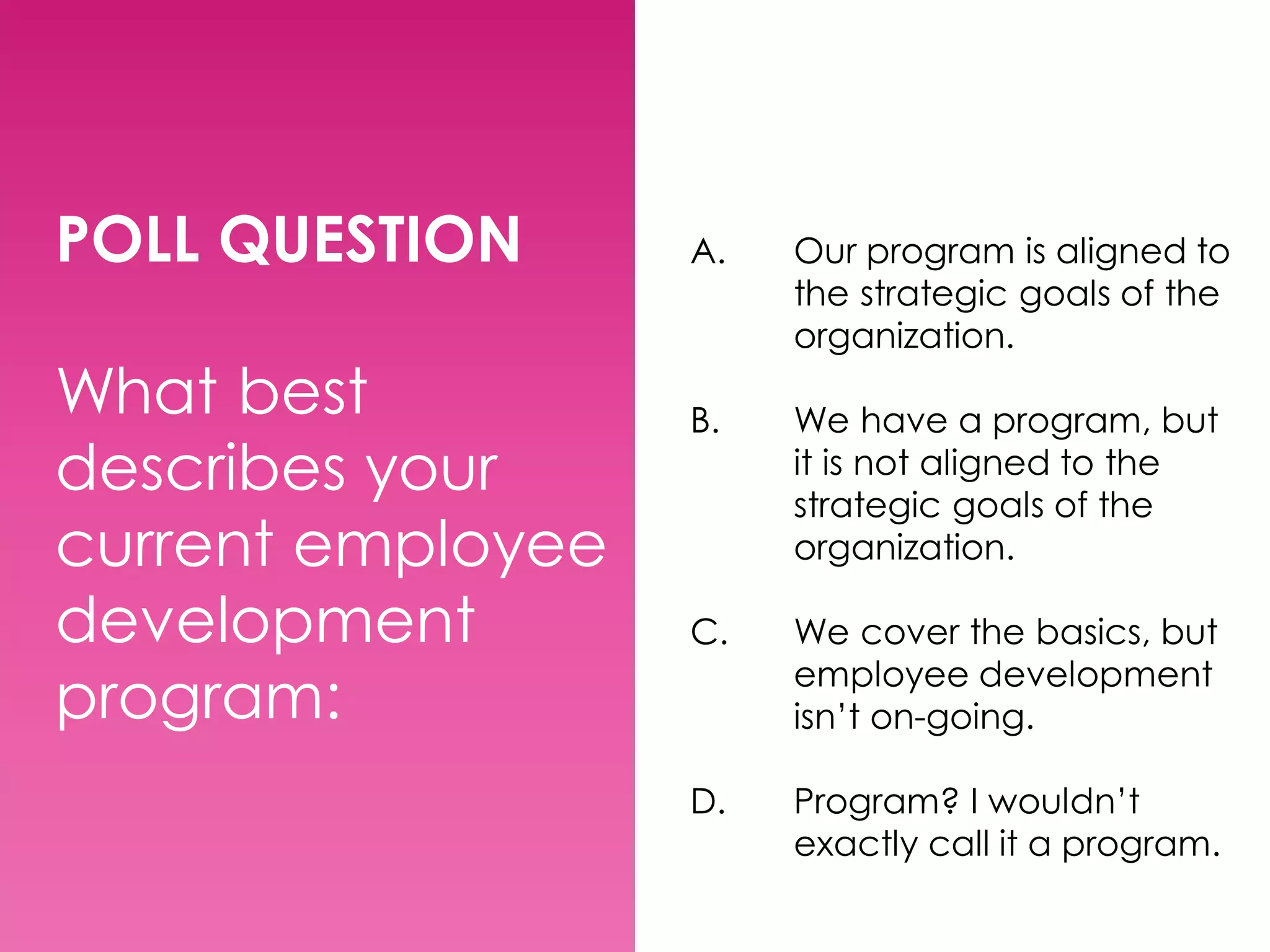
POLL QUESTION
What best
describes your
current employee
development
program:

A.

Our program is aligned to
the strategic goals of the
organization.

B.

We have a program, but
it is not aligned to the
strategic goals of the
organization.

C.

We cover the basics, but
employee development
isn’t on-going.

D.

Program? I wouldn’t
exactly call it a program.
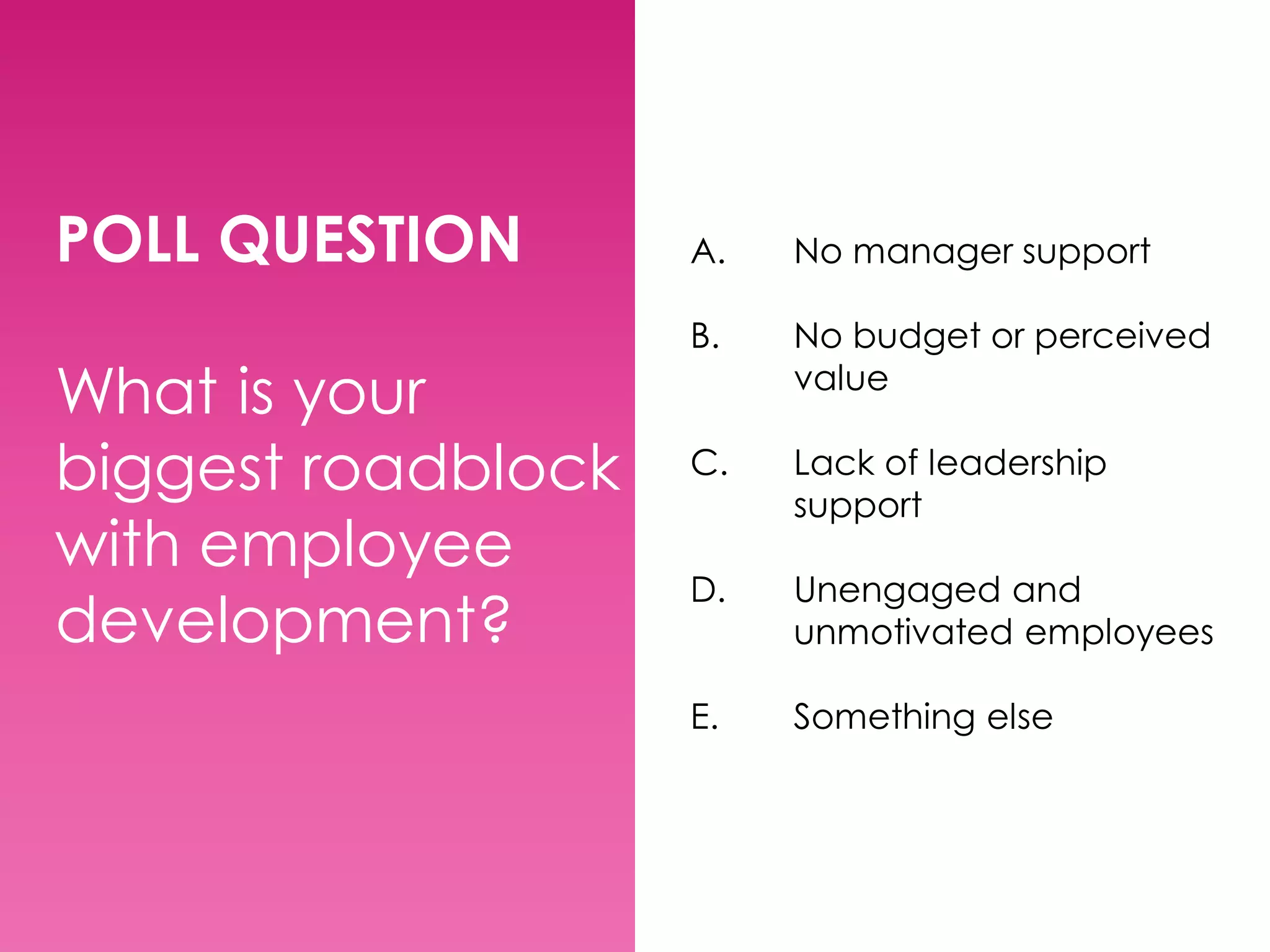
POLL QUESTION
What is your
biggest roadblock
with employee
development?

A.

No manager support

B.

No budget or perceived
value

C.

Lack of leadership
support

D.

Unengaged and
unmotivated employees

E.

Something else
Common Roadblocks
1.No manager support
2.No budget or perceived value
3.Lack of leadership support
4.Unengaged employees
Getting started from the
ground up.

What you’ll
learn:

Creating a learning culture.

Change management.

Setting goals and success
criteria.
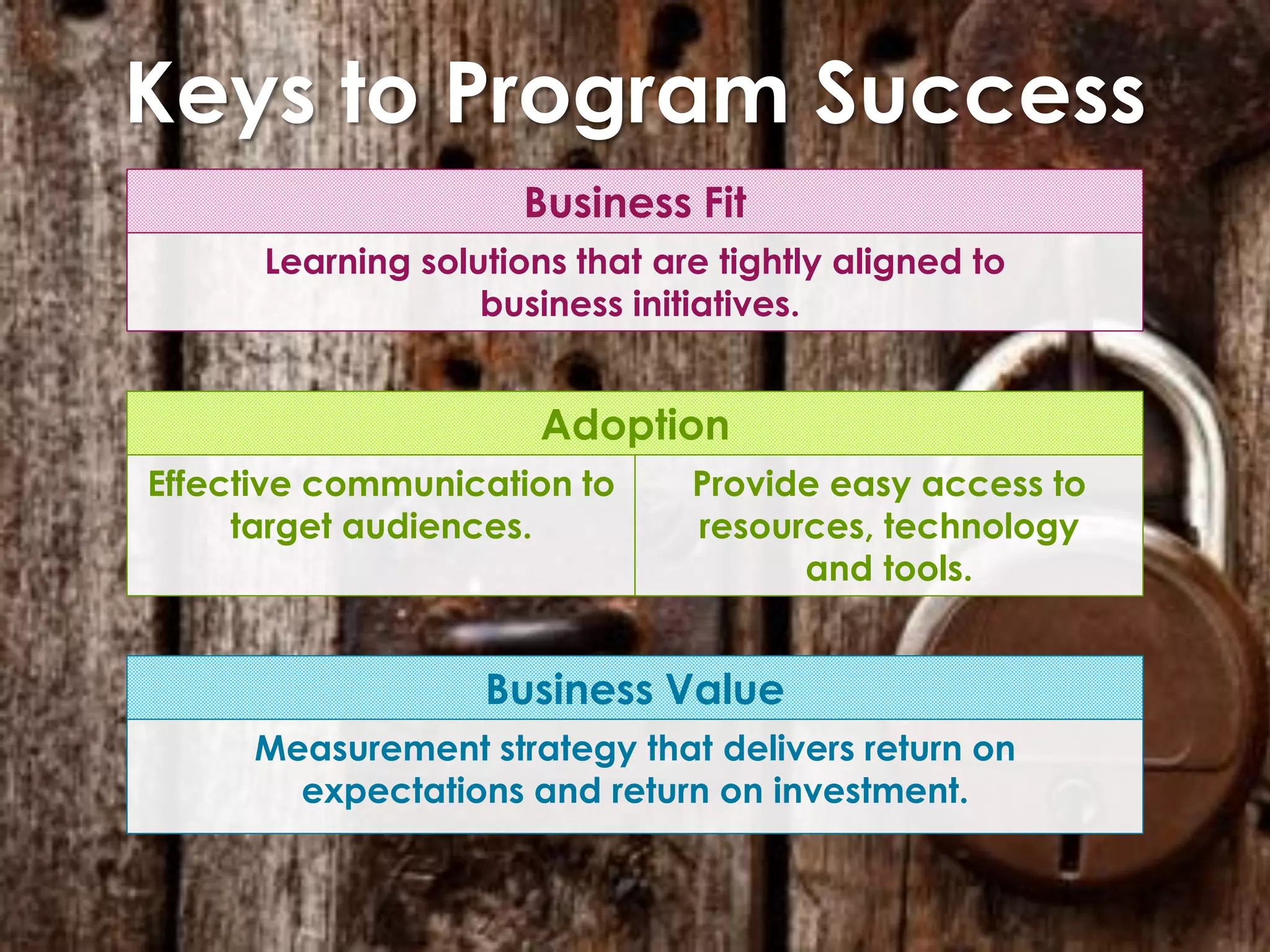
Keys to Program Success
Business Fit
Learning solutions that are tightly aligned to
business initiatives.

Adoption
Effective communication to
target audiences.

Provide easy access to
resources, technology
and tools.

Business Value
Measurement strategy that delivers return on
expectations and return on investment.
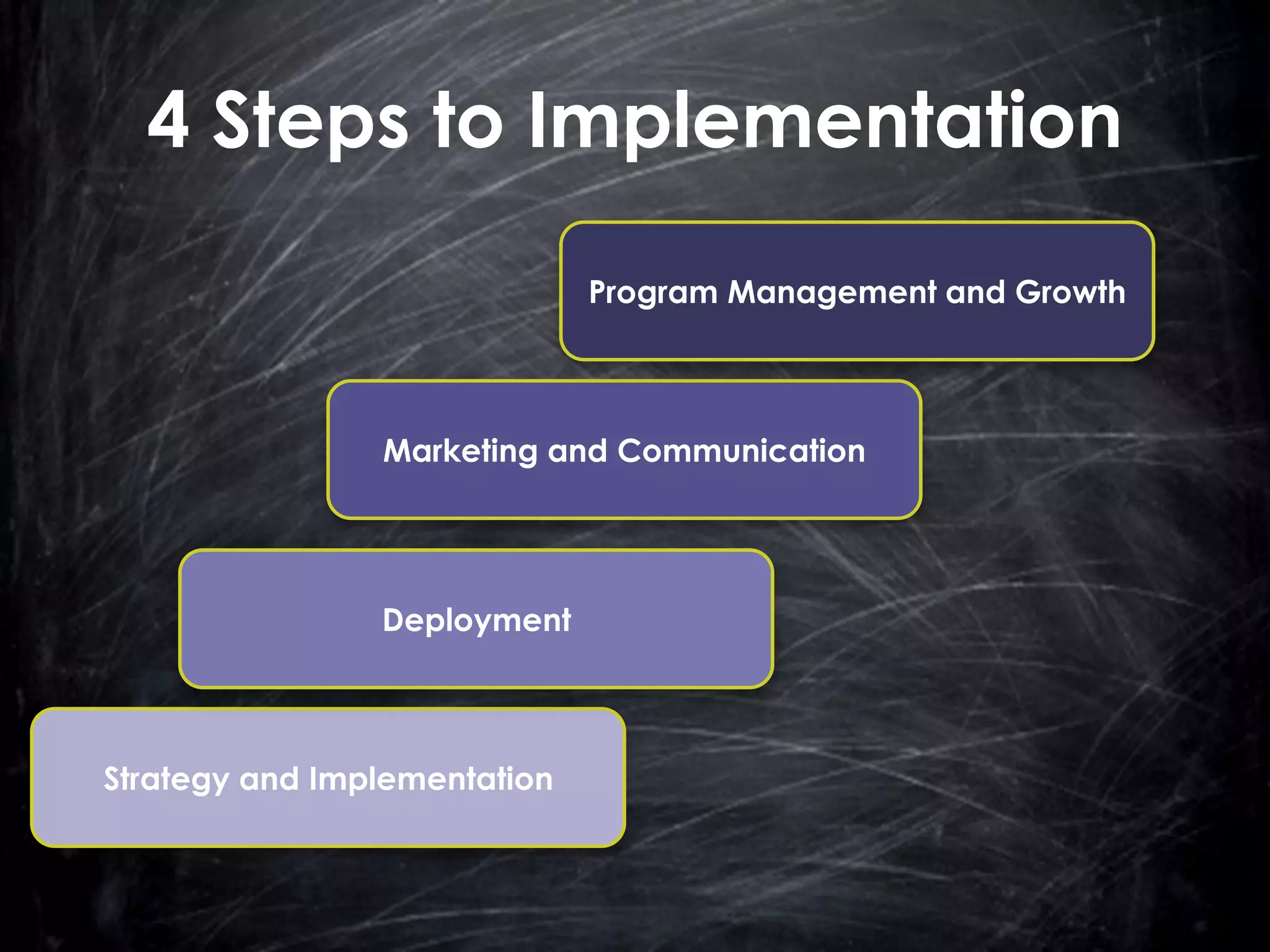
4 Steps to Implementation
Program Management and Growth

Marketing and Communication

Deployment

Strategy and Implementation
•

Cultural awareness

•

Change
management

•

Program goals and
success criteria

•

Managing your
implementation
Cultural Awareness
Executive and management
support
Corporate mission and value
Business and work environment
Communication styles and flow
Relationships of influence
Existing learning culture
Elements of a Learning Culture
1.

Holistic thinking

2.

Integrated learning

3.

Capacity for change
and improvement

4.

Focus on collaboration

5.

Personal commitment
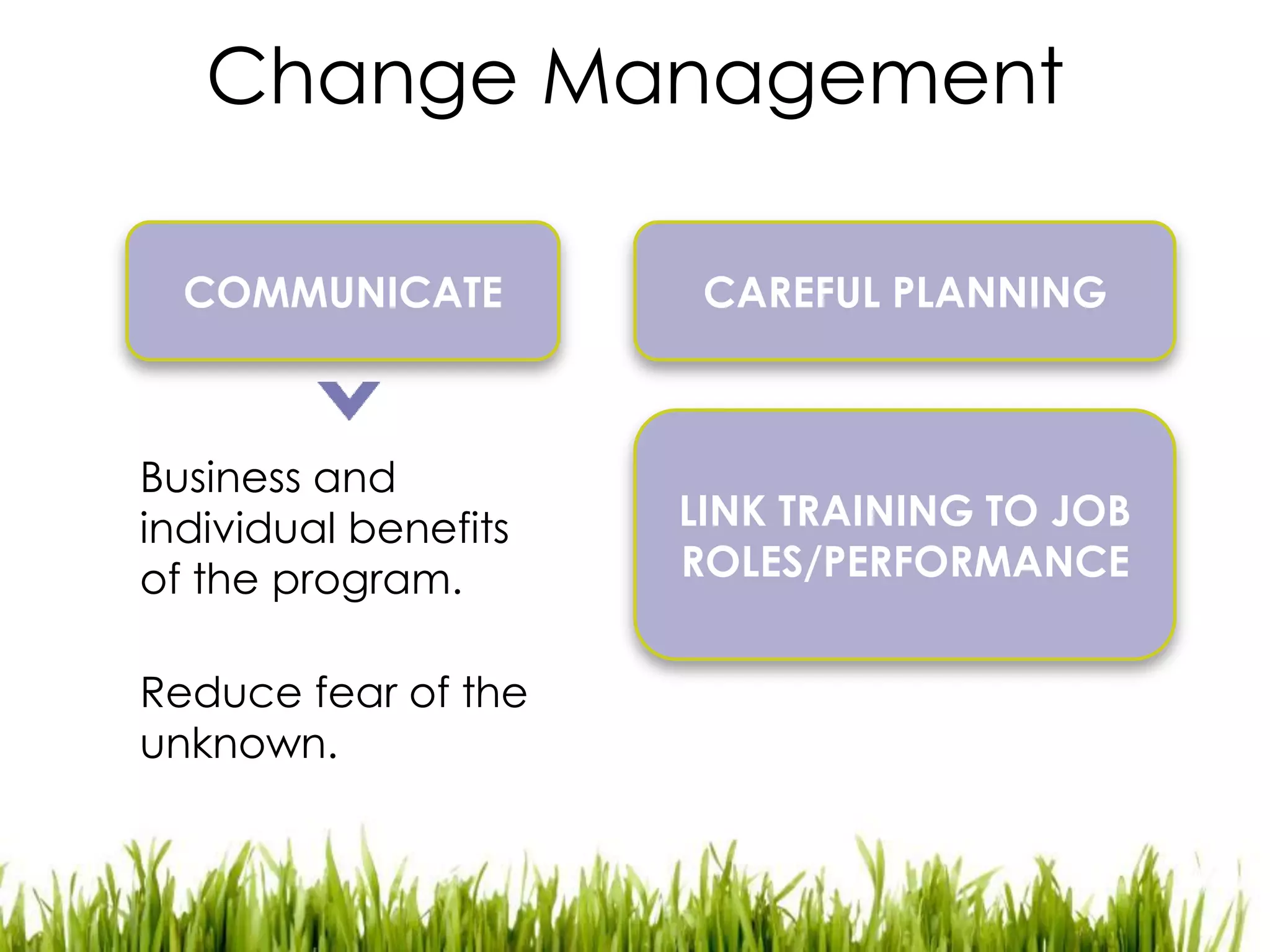
Change Management
COMMUNICATE

Business and
individual benefits
of the program.
Reduce fear of the
unknown.

CAREFUL PLANNING

LINK TRAINING TO JOB
ROLES/PERFORMANCE
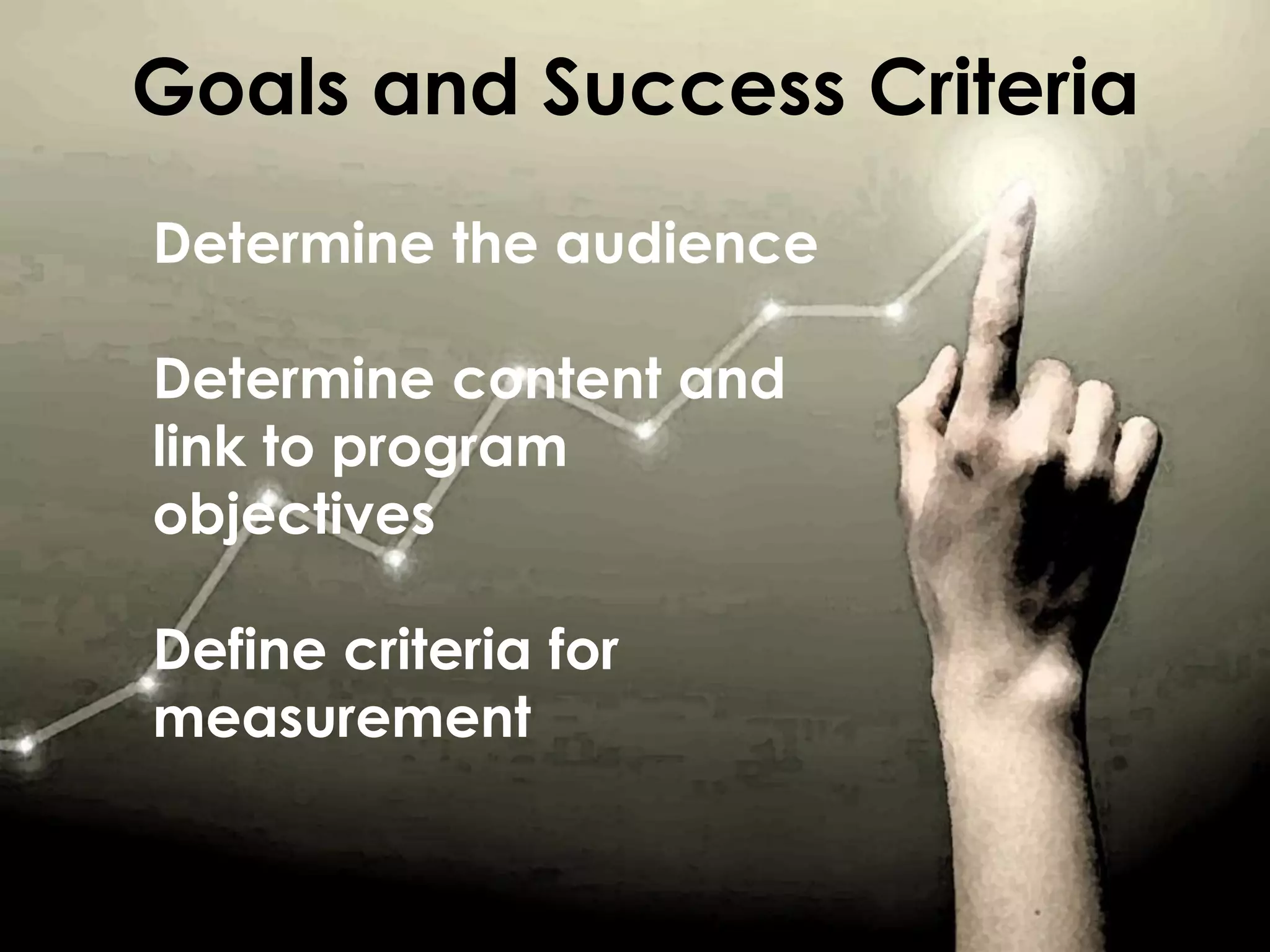
Goals and Success Criteria
Determine the audience
Determine content and
link to program
objectives

Define criteria for
measurement
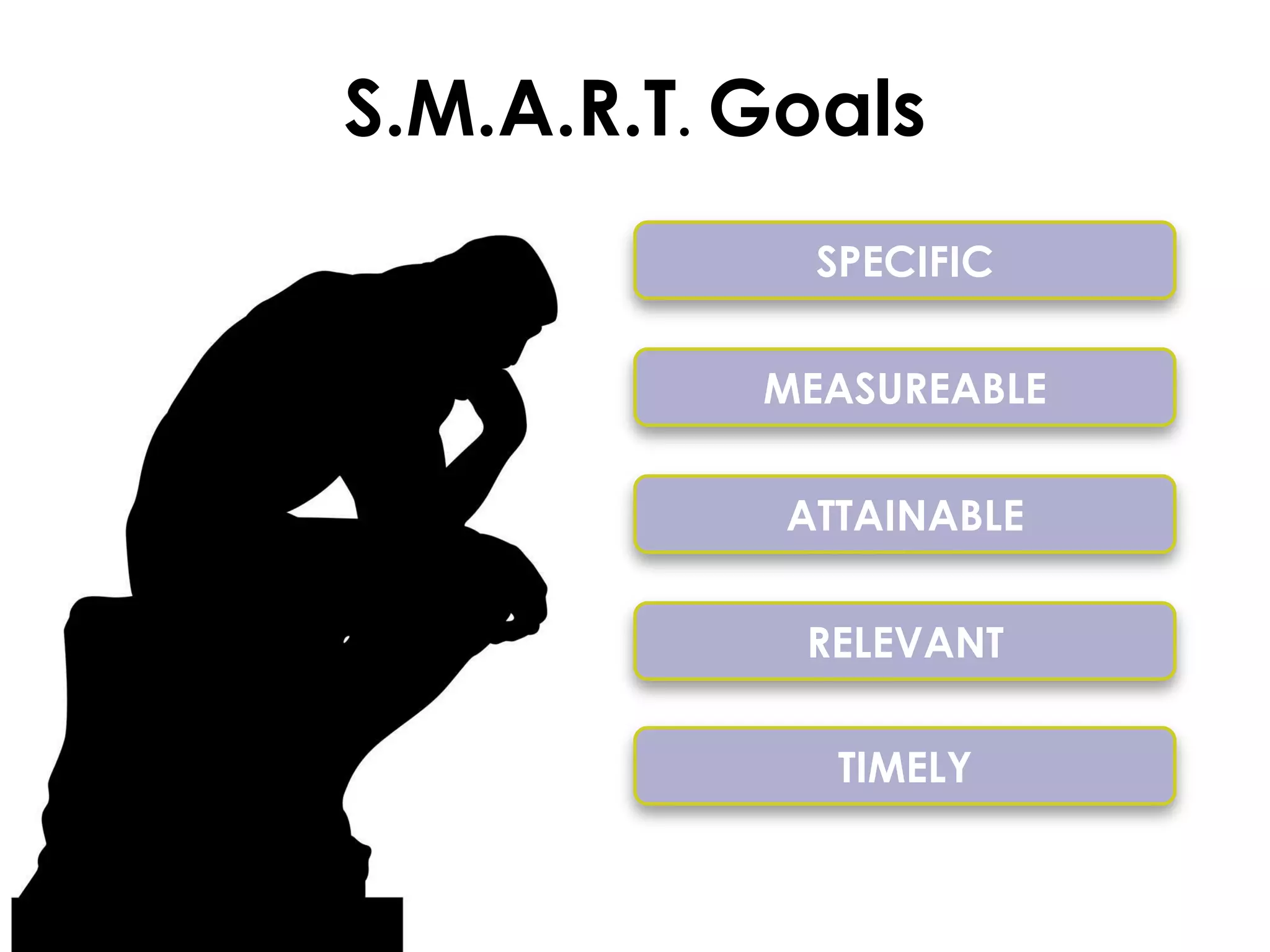
S.M.A.R.T. Goals
SPECIFIC
MEASUREABLE
ATTAINABLE

RELEVANT
TIMELY
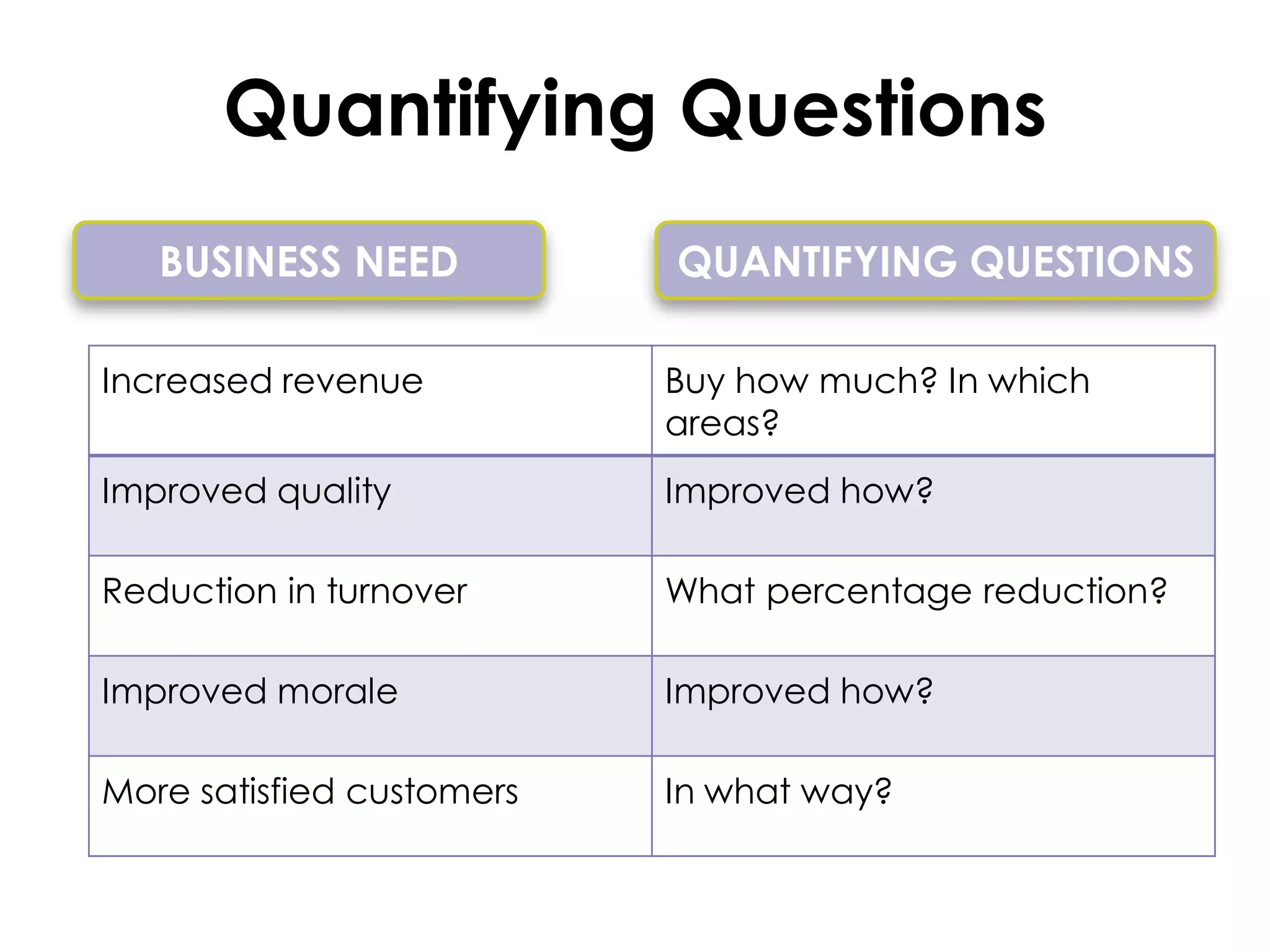
Quantifying Questions
BUSINESS NEED

QUANTIFYING QUESTIONS

Increased revenue

Buy how much? In which
areas?

Improved quality

Improved how?

Reduction in turnover

What percentage reduction?

Improved morale

Improved how?

More satisfied customers

In what way?
Program Focus
Percentage of employees take at least one
course within the first year of program.
Replace percentage of Instructor-Led-Training
(ILT) with online resources.
Employees use eLearning or video programs to
meet an average percentage of their annual
training requirement.
Learner Focus
Positive feedback on content with a specific
approval rating.
Extent the learner has manager
encouragement to use of the knowledge
and/or skills presented.

Positive feedback on how participants will
apply what they learned to their job.
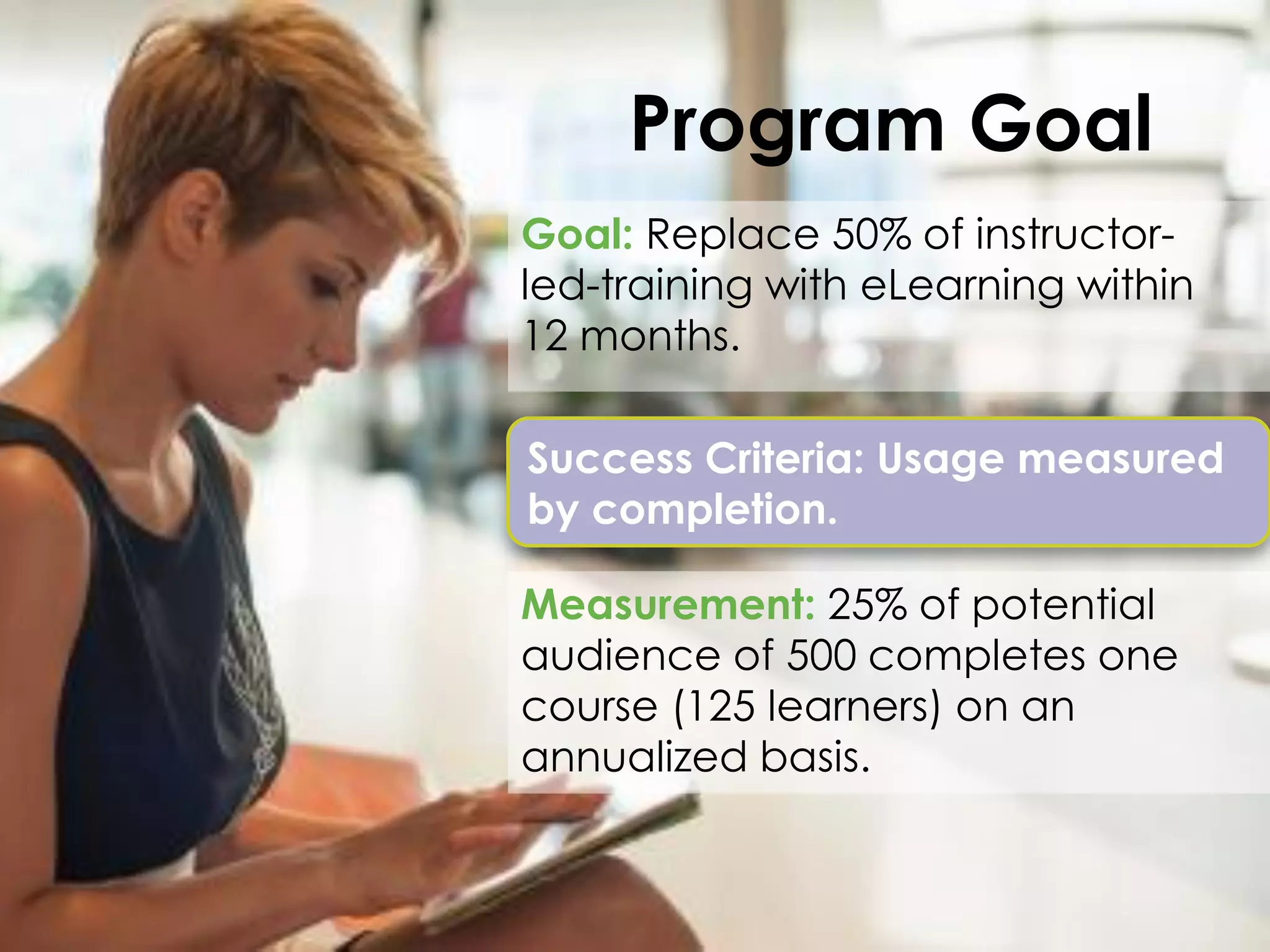
Program Goal
Goal: Replace 50% of instructorled-training with eLearning within
12 months.
Success Criteria: Usage measured
by completion.
Measurement: 25% of potential
audience of 500 completes one
course (125 learners) on an
annualized basis.
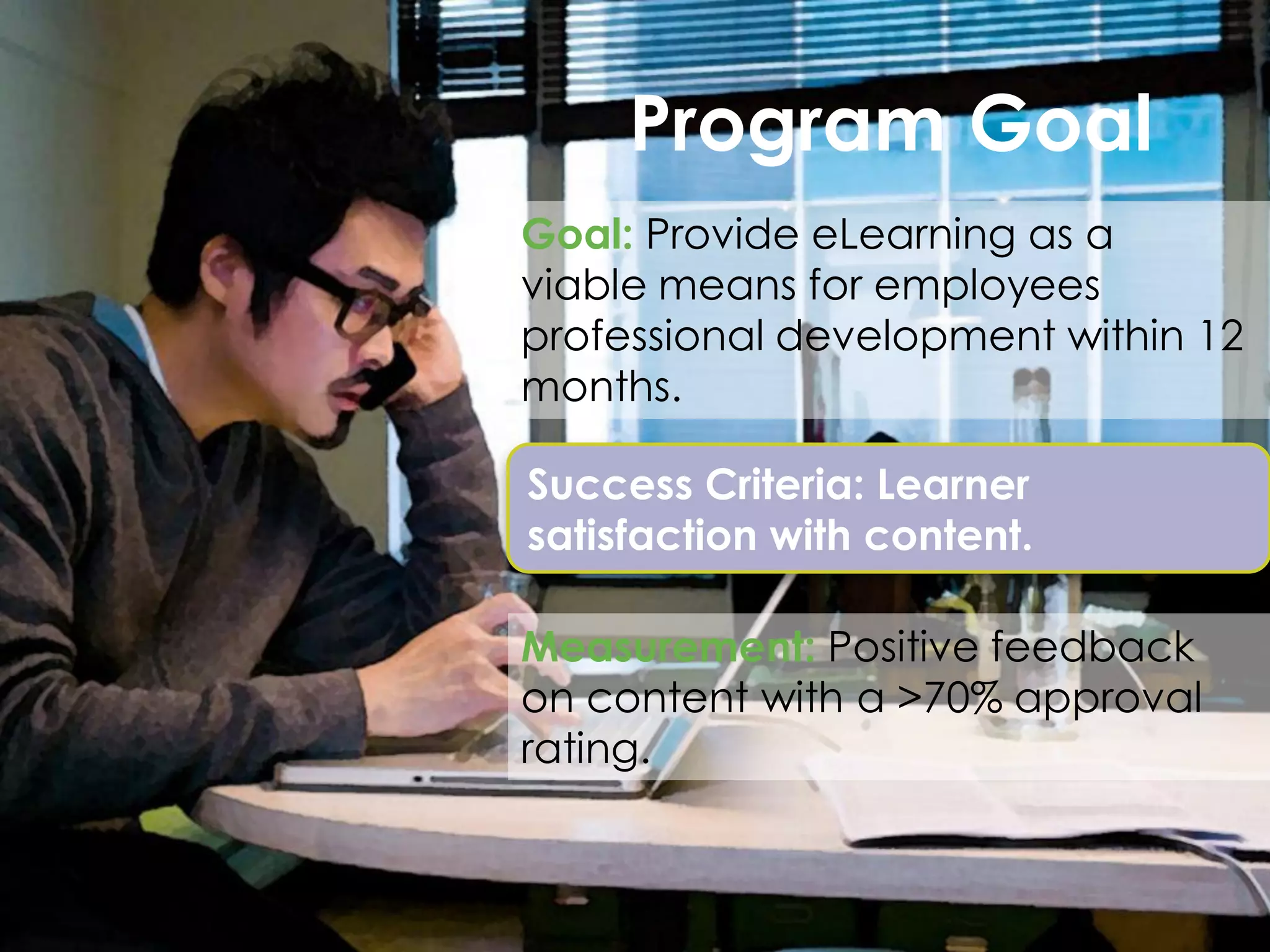
Program Goal
Goal: Provide eLearning as a
viable means for employees
professional development within 12
months.
Success Criteria: Learner
satisfaction with content.

Measurement: Positive feedback
on content with a >70% approval
rating.
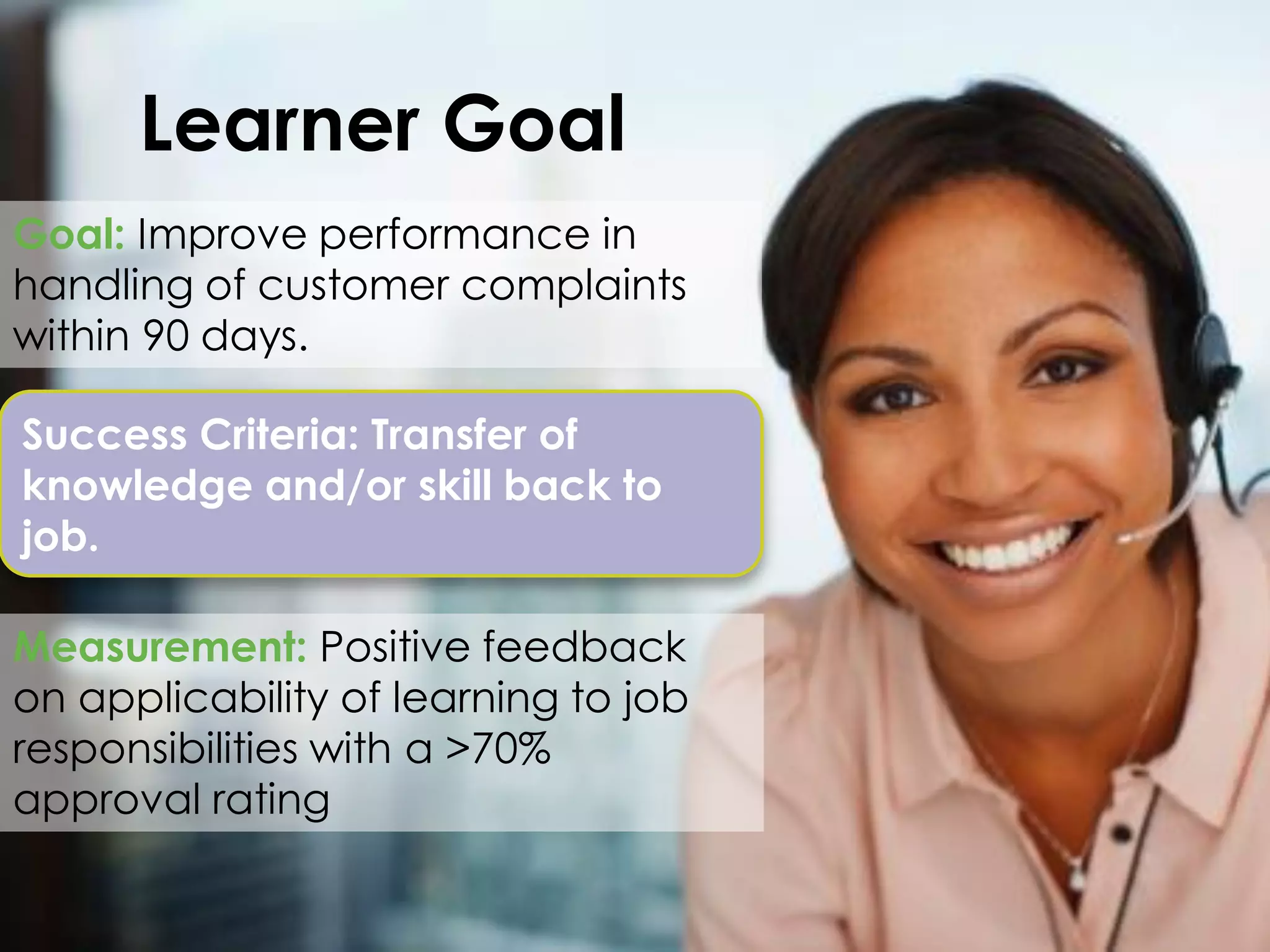
Learner Goal
Goal: Improve performance in
handling of customer complaints
within 90 days.
Success Criteria: Transfer of
knowledge and/or skill back to
job.

Measurement: Positive feedback
on applicability of learning to job
responsibilities with a >70%
approval rating
Program Evaluation
• Start with usage
reports.
• Results from
evaluation forms.
• Pre and post tests.
• Job performance
metrics or KPI’s.
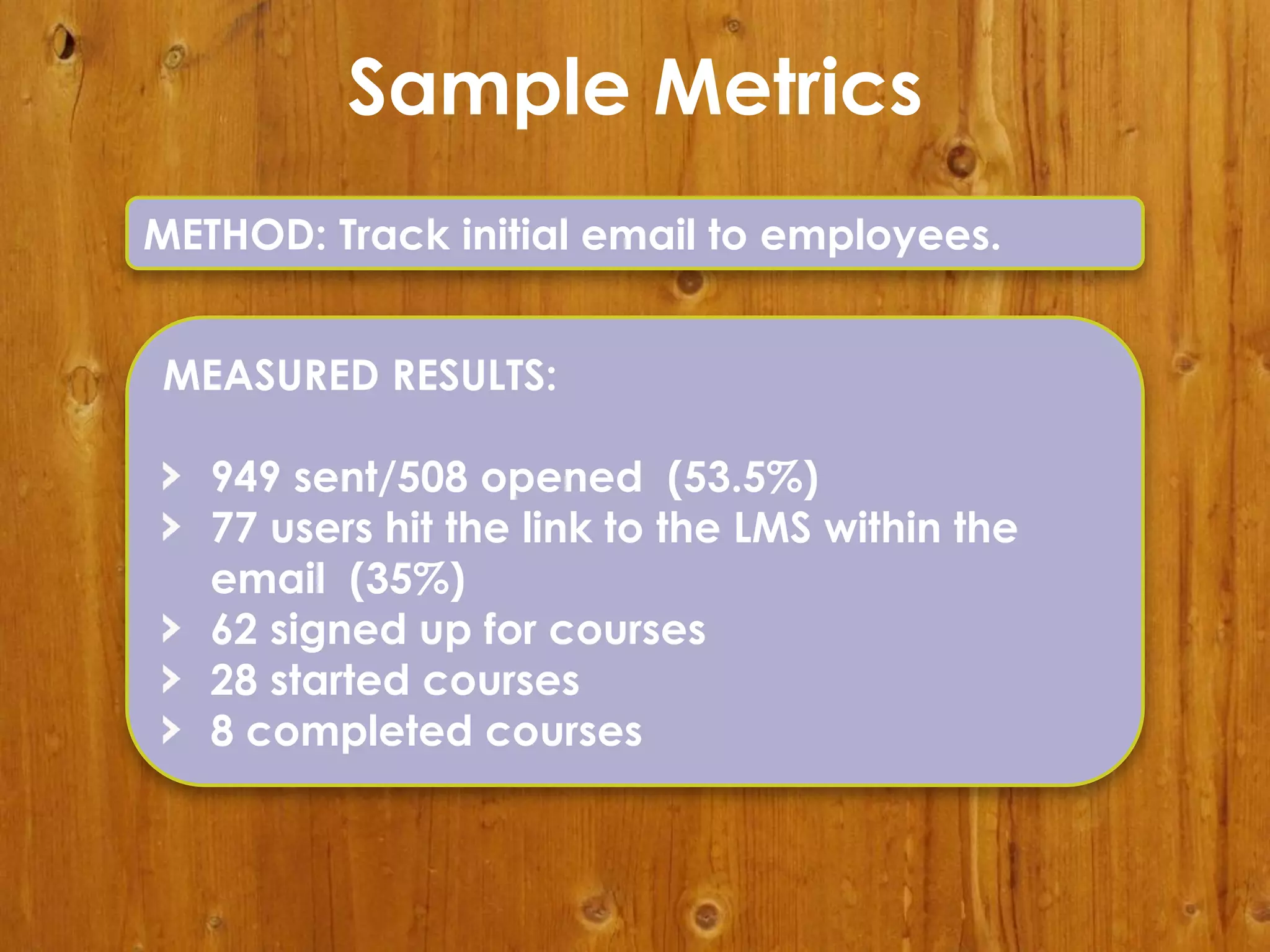
Sample Metrics
METHOD: Track initial email to employees.
MEASURED RESULTS:
949 sent/508 opened (53.5%)
77 users hit the link to the LMS within the
email (35%)
62 signed up for courses
28 started courses
8 completed courses
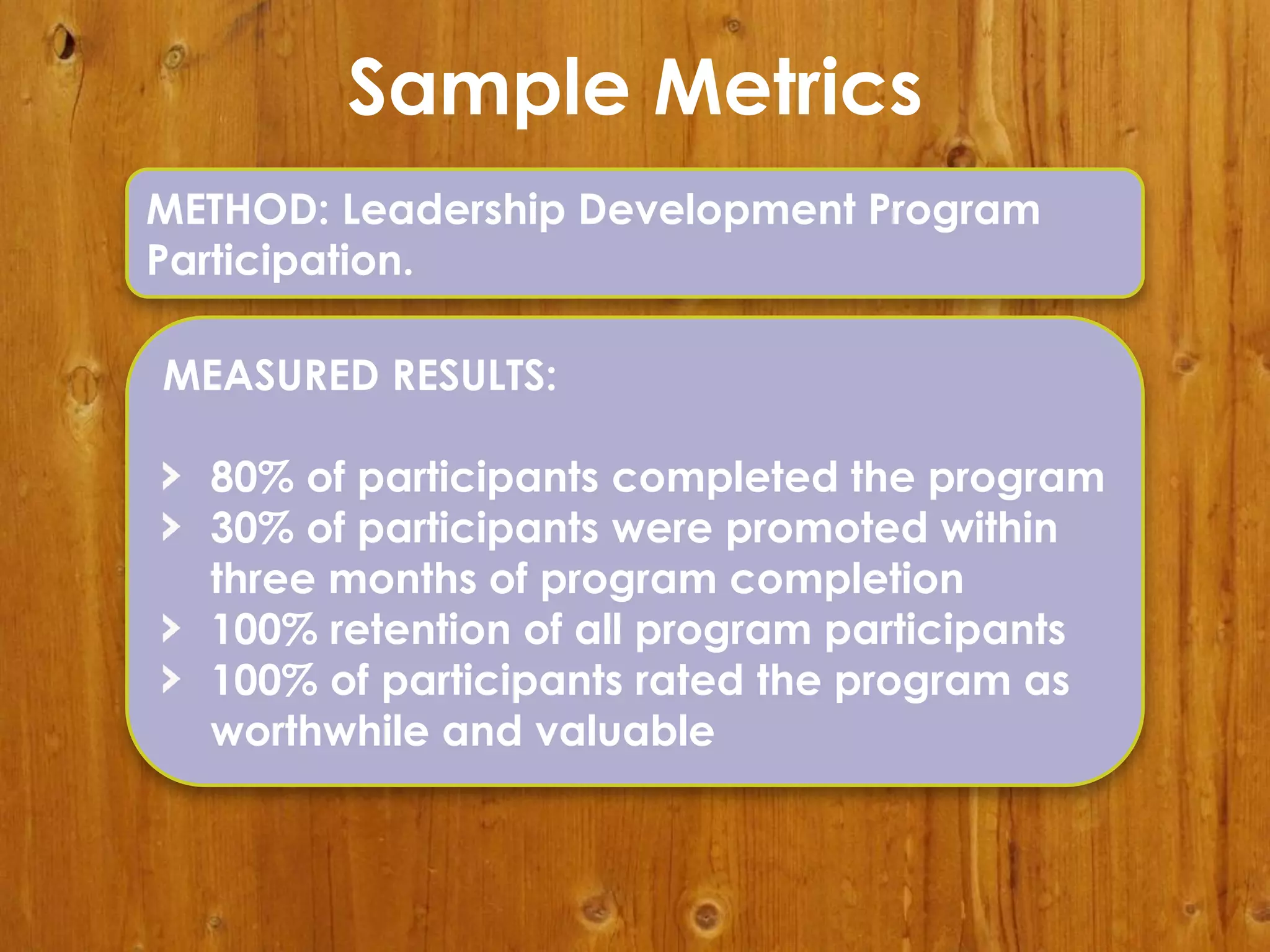
Sample Metrics
METHOD: Leadership Development Program
Participation.
MEASURED RESULTS:
80% of participants completed the program
30% of participants were promoted within
three months of program completion
100% retention of all program participants
100% of participants rated the program as
worthwhile and valuable
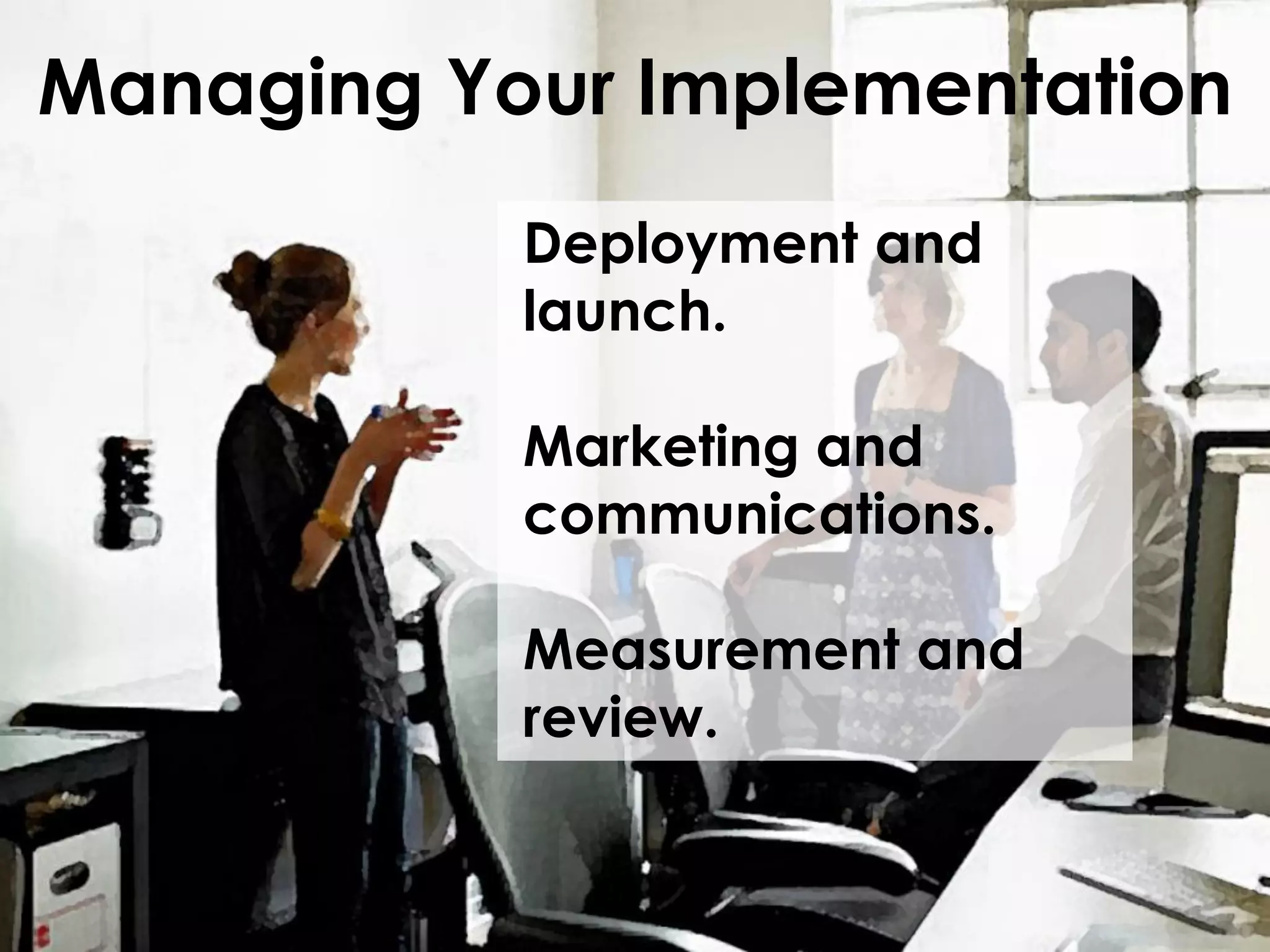
Managing Your Implementation
Deployment and
launch.

Marketing and
communications.
Measurement and
review.
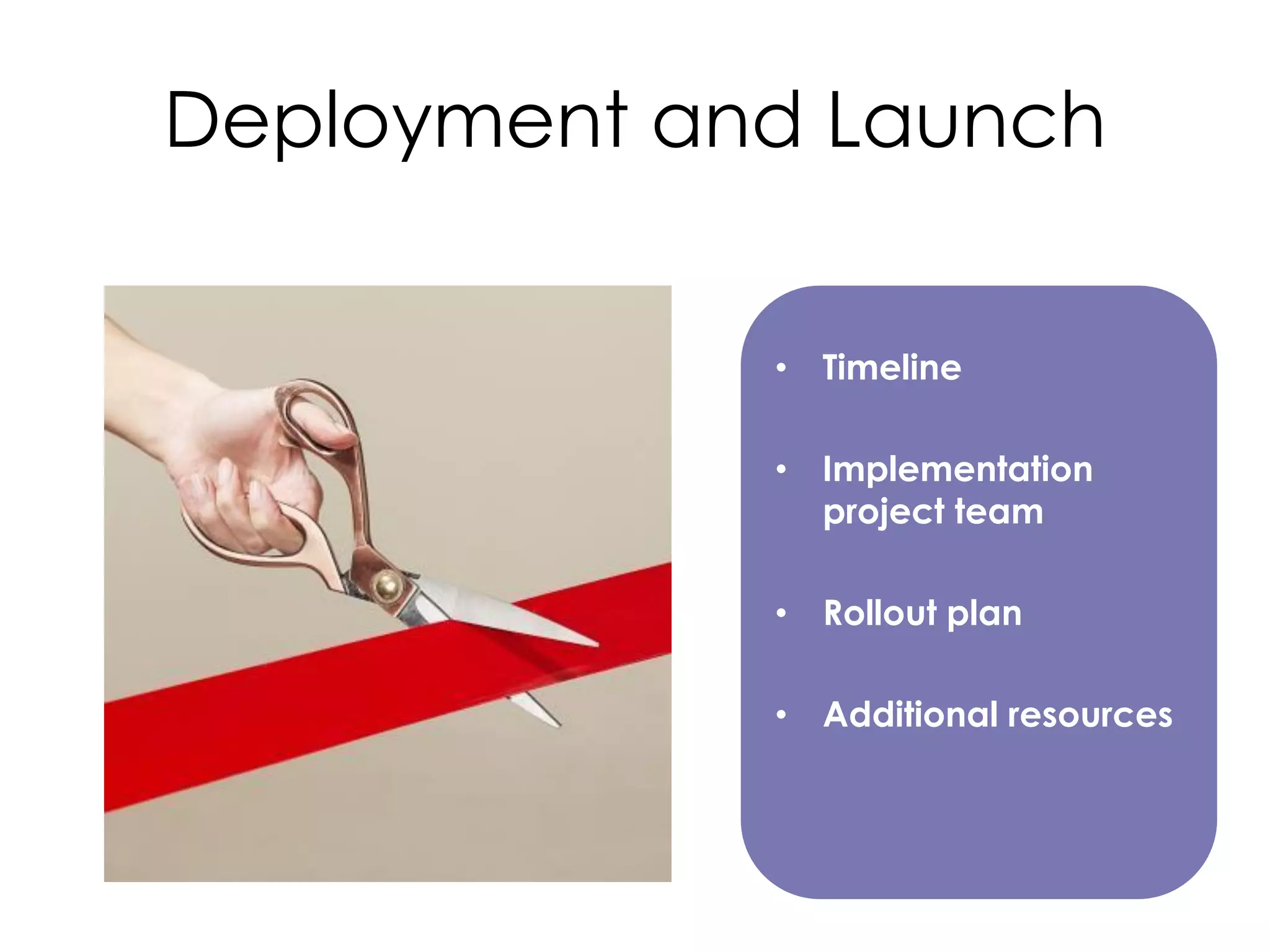
Deployment and Launch
•

Timeline

•

Implementation
project team

•

Rollout plan

•

Additional resources
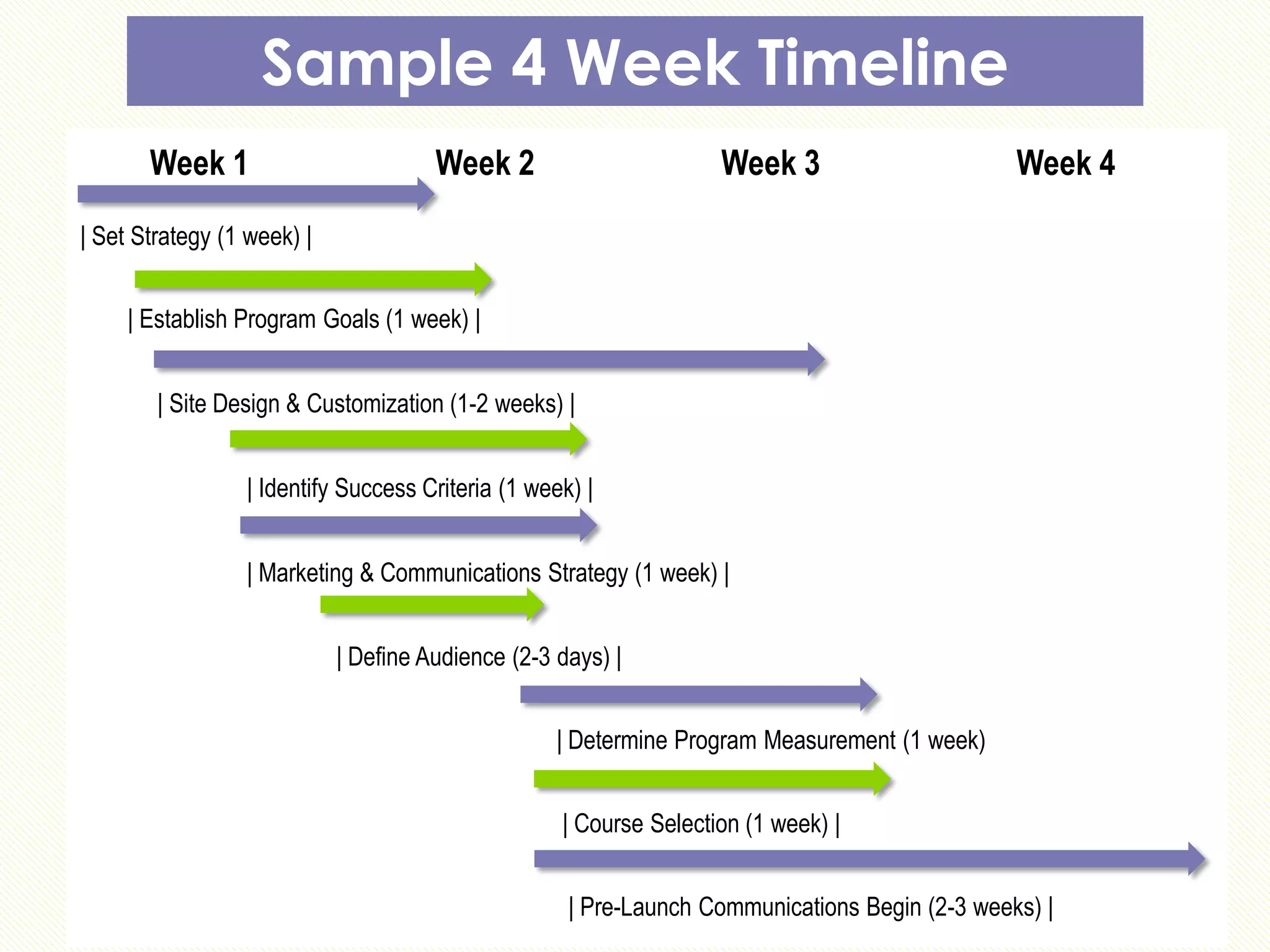
Sample 4 Week Timeline
Week 1

Week 2

Week 3

Week 4

| Set Strategy (1 week) |

| Establish Program Goals (1 week) |
| Site Design & Customization (1-2 weeks) |

| Identify Success Criteria (1 week) |
| Marketing & Communications Strategy (1 week) |
| Define Audience (2-3 days) |
| Determine Program Measurement (1 week)
| Course Selection (1 week) |
| Pre-Launch Communications Begin (2-3 weeks) |
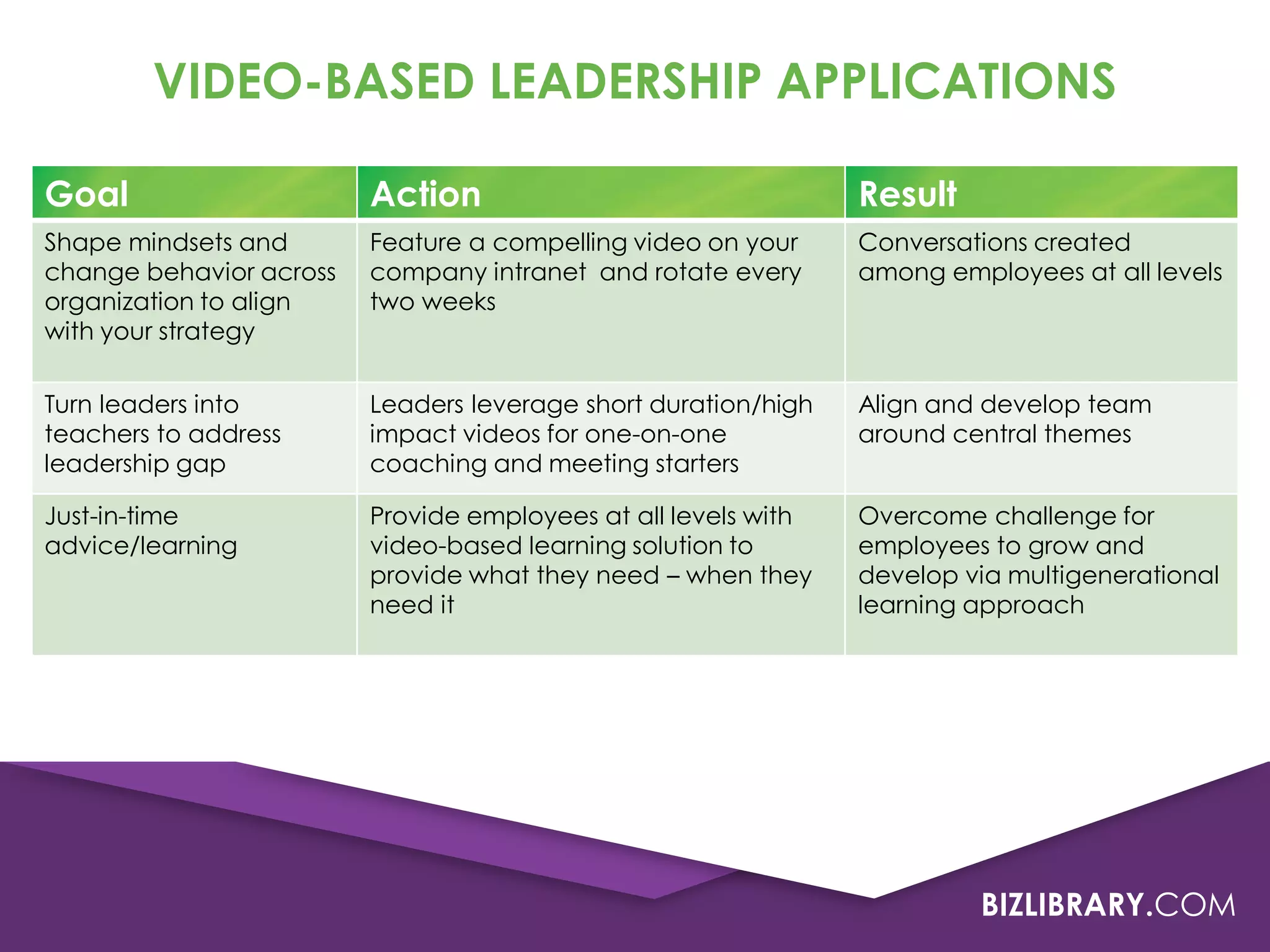
VIDEO-BASED LEADERSHIP APPLICATIONS
Goal

Action

Result

Shape mindsets and
change behavior across
organization to align
with your strategy

Feature a compelling video on your
company intranet and rotate every
two weeks

Conversations created
among employees at all levels

Turn leaders into
teachers to address
leadership gap

Leaders leverage short duration/high
impact videos for one-on-one
coaching and meeting starters

Align and develop team
around central themes

Just-in-time
advice/learning

Provide employees at all levels with
video-based learning solution to
provide what they need – when they
need it

Overcome challenge for
employees to grow and
develop via multigenerational
learning approach

BIZLIBRARY.COM
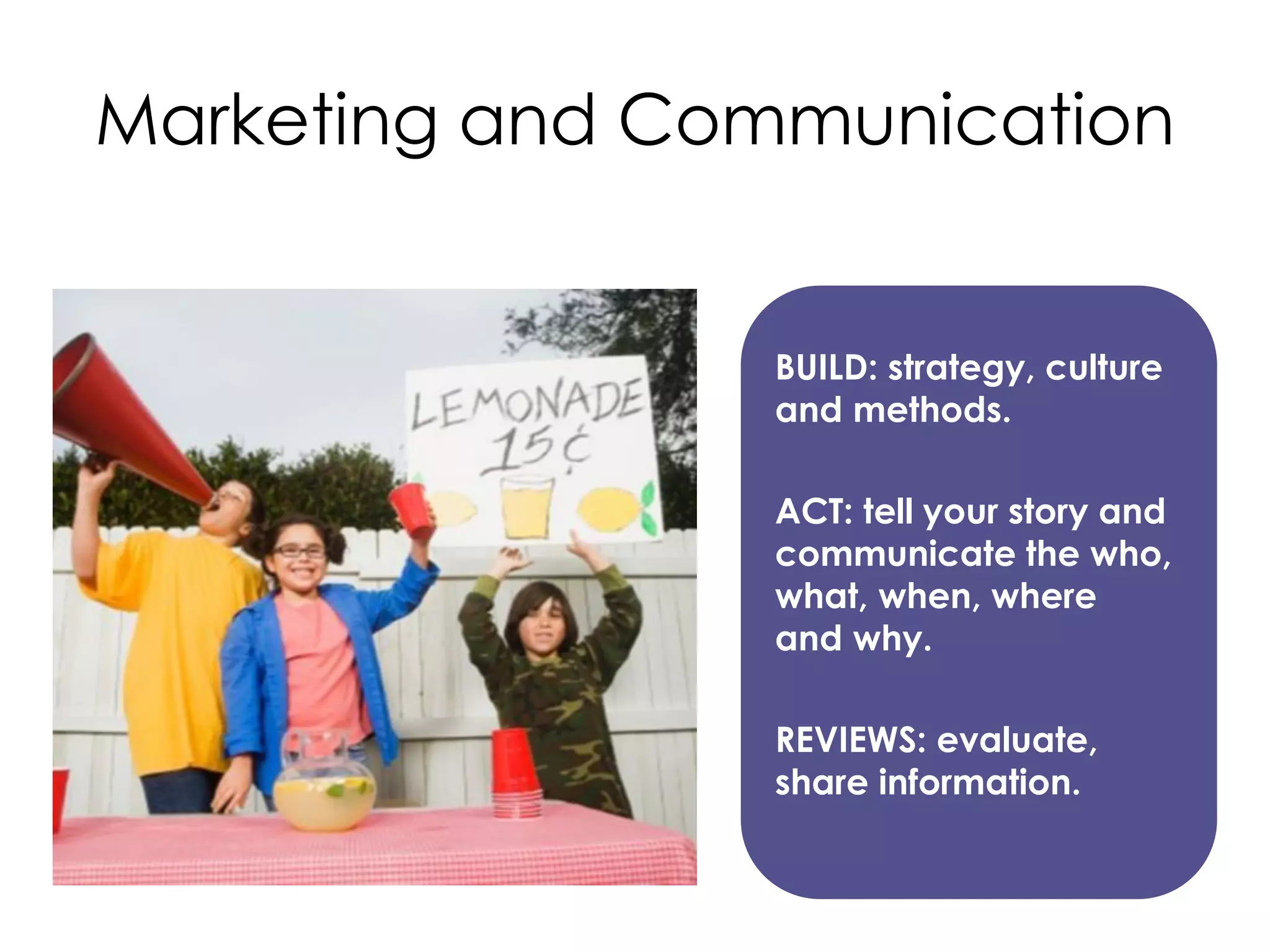
Marketing and Communication

BUILD: strategy, culture
and methods.
ACT: tell your story and
communicate the who,
what, when, where
and why.
REVIEWS: evaluate,
share information.
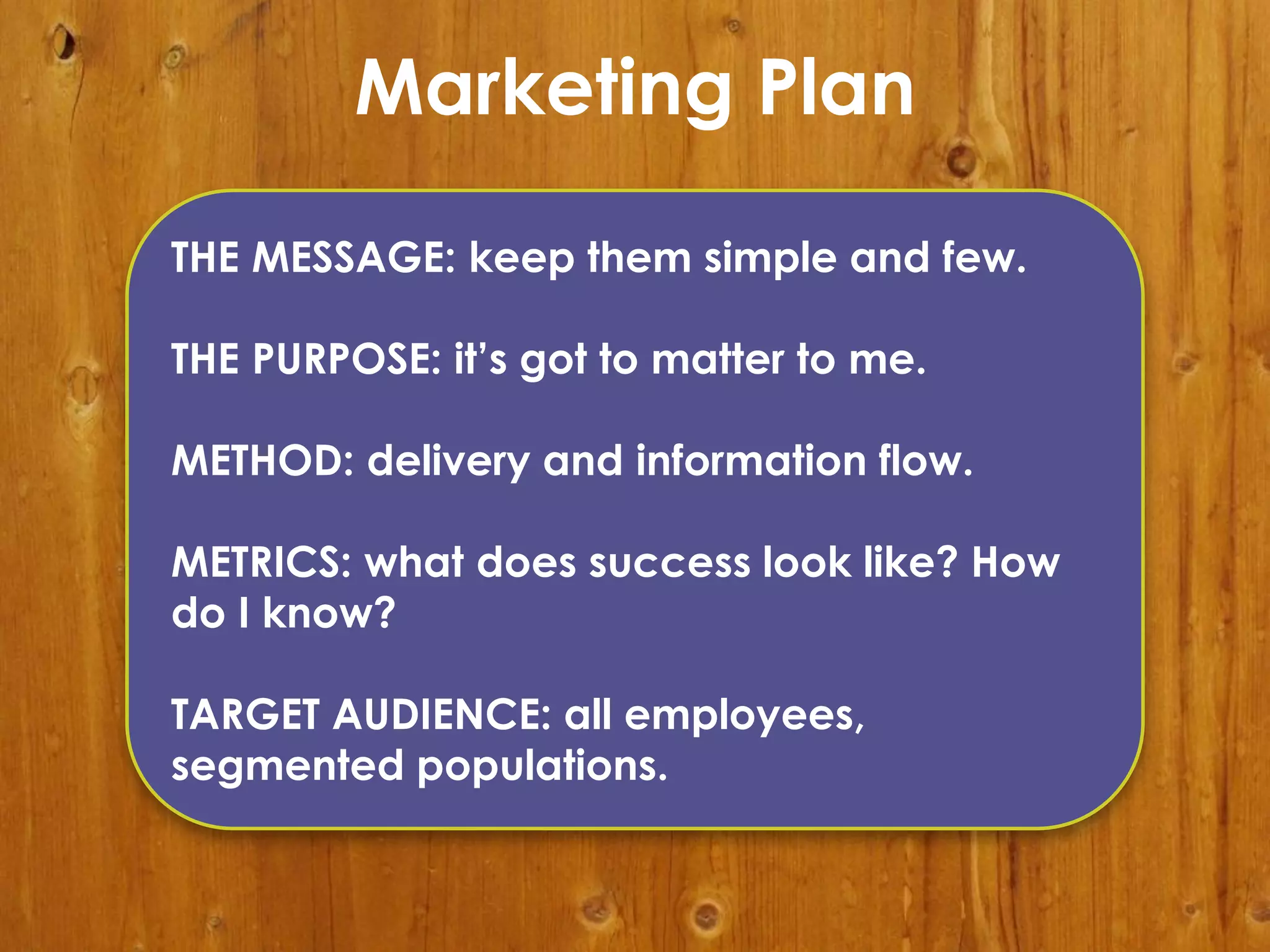
Marketing Plan
THE MESSAGE: keep them simple and few.
THE PURPOSE: it’s got to matter to me.
METHOD: delivery and information flow.
METRICS: what does success look like? How
do I know?
TARGET AUDIENCE: all employees,
segmented populations.
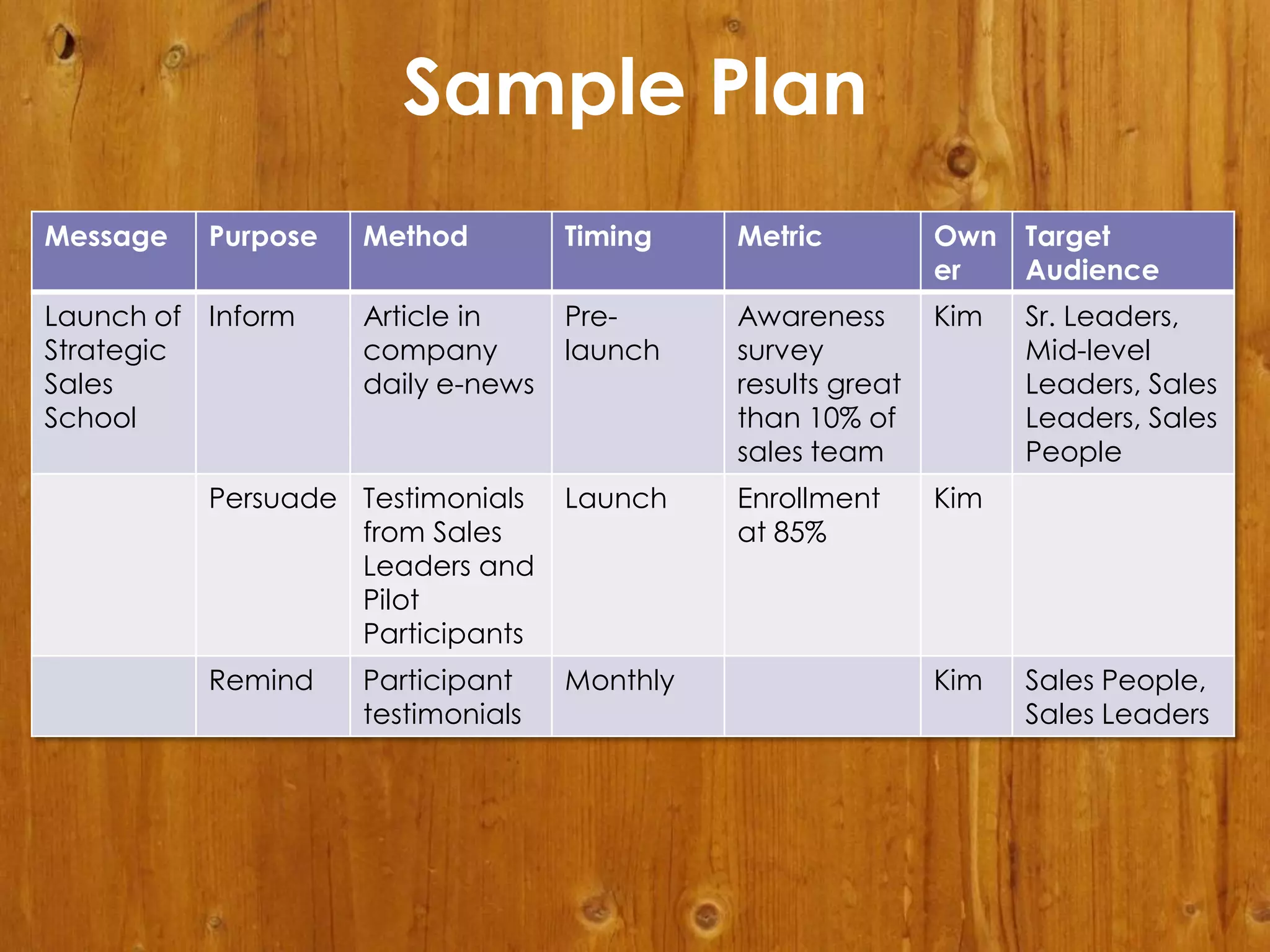
Sample Plan
Message

Purpose

Method

Timing

Metric

Own
er

Target
Audience

Article in
company
daily e-news

Prelaunch

Awareness
survey
results great
than 10% of
sales team

Kim

Sr. Leaders,
Mid-level
Leaders, Sales
Leaders, Sales
People

Persuade Testimonials
from Sales
Leaders and
Pilot
Participants

Launch

Enrollment
at 85%

Kim

Remind

Monthly

Launch of Inform
Strategic
Sales
School

Participant
testimonials

Kim

Sales People,
Sales Leaders
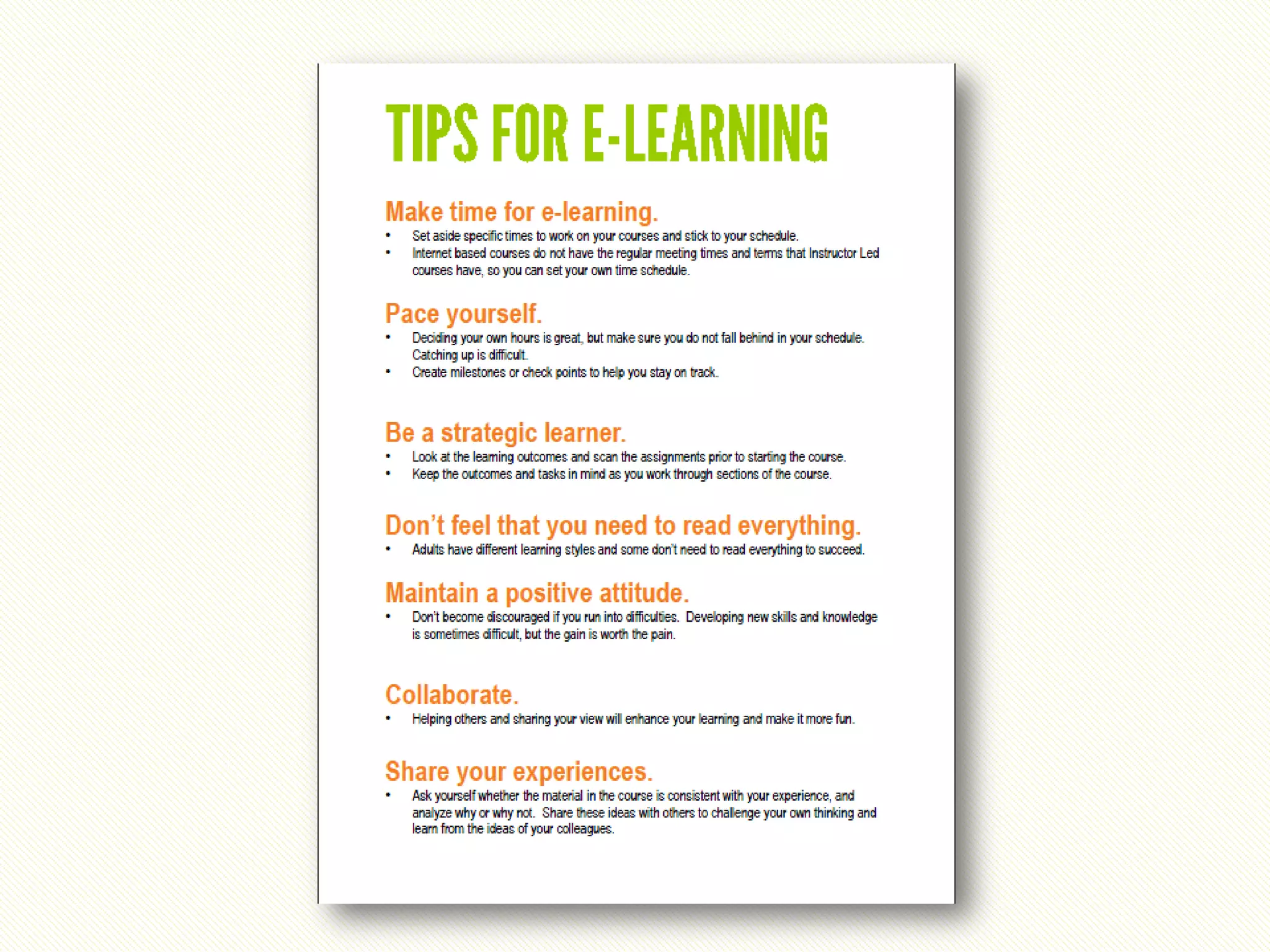
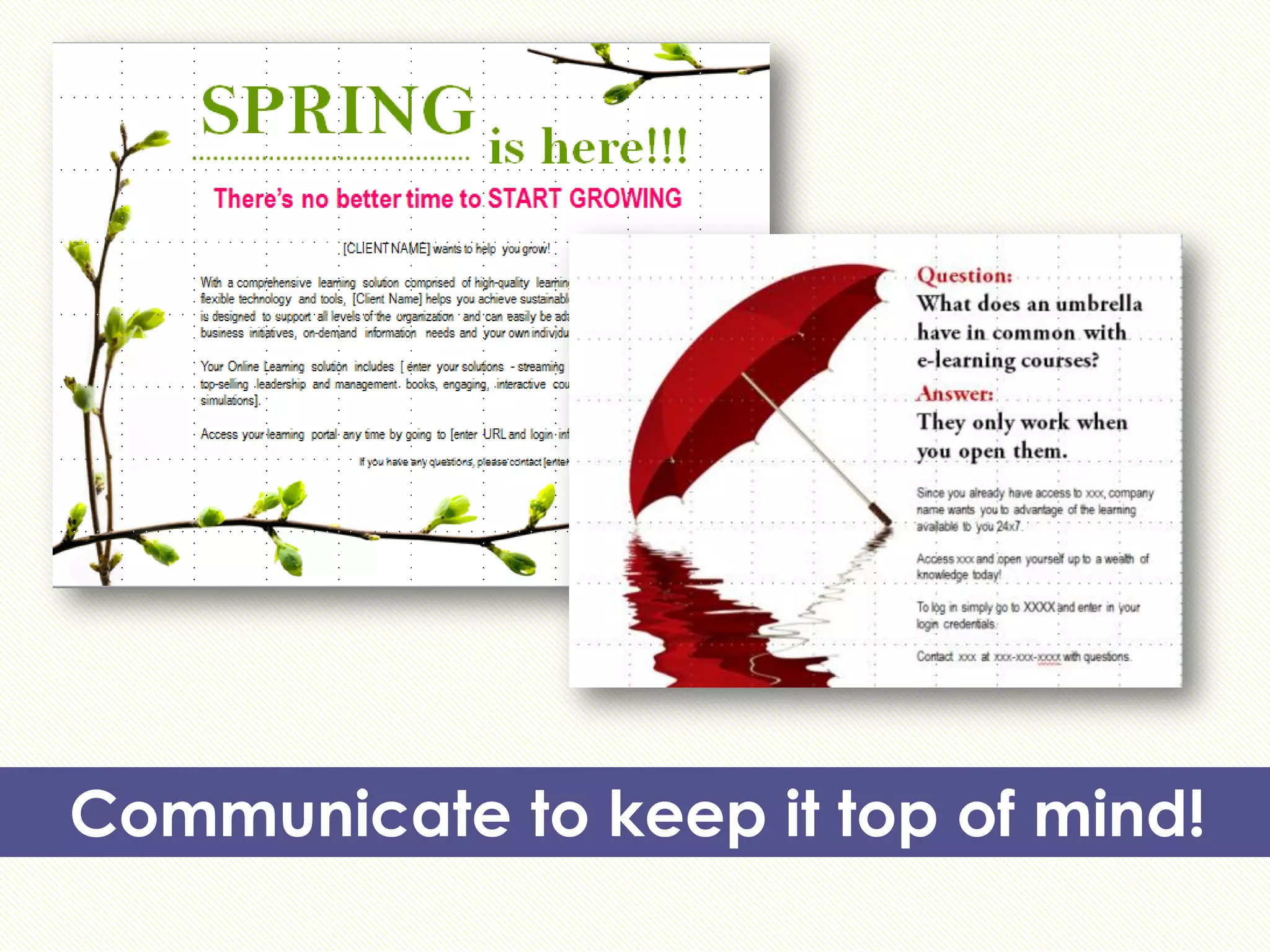
Communicate to keep it top of mind!
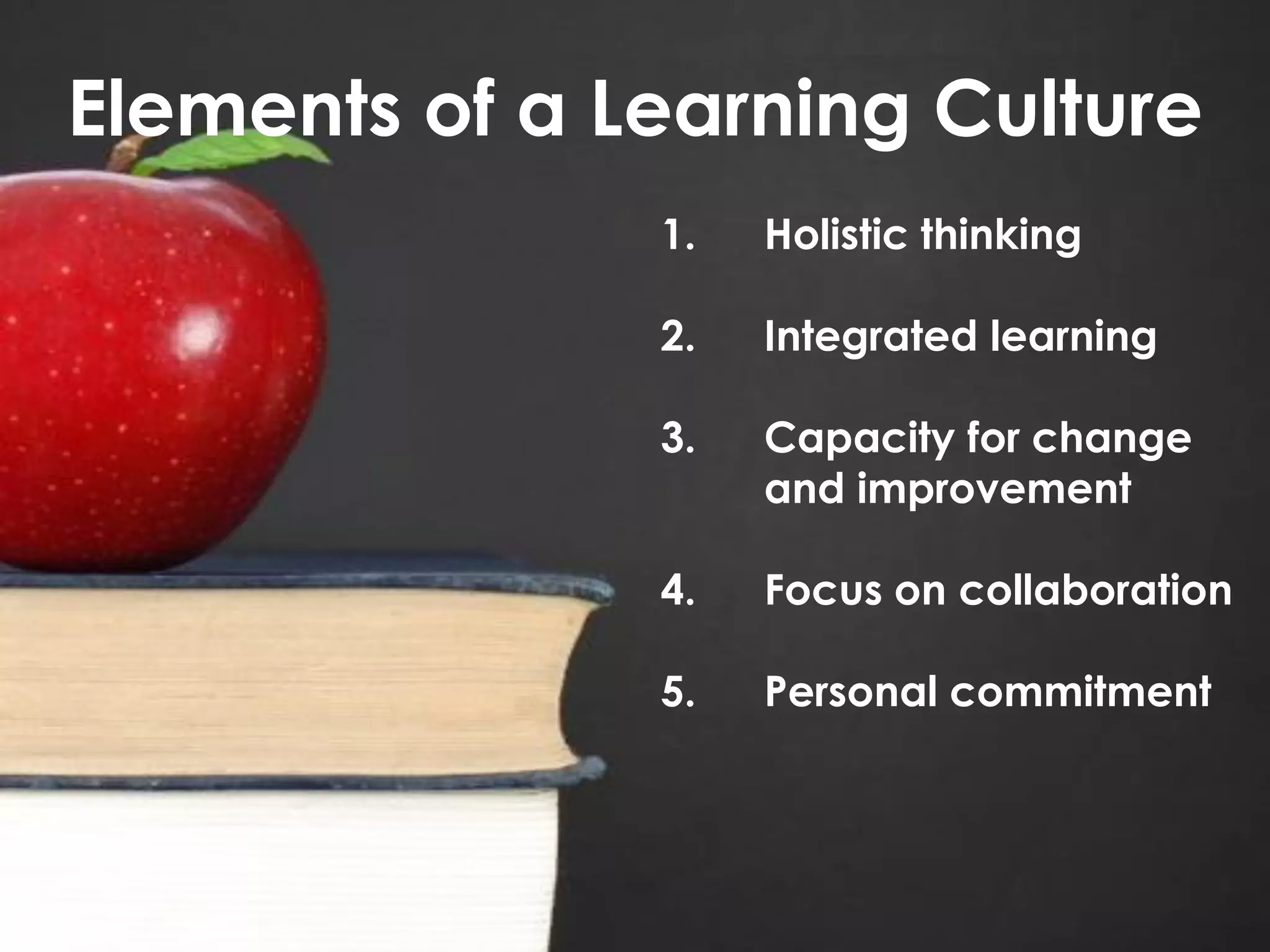
Elements of a Learning Culture
1.

Holistic thinking

2.

Integrated learning

3.

Capacity for change
and improvement

4.

Focus on collaboration

5.

Personal commitment
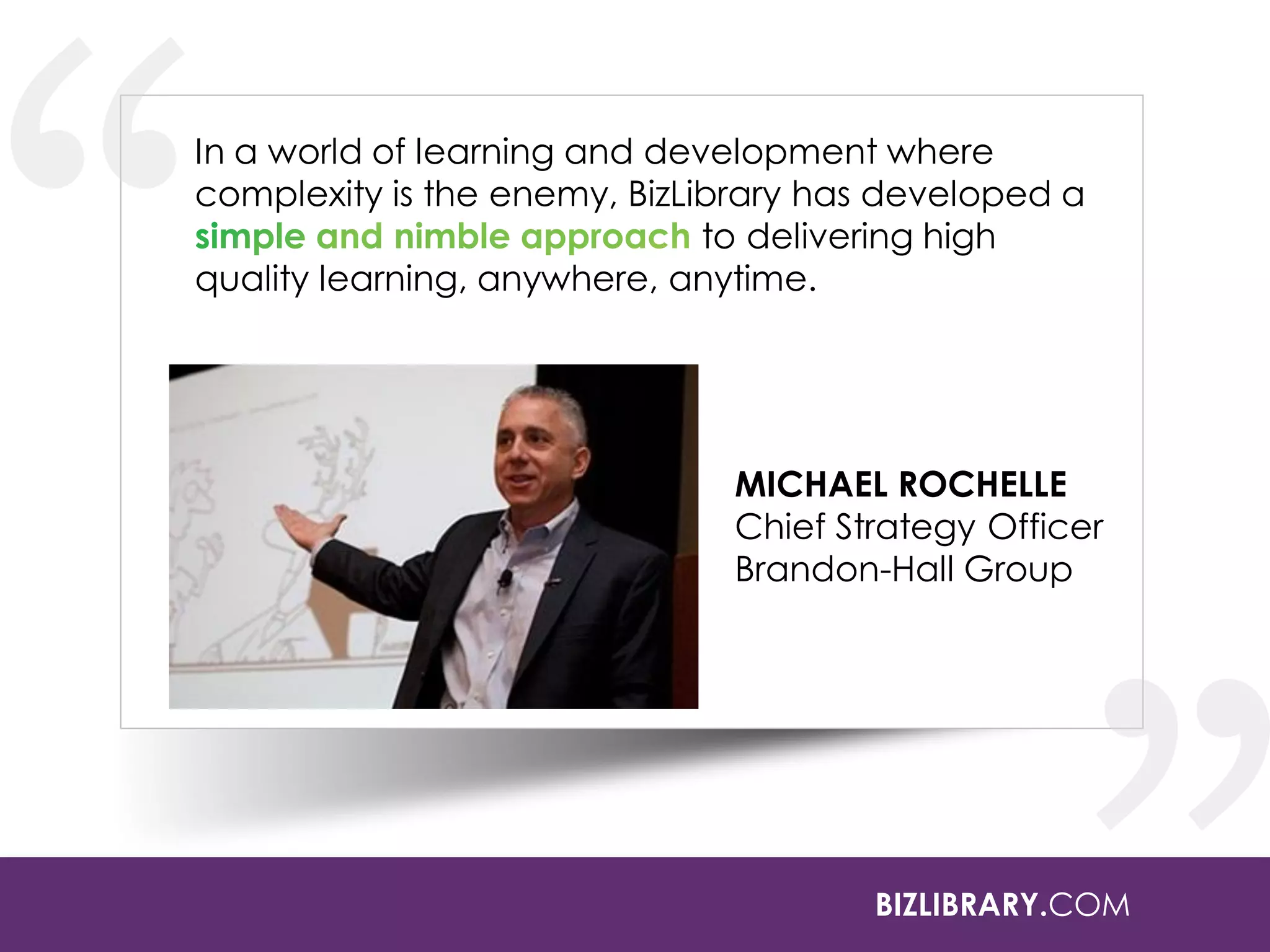
In a world of learning and development where
complexity is the enemy, BizLibrary has developed a
to delivering high
quality learning, anywhere, anytime.

MICHAEL ROCHELLE
Chief Strategy Officer
Brandon-Hall Group

BIZLIBRARY.COM
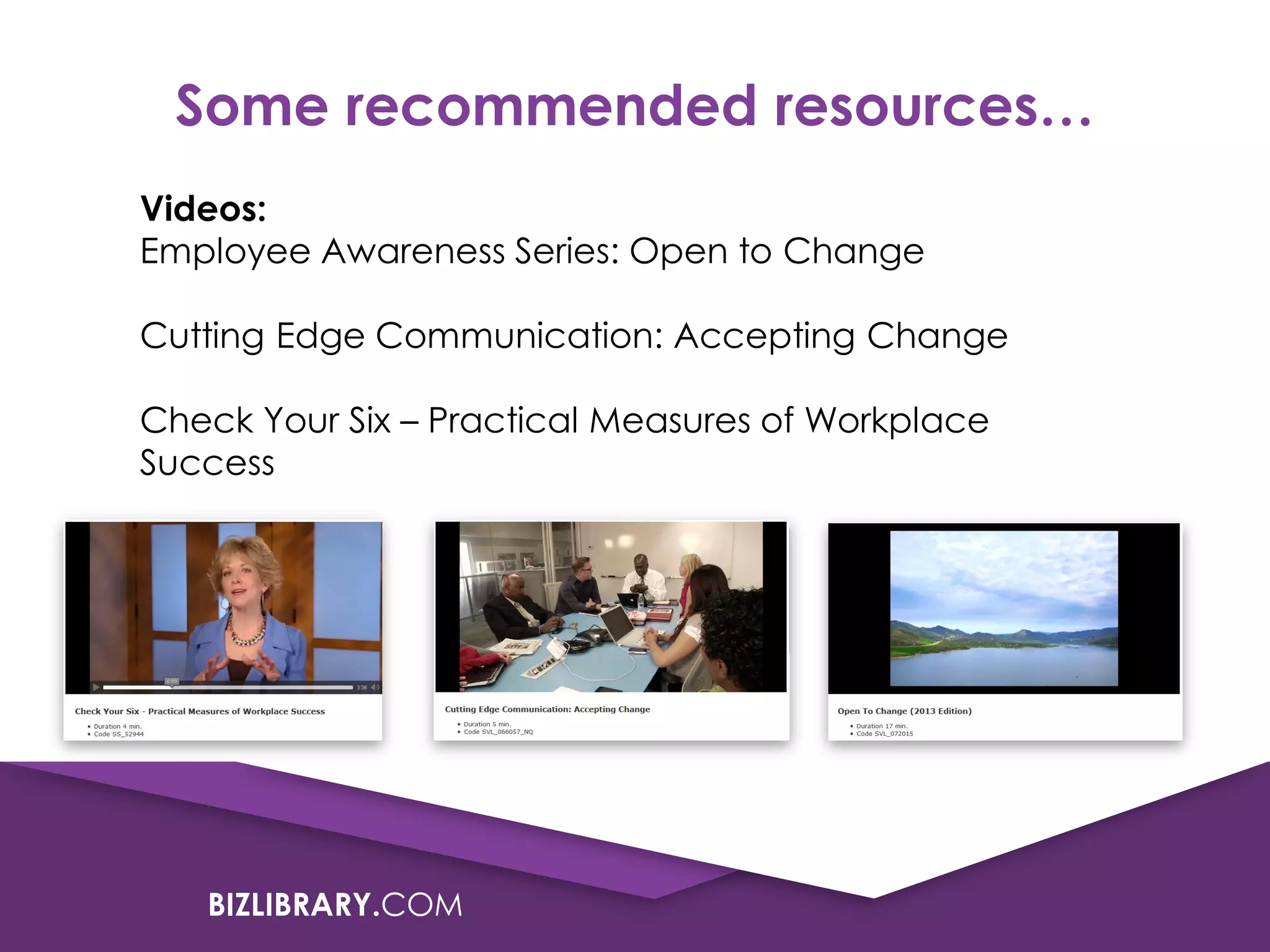
Some recommended resources…
Videos:
Employee Awareness Series: Open to Change
Cutting Edge Communication: Accepting Change

Check Your Six – Practical Measures of Workplace
Success

BIZLIBRARY.COM
Chris Osborn
Vice President of Marketing
cosborn@bizlibrary.com
@chrisosbornstl

Jessica Batz
Marketing Specialist
jbatz@bizlibrary.com
@jessbatz
@BizLibrary

BIZLIBRARY.COM

Creating a Training Program and Learning Culture

  • 1.
    Creating a Training Programand Learning Culture in Your Organization
  • 2.
    4,000+ Courses. 25Topic Areas. Unlimited Access.
  • 3.
    POLL QUESTION What best describesyour current employee development program: A. Our program is aligned to the strategic goals of the organization. B. We have a program, but it is not aligned to the strategic goals of the organization. C. We cover the basics, but employee development isn’t on-going. D. Program? I wouldn’t exactly call it a program.
  • 4.
    POLL QUESTION What isyour biggest roadblock with employee development? A. No manager support B. No budget or perceived value C. Lack of leadership support D. Unengaged and unmotivated employees E. Something else
  • 5.
    Common Roadblocks 1.No managersupport 2.No budget or perceived value 3.Lack of leadership support 4.Unengaged employees
  • 6.
    Getting started fromthe ground up. What you’ll learn: Creating a learning culture. Change management. Setting goals and success criteria.
  • 7.
    Keys to ProgramSuccess Business Fit Learning solutions that are tightly aligned to business initiatives. Adoption Effective communication to target audiences. Provide easy access to resources, technology and tools. Business Value Measurement strategy that delivers return on expectations and return on investment.
  • 8.
    4 Steps toImplementation Program Management and Growth Marketing and Communication Deployment Strategy and Implementation
  • 9.
    Strategy and Implementation • Culturalawareness • Change management • Program goals and success criteria • Managing your implementation
  • 10.
    Cultural Awareness Executive andmanagement support Corporate mission and value Business and work environment Communication styles and flow Relationships of influence Existing learning culture
  • 11.
    Elements of aLearning Culture 1. Holistic thinking 2. Integrated learning 3. Capacity for change and improvement 4. Focus on collaboration 5. Personal commitment
  • 12.
    Change Management COMMUNICATE Business and individualbenefits of the program. Reduce fear of the unknown. CAREFUL PLANNING LINK TRAINING TO JOB ROLES/PERFORMANCE
  • 14.
    Goals and SuccessCriteria Determine the audience Determine content and link to program objectives Define criteria for measurement
  • 15.
  • 16.
    Quantifying Questions BUSINESS NEED QUANTIFYINGQUESTIONS Increased revenue Buy how much? In which areas? Improved quality Improved how? Reduction in turnover What percentage reduction? Improved morale Improved how? More satisfied customers In what way?
  • 17.
    Program Focus Percentage ofemployees take at least one course within the first year of program. Replace percentage of Instructor-Led-Training (ILT) with online resources. Employees use eLearning or video programs to meet an average percentage of their annual training requirement.
  • 18.
    Learner Focus Positive feedbackon content with a specific approval rating. Extent the learner has manager encouragement to use of the knowledge and/or skills presented. Positive feedback on how participants will apply what they learned to their job.
  • 19.
    Program Goal Goal: Replace50% of instructorled-training with eLearning within 12 months. Success Criteria: Usage measured by completion. Measurement: 25% of potential audience of 500 completes one course (125 learners) on an annualized basis.
  • 20.
    Program Goal Goal: ProvideeLearning as a viable means for employees professional development within 12 months. Success Criteria: Learner satisfaction with content. Measurement: Positive feedback on content with a >70% approval rating.
  • 21.
    Learner Goal Goal: Improveperformance in handling of customer complaints within 90 days. Success Criteria: Transfer of knowledge and/or skill back to job. Measurement: Positive feedback on applicability of learning to job responsibilities with a >70% approval rating
  • 22.
    Program Evaluation • Startwith usage reports. • Results from evaluation forms. • Pre and post tests. • Job performance metrics or KPI’s.
  • 23.
    Sample Metrics METHOD: Trackinitial email to employees. MEASURED RESULTS: 949 sent/508 opened (53.5%) 77 users hit the link to the LMS within the email (35%) 62 signed up for courses 28 started courses 8 completed courses
  • 24.
    Sample Metrics METHOD: LeadershipDevelopment Program Participation. MEASURED RESULTS: 80% of participants completed the program 30% of participants were promoted within three months of program completion 100% retention of all program participants 100% of participants rated the program as worthwhile and valuable
  • 25.
    Managing Your Implementation Deploymentand launch. Marketing and communications. Measurement and review.
  • 26.
    Deployment and Launch • Timeline • Implementation projectteam • Rollout plan • Additional resources
  • 27.
    Sample 4 WeekTimeline Week 1 Week 2 Week 3 Week 4 | Set Strategy (1 week) | | Establish Program Goals (1 week) | | Site Design & Customization (1-2 weeks) | | Identify Success Criteria (1 week) | | Marketing & Communications Strategy (1 week) | | Define Audience (2-3 days) | | Determine Program Measurement (1 week) | Course Selection (1 week) | | Pre-Launch Communications Begin (2-3 weeks) |
  • 28.
    VIDEO-BASED LEADERSHIP APPLICATIONS Goal Action Result Shapemindsets and change behavior across organization to align with your strategy Feature a compelling video on your company intranet and rotate every two weeks Conversations created among employees at all levels Turn leaders into teachers to address leadership gap Leaders leverage short duration/high impact videos for one-on-one coaching and meeting starters Align and develop team around central themes Just-in-time advice/learning Provide employees at all levels with video-based learning solution to provide what they need – when they need it Overcome challenge for employees to grow and develop via multigenerational learning approach BIZLIBRARY.COM
  • 29.
    Marketing and Communication BUILD:strategy, culture and methods. ACT: tell your story and communicate the who, what, when, where and why. REVIEWS: evaluate, share information.
  • 30.
    Marketing Plan THE MESSAGE:keep them simple and few. THE PURPOSE: it’s got to matter to me. METHOD: delivery and information flow. METRICS: what does success look like? How do I know? TARGET AUDIENCE: all employees, segmented populations.
  • 31.
    Sample Plan Message Purpose Method Timing Metric Own er Target Audience Article in company dailye-news Prelaunch Awareness survey results great than 10% of sales team Kim Sr. Leaders, Mid-level Leaders, Sales Leaders, Sales People Persuade Testimonials from Sales Leaders and Pilot Participants Launch Enrollment at 85% Kim Remind Monthly Launch of Inform Strategic Sales School Participant testimonials Kim Sales People, Sales Leaders
  • 33.
    Communicate to keepit top of mind!
  • 34.
    Elements of aLearning Culture 1. Holistic thinking 2. Integrated learning 3. Capacity for change and improvement 4. Focus on collaboration 5. Personal commitment
  • 35.
    In a worldof learning and development where complexity is the enemy, BizLibrary has developed a to delivering high quality learning, anywhere, anytime. MICHAEL ROCHELLE Chief Strategy Officer Brandon-Hall Group BIZLIBRARY.COM
  • 36.
    Some recommended resources… Videos: EmployeeAwareness Series: Open to Change Cutting Edge Communication: Accepting Change Check Your Six – Practical Measures of Workplace Success BIZLIBRARY.COM
  • 37.
    Chris Osborn Vice Presidentof Marketing cosborn@bizlibrary.com @chrisosbornstl Jessica Batz Marketing Specialist jbatz@bizlibrary.com @jessbatz @BizLibrary BIZLIBRARY.COM