



















Recent developments and trends in
learning & development
by Toronto Training and HR
July 2015
CONTENTS
3-4 Introduction
5-6 Styles of learning
7-8 Conditions needed for learning to occur
9-10 Demonstrating the impact of learning & development
11-12 Main strands for purposes of learning & development evaluation
13-14 The Kirkpatrick model
15-16 RAM and the value of learning
17-18 Costing learning & development activities
19-20 Levels of learning needs analysis
21-22 Outputs which originate from the learning needs analysis
23-25 Priorities for learning technology in 2015
26-27 Data to be collected
28-30 Learning & development strategy
31-32 Establishing learning as an indispensable business asset
33-35 Using an internal marketing campaign to promote learning & development
36-37 Addressing obstacles that inhibit learning
38-39 Make recommendation-based learning work
40-42 Developing a learning culture
43-45 Changes in learning & development
46-47 Shifts within organizations affecting learning & development
48-49 Practices to implement in 2015
50-51 Conclusion, summary and questions
Page 2
Page 3
Introduction
Page 4
Introduction to Toronto Training
and HR
Toronto Training and HR is a specialist training and
human resources consultancy headed by Timothy Holden
10 years in banking
15 years in training and human resources
Freelance practitioner since 2006
The core services provided by Toronto Training and HR
are:
Training event design
Training event delivery
HR support with an emphasis on reducing
costs, saving time plus improving employee
engagement and morale
Services for job seekers
Page 5
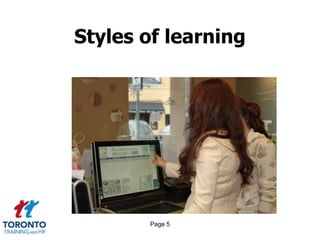
Styles of learning
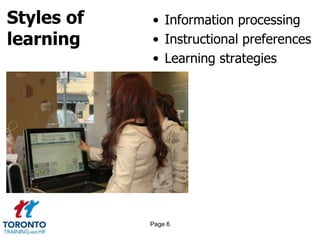
Styles of
learning
• Information processing
• Instructional preferences
• Learning strategies
Page 6
Page 7
Conditions needed for
learning to occur
Conditions
needed for
learning to
occur
• Attention
• Generation
• Emotion
• Spacing
Page 8
Page 9
Demonstrating the impact
of learning & development
Demonstrating
the impact of
learning &
development
• Set expectations
with stakeholders
• Define success
early
• Establish metrics at
the project or
business-unit level
Page 10
Page 11
Main strands for purposes
of learning & development
evaluation
Main strands
for the
purposes of
learning &
development
evaluation
• Proving
• Controlling
• Improving
• Reinforcing
Page 12
Page 13
The Kirkpatrick model
The
Kirkpatrick
model
• Reactions
• Learning
• Behaviour
• Results
Page 14
Page 15
RAM and the value of
learning
RAM and the
value of
learning
• Relevance
• Alignment
• Measurement
Page 16
Page 17
Costing learning &
development activities
Costing
learning &
development
activities
• External provision
• Internal provision
Page 18
Page 19
Levels of learning needs
analysis
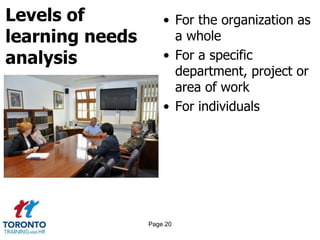
Levels of
learning needs
analysis
• For the organization as
a whole
• For a specific
department, project or
area of work
• For individuals
Page 20
Page 21
Outputs which originate
from the learning needs
analysis
Outputs which
originate from
the learning
needs analysis
• A report of overall
learning needs
• Prioritizing the learning
needs identified
• Learning &
development plans
• Personal development
plans
Page 22
Page 23
Priorities for learning
technology in 2015
Priorities for
learning
technology in
2015
1 of 2
Highest priorities
• Assessment and
evaluation
• Learning management
system
• Mobile and portal
technology
• Learning analytics
applications
• Performance support
Page 24
Priorities for
learning
technology in
2015
2 of 2
Lowest priorities
• Podcasts
• Technical help desk
• Content authoring
software
• Learning portals
Page 25
Page 26
Data to be collected
Data to be
collected
• Costs
• Incidence/nature
• Business benefits
Page 27
Page 28
Learning & development
strategy
Learning &
development
strategy 1 of 2
• Definition
• Influences
• Stakeholders
• Translating the strategy
into action
Page 29
Learning &
development
strategy 2 of 2
• Right size opportunities
• Teach employees how to
learn
• Activate shared
ownership of the learning
environment
Page 30
Page 31
Establishing learning as an
indispensable business
asset
Establishing
learning as an
indispensable
business
asset
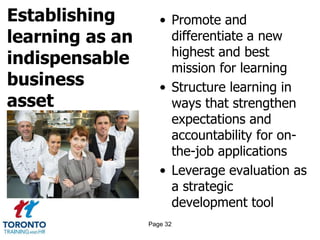
• Promote and
differentiate a new
highest and best
mission for learning
• Structure learning in
ways that strengthen
expectations and
accountability for on-
the-job applications
• Leverage evaluation as
a strategic
development tool
Page 32
Page 33
Using an internal
marketing campaign to
promote learning &
development
Using an internal
marketing
campaign to
promote learning
& development
1 of 2
• Get buy-in from
senior leaders
• Create demand
• Launch with pizzazz
• Make advertising
creative
• Answer the WIIFM
question
• Persuade the skeptics
• Keep growing the
campaign
Page 34
Using an internal
marketing
campaign to
promote learning
& development
2 of 2
• Don’t be afraid to use
social media
• Steal marketing ideas
whenever possible
Page 35
Page 36
Addressing obstacles that
inhibit learning
Addressing
obstacles that
inhibit
learning
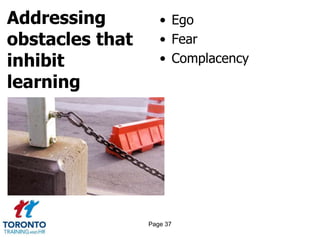
• Ego
• Fear
• Complacency
Page 37
Page 38
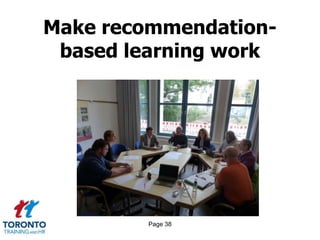
Make recommendation-
based learning work
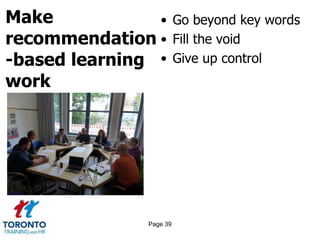
Make
recommendation
-based learning
work
• Go beyond key words
• Fill the void
• Give up control
Page 39
Page 40
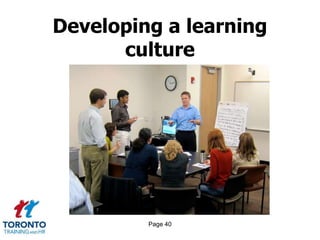
Developing a learning
culture
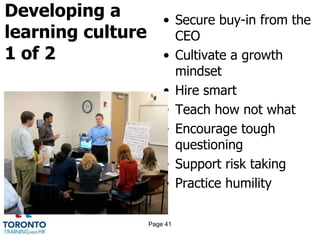
Developing a
learning culture
1 of 2
• Secure buy-in from the
CEO
• Cultivate a growth
mindset
• Hire smart
• Teach how not what
• Encourage tough
questioning
• Support risk taking
• Practice humility
Page 41
Developing a
learning culture
2 of 2
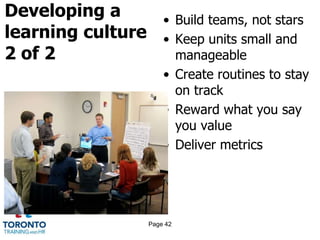
• Build teams, not stars
• Keep units small and
manageable
• Create routines to stay
on track
• Reward what you say
you value
• Deliver metrics
Page 42
Page 43
Changes in learning &
development
Changes in
learning &
development
1 of 2
The environment
• Volatility, uncertainty,
complexity, ambiguity
The organization
• Adaptive, agile,
ambidextrous
Learning & development
• Savvy, affecting and
aligned, versatile, ubiquitous
Page 44
Changes in
learning &
development
2 of 2
• Economic developments
• Technological growth
• Social and cultural change
Page 45
Page 46
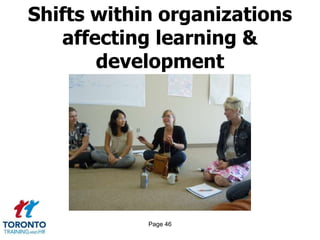
Shifts within organizations
affecting learning &
development
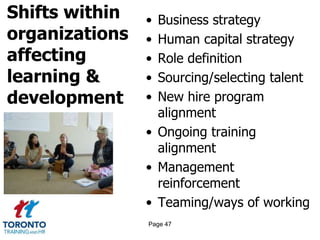
Shifts within
organizations
affecting
learning &
development
• Business strategy
• Human capital strategy
• Role definition
• Sourcing/selecting talent
• New hire program
alignment
• Ongoing training
alignment
• Management
reinforcement
• Teaming/ways of working
Page 47
Page 48
Practices to implement in
2015
Practices to
implement in
2015
• Make relevance non-
negotiable
• Make it micro
• Give them some space
• Mix it up
• Focus attention fast
• Give them some air
• Hit delete on
deliverables
• Retrain the trainer
Page 49
Page 50
Conclusion, summary and
questions
Page 51
Conclusion, summary and
questions
Conclusion
Summary
Videos
Questions

Learning & development July 2015