Presenting Today
Libby Mullen
Learning & Development Manager
BizLibrary
Katie Miller
Marketing Specialist
BizLibrary
www.bizlibrary.com/demo
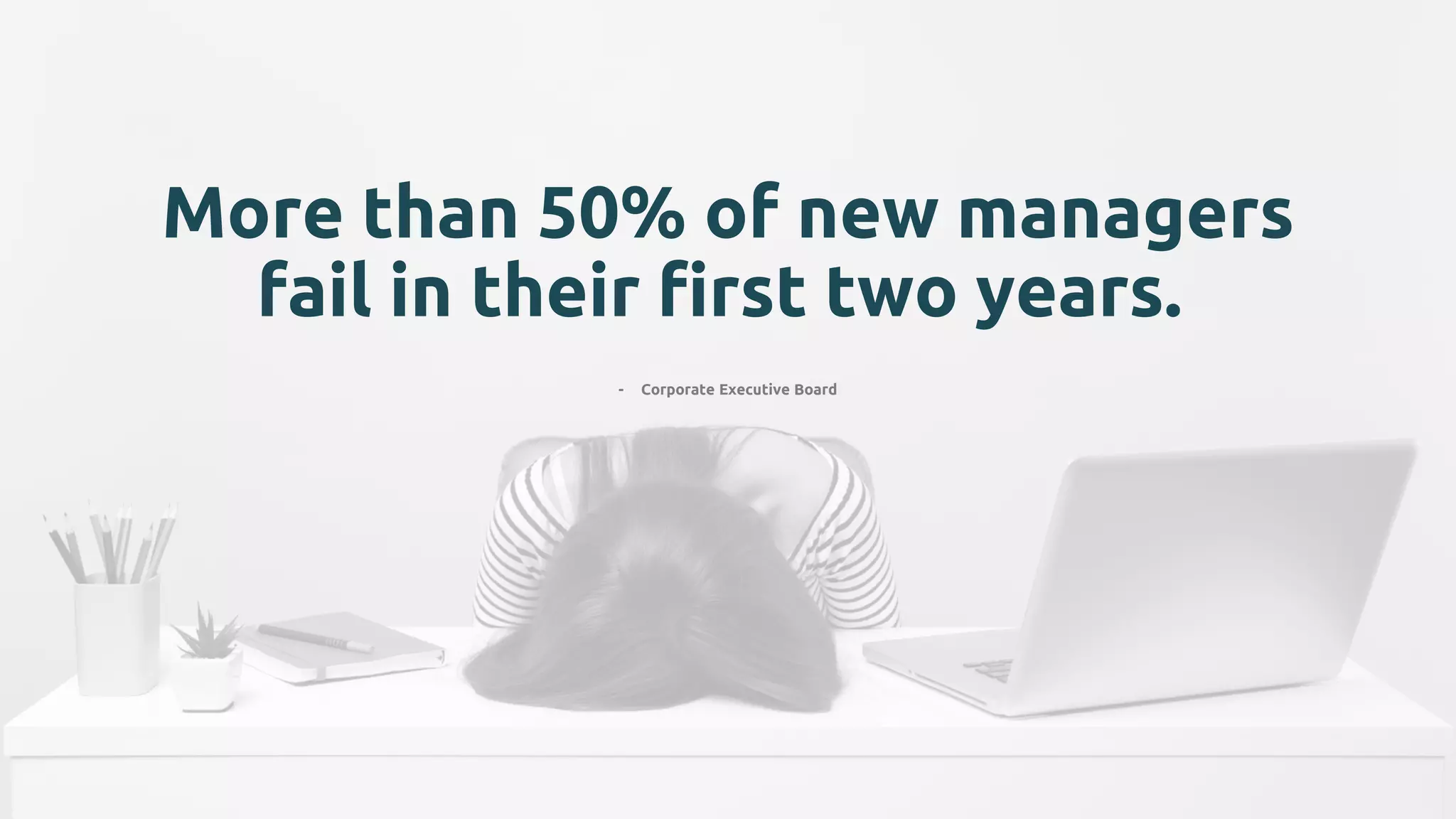
More than 50% of new managers
fail in their first two years.
- Corporate Executive Board
POLL QUESTION
What best describes you?
A. I’m an HR professional thinking about this organizationally.​
B. I lead new supervisors and want to help them succeed.​
C. I am a new supervisor/leader – and have been in the role for less than 6 months.​
D. I am a new supervisor/leader and have been for more than 6 months.​
E. Other – let us know in the group chat!
How would you describe your current training for new
managers and supervisors?
A. Fantastic! — A process-driven, blended approach with targeted learning
and competencies.​
B. Good — we have a formal process and program, but I’m looking for some
ideas for improvement.​
C. Just getting started — we don’t have a formal program in place, but
usually cover the basics.​
D. Non-existent — We throw them in and hope they figure it out.
POLL QUESTION
Today, You’ll Learn:
• How to identify key strengths and improve weaknesses of
first-time managers
• Unique ways to improve the relationship of new managers
and their employees through emotional intelligence
development and coaching techniques
• How to create a training plan that builds confidence and
increases productivity for your new managers
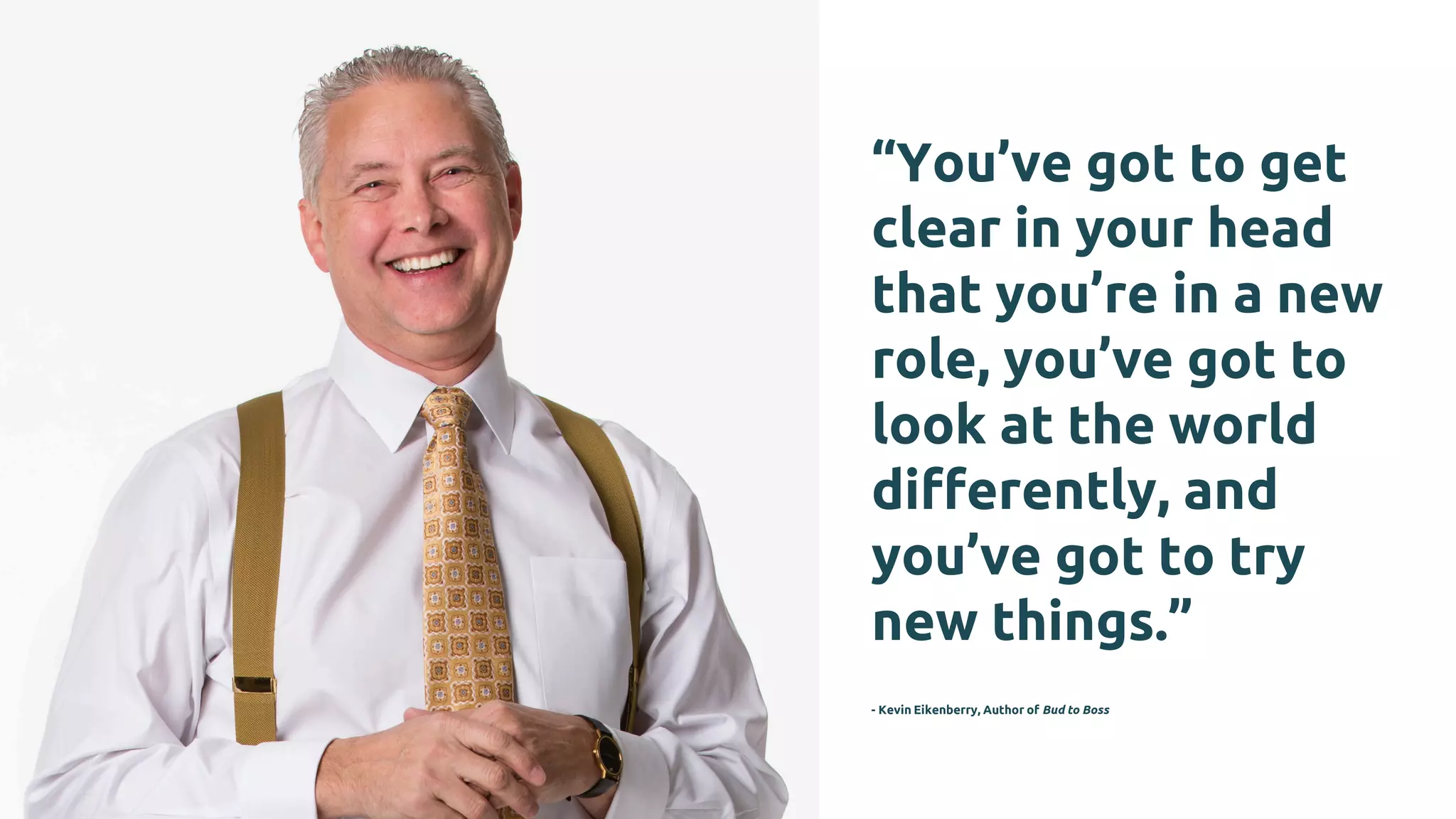
“You’ve got to get
clear in your head
that you’re in a new
role, you’ve got to
look at the world
differently, and
you’ve got to try
new things.”
- Kevin Eikenberry, Author of Bud to Boss
Questions for Managers to Ask Themselves
• Why you were promoted?
• How you can use your strengths to find success?
• What does your success will look like?
• How are you going to develop a mindset that is geared towards
your success?
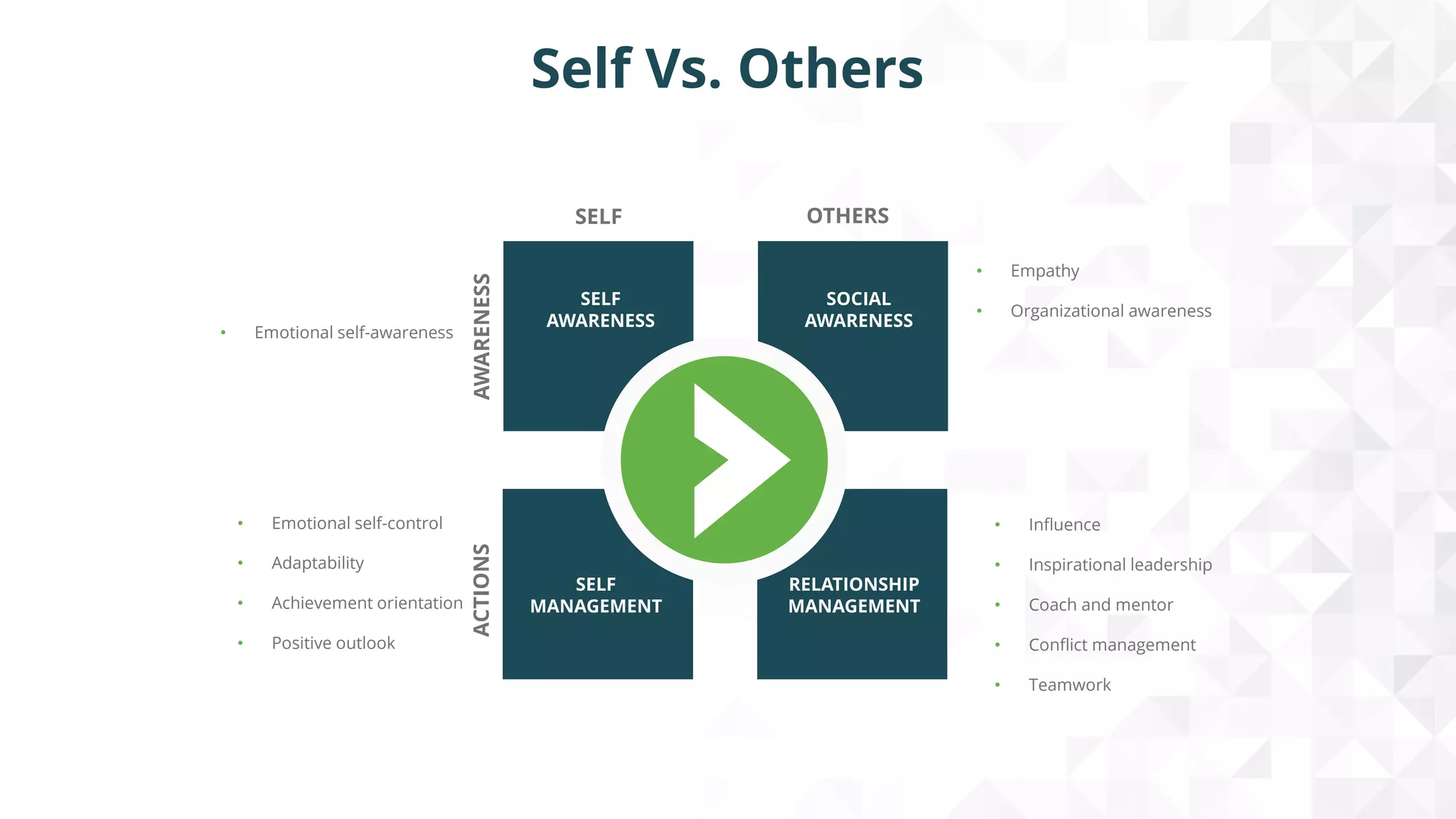
Self Vs. Others
• Empathy
• Organizational awareness
• Emotional self-awareness
• Influence
• Inspirational leadership
• Coach and mentor
• Conflict management
• Teamwork
• Emotional self-control
• Adaptability
• Achievement orientation
• Positive outlook
SELF
AWARENESS
SOCIAL
AWARENESS
SELF
MANAGEMENT
RELATIONSHIP
MANAGEMENT
SELF OTHERS
ACTIONSAWARENESS
1. Research indicates “great” managers listen well, motivate others, and consistently make good
decisions. Do you see these traits in your manager?
2. Research indicates “great” managers are passionate about their work and compassionate
toward others. Do you see these traits in your manager?
3. What would you recommend your manager keep doing?
4. What would you recommend your manager change about his or her approach to management?
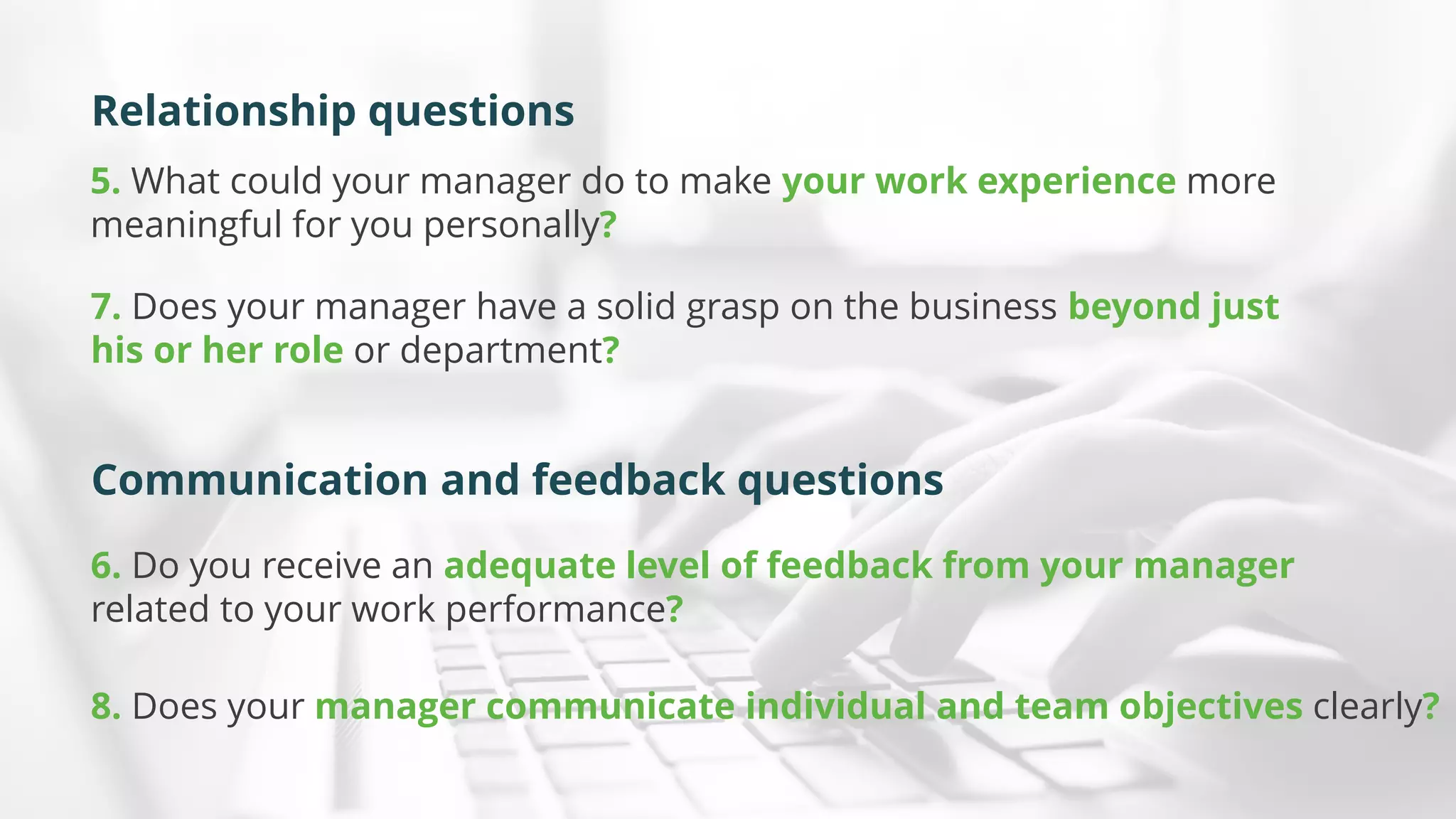
5. What could your manager do to make your work experience more meaningful for you personally?
6. Do you receive an adequate level of feedback from your manager related to your work performance?
7. Does your manager have a solid grasp on the business as a whole beyond just his or her role or
department?
8. Does your manager communicate individual and team objectives clearly?
1. Research indicates “great” managers listen well, motivate others, and
consistently make good decisions. Do you see these traits in your
manager?
2. Research indicates “great” managers are passionate about their work
and compassionate toward others. Do you see these traits in your
manager?
3. What would you recommend your manager keep doing?
4. What would you recommend your manager change about his or her
approach to management?
Open-ended questions
Defined questions
5. What could your manager do to make your work experience more
meaningful for you personally?
6. Do you receive an adequate level of feedback from your manager
related to your work performance?
7. Does your manager have a solid grasp on the business beyond just
his or her role or department?
8. Does your manager communicate individual and team objectives clearly?
Relationship questions
Communication and feedback questions
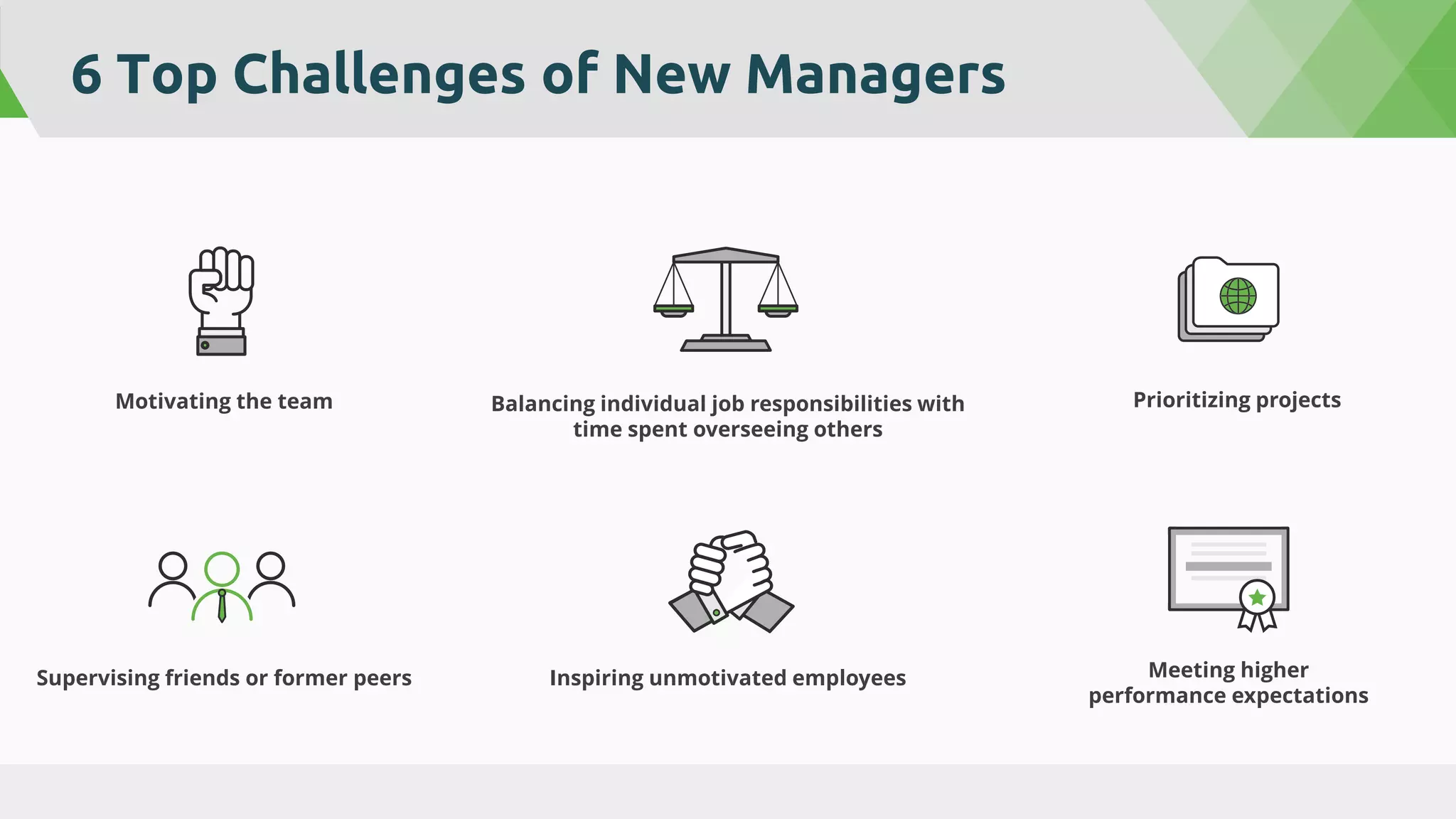
6 Top Challenges of New Managers
Balancing individual job responsibilities with
time spent overseeing others
Supervising friends or former peers
Motivating the team Prioritizing projects
Meeting higher
performance expectations
Inspiring unmotivated employees
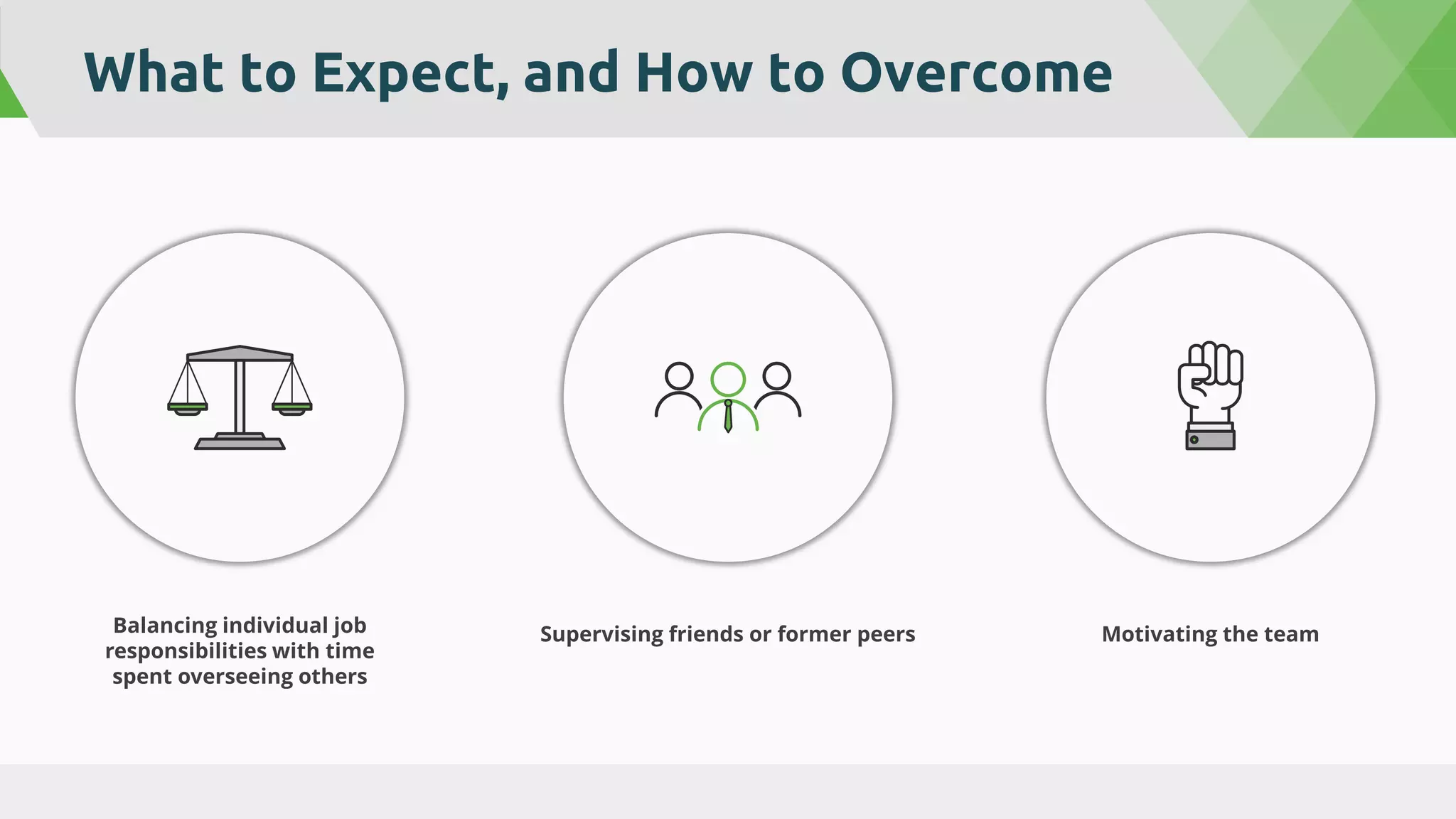
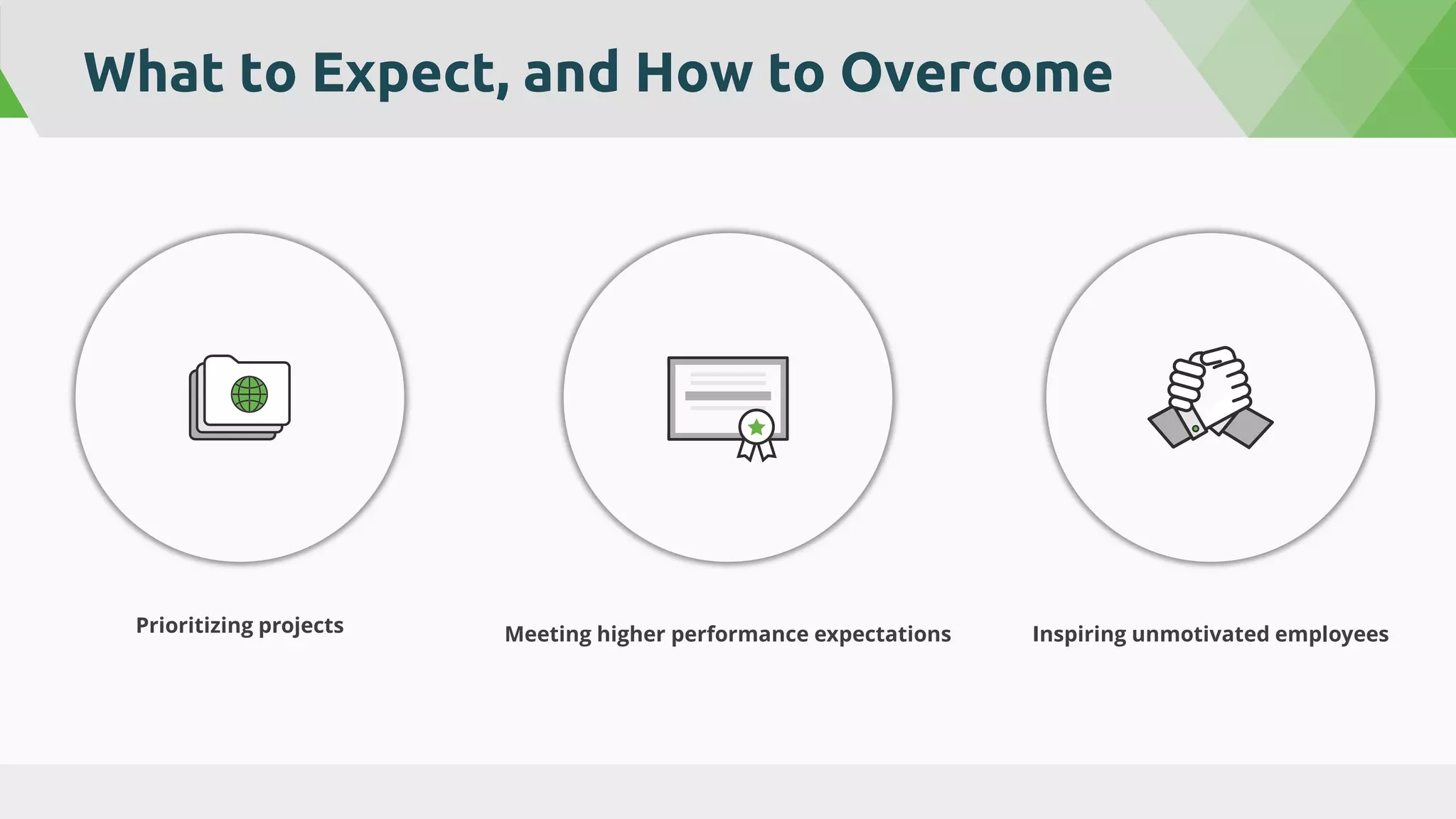
What to Expect, and How to Overcome
Balancing individual job
responsibilities with time
spent overseeing others
Supervising friends or former peers Motivating the team
Six Keys to Cultivate Employee
Engagement
1. Know the importance of their role: recognized & reward.
2. Have a good relationship with their coworkers.
3. Have opportunities to use their strengths.
4. Have a good relationship with their immediate supervisor (that’s you!)
5. Believe their work contributes to the company’s mission.
6. Have autonomy and independence (i.e. don’t micromanage)
Source: https://www.shrm.org/ResourcesAndTools/business-solutions/Documents/2015-job-satisfaction-and-engagement-report.pdf
What to Expect, and How to Overcome
Prioritizing projects Meeting higher performance expectations Inspiring unmotivated employees
Essential Skills of a Successful Manager
• Emotional Intelligence
• Managing Relationships
• Overcoming the Threat of Favoritism
• Earning Respect from Your Reports
• Coaching & Feedback
• Professionalism
• Work Ethic
• Appearance
Emotional Intelligence
• Delegation
• Performance
• Listening
• Coaching
• Leadership
• Strategic Thinking
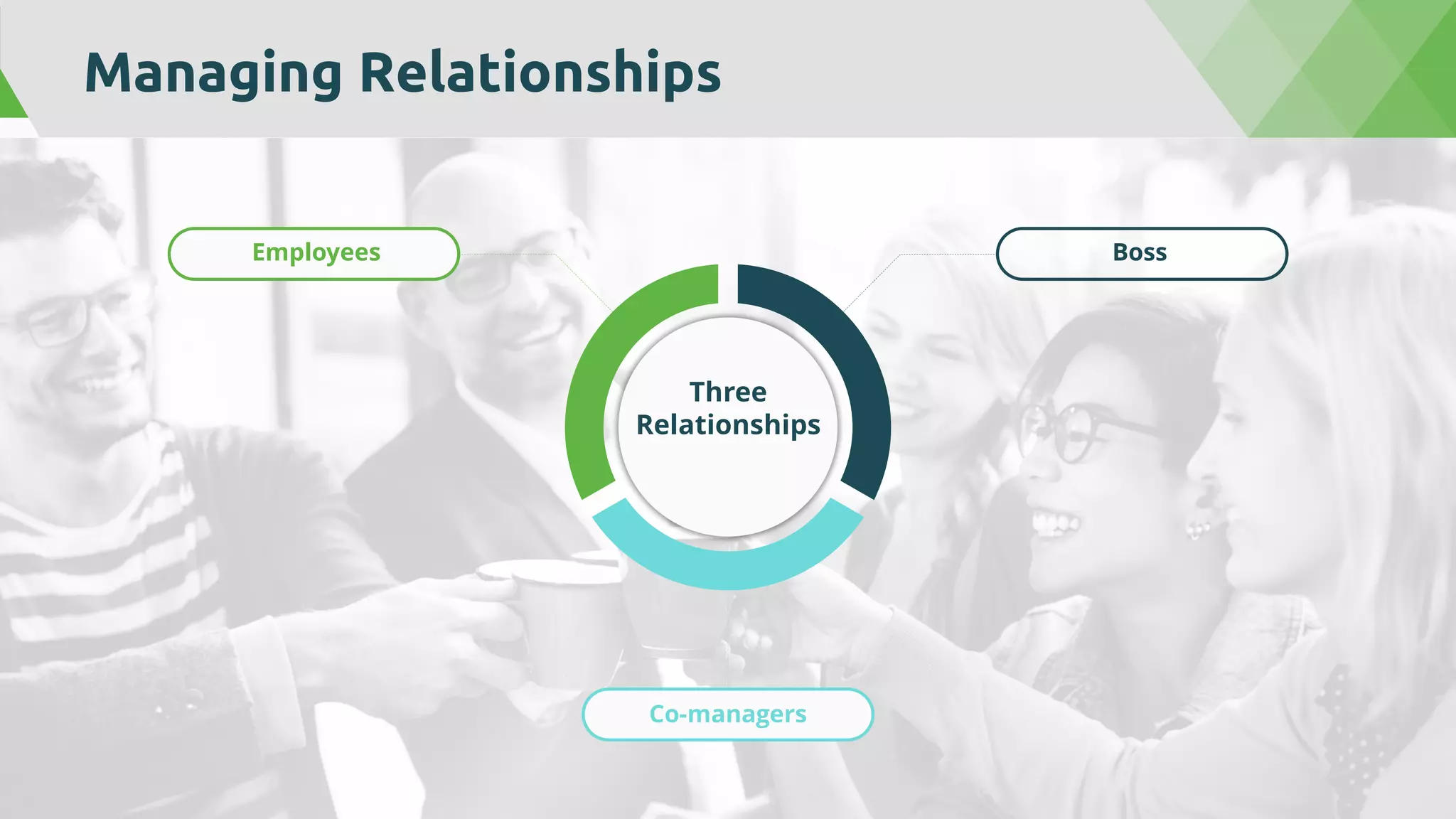
Managing Relationships
Co-managers
Employees Boss
Three
Relationships
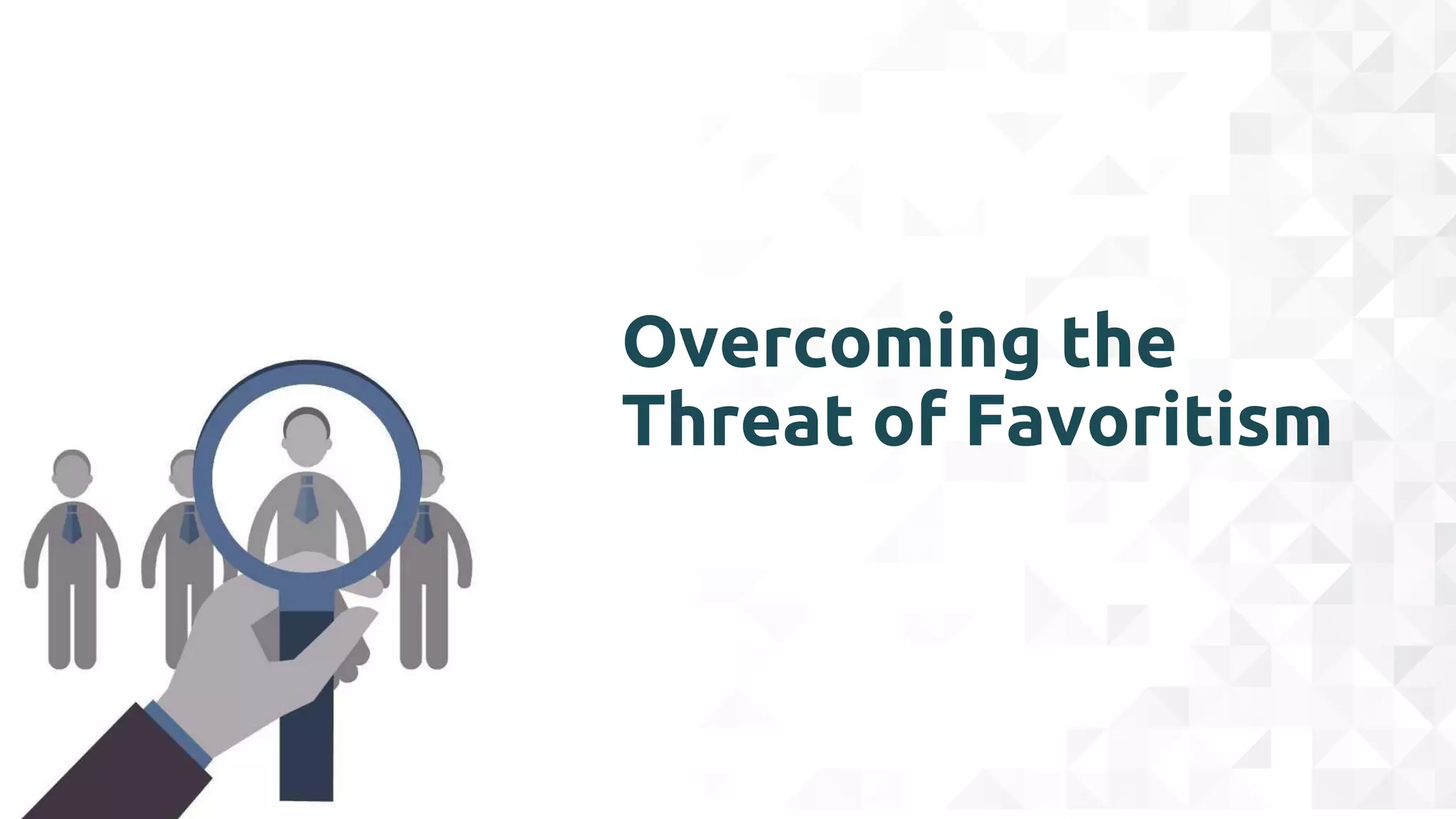
Overcoming the
Threat of Favoritism
Earning Respect from Your Reports
“Respect is something that must be earned. It is not awarded
automatically when someone gets promoted to manager or
gets a little gray at the temples. Managers earn respect when
they are respectful to others, as well as when they
demonstrate trustworthiness, credibility, and a healthy dose
of humanity.”
– Lisa Parker, author of Managing the Moment: A Leader’s Guide to Building Executive Presence One Interaction at a Time
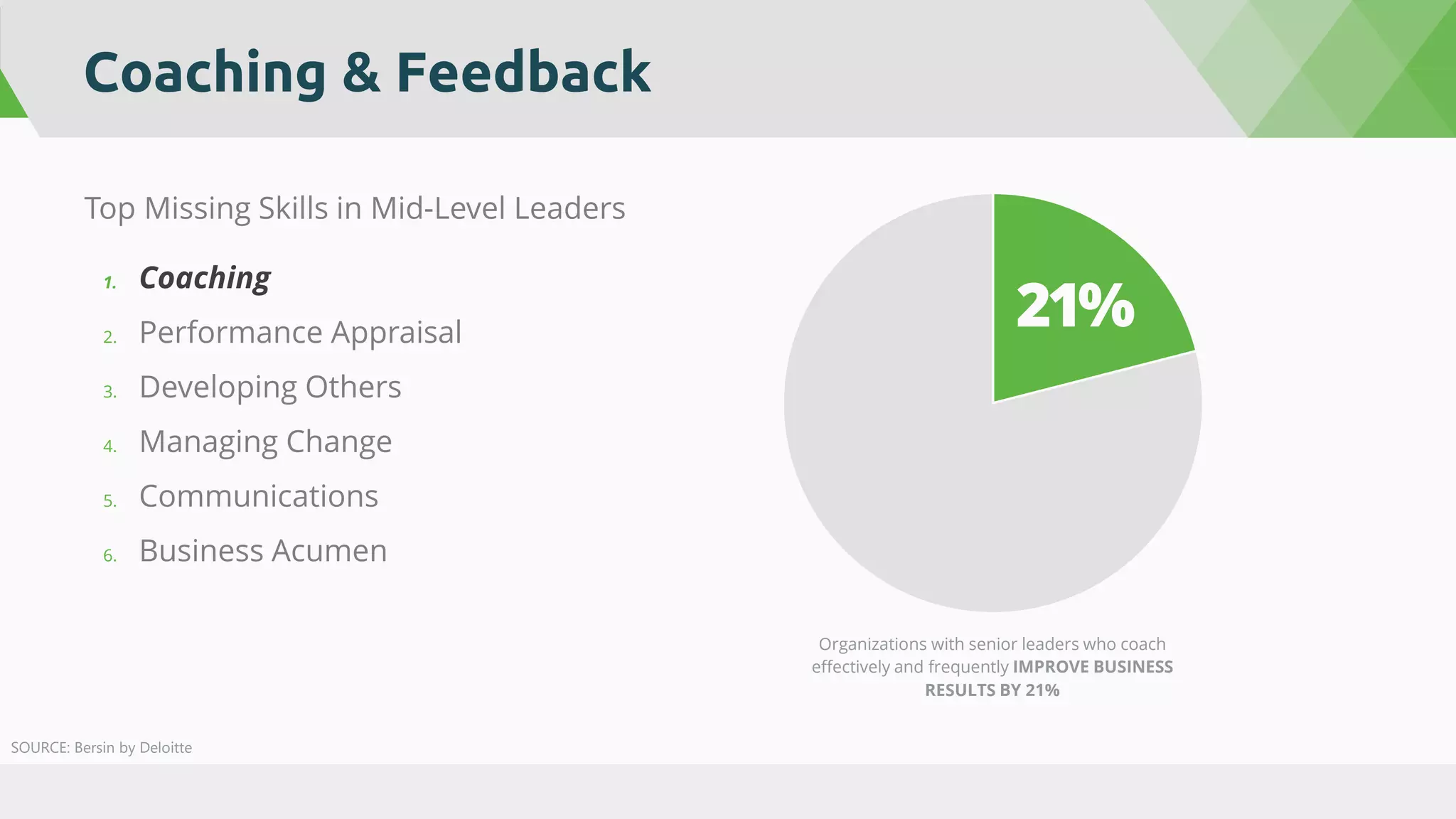
Coaching & Feedback
Organizations with senior leaders who coach
effectively and frequently IMPROVE BUSINESS
RESULTS BY 21%
21%
Top Missing Skills in Mid-Level Leaders
1. Coaching
2. Performance Appraisal​
3. Developing Others ​
4. Managing Change​
5. Communications​
6. Business Acumen
SOURCE: Bersin by Deloitte
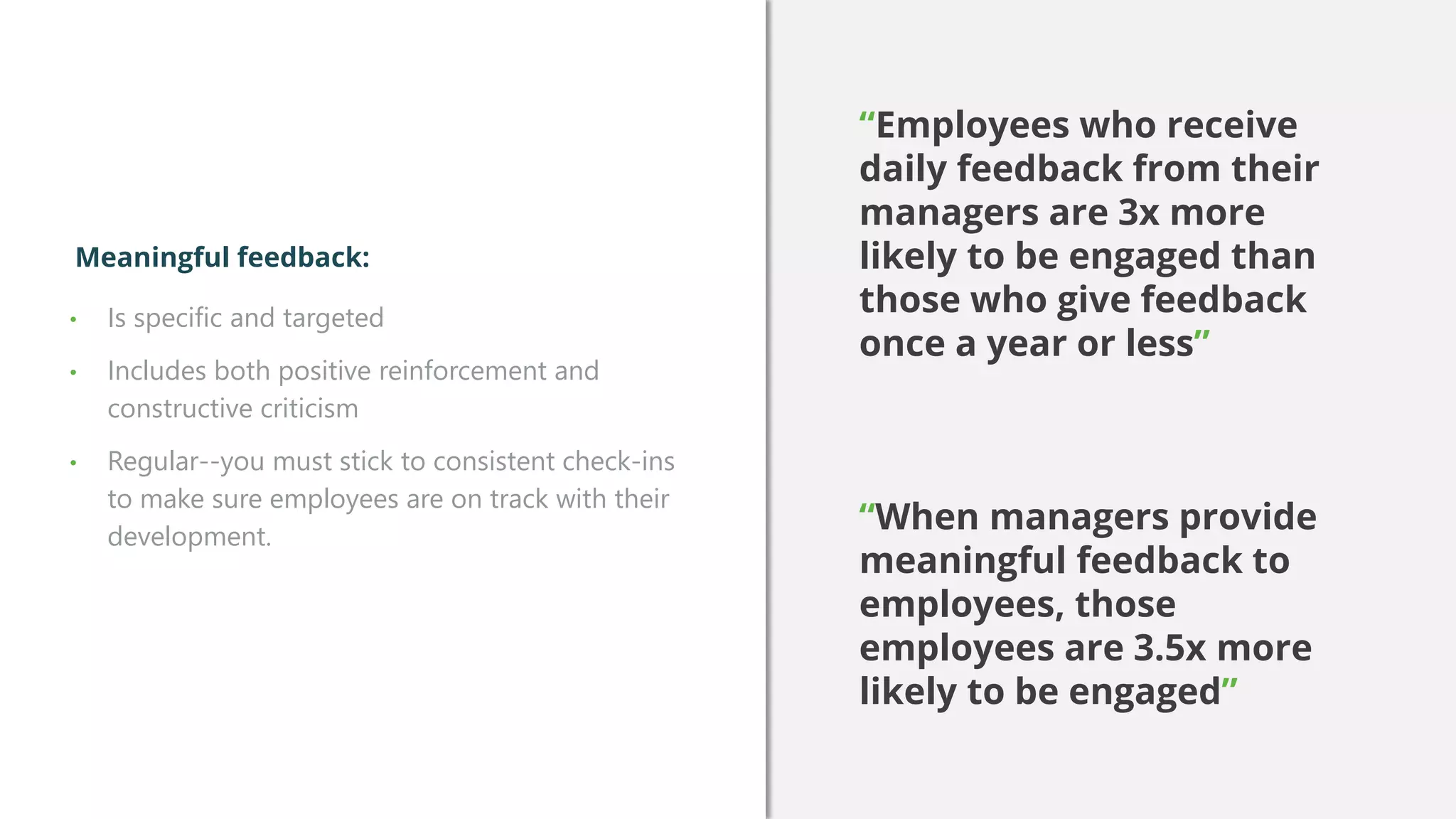
• Is specific and targeted
• Includes both positive reinforcement and
constructive criticism
• Regular--you must stick to consistent check-ins
to make sure employees are on track with their
development.
Meaningful feedback:
“Employees who receive
daily feedback from their
managers are 3x more
likely to be engaged than
those who give feedback
once a year or less”
“When managers provide
meaningful feedback to
employees, those
employees are 3.5x more
likely to be engaged”
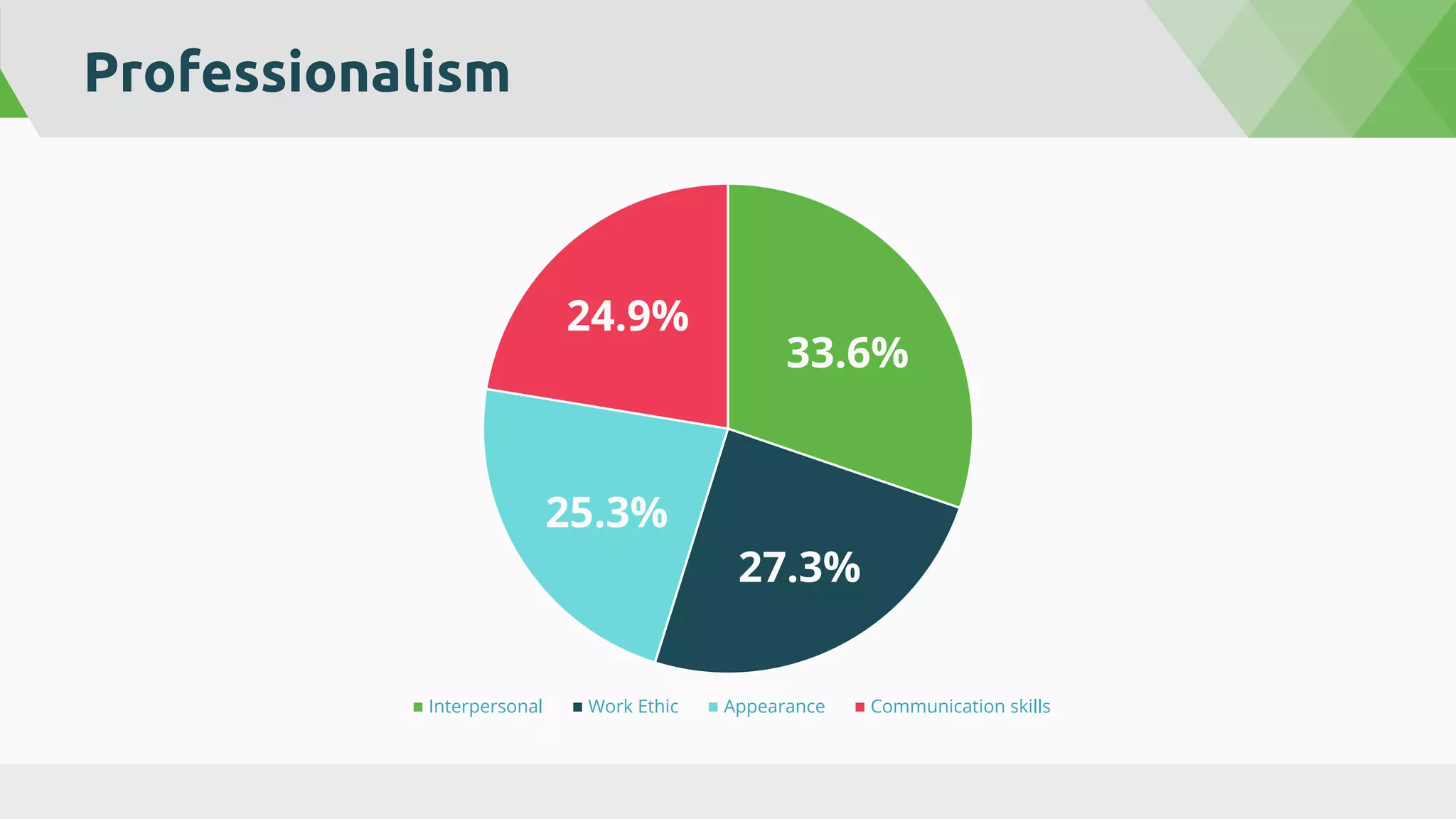
Professionalism
Interpersonal Work Ethic Appearance Communication skills
33.6%
27.3%
25.3%
24.9%
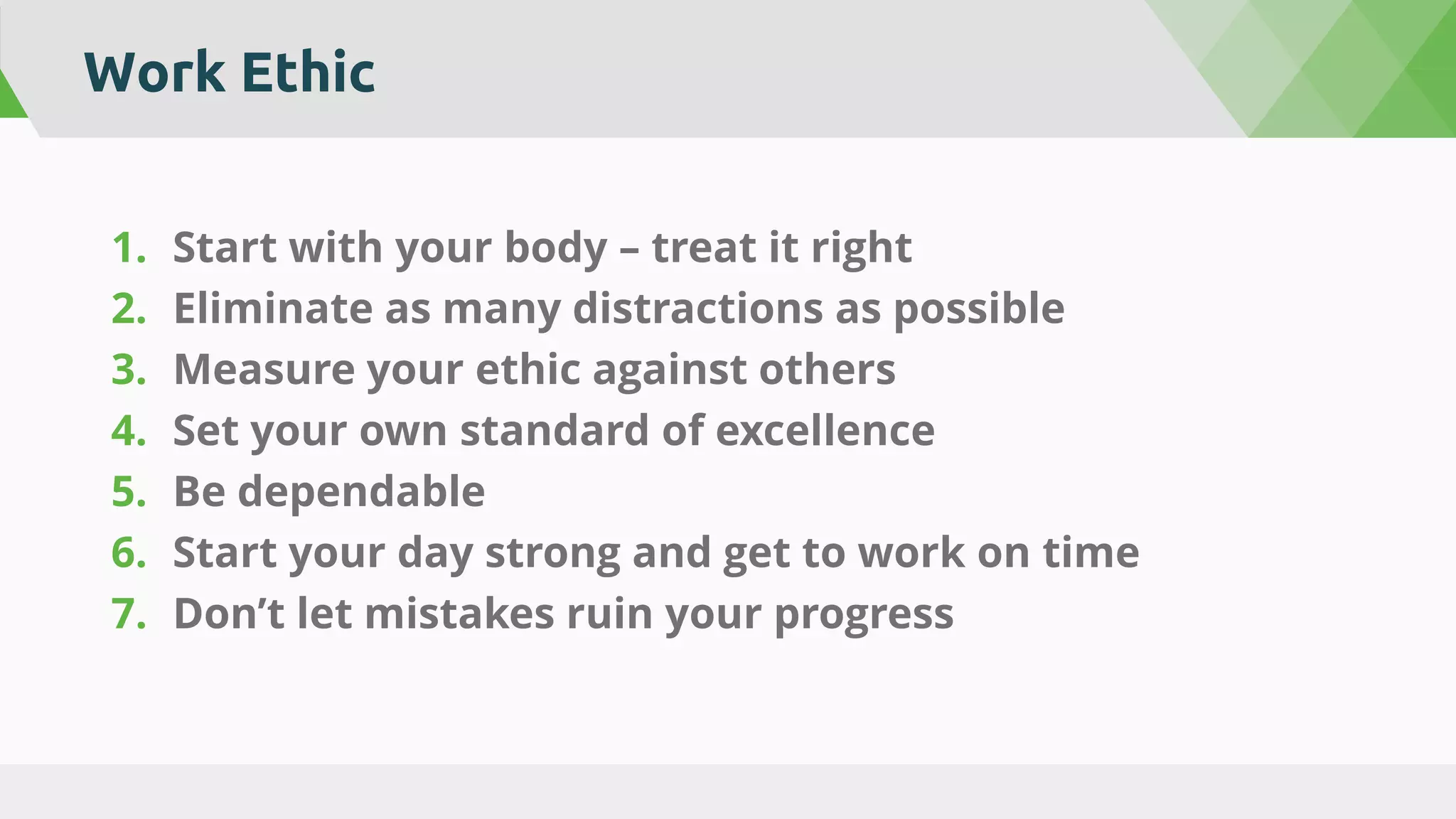
Work Ethic
1. Start with your body – treat it right
2. Eliminate as many distractions as possible
3. Measure your ethic against others
4. Set your own standard of excellence
5. Be dependable
6. Start your day strong and get to work on time
7. Don’t let mistakes ruin your progress
Appearance
“Dress for the new position you have.”
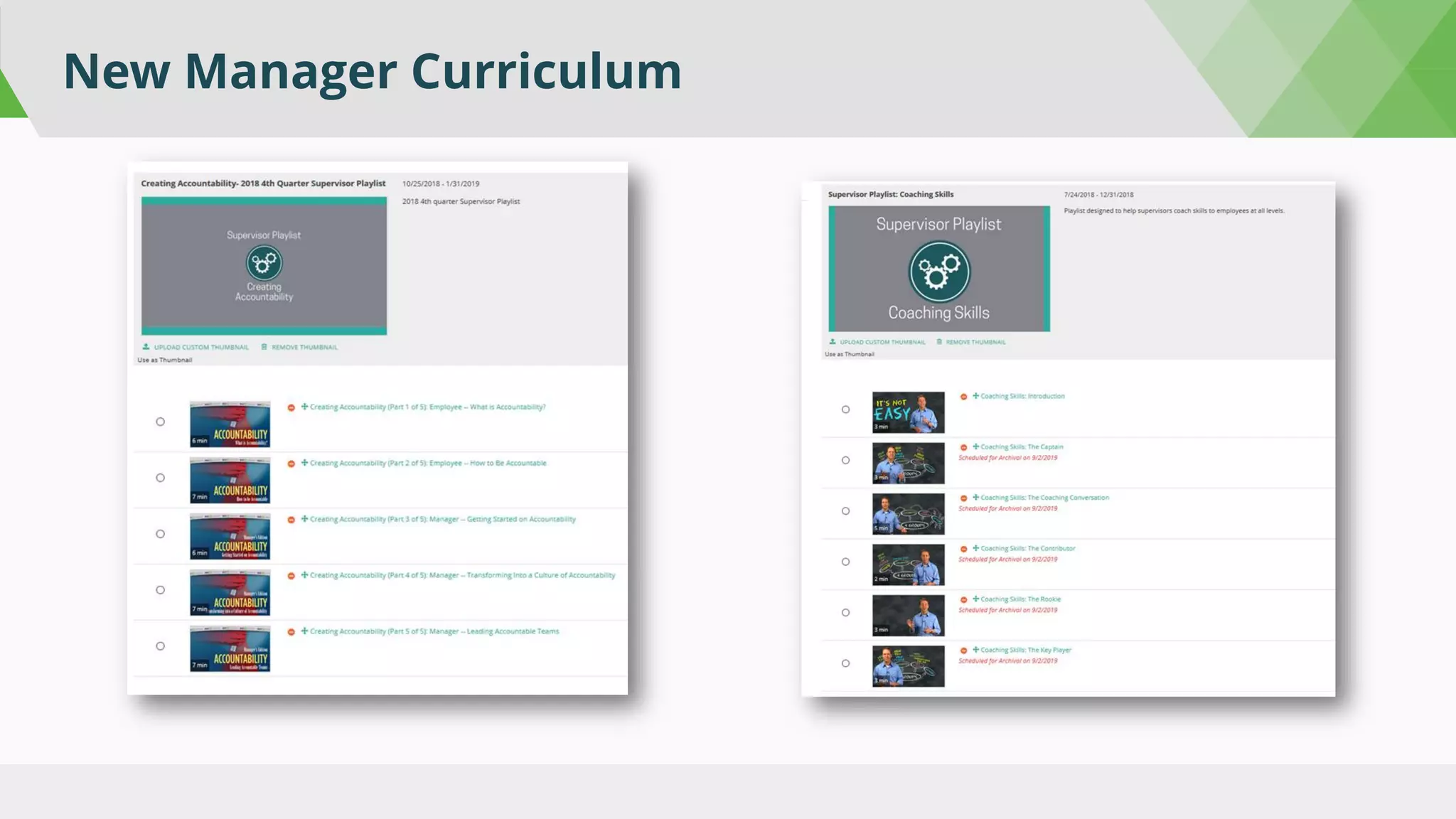
New Manager Curriculum
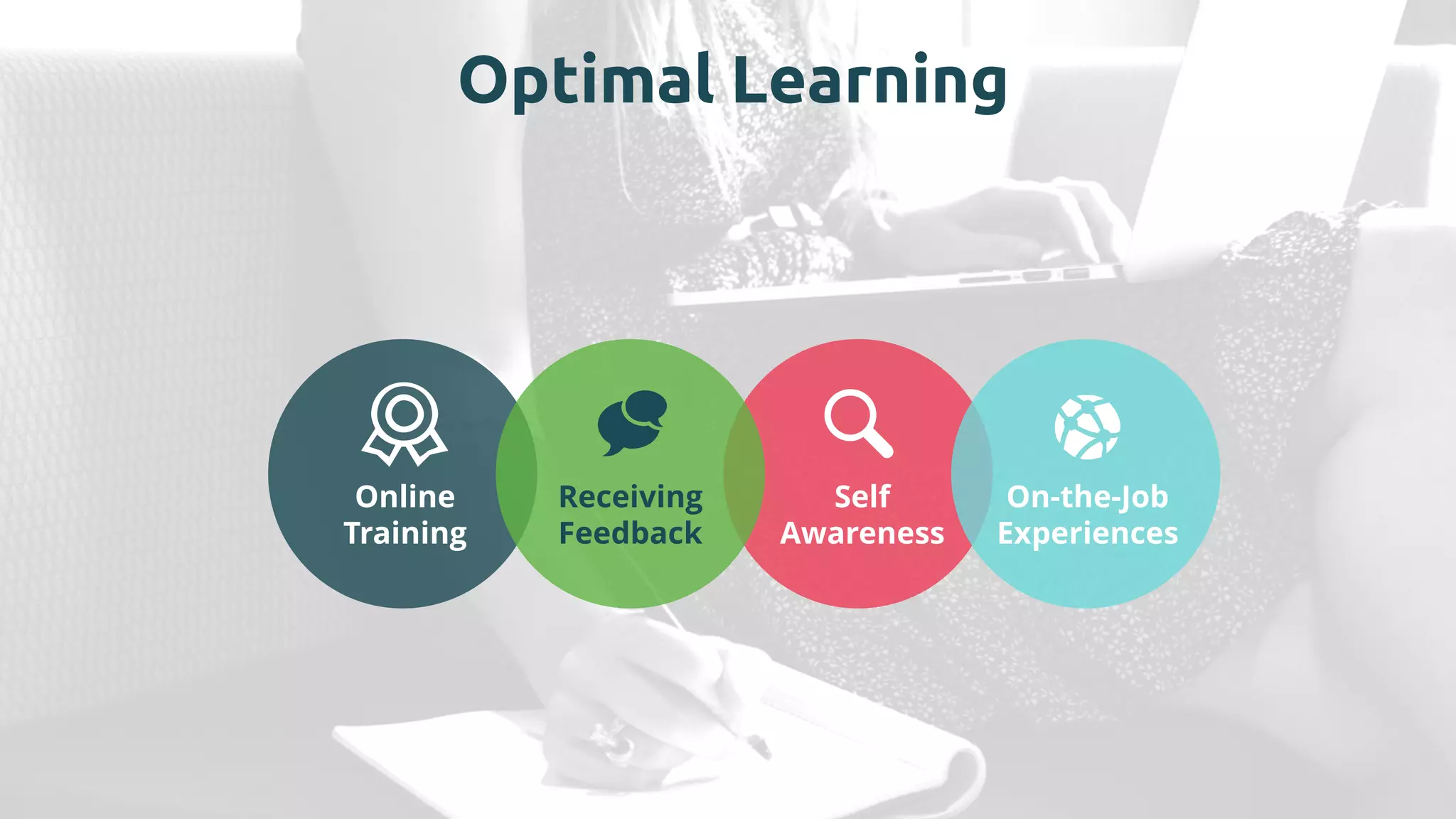
Optimal Learning
Online
Training
Receiving
Feedback
Self
Awareness
On-the-Job
Experiences
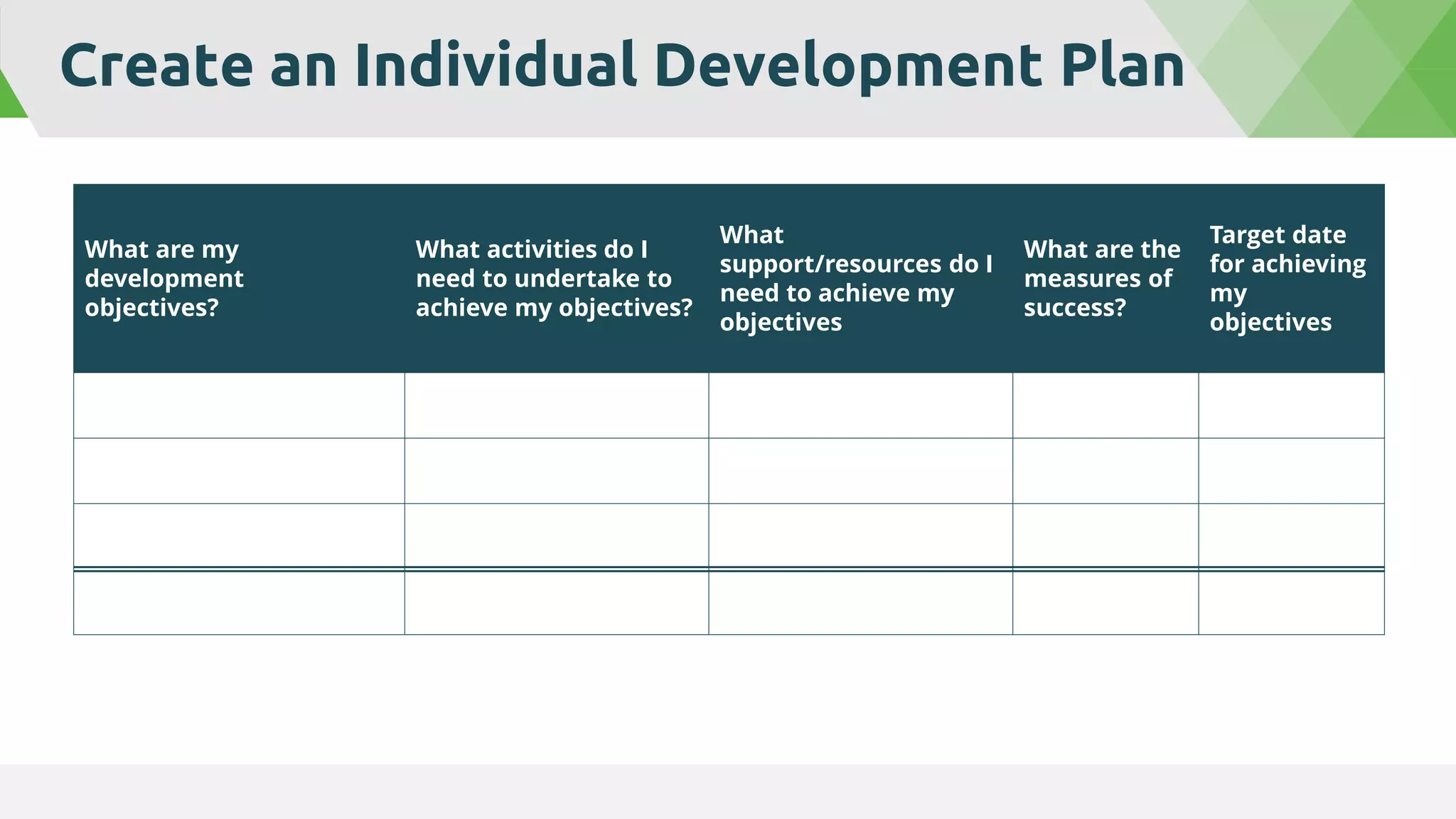
What are my
development
objectives?
What activities do I
need to undertake to
achieve my objectives?
What
support/resources do I
need to achieve my
objectives
What are the
measures of
success?
Target date
for achieving
my
objectives
Create an Individual Development Plan
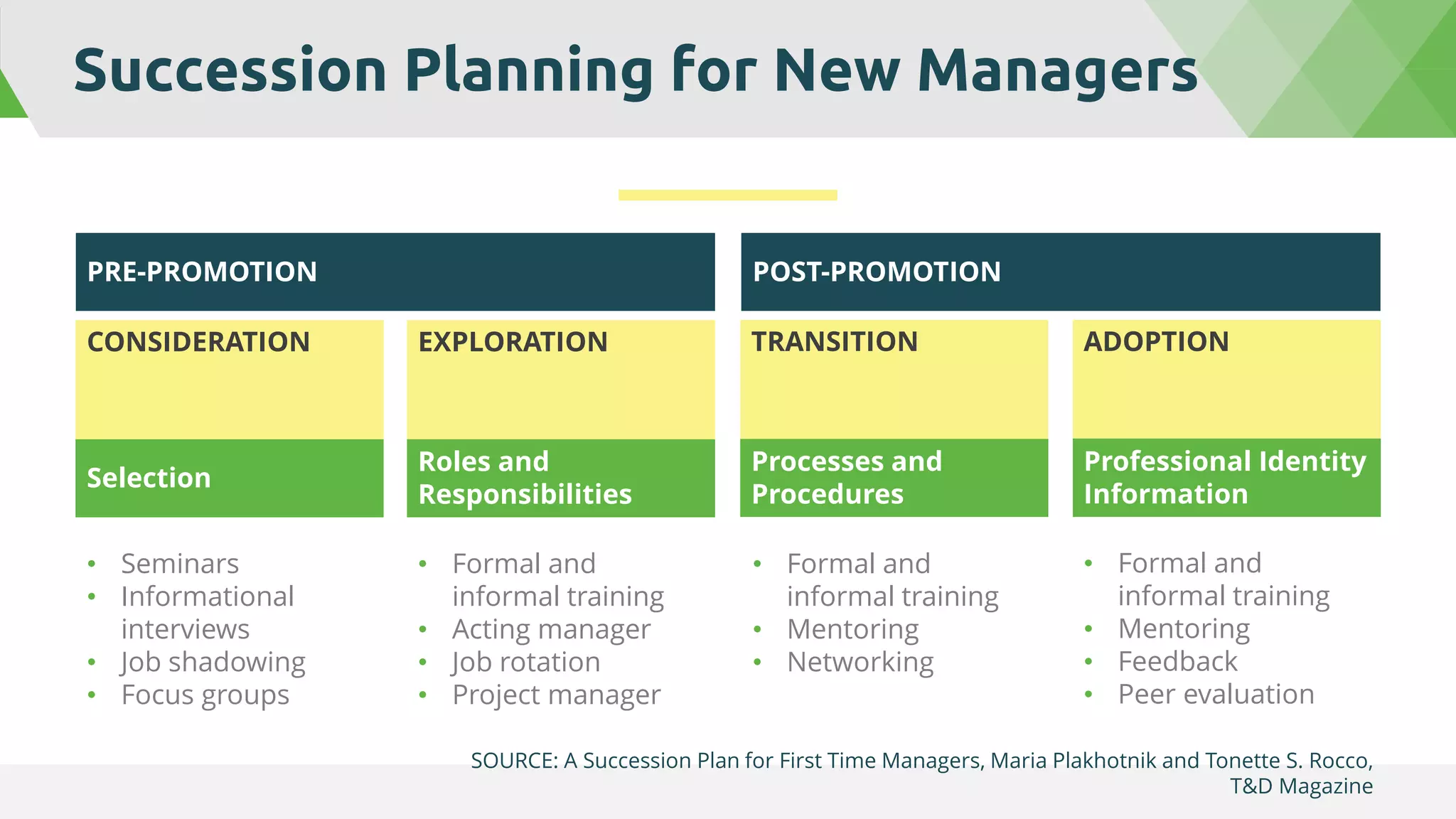
Succession Planning for New Managers
CONSIDERATION EXPLORATION TRANSITION ADOPTION
• Seminars
• Informational
interviews
• Job shadowing
• Focus groups
Selection
• Formal and
informal training
• Acting manager
• Job rotation
• Project manager
• Formal and
informal training
• Mentoring
• Networking
• Formal and
informal training
• Mentoring
• Feedback
• Peer evaluation
Roles and
Responsibilities
Processes and
Procedures
Professional Identity
Information
PRE-PROMOTION POST-PROMOTION
SOURCE: A Succession Plan for First Time Managers, Maria Plakhotnik and Tonette S. Rocco,
T&D Magazine
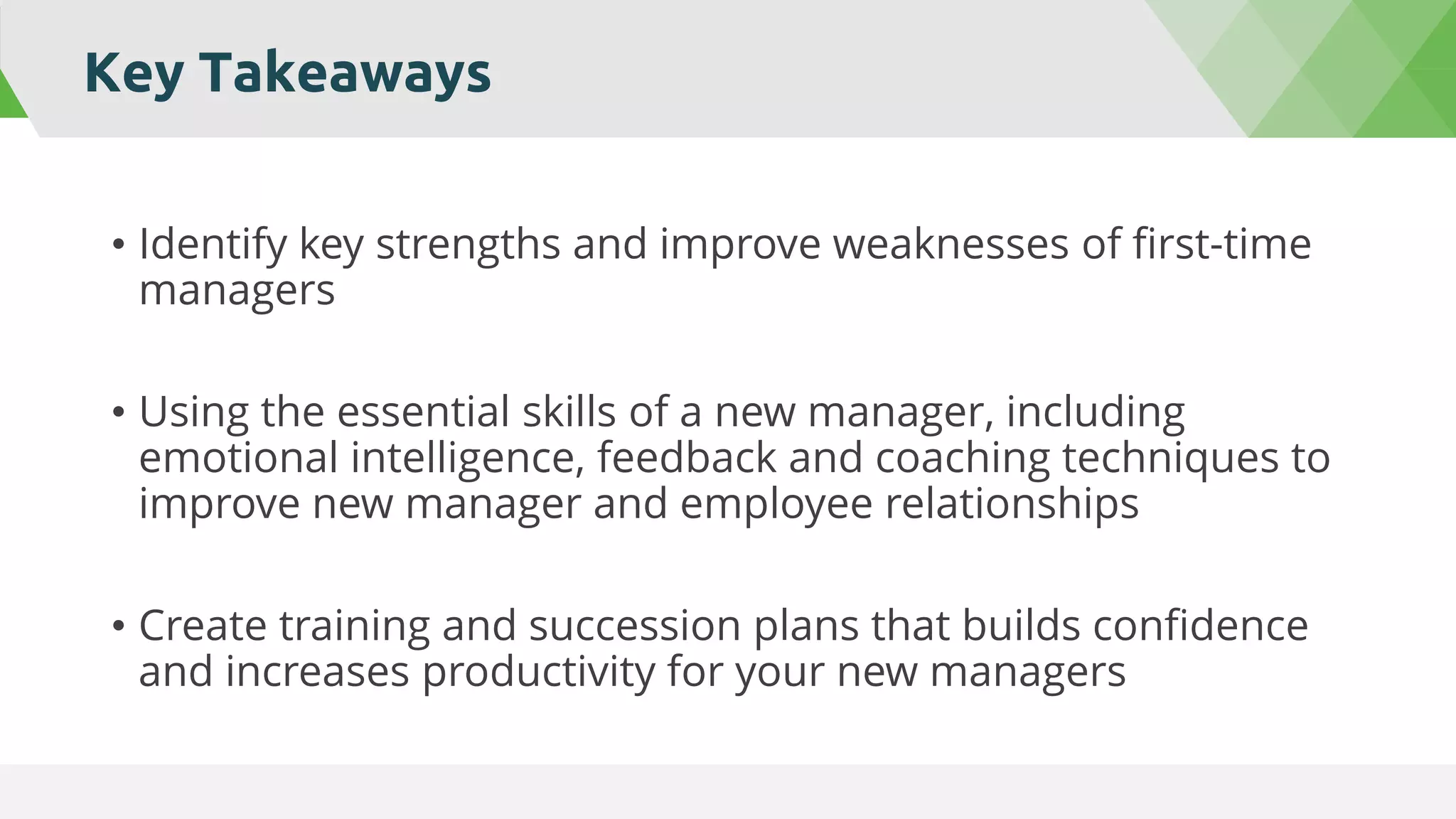
Key Takeaways
• Identify key strengths and improve weaknesses of first-time
managers
• Using the essential skills of a new manager, including
emotional intelligence, feedback and coaching techniques to
improve new manager and employee relationships
• Create training and succession plans that builds confidence
and increases productivity for your new managers
Questions?
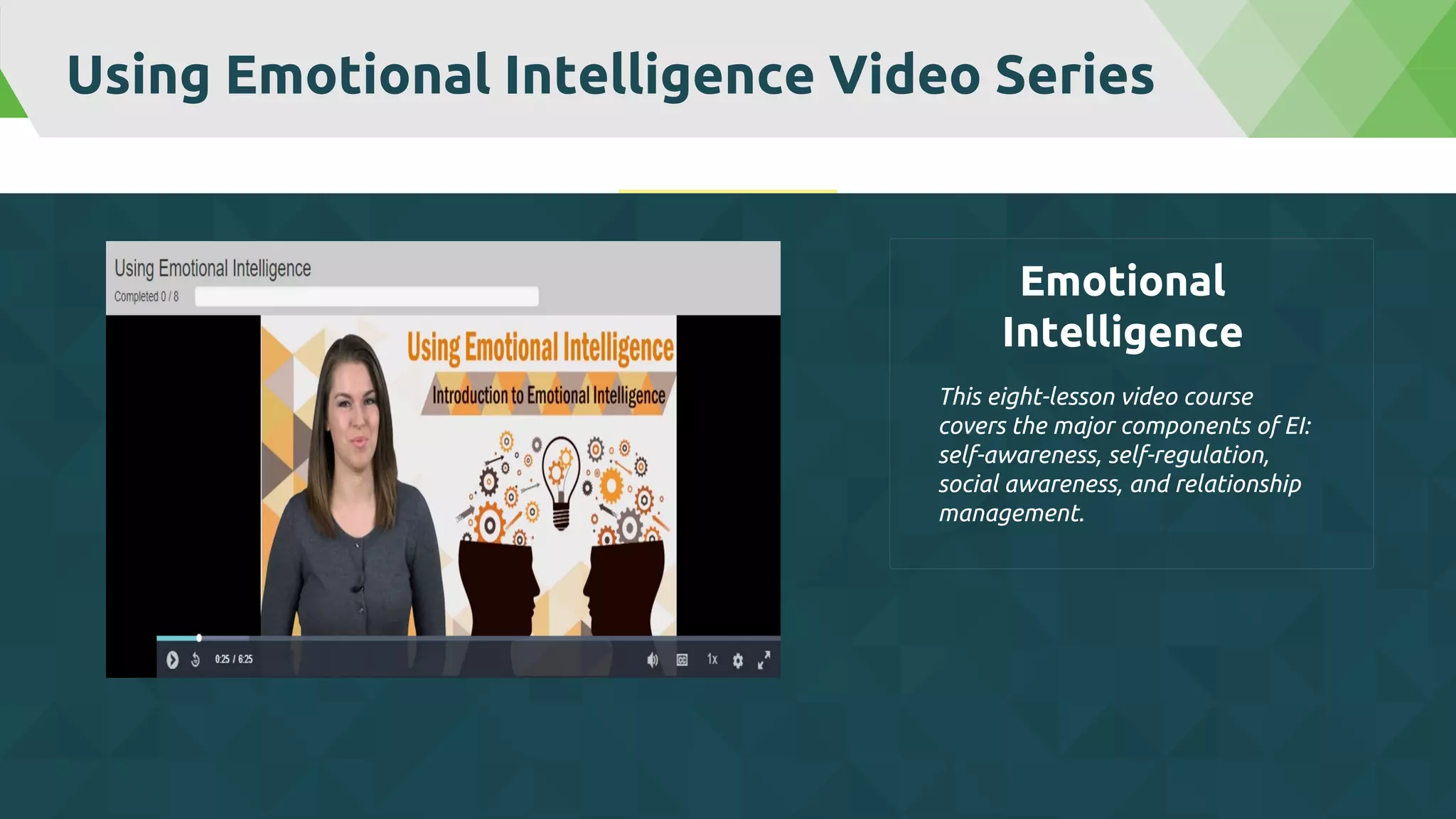
Using Emotional Intelligence Video Series
This eight-lesson video course
covers the major components of EI:
self-awareness, self-regulation,
social awareness, and relationship
management.
Emotional
Intelligence
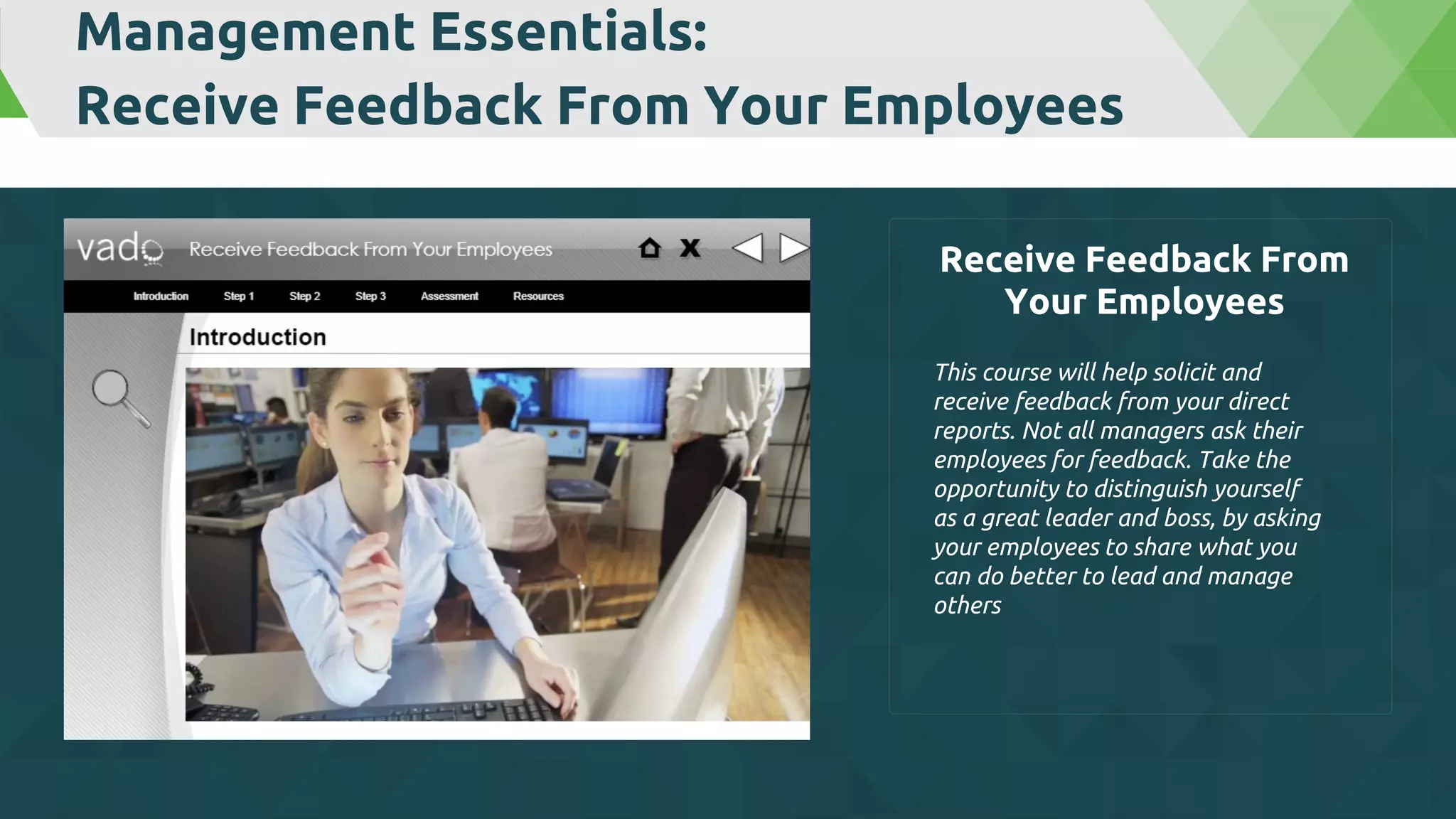
Management Essentials:
Receive Feedback From Your Employees
This course will help solicit and
receive feedback from your direct
reports. Not all managers ask their
employees for feedback. Take the
opportunity to distinguish yourself
as a great leader and boss, by asking
your employees to share what you
can do better to lead and manage
others
Receive Feedback From
Your Employees
Thank you for attending!
Katie Miller
Marketing Specialist
BizLibrary
Libby Mullen
Learning & Development Manager
BizLibrary

From Peer to Leader: How to Develop Your First-Time Managers

  • 2.
    Presenting Today Libby Mullen Learning& Development Manager BizLibrary Katie Miller Marketing Specialist BizLibrary
  • 3.
  • 5.
    More than 50%of new managers fail in their first two years. - Corporate Executive Board
  • 6.
    POLL QUESTION What bestdescribes you? A. I’m an HR professional thinking about this organizationally.​ B. I lead new supervisors and want to help them succeed.​ C. I am a new supervisor/leader – and have been in the role for less than 6 months.​ D. I am a new supervisor/leader and have been for more than 6 months.​ E. Other – let us know in the group chat!
  • 7.
    How would youdescribe your current training for new managers and supervisors? A. Fantastic! — A process-driven, blended approach with targeted learning and competencies.​ B. Good — we have a formal process and program, but I’m looking for some ideas for improvement.​ C. Just getting started — we don’t have a formal program in place, but usually cover the basics.​ D. Non-existent — We throw them in and hope they figure it out. POLL QUESTION
  • 8.
    Today, You’ll Learn: •How to identify key strengths and improve weaknesses of first-time managers • Unique ways to improve the relationship of new managers and their employees through emotional intelligence development and coaching techniques • How to create a training plan that builds confidence and increases productivity for your new managers
  • 9.
    “You’ve got toget clear in your head that you’re in a new role, you’ve got to look at the world differently, and you’ve got to try new things.” - Kevin Eikenberry, Author of Bud to Boss
  • 10.
    Questions for Managersto Ask Themselves • Why you were promoted? • How you can use your strengths to find success? • What does your success will look like? • How are you going to develop a mindset that is geared towards your success?
  • 11.
    Self Vs. Others •Empathy • Organizational awareness • Emotional self-awareness • Influence • Inspirational leadership • Coach and mentor • Conflict management • Teamwork • Emotional self-control • Adaptability • Achievement orientation • Positive outlook SELF AWARENESS SOCIAL AWARENESS SELF MANAGEMENT RELATIONSHIP MANAGEMENT SELF OTHERS ACTIONSAWARENESS
  • 12.
    1. Research indicates“great” managers listen well, motivate others, and consistently make good decisions. Do you see these traits in your manager? 2. Research indicates “great” managers are passionate about their work and compassionate toward others. Do you see these traits in your manager? 3. What would you recommend your manager keep doing? 4. What would you recommend your manager change about his or her approach to management? 5. What could your manager do to make your work experience more meaningful for you personally? 6. Do you receive an adequate level of feedback from your manager related to your work performance? 7. Does your manager have a solid grasp on the business as a whole beyond just his or her role or department? 8. Does your manager communicate individual and team objectives clearly?
  • 13.
    1. Research indicates“great” managers listen well, motivate others, and consistently make good decisions. Do you see these traits in your manager? 2. Research indicates “great” managers are passionate about their work and compassionate toward others. Do you see these traits in your manager? 3. What would you recommend your manager keep doing? 4. What would you recommend your manager change about his or her approach to management? Open-ended questions Defined questions
  • 14.
    5. What couldyour manager do to make your work experience more meaningful for you personally? 6. Do you receive an adequate level of feedback from your manager related to your work performance? 7. Does your manager have a solid grasp on the business beyond just his or her role or department? 8. Does your manager communicate individual and team objectives clearly? Relationship questions Communication and feedback questions
  • 15.
    6 Top Challengesof New Managers Balancing individual job responsibilities with time spent overseeing others Supervising friends or former peers Motivating the team Prioritizing projects Meeting higher performance expectations Inspiring unmotivated employees
  • 16.
    What to Expect,and How to Overcome Balancing individual job responsibilities with time spent overseeing others Supervising friends or former peers Motivating the team
  • 17.
    Six Keys toCultivate Employee Engagement 1. Know the importance of their role: recognized & reward. 2. Have a good relationship with their coworkers. 3. Have opportunities to use their strengths. 4. Have a good relationship with their immediate supervisor (that’s you!) 5. Believe their work contributes to the company’s mission. 6. Have autonomy and independence (i.e. don’t micromanage) Source: https://www.shrm.org/ResourcesAndTools/business-solutions/Documents/2015-job-satisfaction-and-engagement-report.pdf
  • 18.
    What to Expect,and How to Overcome Prioritizing projects Meeting higher performance expectations Inspiring unmotivated employees
  • 19.
    Essential Skills ofa Successful Manager • Emotional Intelligence • Managing Relationships • Overcoming the Threat of Favoritism • Earning Respect from Your Reports • Coaching & Feedback • Professionalism • Work Ethic • Appearance
  • 20.
    Emotional Intelligence • Delegation •Performance • Listening • Coaching • Leadership • Strategic Thinking
  • 21.
  • 22.
  • 23.
    Earning Respect fromYour Reports “Respect is something that must be earned. It is not awarded automatically when someone gets promoted to manager or gets a little gray at the temples. Managers earn respect when they are respectful to others, as well as when they demonstrate trustworthiness, credibility, and a healthy dose of humanity.” – Lisa Parker, author of Managing the Moment: A Leader’s Guide to Building Executive Presence One Interaction at a Time
  • 24.
    Coaching & Feedback Organizationswith senior leaders who coach effectively and frequently IMPROVE BUSINESS RESULTS BY 21% 21% Top Missing Skills in Mid-Level Leaders 1. Coaching 2. Performance Appraisal​ 3. Developing Others ​ 4. Managing Change​ 5. Communications​ 6. Business Acumen SOURCE: Bersin by Deloitte
  • 25.
    • Is specificand targeted • Includes both positive reinforcement and constructive criticism • Regular--you must stick to consistent check-ins to make sure employees are on track with their development. Meaningful feedback: “Employees who receive daily feedback from their managers are 3x more likely to be engaged than those who give feedback once a year or less” “When managers provide meaningful feedback to employees, those employees are 3.5x more likely to be engaged”
  • 26.
    Professionalism Interpersonal Work EthicAppearance Communication skills 33.6% 27.3% 25.3% 24.9%
  • 27.
    Work Ethic 1. Startwith your body – treat it right 2. Eliminate as many distractions as possible 3. Measure your ethic against others 4. Set your own standard of excellence 5. Be dependable 6. Start your day strong and get to work on time 7. Don’t let mistakes ruin your progress
  • 28.
    Appearance “Dress for thenew position you have.”
  • 29.
  • 30.
  • 31.
    What are my development objectives? Whatactivities do I need to undertake to achieve my objectives? What support/resources do I need to achieve my objectives What are the measures of success? Target date for achieving my objectives Create an Individual Development Plan
  • 32.
    Succession Planning forNew Managers CONSIDERATION EXPLORATION TRANSITION ADOPTION • Seminars • Informational interviews • Job shadowing • Focus groups Selection • Formal and informal training • Acting manager • Job rotation • Project manager • Formal and informal training • Mentoring • Networking • Formal and informal training • Mentoring • Feedback • Peer evaluation Roles and Responsibilities Processes and Procedures Professional Identity Information PRE-PROMOTION POST-PROMOTION SOURCE: A Succession Plan for First Time Managers, Maria Plakhotnik and Tonette S. Rocco, T&D Magazine
  • 33.
    Key Takeaways • Identifykey strengths and improve weaknesses of first-time managers • Using the essential skills of a new manager, including emotional intelligence, feedback and coaching techniques to improve new manager and employee relationships • Create training and succession plans that builds confidence and increases productivity for your new managers
  • 34.
  • 35.
    Using Emotional IntelligenceVideo Series This eight-lesson video course covers the major components of EI: self-awareness, self-regulation, social awareness, and relationship management. Emotional Intelligence
  • 36.
    Management Essentials: Receive FeedbackFrom Your Employees This course will help solicit and receive feedback from your direct reports. Not all managers ask their employees for feedback. Take the opportunity to distinguish yourself as a great leader and boss, by asking your employees to share what you can do better to lead and manage others Receive Feedback From Your Employees
  • 37.
    Thank you forattending! Katie Miller Marketing Specialist BizLibrary Libby Mullen Learning & Development Manager BizLibrary