FACULTY OF EDUCATION
ELZA QAZI CAMPUS
PREPAIRED BY: SAIRA NOOR MUHAMMAD
SEAT # 46
TOPIC: CORRELATION
ASSIGNED BY
DR.AMJAD ALI ARAIN
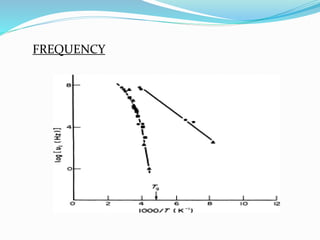
FREQUENCY
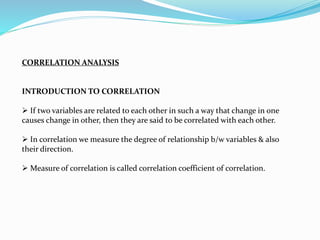
CORRELATION ANALYSIS
INTRODUCTION TO CORRELATION
 If two variables are related to each other in such a way that change in one
causes change in other, then they are said to be correlated with each other.
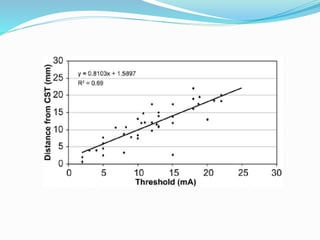
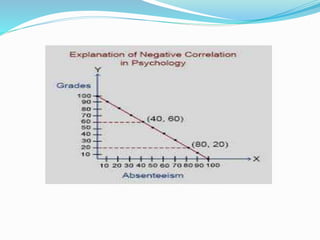
 In correlation we measure the degree of relationship b/w variables & also
their direction.
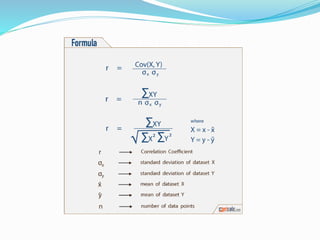
 Measure of correlation is called correlation coefficient of correlation.
Learning Objectives
After reading this chapter, you should be able to:
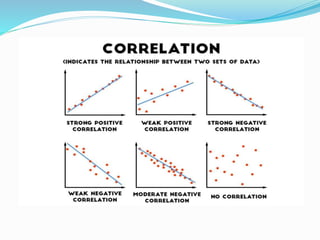
Identify the direction and strength of a correlation between two factors.
Compute and interpret the Pearson correlation coefficient and test for
significance.
Compute and interpret the coefficient of determination.
Define homoscedasticity, linearity, and normality and explain why each
assumption is necessary to appropriately interpret a significant correlation
coefficient.
Explain how causality, outliers, and restriction of range can limit the
interpretation of a significant correlation coefficient.
Compute and interpret the Spearman correlation coefficient and test for
significance.
Compute and interpret the point-biserial correlation coefficient and test for
significance.
Compute and interpret the phi correlation coefficient and test for
significance.
Convert the value of r to a t statistic and χ2 statistic.
Summarize the results of a correlation coefficient in APA format.
Correlation
Correlation

Correlation

  • 1.
    FACULTY OF EDUCATION ELZAQAZI CAMPUS PREPAIRED BY: SAIRA NOOR MUHAMMAD SEAT # 46 TOPIC: CORRELATION ASSIGNED BY DR.AMJAD ALI ARAIN
  • 3.
  • 4.
    CORRELATION ANALYSIS INTRODUCTION TOCORRELATION  If two variables are related to each other in such a way that change in one causes change in other, then they are said to be correlated with each other.  In correlation we measure the degree of relationship b/w variables & also their direction.  Measure of correlation is called correlation coefficient of correlation.
  • 9.
    Learning Objectives After readingthis chapter, you should be able to: Identify the direction and strength of a correlation between two factors. Compute and interpret the Pearson correlation coefficient and test for significance. Compute and interpret the coefficient of determination. Define homoscedasticity, linearity, and normality and explain why each assumption is necessary to appropriately interpret a significant correlation coefficient. Explain how causality, outliers, and restriction of range can limit the interpretation of a significant correlation coefficient. Compute and interpret the Spearman correlation coefficient and test for significance. Compute and interpret the point-biserial correlation coefficient and test for significance. Compute and interpret the phi correlation coefficient and test for significance. Convert the value of r to a t statistic and χ2 statistic. Summarize the results of a correlation coefficient in APA format.

Editor's Notes

  • #2 Faculty of education elsa qazi campus prepaired by: Saira Muhammad noor seat no : topic : assigned by Dr amjad ali arain