Wine Production
• BY
• Shubham Dubey
• Roll no. 03
• TyBSc (Microbiology)
INTRODUCTION
• Winemaking, or
vinification, is the
production of wine.
• Although most wine
is made from
grapes.
• Mead is a wine that
is made with honey
being the primary
ingredient after
water.
Red &
White
Wine
Production
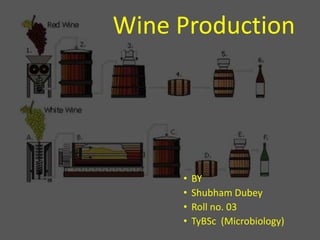
• One of the first things they realized
was that red wine
production required that the grapes
be fermented in contact with their
skins. This gives the wine color and
body. In contrast, most white wine
production does not occur in contact
with the grape skins. Whites are
valued for their fresh fruit
characteristics, and skin contact
would impart unwanted bitter
tannins.
Wine Production :
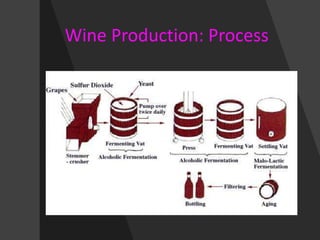
Main Steps
• Viticulture
• Harvesting
• Stemming/Crushing
• Fermentation
• Draining
• Pressing
• Mixing
• Clarification
• Aging
• Bottleing
Wine Production: Process
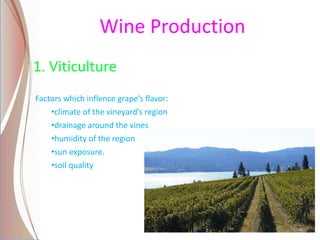
Wine Production
Factors which inflence grape’s flavor:
•climate of the vineyard’s region
•drainage around the vines
•humidity of the region
•sun exposure.
•soil quality
1. Viticulture
Wine Production
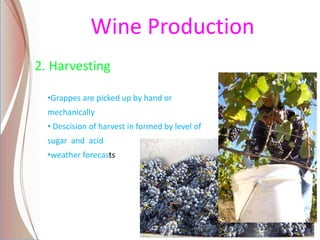
2. Harvesting
•Grappes are picked up by hand or
mechanically
• Descision of harvest in formed by level of
sugar and acid
•weather forecasts
Wine Production
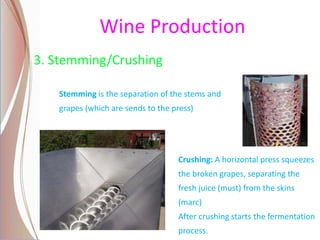
3. Stemming/Crushing
Stemming is the separation of the stems and
grapes (which are sends to the press)
Crushing: A horizontal press squeezes
the broken grapes, separating the
fresh juice (must) from the skins
(marc)
After crushing starts the fermentation
process.
Wine Production
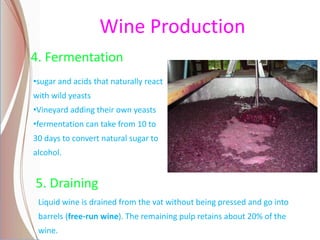
4. Fermentation
•sugar and acids that naturally react
with wild yeasts
•Vineyard adding their own yeasts
•fermentation can take from 10 to
30 days to convert natural sugar to
alcohol.
5. Draining
Liquid wine is drained from the vat without being pressed and go into
barrels (free-run wine). The remaining pulp retains about 20% of the
wine.
Wine Production
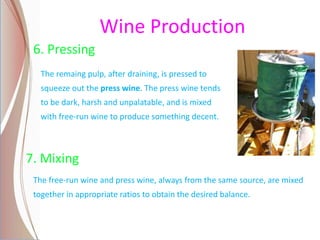
6. Pressing
The remaing pulp, after draining, is pressed to
squeeze out the press wine. The press wine tends
to be dark, harsh and unpalatable, and is mixed
with free-run wine to produce something decent.
7. Mixing
The free-run wine and press wine, always from the same source, are mixed
together in appropriate ratios to obtain the desired balance.
Wine Production
8. Clarification
Clarification is the step of stabilisation of fermentation.
During clarification all remaining solids are removed from the fermented
liquid.
Clarification done in numerous ways:
•fining, a process that calls for the addition of substances that cause the
solids in the liquid to adhere to one another and sink to the bottom of
the vat
•running the liquid through coarse and fine filters
•siphoning the liquid off the top of the fermenting vats after the solids
have settled to the bottom
Wine Production
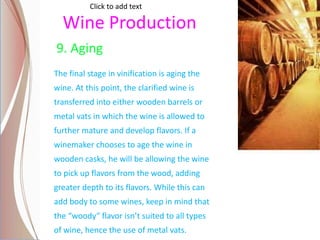
9. Aging
The final stage in vinification is aging the
wine. At this point, the clarified wine is
transferred into either wooden barrels or
metal vats in which the wine is allowed to
further mature and develop flavors. If a
winemaker chooses to age the wine in
wooden casks, he will be allowing the wine
to pick up flavors from the wood, adding
greater depth to its flavors. While this can
add body to some wines, keep in mind that
the “woody” flavor isn’t suited to all types
of wine, hence the use of metal vats.
Click to add text
Wine Production
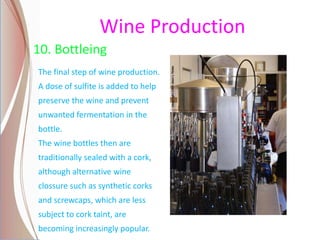
10. Bottleing
The final step of wine production.
A dose of sulfite is added to help
preserve the wine and prevent
unwanted fermentation in the
bottle.
The wine bottles then are
traditionally sealed with a cork,
although alternative wine
clossure such as synthetic corks
and screwcaps, which are less
subject to cork taint, are
becoming increasingly popular.
Crushing and
primary
(alcoholic)
fermentation
• Crushing is the process
when gently squeezing the
berries and breaking the
skins to start to liberate
the contents of the
berries.
• the harvested grapes are
sometimes crushed by
trampling them barefoot or
by the use of inexpensive
small scale crushers.
• larger wineries, a
mechanical
crusher/destemmer is
used.
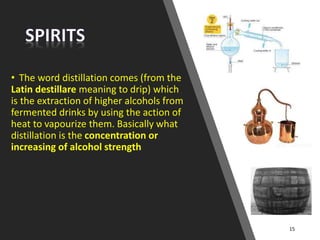
• The word distillation comes (from the
Latin destillare meaning to drip) which
is the extraction of higher alcohols from
fermented drinks by using the action of
heat to vapourize them. Basically what
distillation is the concentration or
increasing of alcohol strength
15
PRODUCTION LINE
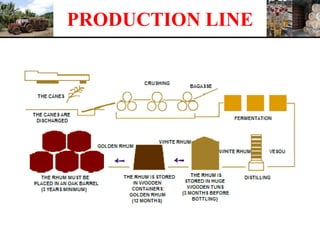
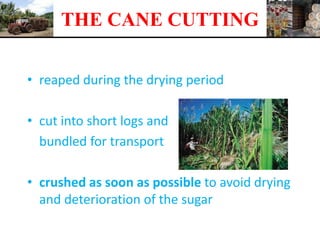
• reaped during the drying period
• cut into short logs and
bundled for transport
• crushed as soon as possible to avoid drying
and deterioration of the sugar
THE CANE CUTTING
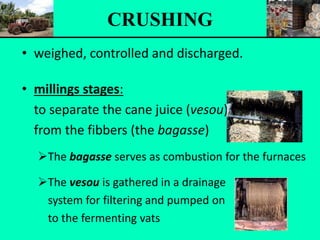
• weighed, controlled and discharged.
• millings stages:
to separate the cane juice (vesou)
from the fibbers (the bagasse)
The bagasse serves as combustion for the furnaces
The vesou is gathered in a drainage
system for filtering and pumped on
to the fermenting vats
CRUSHING
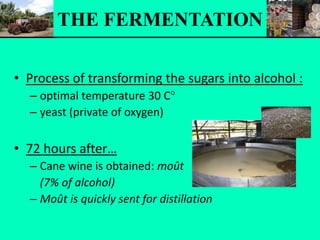
• Process of transforming the sugars into alcohol :
– optimal temperature 30 C°
– yeast (private of oxygen)
• 72 hours after…
– Cane wine is obtained: moût
(7% of alcohol)
– Moût is quickly sent for distillation
THE FERMENTATION
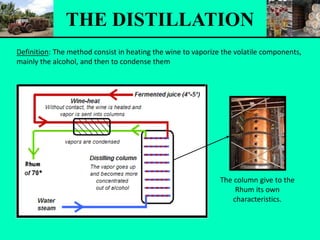
THE DISTILLATION
Definition: The method consist in heating the wine to vaporize the volatile components,
mainly the alcohol, and then to condense them
The column give to the
Rhum its own
characteristics.
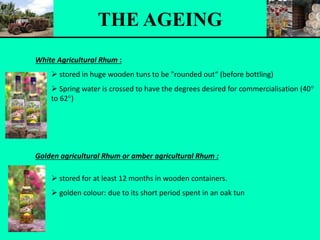
THE AGEING
White Agricultural Rhum :
 stored in huge wooden tuns to be "rounded out“ (before bottling)
 Spring water is crossed to have the degrees desired for commercialisation (40°
to 62°)
Golden agricultural Rhum or amber agricultural Rhum :
 stored for at least 12 months in wooden containers.
 golden colour: due to its short period spent in an oak tun
wine production industrial

wine production industrial

  • 1.
    Wine Production • BY •Shubham Dubey • Roll no. 03 • TyBSc (Microbiology)
  • 2.
    INTRODUCTION • Winemaking, or vinification,is the production of wine. • Although most wine is made from grapes. • Mead is a wine that is made with honey being the primary ingredient after water.
  • 3.
    Red & White Wine Production • Oneof the first things they realized was that red wine production required that the grapes be fermented in contact with their skins. This gives the wine color and body. In contrast, most white wine production does not occur in contact with the grape skins. Whites are valued for their fresh fruit characteristics, and skin contact would impart unwanted bitter tannins.
  • 4.
    Wine Production : MainSteps • Viticulture • Harvesting • Stemming/Crushing • Fermentation • Draining • Pressing • Mixing • Clarification • Aging • Bottleing
  • 5.
  • 6.
    Wine Production Factors whichinflence grape’s flavor: •climate of the vineyard’s region •drainage around the vines •humidity of the region •sun exposure. •soil quality 1. Viticulture
  • 7.
    Wine Production 2. Harvesting •Grappesare picked up by hand or mechanically • Descision of harvest in formed by level of sugar and acid •weather forecasts
  • 8.
    Wine Production 3. Stemming/Crushing Stemmingis the separation of the stems and grapes (which are sends to the press) Crushing: A horizontal press squeezes the broken grapes, separating the fresh juice (must) from the skins (marc) After crushing starts the fermentation process.
  • 9.
    Wine Production 4. Fermentation •sugarand acids that naturally react with wild yeasts •Vineyard adding their own yeasts •fermentation can take from 10 to 30 days to convert natural sugar to alcohol. 5. Draining Liquid wine is drained from the vat without being pressed and go into barrels (free-run wine). The remaining pulp retains about 20% of the wine.
  • 10.
    Wine Production 6. Pressing Theremaing pulp, after draining, is pressed to squeeze out the press wine. The press wine tends to be dark, harsh and unpalatable, and is mixed with free-run wine to produce something decent. 7. Mixing The free-run wine and press wine, always from the same source, are mixed together in appropriate ratios to obtain the desired balance.
  • 11.
    Wine Production 8. Clarification Clarificationis the step of stabilisation of fermentation. During clarification all remaining solids are removed from the fermented liquid. Clarification done in numerous ways: •fining, a process that calls for the addition of substances that cause the solids in the liquid to adhere to one another and sink to the bottom of the vat •running the liquid through coarse and fine filters •siphoning the liquid off the top of the fermenting vats after the solids have settled to the bottom
  • 12.
    Wine Production 9. Aging Thefinal stage in vinification is aging the wine. At this point, the clarified wine is transferred into either wooden barrels or metal vats in which the wine is allowed to further mature and develop flavors. If a winemaker chooses to age the wine in wooden casks, he will be allowing the wine to pick up flavors from the wood, adding greater depth to its flavors. While this can add body to some wines, keep in mind that the “woody” flavor isn’t suited to all types of wine, hence the use of metal vats. Click to add text
  • 13.
    Wine Production 10. Bottleing Thefinal step of wine production. A dose of sulfite is added to help preserve the wine and prevent unwanted fermentation in the bottle. The wine bottles then are traditionally sealed with a cork, although alternative wine clossure such as synthetic corks and screwcaps, which are less subject to cork taint, are becoming increasingly popular.
  • 14.
    Crushing and primary (alcoholic) fermentation • Crushingis the process when gently squeezing the berries and breaking the skins to start to liberate the contents of the berries. • the harvested grapes are sometimes crushed by trampling them barefoot or by the use of inexpensive small scale crushers. • larger wineries, a mechanical crusher/destemmer is used.
  • 15.
    • The worddistillation comes (from the Latin destillare meaning to drip) which is the extraction of higher alcohols from fermented drinks by using the action of heat to vapourize them. Basically what distillation is the concentration or increasing of alcohol strength 15
  • 16.
  • 17.
    • reaped duringthe drying period • cut into short logs and bundled for transport • crushed as soon as possible to avoid drying and deterioration of the sugar THE CANE CUTTING
  • 18.
    • weighed, controlledand discharged. • millings stages: to separate the cane juice (vesou) from the fibbers (the bagasse) The bagasse serves as combustion for the furnaces The vesou is gathered in a drainage system for filtering and pumped on to the fermenting vats CRUSHING
  • 19.
    • Process oftransforming the sugars into alcohol : – optimal temperature 30 C° – yeast (private of oxygen) • 72 hours after… – Cane wine is obtained: moût (7% of alcohol) – Moût is quickly sent for distillation THE FERMENTATION
  • 20.
    THE DISTILLATION Definition: Themethod consist in heating the wine to vaporize the volatile components, mainly the alcohol, and then to condense them The column give to the Rhum its own characteristics.
  • 21.
    THE AGEING White AgriculturalRhum :  stored in huge wooden tuns to be "rounded out“ (before bottling)  Spring water is crossed to have the degrees desired for commercialisation (40° to 62°) Golden agricultural Rhum or amber agricultural Rhum :  stored for at least 12 months in wooden containers.  golden colour: due to its short period spent in an oak tun