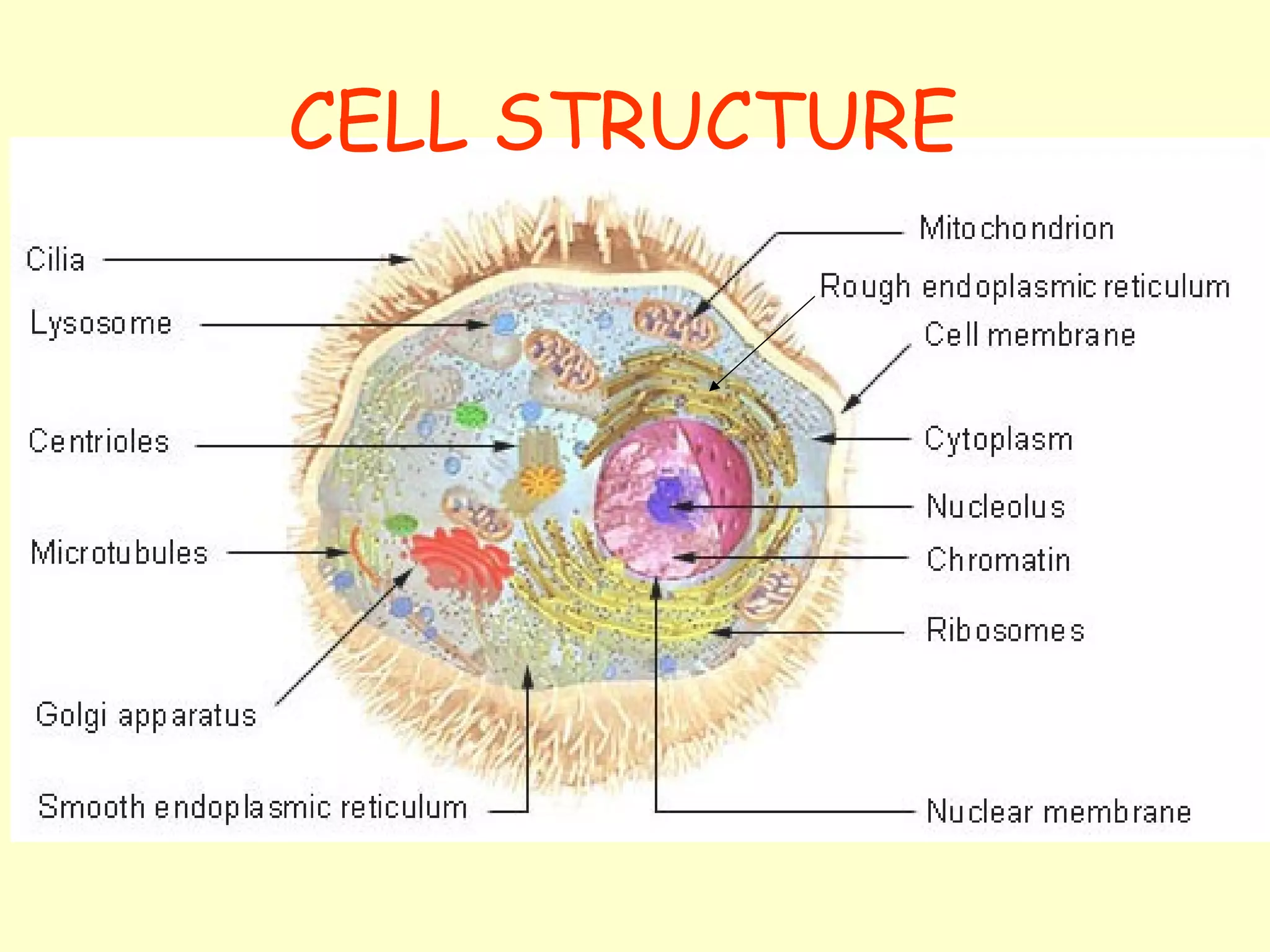
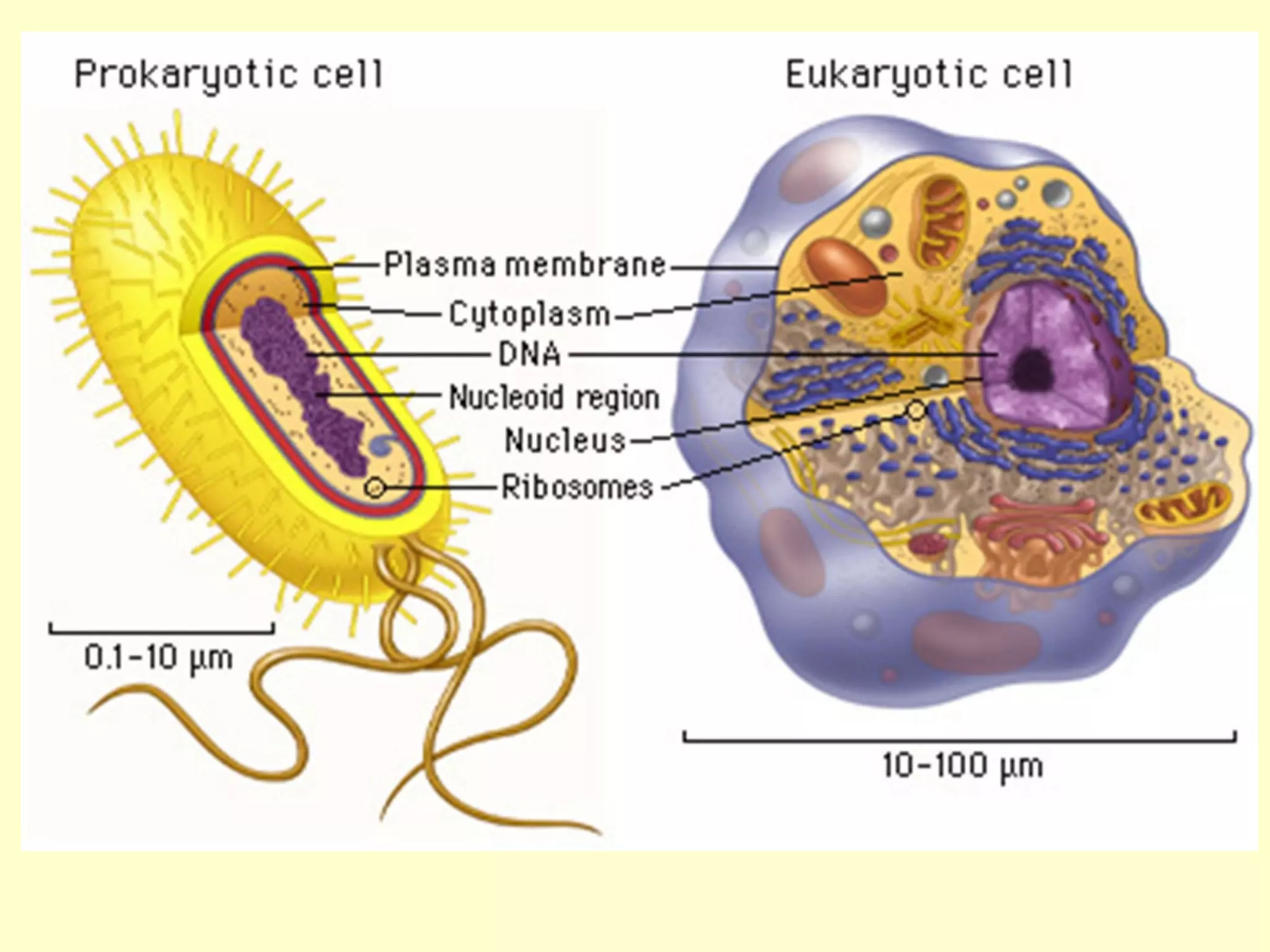
CELL STRUCTURE
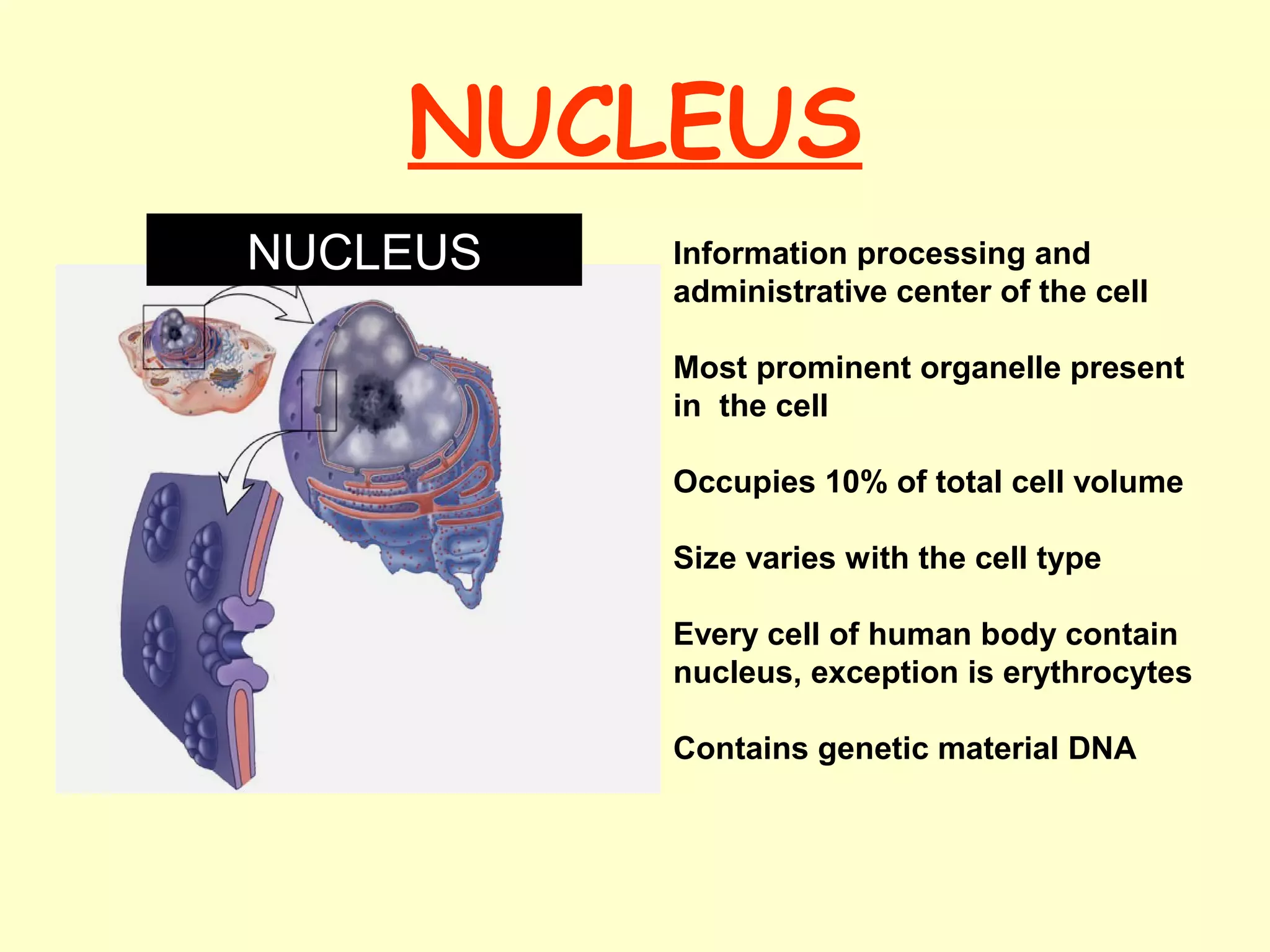
NUCLEUS Information processing and
administrative center of the cell
Most prominent organelle present
in the cell
Occupies 10% of total cell volume
Size varies with the cell type
Every cell of human body contain
nucleus, exception is erythrocytes
Contains genetic material DNA
NUCLEUS
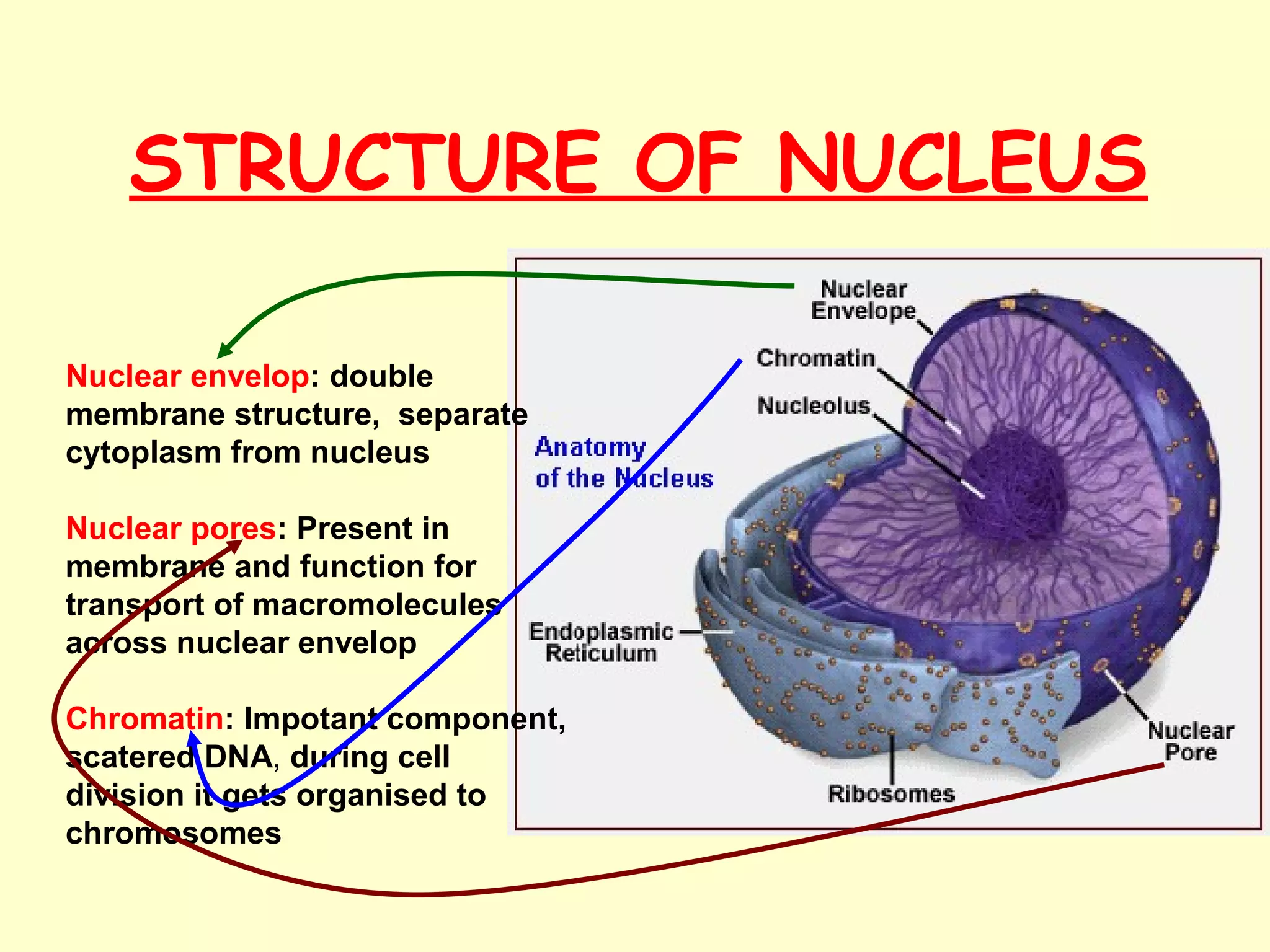
Nuclear envelop: double
membrane structure, separate
cytoplasm from nucleus
Nuclear pores: Present in
membrane and function for
transport of macromolecules
across nuclear envelop
Chromatin: Impotant component,
scatered DNA, during cell
division it gets organised to
chromosomes
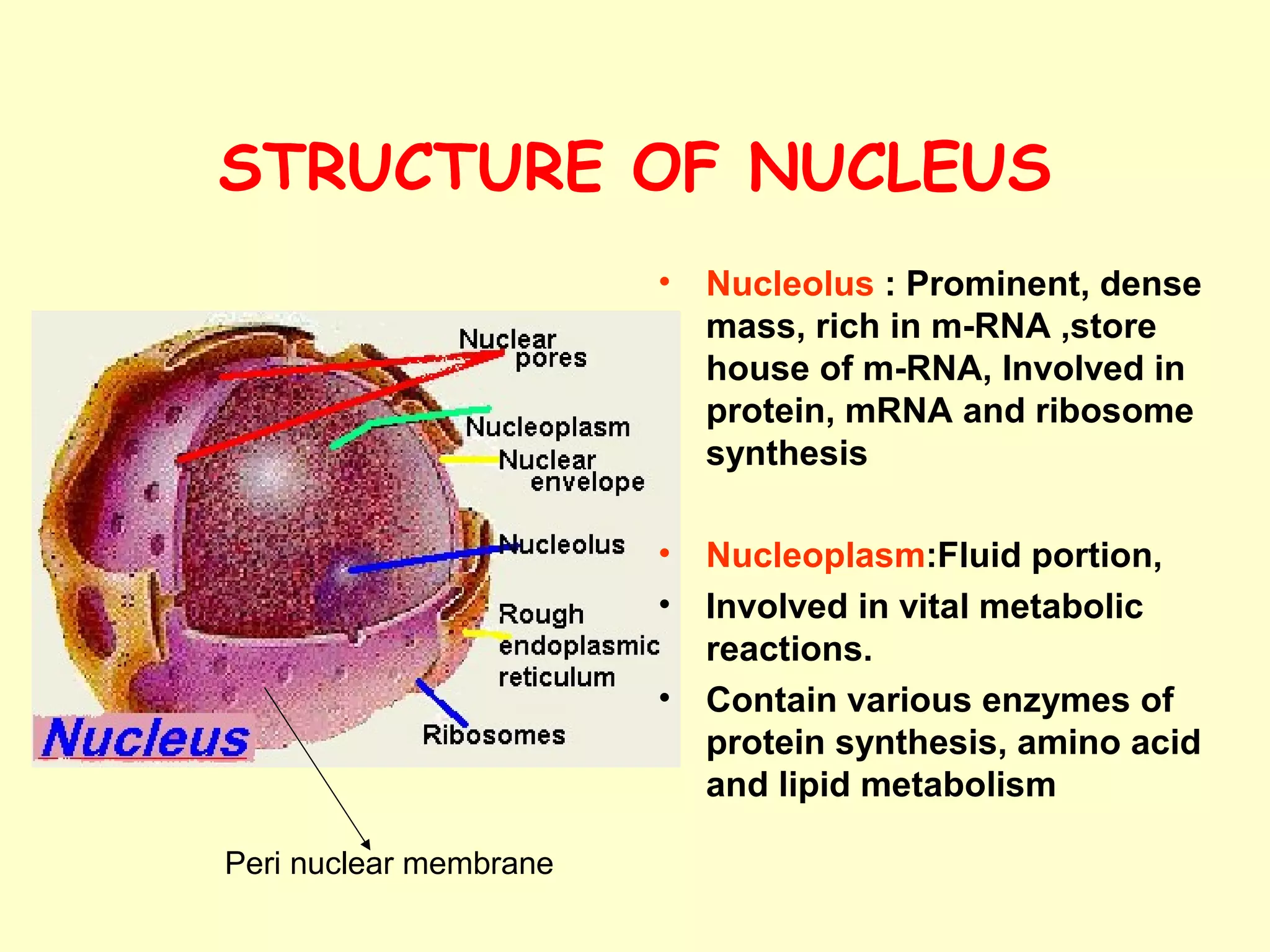
STRUCTURE OF NUCLEUS
• Nucleolus : Prominent, dense
mass, rich in m-RNA ,store
house of m-RNA, Involved in
protein, mRNA and ribosome
synthesis
• Nucleoplasm:Fluid portion,
• Involved in vital metabolic
reactions.
• Contain various enzymes of
protein synthesis, amino acid
and lipid metabolism
Peri nuclear membrane
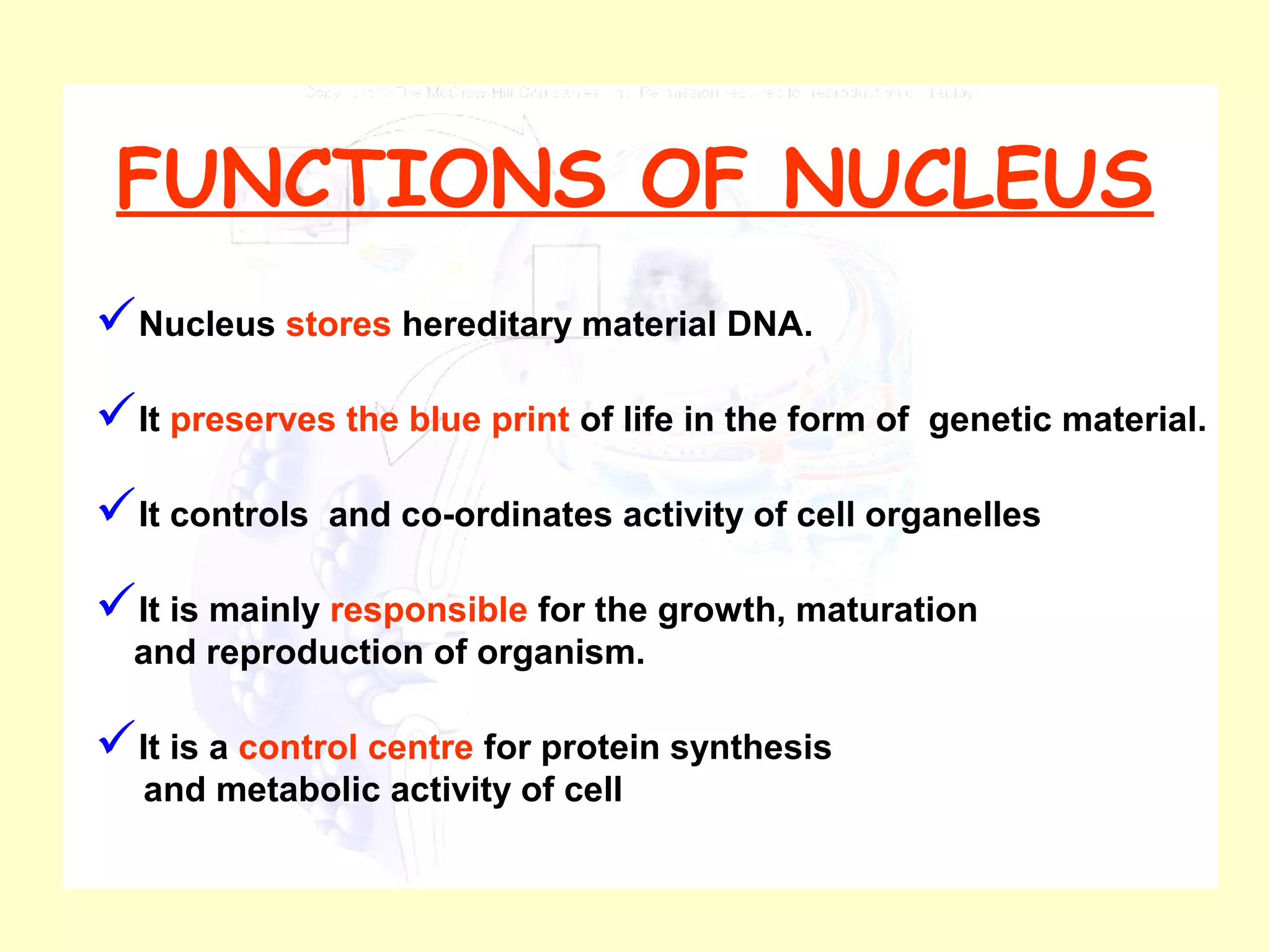
Nucleus stores hereditary material DNA.
It preserves the blue print of life in the form of genetic material.
It controls and co-ordinates activity of cell organelles
It is mainly responsible for the growth, maturation
and reproduction of organism.
It is a control centre for protein synthesis
and metabolic activity of cell
FUNCTIONS OF NUCLEUS
 2nd
largest organelle of cell
 Spherical, oval or rod shaped
 0.5 -- 1.0 µ diameter and 1 - 10 µ in length
 Number varies from cell to cell
 They are different as they contain their own DNA
MITOCHONDRIA
power generator
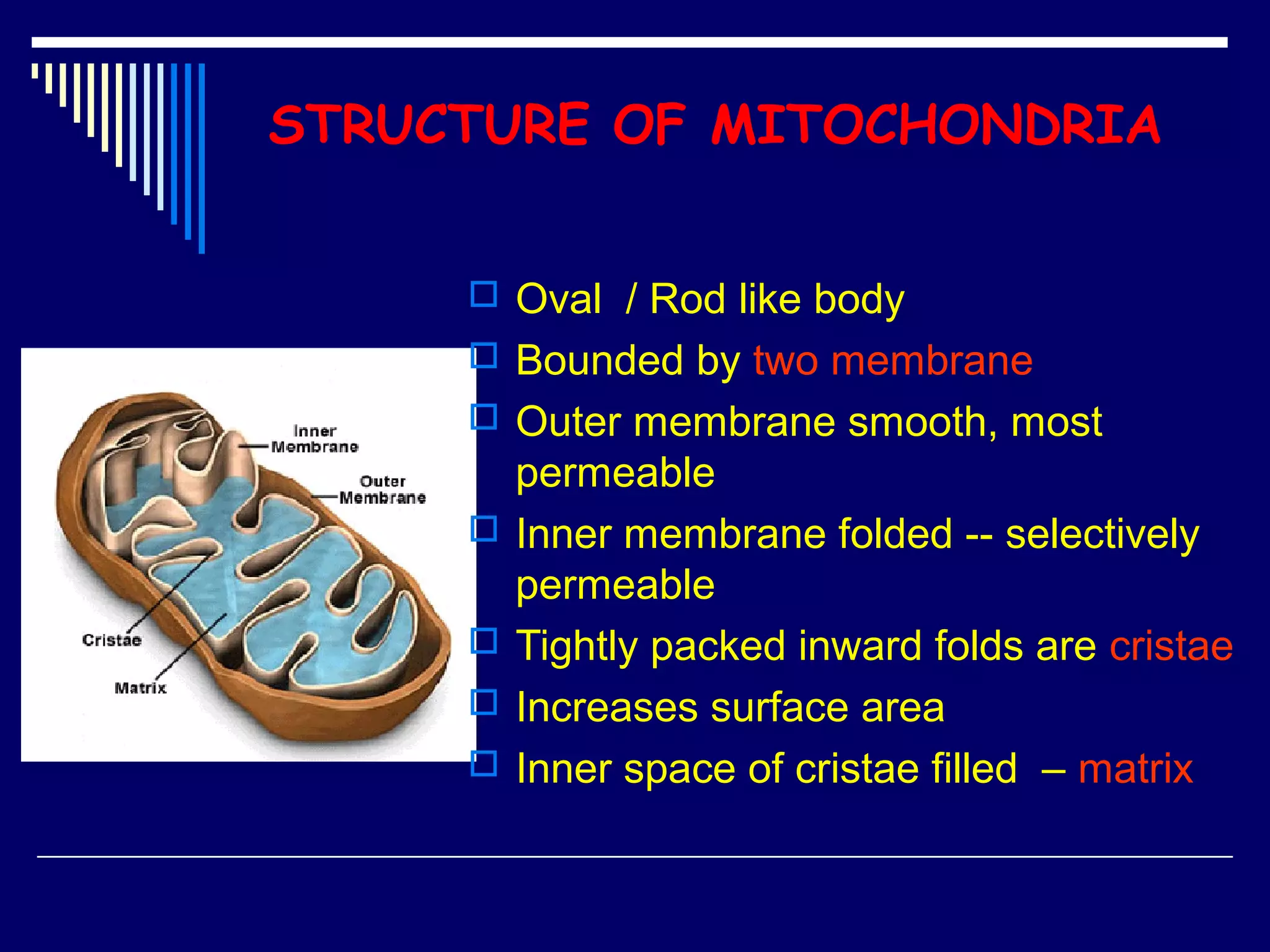
STRUCTURE OF MITOCHONDRIA
 Oval / Rod like body
 Bounded by two membrane
 Outer membrane smooth, most
permeable
 Inner membrane folded -- selectively
permeable
 Tightly packed inward folds are cristae
 Increases surface area
 Inner space of cristae filled – matrix
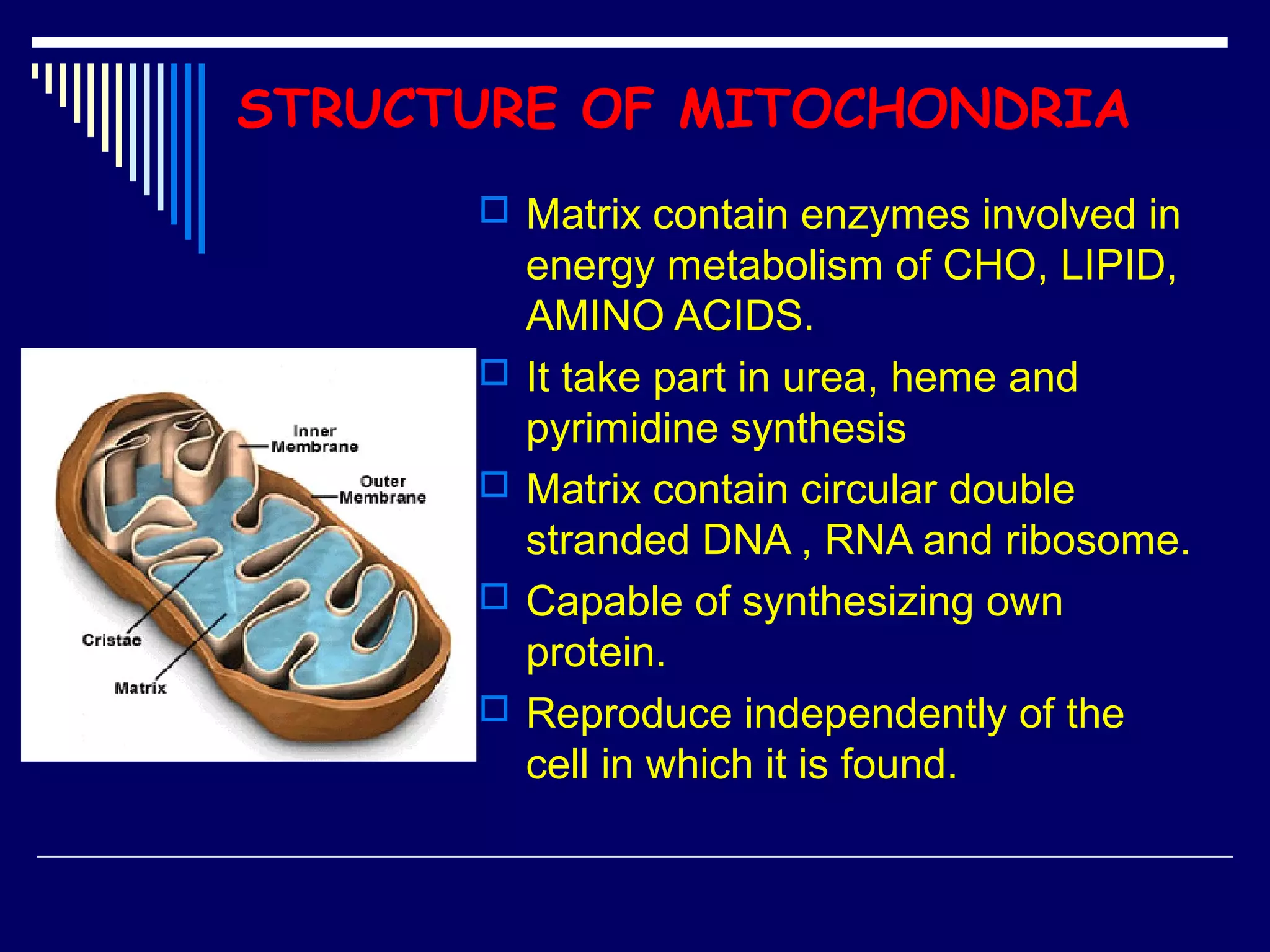
STRUCTURE OF MITOCHONDRIA
 Matrix contain enzymes involved in
energy metabolism of CHO, LIPID,
AMINO ACIDS.
 It take part in urea, heme and
pyrimidine synthesis
 Matrix contain circular double
stranded DNA , RNA and ribosome.
 Capable of synthesizing own
protein.
 Reproduce independently of the
cell in which it is found.
1. Involved in cellular respiration.
2. Energy released from oxidation of food stuff is
trapped as ATP
3. TCA, β-Oxidation, Ketone body metabolism, urea
synthesis, heme and pyrimidine synthesis.
4. Generation of reducing equivalents (NADH)
FUNCTIONS MITOCHONDRIA
power house
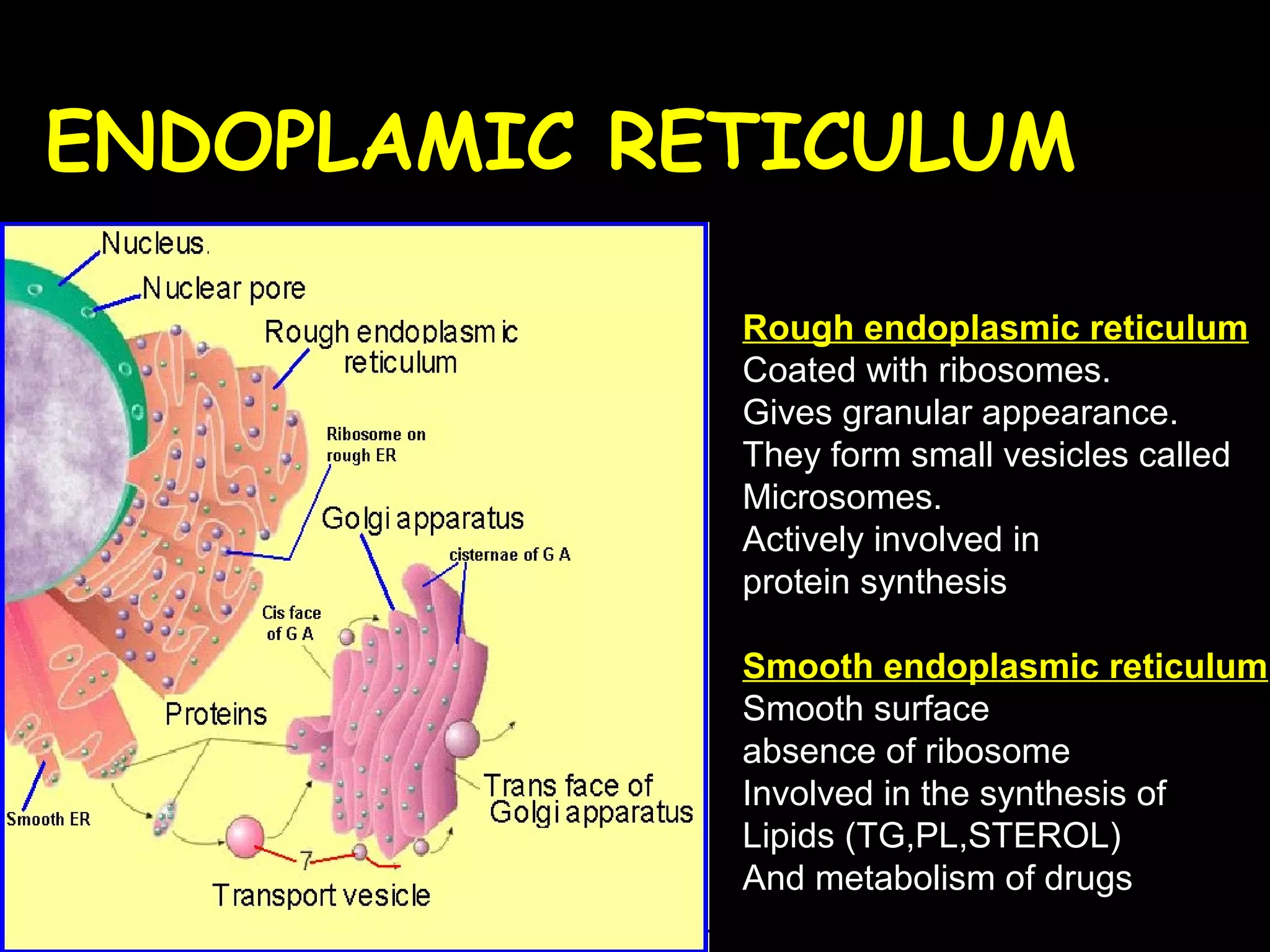
ENDOPLAMIC RETICULUMENDOPLAMIC RETICULUM
Net work of inter connecting
Membrane Continuous from
perinuclear envelop to
outer plasma membrane.
Very prominent in the cell
Which are actively synthesizing
Proteins
Two types
1] rough endoplasmic reticulum
2] Smooth endoplasmic reticulum
Rough endoplasmic reticulum
Coated with ribosomes.
Gives granular appearance.
They form small vesicles called
Microsomes.
Actively involved in
protein synthesis
Smooth endoplasmic reticulum
Smooth surface
absence of ribosome
Involved in the synthesis of
Lipids (TG,PL,STEROL)
And metabolism of drugs
ENDOPLAMIC RETICULUM
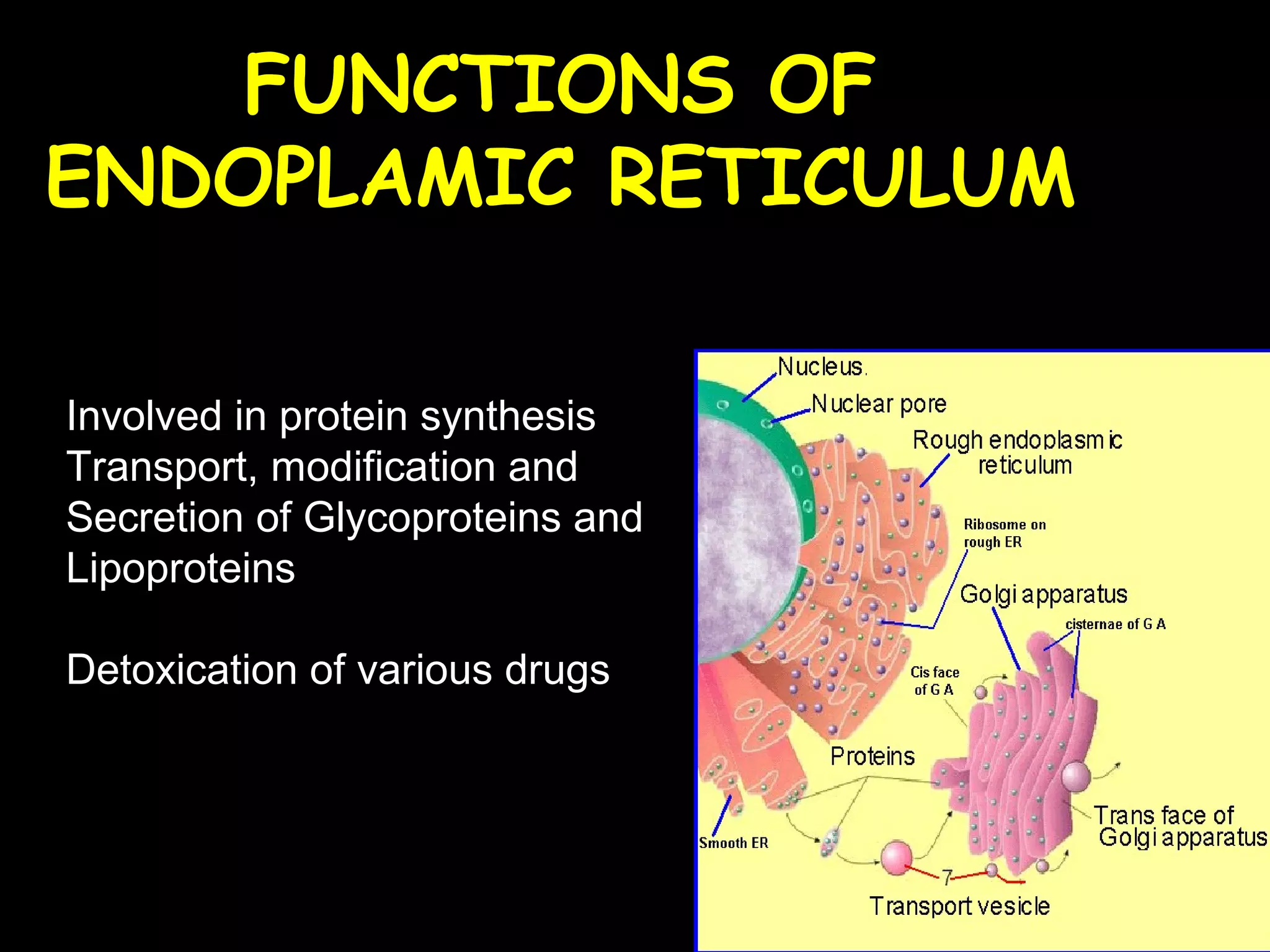
Involved in protein synthesis
Transport, modification and
Secretion of Glycoproteins and
Lipoproteins
Detoxication of various drugs
FUNCTIONS OF
ENDOPLAMIC RETICULUM
Golgi apparatus
 A net work of flattened smooth membrane and vesicles
 Closely associated with Endoplasmic reticulum
It has got three parts
1] Proximal or Cis
2] medial compartment
3] distal or trans compartment
Functions of Golgi apparatusFunctions of Golgi apparatus
1.1. The Golgi apparatus is considered more or less theThe Golgi apparatus is considered more or less the
“POST OFFICE” of the cell.“POST OFFICE” of the cell.
2.2. It handles all incoming lipids, proteins, etc., andIt handles all incoming lipids, proteins, etc., and
controls theircontrols their export after they are modifiedexport after they are modified
3.3. Also involved in membrane synthesis (Peroxisomes,Also involved in membrane synthesis (Peroxisomes,
Lysosomes )Lysosomes )
Functions of Golgi apparatusFunctions of Golgi apparatus
4.4. Post translation modificationPost translation modification is important for theis important for the
proper sanctioning of the proteinproper sanctioning of the protein
5.5. Newly synthesized proteins are handed over to GolgiNewly synthesized proteins are handed over to Golgi
Apparatus which catalyses the addition of CHO, lipidApparatus which catalyses the addition of CHO, lipid
and sulphate to proteinand sulphate to protein
6.6. Some proteins are packed in membranes vesicle andSome proteins are packed in membranes vesicle and
secreted after proper signalsecreted after proper signal
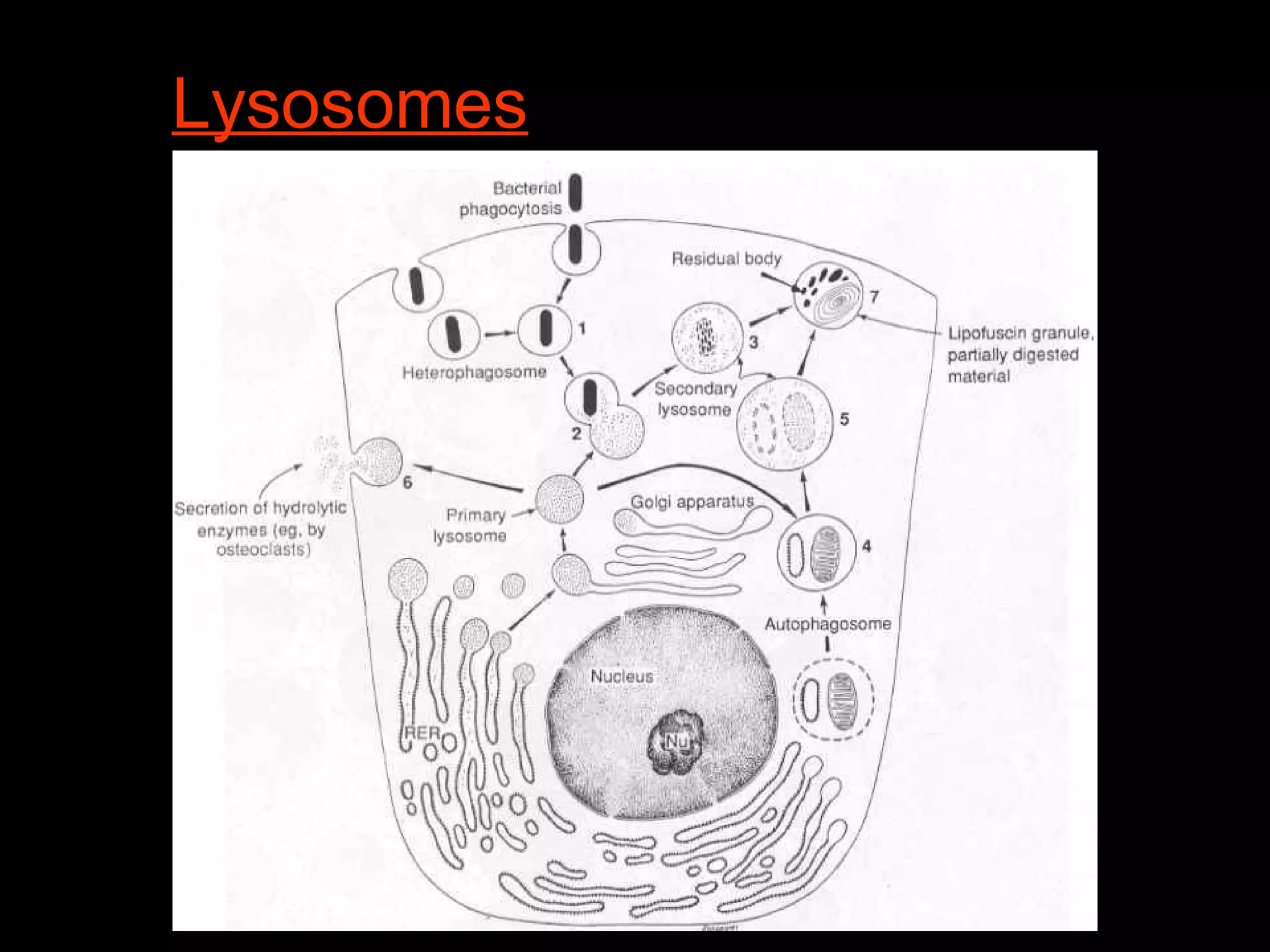
LYSOSOMES
Suicide bags
 Spherical vesicles enveloped by single
membrane
 Regarded as digestive tract of the cell
 Involved in digestion of cellular substances
 Matrix is highly acidic pH < 5.0
Founded in macrophages
LYSOSOMES
Suicide bags
 Contain variety of hydrolase and degradative
types of enzymes
 EX: Glucosidase (Glycogen)
 Cathepasin (Protein)
 Lipases (Lipids)
 Ribonuclease (RNA)
Lysosomal enzymes are protein in nature and
synthesized in ER
Lysosomes
Functions of Lysosomes
1. Degradation of unwanted substances inside the cell
2. As well any external harmful material like bacteria or
virus
3. Function again vary according to the tissue in which it
is present
Diseases associated with malfunction of
Lysosomes
• There are a number of illnesses that are caused by the malfunction of the
Lysosomes or one of their digestive enzymes,
e.g., Pompe’s disease (GSD-II, 1-4 glucosidase)
• Tay-sachs disease, accumulation of gangliosides GM2
• caused by a defective or missing digestive enzymes,
• It leads to the accumulation of substrates within the cell,
• resulting in impaired cell metabolism.
• This disorders are broadly classified as
• mucopolysaccharidoses,
• GM2gangliosidoses,
• Lipid storage disorders,
• Glycoproteinoses,
• mucolipidoses, or
• leukodystophies.
Peroxisome
• Peroxisomes are ubiquitous organelles in eukaryotes
• Occur largely in hepatic and renal cell.
• They are a single membrane bound sacs.
• It separates their contents from the cytosol.
• Contain characteristic enzymes like peroxidase,
• catalase, and urate oxidase.
• It contains membrane proteins critical for various functions,
• such as importing proteins into the organelles and aiding in
proliferation.
• They function to get rid of toxic substances from
the cell.
• Provide protection against oxygen toxicity.
• Regulates between NAD/NADH ratio in the cell.
• Absence of peroxisome– long chain fatty acid can
not be oxidised
• Result – Zellweger syndrome (cerebrohepatorenal
syndrome)
Functions of Peroxisome
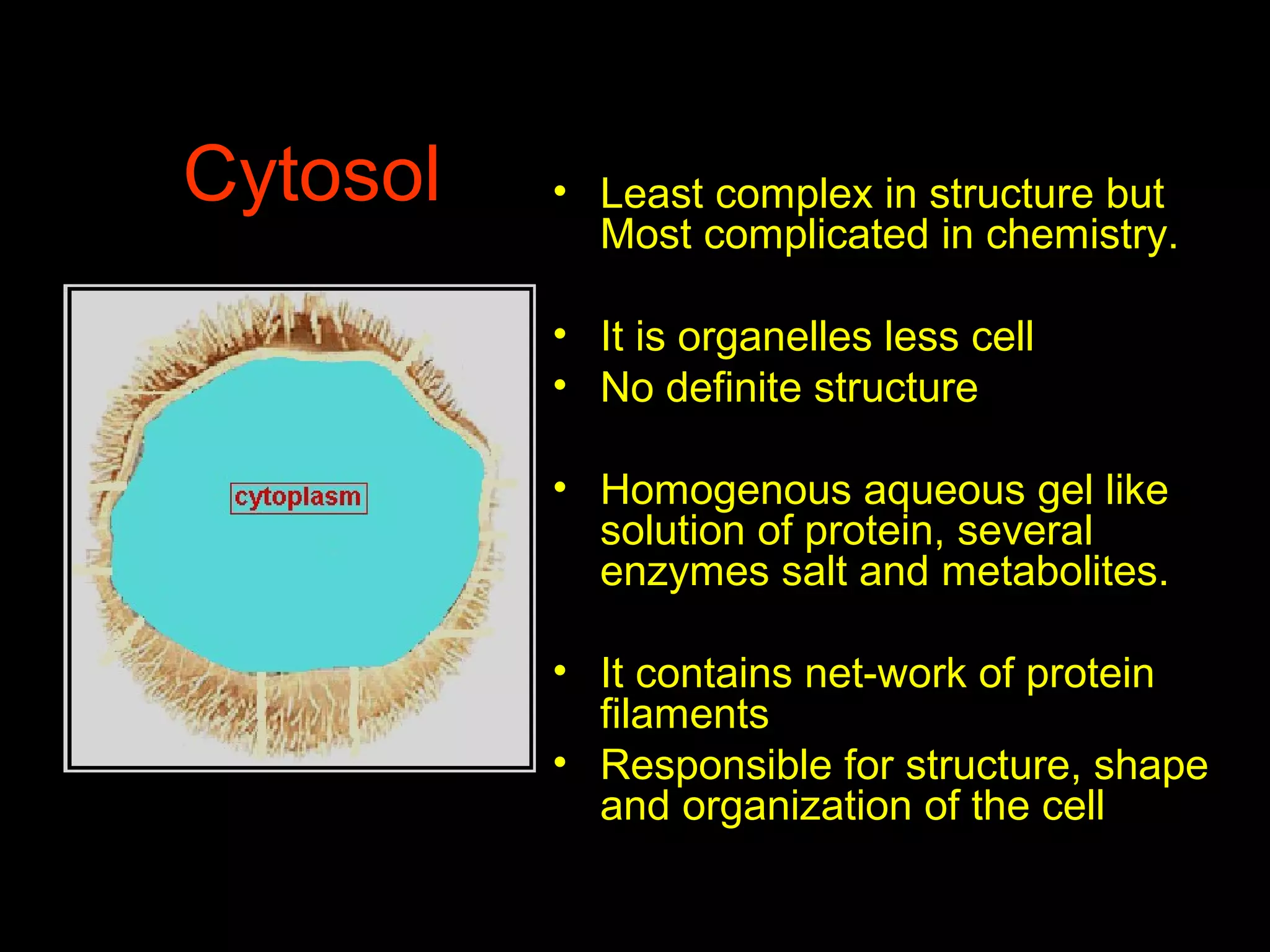
Cytosol • Least complex in structure but
Most complicated in chemistry.
• It is organelles less cell
• No definite structure
• Homogenous aqueous gel like
solution of protein, several
enzymes salt and metabolites.
• It contains net-work of protein
filaments
• Responsible for structure, shape
and organization of the cell
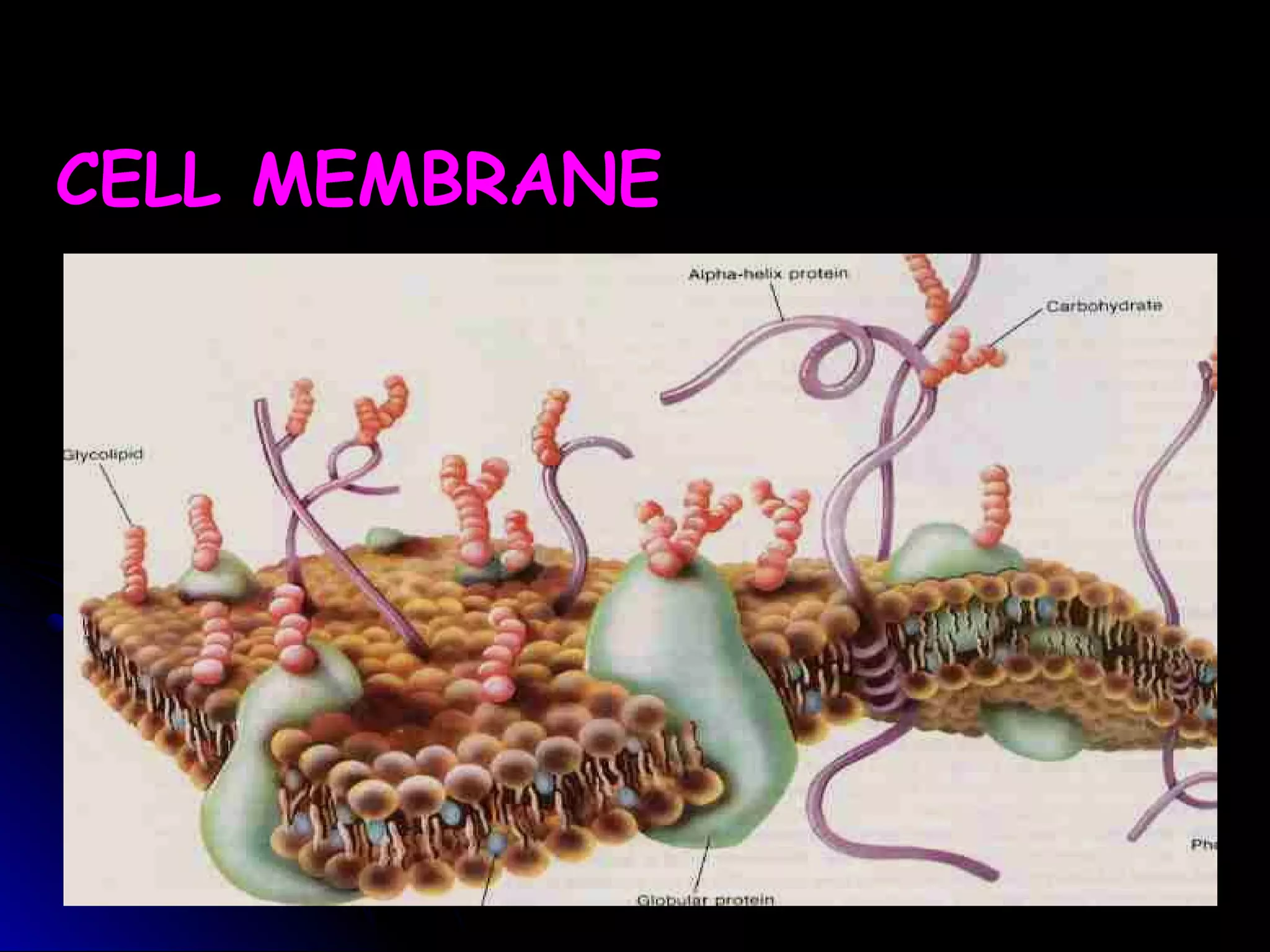
CELL MEMBRANE
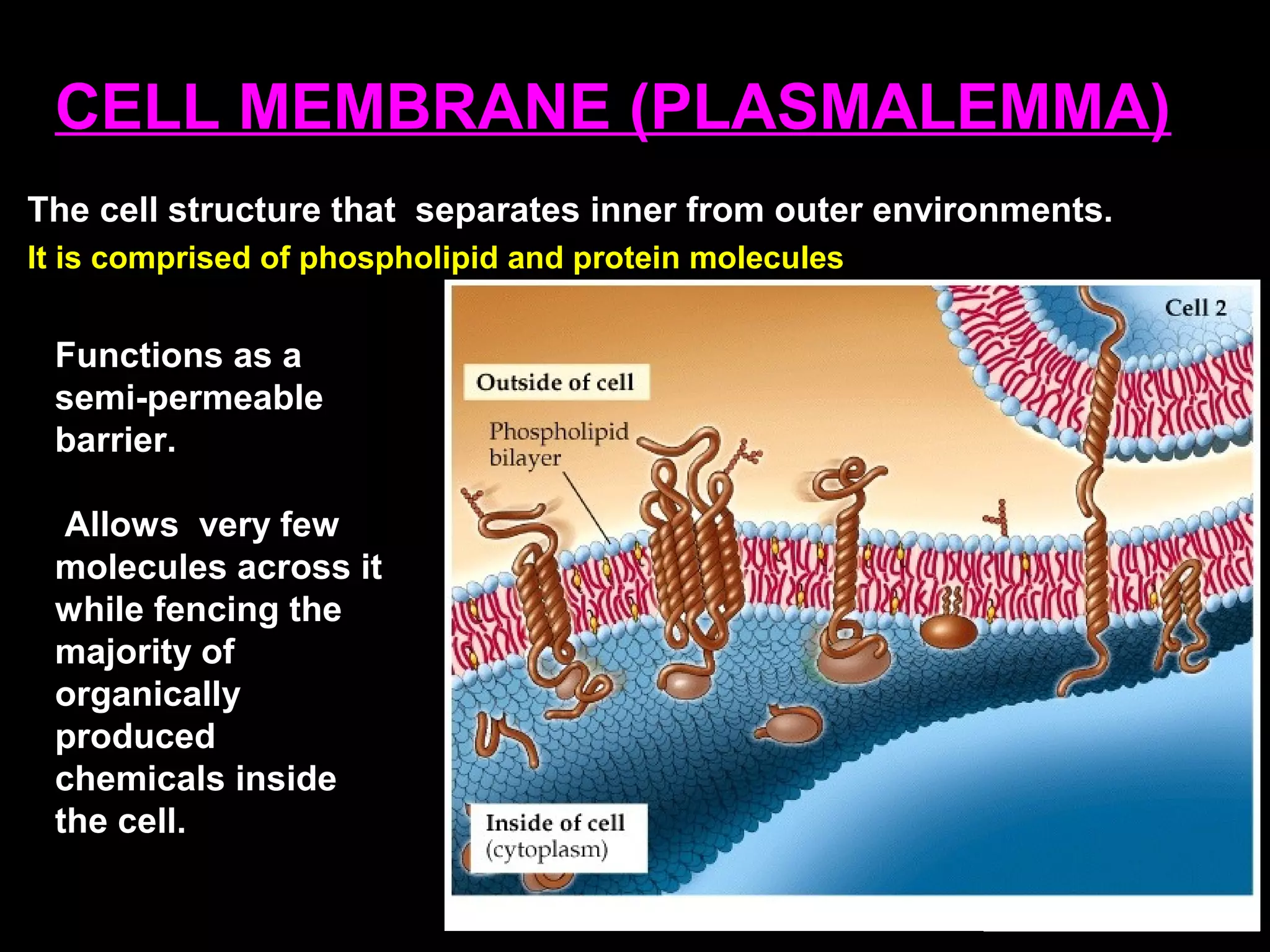
CELL MEMBRANE (PLASMALEMMA)
The cell structure that separates inner from outer environments.
It is comprised of phospholipid and protein molecules
Functions as a
semi-permeable
barrier.
Allows very few
molecules across it
while fencing the
majority of
organically
produced
chemicals inside
the cell.
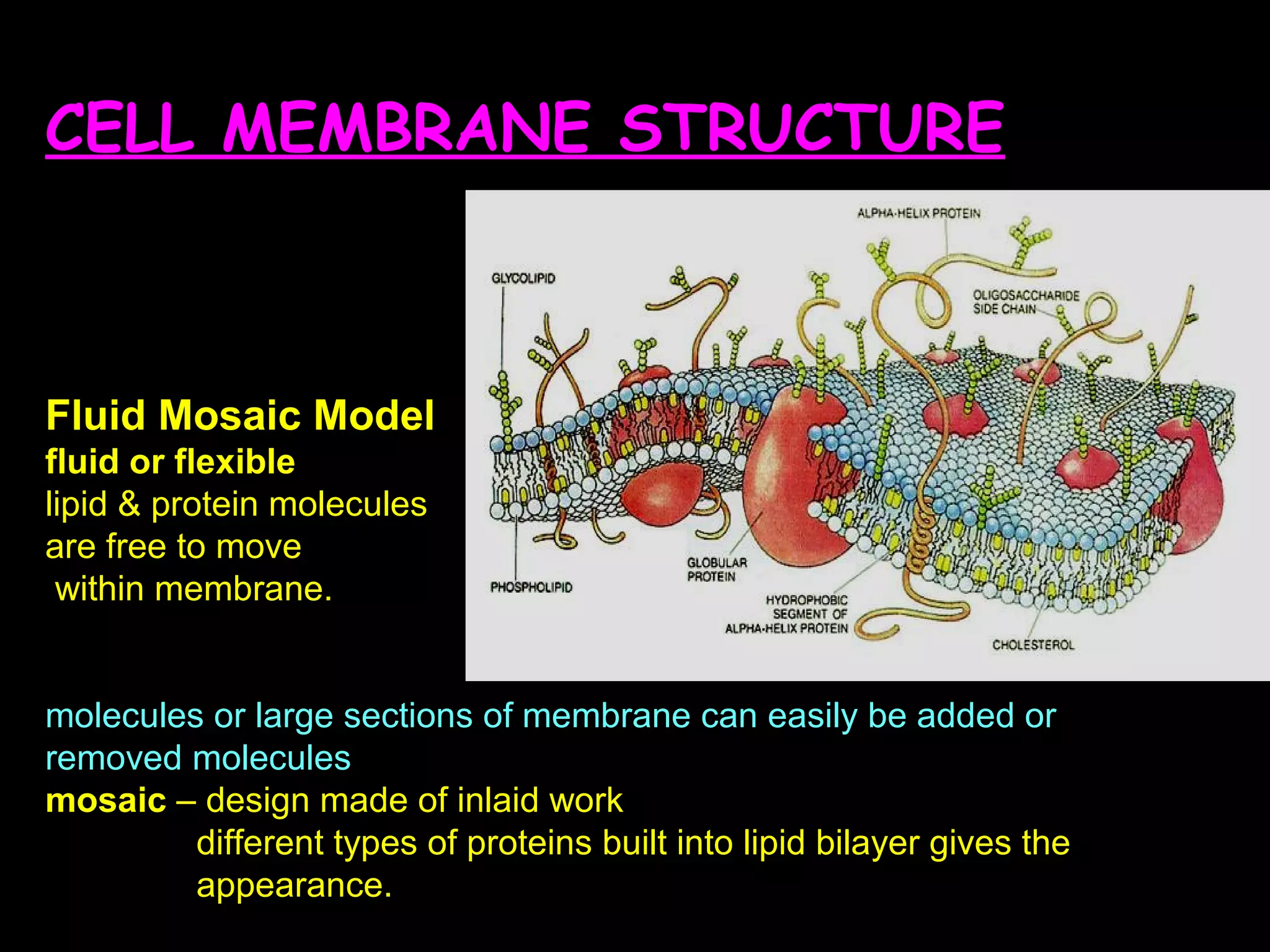
CELL MEMBRANE STRUCTURE
Fluid Mosaic Model
fluid or flexible
lipid & protein molecules
are free to move
within membrane.
molecules or large sections of membrane can easily be added or
removed molecules
mosaic – design made of inlaid work
different types of proteins built into lipid bilayer gives the
appearance.
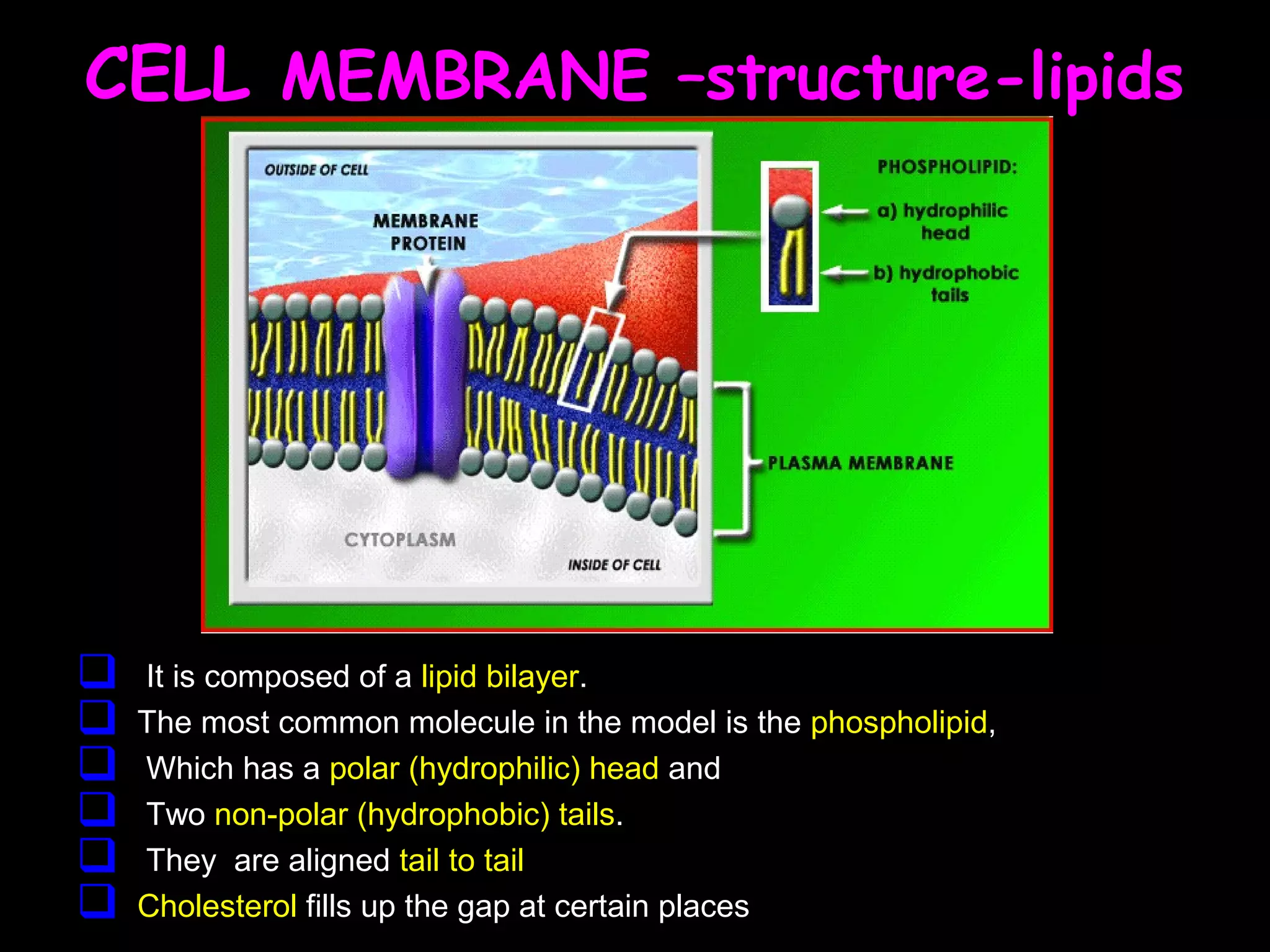
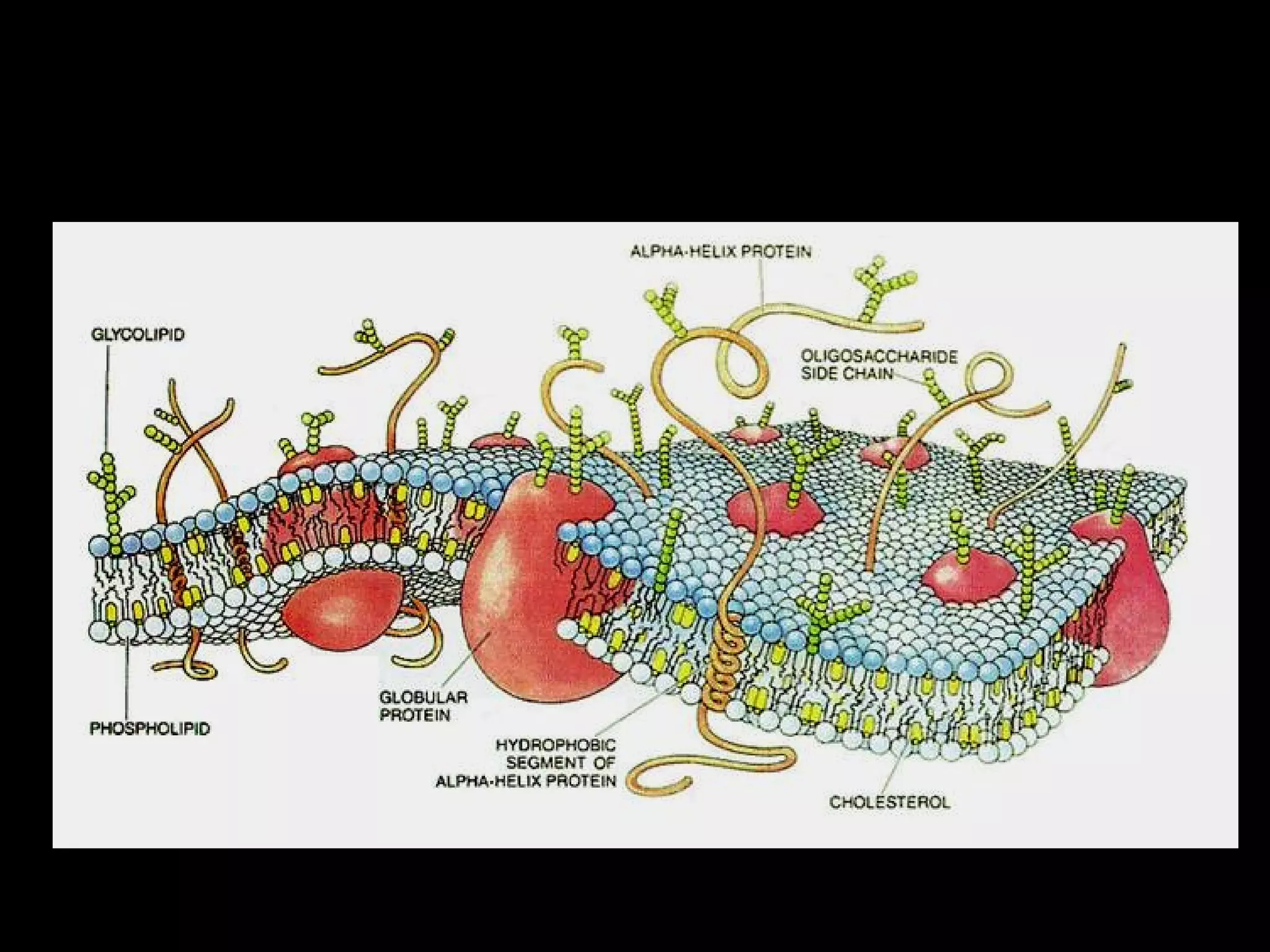
 It is composed of a lipid bilayer.
 The most common molecule in the model is the phospholipid,
 Which has a polar (hydrophilic) head and
 Two non-polar (hydrophobic) tails.
 They are aligned tail to tail
 Cholesterol fills up the gap at certain places
CELL MEMBRANE –structure-lipids
CELL MEMBRANE structure-- proteins
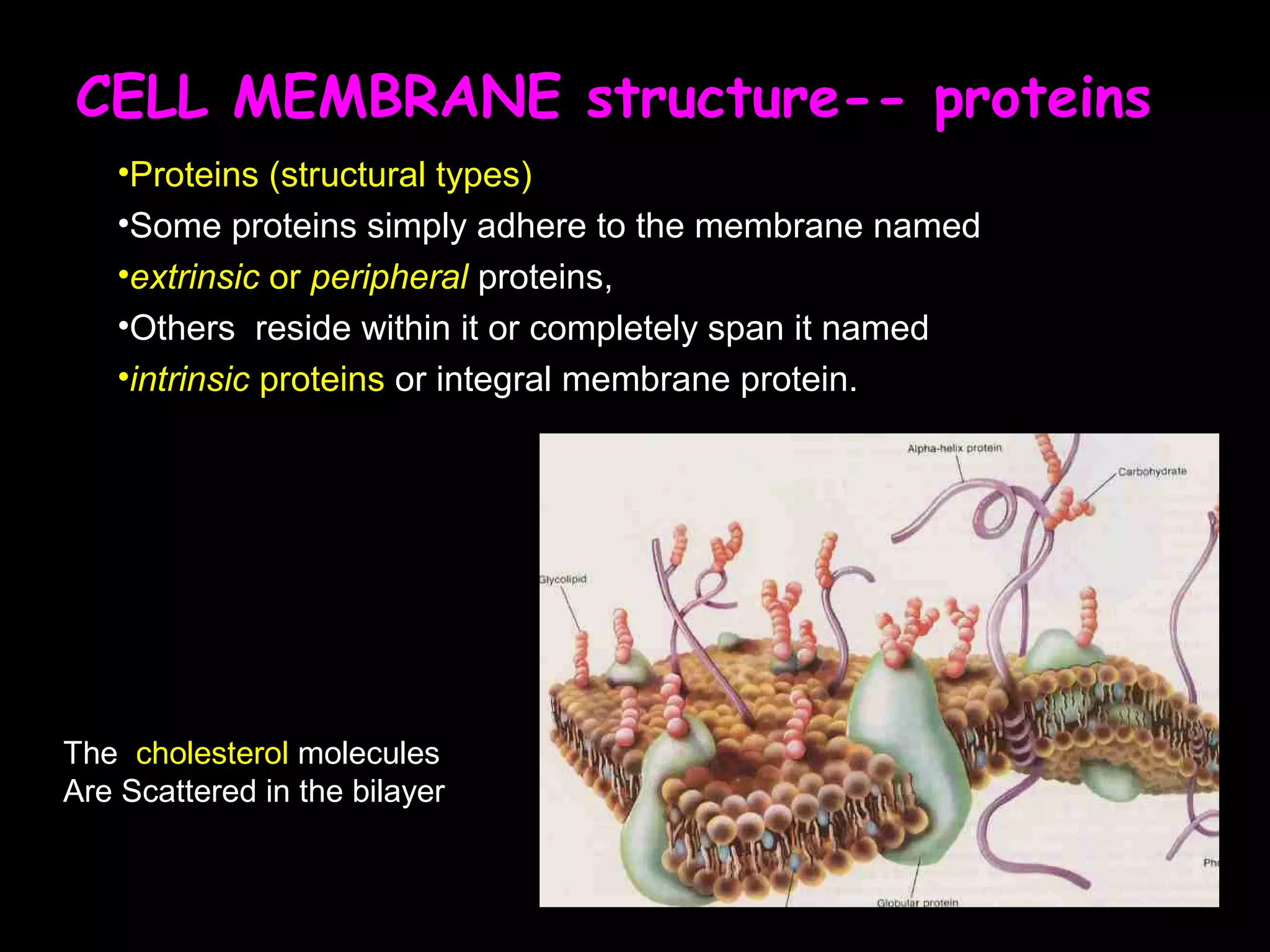
•Proteins (structural types)
•Some proteins simply adhere to the membrane named
•extrinsic or peripheral proteins,
•Others reside within it or completely span it named
•intrinsic proteins or integral membrane protein.
The cholesterol molecules
Are Scattered in the bilayer
CELL MEMBRANE structure-- proteins
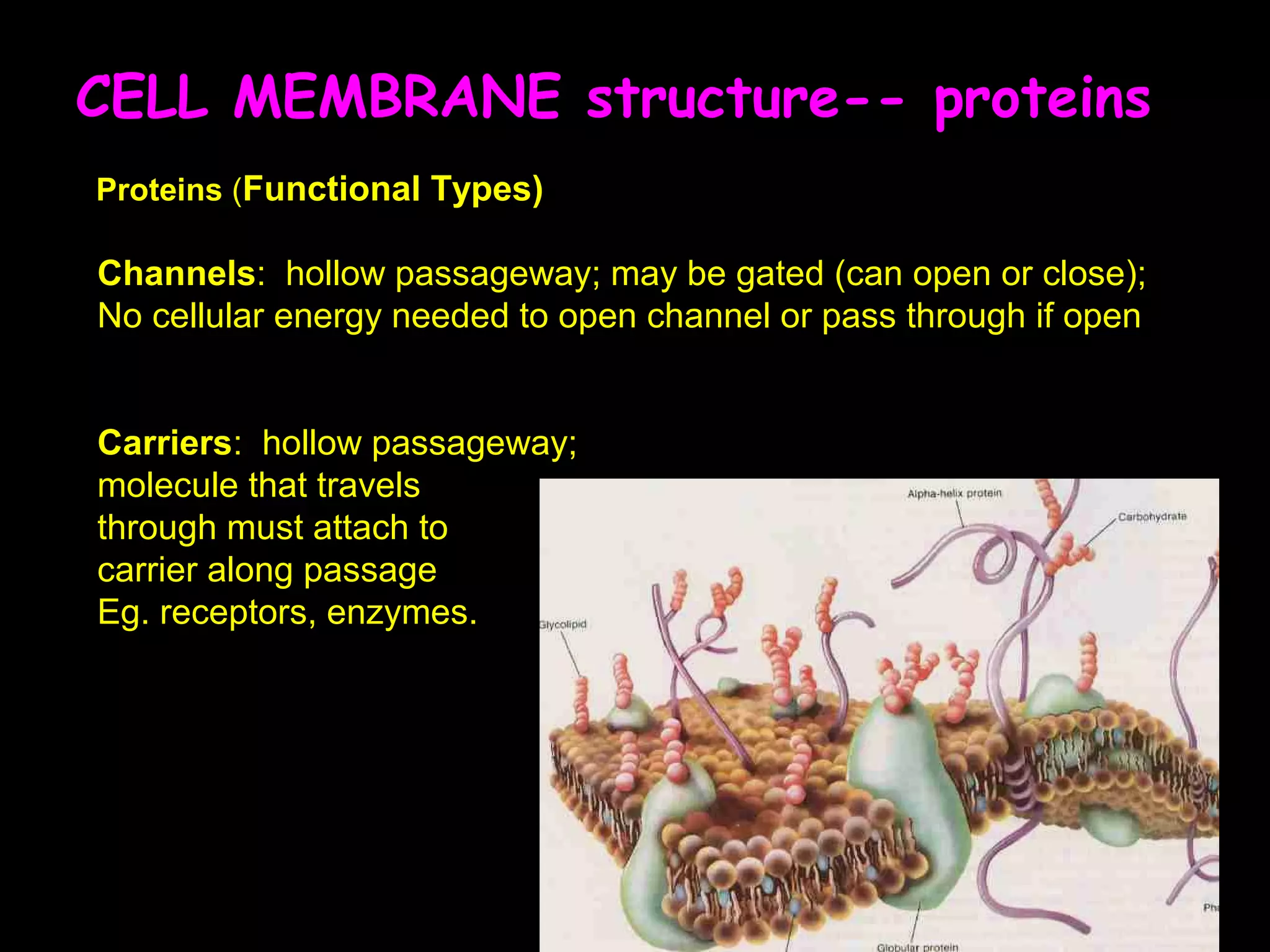
Proteins (Functional Types)
Channels: hollow passageway; may be gated (can open or close);
No cellular energy needed to open channel or pass through if open
Carriers: hollow passageway;
molecule that travels
through must attach to
carrier along passage
Eg. receptors, enzymes.
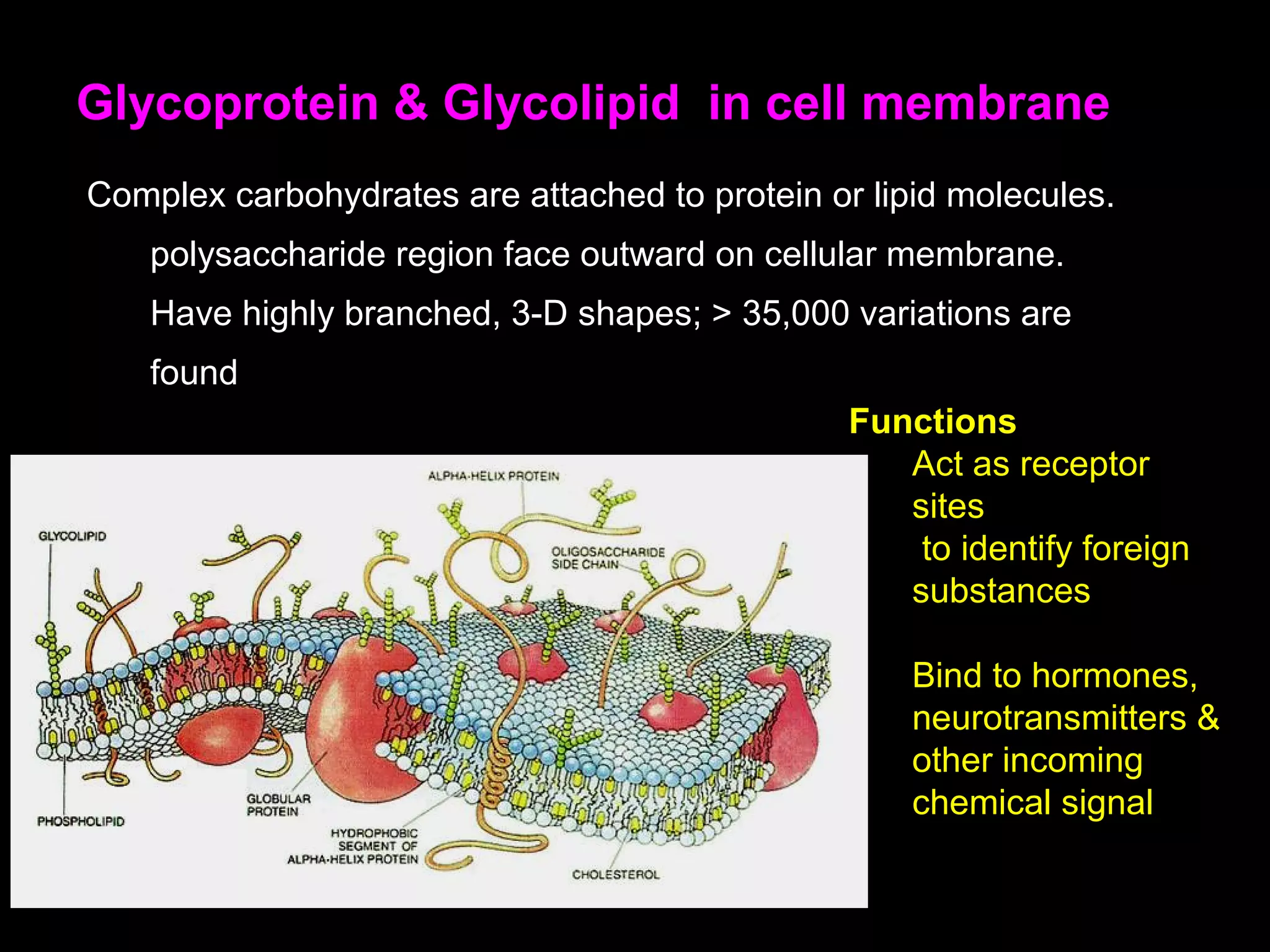
Complex carbohydrates are attached to protein or lipid molecules.
polysaccharide region face outward on cellular membrane.
Have highly branched, 3-D shapes; > 35,000 variations are
found
Glycoprotein & Glycolipid in cell membrane
Functions
Act as receptor
sites
to identify foreign
substances
Bind to hormones,
neurotransmitters &
other incoming
chemical signal
FUNCTIONS
OF
CELL MEMBRANE
1. It attaches parts of the cytoskeleton to the cell
membrane in order to provide shape.
2. It attaches cells to an extra-cellular matrix in grouping
cells together to form tissues.
3. It transports molecules into and out of cells by such
methods as ion pumps, channel proteins and carrier
proteins.
FUNCTIONS
OF
CELL MEMBRANE
4. It acts as receptor for the various chemical messages
which pass between cells such as nerve impulses and
hormone activity.
5. It takes part in enzyme activity which can be important in
the metabolism or as part of the body's defense
mechanism.
FUNCTIONS
OF
CELL MEMBRANE
• Barrier - gives shape, protection
• Selective Permeability - semi-permeable, unwanted chem.
can't enter
• Receptor Sites - cell recognition, acquire needed chemicals
• Enzymes - catalyze some cellular reactions
Essential Biological Functions of
cell membrane are:
1. Immune response
2. Cell metabolism
3. Neurotransmission
4. Photosynthesis
5. Cell adherence
6. Cell growth and differentiation
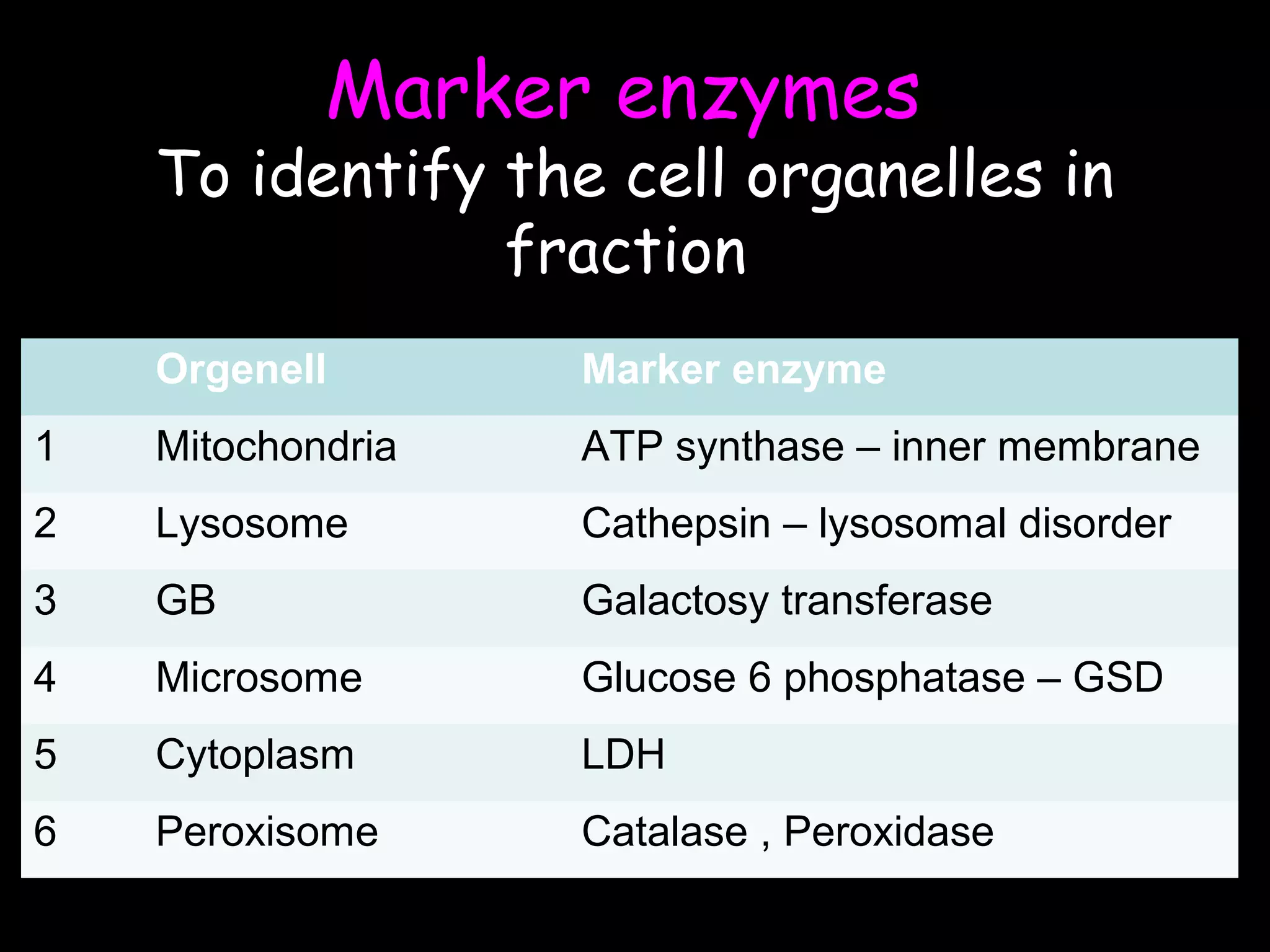
Orgenell Marker enzyme
1 Mitochondria ATP synthase – inner membrane
2 Lysosome Cathepsin – lysosomal disorder
3 GB Galactosy transferase
4 Microsome Glucose 6 phosphatase – GSD
5 Cytoplasm LDH
6 Peroxisome Catalase , Peroxidase
Marker enzymes
To identify the cell organelles in
fraction
Cell structure and function

Cell structure and function

  • 2.
  • 4.
    NUCLEUS Information processingand administrative center of the cell Most prominent organelle present in the cell Occupies 10% of total cell volume Size varies with the cell type Every cell of human body contain nucleus, exception is erythrocytes Contains genetic material DNA NUCLEUS
  • 5.
    Nuclear envelop: double membranestructure, separate cytoplasm from nucleus Nuclear pores: Present in membrane and function for transport of macromolecules across nuclear envelop Chromatin: Impotant component, scatered DNA, during cell division it gets organised to chromosomes STRUCTURE OF NUCLEUS
  • 6.
    STRUCTURE OF NUCLEUS •Nucleolus : Prominent, dense mass, rich in m-RNA ,store house of m-RNA, Involved in protein, mRNA and ribosome synthesis • Nucleoplasm:Fluid portion, • Involved in vital metabolic reactions. • Contain various enzymes of protein synthesis, amino acid and lipid metabolism Peri nuclear membrane
  • 7.
    Nucleus stores hereditarymaterial DNA. It preserves the blue print of life in the form of genetic material. It controls and co-ordinates activity of cell organelles It is mainly responsible for the growth, maturation and reproduction of organism. It is a control centre for protein synthesis and metabolic activity of cell FUNCTIONS OF NUCLEUS
  • 8.
     2nd largest organelleof cell  Spherical, oval or rod shaped  0.5 -- 1.0 µ diameter and 1 - 10 µ in length  Number varies from cell to cell  They are different as they contain their own DNA MITOCHONDRIA power generator
  • 9.
    STRUCTURE OF MITOCHONDRIA Oval / Rod like body  Bounded by two membrane  Outer membrane smooth, most permeable  Inner membrane folded -- selectively permeable  Tightly packed inward folds are cristae  Increases surface area  Inner space of cristae filled – matrix
  • 10.
    STRUCTURE OF MITOCHONDRIA Matrix contain enzymes involved in energy metabolism of CHO, LIPID, AMINO ACIDS.  It take part in urea, heme and pyrimidine synthesis  Matrix contain circular double stranded DNA , RNA and ribosome.  Capable of synthesizing own protein.  Reproduce independently of the cell in which it is found.
  • 11.
    1. Involved incellular respiration. 2. Energy released from oxidation of food stuff is trapped as ATP 3. TCA, β-Oxidation, Ketone body metabolism, urea synthesis, heme and pyrimidine synthesis. 4. Generation of reducing equivalents (NADH) FUNCTIONS MITOCHONDRIA power house
  • 12.
    ENDOPLAMIC RETICULUMENDOPLAMIC RETICULUM Network of inter connecting Membrane Continuous from perinuclear envelop to outer plasma membrane. Very prominent in the cell Which are actively synthesizing Proteins Two types 1] rough endoplasmic reticulum 2] Smooth endoplasmic reticulum
  • 13.
    Rough endoplasmic reticulum Coatedwith ribosomes. Gives granular appearance. They form small vesicles called Microsomes. Actively involved in protein synthesis Smooth endoplasmic reticulum Smooth surface absence of ribosome Involved in the synthesis of Lipids (TG,PL,STEROL) And metabolism of drugs ENDOPLAMIC RETICULUM
  • 14.
    Involved in proteinsynthesis Transport, modification and Secretion of Glycoproteins and Lipoproteins Detoxication of various drugs FUNCTIONS OF ENDOPLAMIC RETICULUM
  • 15.
    Golgi apparatus  Anet work of flattened smooth membrane and vesicles  Closely associated with Endoplasmic reticulum It has got three parts 1] Proximal or Cis 2] medial compartment 3] distal or trans compartment
  • 16.
    Functions of GolgiapparatusFunctions of Golgi apparatus 1.1. The Golgi apparatus is considered more or less theThe Golgi apparatus is considered more or less the “POST OFFICE” of the cell.“POST OFFICE” of the cell. 2.2. It handles all incoming lipids, proteins, etc., andIt handles all incoming lipids, proteins, etc., and controls theircontrols their export after they are modifiedexport after they are modified 3.3. Also involved in membrane synthesis (Peroxisomes,Also involved in membrane synthesis (Peroxisomes, Lysosomes )Lysosomes )
  • 17.
    Functions of GolgiapparatusFunctions of Golgi apparatus 4.4. Post translation modificationPost translation modification is important for theis important for the proper sanctioning of the proteinproper sanctioning of the protein 5.5. Newly synthesized proteins are handed over to GolgiNewly synthesized proteins are handed over to Golgi Apparatus which catalyses the addition of CHO, lipidApparatus which catalyses the addition of CHO, lipid and sulphate to proteinand sulphate to protein 6.6. Some proteins are packed in membranes vesicle andSome proteins are packed in membranes vesicle and secreted after proper signalsecreted after proper signal
  • 18.
    LYSOSOMES Suicide bags  Sphericalvesicles enveloped by single membrane  Regarded as digestive tract of the cell  Involved in digestion of cellular substances  Matrix is highly acidic pH < 5.0 Founded in macrophages
  • 19.
    LYSOSOMES Suicide bags  Containvariety of hydrolase and degradative types of enzymes  EX: Glucosidase (Glycogen)  Cathepasin (Protein)  Lipases (Lipids)  Ribonuclease (RNA) Lysosomal enzymes are protein in nature and synthesized in ER
  • 20.
  • 21.
    Functions of Lysosomes 1.Degradation of unwanted substances inside the cell 2. As well any external harmful material like bacteria or virus 3. Function again vary according to the tissue in which it is present
  • 22.
    Diseases associated withmalfunction of Lysosomes • There are a number of illnesses that are caused by the malfunction of the Lysosomes or one of their digestive enzymes, e.g., Pompe’s disease (GSD-II, 1-4 glucosidase) • Tay-sachs disease, accumulation of gangliosides GM2 • caused by a defective or missing digestive enzymes, • It leads to the accumulation of substrates within the cell, • resulting in impaired cell metabolism. • This disorders are broadly classified as • mucopolysaccharidoses, • GM2gangliosidoses, • Lipid storage disorders, • Glycoproteinoses, • mucolipidoses, or • leukodystophies.
  • 23.
    Peroxisome • Peroxisomes areubiquitous organelles in eukaryotes • Occur largely in hepatic and renal cell. • They are a single membrane bound sacs. • It separates their contents from the cytosol. • Contain characteristic enzymes like peroxidase, • catalase, and urate oxidase. • It contains membrane proteins critical for various functions, • such as importing proteins into the organelles and aiding in proliferation.
  • 24.
    • They functionto get rid of toxic substances from the cell. • Provide protection against oxygen toxicity. • Regulates between NAD/NADH ratio in the cell. • Absence of peroxisome– long chain fatty acid can not be oxidised • Result – Zellweger syndrome (cerebrohepatorenal syndrome) Functions of Peroxisome
  • 25.
    Cytosol • Leastcomplex in structure but Most complicated in chemistry. • It is organelles less cell • No definite structure • Homogenous aqueous gel like solution of protein, several enzymes salt and metabolites. • It contains net-work of protein filaments • Responsible for structure, shape and organization of the cell
  • 27.
  • 28.
    CELL MEMBRANE (PLASMALEMMA) Thecell structure that separates inner from outer environments. It is comprised of phospholipid and protein molecules Functions as a semi-permeable barrier. Allows very few molecules across it while fencing the majority of organically produced chemicals inside the cell.
  • 29.
    CELL MEMBRANE STRUCTURE FluidMosaic Model fluid or flexible lipid & protein molecules are free to move within membrane. molecules or large sections of membrane can easily be added or removed molecules mosaic – design made of inlaid work different types of proteins built into lipid bilayer gives the appearance.
  • 30.
     It iscomposed of a lipid bilayer.  The most common molecule in the model is the phospholipid,  Which has a polar (hydrophilic) head and  Two non-polar (hydrophobic) tails.  They are aligned tail to tail  Cholesterol fills up the gap at certain places CELL MEMBRANE –structure-lipids
  • 31.
    CELL MEMBRANE structure--proteins •Proteins (structural types) •Some proteins simply adhere to the membrane named •extrinsic or peripheral proteins, •Others reside within it or completely span it named •intrinsic proteins or integral membrane protein. The cholesterol molecules Are Scattered in the bilayer
  • 32.
    CELL MEMBRANE structure--proteins Proteins (Functional Types) Channels: hollow passageway; may be gated (can open or close); No cellular energy needed to open channel or pass through if open Carriers: hollow passageway; molecule that travels through must attach to carrier along passage Eg. receptors, enzymes.
  • 33.
    Complex carbohydrates areattached to protein or lipid molecules. polysaccharide region face outward on cellular membrane. Have highly branched, 3-D shapes; > 35,000 variations are found Glycoprotein & Glycolipid in cell membrane Functions Act as receptor sites to identify foreign substances Bind to hormones, neurotransmitters & other incoming chemical signal
  • 34.
    FUNCTIONS OF CELL MEMBRANE 1. Itattaches parts of the cytoskeleton to the cell membrane in order to provide shape. 2. It attaches cells to an extra-cellular matrix in grouping cells together to form tissues. 3. It transports molecules into and out of cells by such methods as ion pumps, channel proteins and carrier proteins.
  • 35.
    FUNCTIONS OF CELL MEMBRANE 4. Itacts as receptor for the various chemical messages which pass between cells such as nerve impulses and hormone activity. 5. It takes part in enzyme activity which can be important in the metabolism or as part of the body's defense mechanism.
  • 36.
    FUNCTIONS OF CELL MEMBRANE • Barrier- gives shape, protection • Selective Permeability - semi-permeable, unwanted chem. can't enter • Receptor Sites - cell recognition, acquire needed chemicals • Enzymes - catalyze some cellular reactions
  • 37.
    Essential Biological Functionsof cell membrane are: 1. Immune response 2. Cell metabolism 3. Neurotransmission 4. Photosynthesis 5. Cell adherence 6. Cell growth and differentiation
  • 39.
    Orgenell Marker enzyme 1Mitochondria ATP synthase – inner membrane 2 Lysosome Cathepsin – lysosomal disorder 3 GB Galactosy transferase 4 Microsome Glucose 6 phosphatase – GSD 5 Cytoplasm LDH 6 Peroxisome Catalase , Peroxidase Marker enzymes To identify the cell organelles in fraction