MORPHOLOGY OF
BACTERIA
PRESENTED BY:
M.C.KNIRANDA
ASSISTANT PROFESSOR
SSNSR, SU.
CONTENTS
• INTRODUCTION
• SIZE OF BACTERIA
• SHAPE OF BACTERIA
• ARRANGEMENTS OF BACTERIAL CELLS
INTRODUCTION
• Bacteria is unicellular, free-living, microscopic
microorganisms capable of performing all the
essential functions of life.
• They possess both deoxyribonucleic acid (DNA)
and Ribonucleic acid (RNA).
INTRODUCTION
• Bacteria are prokaryotic microorganisms that do
not contain chloroplasts, but few bacteria have
chlorophyll.
• (Chloroplasts are organelles found in plant cells
and some algae that are responsible for
photosynthesis and Chlorophyll is a pigment that
gives plants and some microorganism their green
color).
• But some bacteria can perform photosynthesis
such as cyanobacteria.
INTRODUCTION
• They occur in water, soil, air, food, and all
natural environment.
• They can survive extremes of temperature,
pH, oxygen, and atmospheric pressure.
MORPHOLOGY
• Morphology is the study of the shapes and arrangement of
parts of organisms, in order to determine their function, their
development, and how they may have been shaped by
evolution.
• The microorganisms being of very small size are usually
expressed in micro-meter (μm).
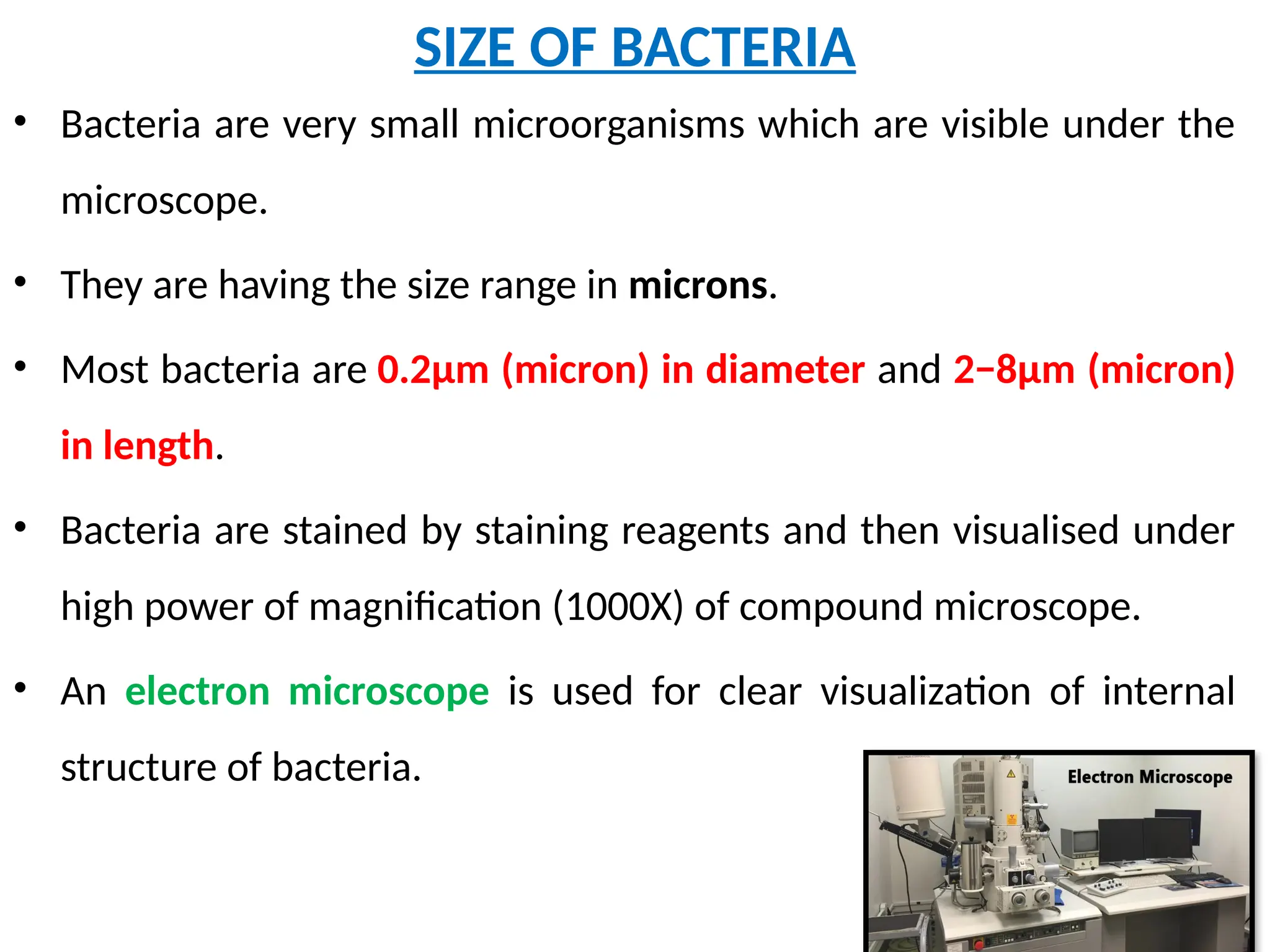
SIZE OF BACTERIA
• Bacteria are very small microorganisms which are visible under the
microscope.
• They are having the size range in microns.
• Most bacteria are 0.2μm (micron) in diameter and 2−8μm (micron)
in length.
• Bacteria are stained by staining reagents and then visualised under
high power of magnification (1000X) of compound microscope.
• An electron microscope is used for clear visualization of internal
structure of bacteria.
SHAPE OF BACTERIA
On the basis of shape, bacteria are classified as
1. Cocci
2. Bacilli
3. Vibrios
4. Spirilla
5. Spirochetes
6. Actinomycetes
7. Mycoplasma
1. Cocci
• Cocci are small, spherical or oval cells. In greek
‘Kokkos’ means berry. Eg: Streptococci
2. Bacilli
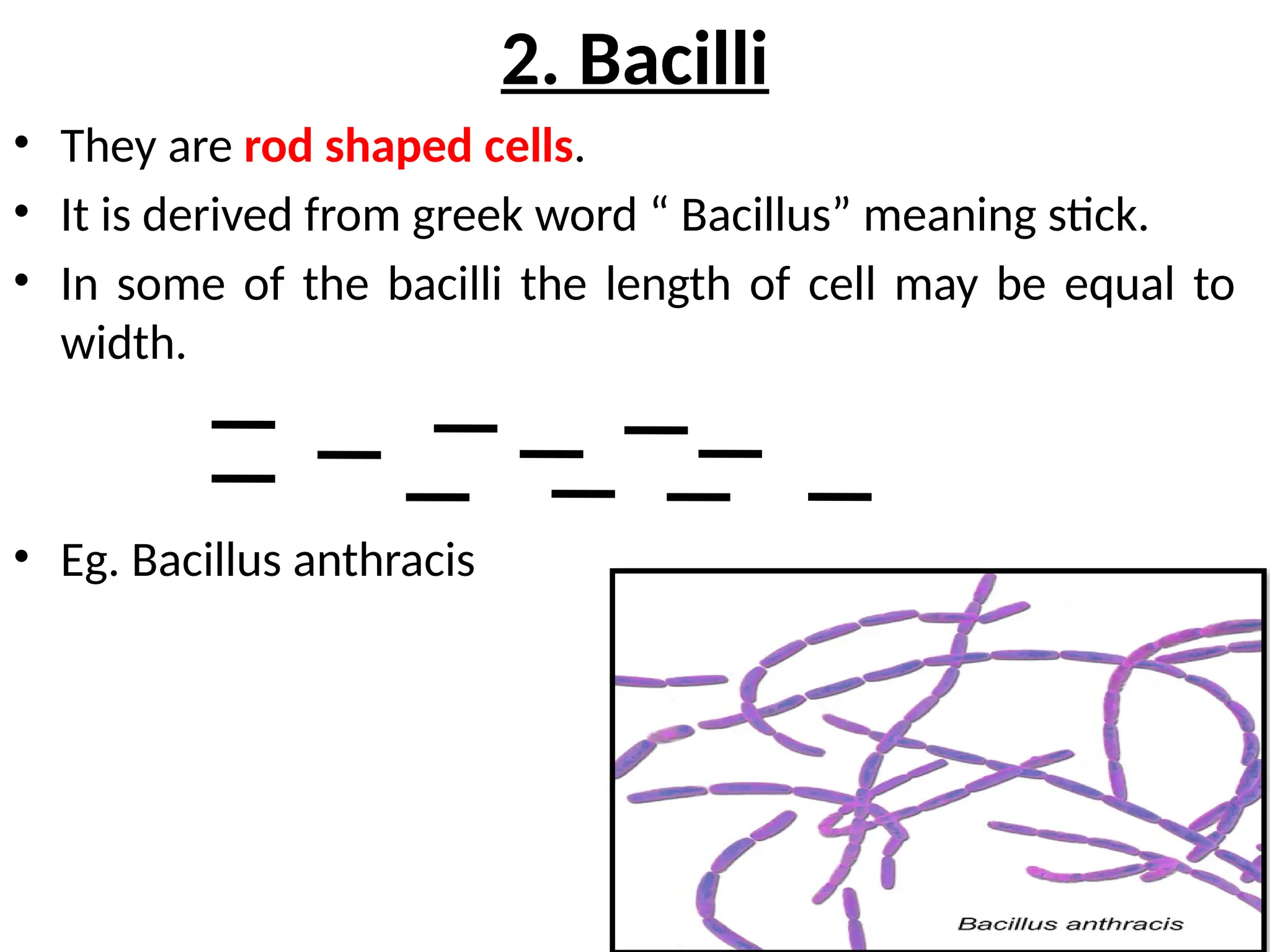
• They are rod shaped cells.
• It is derived from greek word “ Bacillus” meaning stick.
• In some of the bacilli the length of cell may be equal to
width.
• Eg. Bacillus anthracis
OTHER EXAMPLES
3. Vibrios
• They are comma shaped curved rods.
• Eg: Vibrio cholerae
4. Spirilla
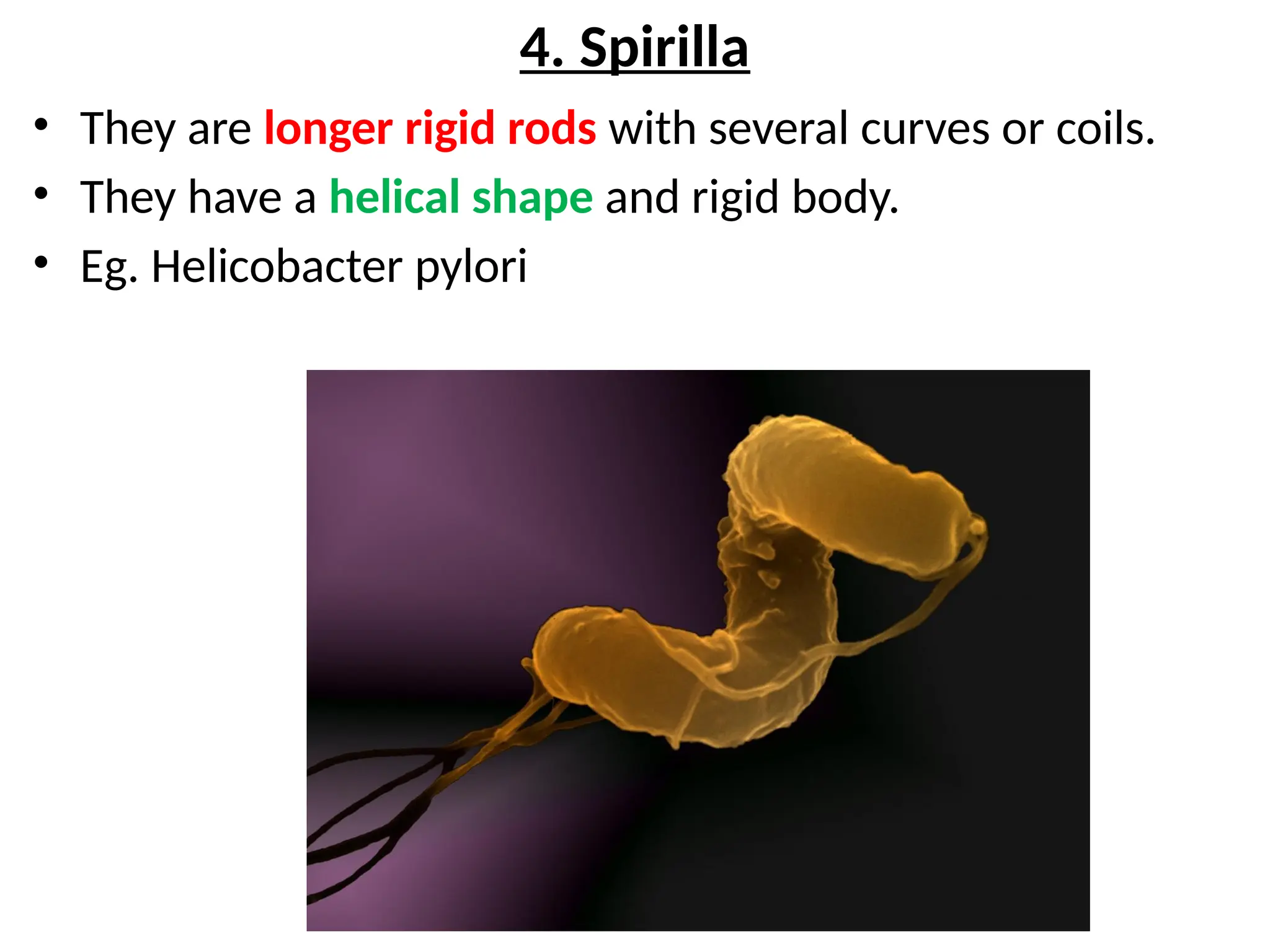
• They are longer rigid rods with several curves or coils.
• They have a helical shape and rigid body.
• Eg. Helicobacter pylori
5. Spirochetes
• They are slender(slim) and flexuous spiral forms.
• Eg. Spirochaeta
6. Actinomycetes
• The Actinomycetes are a group of unicellular
filamentous bacteria (thin in diameter; resembling a
thread) that form a branching network of filaments and
produce spores(cells which acts as a way to defend
themselves)
• Eg: Streptomyces species.
7. Mycoplasma
• Mycoplasmas are spherical to filamentous cells with no
cell walls
• They occur as round or oval bodies with interlacing
filaments.
• eg. Mycoplasma pneumoniae
ARRANGEMENT OF BACTERIAL CELLS
Cocci appears as several characteristics
arrangement or grouping.
1.Diplococci
2.Streptococci
3.Tetracocci
4.Staphylococci
5.Sarcinae
1. Diplococci
• Diplococci are any of several spherical bacteria
occurring in pairs.
• Eg: diplococcus pneumoniae.
2. Streptococci
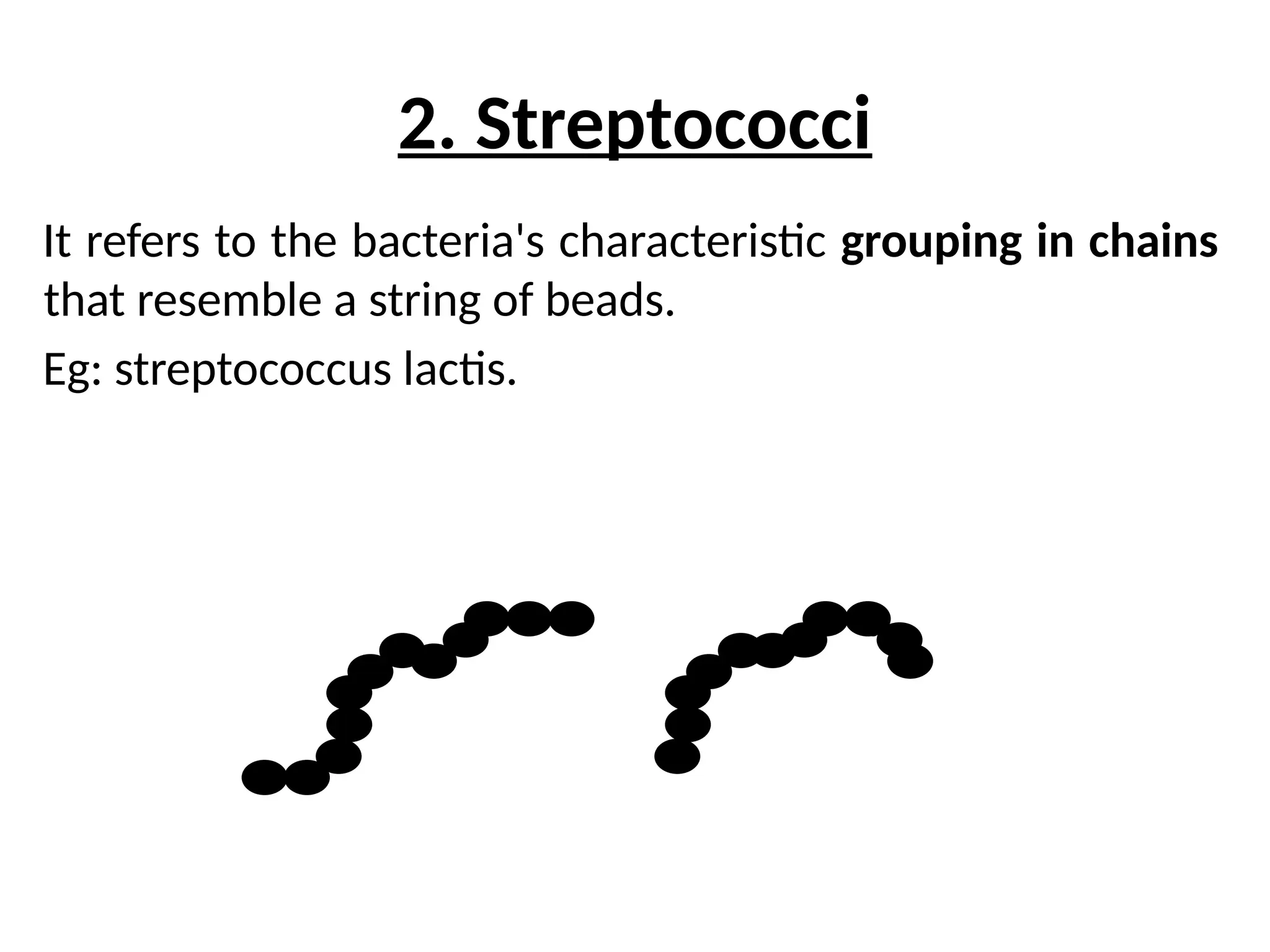
It refers to the bacteria's characteristic grouping in chains
that resemble a string of beads.
Eg: streptococcus lactis.
3. Tetracocci
• Tetracocci are a spherical bacterium occurring in
square groups of four.
• Eg: Gaffyka tetragena.
4. Staphylococci
• Staphylococci are any of a group of round bacteria that
cause various diseases and that occur especially in
irregular clusters.
• These cells produce bunches of cocci as in grapes. Eg:
staphylococcus aureus, staphylococcus albus.
5. Sarcinae
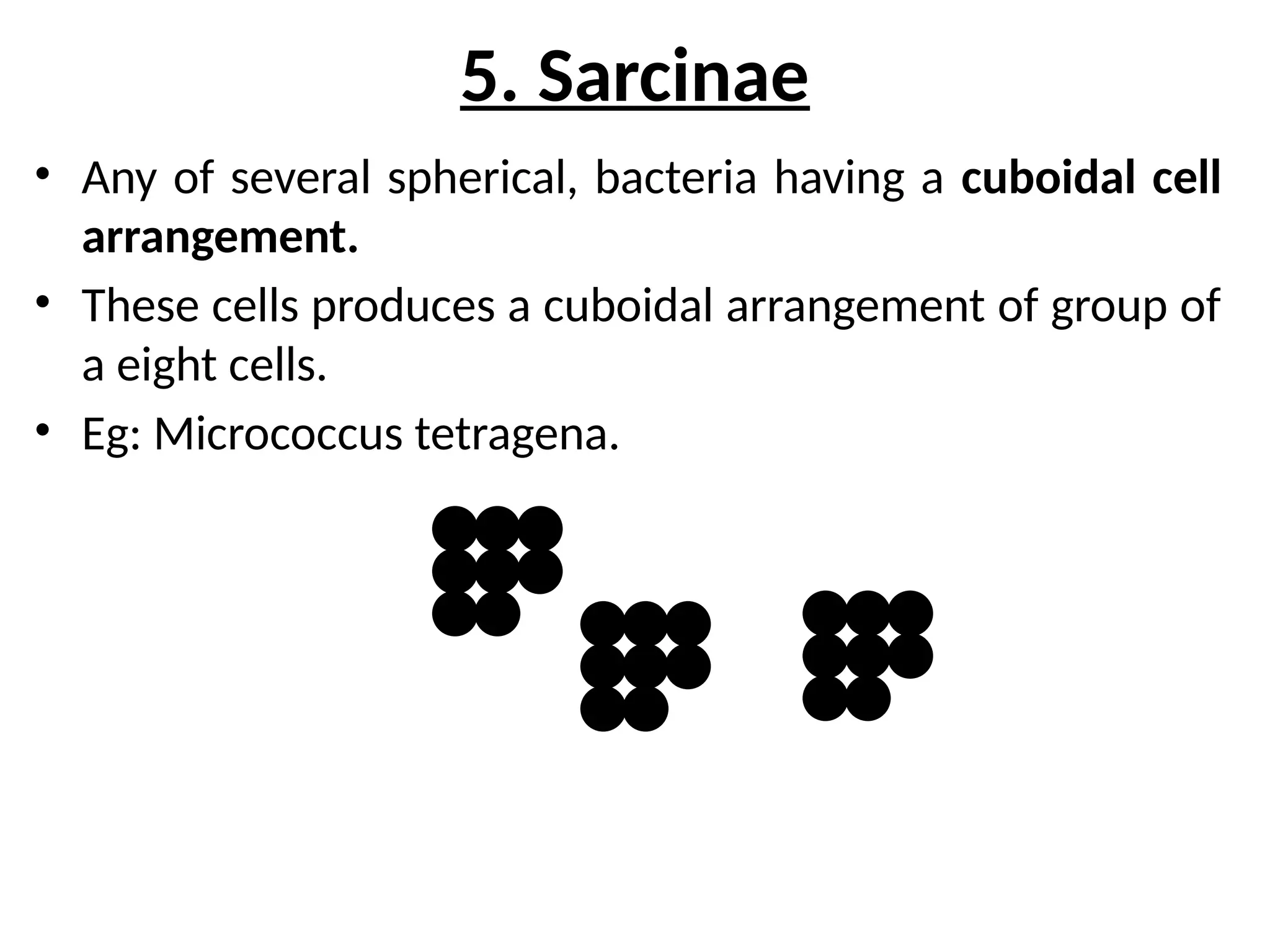
• Any of several spherical, bacteria having a cuboidal cell
arrangement.
• These cells produces a cuboidal arrangement of group of
a eight cells.
• Eg: Micrococcus tetragena.
Arrangement of grouping formed by bacilli
species
1. Diplobacilli
2. Streptobacilli
DIPLOBACILLI
• a pair of rod-shaped bacilli that remain joined
together end-to-end following division.
STREPTOBACILLI
• any of various bacilli that form in chains.
morphology of bacteria/bacterial morphology .pptx

morphology of bacteria/bacterial morphology .pptx

  • 1.
  • 2.
    CONTENTS • INTRODUCTION • SIZEOF BACTERIA • SHAPE OF BACTERIA • ARRANGEMENTS OF BACTERIAL CELLS
  • 3.
    INTRODUCTION • Bacteria isunicellular, free-living, microscopic microorganisms capable of performing all the essential functions of life. • They possess both deoxyribonucleic acid (DNA) and Ribonucleic acid (RNA).
  • 4.
    INTRODUCTION • Bacteria areprokaryotic microorganisms that do not contain chloroplasts, but few bacteria have chlorophyll. • (Chloroplasts are organelles found in plant cells and some algae that are responsible for photosynthesis and Chlorophyll is a pigment that gives plants and some microorganism their green color). • But some bacteria can perform photosynthesis such as cyanobacteria.
  • 5.
    INTRODUCTION • They occurin water, soil, air, food, and all natural environment. • They can survive extremes of temperature, pH, oxygen, and atmospheric pressure.
  • 6.
    MORPHOLOGY • Morphology isthe study of the shapes and arrangement of parts of organisms, in order to determine their function, their development, and how they may have been shaped by evolution. • The microorganisms being of very small size are usually expressed in micro-meter (μm).
  • 7.
    SIZE OF BACTERIA •Bacteria are very small microorganisms which are visible under the microscope. • They are having the size range in microns. • Most bacteria are 0.2μm (micron) in diameter and 2−8μm (micron) in length. • Bacteria are stained by staining reagents and then visualised under high power of magnification (1000X) of compound microscope. • An electron microscope is used for clear visualization of internal structure of bacteria.
  • 8.
    SHAPE OF BACTERIA Onthe basis of shape, bacteria are classified as 1. Cocci 2. Bacilli 3. Vibrios 4. Spirilla 5. Spirochetes 6. Actinomycetes 7. Mycoplasma
  • 9.
    1. Cocci • Cocciare small, spherical or oval cells. In greek ‘Kokkos’ means berry. Eg: Streptococci
  • 12.
    2. Bacilli • Theyare rod shaped cells. • It is derived from greek word “ Bacillus” meaning stick. • In some of the bacilli the length of cell may be equal to width. • Eg. Bacillus anthracis
  • 13.
  • 14.
    3. Vibrios • Theyare comma shaped curved rods. • Eg: Vibrio cholerae
  • 15.
    4. Spirilla • Theyare longer rigid rods with several curves or coils. • They have a helical shape and rigid body. • Eg. Helicobacter pylori
  • 16.
    5. Spirochetes • Theyare slender(slim) and flexuous spiral forms. • Eg. Spirochaeta
  • 17.
    6. Actinomycetes • TheActinomycetes are a group of unicellular filamentous bacteria (thin in diameter; resembling a thread) that form a branching network of filaments and produce spores(cells which acts as a way to defend themselves) • Eg: Streptomyces species.
  • 18.
    7. Mycoplasma • Mycoplasmasare spherical to filamentous cells with no cell walls • They occur as round or oval bodies with interlacing filaments. • eg. Mycoplasma pneumoniae
  • 19.
    ARRANGEMENT OF BACTERIALCELLS Cocci appears as several characteristics arrangement or grouping. 1.Diplococci 2.Streptococci 3.Tetracocci 4.Staphylococci 5.Sarcinae
  • 20.
    1. Diplococci • Diplococciare any of several spherical bacteria occurring in pairs. • Eg: diplococcus pneumoniae.
  • 21.
    2. Streptococci It refersto the bacteria's characteristic grouping in chains that resemble a string of beads. Eg: streptococcus lactis.
  • 22.
    3. Tetracocci • Tetracocciare a spherical bacterium occurring in square groups of four. • Eg: Gaffyka tetragena.
  • 23.
    4. Staphylococci • Staphylococciare any of a group of round bacteria that cause various diseases and that occur especially in irregular clusters. • These cells produce bunches of cocci as in grapes. Eg: staphylococcus aureus, staphylococcus albus.
  • 24.
    5. Sarcinae • Anyof several spherical, bacteria having a cuboidal cell arrangement. • These cells produces a cuboidal arrangement of group of a eight cells. • Eg: Micrococcus tetragena.
  • 25.
    Arrangement of groupingformed by bacilli species 1. Diplobacilli 2. Streptobacilli
  • 26.
    DIPLOBACILLI • a pairof rod-shaped bacilli that remain joined together end-to-end following division.
  • 27.
    STREPTOBACILLI • any ofvarious bacilli that form in chains.