COPD
Harrison Mbohe MBChB Level 4 JKUAT
DEFINITION
• A disease state characterized by airflow limitation that is not fully
reversible.
• Usually progressive.
• Associated with an enhanced chronic inflammatory response in the
airways and the lung to noxious particles or gases.
• COPD includes;
• Emphysema – xtized by destruction and enlargement of the lung
alveoli.
• Chronic bronchitis – xtized by a chronic cough and phlegm.
• Small airways disease – xtized by narrowing of small
bronchioles.
EPIDEMIOLOGY
• Approx. 80 million people worldwide suffer from moderate to
severe disease.
• 10–20% of the cases affect over-40s with 2.5 million
deaths/year worldwide.
• Predicted to become the third most common cause of death and
fifth most common cause of disability worldwide by 2020.
• Anticipated rise in morbidity and mortality will be greatest in
Asian and African countries, as a result of their increasing
tobacco consumption.
• Prevalence directly related to the prevalence of tobacco
smoking.
RISK FACTORS
Environmental
• Tobacco smoke.
• Indoor air pollution – cooking with biomass fuels in confined areas.
• Occupational exposures to coal dust, silica and cadmium
• Low birth weight – reduction of maximally attained lung function in young adult
life
• Lung growth – affected by childhood infections or maternal smoking, resulting in a
lower maximally attained lung function in adult life
• Infections – recurrent respiratory infections accelerate decline in FEV1; persistence
of adenovirus in lung tissue may alter local inflammatory response, predisposing to
lung damage; HIV infection is associated with emphysema
• Low socioeconomic status
• Cannabis smoking
RISK FACTORS
•Genetic factors:
•α 1-antiproteinase deficiency.
•Other COPD susceptibility genes e.g. minor allele SNP
of MMP12 associated with decreased MMP-12
expression has a +ve effect on lung function in children
with asthma and in adult smokers.
• Airway hyper-reactivity – increased
bronchoconstriction in response to a variety of
exogenous stimuli, including methacholine and
histamine.
PATHOGENESIS
•Chronic exposure to cigarette smoke  Inflammatory cell
recruitment within the terminal air spaces of the lungs 
release of elastolytic proteinases that damage the
extracellular matrix of the lung  oxidant stress and loss of
matrix-cell attachment  structural cell death.
•Ineffective repair of elastin and other extracellular matrix
components  air space enlargement.
PATHOPHYSIOLOGY
Airflow obstruction
•Characterized by chronically reduced FEV 1 /FVC.
•In the early stages of COPD, airflow obstruction is only
evident at lung volumes at or below the FRC.
•In more advanced disease the entire curve has decreased
expiratory flow compared to normal.
PATHOPHYSIOLOGY
Hyperinflation
• Compensatory for airflow obstruction.
• Characterized by increased total lung capacity.
• Pushes the diaphragm into a flattened position with the following effects:
• Renders diaphragm less capable of generating inspiratory pressures than
normal.
• Diaphragm must generate greater tension to develop the trans pulmonary
pressure required to produce tidal breathing.
• Decrease in the zone of apposition between the diaphragm and the
abdominal wall  positive abdominal pressure during inspiration not
applied as effectively to the chest wall  hindrance to rib cage movement
and inspiration.
PATHOPHYSIOLOGY
Impaired gaseous exchange
• The PaO2 usually remains near normal until the FEV 1 is
decreased to ~50% of predicted.
• An elevation of PaCO2 is not expected until the FEV 1 is
<25% of predicted.
• Non-uniform ventilation and ventilation-perfusion
mismatching.
• Pulmonary hypertension severe enough to cause cor pulmonale
and right ventricular failure due to COPD occurs in individuals
who have marked decreases in FEV 1 (<25% of predicted) and
chronic hypoxemia (Pa O2 <55 mmHg).
SYSTEMIC EFFECTS
HISTORY
•The three most common symptoms are
•Cough
•Sputum production
•Exertional dyspnoea.
•Symptoms may exist for months or years medical
attention is sought.
•Patients usually present with an acute exacerbation
and Hx should reveal presence of symptoms before
the exacerbation.
HISTORY
•Level of dyspnoea related to activities should also be
interrogated (use modified MRC dyspnoea scale)
•Exertional dyspnoea described as increased effort to
breathe, heaviness, air hunger, or gasping, can be
insidious.
•Activities involving significant arm work, particularly at
or above shoulder level, are particularly difficult for
patients with COPD.
•Activities that allow the patient to brace the arms and use
accessory muscles of respiration are better tolerated.
HISTORY
• As COPD advances, the principal feature is worsening dyspnoea on
exertion.
• In most advanced stages, patients are breathless doing simple activities of
daily living.
• Patients may also develop resting hypoxemia.
• Accompanying worsening airflow obstruction is an increased frequency of
exacerbations.
• In case of a cigarette smoker ask about the amount and duration of
smoking (calculated in pack years as shown below)
P𝑎𝑐𝑘𝑦𝑒𝑎𝑟𝑠 =
𝑛𝑜.𝑜𝑓 𝑐𝑖𝑔𝑎𝑟𝑒𝑡𝑡𝑒𝑠 𝑠𝑚𝑜𝑘𝑒𝑑 𝑝𝑒𝑟 𝑑𝑎𝑦
20 (𝑜𝑛𝑒 𝑝𝑎𝑐𝑘 𝑜𝑓 𝑐𝑖𝑔𝑎𝑟𝑒𝑡𝑡𝑒𝑠)
x no of years of smoking
COMPLICATIONS
•Acute exacerbations ± infection
•Polycythaemia
•Respiratory failure
•Cor pulmonale characterized by pulmonary
HTN, RVH, and eventually right heart failure.
•Pneumothorax due to ruptured bullae
•Lung carcinoma especially in smokers.
PHYSICAL EXAMINATION
• Current smokers exhibit signs of active smoking, including an
odour of smoke or nicotine staining of fingernails.
• Early stages – patients usually have an entirely normal PE.
• More severe disease;
• Expiratory wheezing.
• Signs of hyperinflation – barrel chest and enlarged lung
volumes with poor diaphragmatic excursion as assessed by
percussion.
• Use of accessory muscles of respiration – sitting in the
characteristic “tripod” position to facilitate the actions of
SCM, scalene, and intercostal muscles.
• Cyanosis - visible in the lips and nail beds.
PHYSICAL EXAMINATION
•Advanced disease;
•Accompanied by systemic wasting, with
significant weight loss, bitemporal
wasting, and diffuse loss of subcutaneous
adipose tissue.
•Hoover’s sign – paradoxical inward
movement of the rib cage with inspiration.
PINK PUFFERS VS BLUE
BLOATERS
PINK PUFFERS
• Increased alveolar ventilation
• Near normal PaO2
• Normal or low PaCO2.
• Breathless but not cyanosed.
• May progress to type 1
respiratory failure
BLUE BLOATERS
• Decreased alveolar ventilation
• Low PaO2
• High PaCO2.
• Cyanosed but not breathless
• May go on to develop cor pulmonale.
• Their respiratory centres are relatively
insensitive to CO2 and they rely on
hypoxic drive to maintain respiratory
effort.
INVESTIGATIONS
Lung function tests
• Assessment of severity of airflow limitation.
• Reduced FEV1 (FEV1 <80% of predicted)
• The FEV1 : FVC ratio is reduced (FEV1 : FVC ratio
<70%)
• Low PEFR.
• Measurement of lung volumes provides an assessment
of hyperinflation;
• Lung volumes increase, resulting in an increase in
TLC, FRC, and RV as well as reduced diffusing
capacity for carbon monoxide.
INVESTIGATIONS
Arterial blood gases & oximetry
• Demonstrate resting or exertional hypoxemia.
• Arterial blood gases provide additional information about
alveolar ventilation and acid-base status by measuring arterial
PCO2 and pH.
• Pulse oximetry determines the O2 saturation (<93%).
• In acute exacerbations, ABGs should be considered in pts
with mental status changes, significant respiratory distress,
very severe COPD, or a Hx of hypercarbia.
INVESTIGATIONS
CXR
• Identification of alternative diagnoses, such as CHF,
lung cancer, and the presence of bullae and to exclude
pneumonia during exacerbations.
• Typically reserved for the evaluation of advanced
disease.
• Plain CXR may show hyperinflation; flat
hemidiaphragms; large central pulmonary arteries;
reduced peripheral vascular markings; bullae
INVESTIGATIONS
Other Investigations
• Alpha 1 Antitrypsin (α1AT) testing – is recommended to exclude severe
α1AT deficiency.
• CBC – useful in advanced disease to assess for erythrocytosis, which can
occur secondary to hypoxemia, and anaemia, which can worsen
dyspnoea.
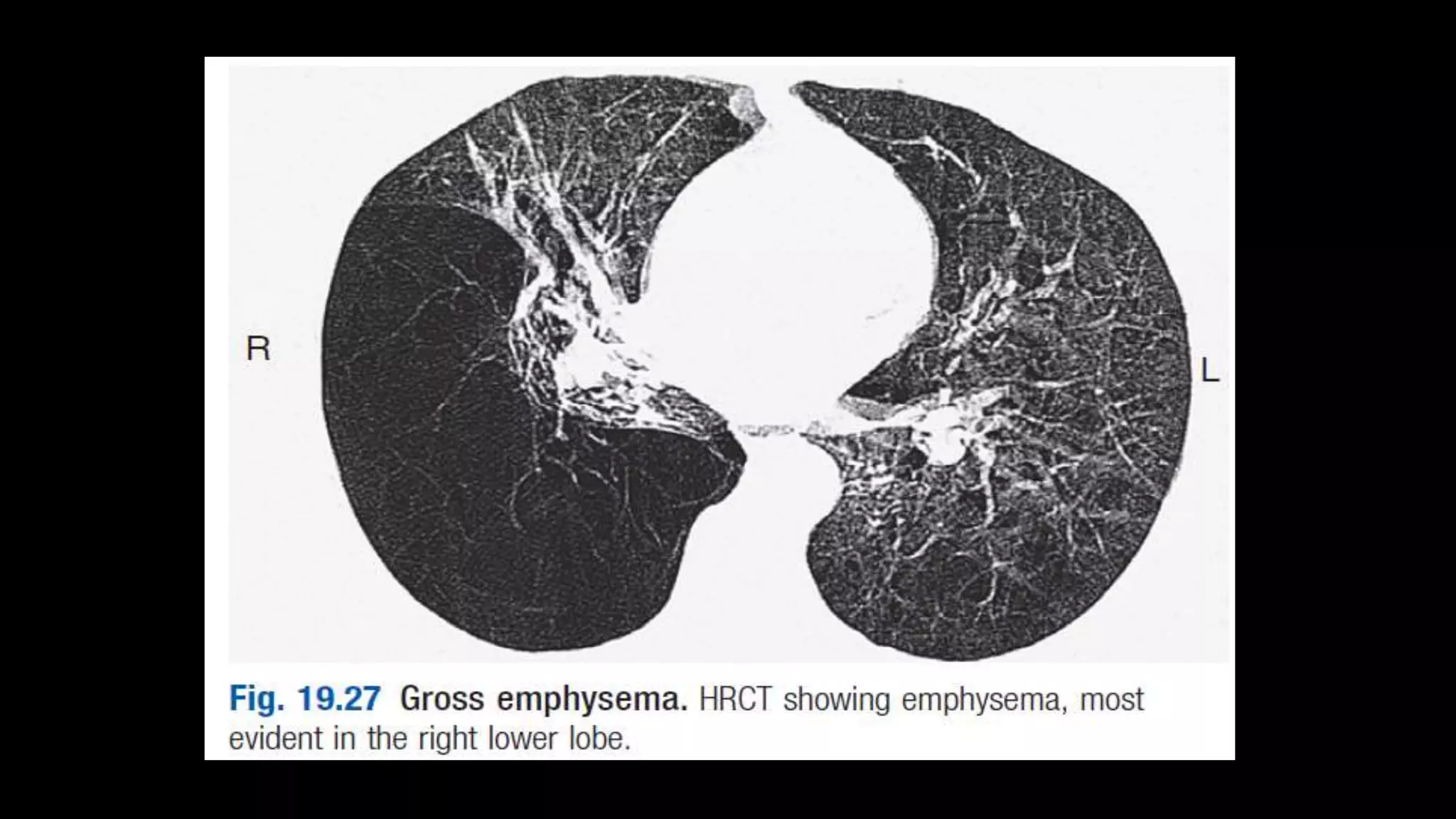
• HRCT – allows the detection, characterisation and quantification of
emphysema and is more sensitive than a plain CXR for detecting bullae.
• ECG – In advanced cor pulmonale the P wave is taller (P pulmonale) and
there may be right bundle branch block (RSR′ complex) and the changes
of right ventricular hypertrophy.
• Echocardiogram – useful to assess cardiac function where there is
disproportionate dyspnoea
DIFFERENTIAL DIAGNOSIS
•Chronic asthma
•Tuberculosis
•Bronchiectasis
•Congestive cardiac failure
•Lung Cancer
MANAGEMENT
General
• Elimination of tobacco smoking reduces decline in
pulmonary function and prolongs survival in pts with
COPD.
• Pulmonary rehabilitation improves dyspnea and
functional status and reduces hospitalizations.
• Annual influenza vaccinations are strongly
recommended; in addition, pneumococcal vaccination
is recommended.
MANAGEMENT
Bronchodilators
• Mild disease can usually be managed with an inhaled
short-acting anticholinergic such as ipratropium or a
short-acting β agonist such as albuterol.
• Combination therapy and long-acting β agonists and/or
long-acting anticholinergics should be added in pts
with severe disease.
• The narrow toxic-therapeutic ratio of theophylline
compounds limits their use. If used, either low doses
or regular monitoring of serum levels are required.
MANAGEMENT
Corticosteroids
•Inhaled steroid medications reduce the frequency of
exacerbations in individuals with severe COPD.
•Combinations of inhaled steroids and long-acting β
agonists reduce COPD exacerbations and may reduce
mortality.
•Oral corticosteroids – useful during exacerbations but
maintenance therapy contributes to osteoporosis and
impaired skeletal muscle function and should be
avoided.
MANAGEMENT
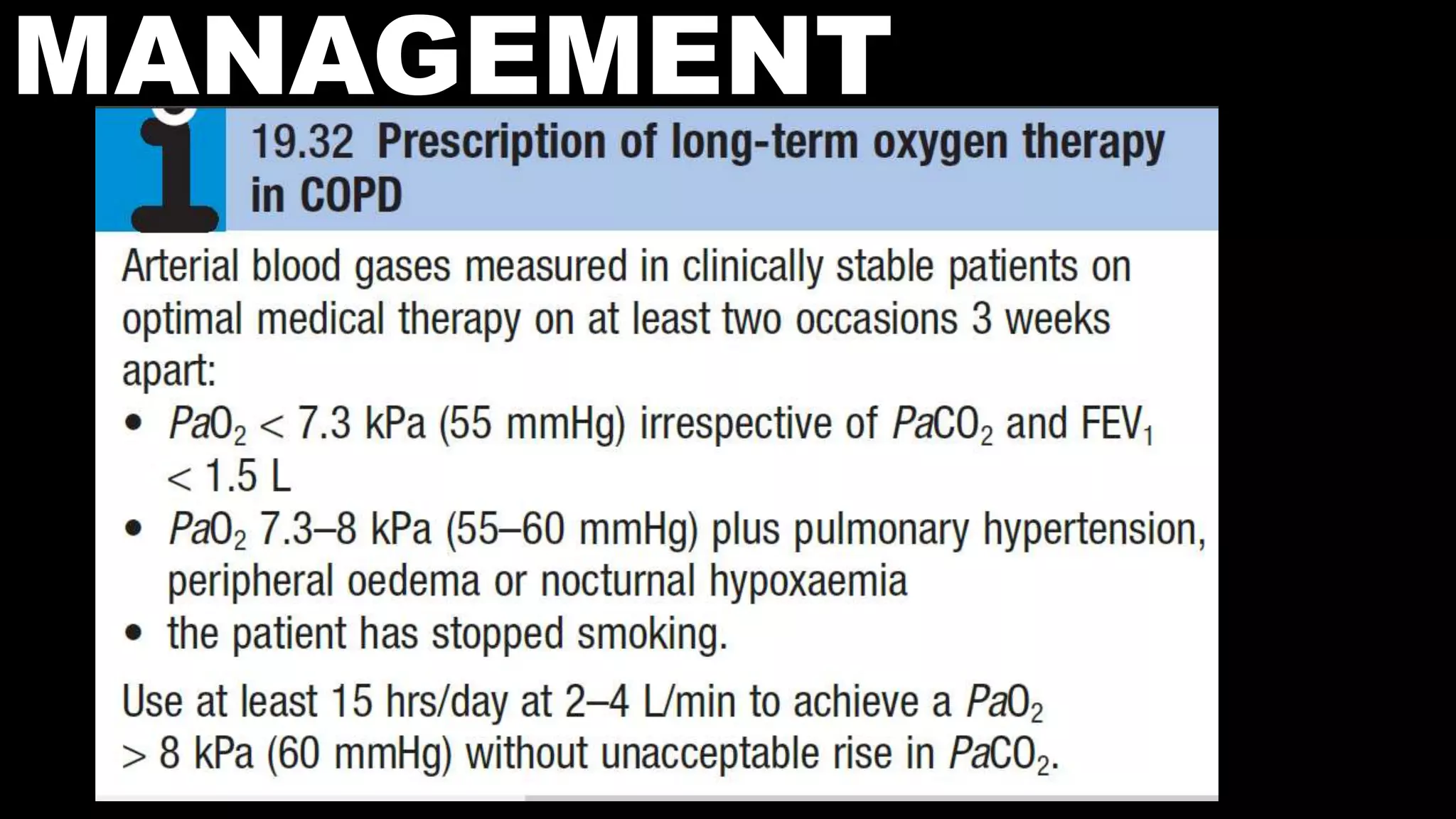
Long Term Domiciliary oxygen therapy
• Reduces symptoms and improve survival in COPD pts who
are chronically hypoxemic.
• Indicated in
• Pts with a PaO2 ≤55 mmHg or SaO2 ≤88%.
• Pts with PaO2 of 56–59 mmHg or SaO2 <90% if associated with signs and
symptoms of pulmonary hypertension or cor pulmonale.
• The aim of therapy is to increase the PaO2 to at least 8 kPa
(60 mmHg) or SaO2 to at least 90%.
• Ambulatory oxygen therapy should be considered in patients
who desaturate on exercise and show objective improvement
in exercise capacity and/or dyspnoea with oxygen.
MANAGEMENT
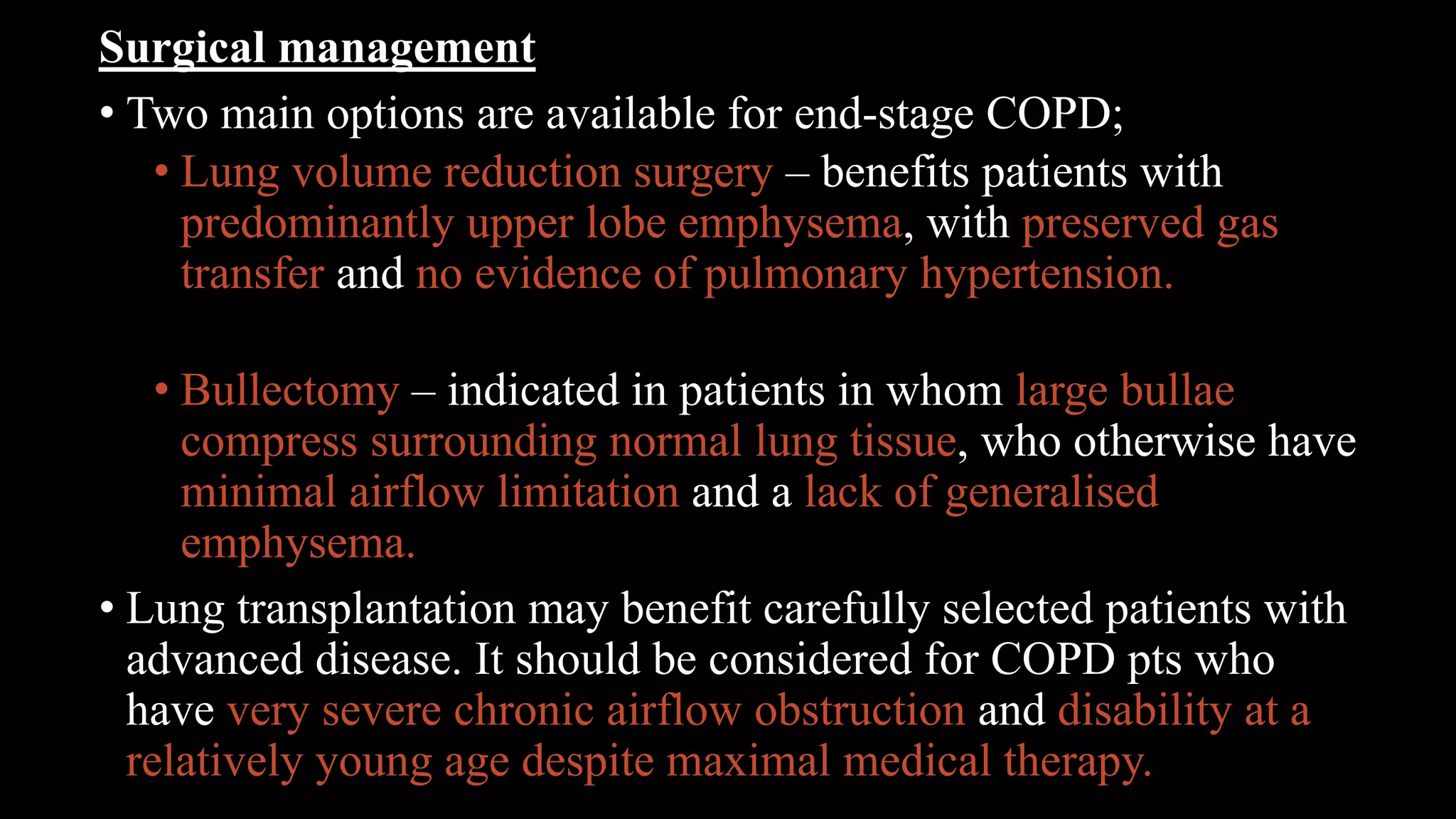
Surgical management
• Two main options are available for end-stage COPD;
• Lung volume reduction surgery – benefits patients with
predominantly upper lobe emphysema, with preserved gas
transfer and no evidence of pulmonary hypertension.
• Bullectomy – indicated in patients in whom large bullae
compress surrounding normal lung tissue, who otherwise have
minimal airflow limitation and a lack of generalised
emphysema.
• Lung transplantation may benefit carefully selected patients with
advanced disease. It should be considered for COPD pts who
have very severe chronic airflow obstruction and disability at a
relatively young age despite maximal medical therapy.
ACUTE EXACERBATIONS
•Characterised by
•Increase in symptoms and
•Deterioration in lung function and health
status.
•May be accompanied by development of
respiratory failure and/or fluid retention
•Usually triggered by mostly bacteria or a change
in air quality.
MAX OF ACUTE EXACERBATIONS
• Controlled oxygen at 24% or 28% - aimed at maintaining a PaO2 above 8 kPa (60
mmHg) (or an SaO2 between 88% and 92%).
• Nebulised short-acting β2-agonists, combined with an anticholinergic agent (e.g.
salbutamol and ipratropium), should be administered.
• Shorter courses of oral prednisolone reduces symptoms and improves lung
function.
• Antibiotics for patients reporting an increase in sputum purulence, sputum volume
or breathlessness. simple regimens are advised, such as an amino penicillin or a
macrolide.
• If the patient remains tachypnoeic, hypercapnic and acidotic, non invasive
ventilation (NIV) is indicated.
• Peripheral oedema usually responds to diuretics.
• Discharge from hospital may be planned once patients are clinically stable on their
usual maintenance medication.
PROGNOSIS
•Determined using the BODE index
•B - Body mass index.
•O - the degree of airflow Obstruction
•D - measurement of Dyspnoea
exercise capacity
•E – Exercise Capacity
THANK YOU

COPD

  • 1.
  • 2.
    DEFINITION • A diseasestate characterized by airflow limitation that is not fully reversible. • Usually progressive. • Associated with an enhanced chronic inflammatory response in the airways and the lung to noxious particles or gases. • COPD includes; • Emphysema – xtized by destruction and enlargement of the lung alveoli. • Chronic bronchitis – xtized by a chronic cough and phlegm. • Small airways disease – xtized by narrowing of small bronchioles.
  • 3.
    EPIDEMIOLOGY • Approx. 80million people worldwide suffer from moderate to severe disease. • 10–20% of the cases affect over-40s with 2.5 million deaths/year worldwide. • Predicted to become the third most common cause of death and fifth most common cause of disability worldwide by 2020. • Anticipated rise in morbidity and mortality will be greatest in Asian and African countries, as a result of their increasing tobacco consumption. • Prevalence directly related to the prevalence of tobacco smoking.
  • 4.
    RISK FACTORS Environmental • Tobaccosmoke. • Indoor air pollution – cooking with biomass fuels in confined areas. • Occupational exposures to coal dust, silica and cadmium • Low birth weight – reduction of maximally attained lung function in young adult life • Lung growth – affected by childhood infections or maternal smoking, resulting in a lower maximally attained lung function in adult life • Infections – recurrent respiratory infections accelerate decline in FEV1; persistence of adenovirus in lung tissue may alter local inflammatory response, predisposing to lung damage; HIV infection is associated with emphysema • Low socioeconomic status • Cannabis smoking
  • 5.
    RISK FACTORS •Genetic factors: •α1-antiproteinase deficiency. •Other COPD susceptibility genes e.g. minor allele SNP of MMP12 associated with decreased MMP-12 expression has a +ve effect on lung function in children with asthma and in adult smokers. • Airway hyper-reactivity – increased bronchoconstriction in response to a variety of exogenous stimuli, including methacholine and histamine.
  • 6.
    PATHOGENESIS •Chronic exposure tocigarette smoke  Inflammatory cell recruitment within the terminal air spaces of the lungs  release of elastolytic proteinases that damage the extracellular matrix of the lung  oxidant stress and loss of matrix-cell attachment  structural cell death. •Ineffective repair of elastin and other extracellular matrix components  air space enlargement.
  • 8.
    PATHOPHYSIOLOGY Airflow obstruction •Characterized bychronically reduced FEV 1 /FVC. •In the early stages of COPD, airflow obstruction is only evident at lung volumes at or below the FRC. •In more advanced disease the entire curve has decreased expiratory flow compared to normal.
  • 9.
    PATHOPHYSIOLOGY Hyperinflation • Compensatory forairflow obstruction. • Characterized by increased total lung capacity. • Pushes the diaphragm into a flattened position with the following effects: • Renders diaphragm less capable of generating inspiratory pressures than normal. • Diaphragm must generate greater tension to develop the trans pulmonary pressure required to produce tidal breathing. • Decrease in the zone of apposition between the diaphragm and the abdominal wall  positive abdominal pressure during inspiration not applied as effectively to the chest wall  hindrance to rib cage movement and inspiration.
  • 10.
    PATHOPHYSIOLOGY Impaired gaseous exchange •The PaO2 usually remains near normal until the FEV 1 is decreased to ~50% of predicted. • An elevation of PaCO2 is not expected until the FEV 1 is <25% of predicted. • Non-uniform ventilation and ventilation-perfusion mismatching. • Pulmonary hypertension severe enough to cause cor pulmonale and right ventricular failure due to COPD occurs in individuals who have marked decreases in FEV 1 (<25% of predicted) and chronic hypoxemia (Pa O2 <55 mmHg).
  • 12.
  • 13.
    HISTORY •The three mostcommon symptoms are •Cough •Sputum production •Exertional dyspnoea. •Symptoms may exist for months or years medical attention is sought. •Patients usually present with an acute exacerbation and Hx should reveal presence of symptoms before the exacerbation.
  • 14.
    HISTORY •Level of dyspnoearelated to activities should also be interrogated (use modified MRC dyspnoea scale) •Exertional dyspnoea described as increased effort to breathe, heaviness, air hunger, or gasping, can be insidious. •Activities involving significant arm work, particularly at or above shoulder level, are particularly difficult for patients with COPD. •Activities that allow the patient to brace the arms and use accessory muscles of respiration are better tolerated.
  • 15.
    HISTORY • As COPDadvances, the principal feature is worsening dyspnoea on exertion. • In most advanced stages, patients are breathless doing simple activities of daily living. • Patients may also develop resting hypoxemia. • Accompanying worsening airflow obstruction is an increased frequency of exacerbations. • In case of a cigarette smoker ask about the amount and duration of smoking (calculated in pack years as shown below) P𝑎𝑐𝑘𝑦𝑒𝑎𝑟𝑠 = 𝑛𝑜.𝑜𝑓 𝑐𝑖𝑔𝑎𝑟𝑒𝑡𝑡𝑒𝑠 𝑠𝑚𝑜𝑘𝑒𝑑 𝑝𝑒𝑟 𝑑𝑎𝑦 20 (𝑜𝑛𝑒 𝑝𝑎𝑐𝑘 𝑜𝑓 𝑐𝑖𝑔𝑎𝑟𝑒𝑡𝑡𝑒𝑠) x no of years of smoking
  • 17.
    COMPLICATIONS •Acute exacerbations ±infection •Polycythaemia •Respiratory failure •Cor pulmonale characterized by pulmonary HTN, RVH, and eventually right heart failure. •Pneumothorax due to ruptured bullae •Lung carcinoma especially in smokers.
  • 18.
    PHYSICAL EXAMINATION • Currentsmokers exhibit signs of active smoking, including an odour of smoke or nicotine staining of fingernails. • Early stages – patients usually have an entirely normal PE. • More severe disease; • Expiratory wheezing. • Signs of hyperinflation – barrel chest and enlarged lung volumes with poor diaphragmatic excursion as assessed by percussion. • Use of accessory muscles of respiration – sitting in the characteristic “tripod” position to facilitate the actions of SCM, scalene, and intercostal muscles. • Cyanosis - visible in the lips and nail beds.
  • 19.
    PHYSICAL EXAMINATION •Advanced disease; •Accompaniedby systemic wasting, with significant weight loss, bitemporal wasting, and diffuse loss of subcutaneous adipose tissue. •Hoover’s sign – paradoxical inward movement of the rib cage with inspiration.
  • 20.
    PINK PUFFERS VSBLUE BLOATERS PINK PUFFERS • Increased alveolar ventilation • Near normal PaO2 • Normal or low PaCO2. • Breathless but not cyanosed. • May progress to type 1 respiratory failure BLUE BLOATERS • Decreased alveolar ventilation • Low PaO2 • High PaCO2. • Cyanosed but not breathless • May go on to develop cor pulmonale. • Their respiratory centres are relatively insensitive to CO2 and they rely on hypoxic drive to maintain respiratory effort.
  • 21.
    INVESTIGATIONS Lung function tests •Assessment of severity of airflow limitation. • Reduced FEV1 (FEV1 <80% of predicted) • The FEV1 : FVC ratio is reduced (FEV1 : FVC ratio <70%) • Low PEFR. • Measurement of lung volumes provides an assessment of hyperinflation; • Lung volumes increase, resulting in an increase in TLC, FRC, and RV as well as reduced diffusing capacity for carbon monoxide.
  • 22.
    INVESTIGATIONS Arterial blood gases& oximetry • Demonstrate resting or exertional hypoxemia. • Arterial blood gases provide additional information about alveolar ventilation and acid-base status by measuring arterial PCO2 and pH. • Pulse oximetry determines the O2 saturation (<93%). • In acute exacerbations, ABGs should be considered in pts with mental status changes, significant respiratory distress, very severe COPD, or a Hx of hypercarbia.
  • 23.
    INVESTIGATIONS CXR • Identification ofalternative diagnoses, such as CHF, lung cancer, and the presence of bullae and to exclude pneumonia during exacerbations. • Typically reserved for the evaluation of advanced disease. • Plain CXR may show hyperinflation; flat hemidiaphragms; large central pulmonary arteries; reduced peripheral vascular markings; bullae
  • 24.
    INVESTIGATIONS Other Investigations • Alpha1 Antitrypsin (α1AT) testing – is recommended to exclude severe α1AT deficiency. • CBC – useful in advanced disease to assess for erythrocytosis, which can occur secondary to hypoxemia, and anaemia, which can worsen dyspnoea. • HRCT – allows the detection, characterisation and quantification of emphysema and is more sensitive than a plain CXR for detecting bullae. • ECG – In advanced cor pulmonale the P wave is taller (P pulmonale) and there may be right bundle branch block (RSR′ complex) and the changes of right ventricular hypertrophy. • Echocardiogram – useful to assess cardiac function where there is disproportionate dyspnoea
  • 27.
  • 28.
    MANAGEMENT General • Elimination oftobacco smoking reduces decline in pulmonary function and prolongs survival in pts with COPD. • Pulmonary rehabilitation improves dyspnea and functional status and reduces hospitalizations. • Annual influenza vaccinations are strongly recommended; in addition, pneumococcal vaccination is recommended.
  • 29.
    MANAGEMENT Bronchodilators • Mild diseasecan usually be managed with an inhaled short-acting anticholinergic such as ipratropium or a short-acting β agonist such as albuterol. • Combination therapy and long-acting β agonists and/or long-acting anticholinergics should be added in pts with severe disease. • The narrow toxic-therapeutic ratio of theophylline compounds limits their use. If used, either low doses or regular monitoring of serum levels are required.
  • 30.
    MANAGEMENT Corticosteroids •Inhaled steroid medicationsreduce the frequency of exacerbations in individuals with severe COPD. •Combinations of inhaled steroids and long-acting β agonists reduce COPD exacerbations and may reduce mortality. •Oral corticosteroids – useful during exacerbations but maintenance therapy contributes to osteoporosis and impaired skeletal muscle function and should be avoided.
  • 31.
    MANAGEMENT Long Term Domiciliaryoxygen therapy • Reduces symptoms and improve survival in COPD pts who are chronically hypoxemic. • Indicated in • Pts with a PaO2 ≤55 mmHg or SaO2 ≤88%. • Pts with PaO2 of 56–59 mmHg or SaO2 <90% if associated with signs and symptoms of pulmonary hypertension or cor pulmonale. • The aim of therapy is to increase the PaO2 to at least 8 kPa (60 mmHg) or SaO2 to at least 90%. • Ambulatory oxygen therapy should be considered in patients who desaturate on exercise and show objective improvement in exercise capacity and/or dyspnoea with oxygen.
  • 32.
  • 33.
    Surgical management • Twomain options are available for end-stage COPD; • Lung volume reduction surgery – benefits patients with predominantly upper lobe emphysema, with preserved gas transfer and no evidence of pulmonary hypertension. • Bullectomy – indicated in patients in whom large bullae compress surrounding normal lung tissue, who otherwise have minimal airflow limitation and a lack of generalised emphysema. • Lung transplantation may benefit carefully selected patients with advanced disease. It should be considered for COPD pts who have very severe chronic airflow obstruction and disability at a relatively young age despite maximal medical therapy.
  • 34.
    ACUTE EXACERBATIONS •Characterised by •Increasein symptoms and •Deterioration in lung function and health status. •May be accompanied by development of respiratory failure and/or fluid retention •Usually triggered by mostly bacteria or a change in air quality.
  • 35.
    MAX OF ACUTEEXACERBATIONS • Controlled oxygen at 24% or 28% - aimed at maintaining a PaO2 above 8 kPa (60 mmHg) (or an SaO2 between 88% and 92%). • Nebulised short-acting β2-agonists, combined with an anticholinergic agent (e.g. salbutamol and ipratropium), should be administered. • Shorter courses of oral prednisolone reduces symptoms and improves lung function. • Antibiotics for patients reporting an increase in sputum purulence, sputum volume or breathlessness. simple regimens are advised, such as an amino penicillin or a macrolide. • If the patient remains tachypnoeic, hypercapnic and acidotic, non invasive ventilation (NIV) is indicated. • Peripheral oedema usually responds to diuretics. • Discharge from hospital may be planned once patients are clinically stable on their usual maintenance medication.
  • 36.
    PROGNOSIS •Determined using theBODE index •B - Body mass index. •O - the degree of airflow Obstruction •D - measurement of Dyspnoea exercise capacity •E – Exercise Capacity
  • 38.