COPD AND ANAESTHESTIC
CONSIDERATIONS
BY- DR NANDINI DESHPANDE
GUIDE- DR ASHISH PAREEK
SPECIAL CO- GUIDE- DR M.L.GUPTA
[PULMONOLOGIST]
CHRONIC OBSTRUCTIVE PULMONARY
DISEASE
 Definition: Disease state characterized by airflow
limitation that is not fully reversible The airflow limitation is
usually progressive and is associated with an abnormal
inflammatory response of the lungs to noxious particles or
gases, primarily caused by cigarette smoking.
 According to GOLD [Global Initiative for chronic obstructive
disease],Chronic Obstructive Pulmonary Disease (COPD) is a
common, preventable and treatable disease that is characterized
by persistent respiratory symptoms and airflow limitation that is
due to airway and/or alveolar abnormalities usually caused by
significant exposure to noxious particles or gases.
CHRONIC
BRONCHITIS
EMPHYSEMA
PERIPHERAL AIRWAY
DISEASE
ASTHMA
BRONCHIECTASIS
PULMONARY
FIBROSIS
CYSTIC FIBROSIS
 Chronic Bronchitis: (Clinical Definition)
Chronic productive cough for 3 months in each of 2
successive years in a patient in whom other causes
of productive chronic cough have been excluded.
 Emphysema: (Pathological Definition)
The presence of permanent enlargement of the
airspaces distal to the terminal bronchioles,
accompanied by destruction of their walls and
without obvious fibrosis
COMPARATIVE FEATURES OF COPD
FEATURE CHRONIC BRONCHITIS EMPHYSEMA
Mechanism of airway
obstruction
Decreased Lumen d/t
mucus & inflammation
Loss of elastic recoil
Dyspnoea Moderate Severe
FEV1 Decreased Decreased
PaO2 Marked Decrease (Blue
Bloater)
Modest Decrease (Pink
Puffer)
PaCO2 Increased Normal or Decreased
Diffusing capacity Normal Decreased
Haematocrit Increased Normal
Cor pulmonale Marked Mild
Prognosis Poor Good
RISK FACTORS:
 Host factors:
•Genetic factors: Eg α1
Antitrypsin Deficiency
•Gender : Prevalence more
in males. ?Females
more susceptible
•Airway
Hyperresponsiveness
 Exposures:
•Smoking: Most Important
Risk Factor
•Passive/second hand
,smoking exposure
•Occupation
•Environmental pollution
•Recurrent
bronchopulmonary
infections
PATHOGENESIS:
PATHOPHYSIOLOGY AND IMPORTANT
CONSIDERATIONS TO THE ANAESTHETIST
 Airway obstruction :
 The major site of obstruction is found in the smaller conducting
airway (<2mm in diameter).
 Processes contributing to obstruction in the small conducting airway include
disruption of the epithelial barrier, interference with mucociliary clearance
apparatus that results in accumulation of inflammatory mucous exudates in
the small airway lumen, infiltration of the airway walls by inflammatory cells
and deposition of connective tissue in the airway wall.
 Fibrosis surrounding the small airway appears to be a significant contributor.
This remodeling and repair thickens the airway walls, reduces lumen caliber
and restricts the normal increase in calibre produced by lung inflation
 Increased resistance of the small conducting airway and increased
compliance of the lung as a result of emphysematous destruction, causes
the prolonged time constant.
 This constant is reflected in measurements of the FEV1 and its ratio to
forced vital capacity(FEV1/FVC),which are reliable screening tools
because they are affected by both airway obstruction and emphysema.
 Hyperinflation:
 In COPD there is often “air trapping” (increased residual volume and
increased ratio of residual volume to total lung capacity) and progressive
hyperinflation (increased total lung capacity) late in the disease.
Hyperinflation of the thorax during tidal breathing preserves maximum
expiratory airflow, because as lung volume increases, elastic recoil
pressure increases, and airways enlarge so that airway resistance
decreases.
 Despite compensating for airway obstruction, hyperinflation can push the
diaphragm into a flattened position with a number of adverse effects.
 First, by decreasing the zone of apposition between the diaphragm and
the abdominal wall, positive abdominal pressure during inspiration is not
applied as effectively to the chest wall, hindering rib cage movement and
impairing inspiration.
 Second, because the muscle fibers of the flattened diaphragm are
shorter than those of a more normally curved diaphragm, they are less
capable of generating inspiratory pressures than normal.
 Third, the flattened diaphragm (with increased radius of curvature)
must generate greater tension to develop the transpulmonary pressure
required to produce tidal breathing.
 Gas exchange:
 Non‐uniform ventilation and ventilation‐perfusion mismatch are
characteristics of COPD, due to the heterogenous nature of the disease
process within airway and lung parenchyma.
 Ventilation/ perfusion (V/Q) mismatching causes reduction in PaO2 but
shunting is minimal.
 This finding explains the effectiveness of modest elevation of inspired
oxygen in treating hypoxemia due to COPD. Pao2 usually remains near
normal until FEV1 is decreased to 50% of predicted and elevation of
PaCO2 is not seen until FEV1 is <25%.
 Hypercapnia, if present, reflects both V/Q mismatching and alveolar
hypoventilation, the later resulting from both respiratory muscle
dysfunction and increased ventilatory requirements.
 Pulmonary hypertension severe enough to cause cor-pulmonale and right
heart failure is seen when there is marked decrease in FEV1<25% along
with chronic hypoxemia PaO2 <55 mmHg.
CONCEPT OF AUTO-PEEP
 Patients with severe COPD often breathe in a pattern that interrupts
expiration before the alveolar pressure has decreased to atmospheric
pressure.
 This incomplete expiration is due to a combination of factors which
include flow limitation, increased work of respiration and increased
airway resistance
 This interruption leads to an increase of the end‐expiratory lung volume
above the FRC. This PEEP in the alveoli at rest has been termed
auto‐PEEP or PEEP i.
 All these changes can cause difficulty in positive
pressure ventilation , increase in peak pressures,
development of auto –PEEP and impaired ventilation
and perfusion during anaesthesia.
CLINICAL FEATURES:
 Symptoms: Cough: Initially intermittent Present throughout the day
Sputum: Tenacious & mucoid Purulent Infection Dyspnea: Progressively
worsens, Persistent.
 Physical Examination:
 Respiratory Signs •Barrel Chest •Pursed lip breathing •Adventitious
Ronchi/Wheeze
 Systemic Signs •Cyanosis •Neck vein enlargement •Peripheral oedema
•Liver enlargement •Loss of muscle mass
 Exposure: Smoking, in pack years
INVESTIGATIONS:
 PULMONARY FUNCTION TESTS:
Diagnosis
Assessment of severity
Following progress Decreased
FEV1/FVC
Decreased FEF
(25-75%)
Increased RV
 ARTERIAL BLOOD GASES:
Arterial blood gases and oximetry may demonstrate resting or
exertional hypoxemia
Arterial blood gases provide additional information about alveolar
ventilation and acid-base status by measuring arterial Pco2 and pH .
The change in pH with Pco2 is 0.08 units/10 mmHg acutely and 0.03
units/10 mmHg in the chronic state .
The arterial blood gas is an important component of the evaluation
of patients presenting with symptoms of an exacerbation.
 CHEST RADIOGRAPH:
 CT SCAN:
Computed tomography (CT) scan is the current definitive
test for establishing the presence or absence of
emphysema.
 ECG:
Signs of RVH: RAD , p Pulmonale in Lead II ,Predominant
R wave in V1-3 , RS pattern in precordial leads
Bronchodilator Reversibility Testing
 Provides the best achievable FEV1 (and FVC) .
 Can be done on first visit if no diagnosis has been
made .
 Best done as a planned procedure: pre- and
postbronchodilator tests require a minimum of 15
minutes
Alpha-1 antitrypsin deficiency (AATD)
 The World Health Organization recommends that all patients with
a diagnosis of COPD should be screened once especially in areas
with high AATD prevalence.
 AATD patients are typically < 45 years with pan lobular basal
emphysema.
 Delay in diagnosis in older AATD patients presents as more
typical distribution of emphysema (centrilobular apical).
 A low concentration (< 20% normal) is highly suggestive of
homozygous deficiency.
GOLD CLASSIFICATION:
STAGE CHARACTERISTICS
Mild FEV1/FVC< 70%
FEV1< 80% predicted, with/without chronic
symptoms
Moderate FEV1/FVC< 70%
50%<FEV1< 80% predicted, with/without
chronic symptoms
Severe FEV1/FVC< 70%
30%<FEV1< 50% predicted, with/without
chronic symptoms
Very severe FEV1/FVC< 70%
FEV1< 30% predicted or <50% predicted plus
chronic respiratory failure (PaCO2<60 mmHg
or PaCO2>50 mmHg)
TREATMENT:
 Modifying natural history of Disease:
Smoking cessation
Long term oxygen therapy
 Symptomatic:
Bronchodilators
Antibiotics
 Pulmonary Rehabilitation
 Nutrition
SMOKING CESSATION:
 Time course Beneficial effects
 12-24 hours ↓ COHb levels and nicotine levels
 48-72 hours bronchociliary functions improve
 1-2 weeks sputum production
 4-6 weeks PFT improves
 6-8 weeks immune function and drug metabolism normalize
 8-12 weeks ↓overall perioperative morbidity
MANAGEMENT OF COPD STAGE I: MILD COPD
 Characteristics:
Treatment:
• FEV1 /FVC < 70%
• FEV1 > 80 %
predicted
• With or without
chronic
symptoms
Short-acting
bronchodilators
as needed
MANAGEMENT OF COPD STAGE II:
MODERATE COPD
 Characteristics:
Treatment:
• FEV1 /FVC < 70%
• 50% < FEV1<
80% predicted
• With or without
chronic
symptoms
• Short-acting
bronchodilators
as needed
• Regular
treatment with
one or more
long-acting
bronchodilators
• Rehabilitation
MANAGEMENT OF COPD STAGE III: SEVERE
COPD
 Characteristics:
Treatment:
• FEV1 /FVC < 70%
• 30% < FEV1<
50% predicted
• With or without
chronic
symptoms
• Short-acting bronchodilators
as needed
• Regular treatment with one
or more long-acting
bronchodilators
• Inhaled glucocorticosteroids
if repeated exacerbations
• Rehabilitation
MANAGEMENT OF COPD STAGE IV:
VERY SEVERE COPD
 Characteristics:
Treatment:
• FEV1 /FVC < 70%
• 30% < FEV1<
50% predicted
• Plus chronic
respiratory
failure
• Short-acting bronchodilators as
needed
• Regular treatment with one or
more long-acting bronchodilators
• Inhaled glucocorticosteroids if
repeated exacerbations
• Treat complications
• Rehabilitation
• Long-term oxygen therapy if
respiratory failure
• Consider surgical options
LONG TERM OXYGEN THERAPY:
 Improves survival, exercise, sleep and cognitive
performance.
 Oxygen delivery methods include nasal continuous
flow, reservoir cannulas and transtracheal catheter.
 Physiological indications for oxygen include an arterial
oxygen tension (PaO2 )<7.3kPa (55mmHg). The
therapeutic goal is to maintain spO2 >90% during rest,
sleep and exertion.
SURGICAL TREATMENT:
 Bullectomy -short-term improvements in
1. airflow obstruction
2. lung volumes
3. hypoxaemia and hypercapnia
4. exercise capacity
5. Dyspnoea
 Lung Volume Reduction Surgery -potentially long-term improvement in
1. survival
2. short-term improvements in Spirometry
3. lung volumes
4. exercise tolerance
5. dyspnoea
 Lung Transplantation
COPD : EXACERBATIONS:
 Definition: An exacerbation of COPD is an event in the
natural course of the disease characterized by a change in the
patient’s baseline dyspnea, cough and/or sputum beyond day-to-
day variability sufficient to warrant a change in management.
 Precipitating Causes:
 Infections: Bacterial, Viral
 Air pollution exposure
 Non compliance with LTOT
INDICATIONS FOR HOSPITALIZATION:
 The presence of high-risk comorbid conditions
1. Pneumonia
2. cardiac arrhythmia
3. congestive heart failure
4. diabetes mellitus
5. renal or liver failure
 Inadequate response to outpatient management
 Marked increase in dyspnoea, orthopnoea
 Worsening hypoxaemia & hypercapnia
 Changes in mental status
 Uncertain diagnosis.
INDICATION FOR ICU ADMISSION:
 Impending or actual respiratory failure
 Presence of other end-organ dysfunction
1. shock
2. renal failure
3. liver failure
4. neurological disturbance
 Haemodynamic instability
TREATMENT FOR COPD EXACERBATION:
 Supplemental Oxygen (if SPO2 < 90%)
 Bronchodilators:
1. Nebulised Beta Agonists,
2. Ipratropium with spacer/MDI
 Corticosteroids -Inhaled, Oral
 Antibiotics:
1. If change in sputum characteristics
2. Based on local antibiotic resistance
3. Amoxycillin/Clavulanate, Respiratory
Fluoroquinolones
 Ventilatory support: NIV, Invasive ventilation
PREPARATION FOR ANAESTHESIA:
Anaesthetic Considerations in patients
with COPD undergoing surgery:
Patient Factors:
 Advanced age
 Poor general condition, nutritional status
 Co morbid conditions :
1. HTN
2. Diabetes
3. Heart Disease
4. Obesity
5. Sleep Apnea
Problems due to Disease
 Exacerbation of Bronchial inflammation
 d/t Airway instrumentation
 preoperative airway infection
 surgery induced immunosuppression
 increased work of breathing
 Increased post operative pulmonary
complications
 Problems due to Anaesthesia:
1. GA decreases lung volumes, promotes V/Q mismatch
2. FRC reduced during anaesthesia
3. Anaesthetic drugs blunt Ventilatory responses to
hypoxia & CO2
4. Postoperative Atelectasis & hypoxemia
5. Postoperative pain limits coughing & lung expansion
 Problems due to Surgery:
1. Site : most important predictor of Post op
complications
2. Duration: > 3 hours
3. Position
PRE-OPERATIVE ASSESMENT:
 History:
1. Smoking
2. Cough: Type, Progression, Recent RTI
3. Sputum: Quantity, colour, blood
4. Dyspnoea
5. Exercise intolerance
6. Occupation, Allergies
7. Symptoms of cardiac or respiratory failure
 Examination:
1. Body Habitus:- Obesity/ Malnourished
2. Active infection
3. Sputum- change in quantity, nature
4. Fever
5. Crepitations
 Respiratory failure
1. Hypercapnia
2. Hypoxia
3. Cyanosis
 Cor Pulmonale and Right heart failure
1. Dependent oedema
2. tender enlarged liver
 Pulmonary hypertension
1. Loud P2
2. Right Parasternal heave
3. Tricuspid regurgitation
INVESTIGATIONS:
 Complete Blood count
 Serum Electrolytes
 Blood Sugar
 ECG
 Arterial Blood Gases
 Chest X Ray
 Spiral CT
 Preoperative Pulmonary Function Tests-specific and
nonspecific tests
INDICATIONS FOR PFT ‘S:
(AMERICAN COLLEGE OF PHYSICIANS CONSENSUS
STATEMENT)
 Cardiac, thoracic or upper abdominal surgery with a
history of dyspnoea, smoking
 Lower abdominal surgery with a history of dyspnoea,
smoking and anticipated prolonged surgery
 All patients undergoing lung resection
 Morbid obesity
 Any pulmonary disease
 Age > 70 years
PRE-OPERATIVE PREPARATION:
 Cessation of smoking
 Dilatation of airways
 Loosening & Removal of secretions
 Eradication of infection
 Recognition of Cor Pulmonale and treatment
 Improve strength of skeletal muscles – nutrition, exercise
 Correct electrolyte imbalance
 Familiarization with respiratory therapy, education, motivation
& facilitation of patient care
DRUGS COMMONLY ENCOUNTERED:
 Anticholinergics:
 Block muscarinic receptors
 Onset of action within 30 Min
 Ipratropium – MDI:- 17 mcg/puff, 200 puffs/ canister -2-3 puffs every 6hours
 NEBULIZER:- 0.25mg/ml(0.025%)- 0.25mg every 6hours
 Ipratropium bromide is generally preferred to the short acting beta-2-agonists
as a first-line agent because of its longer duration of action and absence of
sympathomimetic side effects
 Tiotropium - long lasting
 Side Effects: Dry Mouth, metallic taste
 Caution in Prostatism & Glaucoma
Beta Agonists:
 Act by increasing cAMP
 Specific β2 agonist – Salbutamol : oral 2-4 mg,
0.25 – 0.5 mg i.m /s.c and 100-200 μg inhalation
 Side – effects: muscle tremors, palpitations, throat
irritation
 Terbutaline : oral 5 mg/ 0.25 mg s.c./ 250 μg
inhalation
 Salmeterol : Long acting (12 hrs) , 50 μg BD- 200 μg
BD
 Methylxanthines :
 Mode of Action – inhibition of phospodiesterase,↑ cAMP,
cGMP – Bronchodilatation
 Adenosine receptor antagonism
 ↑ Ca release from SR
 Intravenous (Aminophylline, Theophylline)
 loading – 5mg/kg
 Maintenance – 0.5mg/kg/h
Inhaled Corticosteroids:
 Anti-inflammatory
 Restore responsiveness to β2 agonist
 Reduce severity and frequency of
exacerbations
 Do not alter rate of decline of FEV1
 Beclomethasone, Budesonide, Fluticasone
ANAESTHETIC TECHNIQUE……..
Choice of anaesthesia
depends on the
1. Patient factors(clinical state)
2. Surgical factors(type and duration
of procedure)
CONCERNS IN REGIONAL ANAESTHESIA:
 NEURAXIAL TECHNIQUES:
• No significant effect on Respiratory
function
• Level above T6 not recommended
• No interference with airway
• Avoids bronchospasm
• No danger of pneumothorax from N2O
 PERIPHERAL NERVE BLOCKS:
• Suitable for peripheral limb surgeries
• Minimal respiratory effects
• Supraclavicular techniques are
contraindicated in severe pulmonary
disease
• Interscalene block remains a concern
due to ipsilateral phrenic nerve
paralysis and loss of sympathetic tone
due to stellate ganglion block resulting
in bronchospasm
 Thoracic epidural anesthesia using low
concentrations of local anaesthetic agents and low
doses of opiates suppresses both the afferent
nociceptive inputs and the efferent sympathetic output
thus preserving the respiratory muscular activity and
the HPV response. It also improve ventilatory
mechanics resulting in decreased airway resistance,
lower work of breathing and better preservation of
inspiratory and expiratory capacities allowing lung
recruitment maneuvers and voluntary drainage of
secretions
CONCERNS IN GENERAL ANAESTHESIA:
 General anesthetic agents, opiates, myorelaxants as well as
mechanical ventilation are known to interfere with the
respiratory system.
 The combined effects of the supine position, GA and
thoracic/abdominal incision produce an immediate decline in
lung volumes with atelectasis formation in the most
dependent parts of the lung .
 Pre-oxygenation should be used in any patient who is
hypoxic on air before induction. In patients with severe COPD
and hypoxia, CPAP during induction may be used to improve
the efficacy of pre-oxygenation and reduce the development
of atelectasis.
 Upper airway instrumentation( eg tracheal intubation) may
trigger vagally-mediated reflex bronchoconstriction thereby
promoting the expiratory collapse of the peripheral airways with
incomplete lung alveolar emptying
 To attenuate the Broncho constrictive reflex due to endotracheal
intubation or suctioning, prophylactic treatment with lidocaine(IV
or inhaled) and/or a beta2-adrenergic agonist are recommended
in COPD patients with bronchospastic response
 Volatile anaesthetics like halothane [best], sevoflurane are
useful for maintenance of anaesthesia due to their excellent
Broncho dilating properties with the possible exception of
desflurane and isoflurane. Both desflurane and isoflurane may
cause irritation of the bronchi because of their pungent odour
and increase the airway resistance so there may be an advantage
to choosing a less irritating agent such as sevoflurane for
induction and emergence in cases of severe airway reactivity.
 Emergence from anesthesia with inhalational agents
can be prolonged significantly ,especially in patients
with significant airway obstruction, because air
trapping also traps inhalational agents as they flood
out of the body’s compartments into the lungs .
 Nitrous oxide can be administered in combination with
a volatile anesthetic. When nitrous oxide is used, there
is the potential for passage of this gas into pulmonary
bullae. is could lead to enlargement or even rupture of
the bullae, resulting in development of a
pneumothorax.
 Another potential disadvantage of nitrous oxide is the
limitation on the inspired oxygen concentration that it
imposes.
 Opioids may be less useful than inhaled anesthetics for maintenance
of anesthesia in patients with COPD because they can be associated
with prolonged ventilatory depression as a result of their slow rate
of metabolism or elimination.
 An endotracheal tube bypasses most of the natural airway
humidification system, so humidification of inspired gases and use of
low gas flows are needed to keep airway secretions moist.
 General anesthesia exceeding 2.5–4 hours has been identified as a
strong predictor of PPCs .Indeed, prolonged exposure to general
anesthetics alters the immune defenses and gas exchange capacity
mainly by depressing the alveolar macrophage function, interfering
with surfactant production, slowing of the muco-ciliary clearance and
increasing the permeability of the alveolar-capillary barrier.
 Management of ventilation during general anaesthesia should be
aimed at reducing the dynamic hyperinflation, PEEP i, and air
trapping. Harmful effects of air trapping include hypotension,
barotrauma and volume trauma to the lungs, hypercapnia, and
acidosis
 Measures to reduce air trapping include use of smaller
tidal volumes and lower respiratory rates, with more
time for expiration.
 Shortening the inspiratory time increases the peak
inspiratory flow thereby facilitating better ventilation
of all alveoli.
 Tidal volumes of 6 to 8 mL/kg combined with slow
inspiratory flow rates minimize the likelihood of
turbulent air flow and help maintain optimal
ventilation/perfusion matching .
 Slow respiratory rates (6 to 10 breaths per minute)
provide sufficient time for complete exhalation to
occur, which is particularly important if air trapping is
to be minimized. Slow rates also allow sufficient time
for venous return and are less likely to be associated
with undesirable degrees of hyperventilation .
 Application of external PEEP has been shown to decrease
the effort of triggering breaths in patients breathing
spontaneously on assisted modes of ventilation.
 Even during controlled ventilation, external PEEP that is
less than or equal to PEEP i, is not found to significantly
increase the alveolar pressure.
 Pressure controlled ventilation, by virtue of its
decelerating flow reduces peak inspiratory pressure and
allows for more uniform distribution of tidal volume and
improvement of static and dynamic compliance .
 Residual neuromuscular blockade persisting after
anesthesia emergence has been incriminated in deficient
coughing, depressed hypoxic ventilatory drive and “silent”
inhalation of gastric contents
 Restrictive fluid administration decreases risk of
pulmonary oedema, it has been accepted in thoracic surgery
and showed good outcomes after major abdominal
interventions.
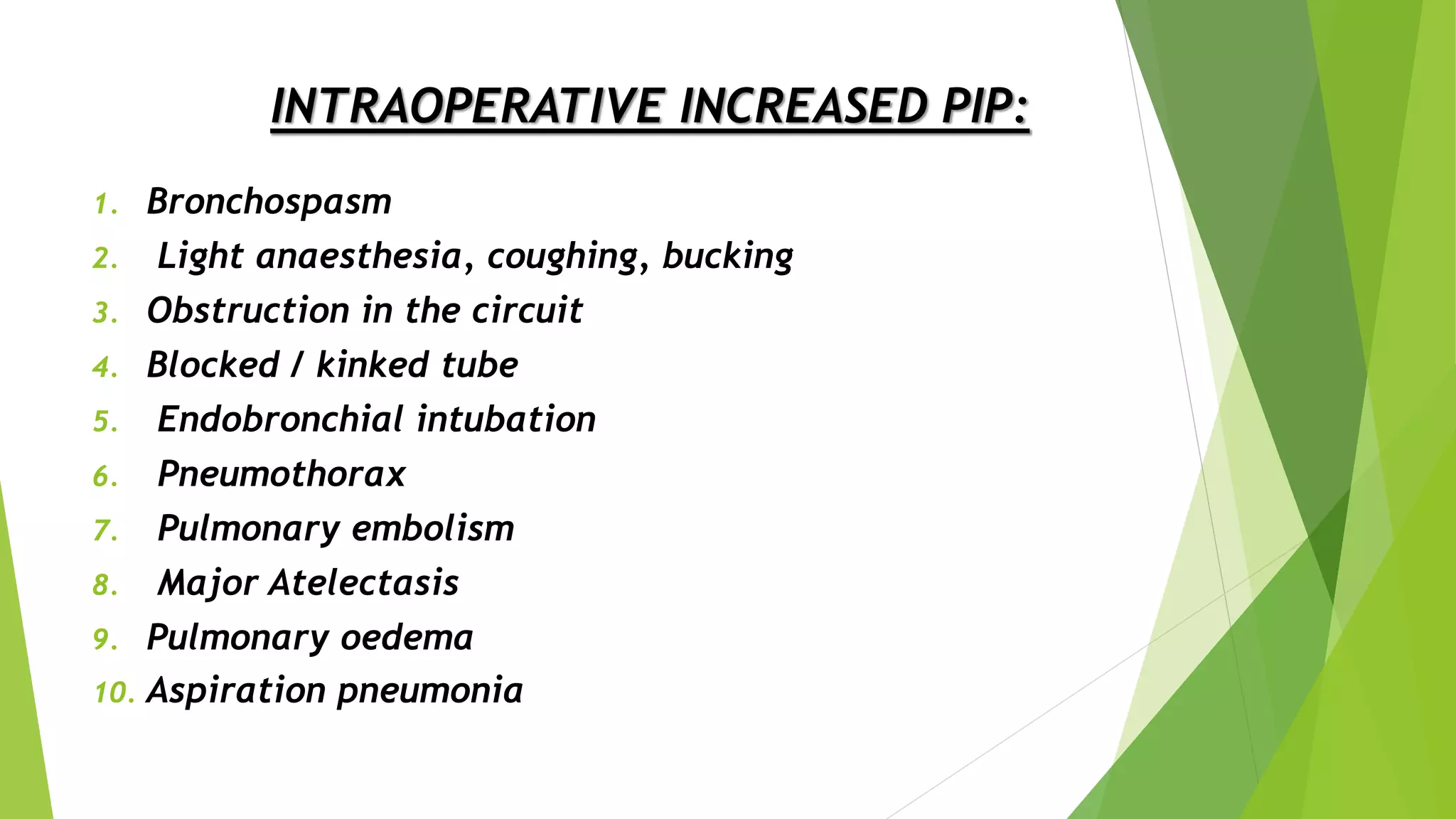
INTRAOPERATIVE INCREASED PIP:
1. Bronchospasm
2. Light anaesthesia, coughing, bucking
3. Obstruction in the circuit
4. Blocked / kinked tube
5. Endobronchial intubation
6. Pneumothorax
7. Pulmonary embolism
8. Major Atelectasis
9. Pulmonary oedema
10. Aspiration pneumonia
INTRAOPERATIVE BRONCHOSPASM:
 Bronchospasm during anaesthesia usually manifests as prolonged
expiration .
 Expiratory wheeze may be auscultated in the chest or heard in the
breathing circuit due to movement of the gas through narrowed
airway .
 Breath sounds may be reduced or absent.
 With intermittent positive pressure ventilation, peak airway
pressures are increased, tidal volumes reduced, or both.
 In severe bronchospasm, wheeze may be quiet or absent due to
cessation of movement of air
 With capnography, narrowed
airway and prolonged
expiration result in a delayed
rise in end‐tidal carbon
dioxide, producing a
characteristic ‘shark fin’
appearance
 Intraoperatively, bronchospasm occurs most commonly during the
induction and maintenance stages of anaesthesia and is less often
encountered in the emergence and recovery stages .
 Bronchospasm during the induction stage is most commonly
caused by airway irritation, often related to intubation.
 During the maintenance stage of anaesthesia, bronchospasm may
result from an anaphylactic or serious allergic reaction. Following
endotracheal intubation, wheezing is more likely to occur when
barbiturates are used as anaesthetic induction agents, compared
with propofol, ketamine or volatile anaesthetics
Inhalational: isoflurane,
desflurane [ due to
pungent odour]
IV Induction drugs:
thiopentone, etomidate
Opioids: morphine,
pethidine
Muscle relaxants:
atracurium,
mivacurium[>histamine
release],
succinylcholine[<histamine
]
Anaesthetic
drugs
causing
bronchospas
m
Inhalational:
sevoflurane[sweet-
smelling],halothane [best
bronchodilator]
IV Induction drugs:
propofol[ haemodynamically
stable patients] , ketamine[
haemodynamically unstable
patients]
Opioids: fentanyl
Muscle relaxants:
cisatracurium ,
vecuronium , rocuronium
Anaesthetic
drugs
preferred in
COPD patients
MANAGEMENT OF INTRAOPERATIVE
BRONCHOSPASM:
 Increase FiO2 to 100%
 Deepen the plane of anaesthesia - Commonest cause is
surgical stimulation under light anaesthesia
 Relieve mechanical stimulation - endotracheal suction,
Stop surgery
 β2 agonists – Nebulisation or MDI
1. s/c Terbutaline, iv Adrenaline
 intravenous Aminophylline:-5mg/kg IV over 20min then
0.5mg/kg/h infusion
 Intravenous corticosteroid(hydrocortisone 200mg)
indicated if severe bronchospasm
POST-OPERATIVE PULMONARY
COMPLICATIONS:
1. Atelectasis
2. Aspiration pneumonitis
3. Ventilator associated pneumonia[VAP]
4. Deep vein thrombosis and pulmonary
embolism
POST-OPERATIVE CARE:
 Mechanical Ventilation:
Indications:
1. Severe COPD undergoing major surgery
2. FEV1 /FVC<70%
3. Pre-op PaCo2> 50mm Hg
FiO2 & Ventilator settings adjusted to maintain PaO2 60- 100
mm Hg & PaCO2 in range that maintains pH at7.35- 7.45
 Continue Bronchodilators
 Oxygen therapy
 Lung Expansion manoeuvres
RISK REDUCTION STRATEGIES:
PRE-OPERATIVE:
• Cessation of smoking for at least 6 weeks
• Treat evidence of expiratory airflow obstruction
• Treat respiratory infection with antibiotics
• Initiate patient education regarding lung expansion
maneuverers [incentive spirometry, chest
physiotherapy, deep breathing exercises, postural
drainage]
INTRAOPERATIVE:
• Minimally invasive
surgery
• Consider regional
anaesthesia
• Avoid surgical
procedures lasting
>3 hours
POST-OPERATIVE:
• Incentive
spirometry
• CPAP or NIV
ventilation
• Voluntary deep
breathing
• Analgesia
[neuraxial
opioids,
intercostal nerve
blocks, patient –
controlled
analgesia]
• Ambulation
SUMMARY:
 COPD is a progressive disease with increasing irreversible
airway obstruction.
 Cigarette smoking is the most important causative factor for
COPD.
 Smoking cessation & LTOT are the only measures capable of
altering the natural history of COPD.
 COPD is not a contraindication for any particular anaesthesia
technique if patients have been appropriately stabilized.
 COPD patients are prone to develop intraoperative and
postoperative pulmonary complications.
 Preoperative optimization should include control of infection
and wheezing.
 Postoperative lung expansion maneuvers and adequate post op
analgesia have been proven to decrease incidence of post op
complications.
Copd and anaesthetic considerations

Copd and anaesthetic considerations

  • 1.
    COPD AND ANAESTHESTIC CONSIDERATIONS BY-DR NANDINI DESHPANDE GUIDE- DR ASHISH PAREEK SPECIAL CO- GUIDE- DR M.L.GUPTA [PULMONOLOGIST]
  • 2.
    CHRONIC OBSTRUCTIVE PULMONARY DISEASE Definition: Disease state characterized by airflow limitation that is not fully reversible The airflow limitation is usually progressive and is associated with an abnormal inflammatory response of the lungs to noxious particles or gases, primarily caused by cigarette smoking.  According to GOLD [Global Initiative for chronic obstructive disease],Chronic Obstructive Pulmonary Disease (COPD) is a common, preventable and treatable disease that is characterized by persistent respiratory symptoms and airflow limitation that is due to airway and/or alveolar abnormalities usually caused by significant exposure to noxious particles or gases.
  • 3.
  • 4.
     Chronic Bronchitis:(Clinical Definition) Chronic productive cough for 3 months in each of 2 successive years in a patient in whom other causes of productive chronic cough have been excluded.  Emphysema: (Pathological Definition) The presence of permanent enlargement of the airspaces distal to the terminal bronchioles, accompanied by destruction of their walls and without obvious fibrosis
  • 5.
    COMPARATIVE FEATURES OFCOPD FEATURE CHRONIC BRONCHITIS EMPHYSEMA Mechanism of airway obstruction Decreased Lumen d/t mucus & inflammation Loss of elastic recoil Dyspnoea Moderate Severe FEV1 Decreased Decreased PaO2 Marked Decrease (Blue Bloater) Modest Decrease (Pink Puffer) PaCO2 Increased Normal or Decreased Diffusing capacity Normal Decreased Haematocrit Increased Normal Cor pulmonale Marked Mild Prognosis Poor Good
  • 6.
    RISK FACTORS:  Hostfactors: •Genetic factors: Eg α1 Antitrypsin Deficiency •Gender : Prevalence more in males. ?Females more susceptible •Airway Hyperresponsiveness  Exposures: •Smoking: Most Important Risk Factor •Passive/second hand ,smoking exposure •Occupation •Environmental pollution •Recurrent bronchopulmonary infections
  • 7.
  • 8.
    PATHOPHYSIOLOGY AND IMPORTANT CONSIDERATIONSTO THE ANAESTHETIST  Airway obstruction :  The major site of obstruction is found in the smaller conducting airway (<2mm in diameter).  Processes contributing to obstruction in the small conducting airway include disruption of the epithelial barrier, interference with mucociliary clearance apparatus that results in accumulation of inflammatory mucous exudates in the small airway lumen, infiltration of the airway walls by inflammatory cells and deposition of connective tissue in the airway wall.  Fibrosis surrounding the small airway appears to be a significant contributor. This remodeling and repair thickens the airway walls, reduces lumen caliber and restricts the normal increase in calibre produced by lung inflation
  • 9.
     Increased resistanceof the small conducting airway and increased compliance of the lung as a result of emphysematous destruction, causes the prolonged time constant.  This constant is reflected in measurements of the FEV1 and its ratio to forced vital capacity(FEV1/FVC),which are reliable screening tools because they are affected by both airway obstruction and emphysema.  Hyperinflation:  In COPD there is often “air trapping” (increased residual volume and increased ratio of residual volume to total lung capacity) and progressive hyperinflation (increased total lung capacity) late in the disease. Hyperinflation of the thorax during tidal breathing preserves maximum expiratory airflow, because as lung volume increases, elastic recoil pressure increases, and airways enlarge so that airway resistance decreases.
  • 10.
     Despite compensatingfor airway obstruction, hyperinflation can push the diaphragm into a flattened position with a number of adverse effects.  First, by decreasing the zone of apposition between the diaphragm and the abdominal wall, positive abdominal pressure during inspiration is not applied as effectively to the chest wall, hindering rib cage movement and impairing inspiration.  Second, because the muscle fibers of the flattened diaphragm are shorter than those of a more normally curved diaphragm, they are less capable of generating inspiratory pressures than normal.  Third, the flattened diaphragm (with increased radius of curvature) must generate greater tension to develop the transpulmonary pressure required to produce tidal breathing.
  • 11.
     Gas exchange: Non‐uniform ventilation and ventilation‐perfusion mismatch are characteristics of COPD, due to the heterogenous nature of the disease process within airway and lung parenchyma.  Ventilation/ perfusion (V/Q) mismatching causes reduction in PaO2 but shunting is minimal.  This finding explains the effectiveness of modest elevation of inspired oxygen in treating hypoxemia due to COPD. Pao2 usually remains near normal until FEV1 is decreased to 50% of predicted and elevation of PaCO2 is not seen until FEV1 is <25%.  Hypercapnia, if present, reflects both V/Q mismatching and alveolar hypoventilation, the later resulting from both respiratory muscle dysfunction and increased ventilatory requirements.  Pulmonary hypertension severe enough to cause cor-pulmonale and right heart failure is seen when there is marked decrease in FEV1<25% along with chronic hypoxemia PaO2 <55 mmHg.
  • 12.
    CONCEPT OF AUTO-PEEP Patients with severe COPD often breathe in a pattern that interrupts expiration before the alveolar pressure has decreased to atmospheric pressure.  This incomplete expiration is due to a combination of factors which include flow limitation, increased work of respiration and increased airway resistance  This interruption leads to an increase of the end‐expiratory lung volume above the FRC. This PEEP in the alveoli at rest has been termed auto‐PEEP or PEEP i.  All these changes can cause difficulty in positive pressure ventilation , increase in peak pressures, development of auto –PEEP and impaired ventilation and perfusion during anaesthesia.
  • 13.
    CLINICAL FEATURES:  Symptoms:Cough: Initially intermittent Present throughout the day Sputum: Tenacious & mucoid Purulent Infection Dyspnea: Progressively worsens, Persistent.  Physical Examination:  Respiratory Signs •Barrel Chest •Pursed lip breathing •Adventitious Ronchi/Wheeze  Systemic Signs •Cyanosis •Neck vein enlargement •Peripheral oedema •Liver enlargement •Loss of muscle mass  Exposure: Smoking, in pack years
  • 15.
    INVESTIGATIONS:  PULMONARY FUNCTIONTESTS: Diagnosis Assessment of severity Following progress Decreased FEV1/FVC Decreased FEF (25-75%) Increased RV
  • 18.
     ARTERIAL BLOODGASES: Arterial blood gases and oximetry may demonstrate resting or exertional hypoxemia Arterial blood gases provide additional information about alveolar ventilation and acid-base status by measuring arterial Pco2 and pH . The change in pH with Pco2 is 0.08 units/10 mmHg acutely and 0.03 units/10 mmHg in the chronic state . The arterial blood gas is an important component of the evaluation of patients presenting with symptoms of an exacerbation.
  • 19.
  • 20.
     CT SCAN: Computedtomography (CT) scan is the current definitive test for establishing the presence or absence of emphysema.  ECG: Signs of RVH: RAD , p Pulmonale in Lead II ,Predominant R wave in V1-3 , RS pattern in precordial leads
  • 21.
    Bronchodilator Reversibility Testing Provides the best achievable FEV1 (and FVC) .  Can be done on first visit if no diagnosis has been made .  Best done as a planned procedure: pre- and postbronchodilator tests require a minimum of 15 minutes
  • 22.
    Alpha-1 antitrypsin deficiency(AATD)  The World Health Organization recommends that all patients with a diagnosis of COPD should be screened once especially in areas with high AATD prevalence.  AATD patients are typically < 45 years with pan lobular basal emphysema.  Delay in diagnosis in older AATD patients presents as more typical distribution of emphysema (centrilobular apical).  A low concentration (< 20% normal) is highly suggestive of homozygous deficiency.
  • 23.
    GOLD CLASSIFICATION: STAGE CHARACTERISTICS MildFEV1/FVC< 70% FEV1< 80% predicted, with/without chronic symptoms Moderate FEV1/FVC< 70% 50%<FEV1< 80% predicted, with/without chronic symptoms Severe FEV1/FVC< 70% 30%<FEV1< 50% predicted, with/without chronic symptoms Very severe FEV1/FVC< 70% FEV1< 30% predicted or <50% predicted plus chronic respiratory failure (PaCO2<60 mmHg or PaCO2>50 mmHg)
  • 24.
    TREATMENT:  Modifying naturalhistory of Disease: Smoking cessation Long term oxygen therapy  Symptomatic: Bronchodilators Antibiotics  Pulmonary Rehabilitation  Nutrition
  • 25.
    SMOKING CESSATION:  Timecourse Beneficial effects  12-24 hours ↓ COHb levels and nicotine levels  48-72 hours bronchociliary functions improve  1-2 weeks sputum production  4-6 weeks PFT improves  6-8 weeks immune function and drug metabolism normalize  8-12 weeks ↓overall perioperative morbidity
  • 26.
    MANAGEMENT OF COPDSTAGE I: MILD COPD  Characteristics: Treatment: • FEV1 /FVC < 70% • FEV1 > 80 % predicted • With or without chronic symptoms Short-acting bronchodilators as needed
  • 27.
    MANAGEMENT OF COPDSTAGE II: MODERATE COPD  Characteristics: Treatment: • FEV1 /FVC < 70% • 50% < FEV1< 80% predicted • With or without chronic symptoms • Short-acting bronchodilators as needed • Regular treatment with one or more long-acting bronchodilators • Rehabilitation
  • 28.
    MANAGEMENT OF COPDSTAGE III: SEVERE COPD  Characteristics: Treatment: • FEV1 /FVC < 70% • 30% < FEV1< 50% predicted • With or without chronic symptoms • Short-acting bronchodilators as needed • Regular treatment with one or more long-acting bronchodilators • Inhaled glucocorticosteroids if repeated exacerbations • Rehabilitation
  • 29.
    MANAGEMENT OF COPDSTAGE IV: VERY SEVERE COPD  Characteristics: Treatment: • FEV1 /FVC < 70% • 30% < FEV1< 50% predicted • Plus chronic respiratory failure • Short-acting bronchodilators as needed • Regular treatment with one or more long-acting bronchodilators • Inhaled glucocorticosteroids if repeated exacerbations • Treat complications • Rehabilitation • Long-term oxygen therapy if respiratory failure • Consider surgical options
  • 30.
    LONG TERM OXYGENTHERAPY:  Improves survival, exercise, sleep and cognitive performance.  Oxygen delivery methods include nasal continuous flow, reservoir cannulas and transtracheal catheter.  Physiological indications for oxygen include an arterial oxygen tension (PaO2 )<7.3kPa (55mmHg). The therapeutic goal is to maintain spO2 >90% during rest, sleep and exertion.
  • 33.
    SURGICAL TREATMENT:  Bullectomy-short-term improvements in 1. airflow obstruction 2. lung volumes 3. hypoxaemia and hypercapnia 4. exercise capacity 5. Dyspnoea  Lung Volume Reduction Surgery -potentially long-term improvement in 1. survival 2. short-term improvements in Spirometry 3. lung volumes 4. exercise tolerance 5. dyspnoea  Lung Transplantation
  • 34.
    COPD : EXACERBATIONS: Definition: An exacerbation of COPD is an event in the natural course of the disease characterized by a change in the patient’s baseline dyspnea, cough and/or sputum beyond day-to- day variability sufficient to warrant a change in management.  Precipitating Causes:  Infections: Bacterial, Viral  Air pollution exposure  Non compliance with LTOT
  • 35.
    INDICATIONS FOR HOSPITALIZATION: The presence of high-risk comorbid conditions 1. Pneumonia 2. cardiac arrhythmia 3. congestive heart failure 4. diabetes mellitus 5. renal or liver failure  Inadequate response to outpatient management  Marked increase in dyspnoea, orthopnoea  Worsening hypoxaemia & hypercapnia  Changes in mental status  Uncertain diagnosis.
  • 36.
    INDICATION FOR ICUADMISSION:  Impending or actual respiratory failure  Presence of other end-organ dysfunction 1. shock 2. renal failure 3. liver failure 4. neurological disturbance  Haemodynamic instability
  • 37.
    TREATMENT FOR COPDEXACERBATION:  Supplemental Oxygen (if SPO2 < 90%)  Bronchodilators: 1. Nebulised Beta Agonists, 2. Ipratropium with spacer/MDI  Corticosteroids -Inhaled, Oral  Antibiotics: 1. If change in sputum characteristics 2. Based on local antibiotic resistance 3. Amoxycillin/Clavulanate, Respiratory Fluoroquinolones  Ventilatory support: NIV, Invasive ventilation
  • 38.
  • 39.
    Anaesthetic Considerations inpatients with COPD undergoing surgery: Patient Factors:  Advanced age  Poor general condition, nutritional status  Co morbid conditions : 1. HTN 2. Diabetes 3. Heart Disease 4. Obesity 5. Sleep Apnea
  • 40.
    Problems due toDisease  Exacerbation of Bronchial inflammation  d/t Airway instrumentation  preoperative airway infection  surgery induced immunosuppression  increased work of breathing  Increased post operative pulmonary complications
  • 41.
     Problems dueto Anaesthesia: 1. GA decreases lung volumes, promotes V/Q mismatch 2. FRC reduced during anaesthesia 3. Anaesthetic drugs blunt Ventilatory responses to hypoxia & CO2 4. Postoperative Atelectasis & hypoxemia 5. Postoperative pain limits coughing & lung expansion  Problems due to Surgery: 1. Site : most important predictor of Post op complications 2. Duration: > 3 hours 3. Position
  • 42.
    PRE-OPERATIVE ASSESMENT:  History: 1.Smoking 2. Cough: Type, Progression, Recent RTI 3. Sputum: Quantity, colour, blood 4. Dyspnoea 5. Exercise intolerance 6. Occupation, Allergies 7. Symptoms of cardiac or respiratory failure
  • 43.
     Examination: 1. BodyHabitus:- Obesity/ Malnourished 2. Active infection 3. Sputum- change in quantity, nature 4. Fever 5. Crepitations  Respiratory failure 1. Hypercapnia 2. Hypoxia 3. Cyanosis
  • 44.
     Cor Pulmonaleand Right heart failure 1. Dependent oedema 2. tender enlarged liver  Pulmonary hypertension 1. Loud P2 2. Right Parasternal heave 3. Tricuspid regurgitation
  • 45.
    INVESTIGATIONS:  Complete Bloodcount  Serum Electrolytes  Blood Sugar  ECG  Arterial Blood Gases  Chest X Ray  Spiral CT  Preoperative Pulmonary Function Tests-specific and nonspecific tests
  • 46.
    INDICATIONS FOR PFT‘S: (AMERICAN COLLEGE OF PHYSICIANS CONSENSUS STATEMENT)  Cardiac, thoracic or upper abdominal surgery with a history of dyspnoea, smoking  Lower abdominal surgery with a history of dyspnoea, smoking and anticipated prolonged surgery  All patients undergoing lung resection  Morbid obesity  Any pulmonary disease  Age > 70 years
  • 47.
    PRE-OPERATIVE PREPARATION:  Cessationof smoking  Dilatation of airways  Loosening & Removal of secretions  Eradication of infection  Recognition of Cor Pulmonale and treatment  Improve strength of skeletal muscles – nutrition, exercise  Correct electrolyte imbalance  Familiarization with respiratory therapy, education, motivation & facilitation of patient care
  • 48.
    DRUGS COMMONLY ENCOUNTERED: Anticholinergics:  Block muscarinic receptors  Onset of action within 30 Min  Ipratropium – MDI:- 17 mcg/puff, 200 puffs/ canister -2-3 puffs every 6hours  NEBULIZER:- 0.25mg/ml(0.025%)- 0.25mg every 6hours  Ipratropium bromide is generally preferred to the short acting beta-2-agonists as a first-line agent because of its longer duration of action and absence of sympathomimetic side effects  Tiotropium - long lasting  Side Effects: Dry Mouth, metallic taste  Caution in Prostatism & Glaucoma
  • 49.
    Beta Agonists:  Actby increasing cAMP  Specific β2 agonist – Salbutamol : oral 2-4 mg, 0.25 – 0.5 mg i.m /s.c and 100-200 μg inhalation  Side – effects: muscle tremors, palpitations, throat irritation  Terbutaline : oral 5 mg/ 0.25 mg s.c./ 250 μg inhalation  Salmeterol : Long acting (12 hrs) , 50 μg BD- 200 μg BD
  • 50.
     Methylxanthines : Mode of Action – inhibition of phospodiesterase,↑ cAMP, cGMP – Bronchodilatation  Adenosine receptor antagonism  ↑ Ca release from SR  Intravenous (Aminophylline, Theophylline)  loading – 5mg/kg  Maintenance – 0.5mg/kg/h
  • 51.
    Inhaled Corticosteroids:  Anti-inflammatory Restore responsiveness to β2 agonist  Reduce severity and frequency of exacerbations  Do not alter rate of decline of FEV1  Beclomethasone, Budesonide, Fluticasone
  • 52.
  • 53.
    Choice of anaesthesia dependson the 1. Patient factors(clinical state) 2. Surgical factors(type and duration of procedure)
  • 54.
    CONCERNS IN REGIONALANAESTHESIA:  NEURAXIAL TECHNIQUES: • No significant effect on Respiratory function • Level above T6 not recommended • No interference with airway • Avoids bronchospasm • No danger of pneumothorax from N2O
  • 55.
     PERIPHERAL NERVEBLOCKS: • Suitable for peripheral limb surgeries • Minimal respiratory effects • Supraclavicular techniques are contraindicated in severe pulmonary disease • Interscalene block remains a concern due to ipsilateral phrenic nerve paralysis and loss of sympathetic tone due to stellate ganglion block resulting in bronchospasm
  • 56.
     Thoracic epiduralanesthesia using low concentrations of local anaesthetic agents and low doses of opiates suppresses both the afferent nociceptive inputs and the efferent sympathetic output thus preserving the respiratory muscular activity and the HPV response. It also improve ventilatory mechanics resulting in decreased airway resistance, lower work of breathing and better preservation of inspiratory and expiratory capacities allowing lung recruitment maneuvers and voluntary drainage of secretions
  • 57.
    CONCERNS IN GENERALANAESTHESIA:  General anesthetic agents, opiates, myorelaxants as well as mechanical ventilation are known to interfere with the respiratory system.  The combined effects of the supine position, GA and thoracic/abdominal incision produce an immediate decline in lung volumes with atelectasis formation in the most dependent parts of the lung .  Pre-oxygenation should be used in any patient who is hypoxic on air before induction. In patients with severe COPD and hypoxia, CPAP during induction may be used to improve the efficacy of pre-oxygenation and reduce the development of atelectasis.
  • 58.
     Upper airwayinstrumentation( eg tracheal intubation) may trigger vagally-mediated reflex bronchoconstriction thereby promoting the expiratory collapse of the peripheral airways with incomplete lung alveolar emptying  To attenuate the Broncho constrictive reflex due to endotracheal intubation or suctioning, prophylactic treatment with lidocaine(IV or inhaled) and/or a beta2-adrenergic agonist are recommended in COPD patients with bronchospastic response  Volatile anaesthetics like halothane [best], sevoflurane are useful for maintenance of anaesthesia due to their excellent Broncho dilating properties with the possible exception of desflurane and isoflurane. Both desflurane and isoflurane may cause irritation of the bronchi because of their pungent odour and increase the airway resistance so there may be an advantage to choosing a less irritating agent such as sevoflurane for induction and emergence in cases of severe airway reactivity.
  • 59.
     Emergence fromanesthesia with inhalational agents can be prolonged significantly ,especially in patients with significant airway obstruction, because air trapping also traps inhalational agents as they flood out of the body’s compartments into the lungs .  Nitrous oxide can be administered in combination with a volatile anesthetic. When nitrous oxide is used, there is the potential for passage of this gas into pulmonary bullae. is could lead to enlargement or even rupture of the bullae, resulting in development of a pneumothorax.  Another potential disadvantage of nitrous oxide is the limitation on the inspired oxygen concentration that it imposes.
  • 60.
     Opioids maybe less useful than inhaled anesthetics for maintenance of anesthesia in patients with COPD because they can be associated with prolonged ventilatory depression as a result of their slow rate of metabolism or elimination.  An endotracheal tube bypasses most of the natural airway humidification system, so humidification of inspired gases and use of low gas flows are needed to keep airway secretions moist.  General anesthesia exceeding 2.5–4 hours has been identified as a strong predictor of PPCs .Indeed, prolonged exposure to general anesthetics alters the immune defenses and gas exchange capacity mainly by depressing the alveolar macrophage function, interfering with surfactant production, slowing of the muco-ciliary clearance and increasing the permeability of the alveolar-capillary barrier.  Management of ventilation during general anaesthesia should be aimed at reducing the dynamic hyperinflation, PEEP i, and air trapping. Harmful effects of air trapping include hypotension, barotrauma and volume trauma to the lungs, hypercapnia, and acidosis
  • 61.
     Measures toreduce air trapping include use of smaller tidal volumes and lower respiratory rates, with more time for expiration.  Shortening the inspiratory time increases the peak inspiratory flow thereby facilitating better ventilation of all alveoli.  Tidal volumes of 6 to 8 mL/kg combined with slow inspiratory flow rates minimize the likelihood of turbulent air flow and help maintain optimal ventilation/perfusion matching .  Slow respiratory rates (6 to 10 breaths per minute) provide sufficient time for complete exhalation to occur, which is particularly important if air trapping is to be minimized. Slow rates also allow sufficient time for venous return and are less likely to be associated with undesirable degrees of hyperventilation .
  • 62.
     Application ofexternal PEEP has been shown to decrease the effort of triggering breaths in patients breathing spontaneously on assisted modes of ventilation.  Even during controlled ventilation, external PEEP that is less than or equal to PEEP i, is not found to significantly increase the alveolar pressure.  Pressure controlled ventilation, by virtue of its decelerating flow reduces peak inspiratory pressure and allows for more uniform distribution of tidal volume and improvement of static and dynamic compliance .  Residual neuromuscular blockade persisting after anesthesia emergence has been incriminated in deficient coughing, depressed hypoxic ventilatory drive and “silent” inhalation of gastric contents  Restrictive fluid administration decreases risk of pulmonary oedema, it has been accepted in thoracic surgery and showed good outcomes after major abdominal interventions.
  • 63.
    INTRAOPERATIVE INCREASED PIP: 1.Bronchospasm 2. Light anaesthesia, coughing, bucking 3. Obstruction in the circuit 4. Blocked / kinked tube 5. Endobronchial intubation 6. Pneumothorax 7. Pulmonary embolism 8. Major Atelectasis 9. Pulmonary oedema 10. Aspiration pneumonia
  • 64.
    INTRAOPERATIVE BRONCHOSPASM:  Bronchospasmduring anaesthesia usually manifests as prolonged expiration .  Expiratory wheeze may be auscultated in the chest or heard in the breathing circuit due to movement of the gas through narrowed airway .  Breath sounds may be reduced or absent.  With intermittent positive pressure ventilation, peak airway pressures are increased, tidal volumes reduced, or both.  In severe bronchospasm, wheeze may be quiet or absent due to cessation of movement of air
  • 65.
     With capnography,narrowed airway and prolonged expiration result in a delayed rise in end‐tidal carbon dioxide, producing a characteristic ‘shark fin’ appearance
  • 66.
     Intraoperatively, bronchospasmoccurs most commonly during the induction and maintenance stages of anaesthesia and is less often encountered in the emergence and recovery stages .  Bronchospasm during the induction stage is most commonly caused by airway irritation, often related to intubation.  During the maintenance stage of anaesthesia, bronchospasm may result from an anaphylactic or serious allergic reaction. Following endotracheal intubation, wheezing is more likely to occur when barbiturates are used as anaesthetic induction agents, compared with propofol, ketamine or volatile anaesthetics
  • 67.
    Inhalational: isoflurane, desflurane [due to pungent odour] IV Induction drugs: thiopentone, etomidate Opioids: morphine, pethidine Muscle relaxants: atracurium, mivacurium[>histamine release], succinylcholine[<histamine ] Anaesthetic drugs causing bronchospas m
  • 68.
    Inhalational: sevoflurane[sweet- smelling],halothane [best bronchodilator] IV Inductiondrugs: propofol[ haemodynamically stable patients] , ketamine[ haemodynamically unstable patients] Opioids: fentanyl Muscle relaxants: cisatracurium , vecuronium , rocuronium Anaesthetic drugs preferred in COPD patients
  • 69.
  • 71.
     Increase FiO2to 100%  Deepen the plane of anaesthesia - Commonest cause is surgical stimulation under light anaesthesia  Relieve mechanical stimulation - endotracheal suction, Stop surgery  β2 agonists – Nebulisation or MDI 1. s/c Terbutaline, iv Adrenaline  intravenous Aminophylline:-5mg/kg IV over 20min then 0.5mg/kg/h infusion  Intravenous corticosteroid(hydrocortisone 200mg) indicated if severe bronchospasm
  • 72.
    POST-OPERATIVE PULMONARY COMPLICATIONS: 1. Atelectasis 2.Aspiration pneumonitis 3. Ventilator associated pneumonia[VAP] 4. Deep vein thrombosis and pulmonary embolism
  • 74.
    POST-OPERATIVE CARE:  MechanicalVentilation: Indications: 1. Severe COPD undergoing major surgery 2. FEV1 /FVC<70% 3. Pre-op PaCo2> 50mm Hg FiO2 & Ventilator settings adjusted to maintain PaO2 60- 100 mm Hg & PaCO2 in range that maintains pH at7.35- 7.45  Continue Bronchodilators  Oxygen therapy  Lung Expansion manoeuvres
  • 75.
    RISK REDUCTION STRATEGIES: PRE-OPERATIVE: •Cessation of smoking for at least 6 weeks • Treat evidence of expiratory airflow obstruction • Treat respiratory infection with antibiotics • Initiate patient education regarding lung expansion maneuverers [incentive spirometry, chest physiotherapy, deep breathing exercises, postural drainage]
  • 76.
    INTRAOPERATIVE: • Minimally invasive surgery •Consider regional anaesthesia • Avoid surgical procedures lasting >3 hours POST-OPERATIVE: • Incentive spirometry • CPAP or NIV ventilation • Voluntary deep breathing • Analgesia [neuraxial opioids, intercostal nerve blocks, patient – controlled analgesia] • Ambulation
  • 77.
    SUMMARY:  COPD isa progressive disease with increasing irreversible airway obstruction.  Cigarette smoking is the most important causative factor for COPD.  Smoking cessation & LTOT are the only measures capable of altering the natural history of COPD.  COPD is not a contraindication for any particular anaesthesia technique if patients have been appropriately stabilized.  COPD patients are prone to develop intraoperative and postoperative pulmonary complications.  Preoperative optimization should include control of infection and wheezing.  Postoperative lung expansion maneuvers and adequate post op analgesia have been proven to decrease incidence of post op complications.