CONTROLLED RELEASE
DRUG DELIVERY SYSTEM
(CRDDS)
Presented By:-
Asst. Prof. Gunjan P. Malode
M.Pharm ,Pharmaceutics
Dr. Rajendra Gode Institute of Pharmacy, Amravati.
INTRODUCTION
• Controlled release dosage form is a dosage form that releases one or more drugs continuously in predetermined
pattern for a fixed period of pattern, either systemically or locally to specified target organ.
• Controlled drug delivery is one which delivers the drug at a predetermined and predictable rate, locally or
systemically, for specified period of time.
• The difference between controlled release and sustained release.
• Controlled drug delivery- which delivers the drug at a pre determined rate for a specified period of time.
Controlled release is perfectly zero order release that is the drug release over time irrespective of concentration.
• Sustain release dosage form- is defined as the type of dosage form in which a portion i.e. (initial dose) of the
drug is released immediately, in order to achieve desired therapeutic response more promptly, and the
remaining(maintenance dose) is then released slowly there by achieving a therapeutic level which is prolonged,
but not maintained constant. Sustained release implies slow release of the drug over a time period. It may or may
not be controlled release.
RATIONALE
 The basic rationale of a controlled release drug delivery system is to optimize the
biopharmaceutics, pharmacokinetics, and pharmacodynamics properties of a drug in
such a way that its utility is maximized through reduction in side effects and cure or
control of disease condition in the shortest possible time by using smallest quantity of
drug, administered by most suitable route.
 The immediate release drug delivery system lacks some features like dose
maintenance, controlled release rate and site targeting.
 An ideal drug delivery system should deliver the drug at a rate dictated by the need of
body over a specified period of treatment.
Advantages
 Reduction in frequency of drug administration
 Improved patient compliance
 Reduction in drug level fluctuation in blood
 Reduction in total drug usage when compared with
conventional therapy
 Reduction in drug accumulation with chronic
therapy
 Reduction in drug toxicity (local/systemic)
 Stabilization of medical condition (because of more
uniform drug levels)
 Improvement in bioavailability of some drugs
because of spatial control
 Economical to the health care providers and the
Disadvantages
 Delay in onset of drug action
 Possibility of dose dumping in the case of a poor
formulation strategy
 Increased potential for first pass metabolism
 Greater dependence on GI residence time of dosage
form
 Possibility of less accurate dose adjustment in
some cases
 Cost per unit dose is higher when compared with
conventional doses
 Not all drugs are suitable for formulating into ER
dosage form
Selection of drug candidates or characteristics that may make a drug unsuitable for
Control release dosage form
 Short elimination half-life
 Long elimination half-life
 Narrow therapeutic index
 Poor absorption
 Active absorption
 Low or slow absorption
 Extensive first pass effect
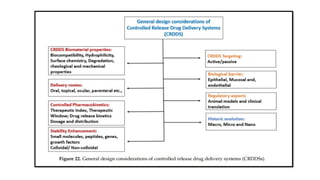
Factors influencing formulation of CRDDS
Physiochemical Factors
• Aqueous Solubility
• Drug Stability
• Molecular Size and Diffusivity
• Partition Coefficient
• Drug pKa and Ionization at Physiological
pH
• Protein Binding
Biological Factors
• Absorption
• Distribution
• Protein Binding
• Metabolism
• Half Life
• Therapeutic Index
• Plasma conc. Response relationship
• Disease State
Physiochemical Factors
Aqueous Solubility’s:
 Most of the active pharmaceutical moiety (API) are weakly acidic or basic in nature that
affect the water solubility of API.
 Weak water-soluble drugs are difficult to design the controlled release formulations.
 High aqueous solubility drug show burst release followed by a rapid increment in
plasma drug concentration.
 These types of drugs are a good candidate for CRDDS.
 The pH dependent solubility also creates a problem in formulating CRDDS.
 BCS class-III & IV drugs are not a suitable candidate for this type of formulations.
Partition coefficient (P-value):
• P-value denotes the fraction of the drug into oil & aqueous phase that is a significant
factor that affects the passive diffusion of the drug across the biological membrane.
• The drugs are having high or low P value not suitable for CR, it should be appropriate to
dissolve in both phases.
Drug pKa:
• pKa is the factor that determined the ionization of drug at physiological pH in GIT.
• Generally, the high ionized drugs are poor candidates for CRDDS.
• The absorption of the unionized drug occurs rapidly as compared to ionized drugs from
the biological membranes.
• The pKa range for an acidic drug that ionization depends on the pH is 3.0 to 7.5 and for
a basic drug it lay between 7 and 11.
Drug stability:
 Drugs that are stable in acid/base, enzymatic degradation, and other gastric fluids are good
candidates for CRDDS.
 If drug degraded in the stomach and small intestine, it not suitable for controlled release
formulations because it will decrease in bioavailability of concern drug.
Molecular size & molecular weight:
• The molecular size & molecular weight are two important factors which affect the
molecular diffusibility across a biological membrane.
• The molecular size less than 400D is easily diffused but greater than 400D create a
problem in drug diffusion.
Protein binding:
 The drug-protein complex act as a reservoir in plasma for the drug.
 Drug showing high plasma protein binding are not a good candidate for CRDDS because
Protein binding increases the biological half-life.
 So there is no need to sustain the drug release.
Biological Factors
Absorption:
• Uniformity in rate and extent of absorption is an important factor in formulating the
CRDDS. However, the rate limiting step is drugged release from the dosage form.
• The absorption rate should rapid then release rate to prevent the dose dumping.
• The various factors like aqueous solubility, log P, acid hydrolysis, which affect the
absorption of drugs.
Dose size:
• The CRDDS formulated to eliminate the repetitive dosing, so it must contain the large dose
than conventional dosage form. But the dose used in conventional dosage form give an
indication of the dose to be used in CRDDS.
Therapeutic window:
• The drugs with narrow therapeutic index are not suitable for CRDDS. If the delivery system
failed to control release, it would cause dose dumping and ultimate toxicity.
Absorption window:
• The drugs which show absorption from the specific segment in GIT, are a poor candidate
for CRDDS.
• Drugs which absorbed throughout the GIT are good candidates for controlled release.
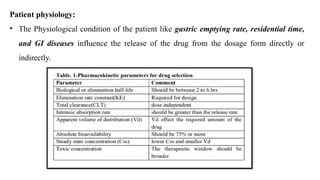
Patient physiology:
• The Physiological condition of the patient like gastric emptying rate, residential time,
and GI diseases influence the release of the drug from the dosage form directly or
indirectly.
Biopharmaceutic And Pharmacokinetic Aspects In The Design Of Controlled Release Per
Oral Drug Delivery Systems
Controlled release drug delivery systems are dosage forms from which the drug is released by
a predetermined rate which is based on a desired therapeutic concentration and the drug’s
pharmacokinetic characteristics.
Biological half-life (t ½)
The shorter the t ½ of a drug the larger will be the fluctuations between the maximum steady
state concentration and maximum steady state concentration upon repetitive dosing. Thus drug
product needs to be administered more frequently.
Minimum effective concentration (MEC)
If a minimum effective concentration, MEC is required either frequent dosing of a
conventional drug product is necessary or a controlled release preparation may be chosen.
Dose size and Extent of duration
The longer the extent of duration the larger the total dose per unit delivery system needs to be.
Hence there is a limitation to the amount of drug that can be practically incorporated into such
a system.
Relatively long t1/2 or fluctuation desired at steady state
It is the belief of some that neither a SR nor a CRDDS is needed or useful for drugs having a
t ½ of 12 hours or more. This is not so because there are two cases for which a 12 or 24
CRDDS seems to be indicated:
1. A drug having a t ½ between 12 and 72 hours may be designed for a CRDDS permitting
application for every two to three days. The decline of the blood level time curve after
release of the drug from the system will depend on the drug’s t ½.
• Naturally, fluctuation between Css max and Css min may accordingly be relatively large
in other words on adds slow release to the slow elimination process.
• For some drugs having a t1/2 between 20 and 100 hrs ,and which are intended for long
term use ,one may desire small fluctuations between peaks and troughs at steady .
2. States either to achieve a certain therapeutic effect or because the therapeutic range is
narrow.
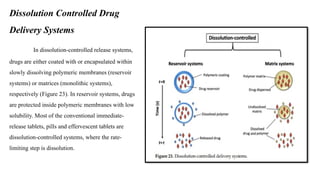
Dissolution Controlled Drug
Delivery Systems
In dissolution-controlled release systems,
drugs are either coated with or encapsulated within
slowly dissolving polymeric membranes (reservoir
systems) or matrices (monolithic systems),
respectively (Figure 23). In reservoir systems, drugs
are protected inside polymeric membranes with low
solubility. Most of the conventional immediate-
release tablets, pills and effervescent tablets are
dissolution-controlled systems, where the rate-
limiting step is dissolution.
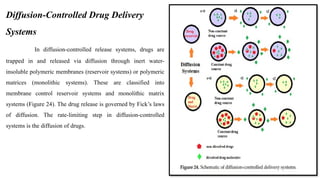
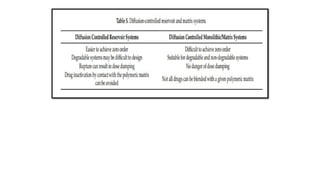
Diffusion-Controlled Drug Delivery
Systems
In diffusion-controlled release systems, drugs are
trapped in and released via diffusion through inert water-
insoluble polymeric membranes (reservoir systems) or polymeric
matrices (monolithic systems). These are classified into
membrane control reservoir systems and monolithic matrix
systems (Figure 24). The drug release is governed by Fick’s laws
of diffusion. The rate-limiting step in diffusion-controlled
systems is the diffusion of drugs.
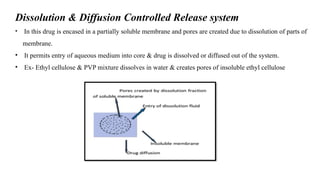
Dissolution & Diffusion Controlled Release system
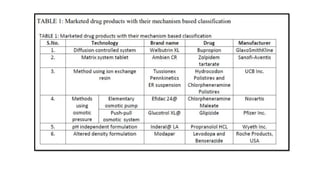
• In this drug is encased in a partially soluble membrane and pores are created due to dissolution of parts of
membrane.
• It permits entry of aqueous medium into core & drug is dissolved or diffused out of the system.
• Ex- Ethyl cellulose & PVP mixture dissolves in water & creates pores of insoluble ethyl cellulose
Ion exchange resins controlled release system
 Ion exchange resins are cross-linked water insoluble polymers carrying ionizable
functional groups.
 These resins are used for taste masking and controlled release system.
 The formulations are developed by embedding the drug molecules in the ion-exchange
resin matrix and this core is then coated with a semi permeable coating material such
as Ethyl Cellulose.
 This system reduced the degradation of drug in GIT.
 The most widely used and safe ion-exchange resin is divinylbenzene sulphonate. In
tablet formulations ion-exchange resins have been used as disintegrant.
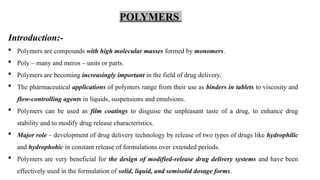
Introduction:-
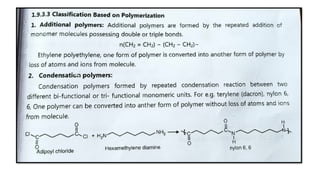
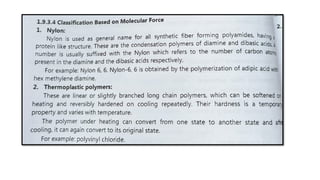
 Polymers are compounds with high molecular masses formed by monomers.
 Poly – many and meros – units or parts.
 Polymers are becoming increasingly important in the field of drug delivery.
 The pharmaceutical applications of polymers range from their use as binders in tablets to viscosity and
flow-controlling agents in liquids, suspensions and emulsions.
 Polymers can be used as film coatings to disguise the unpleasant taste of a drug, to enhance drug
stability and to modify drug release characteristics.
 Major role – development of drug delivery technology by release of two types of drugs like hydrophilic
and hydrophobic in constant release of formulations over extended periods.
 Polymers are very beneficial for the design of modified-release drug delivery systems and have been
effectively used in the formulation of solid, liquid, and semisolid dosage forms.
POLYMERS
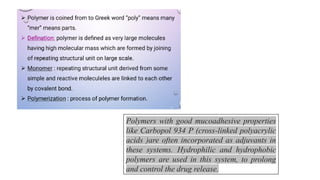
Polymers with good mucoadhesive properties
like Carbopol 934 P (cross-linked polyacrylic
acids )are often incorporated as adjuvants in
these systems. Hydrophilic and hydrophobic
polymers are used in this system, to prolong
and control the drug release.
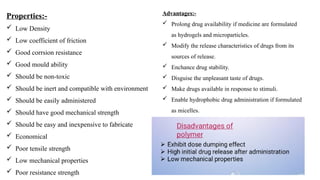
Properties:-
 Low Density
 Low coefficient of friction
 Good corrsion resistance
 Good mould ability
 Should be non-toxic
 Should be inert and compatible with environment
 Should be easily administered
 Should have good mechanical strength
 Should be easy and inexpensive to fabricate
 Economical
 Poor tensile strength
 Low mechanical properties
 Poor resistance strength
Advantages:-
 Prolong drug availability if medicine are formulated
as hydrogels and microparticles.
 Modify the release characteristics of drugs from its
sources of release.
 Enchance drug stability.
 Disguise the unpleasant taste of drugs.
 Make drugs available in response to stimuli.
 Enable hydrophobic drug administration if formulated
as micelles.
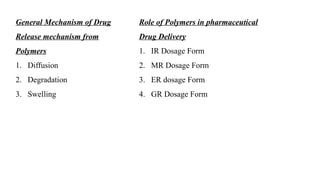
General Mechanism of Drug
Release mechanism from
Polymers
1. Diffusion
2. Degradation
3. Swelling
Role of Polymers in pharmaceutical
Drug Delivery
1. IR Dosage Form
2. MR Dosage Form
3. ER dosage Form
4. GR Dosage Form
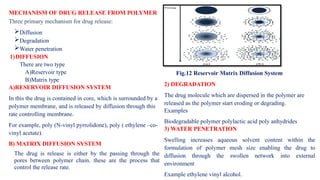
MECHANISM OF DRUG RELEASE FROM POLYMER
Three primary mechanism for drug release:
Diffusion
Degradation
Water penetration
1)DIFFUSION
There are two type
A)Reservoir type
B)Matrix type
A)RESERVOIR DIFFUSION SYSTEM
In this the drug is contained in core, which is surrounded by a
polymer membrane, and is released by diffusion through this
rate controlling membrane.
For example, poly (N-vinyl pyrrolidone), poly ( ethylene –co-
vinyl acetate).
B) MATRIX DIFFUSION SYSTEM
The drug is release is either by the passing through the
pores between polymer chain. these are the process that
control the release rate.
Fig.12 Reservoir Matrix Diffusion System
2) DEGRADATION
The drug molecule which are dispersed in the polymer are
released as the polymer start eroding or degrading.
Examples
Biodegradable polymer polylactic acid poly anhydrides
3) WATER PENETRATION
Swelling increases aqueous solvent content within the
formulation of polymer mesh size enabling the drug to
diffusion through the swollen network into external
environment
Example ethylene vinyl alcohol.
.
ROLE OF POLYMER IN DRUG DELIVERY
1)IMMEDIATE DRUG RELEASED DOSAGE FORM
Polymer such as polyvinyl pyrrolidone and hydroxypropyl methyl cellulose are found to be good binder which increases the
formulation of granules that improve the flow of tablet. Starch and cellulose are used as a disintegrate a tablet preparation non- functional
polymeric film coated in order to protect the drug from degradation.
Many of the polymeric excipients used to bulk out capsule fill are those same as the used in the intermediate release tablet
for hard and soft shell gelatin is the most often used by recent advances HPMC has been accepted as alternative material to the hard
and soft capsule. Capsule used as alternative to tablet poorly
compressible material to increase bioavailability.
2) EXTENDED RELEASED DOSAGE FORM
Extended and sustained release dosage form prolong the time that systemic drug level are within the therapeutic rangeand thus
reduced the number of dosage the patient must take to maintain a therapeutic effect there by increasing the compliance.
The most commonly used water insoluble polymer for extended
release application are the ammonium ethacrylate copolymer, cellulose derivative, ethyl cellulose, ethyl cellulose and cellulose of
acetate, and polyvinyl derivatives, polyvinyl acetate.
Eudragit RS and RN differ in the proportion of quaternary
ammonium group, rendering the eudragit RS less permeable to water, where as methyl cellulose is available in number of different
grades forming stronger and more durable film.
3) GASTRORETENTIVE DOSAGE FORMS
Gastro retentive dosage forms offer an alternatives stratagy for achieve in extended released profile, in
which the formulation will remain in the stomach for prolonged periods. releasing the drug insitu, which
will then dissolved in the liquid content and slowly passed into the small intestine. unlike the conventional
extended released dosage form which gradually released the drug during the transit time along the
gastrointestinal tract. such delivery system would overcome the problem of drug that are absorbed
preferentially from dosage form with in gastrointestinal tract.
4) MODIFIED-RELEASE DOSAGE FORM
It is now generally accepted that for many therapeutic agent drug delivery using immediate release
dosage form result sub optimal therapy and systemic side effect pharmaceutical scientist have attempted to
overcome the limitation of conventional oral dosage form by developing modified release dosage form.
APPLICATION OF POLYMER IN CONTROLLED DRUG
DELIVERY SYSTEM
ORAL DRUGDELIVERYSYSTEM
Drug released at controlled rate when administered orally. For
that several mechanism are involved.
Osmotic pressure controlled GI delivery system
Gel diffusion controlled GI delivery system
Mucoadhesive GI delivery system
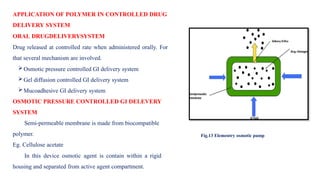
OSMOTIC PRESSURE CONTROLLED GI DELEVERY
SYSTEM
Semi-permeable membrane is made from biocompatible
polymer.
Eg. Cellulose acetate
In this device osmotic agent is contain within a rigid
housing and separated from active agent compartment.
Fig.13 Elementry osmotic pump
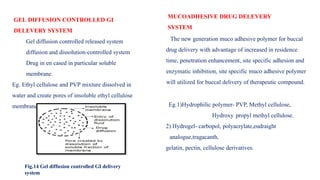
GEL DIFFUSION CONTROLLED GI
DELEVERY SYSTEM
Gel diffusion controlled released system
diffusion and dissolution-controlled system
Drug in en cased in particular soluble
membrane.
Eg. Ethyl cellulose and PVP mixture dissolved in
water and create pores of insoluble ethyl cellulose
membrane.
Fig.14 Gel diffusion controlled GI delivery
system
MUCOADHESIVE DRUG DELEVERY
SYSTEM
The new generation muco adhesive polymer for buccal
drug delivery with advantage of increased in residence
time, penetration enhancement, site specific adhesion and
enzymatic inhibition, site specific muco adhesive polymer
will utilized for buccal delivery of therapeutic compound.
Eg.1)Hydrophilic polymer- PVP, Methyl cellulose,
Hydroxy propyl methyl cellulose.
2) Hydrogel- carbopol, polyacrylate,eudraight
analogue,tragacanth,
gelatin, pectin, cellulose derivatives.
TRANSDERMAL DRUG DELIVERY SYSTEM (TDDS)
The use of polymers for skin preparations is manifold. Requirements of such polymers are dependent on the
formulation types. The most applied polymers on skin long to various classes, for example to cellulose derivatives,
chitosan,carageenan, polyacrylates, polyvinyl alcohol, polyvinyl pyrrolidone and silicones. They are gelating agents,
matrices in patches and wound dressings, anti nucleants and penetration enhancers. Correlations between
commercially available products and results of new scientific investigations are often difficult or not possible, because
of the lack of comparative data especially for transdermal patches. Finally, two promising future trends of polymeric
systems, gene delivery and tissue: engineering, are discussed.
OCCULAR DRUG DELIVERY SYSTEM
It allows prolong contact with corneal surface of eye. Example is Pilocarpine in the treatment of glaucoma.Example is
polyacrylic acid,copolymer of acetate vinyl and ethyl. The delivery of therapeutic agents to the eye for the treatment of
disorders of the eye, (e.g., glaucoma), using conventional drug delivery systems, e.g. drops, ointments, is an inefficient
process. The efficiency of ocular drug delivery is improved through the use of polymeric implants that are implanted
under the lower cul-de-sac of the eye. In this system pilocarpine is dispersed within an alginic acid matrix which is
sandwiched between two layers each composed of poly(ethylene-co-vinyl acetate). It is designed to release either 20 µg/h
or 40 µg/h of a therapeutic agent for a seven day period implantation.
.
APPLICATION OF POLYMER IN SOLID DOSAGE FORM
IN TABLETS
Polymer like methyl cellulose, hydroxyl ethyl methyl cellulose are used as binders. Polymer like all the cellulose derivatives are used as a
coating material. Polymer like carboxy methyl celllose derivatives are used as a disintegrating agent.
IN CAPSULE
Gelatine a natural polymer which is the major ingredient in the manufacturing of the capsules.
APPLICATION OF POLYMER IN THE LIQUID DOSAGE FORM
IN SUSPENSION
Polymer like acacia, tragacanth, cellulose derivatives, xanthum gum are used as a suspending agent.They should be selected based
on the character like PH, solubility and concentration. They enhance the dispersion of the solid in
liquids.
IN EMULSION
Polymer like tragacanth span, tween are used as emulsifying agent.
4)Polymer can be used as film coating agent to mask the unpleasant taste of the drug and to modify drug release.
5)Hyaluronic acid is used in the controlled released ophthalmic
preparation.
6)Some of the polymer using as protective colloids to stabilize suspension and emulsion.
CONTROLLED RELEASE  DRUG DELIVERY SYSTEM (CRDDS)

CONTROLLED RELEASE DRUG DELIVERY SYSTEM (CRDDS)

  • 1.
    CONTROLLED RELEASE DRUG DELIVERYSYSTEM (CRDDS) Presented By:- Asst. Prof. Gunjan P. Malode M.Pharm ,Pharmaceutics Dr. Rajendra Gode Institute of Pharmacy, Amravati.
  • 2.
    INTRODUCTION • Controlled releasedosage form is a dosage form that releases one or more drugs continuously in predetermined pattern for a fixed period of pattern, either systemically or locally to specified target organ. • Controlled drug delivery is one which delivers the drug at a predetermined and predictable rate, locally or systemically, for specified period of time. • The difference between controlled release and sustained release. • Controlled drug delivery- which delivers the drug at a pre determined rate for a specified period of time. Controlled release is perfectly zero order release that is the drug release over time irrespective of concentration. • Sustain release dosage form- is defined as the type of dosage form in which a portion i.e. (initial dose) of the drug is released immediately, in order to achieve desired therapeutic response more promptly, and the remaining(maintenance dose) is then released slowly there by achieving a therapeutic level which is prolonged, but not maintained constant. Sustained release implies slow release of the drug over a time period. It may or may not be controlled release.
  • 3.
    RATIONALE  The basicrationale of a controlled release drug delivery system is to optimize the biopharmaceutics, pharmacokinetics, and pharmacodynamics properties of a drug in such a way that its utility is maximized through reduction in side effects and cure or control of disease condition in the shortest possible time by using smallest quantity of drug, administered by most suitable route.  The immediate release drug delivery system lacks some features like dose maintenance, controlled release rate and site targeting.  An ideal drug delivery system should deliver the drug at a rate dictated by the need of body over a specified period of treatment.
  • 4.
    Advantages  Reduction infrequency of drug administration  Improved patient compliance  Reduction in drug level fluctuation in blood  Reduction in total drug usage when compared with conventional therapy  Reduction in drug accumulation with chronic therapy  Reduction in drug toxicity (local/systemic)  Stabilization of medical condition (because of more uniform drug levels)  Improvement in bioavailability of some drugs because of spatial control  Economical to the health care providers and the Disadvantages  Delay in onset of drug action  Possibility of dose dumping in the case of a poor formulation strategy  Increased potential for first pass metabolism  Greater dependence on GI residence time of dosage form  Possibility of less accurate dose adjustment in some cases  Cost per unit dose is higher when compared with conventional doses  Not all drugs are suitable for formulating into ER dosage form
  • 5.
    Selection of drugcandidates or characteristics that may make a drug unsuitable for Control release dosage form  Short elimination half-life  Long elimination half-life  Narrow therapeutic index  Poor absorption  Active absorption  Low or slow absorption  Extensive first pass effect
  • 6.
    Factors influencing formulationof CRDDS Physiochemical Factors • Aqueous Solubility • Drug Stability • Molecular Size and Diffusivity • Partition Coefficient • Drug pKa and Ionization at Physiological pH • Protein Binding Biological Factors • Absorption • Distribution • Protein Binding • Metabolism • Half Life • Therapeutic Index • Plasma conc. Response relationship • Disease State
  • 7.
    Physiochemical Factors Aqueous Solubility’s: Most of the active pharmaceutical moiety (API) are weakly acidic or basic in nature that affect the water solubility of API.  Weak water-soluble drugs are difficult to design the controlled release formulations.  High aqueous solubility drug show burst release followed by a rapid increment in plasma drug concentration.  These types of drugs are a good candidate for CRDDS.  The pH dependent solubility also creates a problem in formulating CRDDS.  BCS class-III & IV drugs are not a suitable candidate for this type of formulations.
  • 8.
    Partition coefficient (P-value): •P-value denotes the fraction of the drug into oil & aqueous phase that is a significant factor that affects the passive diffusion of the drug across the biological membrane. • The drugs are having high or low P value not suitable for CR, it should be appropriate to dissolve in both phases. Drug pKa: • pKa is the factor that determined the ionization of drug at physiological pH in GIT. • Generally, the high ionized drugs are poor candidates for CRDDS. • The absorption of the unionized drug occurs rapidly as compared to ionized drugs from the biological membranes. • The pKa range for an acidic drug that ionization depends on the pH is 3.0 to 7.5 and for a basic drug it lay between 7 and 11.
  • 9.
    Drug stability:  Drugsthat are stable in acid/base, enzymatic degradation, and other gastric fluids are good candidates for CRDDS.  If drug degraded in the stomach and small intestine, it not suitable for controlled release formulations because it will decrease in bioavailability of concern drug. Molecular size & molecular weight: • The molecular size & molecular weight are two important factors which affect the molecular diffusibility across a biological membrane. • The molecular size less than 400D is easily diffused but greater than 400D create a problem in drug diffusion.
  • 10.
    Protein binding:  Thedrug-protein complex act as a reservoir in plasma for the drug.  Drug showing high plasma protein binding are not a good candidate for CRDDS because Protein binding increases the biological half-life.  So there is no need to sustain the drug release. Biological Factors Absorption: • Uniformity in rate and extent of absorption is an important factor in formulating the CRDDS. However, the rate limiting step is drugged release from the dosage form. • The absorption rate should rapid then release rate to prevent the dose dumping. • The various factors like aqueous solubility, log P, acid hydrolysis, which affect the absorption of drugs.
  • 11.
    Dose size: • TheCRDDS formulated to eliminate the repetitive dosing, so it must contain the large dose than conventional dosage form. But the dose used in conventional dosage form give an indication of the dose to be used in CRDDS. Therapeutic window: • The drugs with narrow therapeutic index are not suitable for CRDDS. If the delivery system failed to control release, it would cause dose dumping and ultimate toxicity. Absorption window: • The drugs which show absorption from the specific segment in GIT, are a poor candidate for CRDDS. • Drugs which absorbed throughout the GIT are good candidates for controlled release.
  • 12.
    Patient physiology: • ThePhysiological condition of the patient like gastric emptying rate, residential time, and GI diseases influence the release of the drug from the dosage form directly or indirectly.
  • 13.
    Biopharmaceutic And PharmacokineticAspects In The Design Of Controlled Release Per Oral Drug Delivery Systems Controlled release drug delivery systems are dosage forms from which the drug is released by a predetermined rate which is based on a desired therapeutic concentration and the drug’s pharmacokinetic characteristics. Biological half-life (t ½) The shorter the t ½ of a drug the larger will be the fluctuations between the maximum steady state concentration and maximum steady state concentration upon repetitive dosing. Thus drug product needs to be administered more frequently. Minimum effective concentration (MEC) If a minimum effective concentration, MEC is required either frequent dosing of a conventional drug product is necessary or a controlled release preparation may be chosen.
  • 14.
    Dose size andExtent of duration The longer the extent of duration the larger the total dose per unit delivery system needs to be. Hence there is a limitation to the amount of drug that can be practically incorporated into such a system. Relatively long t1/2 or fluctuation desired at steady state It is the belief of some that neither a SR nor a CRDDS is needed or useful for drugs having a t ½ of 12 hours or more. This is not so because there are two cases for which a 12 or 24 CRDDS seems to be indicated: 1. A drug having a t ½ between 12 and 72 hours may be designed for a CRDDS permitting application for every two to three days. The decline of the blood level time curve after release of the drug from the system will depend on the drug’s t ½.
  • 15.
    • Naturally, fluctuationbetween Css max and Css min may accordingly be relatively large in other words on adds slow release to the slow elimination process. • For some drugs having a t1/2 between 20 and 100 hrs ,and which are intended for long term use ,one may desire small fluctuations between peaks and troughs at steady . 2. States either to achieve a certain therapeutic effect or because the therapeutic range is narrow.
  • 16.
    Dissolution Controlled Drug DeliverySystems In dissolution-controlled release systems, drugs are either coated with or encapsulated within slowly dissolving polymeric membranes (reservoir systems) or matrices (monolithic systems), respectively (Figure 23). In reservoir systems, drugs are protected inside polymeric membranes with low solubility. Most of the conventional immediate- release tablets, pills and effervescent tablets are dissolution-controlled systems, where the rate- limiting step is dissolution.
  • 17.
    Diffusion-Controlled Drug Delivery Systems Indiffusion-controlled release systems, drugs are trapped in and released via diffusion through inert water- insoluble polymeric membranes (reservoir systems) or polymeric matrices (monolithic systems). These are classified into membrane control reservoir systems and monolithic matrix systems (Figure 24). The drug release is governed by Fick’s laws of diffusion. The rate-limiting step in diffusion-controlled systems is the diffusion of drugs.
  • 19.
    Dissolution & DiffusionControlled Release system • In this drug is encased in a partially soluble membrane and pores are created due to dissolution of parts of membrane. • It permits entry of aqueous medium into core & drug is dissolved or diffused out of the system. • Ex- Ethyl cellulose & PVP mixture dissolves in water & creates pores of insoluble ethyl cellulose
  • 20.
    Ion exchange resinscontrolled release system  Ion exchange resins are cross-linked water insoluble polymers carrying ionizable functional groups.  These resins are used for taste masking and controlled release system.  The formulations are developed by embedding the drug molecules in the ion-exchange resin matrix and this core is then coated with a semi permeable coating material such as Ethyl Cellulose.  This system reduced the degradation of drug in GIT.  The most widely used and safe ion-exchange resin is divinylbenzene sulphonate. In tablet formulations ion-exchange resins have been used as disintegrant.
  • 22.
    Introduction:-  Polymers arecompounds with high molecular masses formed by monomers.  Poly – many and meros – units or parts.  Polymers are becoming increasingly important in the field of drug delivery.  The pharmaceutical applications of polymers range from their use as binders in tablets to viscosity and flow-controlling agents in liquids, suspensions and emulsions.  Polymers can be used as film coatings to disguise the unpleasant taste of a drug, to enhance drug stability and to modify drug release characteristics.  Major role – development of drug delivery technology by release of two types of drugs like hydrophilic and hydrophobic in constant release of formulations over extended periods.  Polymers are very beneficial for the design of modified-release drug delivery systems and have been effectively used in the formulation of solid, liquid, and semisolid dosage forms. POLYMERS
  • 23.
    Polymers with goodmucoadhesive properties like Carbopol 934 P (cross-linked polyacrylic acids )are often incorporated as adjuvants in these systems. Hydrophilic and hydrophobic polymers are used in this system, to prolong and control the drug release.
  • 24.
    Properties:-  Low Density Low coefficient of friction  Good corrsion resistance  Good mould ability  Should be non-toxic  Should be inert and compatible with environment  Should be easily administered  Should have good mechanical strength  Should be easy and inexpensive to fabricate  Economical  Poor tensile strength  Low mechanical properties  Poor resistance strength Advantages:-  Prolong drug availability if medicine are formulated as hydrogels and microparticles.  Modify the release characteristics of drugs from its sources of release.  Enchance drug stability.  Disguise the unpleasant taste of drugs.  Make drugs available in response to stimuli.  Enable hydrophobic drug administration if formulated as micelles.
  • 31.
    General Mechanism ofDrug Release mechanism from Polymers 1. Diffusion 2. Degradation 3. Swelling Role of Polymers in pharmaceutical Drug Delivery 1. IR Dosage Form 2. MR Dosage Form 3. ER dosage Form 4. GR Dosage Form
  • 32.
    MECHANISM OF DRUGRELEASE FROM POLYMER Three primary mechanism for drug release: Diffusion Degradation Water penetration 1)DIFFUSION There are two type A)Reservoir type B)Matrix type A)RESERVOIR DIFFUSION SYSTEM In this the drug is contained in core, which is surrounded by a polymer membrane, and is released by diffusion through this rate controlling membrane. For example, poly (N-vinyl pyrrolidone), poly ( ethylene –co- vinyl acetate). B) MATRIX DIFFUSION SYSTEM The drug is release is either by the passing through the pores between polymer chain. these are the process that control the release rate. Fig.12 Reservoir Matrix Diffusion System 2) DEGRADATION The drug molecule which are dispersed in the polymer are released as the polymer start eroding or degrading. Examples Biodegradable polymer polylactic acid poly anhydrides 3) WATER PENETRATION Swelling increases aqueous solvent content within the formulation of polymer mesh size enabling the drug to diffusion through the swollen network into external environment Example ethylene vinyl alcohol. .
  • 33.
    ROLE OF POLYMERIN DRUG DELIVERY 1)IMMEDIATE DRUG RELEASED DOSAGE FORM Polymer such as polyvinyl pyrrolidone and hydroxypropyl methyl cellulose are found to be good binder which increases the formulation of granules that improve the flow of tablet. Starch and cellulose are used as a disintegrate a tablet preparation non- functional polymeric film coated in order to protect the drug from degradation. Many of the polymeric excipients used to bulk out capsule fill are those same as the used in the intermediate release tablet for hard and soft shell gelatin is the most often used by recent advances HPMC has been accepted as alternative material to the hard and soft capsule. Capsule used as alternative to tablet poorly compressible material to increase bioavailability. 2) EXTENDED RELEASED DOSAGE FORM Extended and sustained release dosage form prolong the time that systemic drug level are within the therapeutic rangeand thus reduced the number of dosage the patient must take to maintain a therapeutic effect there by increasing the compliance. The most commonly used water insoluble polymer for extended release application are the ammonium ethacrylate copolymer, cellulose derivative, ethyl cellulose, ethyl cellulose and cellulose of acetate, and polyvinyl derivatives, polyvinyl acetate. Eudragit RS and RN differ in the proportion of quaternary ammonium group, rendering the eudragit RS less permeable to water, where as methyl cellulose is available in number of different grades forming stronger and more durable film.
  • 34.
    3) GASTRORETENTIVE DOSAGEFORMS Gastro retentive dosage forms offer an alternatives stratagy for achieve in extended released profile, in which the formulation will remain in the stomach for prolonged periods. releasing the drug insitu, which will then dissolved in the liquid content and slowly passed into the small intestine. unlike the conventional extended released dosage form which gradually released the drug during the transit time along the gastrointestinal tract. such delivery system would overcome the problem of drug that are absorbed preferentially from dosage form with in gastrointestinal tract. 4) MODIFIED-RELEASE DOSAGE FORM It is now generally accepted that for many therapeutic agent drug delivery using immediate release dosage form result sub optimal therapy and systemic side effect pharmaceutical scientist have attempted to overcome the limitation of conventional oral dosage form by developing modified release dosage form.
  • 35.
    APPLICATION OF POLYMERIN CONTROLLED DRUG DELIVERY SYSTEM ORAL DRUGDELIVERYSYSTEM Drug released at controlled rate when administered orally. For that several mechanism are involved. Osmotic pressure controlled GI delivery system Gel diffusion controlled GI delivery system Mucoadhesive GI delivery system OSMOTIC PRESSURE CONTROLLED GI DELEVERY SYSTEM Semi-permeable membrane is made from biocompatible polymer. Eg. Cellulose acetate In this device osmotic agent is contain within a rigid housing and separated from active agent compartment. Fig.13 Elementry osmotic pump
  • 36.
    GEL DIFFUSION CONTROLLEDGI DELEVERY SYSTEM Gel diffusion controlled released system diffusion and dissolution-controlled system Drug in en cased in particular soluble membrane. Eg. Ethyl cellulose and PVP mixture dissolved in water and create pores of insoluble ethyl cellulose membrane. Fig.14 Gel diffusion controlled GI delivery system MUCOADHESIVE DRUG DELEVERY SYSTEM The new generation muco adhesive polymer for buccal drug delivery with advantage of increased in residence time, penetration enhancement, site specific adhesion and enzymatic inhibition, site specific muco adhesive polymer will utilized for buccal delivery of therapeutic compound. Eg.1)Hydrophilic polymer- PVP, Methyl cellulose, Hydroxy propyl methyl cellulose. 2) Hydrogel- carbopol, polyacrylate,eudraight analogue,tragacanth, gelatin, pectin, cellulose derivatives.
  • 37.
    TRANSDERMAL DRUG DELIVERYSYSTEM (TDDS) The use of polymers for skin preparations is manifold. Requirements of such polymers are dependent on the formulation types. The most applied polymers on skin long to various classes, for example to cellulose derivatives, chitosan,carageenan, polyacrylates, polyvinyl alcohol, polyvinyl pyrrolidone and silicones. They are gelating agents, matrices in patches and wound dressings, anti nucleants and penetration enhancers. Correlations between commercially available products and results of new scientific investigations are often difficult or not possible, because of the lack of comparative data especially for transdermal patches. Finally, two promising future trends of polymeric systems, gene delivery and tissue: engineering, are discussed. OCCULAR DRUG DELIVERY SYSTEM It allows prolong contact with corneal surface of eye. Example is Pilocarpine in the treatment of glaucoma.Example is polyacrylic acid,copolymer of acetate vinyl and ethyl. The delivery of therapeutic agents to the eye for the treatment of disorders of the eye, (e.g., glaucoma), using conventional drug delivery systems, e.g. drops, ointments, is an inefficient process. The efficiency of ocular drug delivery is improved through the use of polymeric implants that are implanted under the lower cul-de-sac of the eye. In this system pilocarpine is dispersed within an alginic acid matrix which is sandwiched between two layers each composed of poly(ethylene-co-vinyl acetate). It is designed to release either 20 µg/h or 40 µg/h of a therapeutic agent for a seven day period implantation. .
  • 38.
    APPLICATION OF POLYMERIN SOLID DOSAGE FORM IN TABLETS Polymer like methyl cellulose, hydroxyl ethyl methyl cellulose are used as binders. Polymer like all the cellulose derivatives are used as a coating material. Polymer like carboxy methyl celllose derivatives are used as a disintegrating agent. IN CAPSULE Gelatine a natural polymer which is the major ingredient in the manufacturing of the capsules. APPLICATION OF POLYMER IN THE LIQUID DOSAGE FORM IN SUSPENSION Polymer like acacia, tragacanth, cellulose derivatives, xanthum gum are used as a suspending agent.They should be selected based on the character like PH, solubility and concentration. They enhance the dispersion of the solid in liquids. IN EMULSION Polymer like tragacanth span, tween are used as emulsifying agent. 4)Polymer can be used as film coating agent to mask the unpleasant taste of the drug and to modify drug release. 5)Hyaluronic acid is used in the controlled released ophthalmic preparation. 6)Some of the polymer using as protective colloids to stabilize suspension and emulsion.