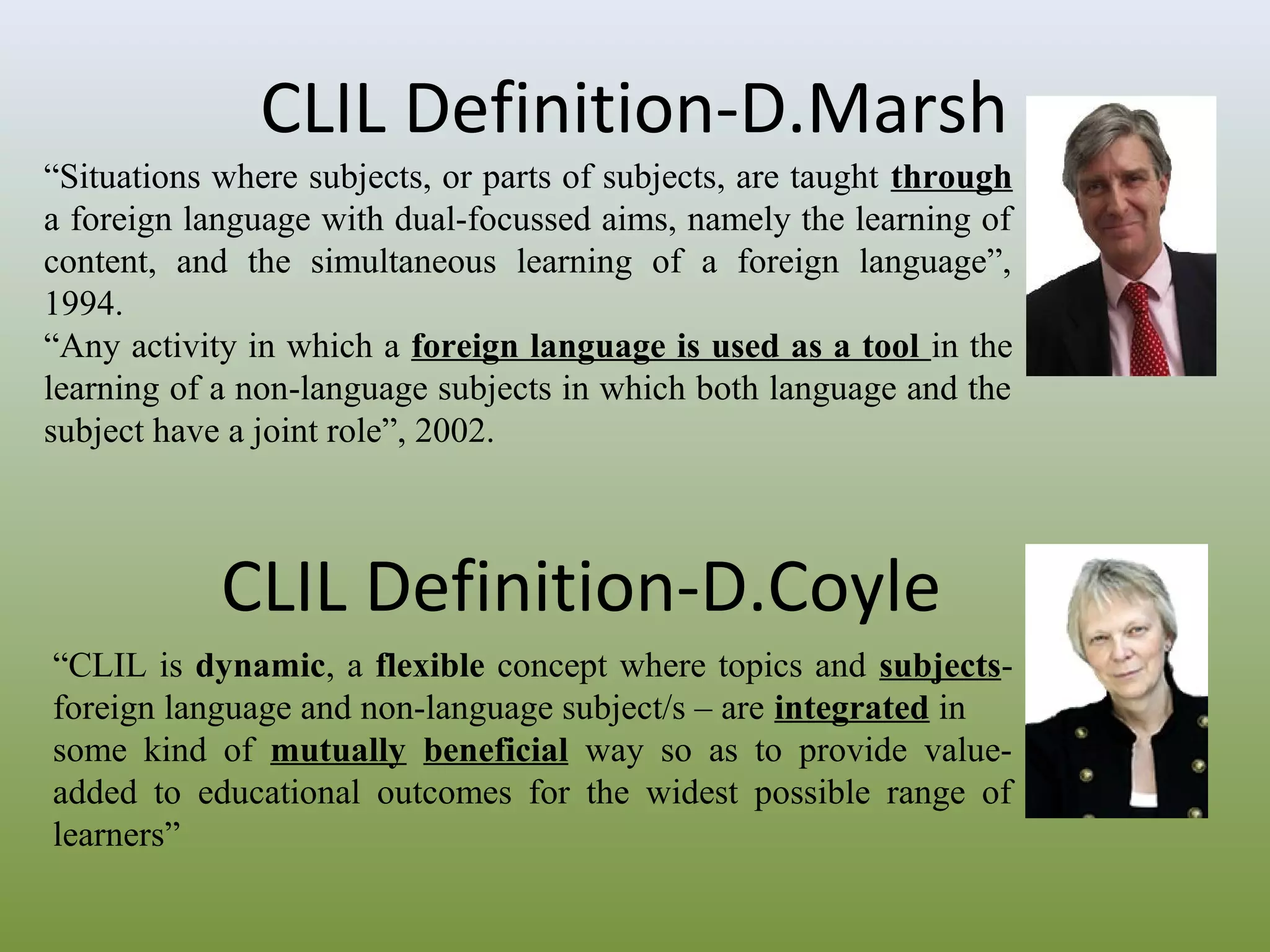
CLIL Definition-D.Marsh
“Situations where subjects, or parts of subjects, are taught through
a foreign language with dual-focussed aims, namely the learning of
content, and the simultaneous learning of a foreign language”,
1994.
“Any activity in which a foreign language is used as a tool in the
learning of a non-language subjects in which both language and the
subject have a joint role”, 2002.

CLIL Definition-D.Coyle
“CLIL is dynamic, a flexible concept where topics and subjectsforeign language and non-language subject/s – are integrated in
some kind of mutually beneficial way so as to provide valueadded to educational outcomes for the widest possible range of
learners”
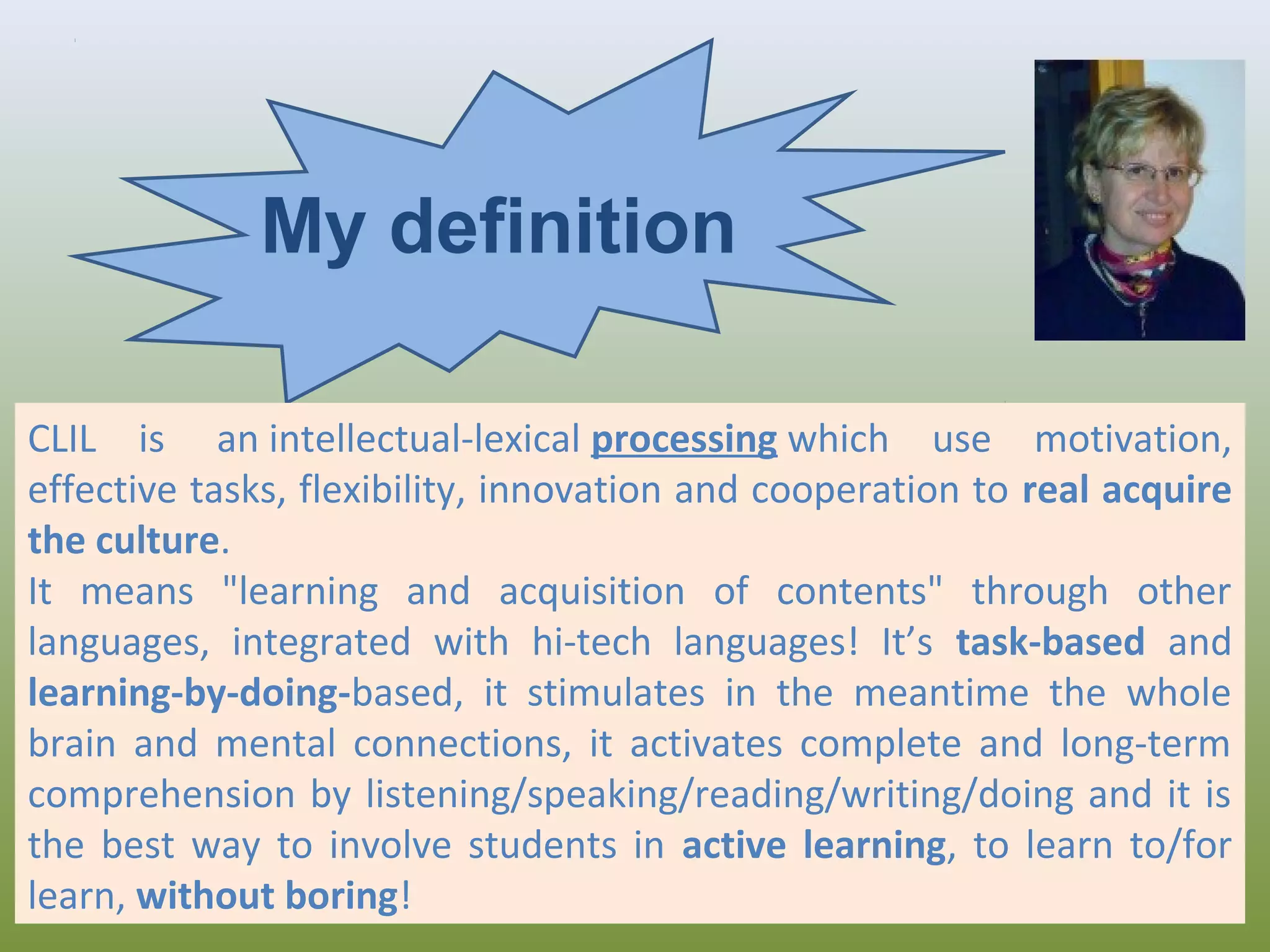
My definition
CLIL is an intellectual-lexical processing which use motivation,
effective tasks, flexibility, innovation and cooperation to real acquire
the culture.
It means "learning and acquisition of contents" through other
languages, integrated with hi-tech languages! It’s task-based and
learning-by-doing-based, it stimulates in the meantime the whole
brain and mental connections, it activates complete and long-term
comprehension by listening/speaking/reading/writing/doing and it is
the best way to involve students in active learning, to learn to/for
learn, without boring!
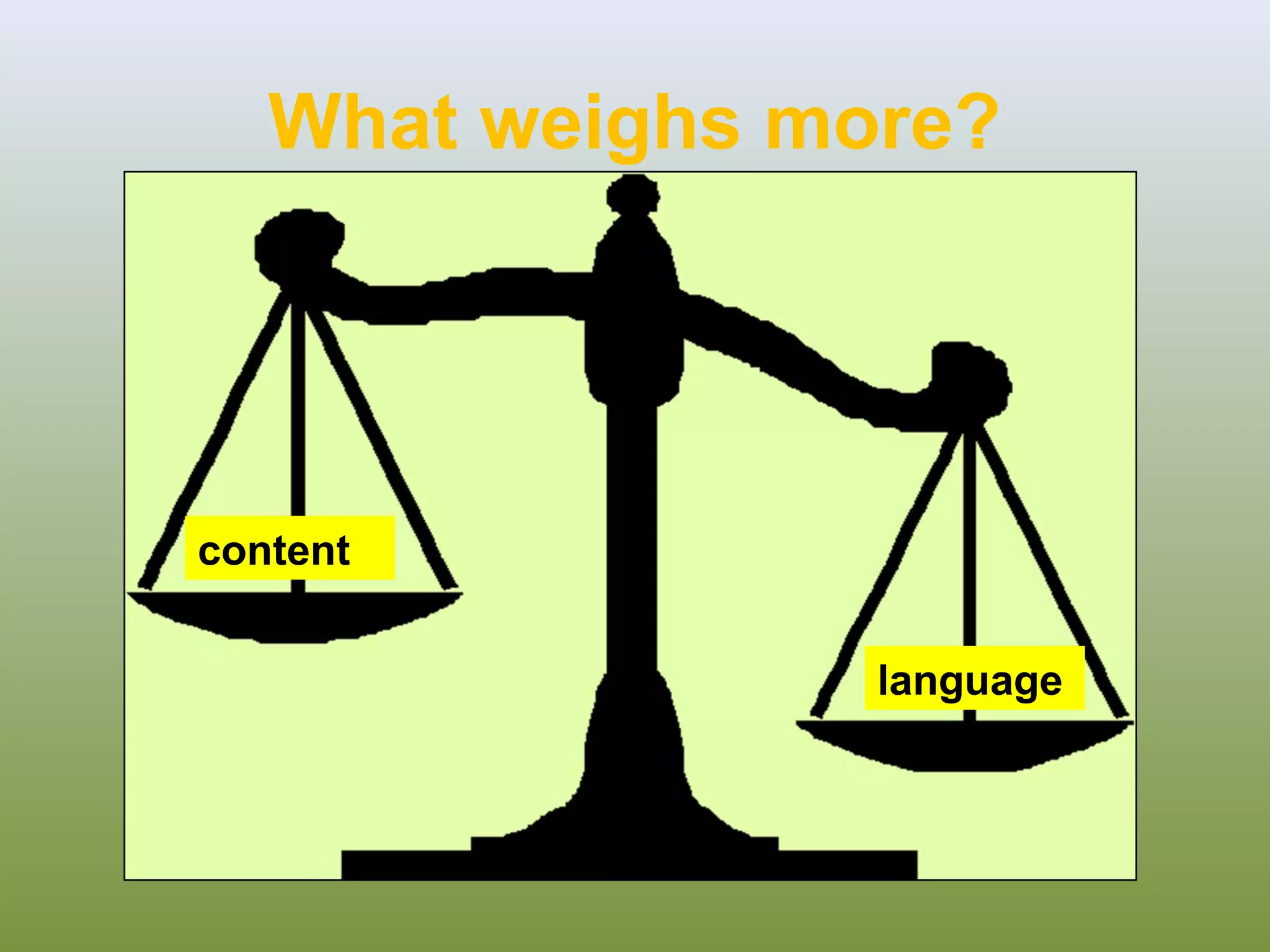
What weighs more?

content
language
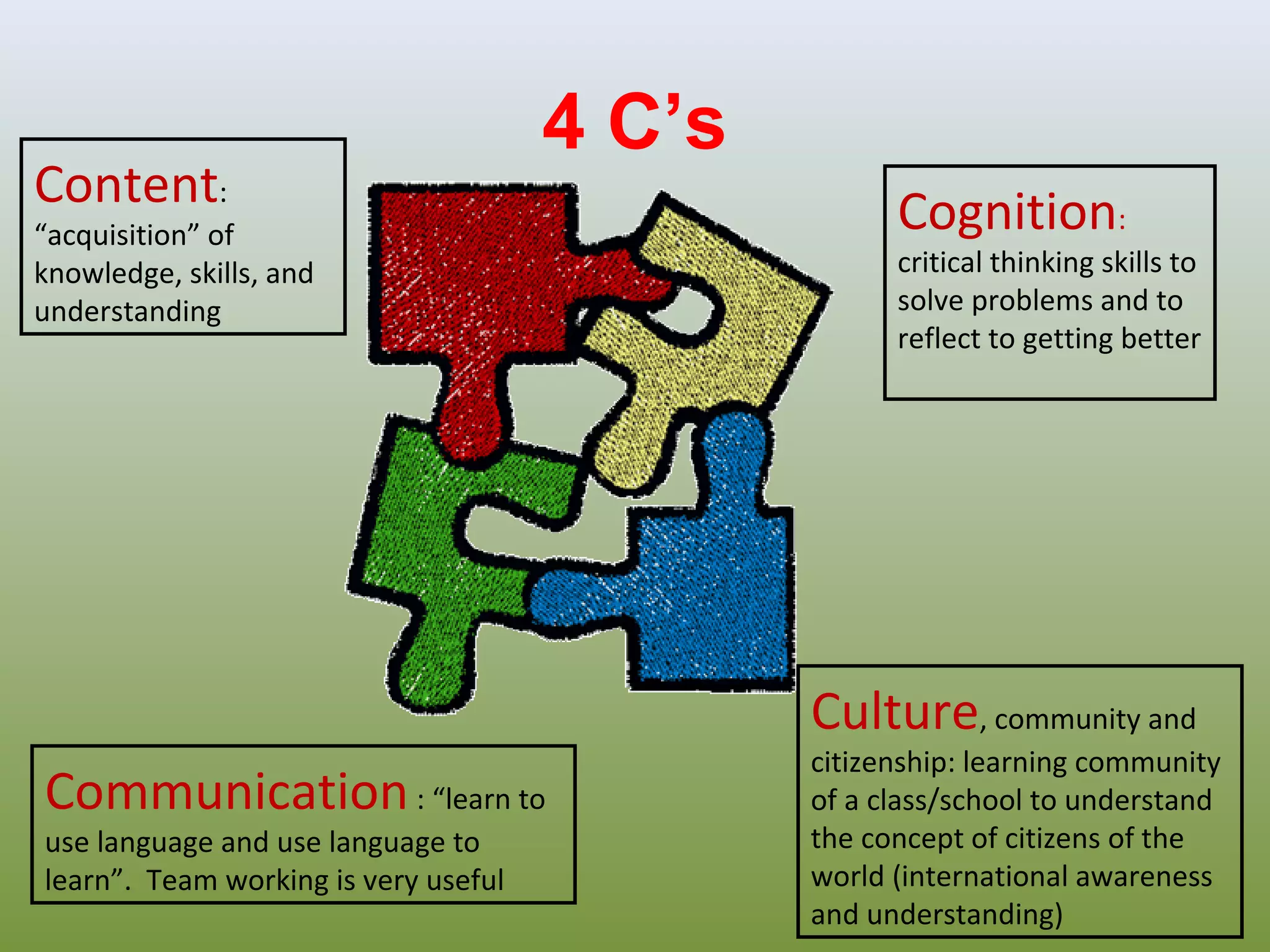
Content:

4 C’s

“acquisition” of
knowledge, skills, and
understanding

Cognition:

critical thinking skills to
solve problems and to
reflect to getting better

Culture, community and
Communication : “learn to
use language and use language to
learn”. Team working is very useful

citizenship: learning community
of a class/school to understand
the concept of citizens of the
world (international awareness
and understanding)
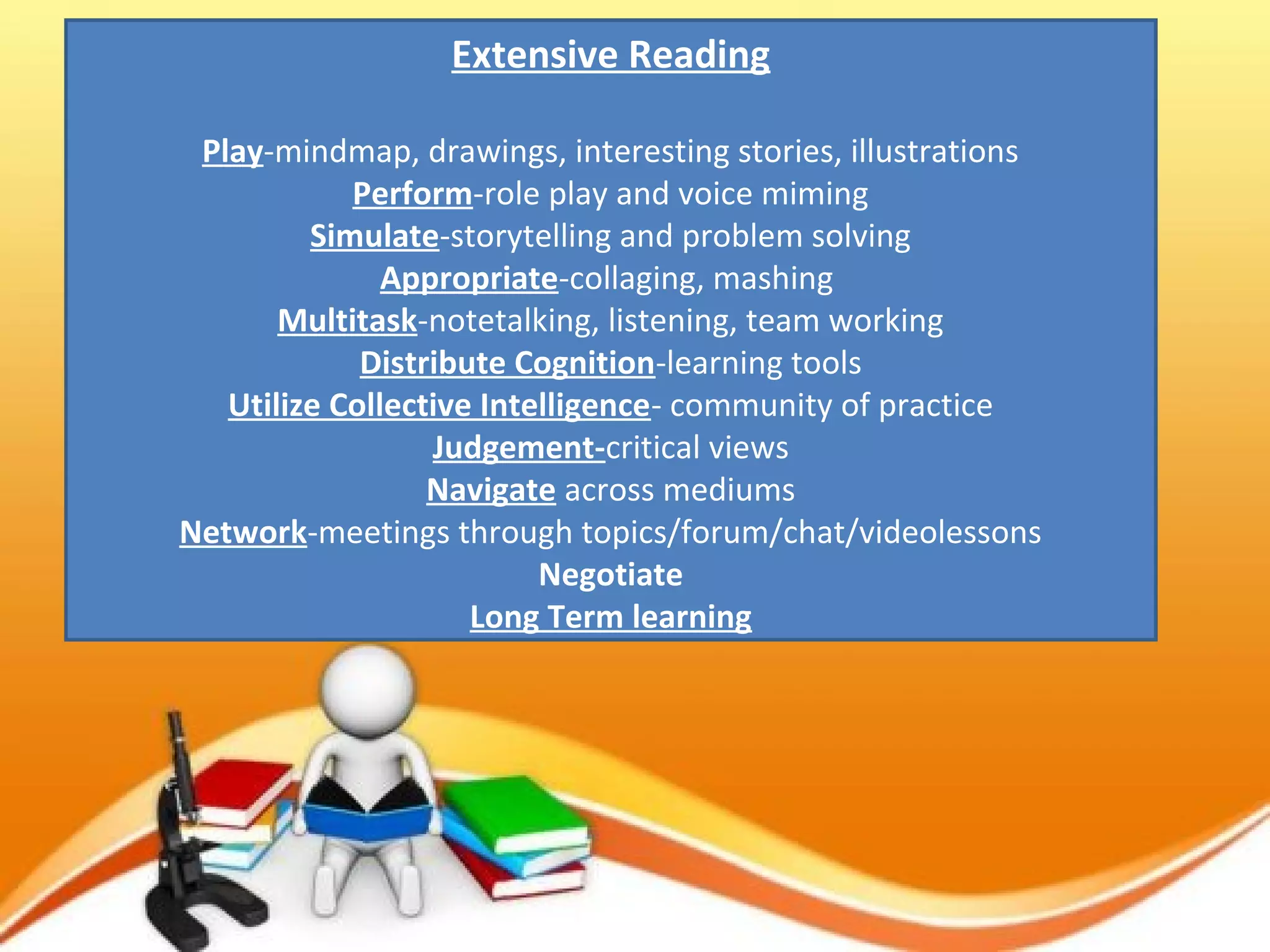
Extensive Reading

.

Play-mindmap, drawings, interesting stories, illustrations
Perform-role play and voice miming
Simulate-storytelling and problem solving
Appropriate-collaging, mashing
Multitask-notetalking, listening, team working
Distribute Cognition-learning tools
Utilize Collective Intelligence- community of practice
Judgement-critical views
Navigate across mediums
Network-meetings through topics/forum/chat/videolessons
Negotiate
Long Term learning
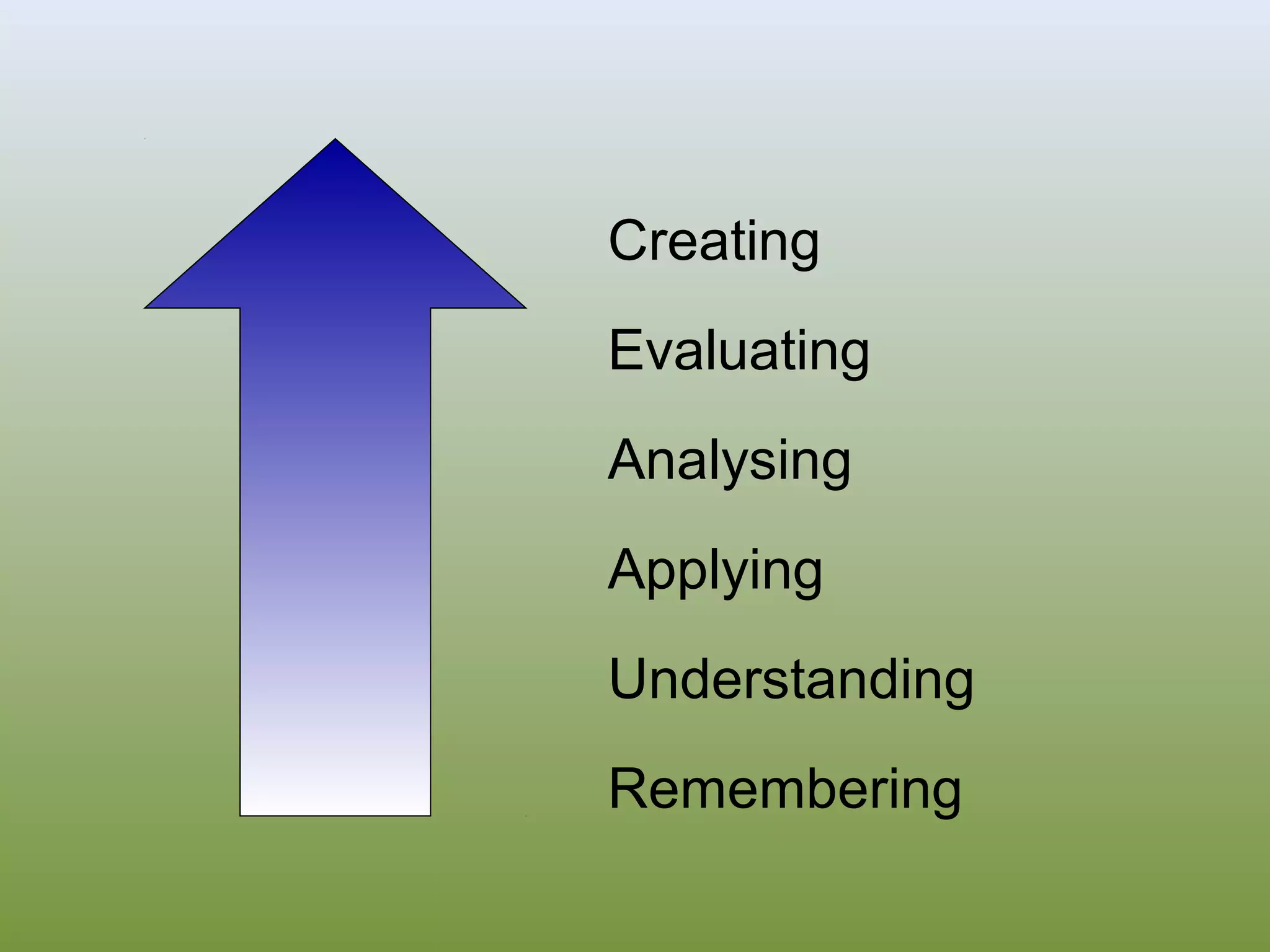
Creating
Evaluating
Analysing
Applying
Understanding
Remembering
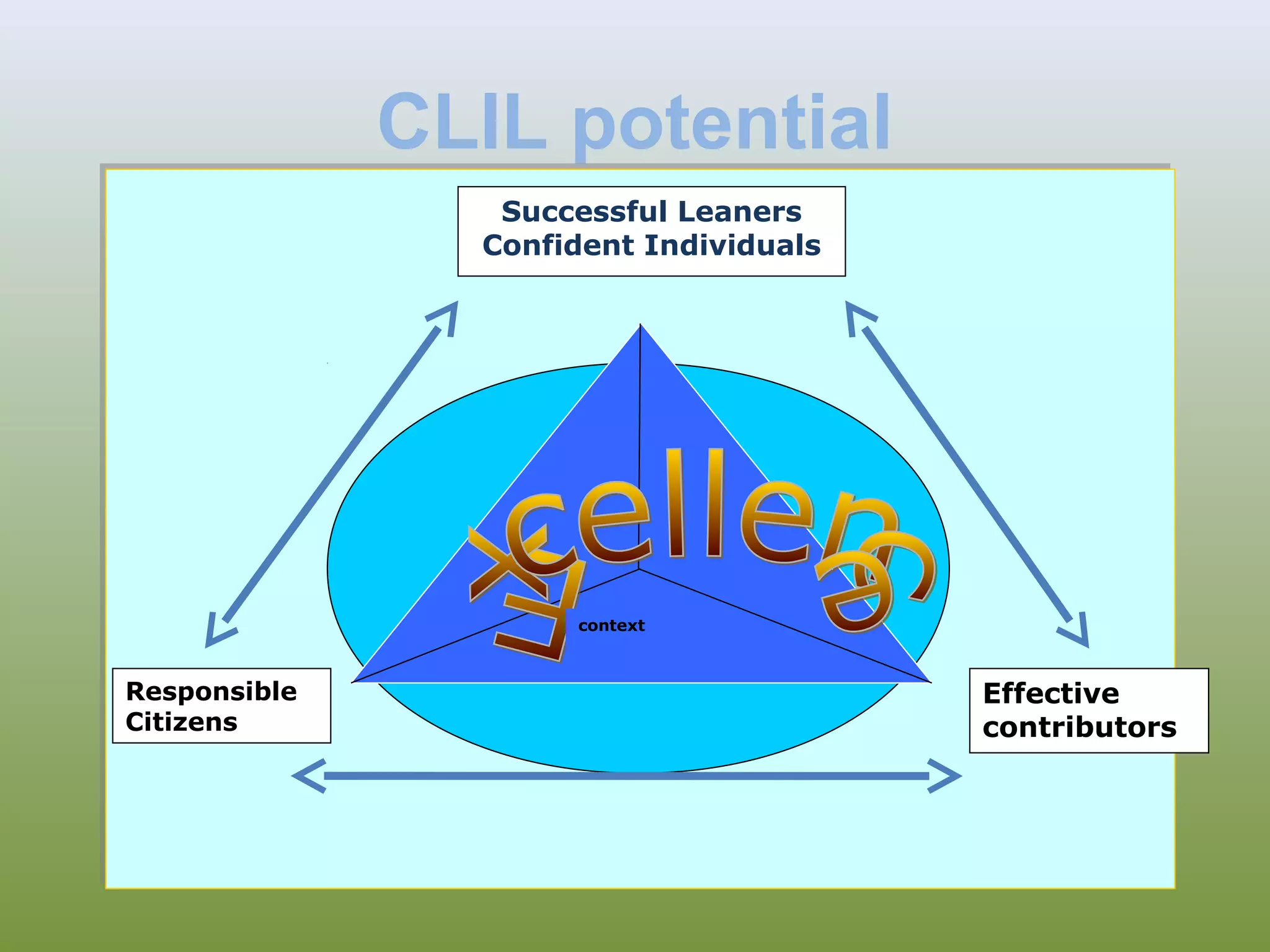
CLIL potential
Successful Leaners
Confident Individuals

context

Responsible
Citizens

Effective
contributors
CLIL beyond
•Revisits effective teaching/learning
•Provides new challenges
•Raises our expectations
•Challenges our learners
•Motivates learners
•Elevates our subject
•Develops different kind of language
•Makes us ask What? How? Why?
•Allows teachers to ‘own’ the process
CLIL considerations
 Learning grows through motivation in natural way
 Overall and specific language competence improves
together
 It’s a good preparation for both study and working life
 It allows a diversity of methods and forms of teaching/
learning, suitable for all students
 Task is more important than text level
 It provides Planning Manage with aim, activities and
knowledge (concetps, preocedures, skills and language)
task is more important than text!
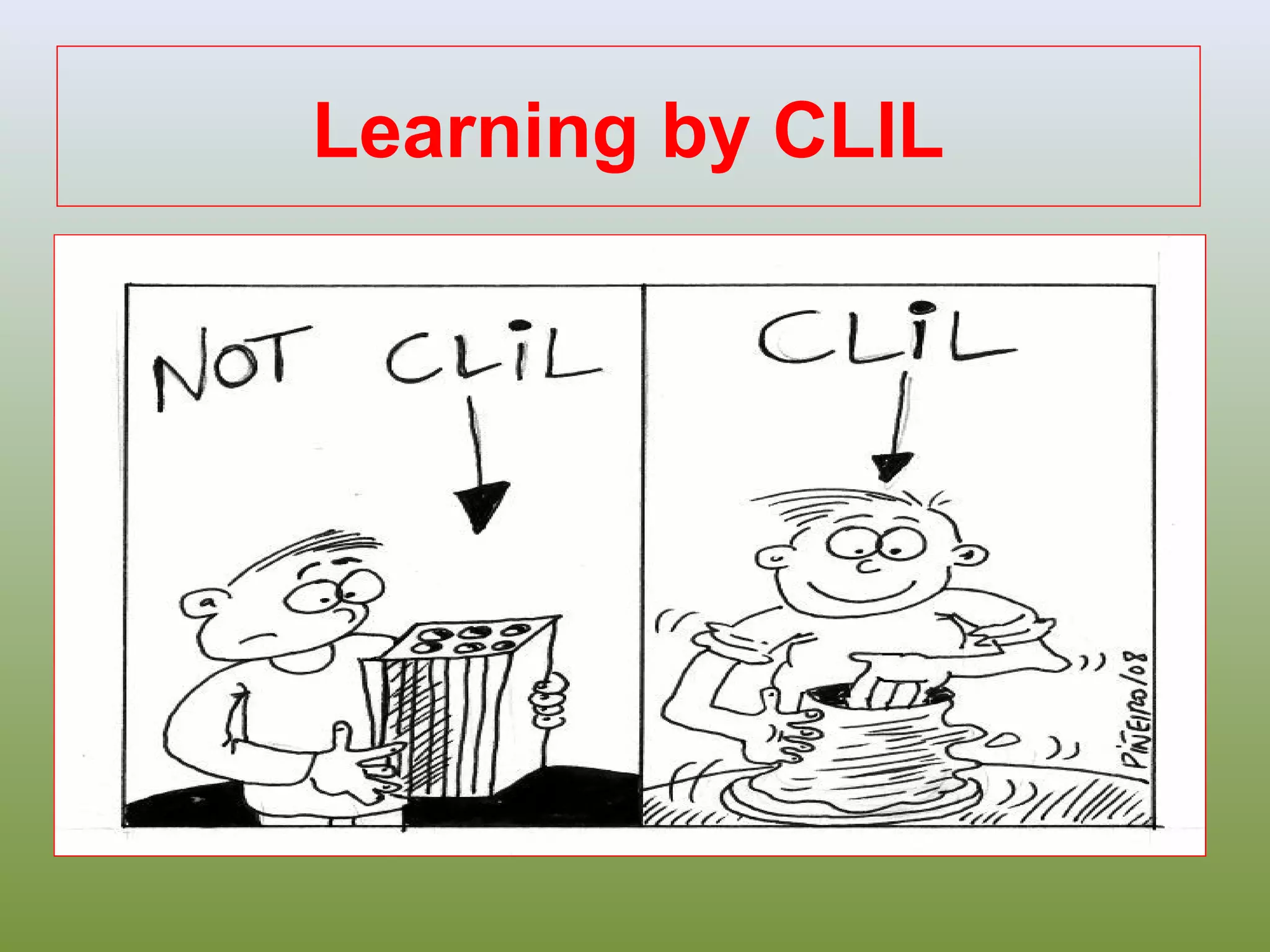
Learning by CLIL

Clil presentazione new

  • 1.
    CLIL Definition-D.Marsh “Situations wheresubjects, or parts of subjects, are taught through a foreign language with dual-focussed aims, namely the learning of content, and the simultaneous learning of a foreign language”, 1994. “Any activity in which a foreign language is used as a tool in the learning of a non-language subjects in which both language and the subject have a joint role”, 2002. CLIL Definition-D.Coyle “CLIL is dynamic, a flexible concept where topics and subjectsforeign language and non-language subject/s – are integrated in some kind of mutually beneficial way so as to provide valueadded to educational outcomes for the widest possible range of learners”
  • 2.
    My definition CLIL isan intellectual-lexical processing which use motivation, effective tasks, flexibility, innovation and cooperation to real acquire the culture. It means "learning and acquisition of contents" through other languages, integrated with hi-tech languages! It’s task-based and learning-by-doing-based, it stimulates in the meantime the whole brain and mental connections, it activates complete and long-term comprehension by listening/speaking/reading/writing/doing and it is the best way to involve students in active learning, to learn to/for learn, without boring!
  • 3.
  • 4.
    Content: 4 C’s “acquisition” of knowledge,skills, and understanding Cognition: critical thinking skills to solve problems and to reflect to getting better Culture, community and Communication : “learn to use language and use language to learn”. Team working is very useful citizenship: learning community of a class/school to understand the concept of citizens of the world (international awareness and understanding)
  • 5.
    Extensive Reading . Play-mindmap, drawings,interesting stories, illustrations Perform-role play and voice miming Simulate-storytelling and problem solving Appropriate-collaging, mashing Multitask-notetalking, listening, team working Distribute Cognition-learning tools Utilize Collective Intelligence- community of practice Judgement-critical views Navigate across mediums Network-meetings through topics/forum/chat/videolessons Negotiate Long Term learning
  • 6.
  • 7.
    CLIL potential Successful Leaners ConfidentIndividuals context Responsible Citizens Effective contributors
  • 8.
    CLIL beyond •Revisits effectiveteaching/learning •Provides new challenges •Raises our expectations •Challenges our learners •Motivates learners •Elevates our subject •Develops different kind of language •Makes us ask What? How? Why? •Allows teachers to ‘own’ the process
  • 9.
    CLIL considerations  Learninggrows through motivation in natural way  Overall and specific language competence improves together  It’s a good preparation for both study and working life  It allows a diversity of methods and forms of teaching/ learning, suitable for all students  Task is more important than text level  It provides Planning Manage with aim, activities and knowledge (concetps, preocedures, skills and language) task is more important than text!
  • 10.