E N G L I S H A S M E D I U M O F I N S T R U C T I O N
B Y N O N - N A T I V E E N G L I S H S P E A K E R S
T O N O N - N A T I V E E N G L I S H S P E A K E R S
CLIL:
What do content teachers do?
Background
 South Africa: teachers and students
Generative change in teachers with intervention
language program
 Saudi Arabia: social and economical changes
More opportunities for women
Language of business
PYP
Language is tool for learning Scientific Subjects
CLIL
Content and Language Integrated Learning
 Content and Language Learning (CLIL) dual-focused educational
approach
 Additional language of learners is used for teaching both the content
and language simultaneously in the content classroom. (Eurydice,
2006)
 focus is on teaching both language and content
 CLIL =umbrella term for the similar approach followed world-wide
 Different terms, such as immersion in Swede, bilingual education
in Hungary, integrated education in Spain, multilingual education
in Latvia, language across the curriculum in Austria, language
enriched instruction in Finland ( Eurydice, 2006) and in South
Africa Language of Learning and Teaching (LOLT)
 Each country has own specific education needs, population of
learners, instruction and curricula
 No single blueprint that can be applied in the same way in the
different countries (Coyle, 2007).
CLIL: 4 C’s
 Content: understand, skills to practice, and explore
 Communication: language discourse – discuss,
language to learn and learning to use language
 Cognition: develop thinking skills –LOTS & HOTS
Concept formation – abstract and concrete,
understanding, giving feedback and questioning
 Culture: understanding otherness and self within
the community for global citizenship
(Marsh, 2006)
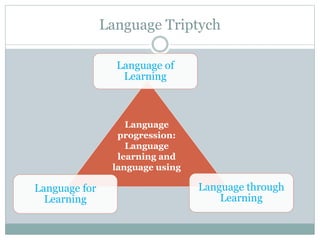
Language Triptych
Language of
Learning
Language for
Learning
Language through
Learning
Language
progression:
Language
learning and
language using
Why focus on Language in Content Subjects?
 Literacy: to read and write?
 Low levels of literacy (the ability to read and write at a specific age),
and education in general, can impede the economic development of a
country in the current rapidly changing, technology-driven world
(UNESCO, 2012)
 TIMMS results (Mullis et al, 2012) Saudi Arabia performs below the
international benchmark
 United Nations Educational, Scientific, and Cultural Organization
(UNESCO) Institute for Statistics: indicate Youth Literacy in Saudi
Arabia ranked as 147 of 153 countries
Literacy
 “the ability to read purposefully with understanding, to read the text,
and to read between the lines. This ability will enable the learner to
exploit the resources around him [or her] to formulate constructive
alternatives” (Dingani in Ball, 2006)
 Literacy includes a broader conception of knowledge and skills, and an
application of skills that requires the learners’ involvement and
personal development (Hansen-Pauly et al, 2009).
 Literacy requirements for adolescents entering the adult world in the
21st century are much higher than before (Meyer, 2013; Williams,
2008) as they will read and write more than at any other time thus far
in human history.
 Multiple literacies such as new literacies involving technology and
different ways of interacting with information (Buchanan, Holmes,
Preston & Shaw, 2012; Chang, 2011; Kamil, 2003; Moje, 2008).
How to…?
 CLIL promotes linguistic and communicative
competence (EC, 2005)
 Train content teachers
Research in Math Class:
Language competence, development, participation,
pronunciation
Making language purposeful and vehicle into the
future.
Aspects for Literacy Improvement
 Decoding: receptive and productive vocabularies
 Morphology: phonemes, phonics - affixes
 Fluency: exposure to genré of text
 Vocabulary: high frequency words in content and
terminology
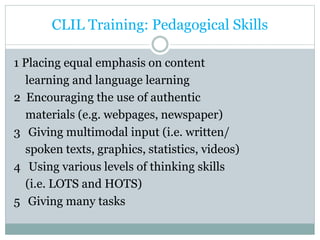
CLIL Training: Pedagogical Skills
1 Placing equal emphasis on content
learning and language learning
2 Encouraging the use of authentic
materials (e.g. webpages, newspaper)
3 Giving multimodal input (i.e. written/
spoken texts, graphics, statistics, videos)
4 Using various levels of thinking skills
(i.e. LOTS and HOTS)
5 Giving many tasks
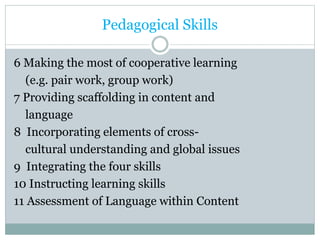
Pedagogical Skills
6 Making the most of cooperative learning
(e.g. pair work, group work)
7 Providing scaffolding in content and
language
8 Incorporating elements of cross-
cultural understanding and global issues
9 Integrating the four skills
10 Instructing learning skills
11 Assessment of Language within Content
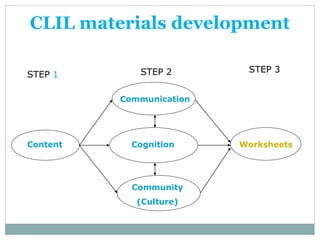
CLIL materials development
STEP 1 STEP 2 STEP 3
Content
Communication
Cognition
Community
(Culture)
Worksheets
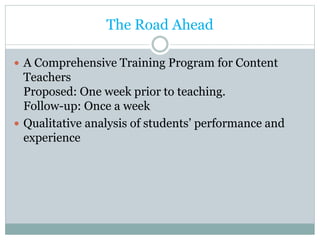
The Road Ahead
 A Comprehensive Training Program for Content
Teachers
Proposed: One week prior to teaching.
Follow-up: Once a week
 Qualitative analysis of students’ performance and
experience

Presentation LJRoodt TESOL Arabia

  • 1.
    E N GL I S H A S M E D I U M O F I N S T R U C T I O N B Y N O N - N A T I V E E N G L I S H S P E A K E R S T O N O N - N A T I V E E N G L I S H S P E A K E R S CLIL: What do content teachers do?
  • 2.
    Background  South Africa:teachers and students Generative change in teachers with intervention language program  Saudi Arabia: social and economical changes More opportunities for women Language of business PYP Language is tool for learning Scientific Subjects CLIL
  • 3.
    Content and LanguageIntegrated Learning  Content and Language Learning (CLIL) dual-focused educational approach  Additional language of learners is used for teaching both the content and language simultaneously in the content classroom. (Eurydice, 2006)  focus is on teaching both language and content  CLIL =umbrella term for the similar approach followed world-wide  Different terms, such as immersion in Swede, bilingual education in Hungary, integrated education in Spain, multilingual education in Latvia, language across the curriculum in Austria, language enriched instruction in Finland ( Eurydice, 2006) and in South Africa Language of Learning and Teaching (LOLT)  Each country has own specific education needs, population of learners, instruction and curricula  No single blueprint that can be applied in the same way in the different countries (Coyle, 2007).
  • 4.
    CLIL: 4 C’s Content: understand, skills to practice, and explore  Communication: language discourse – discuss, language to learn and learning to use language  Cognition: develop thinking skills –LOTS & HOTS Concept formation – abstract and concrete, understanding, giving feedback and questioning  Culture: understanding otherness and self within the community for global citizenship (Marsh, 2006)
  • 5.
    Language Triptych Language of Learning Languagefor Learning Language through Learning Language progression: Language learning and language using
  • 6.
    Why focus onLanguage in Content Subjects?  Literacy: to read and write?  Low levels of literacy (the ability to read and write at a specific age), and education in general, can impede the economic development of a country in the current rapidly changing, technology-driven world (UNESCO, 2012)  TIMMS results (Mullis et al, 2012) Saudi Arabia performs below the international benchmark  United Nations Educational, Scientific, and Cultural Organization (UNESCO) Institute for Statistics: indicate Youth Literacy in Saudi Arabia ranked as 147 of 153 countries
  • 7.
    Literacy  “the abilityto read purposefully with understanding, to read the text, and to read between the lines. This ability will enable the learner to exploit the resources around him [or her] to formulate constructive alternatives” (Dingani in Ball, 2006)  Literacy includes a broader conception of knowledge and skills, and an application of skills that requires the learners’ involvement and personal development (Hansen-Pauly et al, 2009).  Literacy requirements for adolescents entering the adult world in the 21st century are much higher than before (Meyer, 2013; Williams, 2008) as they will read and write more than at any other time thus far in human history.  Multiple literacies such as new literacies involving technology and different ways of interacting with information (Buchanan, Holmes, Preston & Shaw, 2012; Chang, 2011; Kamil, 2003; Moje, 2008).
  • 8.
    How to…?  CLILpromotes linguistic and communicative competence (EC, 2005)  Train content teachers Research in Math Class: Language competence, development, participation, pronunciation Making language purposeful and vehicle into the future.
  • 9.
    Aspects for LiteracyImprovement  Decoding: receptive and productive vocabularies  Morphology: phonemes, phonics - affixes  Fluency: exposure to genré of text  Vocabulary: high frequency words in content and terminology
  • 10.
    CLIL Training: PedagogicalSkills 1 Placing equal emphasis on content learning and language learning 2 Encouraging the use of authentic materials (e.g. webpages, newspaper) 3 Giving multimodal input (i.e. written/ spoken texts, graphics, statistics, videos) 4 Using various levels of thinking skills (i.e. LOTS and HOTS) 5 Giving many tasks
  • 11.
    Pedagogical Skills 6 Makingthe most of cooperative learning (e.g. pair work, group work) 7 Providing scaffolding in content and language 8 Incorporating elements of cross- cultural understanding and global issues 9 Integrating the four skills 10 Instructing learning skills 11 Assessment of Language within Content
  • 12.
    CLIL materials development STEP1 STEP 2 STEP 3 Content Communication Cognition Community (Culture) Worksheets
  • 13.
    The Road Ahead A Comprehensive Training Program for Content Teachers Proposed: One week prior to teaching. Follow-up: Once a week  Qualitative analysis of students’ performance and experience