CLIL ATTACK!The 4Cs of CLIL1st Module
The 4Cs of CLILContent
Communication
Cognition
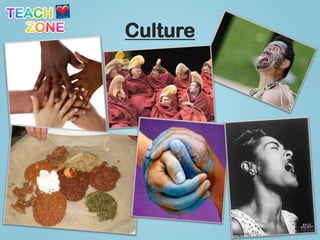
CultureThese four principles are essential to the CLIL approach. They should be used as the framework for creating and delivering successful lessons.
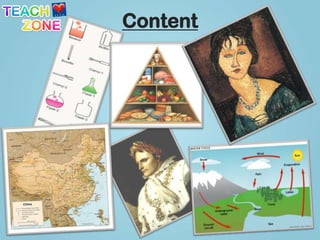
Content
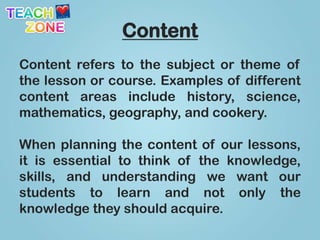
ContentContent refers to the subject or theme of the lesson or course. Examples of different content areas include history, science, mathematics, geography, and cookery.When planning the content of our lessons, it is essential to think of the knowledge, skills, and understanding we want our students to learn and not only the knowledge they should acquire.
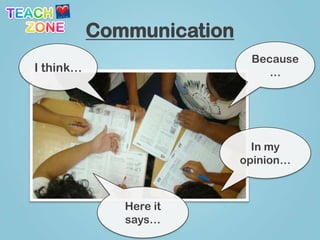
CommunicationBecause…I think…In my opinion…Here it says…
CommunicationCommunication refers to students using the target language to communicate their thoughts, opinions, attitudes, and discoveries related to the lesson content. Both speaking and writing are emphasized as students “learn to use language and use language to learn”. (Coyle)Students engage in meaningful interaction with each other. Group work is very common.The aim is for students to produce authentic language, not to memorize grammar rules and parrot the teacher.The teacher serves as guide/facilitator.
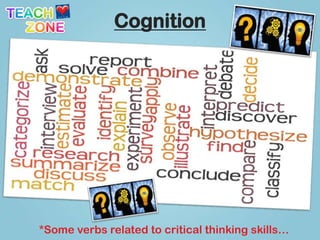
Cognition*Some verbs related to critical thinking skills…
CognitionCognition refers to the critical thinking skills that students use to engage with and understand course content, to solve problems, and to reflect on their learning.A taxonomy such as the one designed by Anderson and Krathwohl(2001) is a helpful guide as we plan lessons. Go to http://www.edurete.org/pd/sele_art.asp?ida=175 for furtherinformation (in italiano).

The 4Cs Of CLIL - Module 1

  • 1.
    CLIL ATTACK!The 4Csof CLIL1st Module
  • 2.
    The 4Cs ofCLILContent
  • 3.
  • 4.
  • 5.
    CultureThese four principlesare essential to the CLIL approach. They should be used as the framework for creating and delivering successful lessons.
  • 6.
  • 7.
    ContentContent refers tothe subject or theme of the lesson or course. Examples of different content areas include history, science, mathematics, geography, and cookery.When planning the content of our lessons, it is essential to think of the knowledge, skills, and understanding we want our students to learn and not only the knowledge they should acquire.
  • 8.
  • 9.
    CommunicationCommunication refers tostudents using the target language to communicate their thoughts, opinions, attitudes, and discoveries related to the lesson content. Both speaking and writing are emphasized as students “learn to use language and use language to learn”. (Coyle)Students engage in meaningful interaction with each other. Group work is very common.The aim is for students to produce authentic language, not to memorize grammar rules and parrot the teacher.The teacher serves as guide/facilitator.
  • 10.
    Cognition*Some verbs relatedto critical thinking skills…
  • 11.
    CognitionCognition refers tothe critical thinking skills that students use to engage with and understand course content, to solve problems, and to reflect on their learning.A taxonomy such as the one designed by Anderson and Krathwohl(2001) is a helpful guide as we plan lessons. Go to http://www.edurete.org/pd/sele_art.asp?ida=175 for furtherinformation (in italiano).