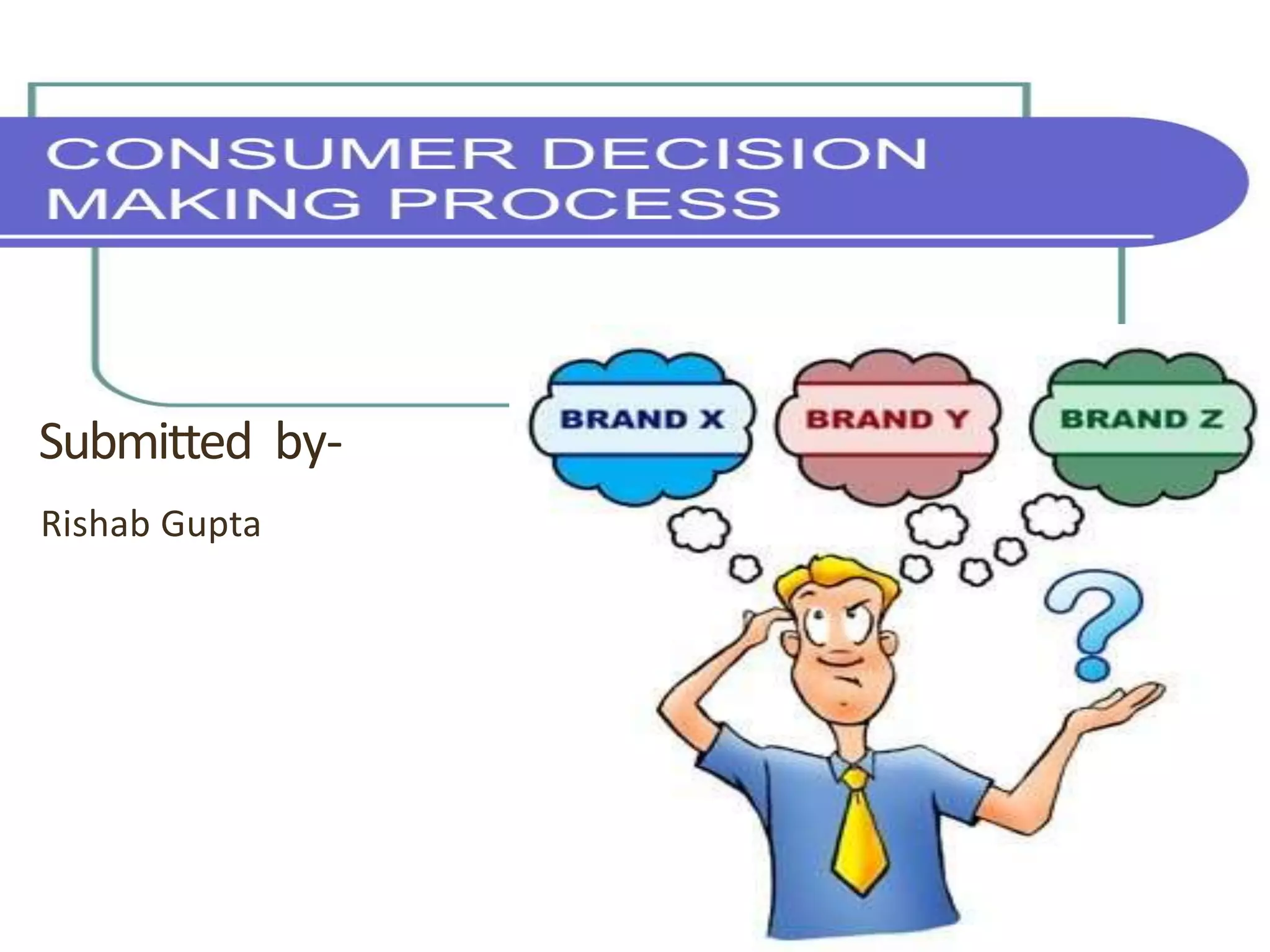
Submitted by-
Rishab Gupta
CONSUMER BEHAVIOUR??
• Consumer behaviour is the study of when,
why, how, and where people do or do not buy
a product.
• It blends elements from psychology, sociology,
social anthropology and economics.
• It attempts to understand the buyer decision
making process, both individually and in groups.
• It studies characteristics of individual consumers
such as demographics and behavioural
variables in an attempt to understand people's
wants.
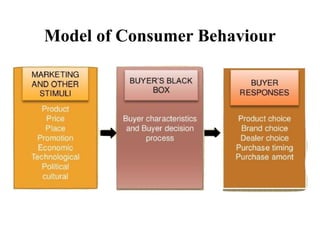
Model of Consumer Behaviour
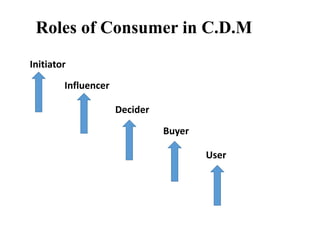
Roles of Consumer in C.D.M
Initiator
Influencer
Decider
Buyer
User
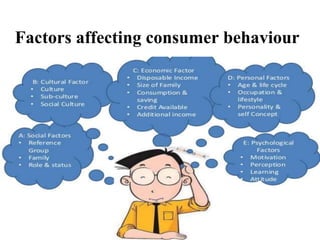
Factors affecting consumer behaviour
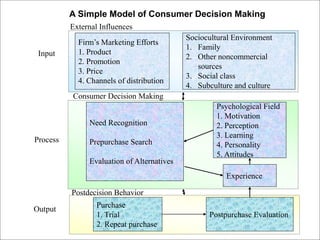
A Simple Model of Consumer Decision Making
Firm’s Marketing Efforts
1. Product
2. Promotion
3. Price
4. Channels of distribution
Sociocultural Environment
1. Family
2. Other noncommercial
sources
3. Social class
4. Subculture and culture
Need Recognition
Prepurchase Search
Evaluation of Alternatives
Psychological Field
1. Motivation
2. Perception
3. Learning
4. Personality
5. Attitudes
Experience
Purchase
1. Trial
2. Repeat purchase
Postpurchase Evaluation
Output
Process
Input
External Influences
Consumer Decision Making
Postdecision Behavior
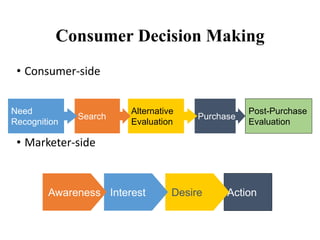
Consumer Decision Making
Purchase
Alternative
Evaluation
Search
Need
Recognition
Post-Purchase
Evaluation
• Consumer-side
• Marketer-side
ActionDesireInterestAwareness
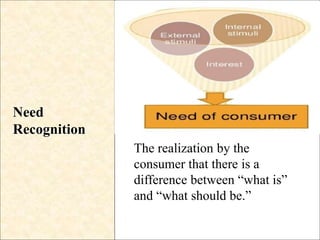
Need
Recognition
The realization by the
consumer that there is a
difference between “what is”
and “what should be.”
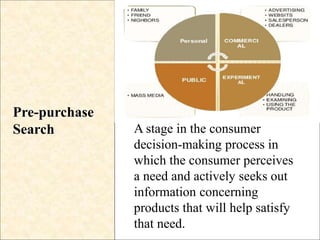
Pre-purchase
Search A stage in the consumer
decision-making process in
which the consumer perceives
a need and actively seeks out
information concerning
products that will help satisfy
that need.
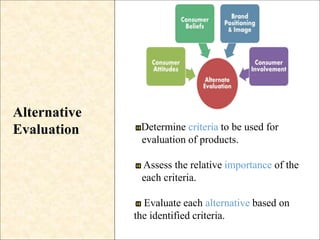
Alternative
Evaluation Determine criteria to be used for
evaluation of products.
Assess the relative importance of the
each criteria.
Evaluate each alternative based on
the identified criteria.
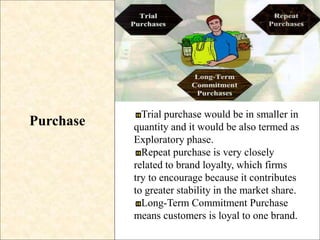
Purchase
Trial purchase would be in smaller in
quantity and it would be also termed as
Exploratory phase.
Repeat purchase is very closely
related to brand loyalty, which firms
try to encourage because it contributes
to greater stability in the market share.
Long-Term Commitment Purchase
means customers is loyal to one brand.
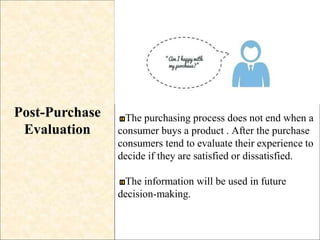
Post-Purchase
Evaluation
The purchasing process does not end when a
consumer buys a product . After the purchase
consumers tend to evaluate their experience to
decide if they are satisfied or dissatisfied.
The information will be used in future
decision-making.
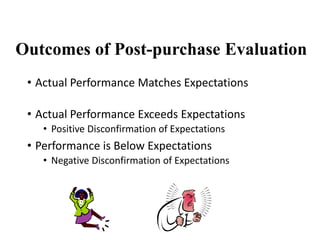
Outcomes of Post-purchase Evaluation
• Actual Performance Matches Expectations
• Actual Performance Exceeds Expectations
• Positive Disconfirmation of Expectations
• Performance is Below Expectations
• Negative Disconfirmation of Expectations
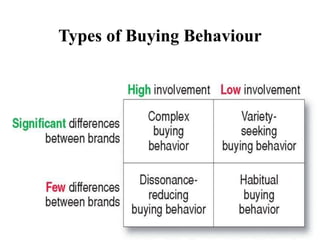
Types of Buying Behaviour
“Knowing who your customers are” is great,
but knowing how they behave is even better."

Consumer decision-making-process

  • 1.
  • 2.
    CONSUMER BEHAVIOUR?? • Consumerbehaviour is the study of when, why, how, and where people do or do not buy a product. • It blends elements from psychology, sociology, social anthropology and economics. • It attempts to understand the buyer decision making process, both individually and in groups. • It studies characteristics of individual consumers such as demographics and behavioural variables in an attempt to understand people's wants.
  • 3.
  • 4.
    Roles of Consumerin C.D.M Initiator Influencer Decider Buyer User
  • 5.
  • 6.
    A Simple Modelof Consumer Decision Making Firm’s Marketing Efforts 1. Product 2. Promotion 3. Price 4. Channels of distribution Sociocultural Environment 1. Family 2. Other noncommercial sources 3. Social class 4. Subculture and culture Need Recognition Prepurchase Search Evaluation of Alternatives Psychological Field 1. Motivation 2. Perception 3. Learning 4. Personality 5. Attitudes Experience Purchase 1. Trial 2. Repeat purchase Postpurchase Evaluation Output Process Input External Influences Consumer Decision Making Postdecision Behavior
  • 7.
  • 8.
    Need Recognition The realization bythe consumer that there is a difference between “what is” and “what should be.”
  • 9.
    Pre-purchase Search A stagein the consumer decision-making process in which the consumer perceives a need and actively seeks out information concerning products that will help satisfy that need.
  • 10.
    Alternative Evaluation Determine criteriato be used for evaluation of products. Assess the relative importance of the each criteria. Evaluate each alternative based on the identified criteria.
  • 11.
    Purchase Trial purchase wouldbe in smaller in quantity and it would be also termed as Exploratory phase. Repeat purchase is very closely related to brand loyalty, which firms try to encourage because it contributes to greater stability in the market share. Long-Term Commitment Purchase means customers is loyal to one brand.
  • 12.
    Post-Purchase Evaluation The purchasing processdoes not end when a consumer buys a product . After the purchase consumers tend to evaluate their experience to decide if they are satisfied or dissatisfied. The information will be used in future decision-making.
  • 13.
    Outcomes of Post-purchaseEvaluation • Actual Performance Matches Expectations • Actual Performance Exceeds Expectations • Positive Disconfirmation of Expectations • Performance is Below Expectations • Negative Disconfirmation of Expectations
  • 14.
    Types of BuyingBehaviour
  • 15.
    “Knowing who yourcustomers are” is great, but knowing how they behave is even better."