Chapter 8 Consumer Attitude Formation and Change Consumer Behavior, Eighth Edition SCHIFFMAN  & KANUK
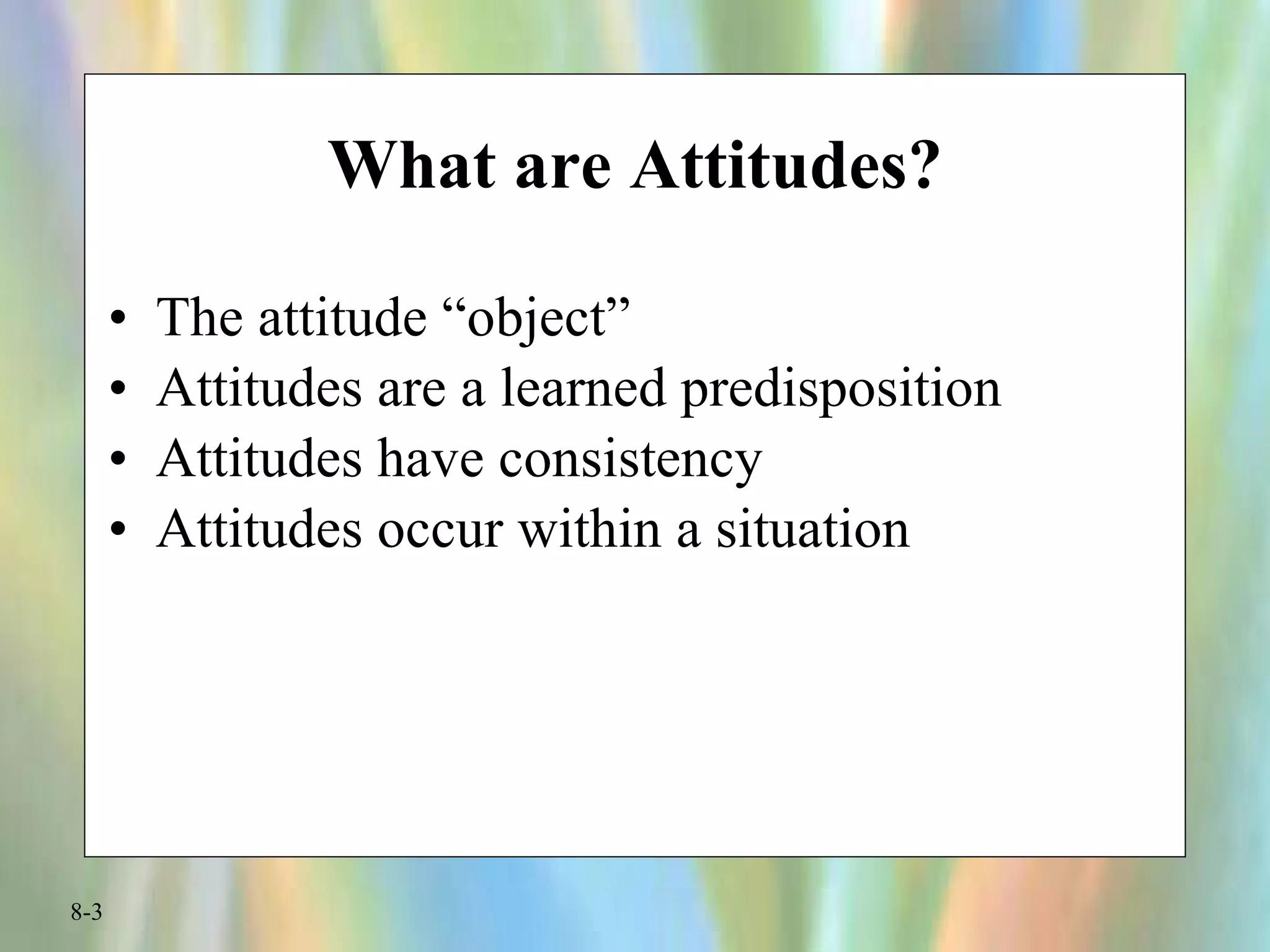
Attitude A learned predisposition to behave in a consistently favorable or unfavorable manner with respect to a given object.
What are Attitudes? The attitude “object” Attitudes are a learned predisposition Attitudes have consistency Attitudes occur within a situation
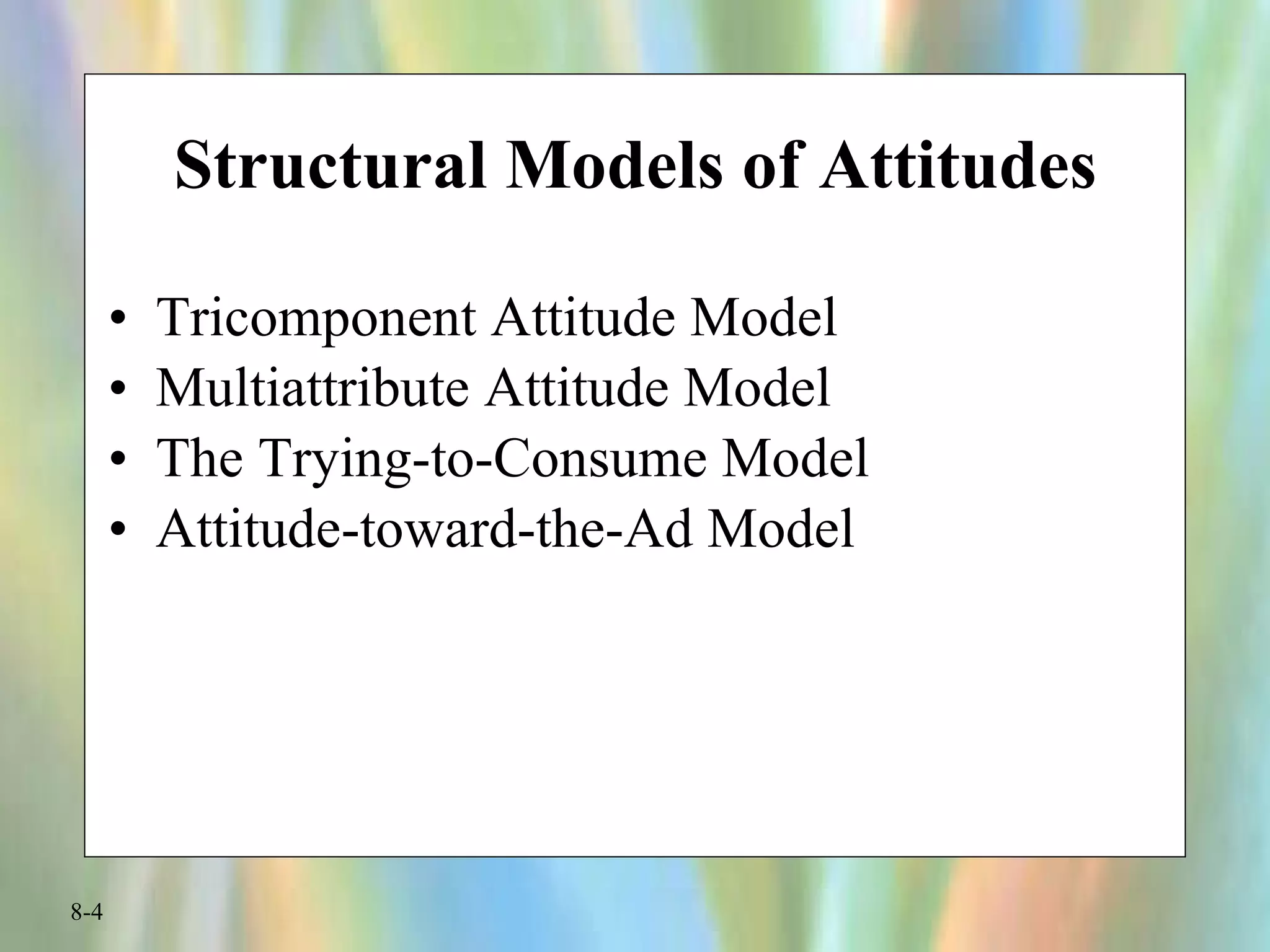
Structural Models of Attitudes Tricomponent Attitude Model Multiattribute Attitude Model The Trying-to-Consume Model Attitude-toward-the-Ad Model
Figure 8.2  A Simple Representation of the Tricomponent Attitude Model Conation Affect Cognition
The Tricomponent Model Cognitive Component The knowledge and perceptions that are acquired by a combination of direct experience with the attitude object and related information from various sources. Affective Component A consumer’s emotions or feelings about a particular product or brand. Conative Component The likelihood or tendency that an individual will undertake a specific action or behave in a particular way with regard to the attitude object.
Multiattribute Attitude Models Attitude models that examine the composition of consumer attitudes in terms of selected product attributes or beliefs.
Multiattribute Attitude Models The attitude-toward-object model Attitude is function of evaluation of product-specific beliefs and evaluations The attitude-toward-behavior model Is the attitude toward behaving or acting with respect to an object, rather than the attitude toward the object itself  Theory-of-reasoned-action model A comprehensive, integrative model of attitudes
Attitude-Toward-Behavior Model A model that proposes that a consumer’s attitude toward a specific behavior is a function of how strongly he or she believes that the action will lead to a specific outcome (either favorable or unfavorable).
Theory of Reasoned Action A comprehensive theory of the interrelationship among attitudes,intentions, and behavior.
Theory of Trying to Consume An attitude theory designed to account for the many cases where the action or outcome is not certain but instead reflects the consumer’s attempt to consume (or purchase).
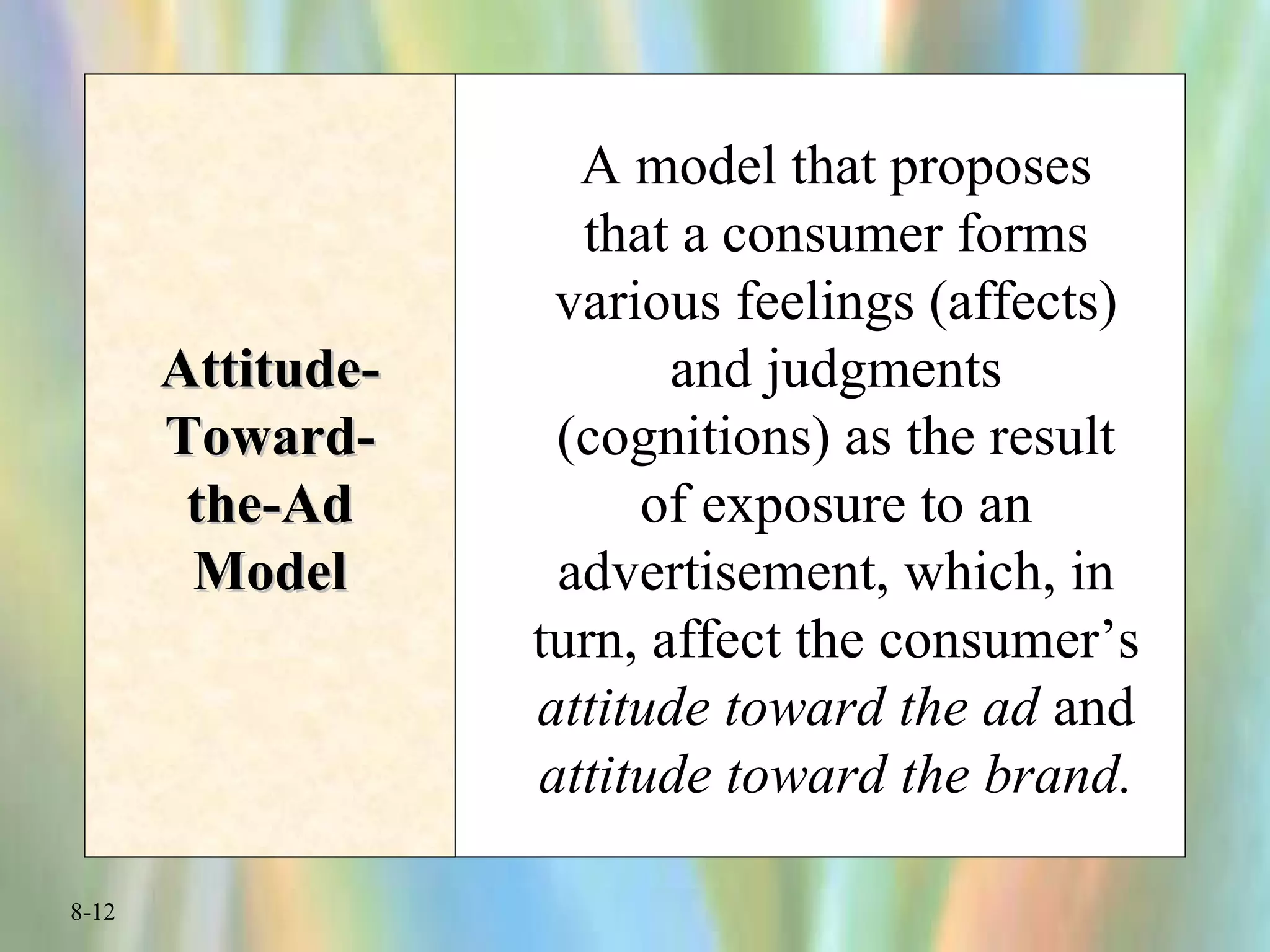
Attitude-Toward-the-Ad Model A model that proposes that a consumer forms various feelings (affects) and judgments (cognitions) as the result of exposure to an advertisement, which, in turn, affect the consumer’s  attitude toward the ad  and  attitude toward the brand.
Issues in Attitude Formation or Barriers to changing consumer attitude How attitudes are learned Sources of influence on attitude formation Personality factors
Strategies of Attitude Change Changing the Basic Motivational Function Associating the Product With an Admired Group or Event Resolving Two Conflicting Attitudes Altering Components of the Multi-attribute Model Changing Beliefs About Competitors’ Brands
Four Basic Attitude Functions The Utilitarian Function The Ego-defensive Function The Value-expressive Function The Knowledge Function
Elaboration Likelihood Model (ELM) A theory that suggests that a person’s level of involvement during message processing is a critical factor in determining which route to persuasion is likely to be effective.
Why Might Behavior Precede Attitude Formation? Cognitive Dissonance Theory Attribution Theory Behave (Purchase) Form Attitude Form Attitude

Consumer Behaviour - Attitude

  • 1.
    Chapter 8 ConsumerAttitude Formation and Change Consumer Behavior, Eighth Edition SCHIFFMAN & KANUK
  • 2.
    Attitude A learnedpredisposition to behave in a consistently favorable or unfavorable manner with respect to a given object.
  • 3.
    What are Attitudes?The attitude “object” Attitudes are a learned predisposition Attitudes have consistency Attitudes occur within a situation
  • 4.
    Structural Models ofAttitudes Tricomponent Attitude Model Multiattribute Attitude Model The Trying-to-Consume Model Attitude-toward-the-Ad Model
  • 5.
    Figure 8.2 A Simple Representation of the Tricomponent Attitude Model Conation Affect Cognition
  • 6.
    The Tricomponent ModelCognitive Component The knowledge and perceptions that are acquired by a combination of direct experience with the attitude object and related information from various sources. Affective Component A consumer’s emotions or feelings about a particular product or brand. Conative Component The likelihood or tendency that an individual will undertake a specific action or behave in a particular way with regard to the attitude object.
  • 7.
    Multiattribute Attitude ModelsAttitude models that examine the composition of consumer attitudes in terms of selected product attributes or beliefs.
  • 8.
    Multiattribute Attitude ModelsThe attitude-toward-object model Attitude is function of evaluation of product-specific beliefs and evaluations The attitude-toward-behavior model Is the attitude toward behaving or acting with respect to an object, rather than the attitude toward the object itself Theory-of-reasoned-action model A comprehensive, integrative model of attitudes
  • 9.
    Attitude-Toward-Behavior Model Amodel that proposes that a consumer’s attitude toward a specific behavior is a function of how strongly he or she believes that the action will lead to a specific outcome (either favorable or unfavorable).
  • 10.
    Theory of ReasonedAction A comprehensive theory of the interrelationship among attitudes,intentions, and behavior.
  • 11.
    Theory of Tryingto Consume An attitude theory designed to account for the many cases where the action or outcome is not certain but instead reflects the consumer’s attempt to consume (or purchase).
  • 12.
    Attitude-Toward-the-Ad Model Amodel that proposes that a consumer forms various feelings (affects) and judgments (cognitions) as the result of exposure to an advertisement, which, in turn, affect the consumer’s attitude toward the ad and attitude toward the brand.
  • 13.
    Issues in AttitudeFormation or Barriers to changing consumer attitude How attitudes are learned Sources of influence on attitude formation Personality factors
  • 14.
    Strategies of AttitudeChange Changing the Basic Motivational Function Associating the Product With an Admired Group or Event Resolving Two Conflicting Attitudes Altering Components of the Multi-attribute Model Changing Beliefs About Competitors’ Brands
  • 15.
    Four Basic AttitudeFunctions The Utilitarian Function The Ego-defensive Function The Value-expressive Function The Knowledge Function
  • 16.
    Elaboration Likelihood Model(ELM) A theory that suggests that a person’s level of involvement during message processing is a critical factor in determining which route to persuasion is likely to be effective.
  • 17.
    Why Might BehaviorPrecede Attitude Formation? Cognitive Dissonance Theory Attribution Theory Behave (Purchase) Form Attitude Form Attitude