Strategies for

Consumer
Attitude
Change
Agenda
Introduction
Attitude Formation
Strategies of Attitude Change
Conclusion
What Are Attitudes?
Definition of
Attitude
A learned
predisposition to
behave in a
consistently
favorable or
unfavorable
manner with
respect to a given
object.
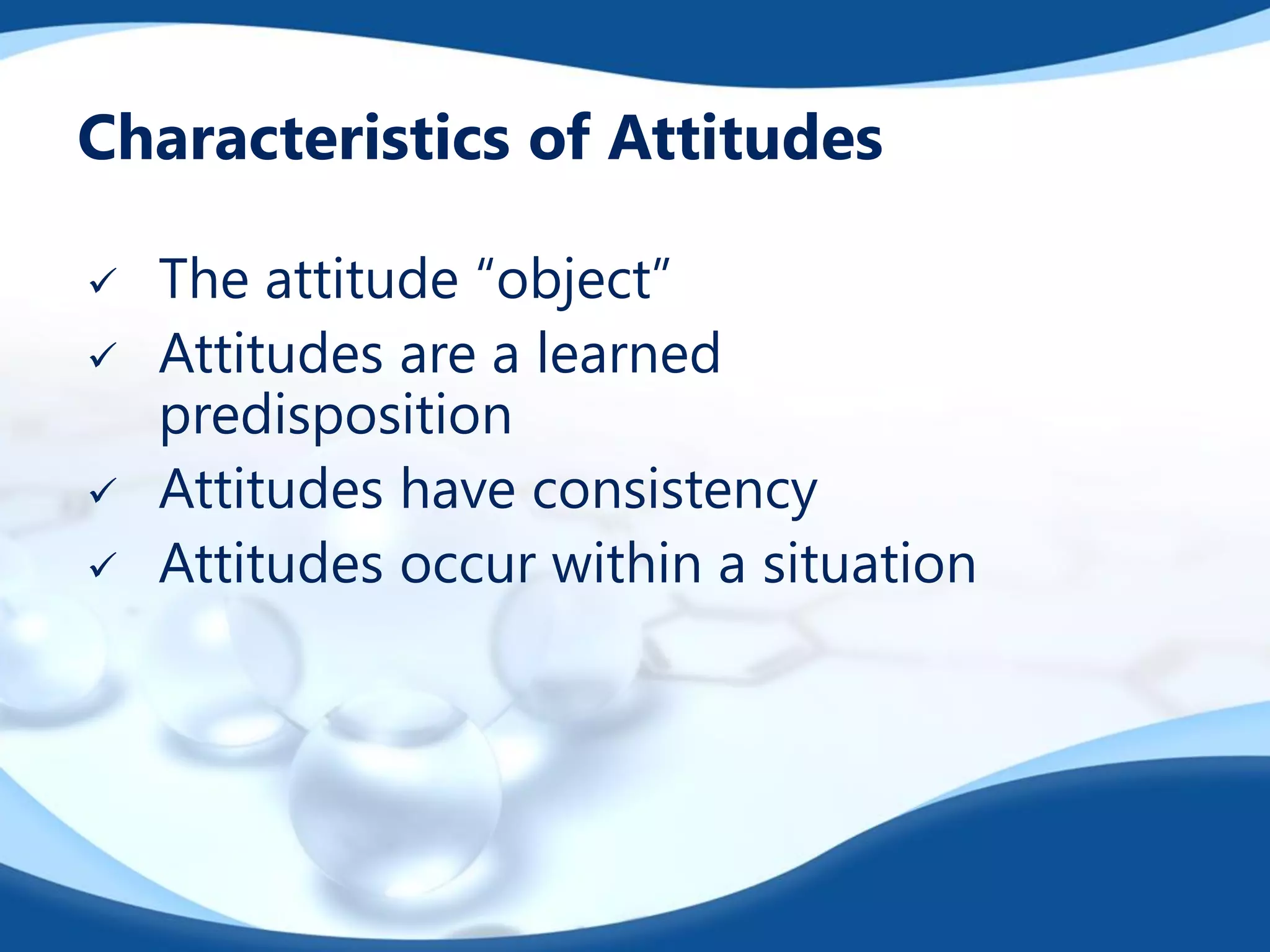
Characteristics of Attitudes
 The attitude “object”
 Attitudes are a learned
predisposition
 Attitudes have consistency
 Attitudes occur within a situation
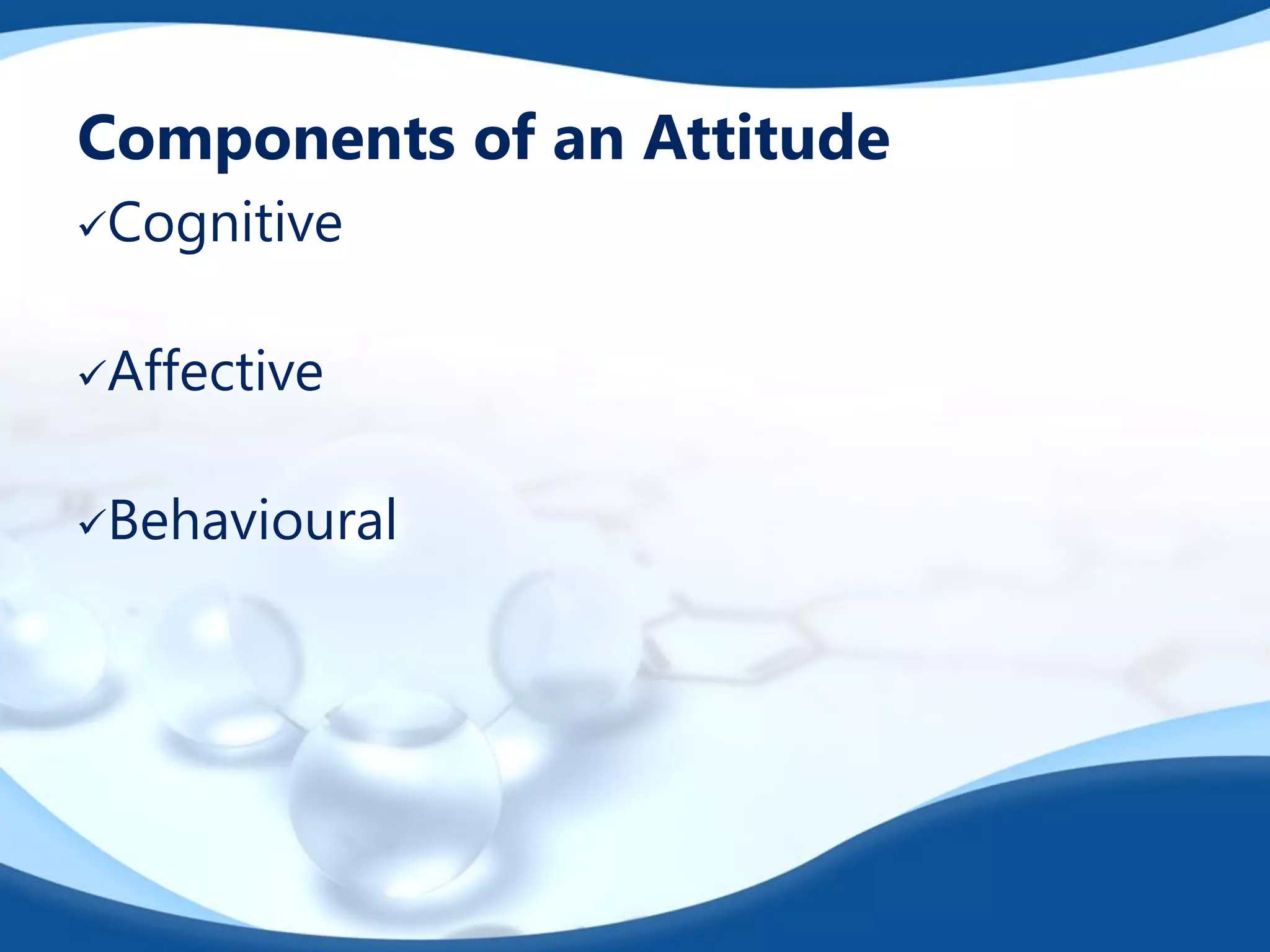
Components of an Attitude
Cognitive
Affective
Behavioural
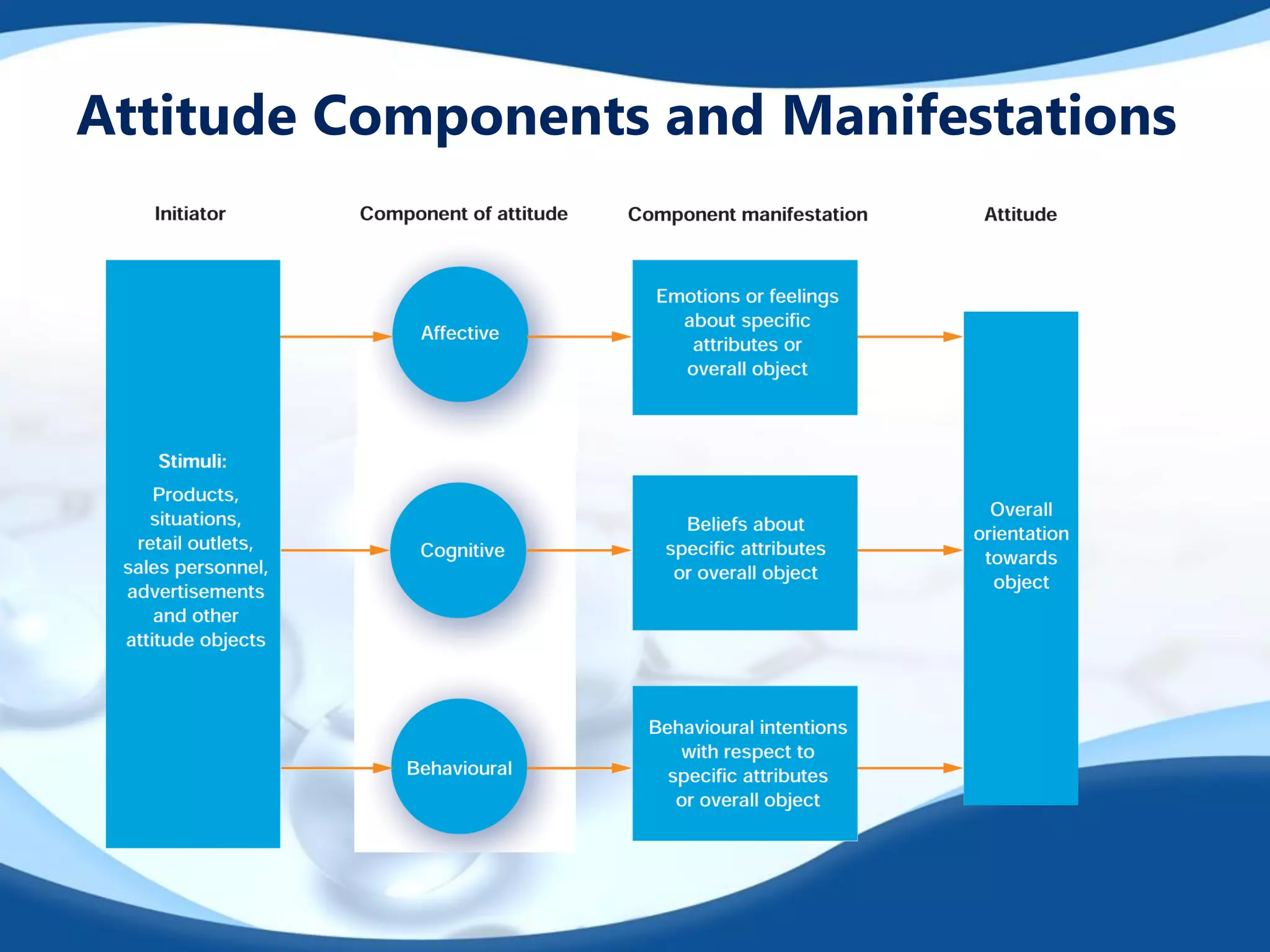
Attitude Components and Manifestations
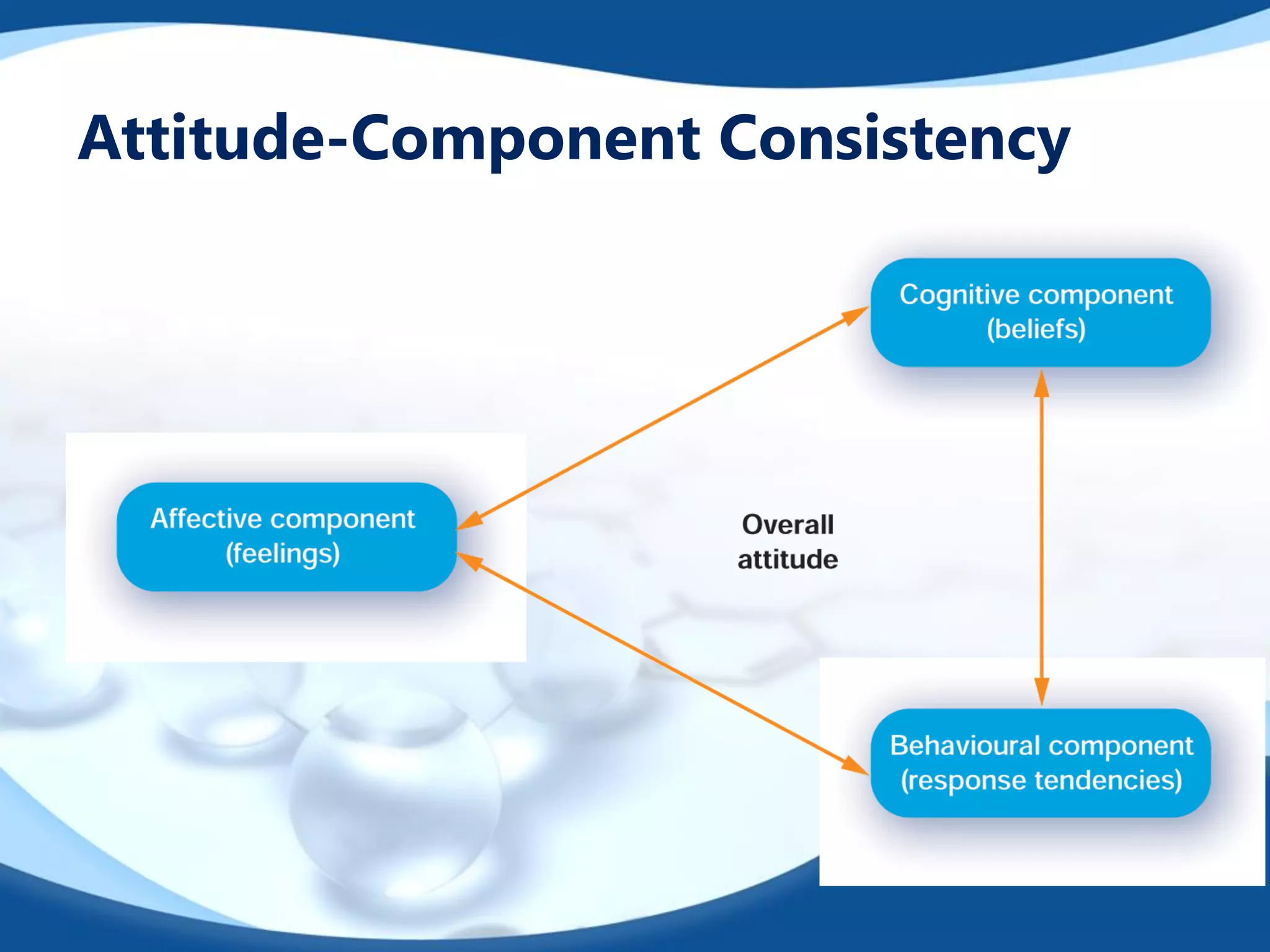
Attitude-Component Consistency
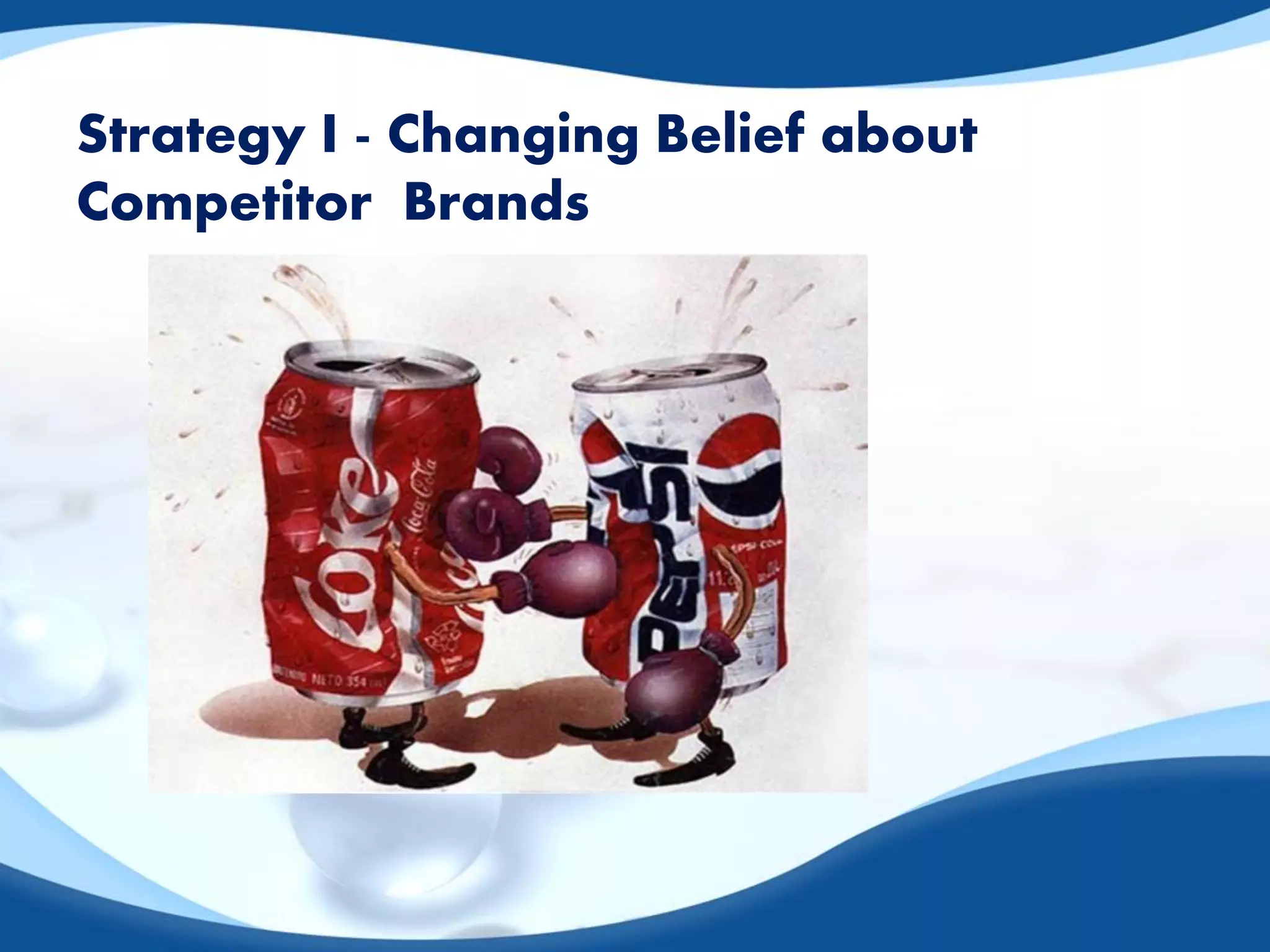
Strategy I - Changing Belief about
Competitor Brands
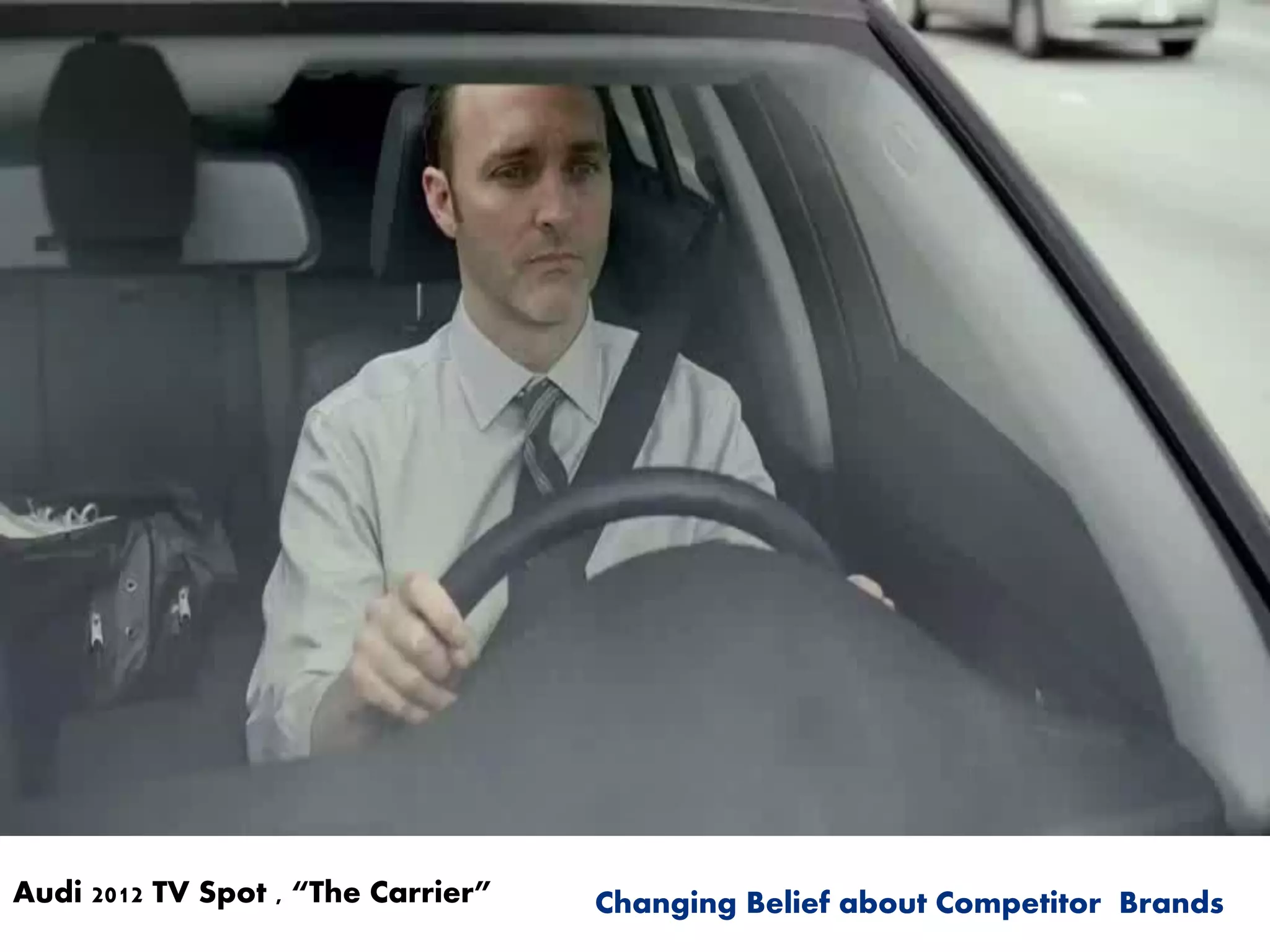
Audi 2012 TV Spot , “The Carrier” Changing Belief about Competitor Brands
Nissan 2012 TV Spot , “Toyota Vs
Hyundai”
Changing Belief about Competitor Brands
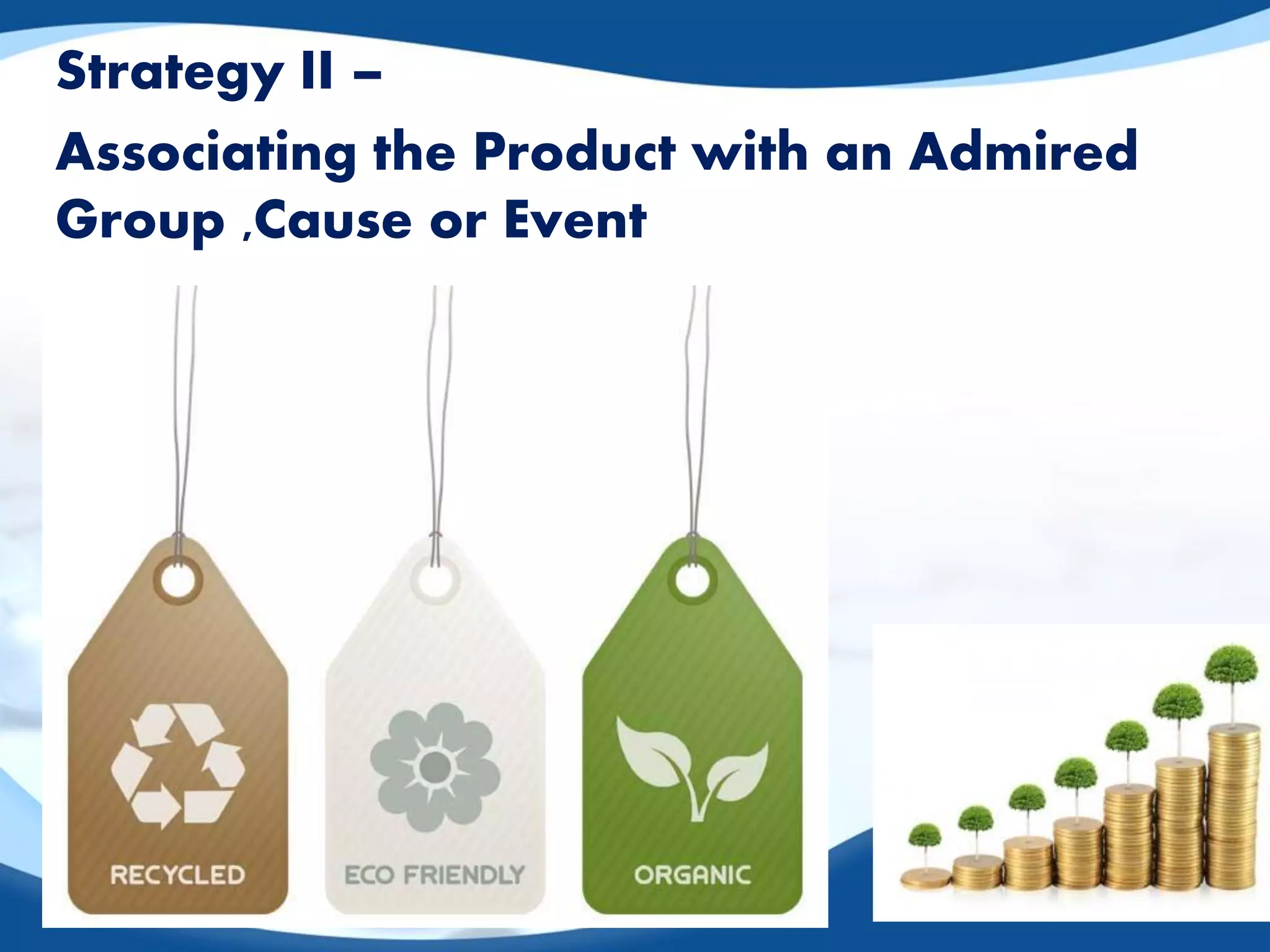
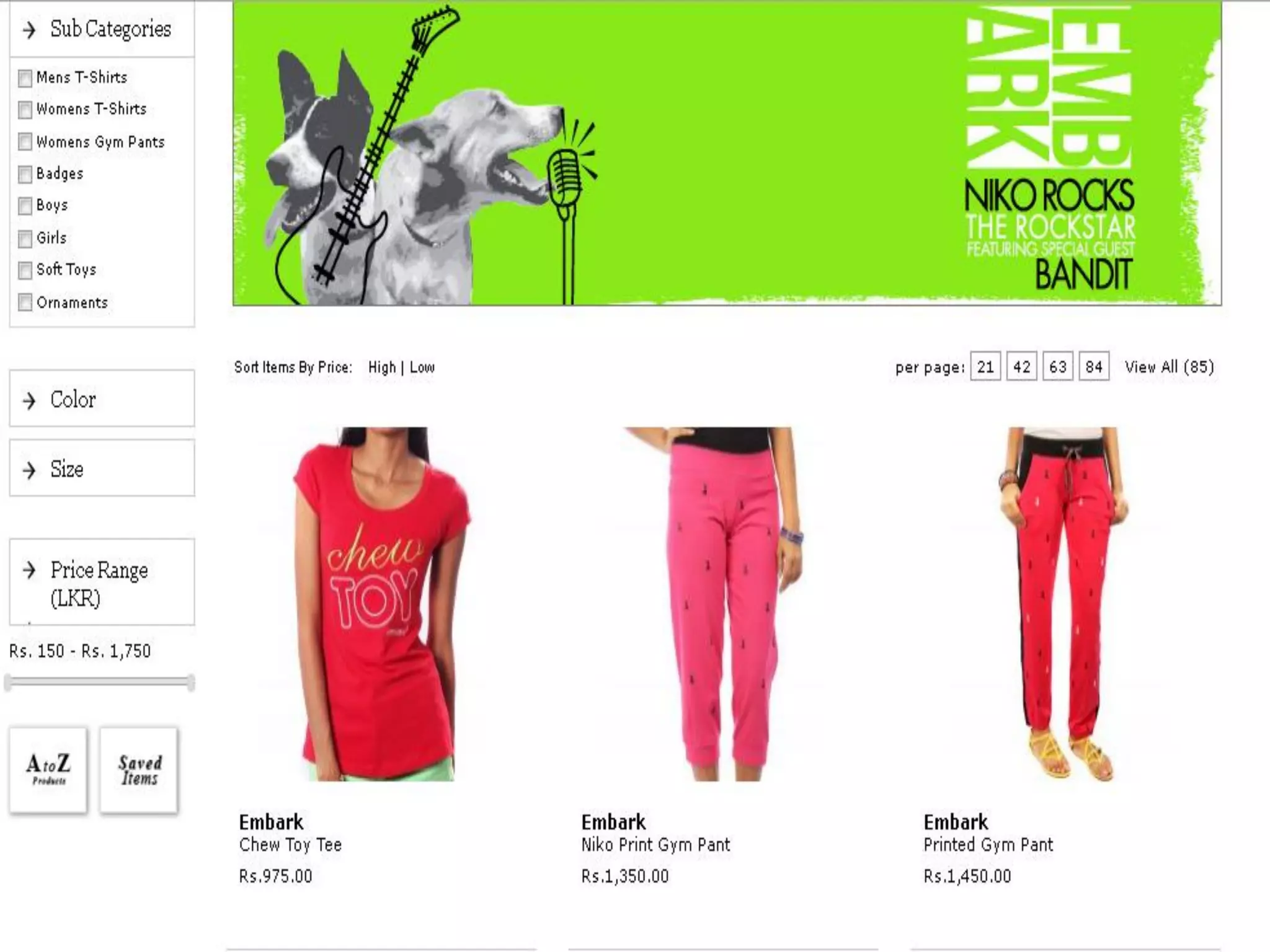
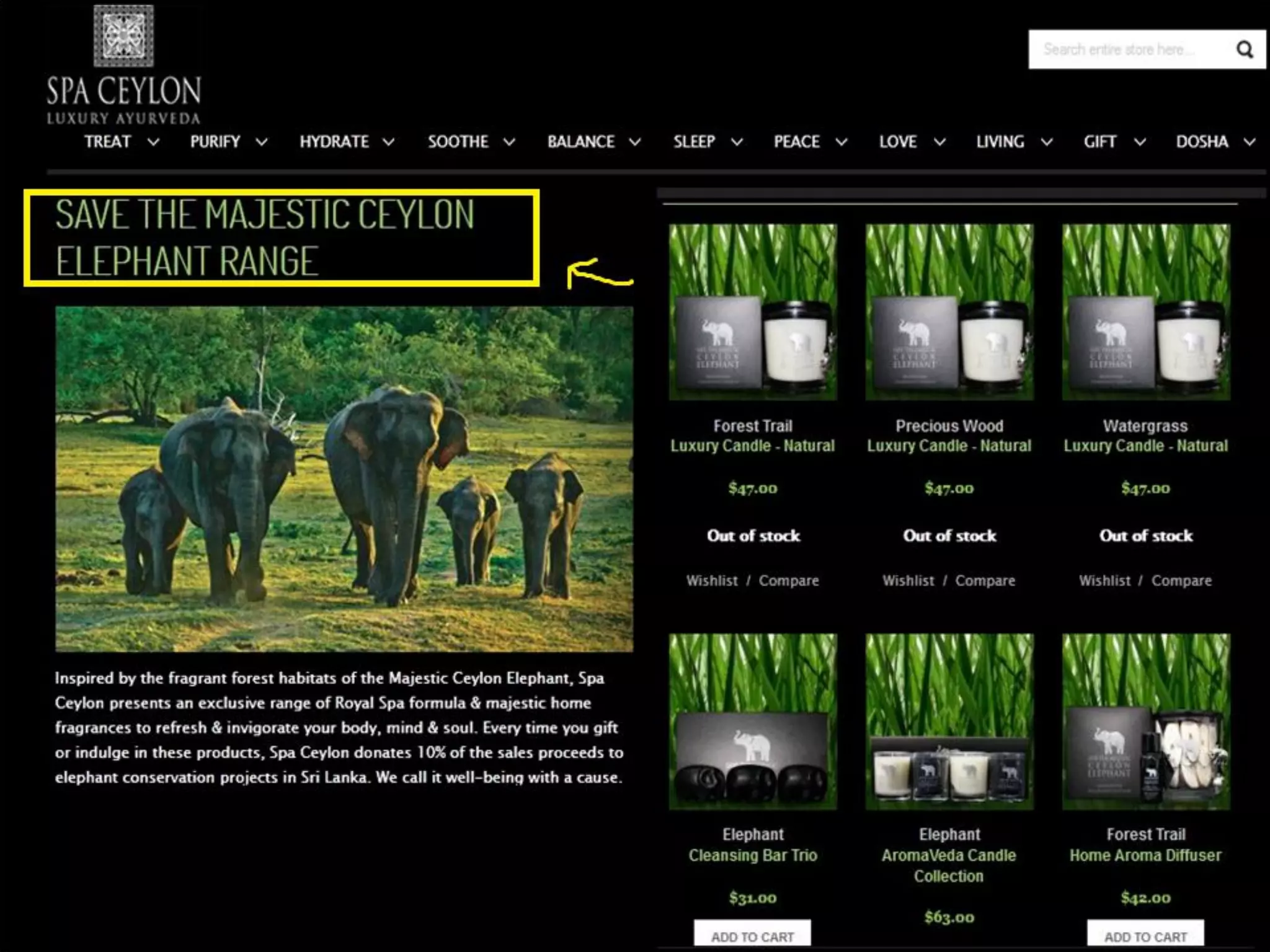
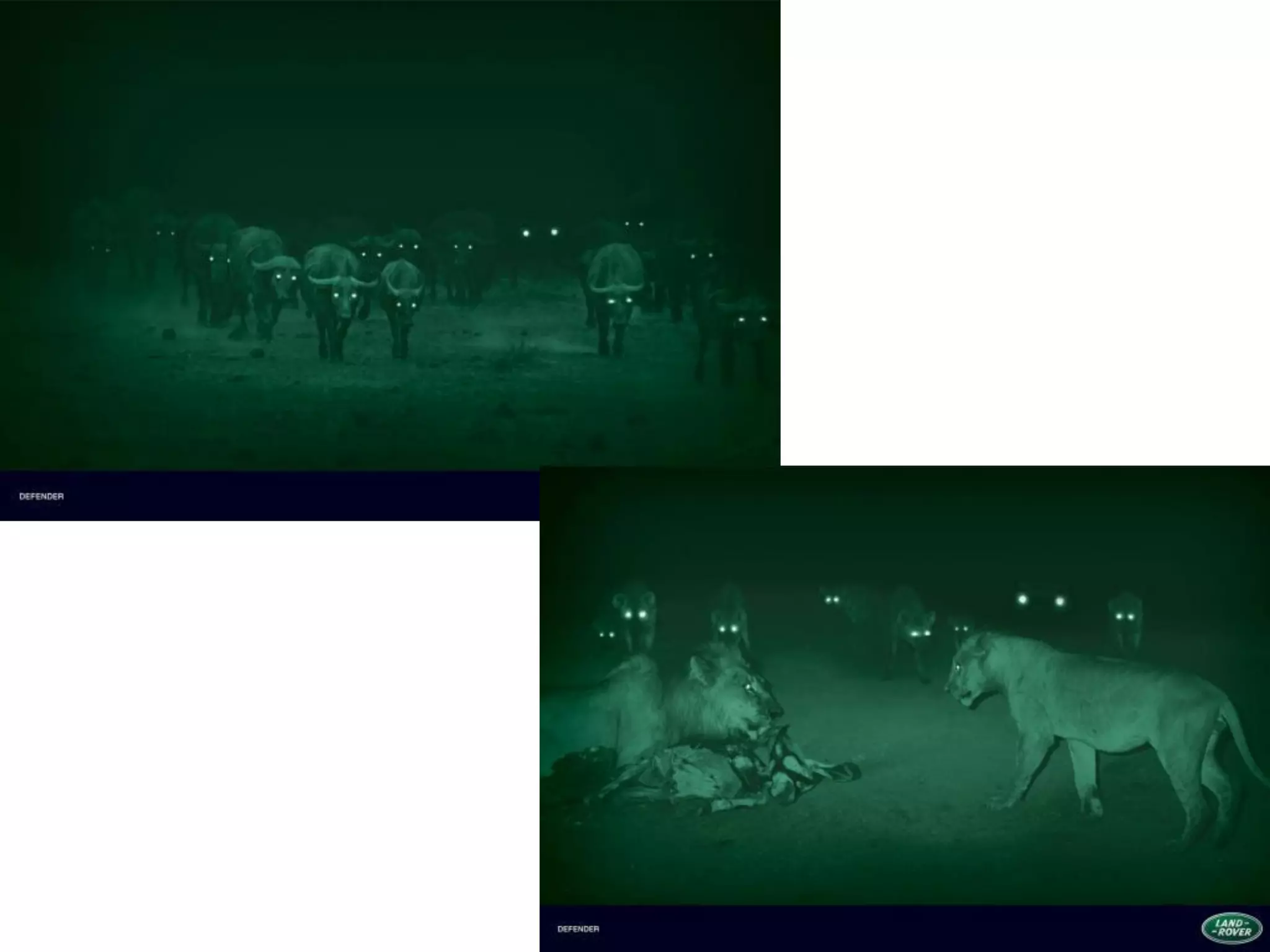
Strategy II –
Associating the Product with an Admired
Group ,Cause or Event
Strategy III –
Altering Components of Multiattribute Model
Copyright 2007 by Prentice Hall
Multiattribute
Attitude
Models
Attitude models that
examine the
composition of
consumer attitudes
in terms of selected
product attributes or
beliefs.
1. Changing the Relative evaluation
attributes
2. Changing Brand Belief
3. Adding an Attribute
4. Change overall brand rating
Albert Einstein, Bob Dylan, Martin Luther King, Jr., Richard Branson, John
Lennon & Yoko Ono, Buckminster Fuller, Thomas Edison, Muhammad Ali,
Ted Turner, Maria Callas, Mahatma Gandhi, Amelia Earhart & Bernt Balchen,
Alfred Hitchcock, Martha Graham, Jim Henson, Frank Lloyd Wright, Pablo
Picasso. The commercial ends with an image of a young girl opening
her closed eyes, as if to see the possibilities before her.
Apple (1997) “Think Different “
- Ad narrated by Steve Jobs
“It fits a bit better than your Ordinary Shoe”
Reebok (1989) TV Spot“Pump Bungee” Altering Multiattribute Model Components
+Changing Belief about Competitor Brands
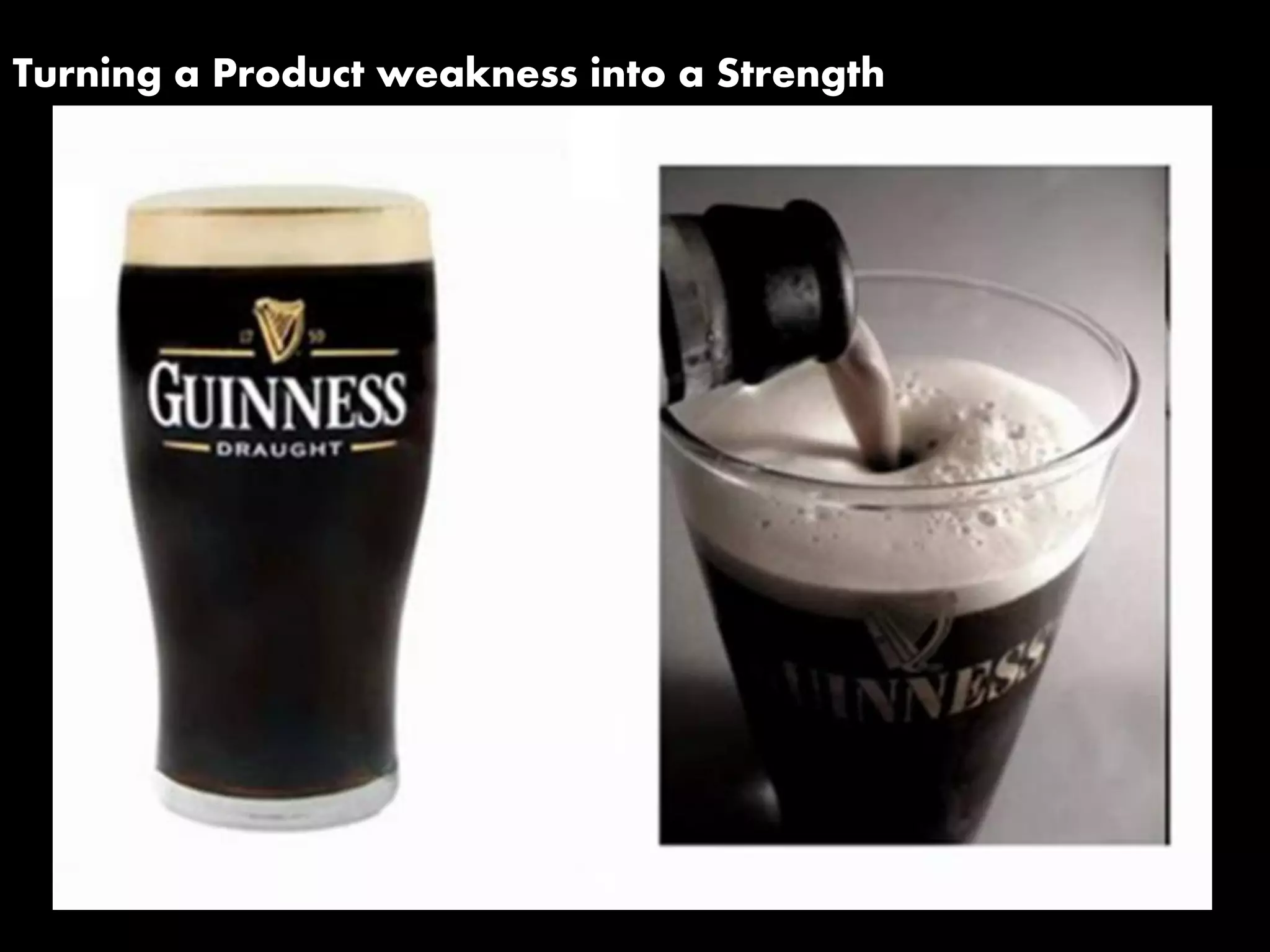
Turning a Product weakness into a Strength
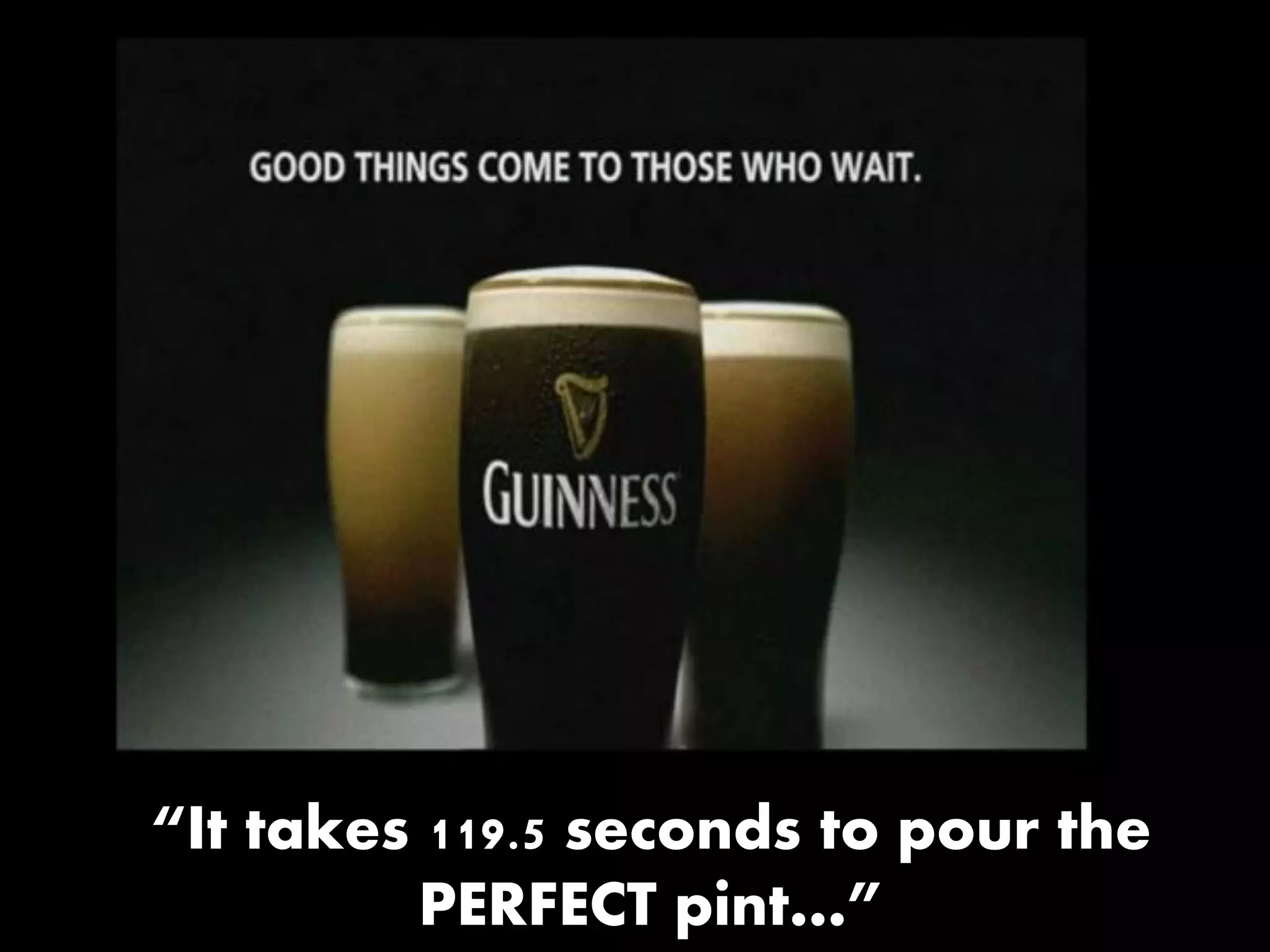
“It takes 119.5 seconds to pour the
PERFECT pint…”
Guniness (1998) TV Spot “Swim Black” Altering Multiattribute Model Components
Strategy IV –
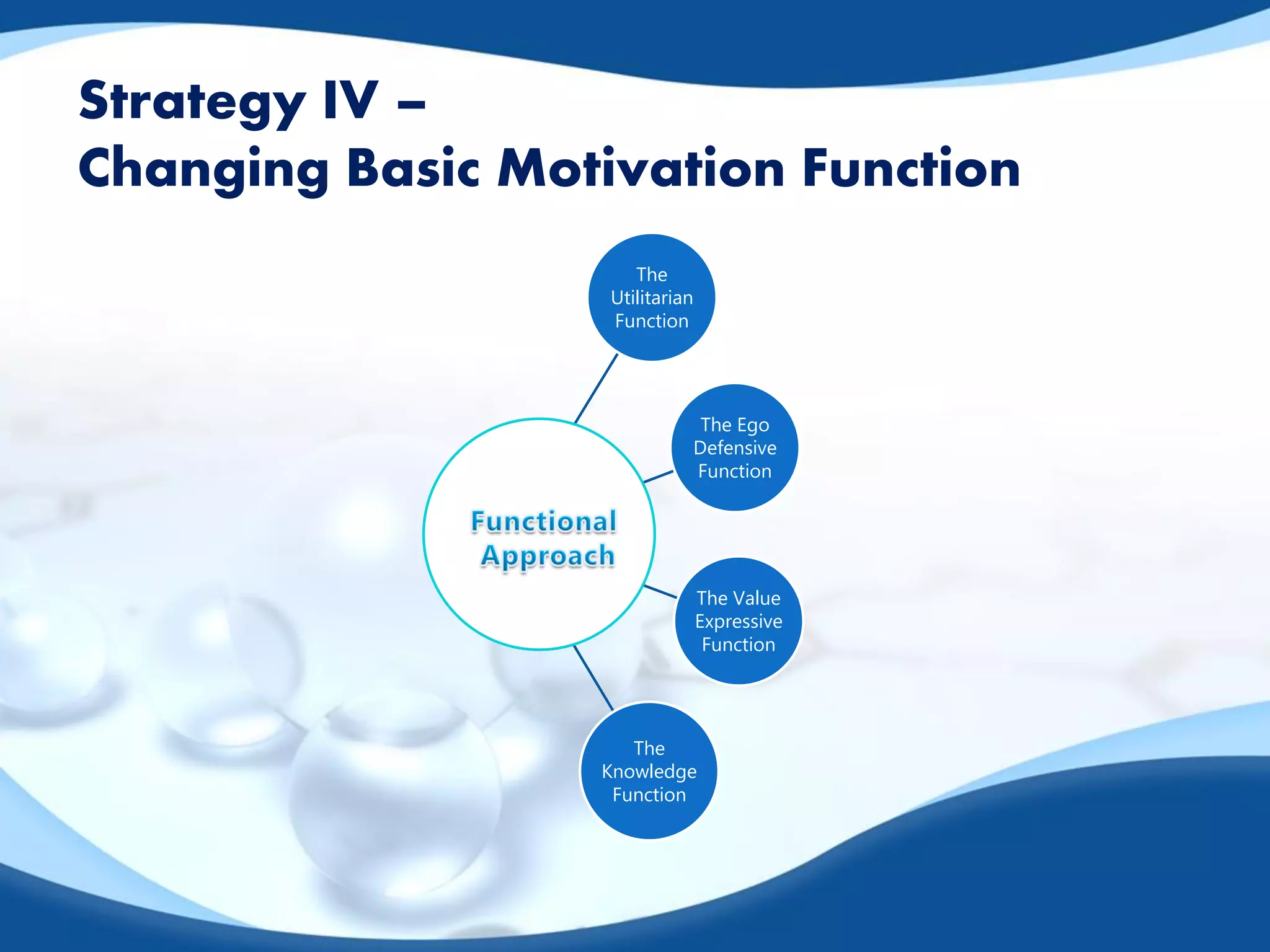
Changing Basic Motivation Function
The
Utilitarian
Function
The Ego
Defensive
Function
The Value
Expressive
Function
The
Knowledge
Function
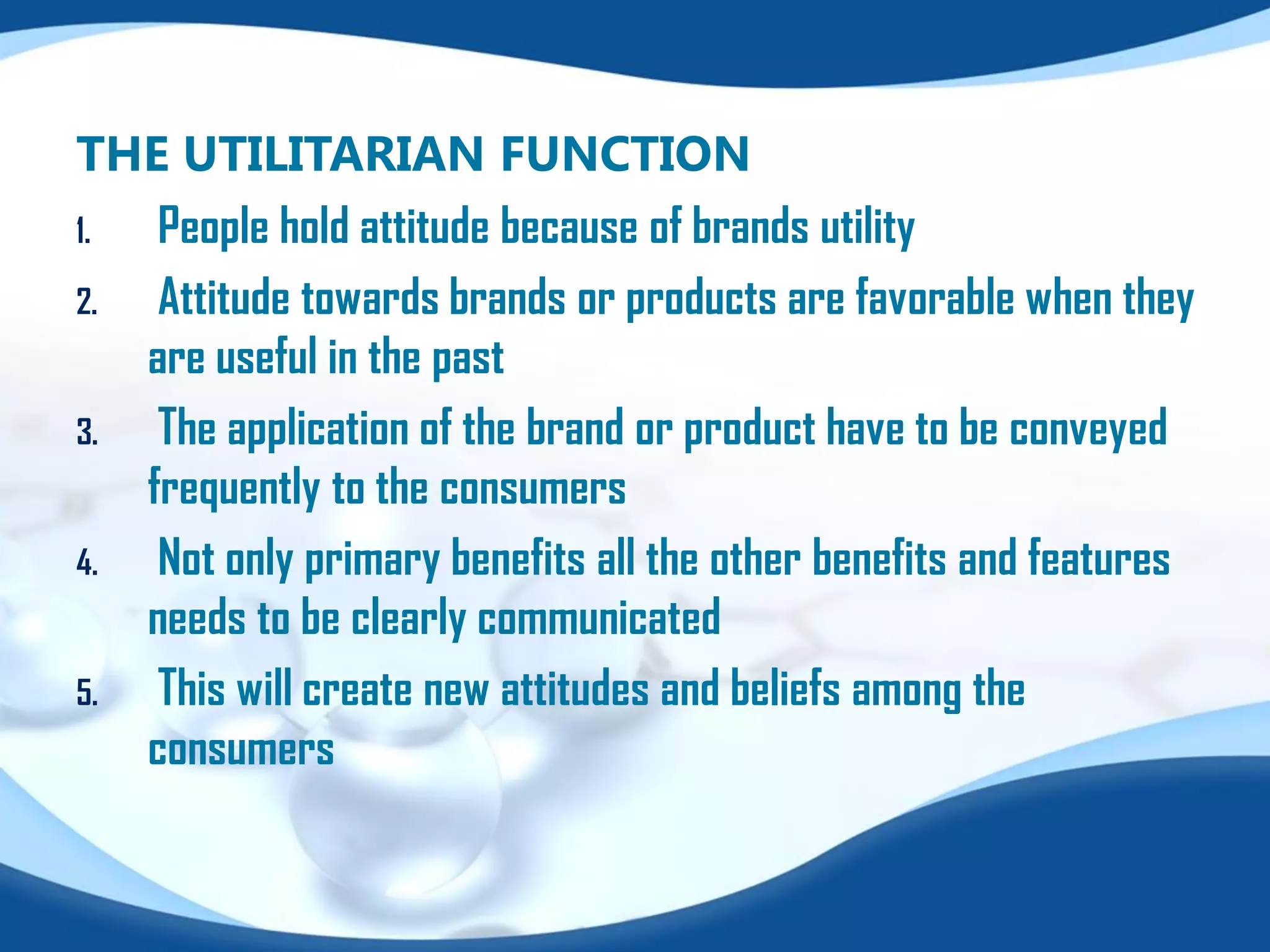
THE UTILITARIAN FUNCTION
1. People hold attitude because of brands utility
2. Attitude towards brands or products are favorable when they
are useful in the past
3. The application of the brand or product have to be conveyed
frequently to the consumers
4. Not only primary benefits all the other benefits and features
needs to be clearly communicated
5. This will create new attitudes and beliefs among the
consumers
The Utilitarian Function
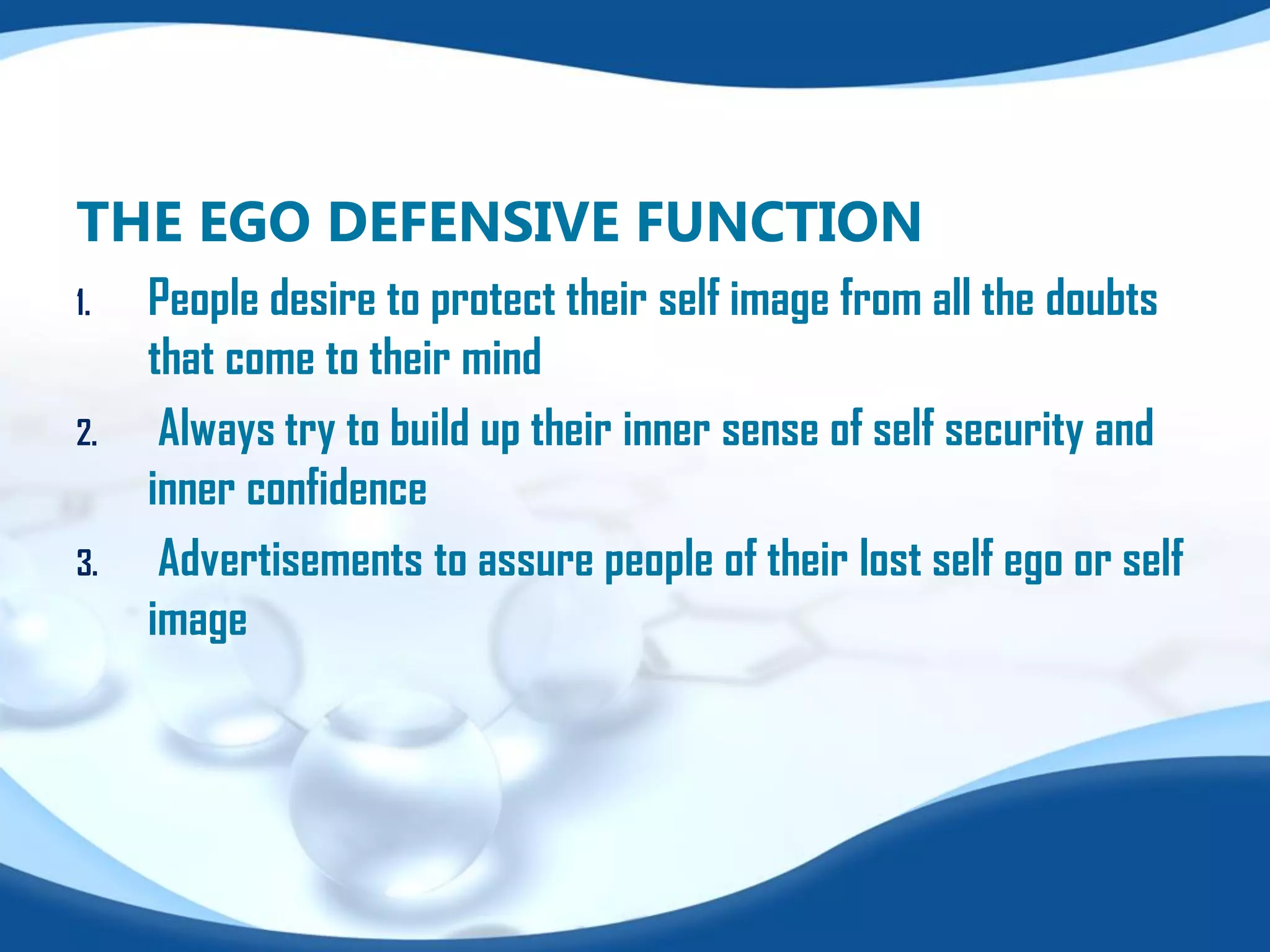
THE EGO DEFENSIVE FUNCTION
1. People desire to protect their self image from all the doubts
that come to their mind
2. Always try to build up their inner sense of self security and
inner confidence
3. Advertisements to assure people of their lost self ego or self
image
The Ego-Defensive Function
VALUE EXPRESSIVE FUNCTION
1. Consumers general values, lifestyles and point of view are
mostly the attitudes they hold
2. Concentrating on target consumers lifestyle and belief will be
useful as they reflect their attitudes towards certain brands
and products
3. if the consumers hold a positive attitudes or negative
attitudes toward the values or beliefs, that will be depicted by
the products and brands they buy
The Value Expressive Function
THE KNOWLEDGE FUNCTION
1. The consumers always have a strong “need to know” about the
particular brand and product
2. Marketers should make the consumers aware of all the important
advantages of particular brands and products over their
competitive brands
3. Consumers should be educated on all the details of the products
and brands so they will secure to buy that particular brand or
product
4. A strong convincing to the consumers on the benefits will be
useful for most of the brands
The Knowledge Function
Resolving Two Conflicting Attitudes
1. CONSUMER IS CONFUSED BETWEEN TWO CONFLICTING ATTITUDES
(NEGATIVE AND POSITIVE)
2. THE ATTITUDE CHANGE STRATEGIES CAN CHANGE THESE CONFLICTS
3. IF CONSUMER HAVE NEGATIVE ATTITUDE TOWARD A PARTICULAR BRAND OR PRODUCT
AND THAT CONFLICT WITH ANOTHER POSITIVE ATTITUDE THEY HAVE, THIS MAY CONFUSE
THE CONSUMER
4. THIS STRATEGY CHANGES THE MIND OF THE CONSUMER TO MOVE FROM THE NEGATIVE
ATTITUDE TO POSITIVE ATTITUDE OF THE PRODUCT OR THE BRAND
Strategy IV –
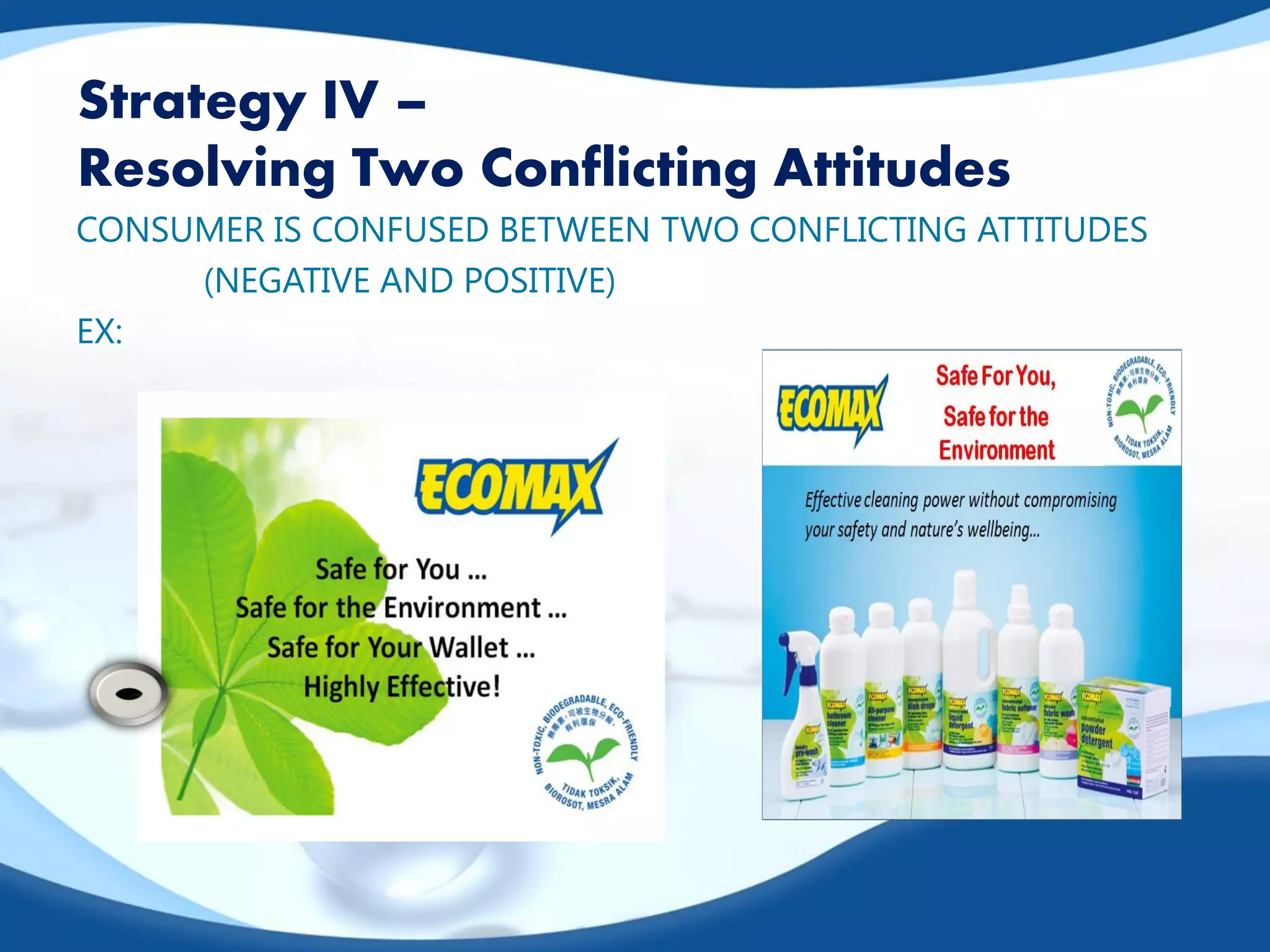
Resolving Two Conflicting Attitudes
CONSUMER IS CONFUSED BETWEEN TWO CONFLICTING ATTITUDES
(NEGATIVE AND POSITIVE)
EX:
CONCLUSION
Attitudes are learned.
Attitudes can be changed , influenced by
different strategies.
Strategies for Consumer Attitude Change

Strategies for Consumer Attitude Change

  • 1.
  • 2.
  • 3.
  • 4.
    Definition of Attitude A learned predispositionto behave in a consistently favorable or unfavorable manner with respect to a given object.
  • 5.
    Characteristics of Attitudes The attitude “object”  Attitudes are a learned predisposition  Attitudes have consistency  Attitudes occur within a situation
  • 6.
    Components of anAttitude Cognitive Affective Behavioural
  • 7.
  • 8.
  • 9.
    Strategy I -Changing Belief about Competitor Brands
  • 10.
    Audi 2012 TVSpot , “The Carrier” Changing Belief about Competitor Brands
  • 11.
    Nissan 2012 TVSpot , “Toyota Vs Hyundai” Changing Belief about Competitor Brands
  • 12.
    Strategy II – Associatingthe Product with an Admired Group ,Cause or Event
  • 20.
    Strategy III – AlteringComponents of Multiattribute Model
  • 21.
    Copyright 2007 byPrentice Hall Multiattribute Attitude Models Attitude models that examine the composition of consumer attitudes in terms of selected product attributes or beliefs.
  • 22.
    1. Changing theRelative evaluation attributes 2. Changing Brand Belief 3. Adding an Attribute 4. Change overall brand rating
  • 24.
    Albert Einstein, BobDylan, Martin Luther King, Jr., Richard Branson, John Lennon & Yoko Ono, Buckminster Fuller, Thomas Edison, Muhammad Ali, Ted Turner, Maria Callas, Mahatma Gandhi, Amelia Earhart & Bernt Balchen, Alfred Hitchcock, Martha Graham, Jim Henson, Frank Lloyd Wright, Pablo Picasso. The commercial ends with an image of a young girl opening her closed eyes, as if to see the possibilities before her. Apple (1997) “Think Different “ - Ad narrated by Steve Jobs
  • 25.
    “It fits abit better than your Ordinary Shoe”
  • 26.
    Reebok (1989) TVSpot“Pump Bungee” Altering Multiattribute Model Components +Changing Belief about Competitor Brands
  • 27.
    Turning a Productweakness into a Strength
  • 28.
    “It takes 119.5seconds to pour the PERFECT pint…”
  • 29.
    Guniness (1998) TVSpot “Swim Black” Altering Multiattribute Model Components
  • 30.
    Strategy IV – ChangingBasic Motivation Function The Utilitarian Function The Ego Defensive Function The Value Expressive Function The Knowledge Function
  • 31.
    THE UTILITARIAN FUNCTION 1.People hold attitude because of brands utility 2. Attitude towards brands or products are favorable when they are useful in the past 3. The application of the brand or product have to be conveyed frequently to the consumers 4. Not only primary benefits all the other benefits and features needs to be clearly communicated 5. This will create new attitudes and beliefs among the consumers
  • 32.
  • 33.
    THE EGO DEFENSIVEFUNCTION 1. People desire to protect their self image from all the doubts that come to their mind 2. Always try to build up their inner sense of self security and inner confidence 3. Advertisements to assure people of their lost self ego or self image
  • 34.
  • 35.
    VALUE EXPRESSIVE FUNCTION 1.Consumers general values, lifestyles and point of view are mostly the attitudes they hold 2. Concentrating on target consumers lifestyle and belief will be useful as they reflect their attitudes towards certain brands and products 3. if the consumers hold a positive attitudes or negative attitudes toward the values or beliefs, that will be depicted by the products and brands they buy
  • 36.
  • 37.
    THE KNOWLEDGE FUNCTION 1.The consumers always have a strong “need to know” about the particular brand and product 2. Marketers should make the consumers aware of all the important advantages of particular brands and products over their competitive brands 3. Consumers should be educated on all the details of the products and brands so they will secure to buy that particular brand or product 4. A strong convincing to the consumers on the benefits will be useful for most of the brands
  • 38.
  • 39.
    Resolving Two ConflictingAttitudes 1. CONSUMER IS CONFUSED BETWEEN TWO CONFLICTING ATTITUDES (NEGATIVE AND POSITIVE) 2. THE ATTITUDE CHANGE STRATEGIES CAN CHANGE THESE CONFLICTS 3. IF CONSUMER HAVE NEGATIVE ATTITUDE TOWARD A PARTICULAR BRAND OR PRODUCT AND THAT CONFLICT WITH ANOTHER POSITIVE ATTITUDE THEY HAVE, THIS MAY CONFUSE THE CONSUMER 4. THIS STRATEGY CHANGES THE MIND OF THE CONSUMER TO MOVE FROM THE NEGATIVE ATTITUDE TO POSITIVE ATTITUDE OF THE PRODUCT OR THE BRAND
  • 40.
    Strategy IV – ResolvingTwo Conflicting Attitudes CONSUMER IS CONFUSED BETWEEN TWO CONFLICTING ATTITUDES (NEGATIVE AND POSITIVE) EX:
  • 41.
    CONCLUSION Attitudes are learned. Attitudescan be changed , influenced by different strategies.