Prepared by – Akhil Dubey
 Buyer decision making process.
 Post purchase consumer behavior.
 Post purchase consumer behavior flow chart.
 Purchase evaluation and customer satisfaction.
 Post purchase satisfaction.
 Post purchase dissatisfaction.
Buyer Decision Making Process
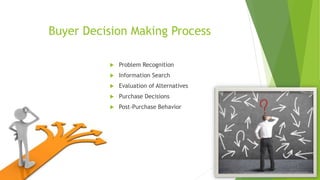
 Problem Recognition
 Information Search
 Evaluation of Alternatives
 Purchase Decisions
 Post-Purchase Behavior
Post Purchase Consumer Behaviour
Post-purchase behavior is the final stage in the
consumer decision process when the customer
assesses whether he is satisfied or dissatisfied with
a purchase. How the customer feels about a
purchase will significantly influence whether he will
purchase the product again.
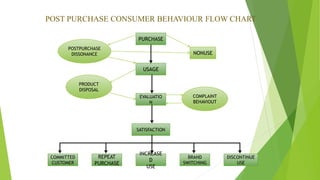
POST PURCHASE CONSUMER BEHAVIOUR FLOW CHART
PURCHASE
USAGE
EVALUATIO
N
SATISFACTION
REPEAT
PURCHASE
DISCONTINUE
USE
BRAND
SWITCHING
INCREASE
D
USE
COMMITTED
CUSTOMER
PRODUCT
DISPOSAL
COMPLAINT
BEHAVIOUT
POSTPURCHASE
DISSONANCE NONUSE
PURCHASE
USAGE
NONUSE
POST PURCHASE
DISSONANCE
POST PURCHASE CONSUMER BEHAVIOUR
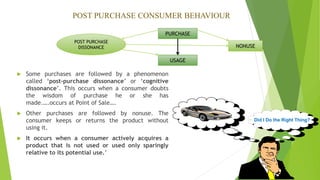
 Some purchases are followed by a phenomenon
called ‘post-purchase dissonance’ or ‘cognitive
dissonance’. This occurs when a consumer doubts
the wisdom of purchase he or she has
made.….occurs at Point of Sale….
 Other purchases are followed by nonuse. The
consumer keeps or returns the product without
using it.
 It occurs when a consumer actively acquires a
product that is not used or used only sparingly
relative to its potential use.’
Did I Do the Right Thing?
POST PURCHASE CONSUMER BEHAVIOUR
PURCHASE
USAGE
EVALUATIO
N
PRODUCT
DISPOSAL COMPLAINT
BEHAVIOUT
POSTPURCHASE
DISSONANCE NONUSE
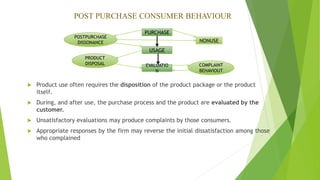
 Product use often requires the disposition of the product package or the product
itself.
 During, and after use, the purchase process and the product are evaluated by the
customer.
 Unsatisfactory evaluations may produce complaints by those consumers.
 Appropriate responses by the firm may reverse the initial dissatisfaction among those
who complained
PURCHASE EVALUATION & CUSTOMER SATISFACTION
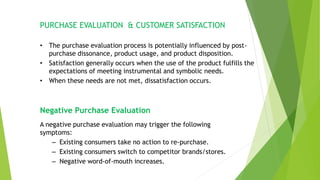
• The purchase evaluation process is potentially influenced by post-
purchase dissonance, product usage, and product disposition.
• Satisfaction generally occurs when the use of the product fulfills the
expectations of meeting instrumental and symbolic needs.
• When these needs are not met, dissatisfaction occurs.
Negative Purchase Evaluation
A negative purchase evaluation may trigger the following
symptoms:
– Existing consumers take no action to re-purchase.
– Existing consumers switch to competitor brands/stores.
– Negative word-of-mouth increases.
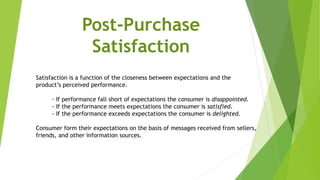
Satisfaction is a function of the closeness between expectations and the
product’s perceived performance.
- If performance fall short of expectations the consumer is disappointed.
- If the performance meets expectations the consumer is satisfied.
- If the performance exceeds expectations the consumer is delighted.
Consumer form their expectations on the basis of messages received from sellers,
friends, and other information sources.
Post-Purchase
Satisfaction
Complain to
store or
manufacture
r
Stop
buying
that
brand or
at the
store
Warm
Friends
Complain
to private
or Govt.
Agencies
Initiate
Legal
Action
LESS
FAVORABL
E
ATTITUDE
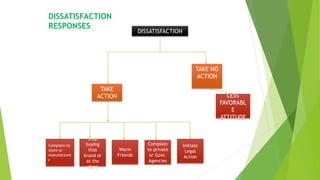
DISSATISFACTION
TAKE NO
ACTION
TAKE
ACTION
DISSATISFACTION
RESPONSES

Post purchase consumer behaviour

  • 1.
    Prepared by –Akhil Dubey
  • 2.
     Buyer decisionmaking process.  Post purchase consumer behavior.  Post purchase consumer behavior flow chart.  Purchase evaluation and customer satisfaction.  Post purchase satisfaction.  Post purchase dissatisfaction.
  • 3.
    Buyer Decision MakingProcess  Problem Recognition  Information Search  Evaluation of Alternatives  Purchase Decisions  Post-Purchase Behavior
  • 4.
    Post Purchase ConsumerBehaviour Post-purchase behavior is the final stage in the consumer decision process when the customer assesses whether he is satisfied or dissatisfied with a purchase. How the customer feels about a purchase will significantly influence whether he will purchase the product again.
  • 5.
    POST PURCHASE CONSUMERBEHAVIOUR FLOW CHART PURCHASE USAGE EVALUATIO N SATISFACTION REPEAT PURCHASE DISCONTINUE USE BRAND SWITCHING INCREASE D USE COMMITTED CUSTOMER PRODUCT DISPOSAL COMPLAINT BEHAVIOUT POSTPURCHASE DISSONANCE NONUSE
  • 6.
    PURCHASE USAGE NONUSE POST PURCHASE DISSONANCE POST PURCHASECONSUMER BEHAVIOUR  Some purchases are followed by a phenomenon called ‘post-purchase dissonance’ or ‘cognitive dissonance’. This occurs when a consumer doubts the wisdom of purchase he or she has made.….occurs at Point of Sale….  Other purchases are followed by nonuse. The consumer keeps or returns the product without using it.  It occurs when a consumer actively acquires a product that is not used or used only sparingly relative to its potential use.’ Did I Do the Right Thing?
  • 7.
    POST PURCHASE CONSUMERBEHAVIOUR PURCHASE USAGE EVALUATIO N PRODUCT DISPOSAL COMPLAINT BEHAVIOUT POSTPURCHASE DISSONANCE NONUSE  Product use often requires the disposition of the product package or the product itself.  During, and after use, the purchase process and the product are evaluated by the customer.  Unsatisfactory evaluations may produce complaints by those consumers.  Appropriate responses by the firm may reverse the initial dissatisfaction among those who complained
  • 8.
    PURCHASE EVALUATION &CUSTOMER SATISFACTION • The purchase evaluation process is potentially influenced by post- purchase dissonance, product usage, and product disposition. • Satisfaction generally occurs when the use of the product fulfills the expectations of meeting instrumental and symbolic needs. • When these needs are not met, dissatisfaction occurs. Negative Purchase Evaluation A negative purchase evaluation may trigger the following symptoms: – Existing consumers take no action to re-purchase. – Existing consumers switch to competitor brands/stores. – Negative word-of-mouth increases.
  • 9.
    Satisfaction is afunction of the closeness between expectations and the product’s perceived performance. - If performance fall short of expectations the consumer is disappointed. - If the performance meets expectations the consumer is satisfied. - If the performance exceeds expectations the consumer is delighted. Consumer form their expectations on the basis of messages received from sellers, friends, and other information sources. Post-Purchase Satisfaction
  • 10.
    Complain to store or manufacture r Stop buying that brandor at the store Warm Friends Complain to private or Govt. Agencies Initiate Legal Action LESS FAVORABL E ATTITUDE DISSATISFACTION TAKE NO ACTION TAKE ACTION DISSATISFACTION RESPONSES