Levels of Consumer Decision
Making & A Model of Consumer
Decision Making
Presented by:
Ajit Kumar Gautam
MBA-IB(3rd Sem)
Consumer Decision Making
 Process by which consumer identify
their needs, collect information,
evaluate alternatives and make
purchase decision.
 These actions are determined by
psychological and economical factors,
and are influenced by environmental
factors such as culture, group, and
social values.
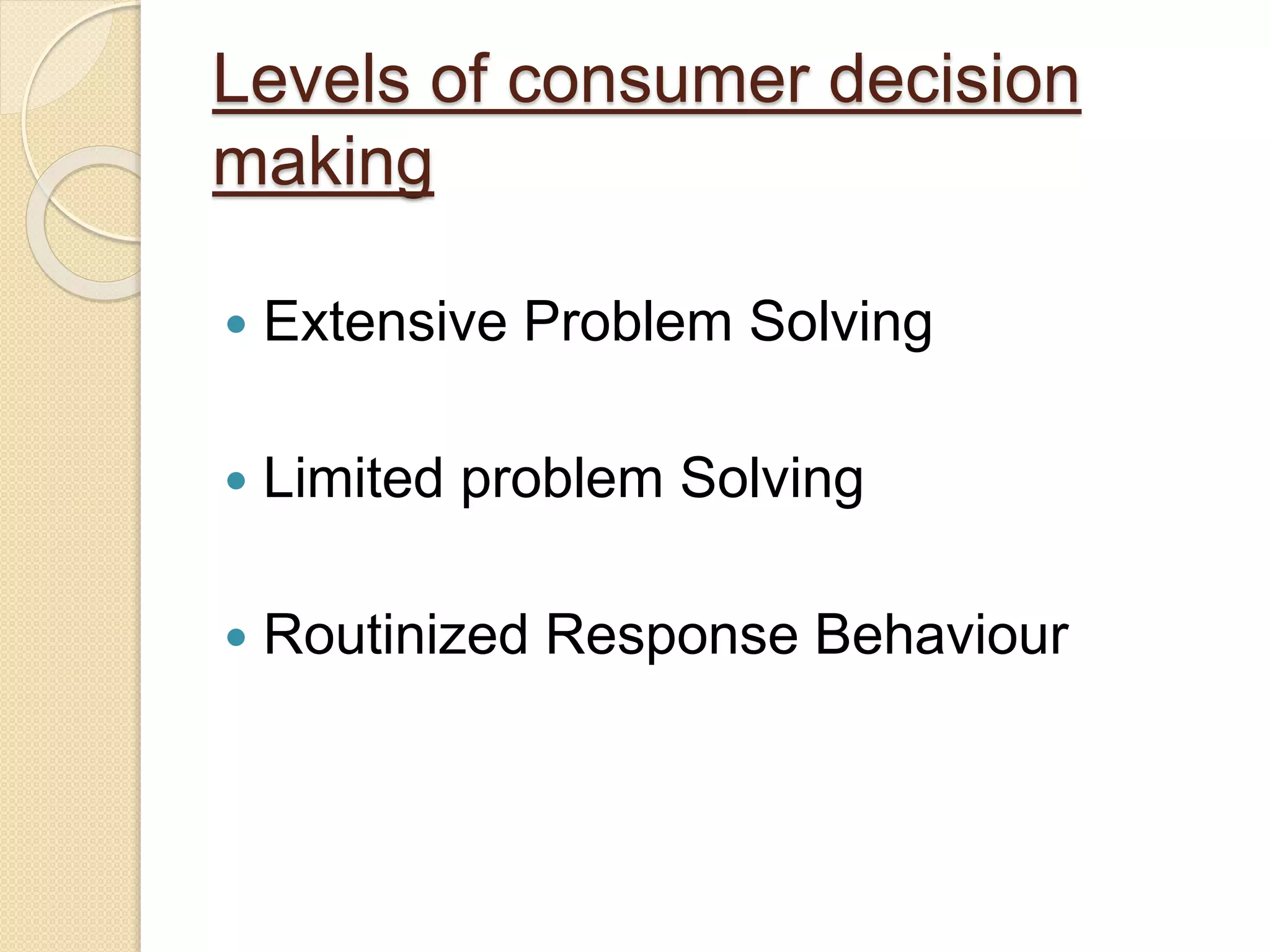
Levels of consumer decision
making
 Extensive Problem Solving
 Limited problem Solving
 Routinized Response Behaviour
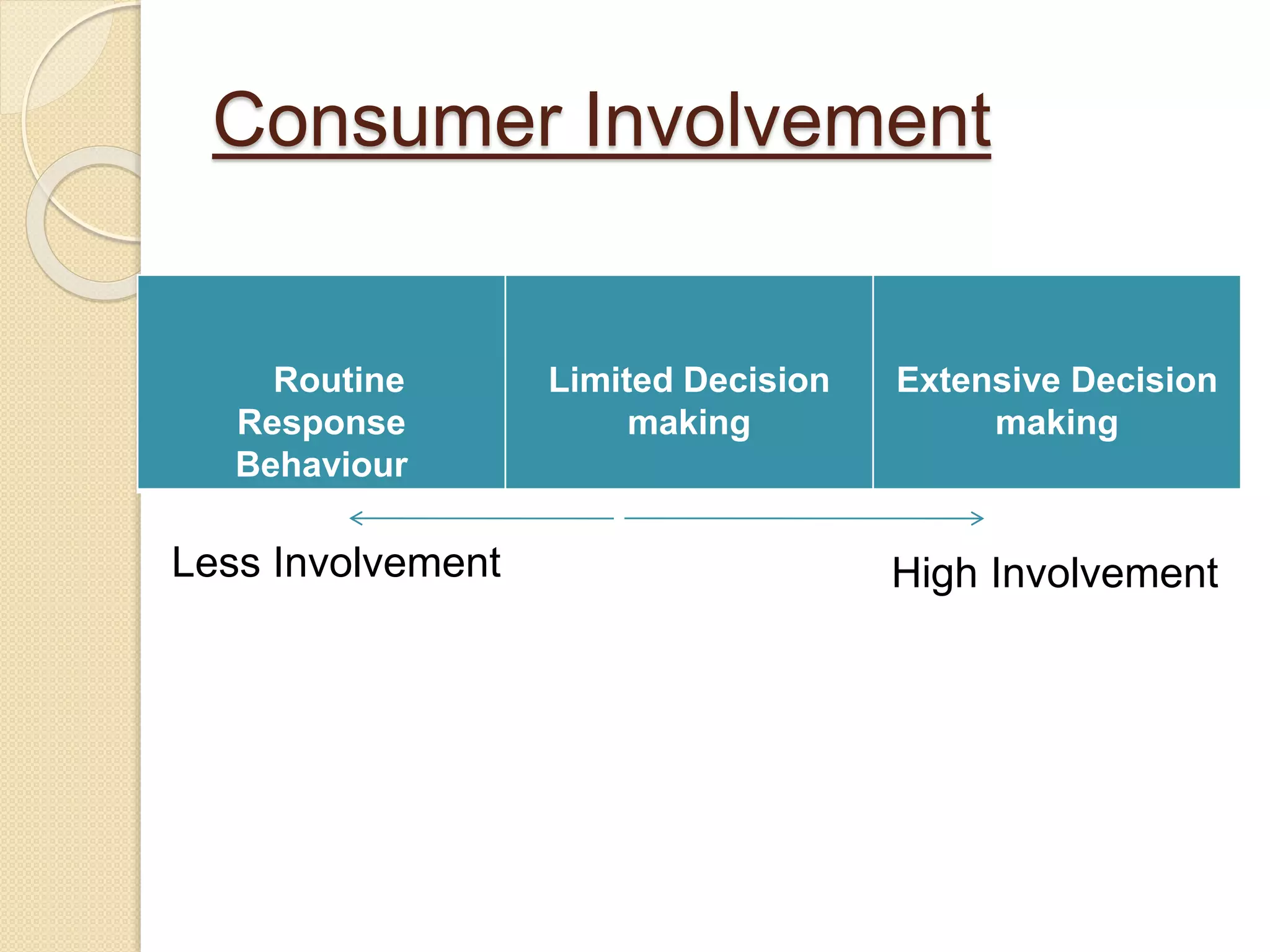
Consumer Involvement
Routine
Response
Behaviour
Limited Decision
making
Extensive Decision
making
Less Involvement High Involvement
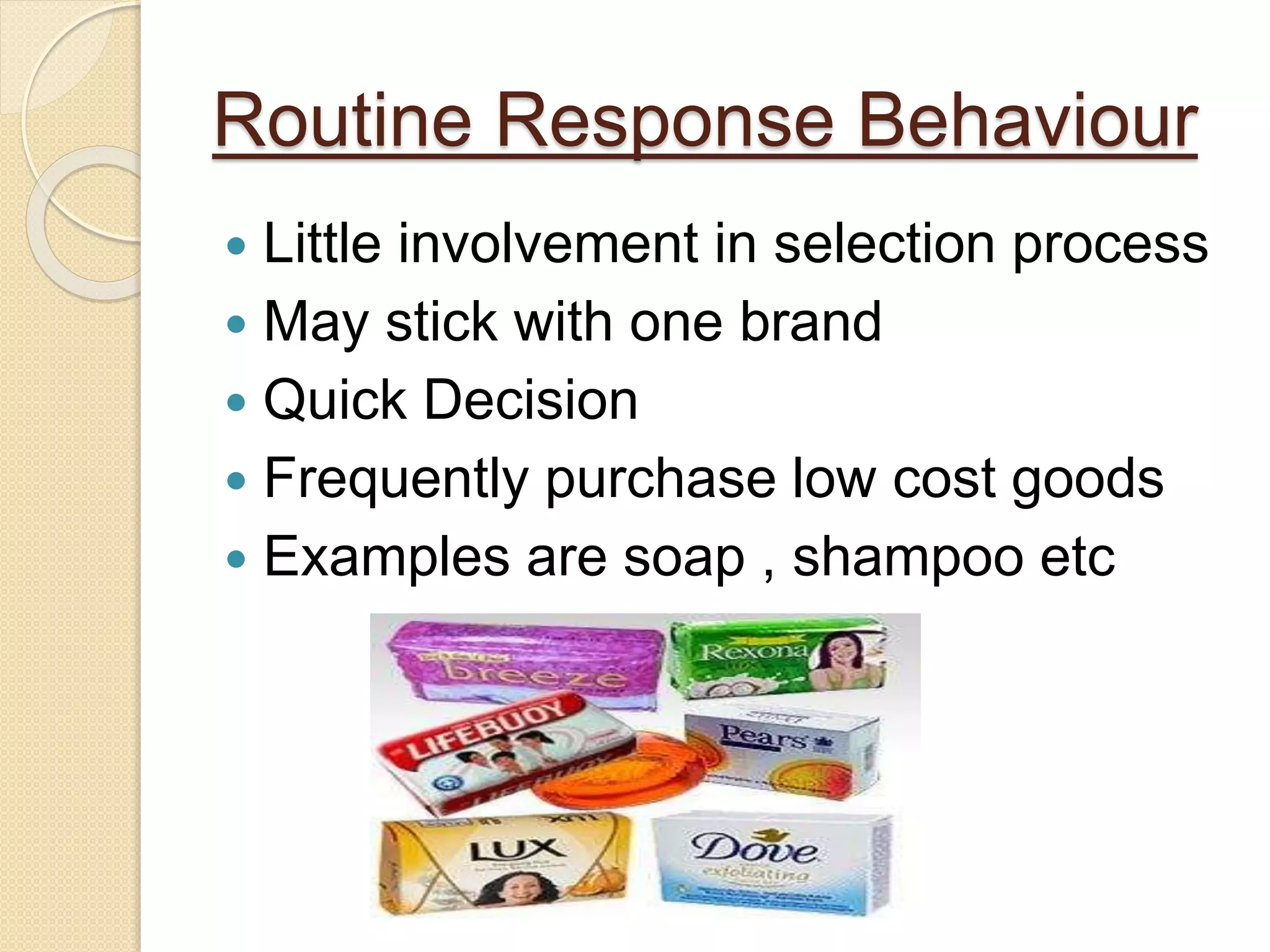
Routine Response Behaviour
 Little involvement in selection process
 May stick with one brand
 Quick Decision
 Frequently purchase low cost goods
 Examples are soap , shampoo etc
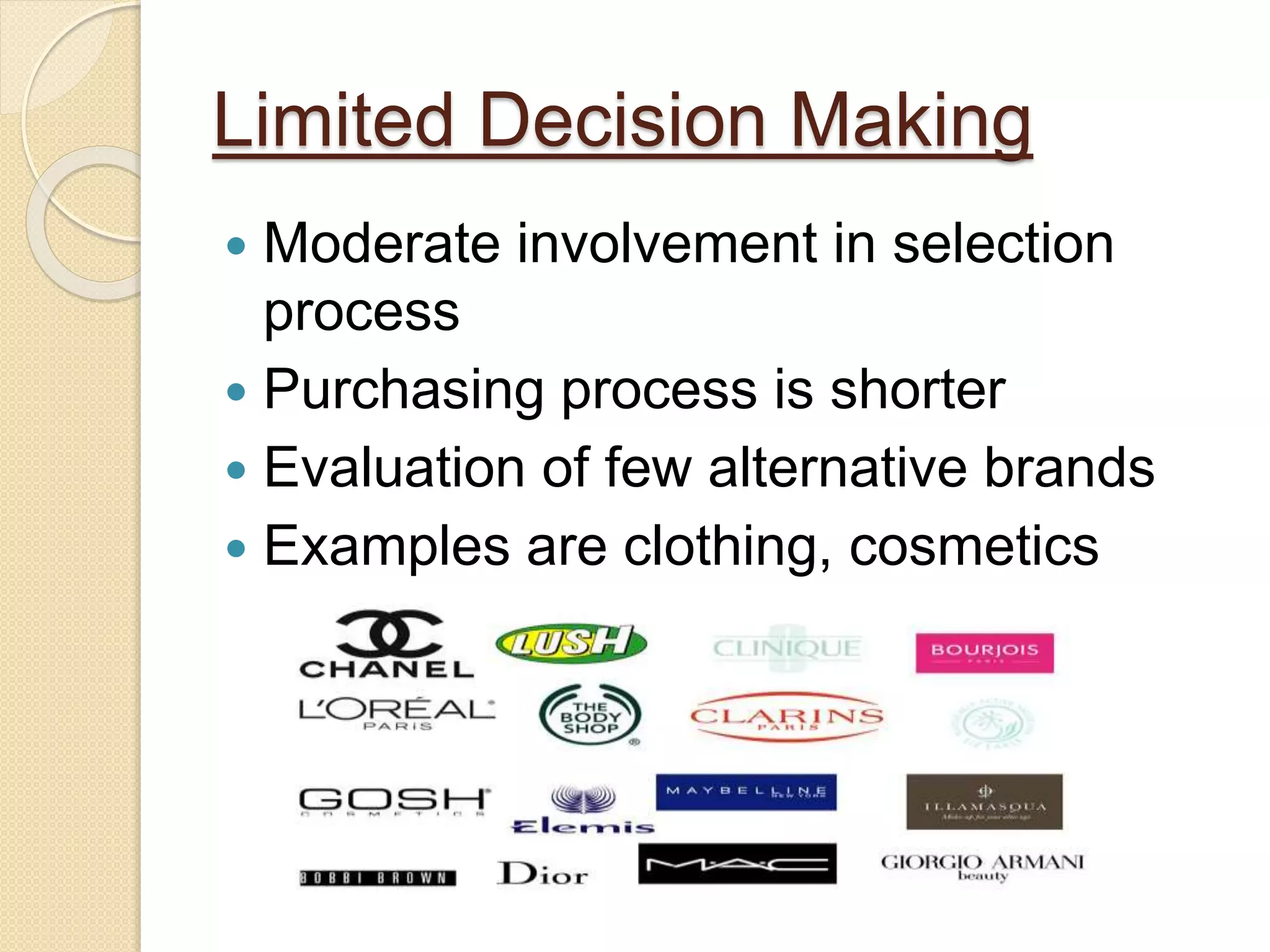
Limited Decision Making
 Moderate involvement in selection
process
 Purchasing process is shorter
 Evaluation of few alternative brands
 Examples are clothing, cosmetics
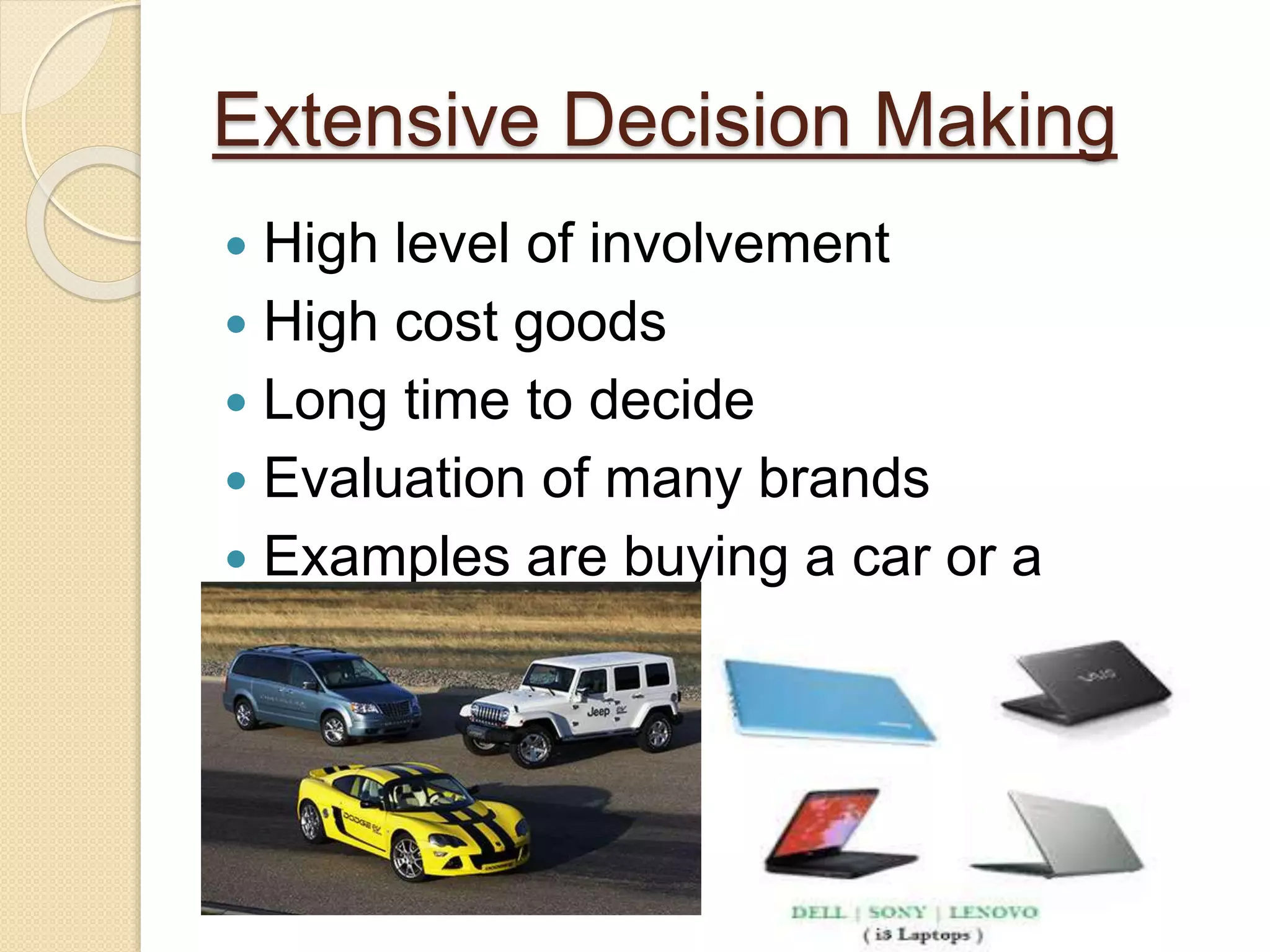
Extensive Decision Making
 High level of involvement
 High cost goods
 Long time to decide
 Evaluation of many brands
 Examples are buying a car or a
computer
A Model of Consumer
Decision Making
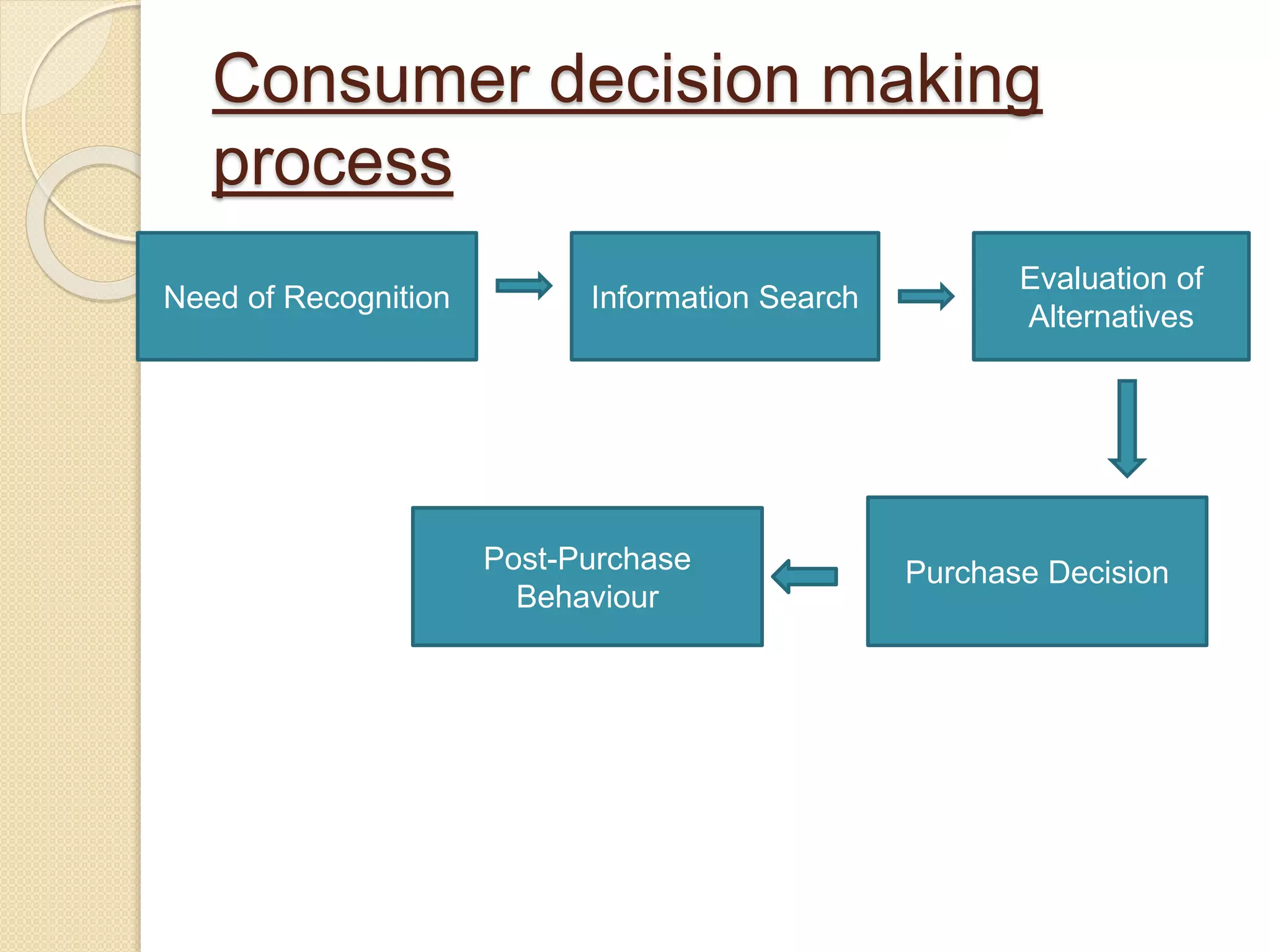
Consumer decision making
process
Need of Recognition Information Search
Evaluation of
Alternatives
Purchase DecisionPost-Purchase
Behaviour
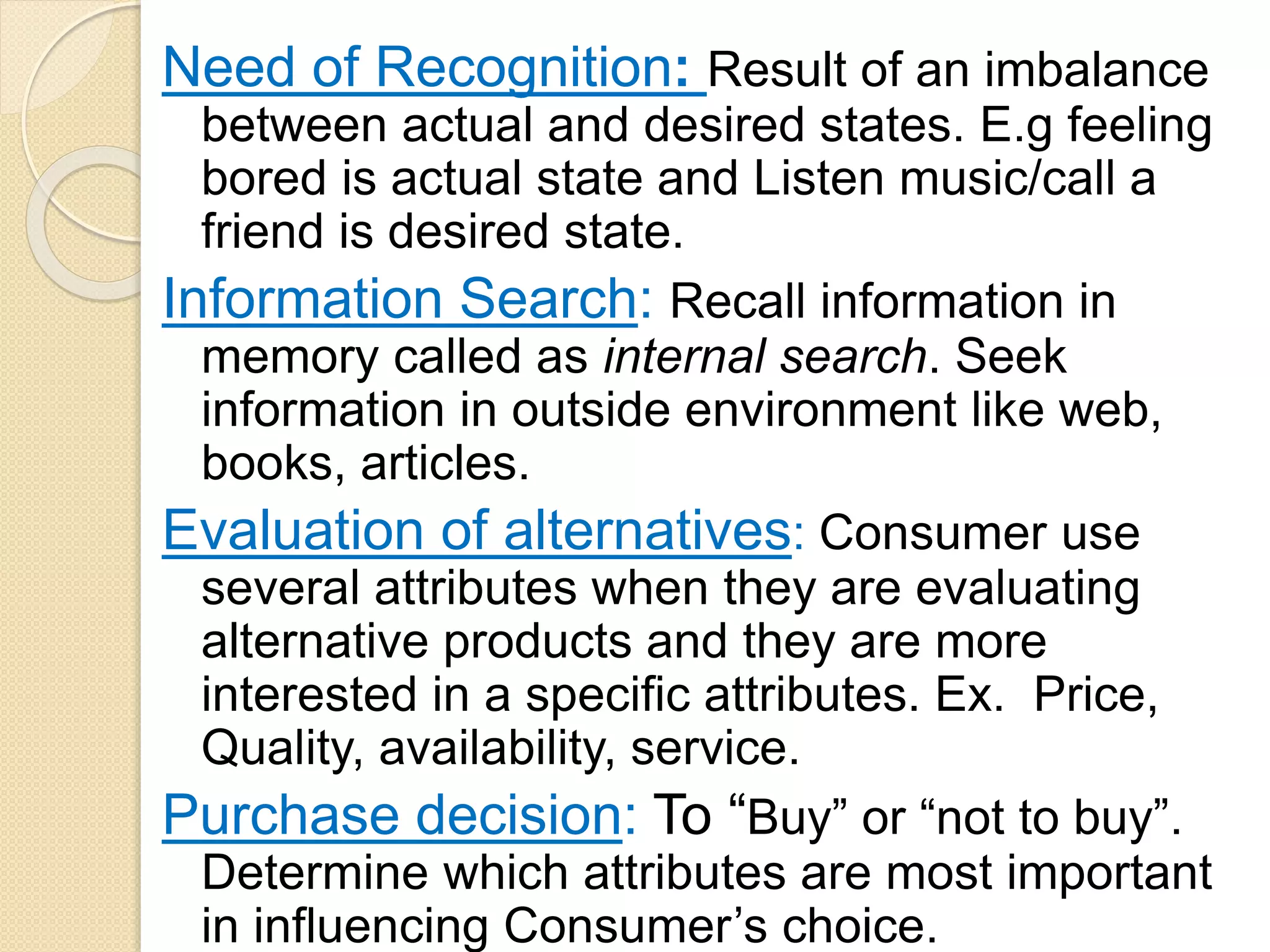
Need of Recognition: Result of an imbalance
between actual and desired states. E.g feeling
bored is actual state and Listen music/call a
friend is desired state.
Information Search: Recall information in
memory called as internal search. Seek
information in outside environment like web,
books, articles.
Evaluation of alternatives: Consumer use
several attributes when they are evaluating
alternative products and they are more
interested in a specific attributes. Ex. Price,
Quality, availability, service.
Purchase decision: To “Buy” or “not to buy”.
Determine which attributes are most important
in influencing Consumer’s choice.
Post – Purchase Behaviour
 The purchasing process does not end when
consumer buys a product. After the
purchase consumer tend to evaluate their
experience to decide whether they
‘satisfied’ or ‘dissatisfied’.
 The information will be used in decision
making.
 The performance of the product or services
will be compare with consumer’s
expectations. a) Perceived performance
meeting expectations.
b) Perceived performance exceeds
expectations
Levels of Consumer Decision making & A model of Consumer Decision making in Consumer Behaviour.

Levels of Consumer Decision making & A model of Consumer Decision making in Consumer Behaviour.

  • 1.
    Levels of ConsumerDecision Making & A Model of Consumer Decision Making Presented by: Ajit Kumar Gautam MBA-IB(3rd Sem)
  • 2.
    Consumer Decision Making Process by which consumer identify their needs, collect information, evaluate alternatives and make purchase decision.  These actions are determined by psychological and economical factors, and are influenced by environmental factors such as culture, group, and social values.
  • 3.
    Levels of consumerdecision making  Extensive Problem Solving  Limited problem Solving  Routinized Response Behaviour
  • 4.
  • 5.
    Routine Response Behaviour Little involvement in selection process  May stick with one brand  Quick Decision  Frequently purchase low cost goods  Examples are soap , shampoo etc
  • 6.
    Limited Decision Making Moderate involvement in selection process  Purchasing process is shorter  Evaluation of few alternative brands  Examples are clothing, cosmetics
  • 7.
    Extensive Decision Making High level of involvement  High cost goods  Long time to decide  Evaluation of many brands  Examples are buying a car or a computer
  • 8.
    A Model ofConsumer Decision Making
  • 10.
    Consumer decision making process Needof Recognition Information Search Evaluation of Alternatives Purchase DecisionPost-Purchase Behaviour
  • 11.
    Need of Recognition:Result of an imbalance between actual and desired states. E.g feeling bored is actual state and Listen music/call a friend is desired state. Information Search: Recall information in memory called as internal search. Seek information in outside environment like web, books, articles. Evaluation of alternatives: Consumer use several attributes when they are evaluating alternative products and they are more interested in a specific attributes. Ex. Price, Quality, availability, service. Purchase decision: To “Buy” or “not to buy”. Determine which attributes are most important in influencing Consumer’s choice.
  • 12.
    Post – PurchaseBehaviour  The purchasing process does not end when consumer buys a product. After the purchase consumer tend to evaluate their experience to decide whether they ‘satisfied’ or ‘dissatisfied’.  The information will be used in decision making.  The performance of the product or services will be compare with consumer’s expectations. a) Perceived performance meeting expectations. b) Perceived performance exceeds expectations