WHAT IS CONSTRUCTIVISM?
Constructivism refers to the idea
that learners construct knowledge
for themselves---each learner
individually (and socially) constructs
meaning--- as he or she learns.
 A learning theory that “equates
learning with creating
meaning from experience”

MAJOR SCHOLARS OF
CONSTRUCTIVISM AND
THEIR KEY CLAIM:
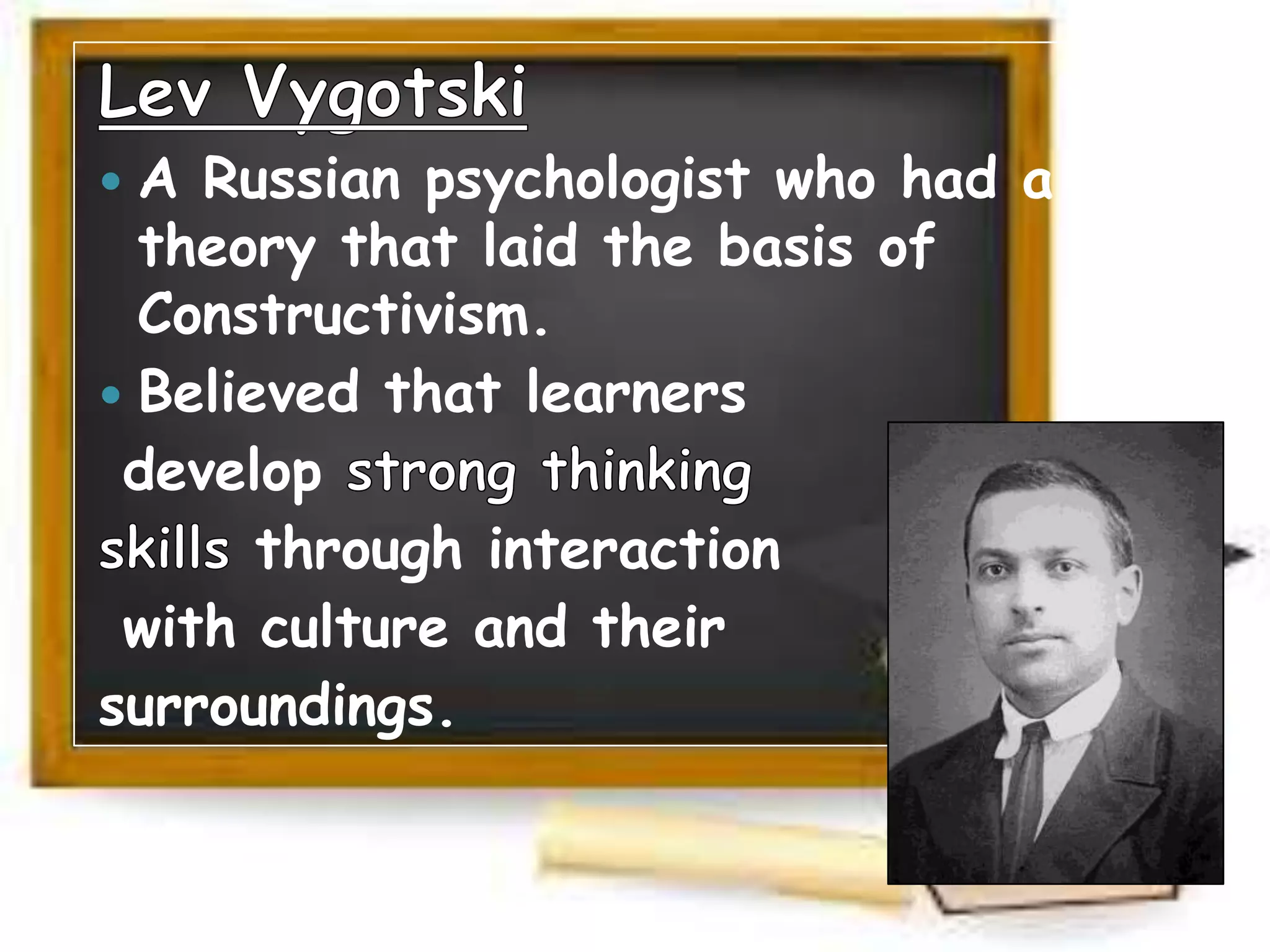
A Russian psychologist who had a
theory that laid the basis of
Constructivism.
 Believed that learners
develop
through interaction
with culture and their
surroundings.



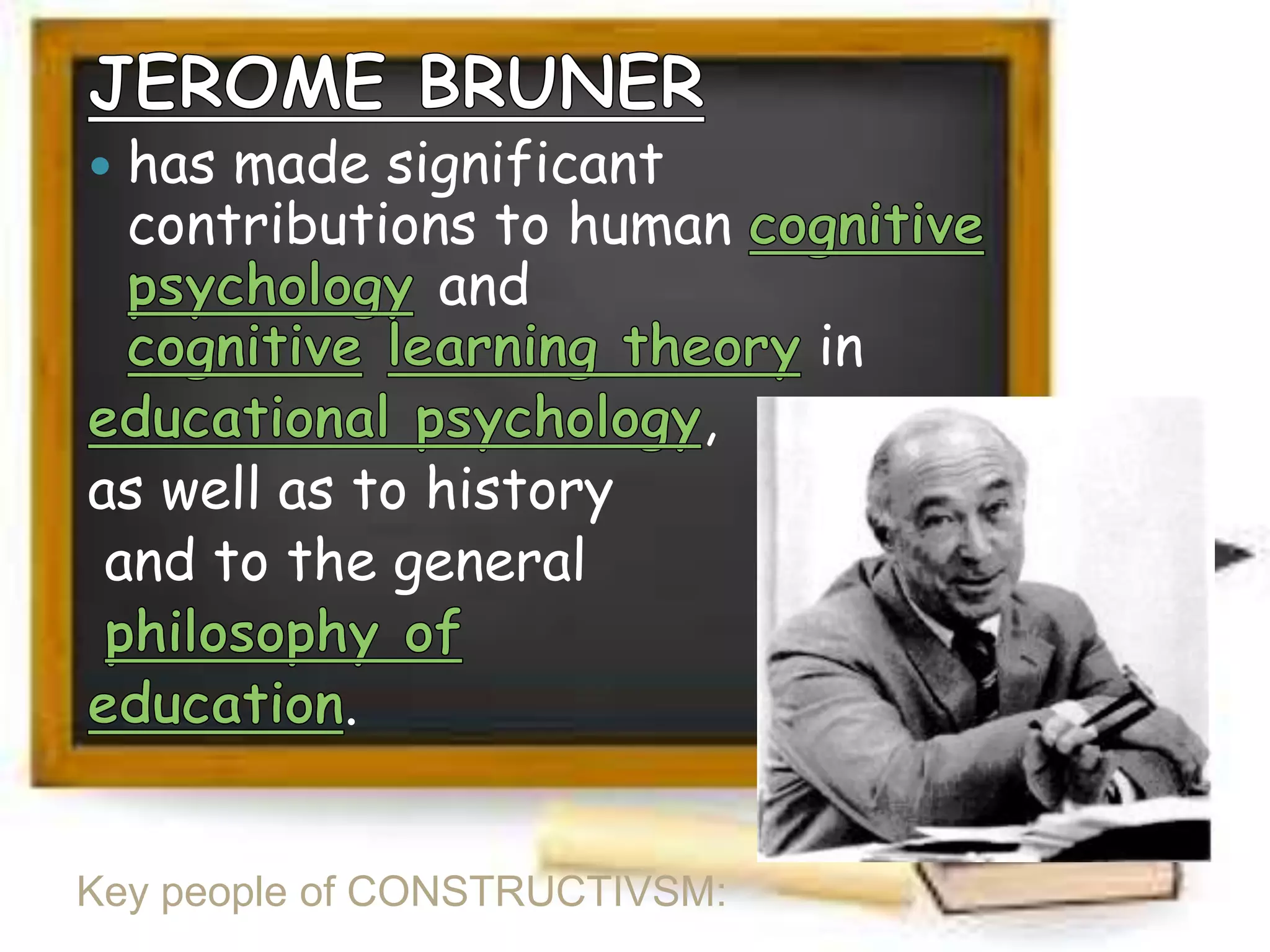
has made significant
contributions to human
and

as well as to history
and to the general

,

.
Key people of CONSTRUCTIVSM:

in
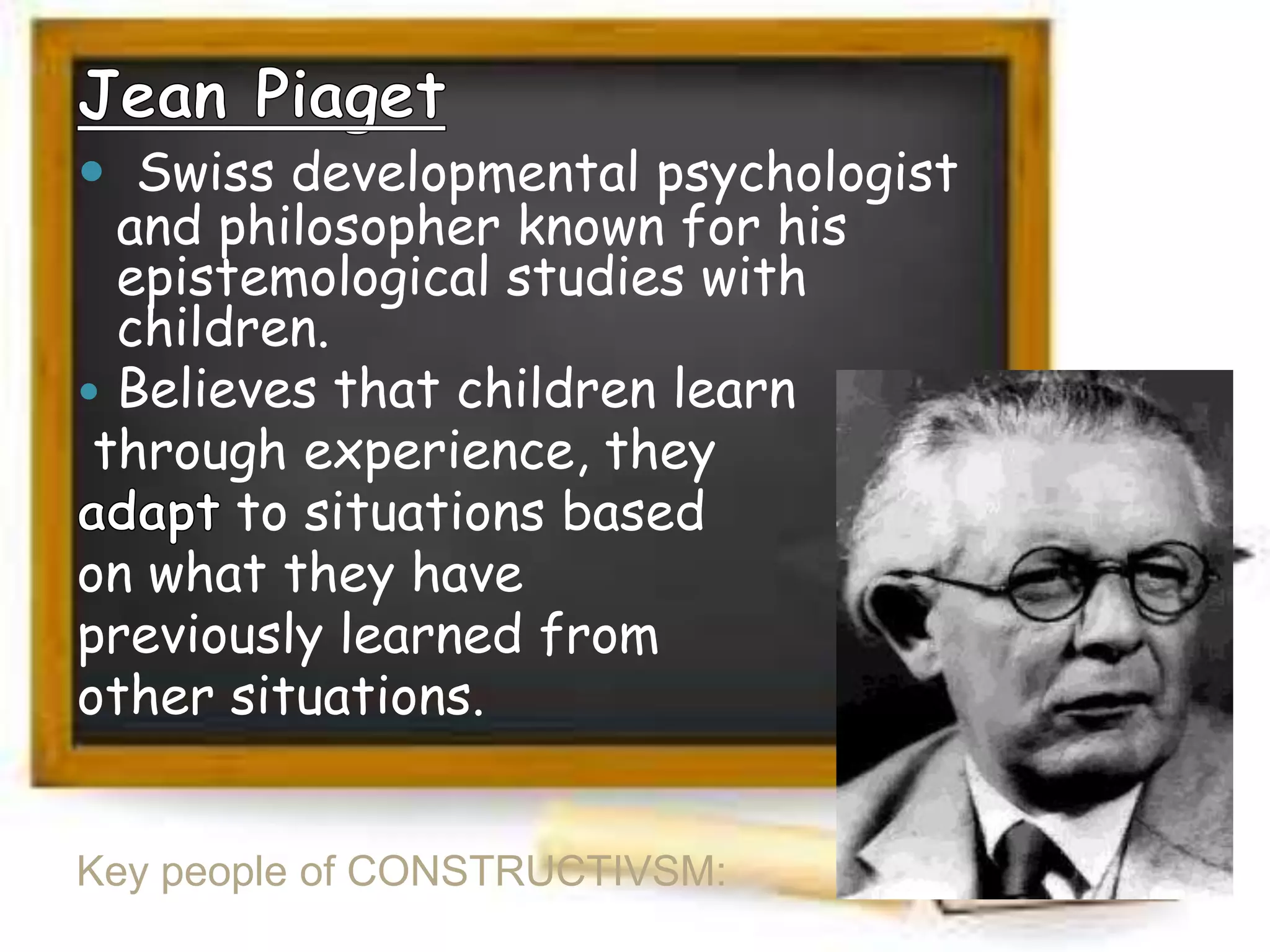
 Swiss developmental psychologist
and philosopher known for his
epistemological studies with
children.
 Believes that children learn
through experience, they
to situations based
on what they have
previously learned from
other situations.
Key people of CONSTRUCTIVSM:
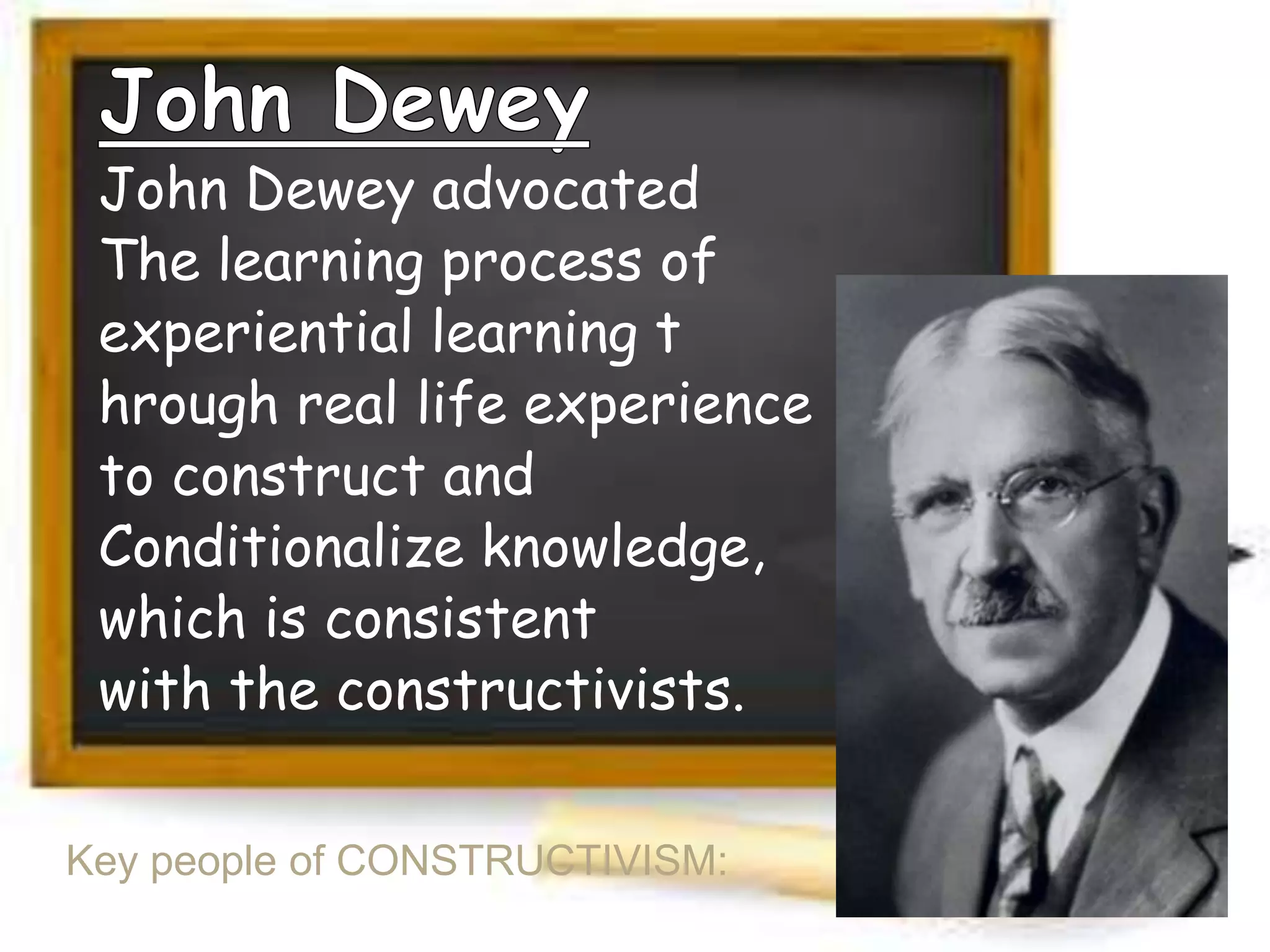
John Dewey advocated
The learning process of
experiential learning t
hrough real life experience
to construct and
Conditionalize knowledge,
which is consistent
with the constructivists.
Key people of CONSTRUCTIVISM:
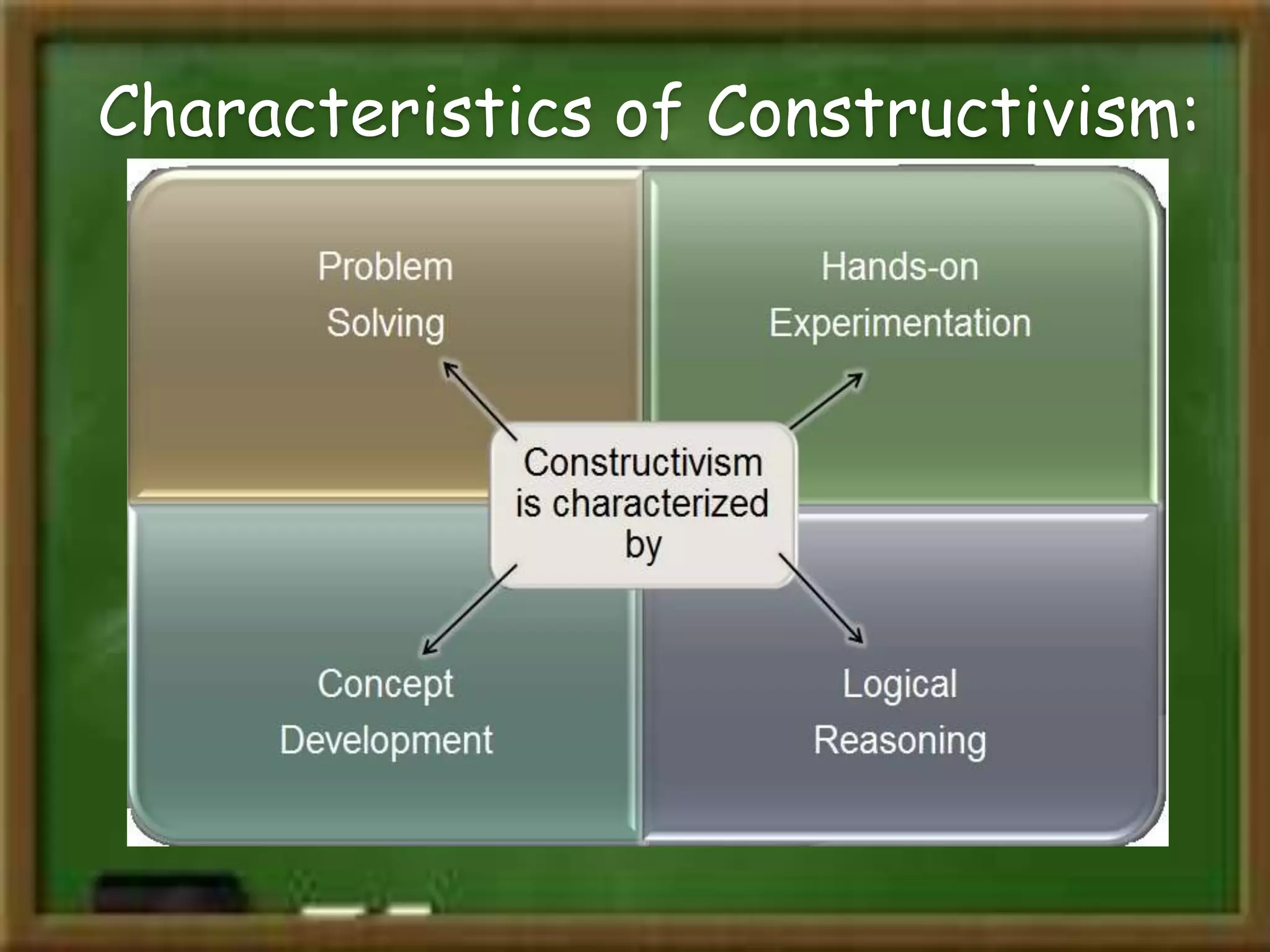
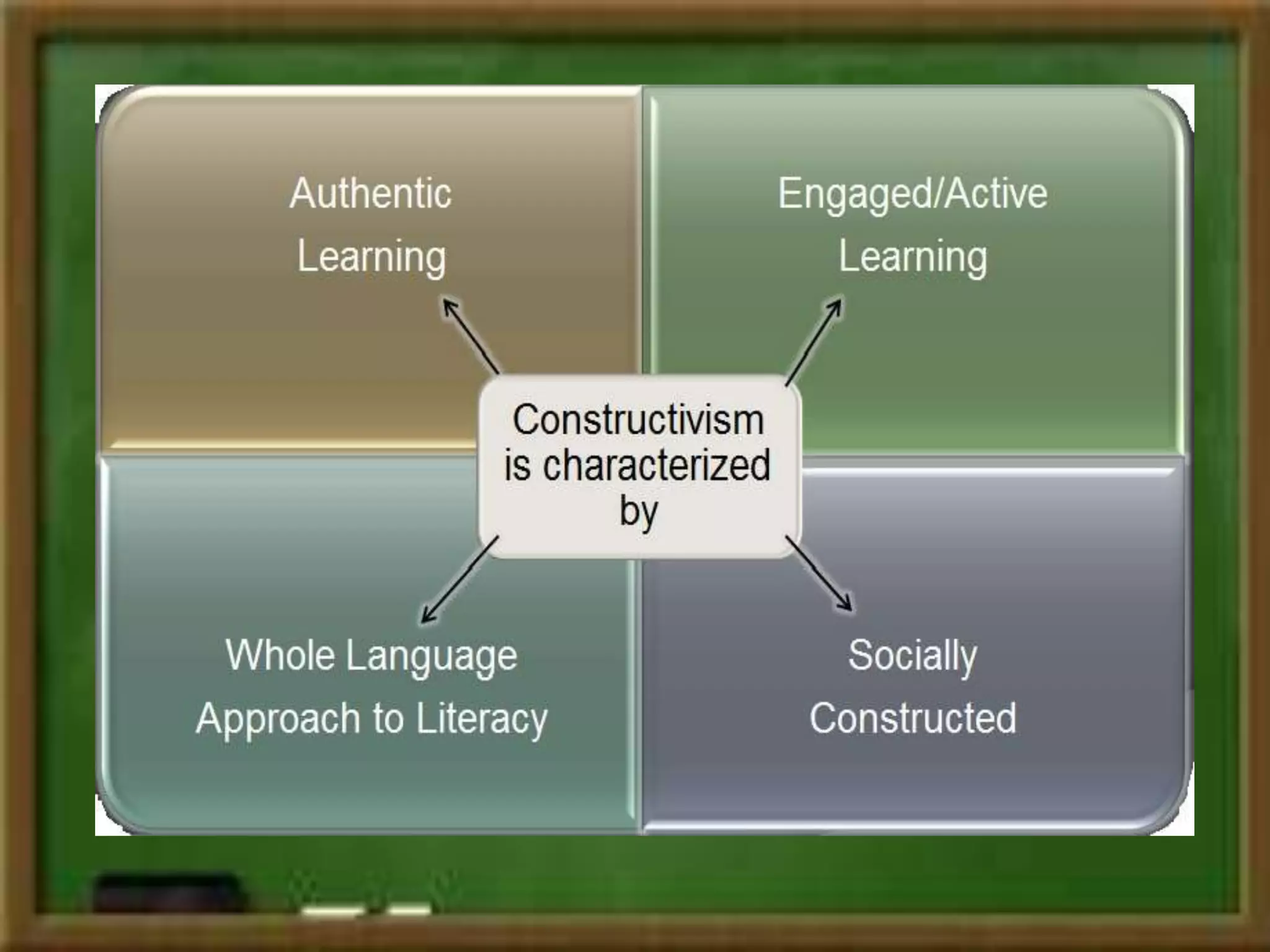
Characteristics of Constructivism:
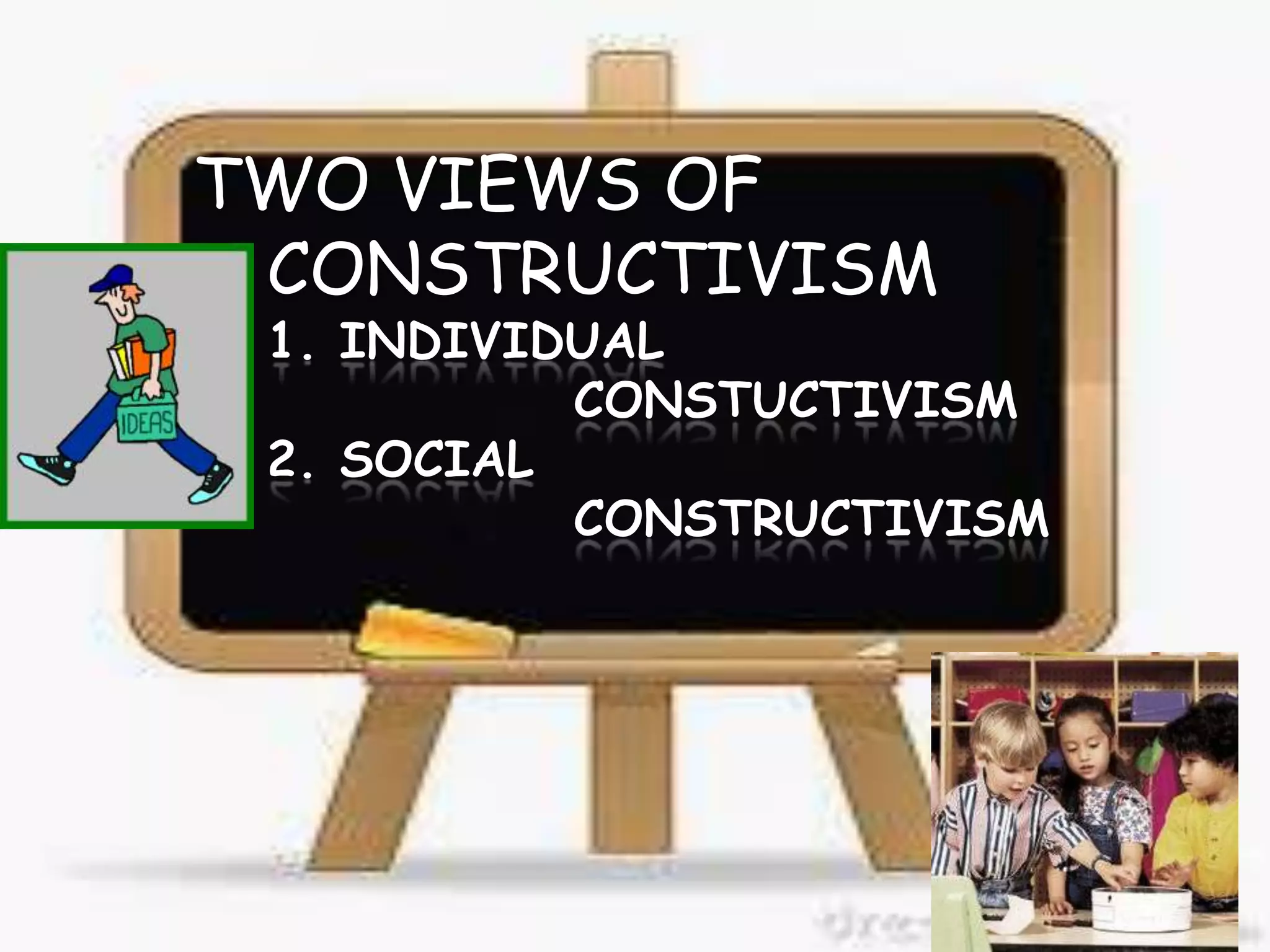
TWO VIEWS OF
CONSTRUCTIVISM
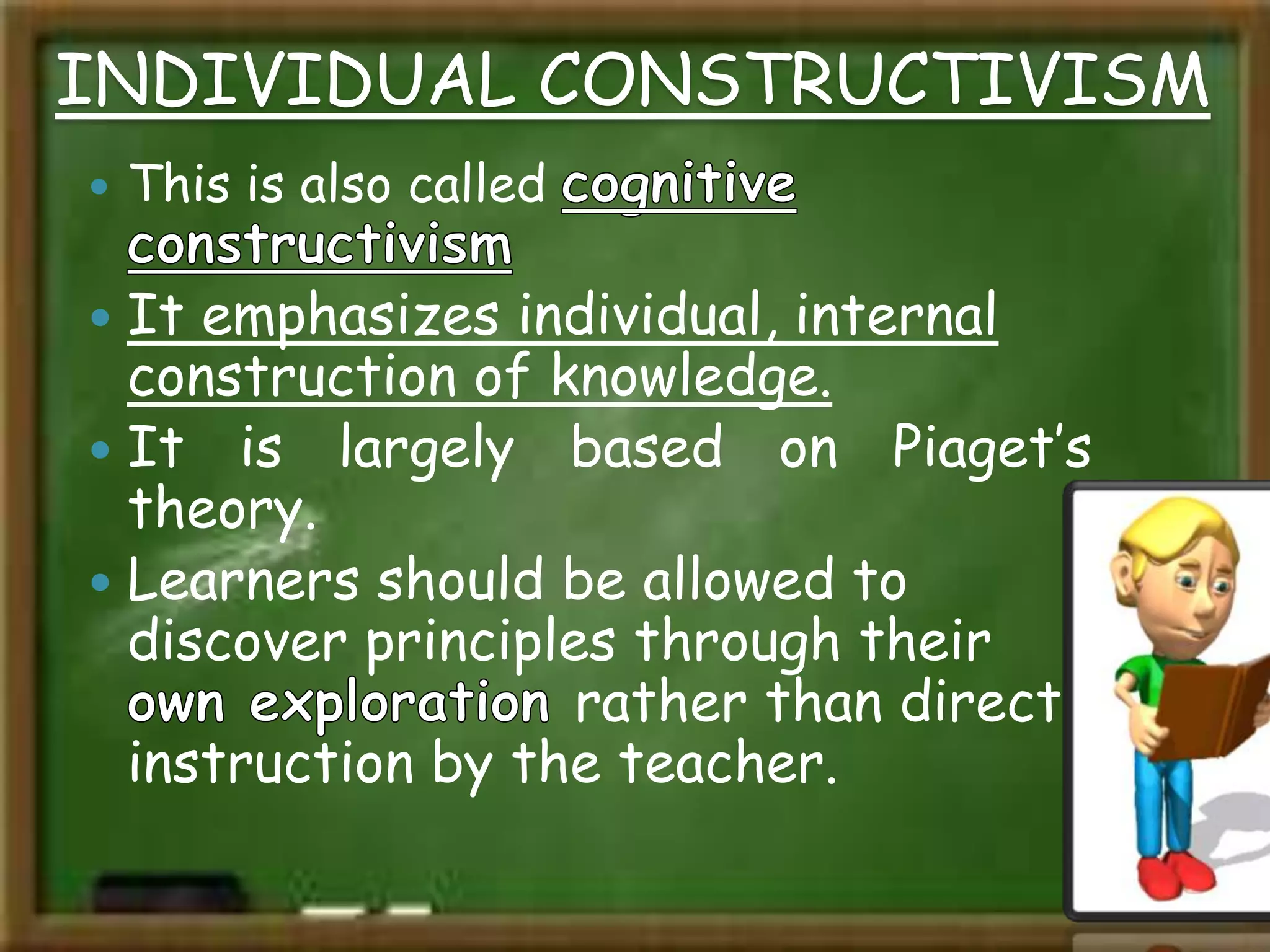
INDIVIDUAL CONSTRUCTIVISM


This is also called

It emphasizes individual, internal
construction of knowledge.
 It is largely based on Piaget’s
theory.
 Learners should be allowed to
discover principles through their
rather than direct
instruction by the teacher.

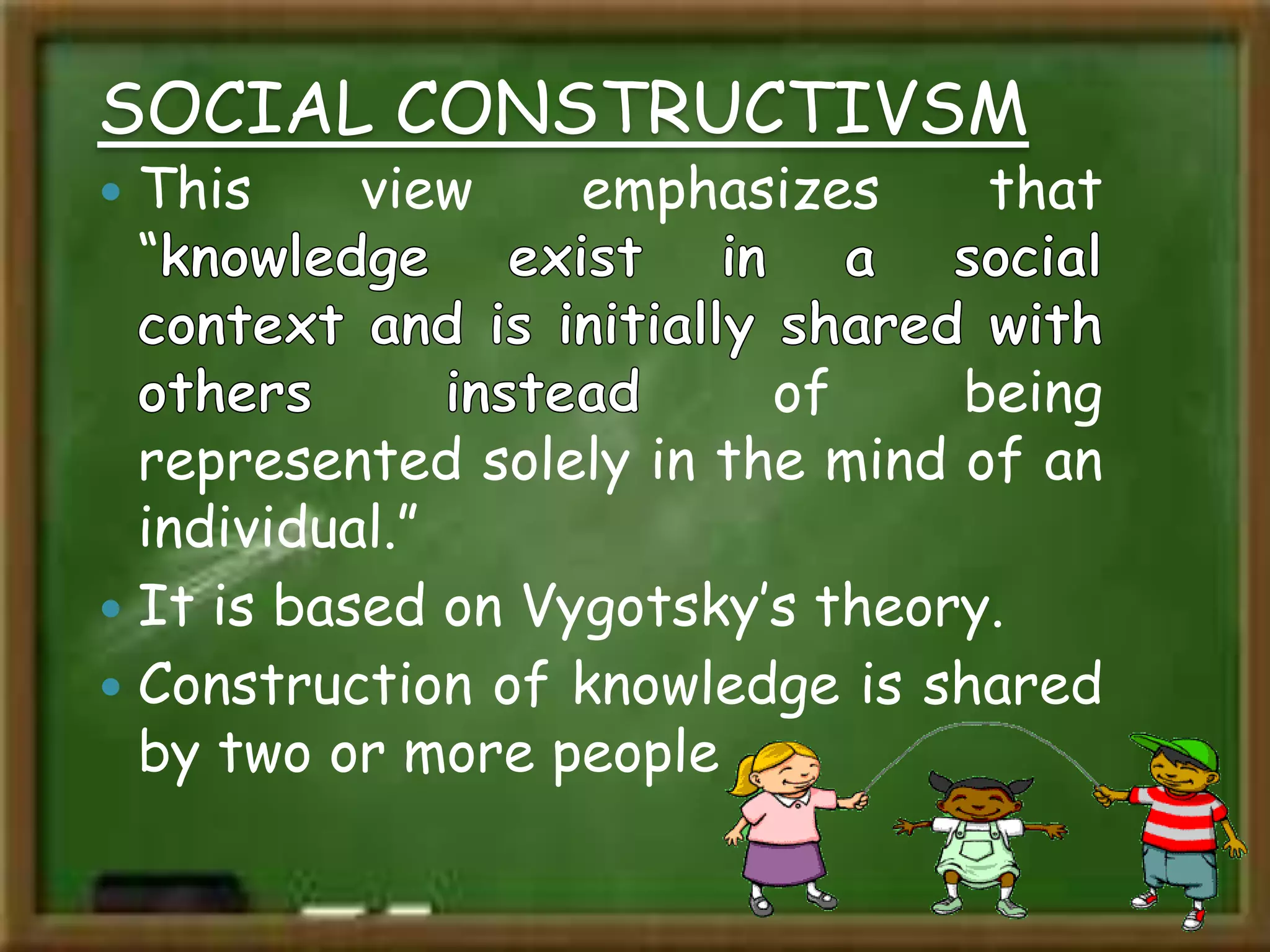
SOCIAL CONSTRUCTIVSM


This
“

view

emphasizes

that

of
being
represented solely in the mind of an
individual.”
 It is based on Vygotsky’s theory.
 Construction of knowledge is shared
by two or more people
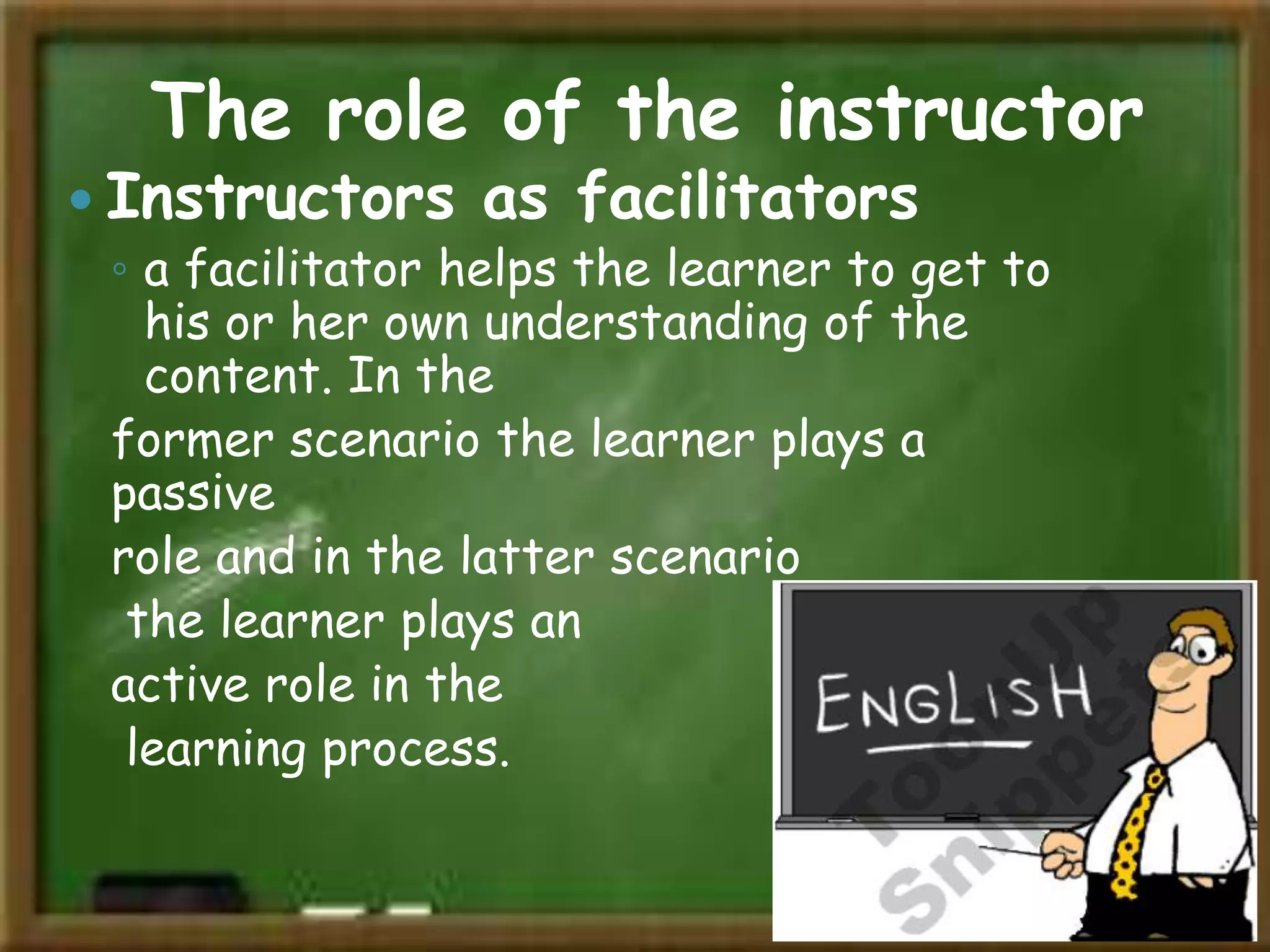
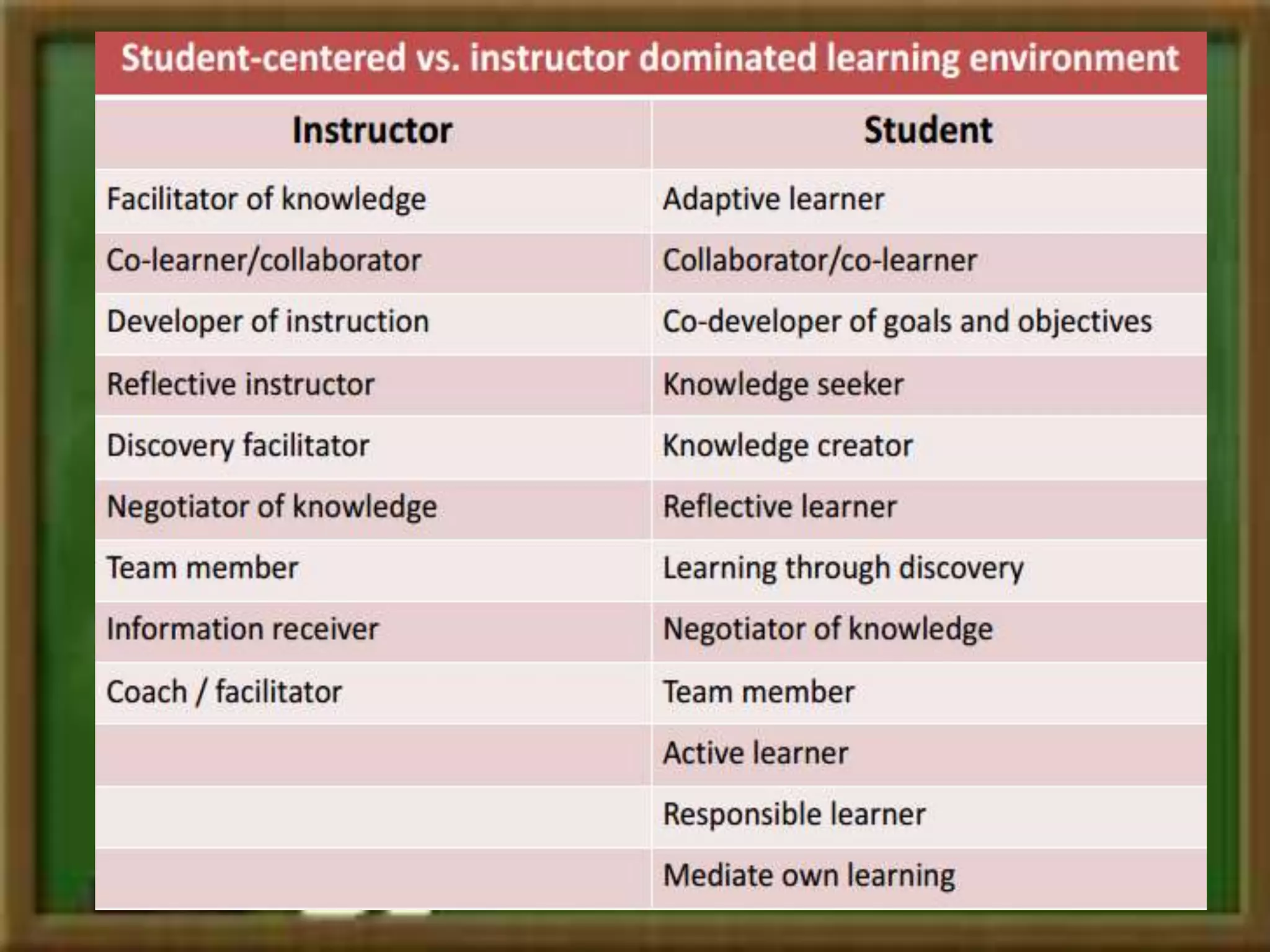
The role of the instructor

 Instructors as facilitators
◦ a facilitator helps the learner to get to
his or her own understanding of the
content. In the
former scenario the learner plays a
passive
role and in the latter scenario
the learner plays an
active role in the
learning process.
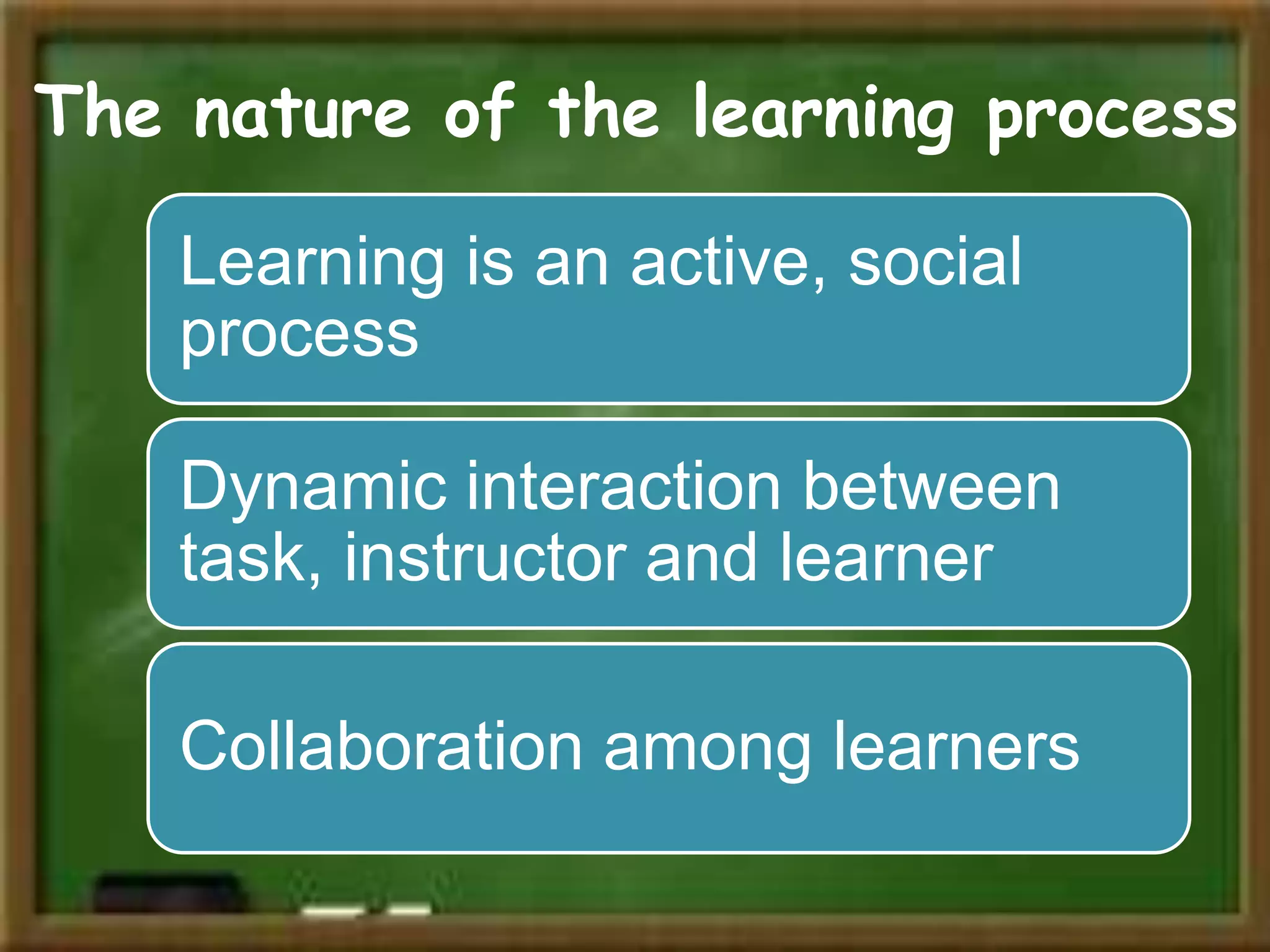
The nature of the learning process
Learning is an active, social
process

Dynamic interaction between
task, instructor and learner
Collaboration among learners
Traditional Classroom
vs.
Constructivist
Classroom
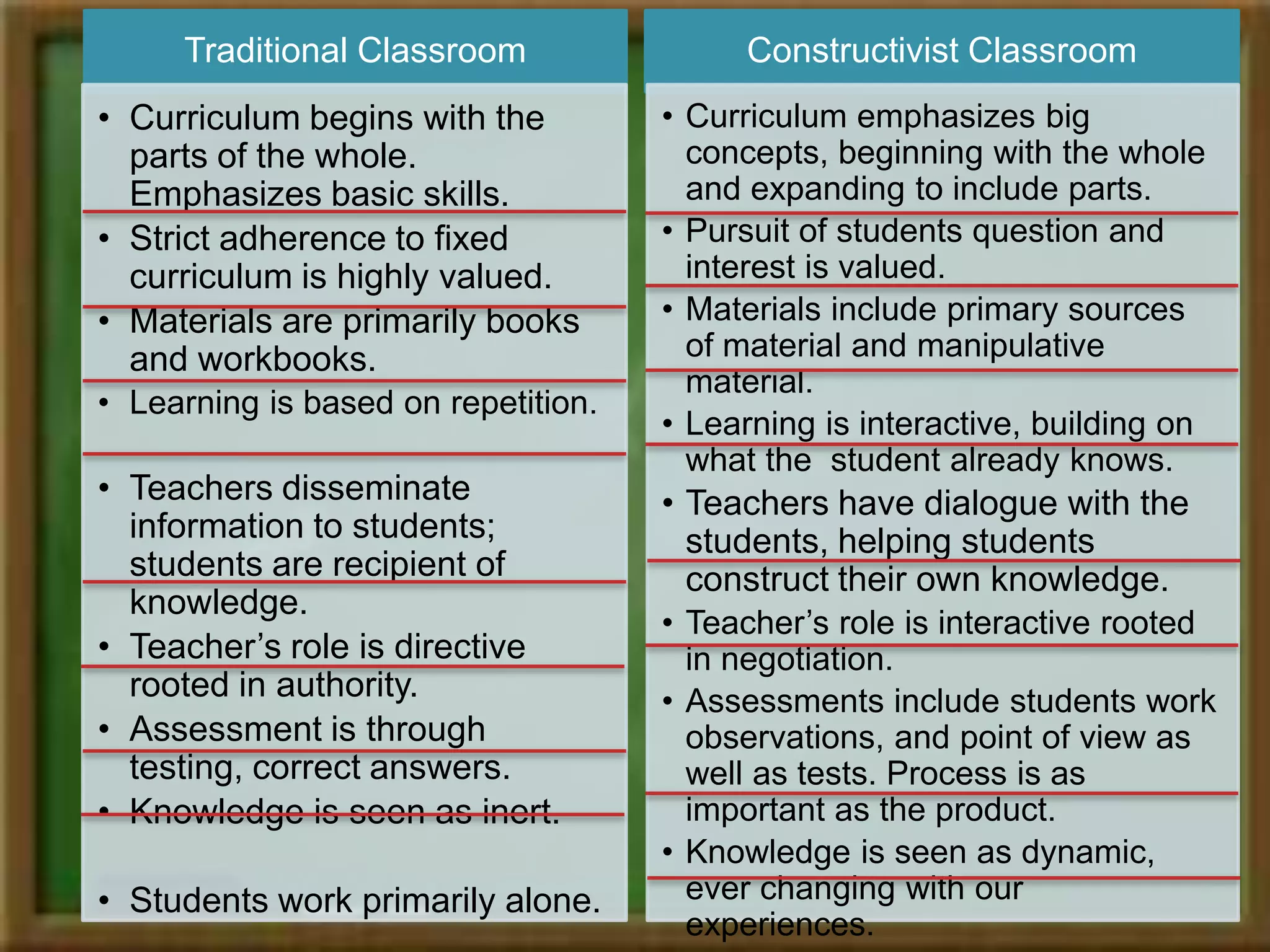
Traditional Classroom

• Curriculum begins with the
parts of the whole.
Emphasizes basic skills.
• Strict adherence to fixed
curriculum is highly valued.
• Materials are primarily books
and workbooks.
• Learning is based on repetition.

• Teachers disseminate
information to students;
students are recipient of
knowledge.
• Teacher’s role is directive
rooted in authority.
• Assessment is through
testing, correct answers.
• Knowledge is seen as inert.
• Students work primarily alone.

Constructivist Classroom
• Curriculum emphasizes big
concepts, beginning with the whole
and expanding to include parts.
• Pursuit of students question and
interest is valued.
• Materials include primary sources
of material and manipulative
material.
• Learning is interactive, building on
what the student already knows.

• Teachers have dialogue with the
students, helping students
construct their own knowledge.
• Teacher’s role is interactive rooted
in negotiation.
• Assessments include students work
observations, and point of view as
well as tests. Process is as
important as the product.
• Knowledge is seen as dynamic,
ever changing with our
experiences.
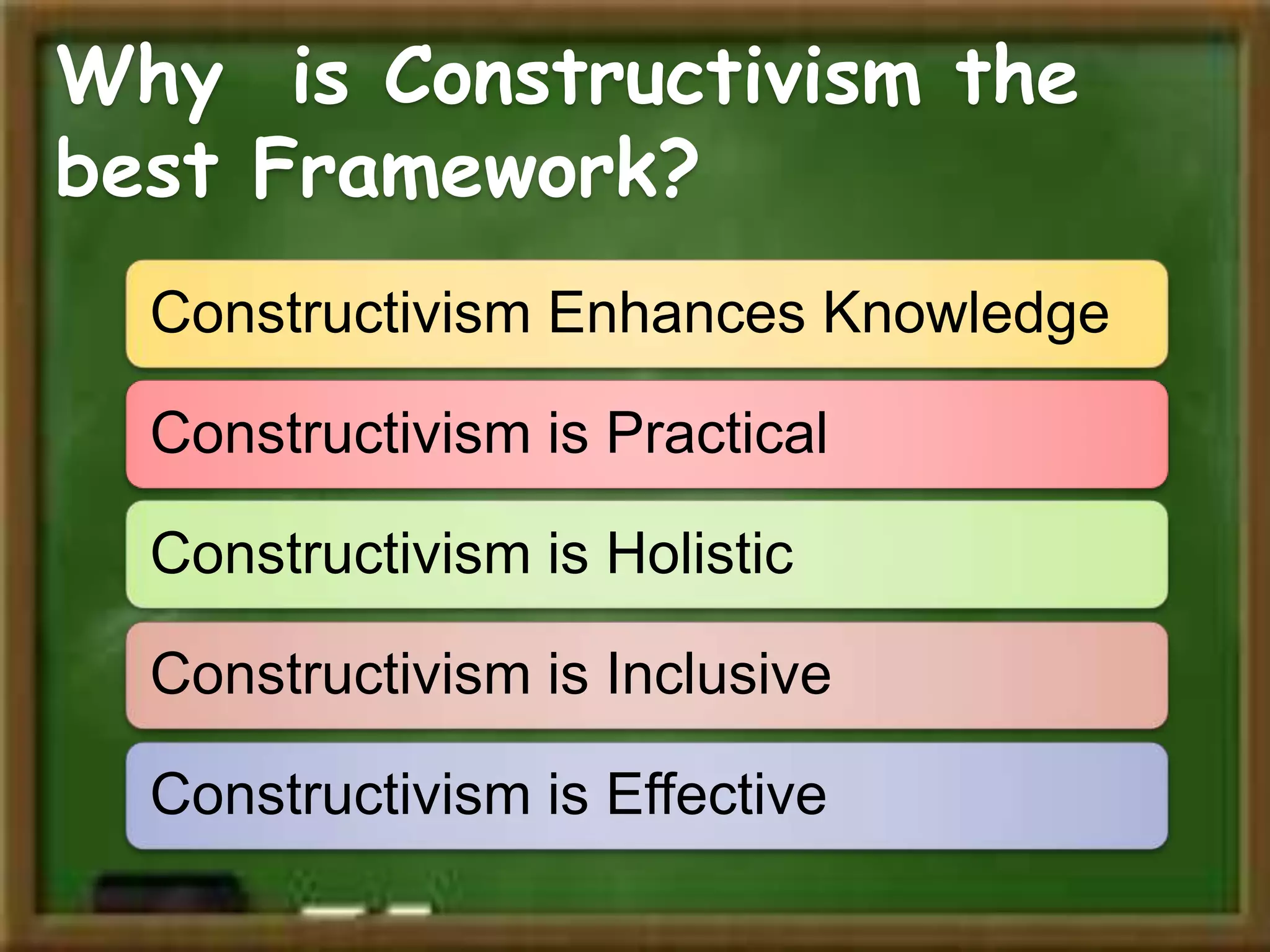
Why is Constructivism the
best Framework?
Constructivism Enhances Knowledge
Constructivism is Practical
Constructivism is Holistic
Constructivism is Inclusive
Constructivism is Effective
If you tell me, I will listen.
If you show me, I will see.
But if you ley me experience, I will
learn.

Lao-Tse 500 B.C

Constructivism

  • 2.
    WHAT IS CONSTRUCTIVISM? Constructivismrefers to the idea that learners construct knowledge for themselves---each learner individually (and socially) constructs meaning--- as he or she learns.  A learning theory that “equates learning with creating meaning from experience” 
  • 3.
  • 4.
    A Russian psychologistwho had a theory that laid the basis of Constructivism.  Believed that learners develop through interaction with culture and their surroundings. 
  • 5.
     has made significant contributionsto human and as well as to history and to the general , . Key people of CONSTRUCTIVSM: in
  • 6.
     Swiss developmentalpsychologist and philosopher known for his epistemological studies with children.  Believes that children learn through experience, they to situations based on what they have previously learned from other situations. Key people of CONSTRUCTIVSM:
  • 7.
    John Dewey advocated Thelearning process of experiential learning t hrough real life experience to construct and Conditionalize knowledge, which is consistent with the constructivists. Key people of CONSTRUCTIVISM:
  • 8.
  • 10.
  • 11.
    INDIVIDUAL CONSTRUCTIVISM  This isalso called It emphasizes individual, internal construction of knowledge.  It is largely based on Piaget’s theory.  Learners should be allowed to discover principles through their rather than direct instruction by the teacher. 
  • 12.
    SOCIAL CONSTRUCTIVSM  This “ view emphasizes that of being represented solelyin the mind of an individual.”  It is based on Vygotsky’s theory.  Construction of knowledge is shared by two or more people
  • 13.
    The role ofthe instructor  Instructors as facilitators ◦ a facilitator helps the learner to get to his or her own understanding of the content. In the former scenario the learner plays a passive role and in the latter scenario the learner plays an active role in the learning process.
  • 14.
    The nature ofthe learning process Learning is an active, social process Dynamic interaction between task, instructor and learner Collaboration among learners
  • 15.
  • 16.
    Traditional Classroom • Curriculumbegins with the parts of the whole. Emphasizes basic skills. • Strict adherence to fixed curriculum is highly valued. • Materials are primarily books and workbooks. • Learning is based on repetition. • Teachers disseminate information to students; students are recipient of knowledge. • Teacher’s role is directive rooted in authority. • Assessment is through testing, correct answers. • Knowledge is seen as inert. • Students work primarily alone. Constructivist Classroom • Curriculum emphasizes big concepts, beginning with the whole and expanding to include parts. • Pursuit of students question and interest is valued. • Materials include primary sources of material and manipulative material. • Learning is interactive, building on what the student already knows. • Teachers have dialogue with the students, helping students construct their own knowledge. • Teacher’s role is interactive rooted in negotiation. • Assessments include students work observations, and point of view as well as tests. Process is as important as the product. • Knowledge is seen as dynamic, ever changing with our experiences.
  • 18.
    Why is Constructivismthe best Framework? Constructivism Enhances Knowledge Constructivism is Practical Constructivism is Holistic Constructivism is Inclusive Constructivism is Effective
  • 19.
    If you tellme, I will listen. If you show me, I will see. But if you ley me experience, I will learn. Lao-Tse 500 B.C