Downloaded 554 times

![Alexander Rodchenko
Advertisement of GUM (Government Universal Poster for film “Hino-Glaz” [Cinema-Eye] - 1924 Poster for Dziga Vertov's film - "One-Sixth of
Store). The most business, the tidiest. 1923 the World“ – 1926](https://image.slidesharecdn.com/constructivism-130328040405-phpapp02/75/Constructivism-8-2048.jpg)
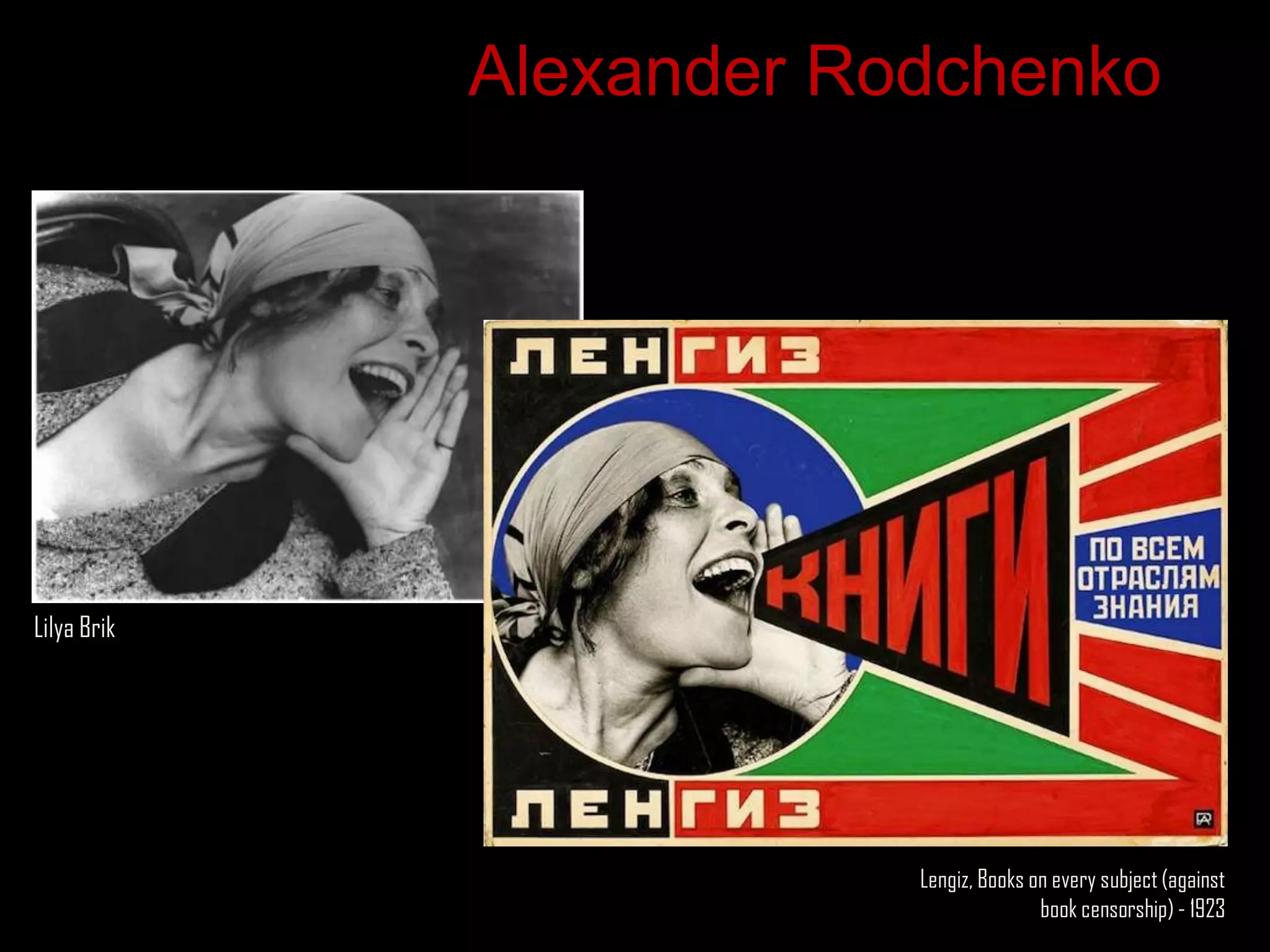
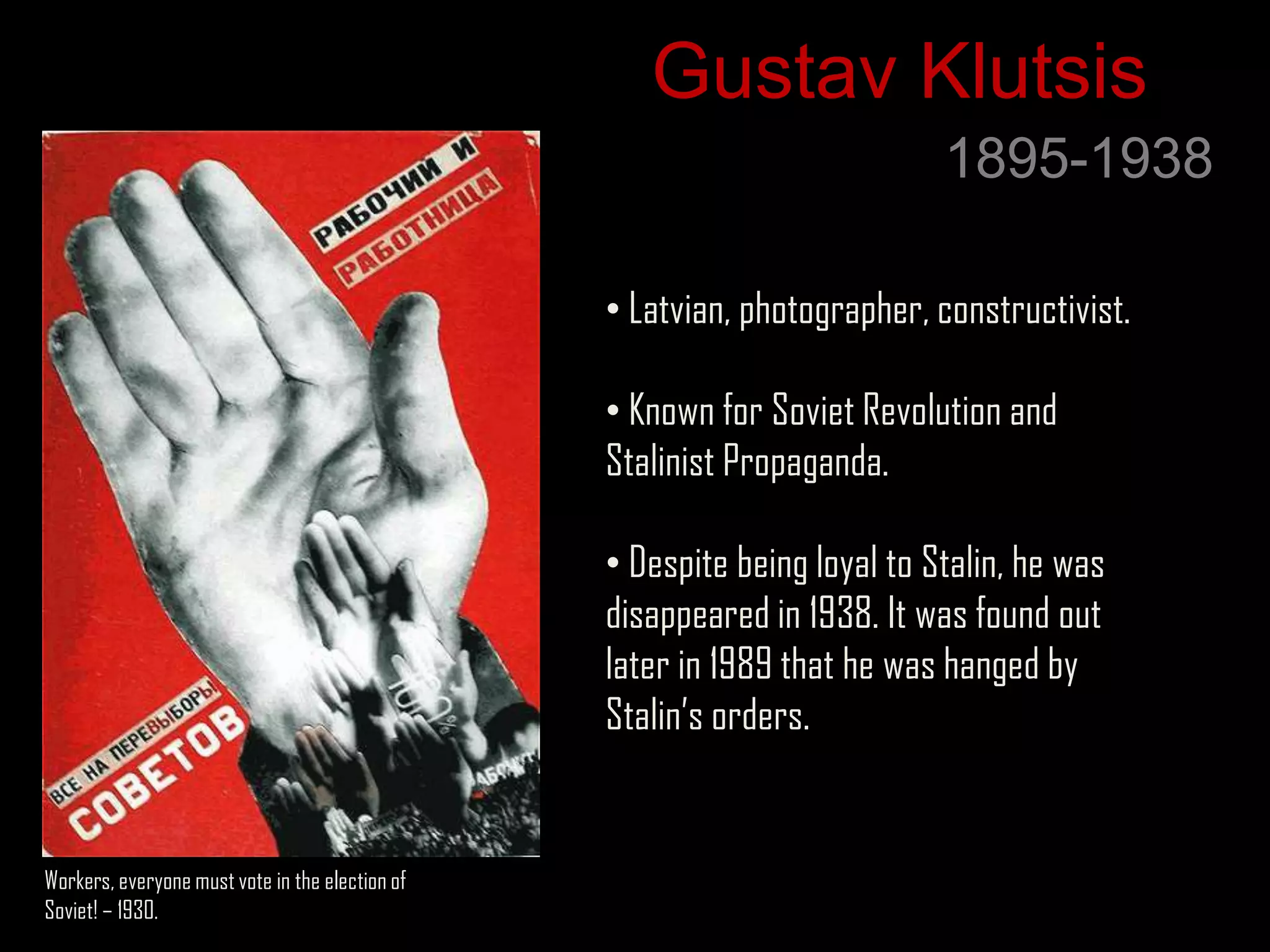
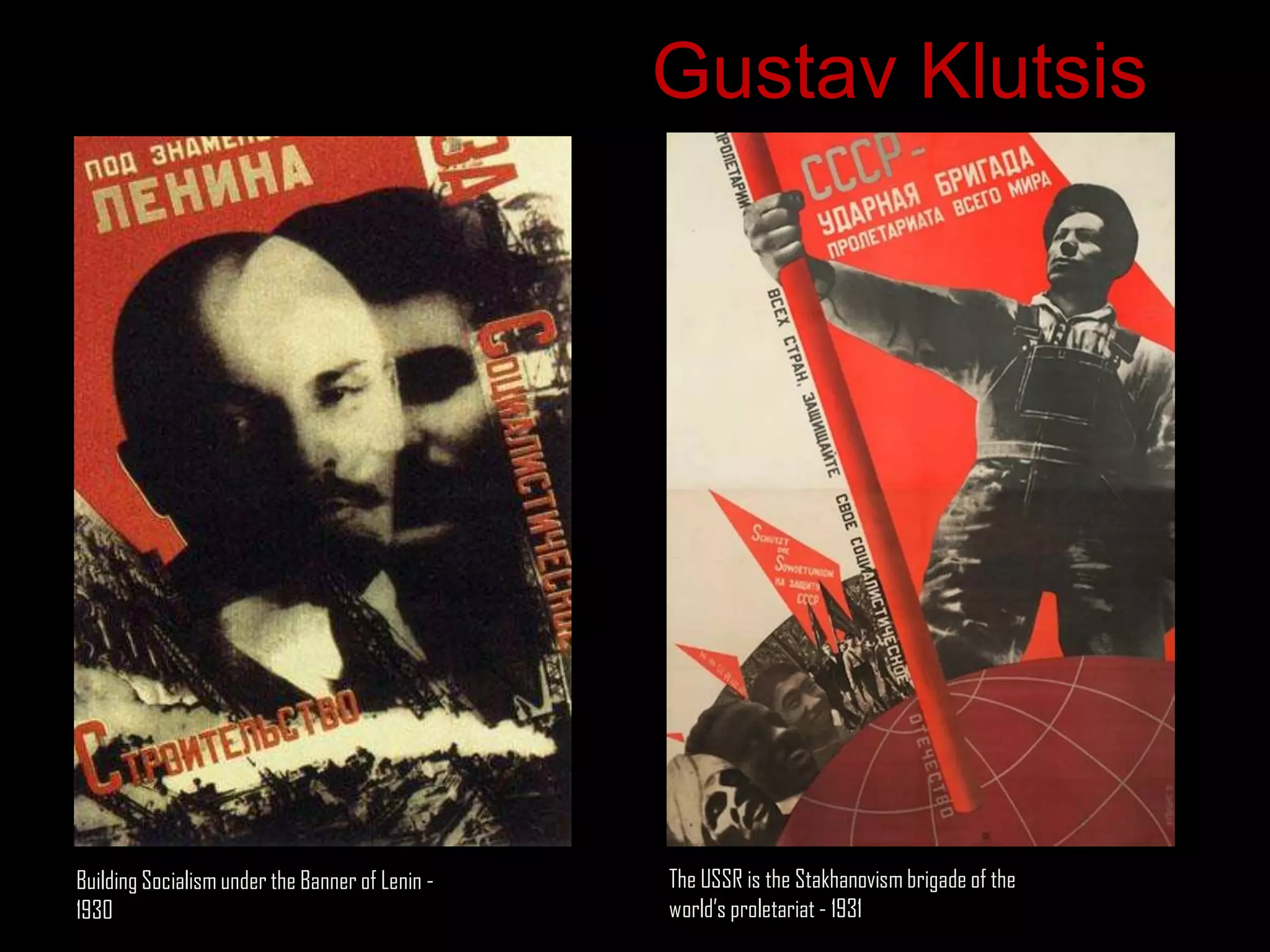
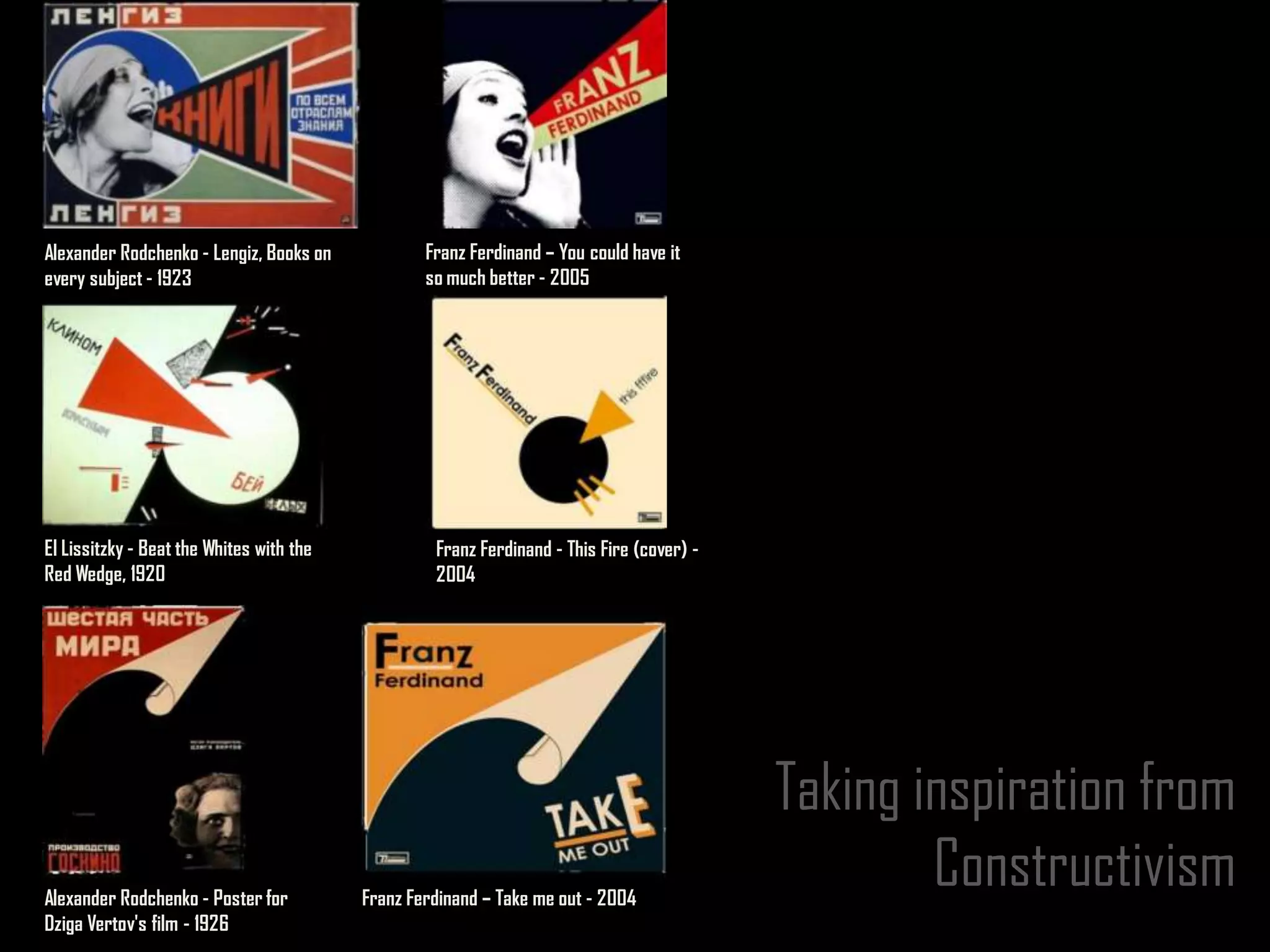

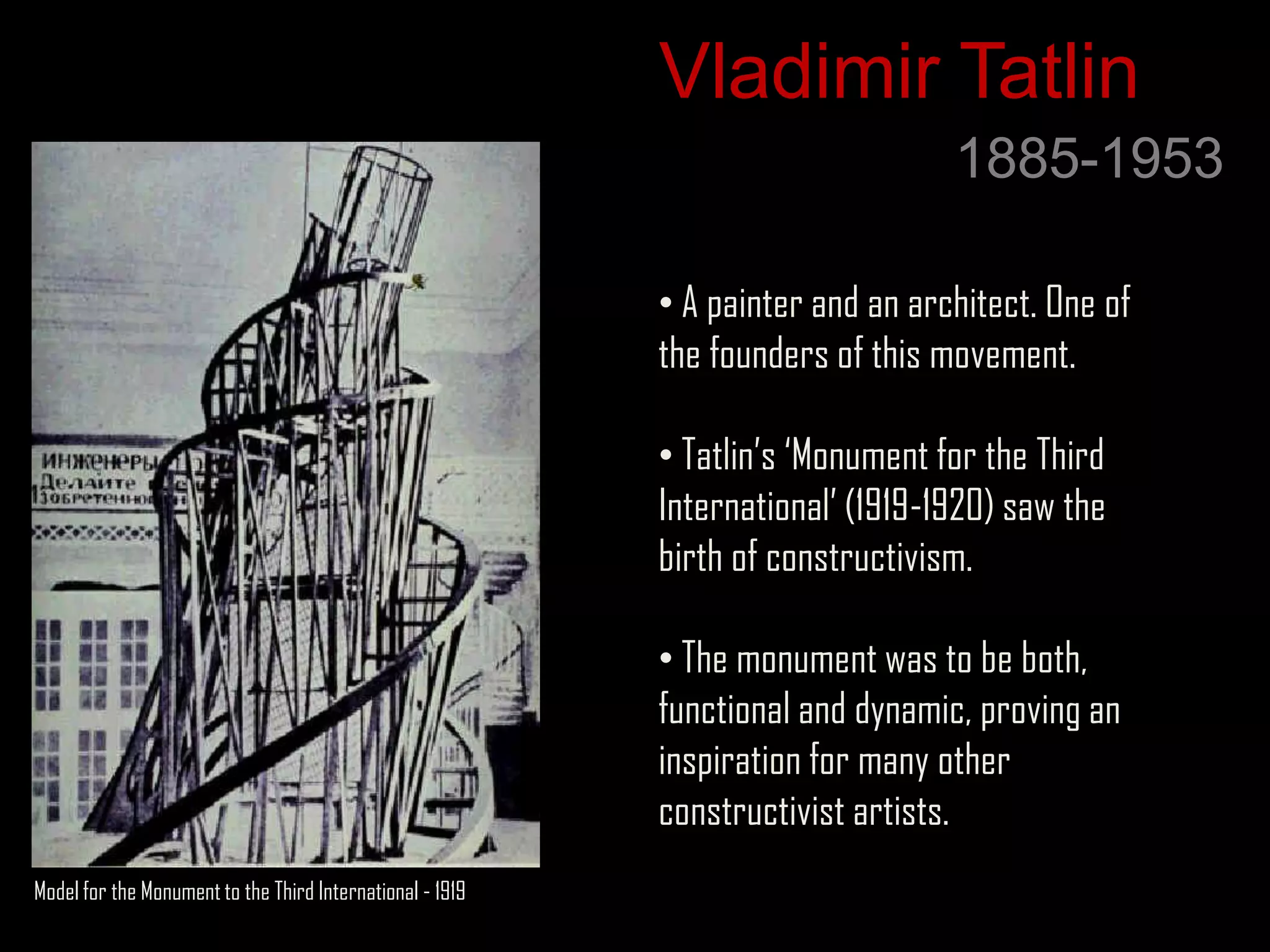
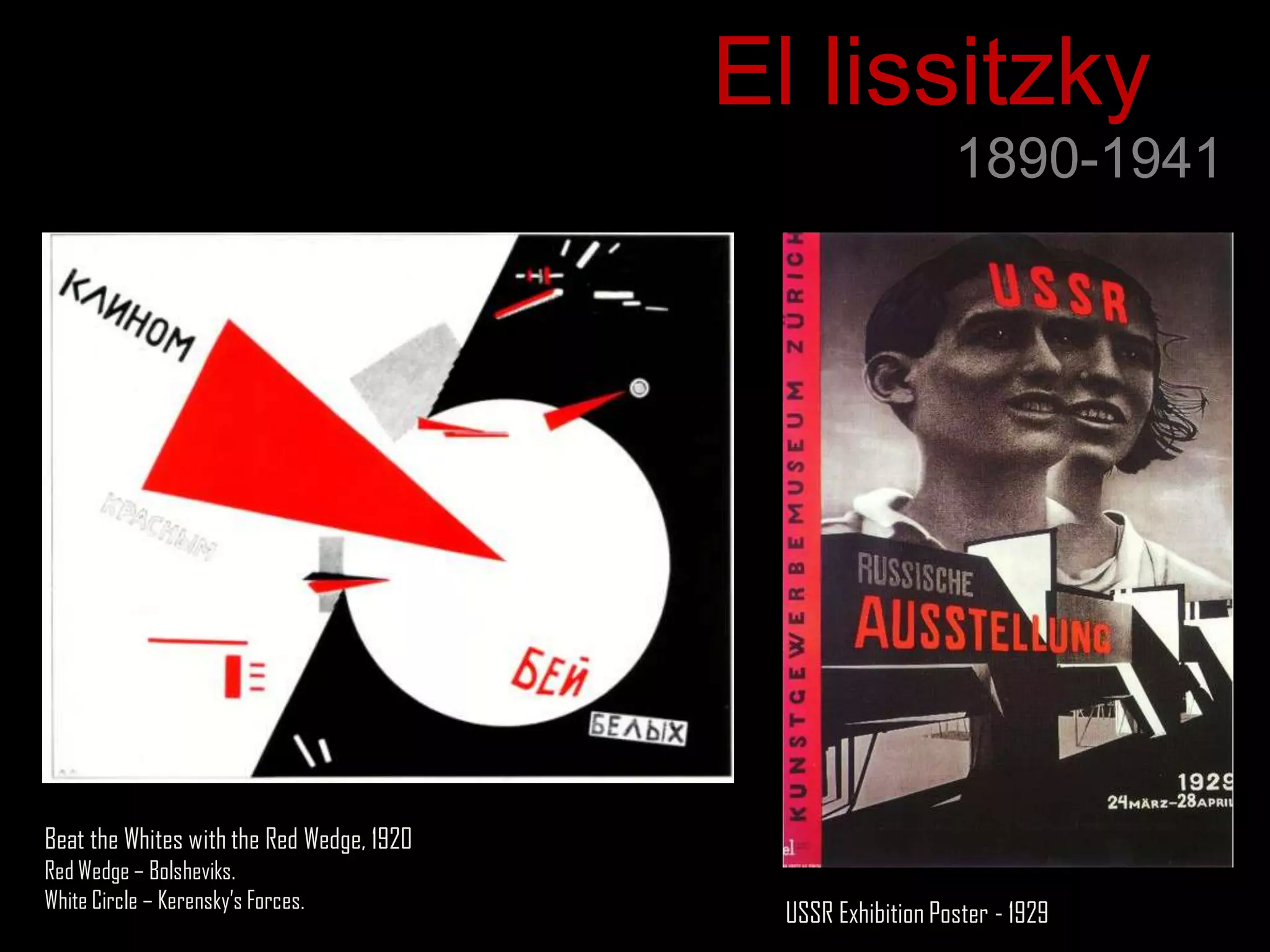
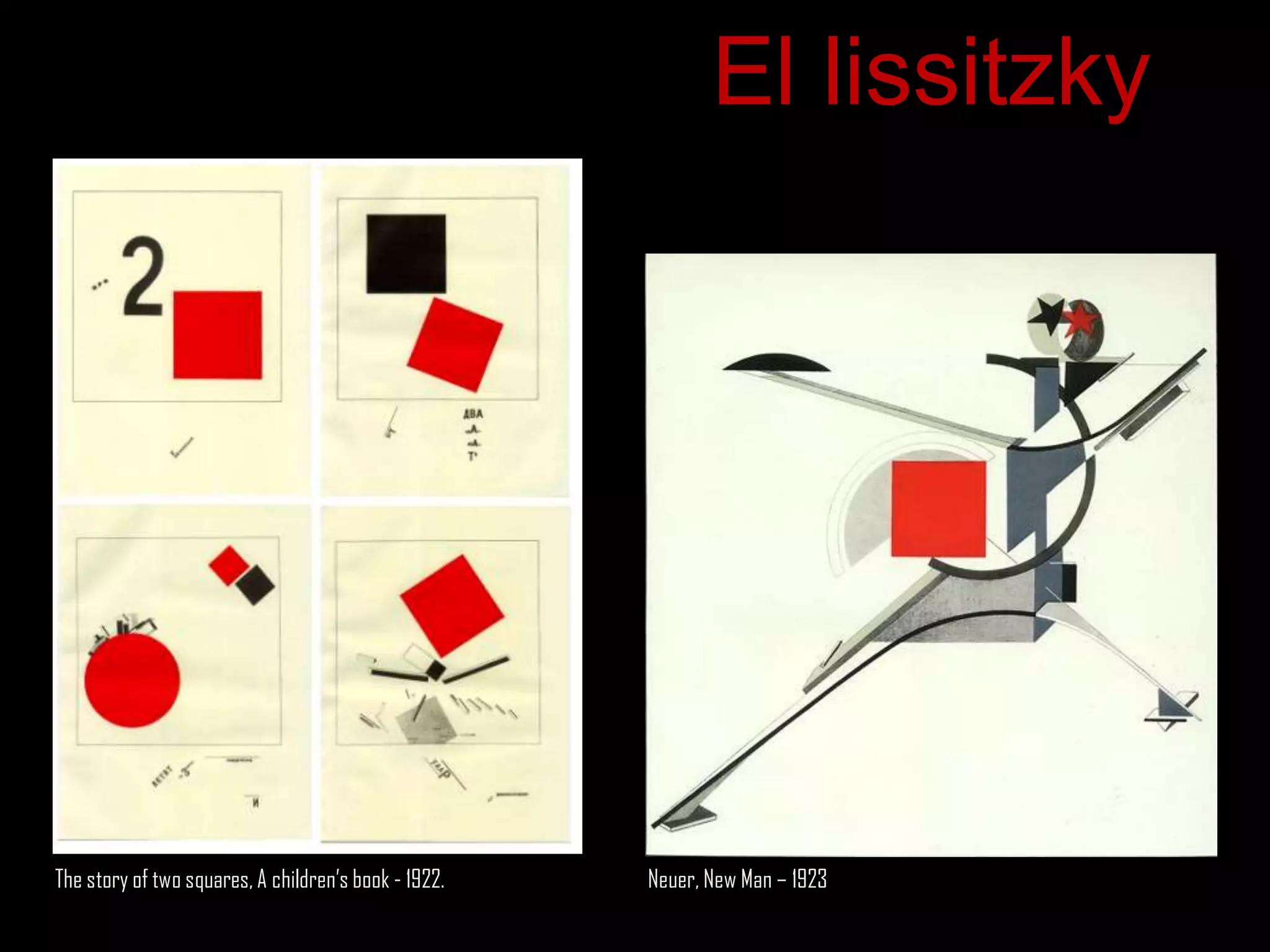
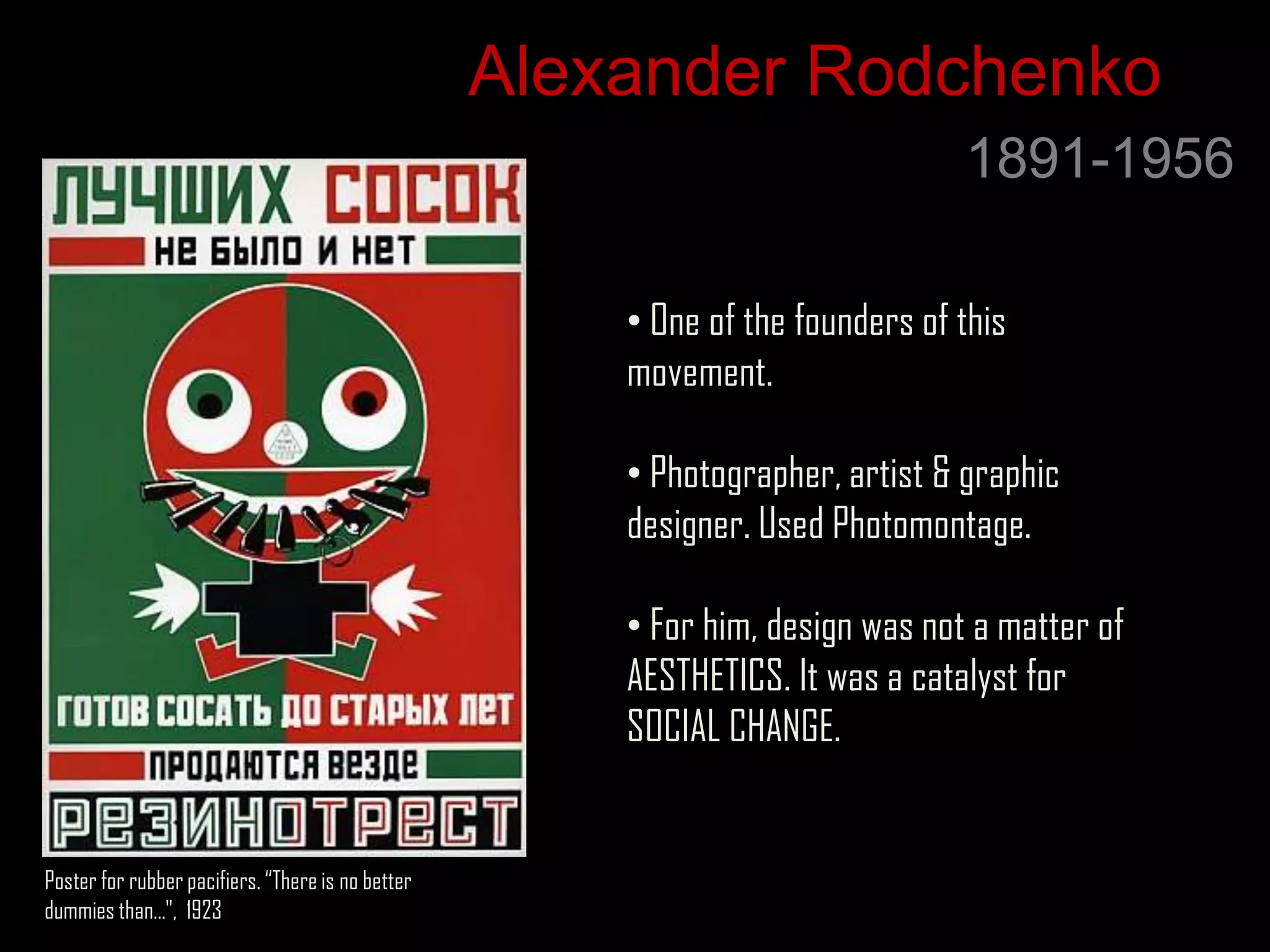
Constructivism originated in Russia after World War 1 as an artistic movement that rejected autonomous art and sought to use art as a catalyst for social change. Key figures included Vladimir Tatlin, Alexander Rodchenko, and El Lissitzky. Tatlin's Monument to the Third International from 1919-1920 came to symbolize the movement's focus on functional, dynamic works of art that could inspire social change. Constructivism emphasized usefulness over aesthetics and sought to bring art to the masses.


