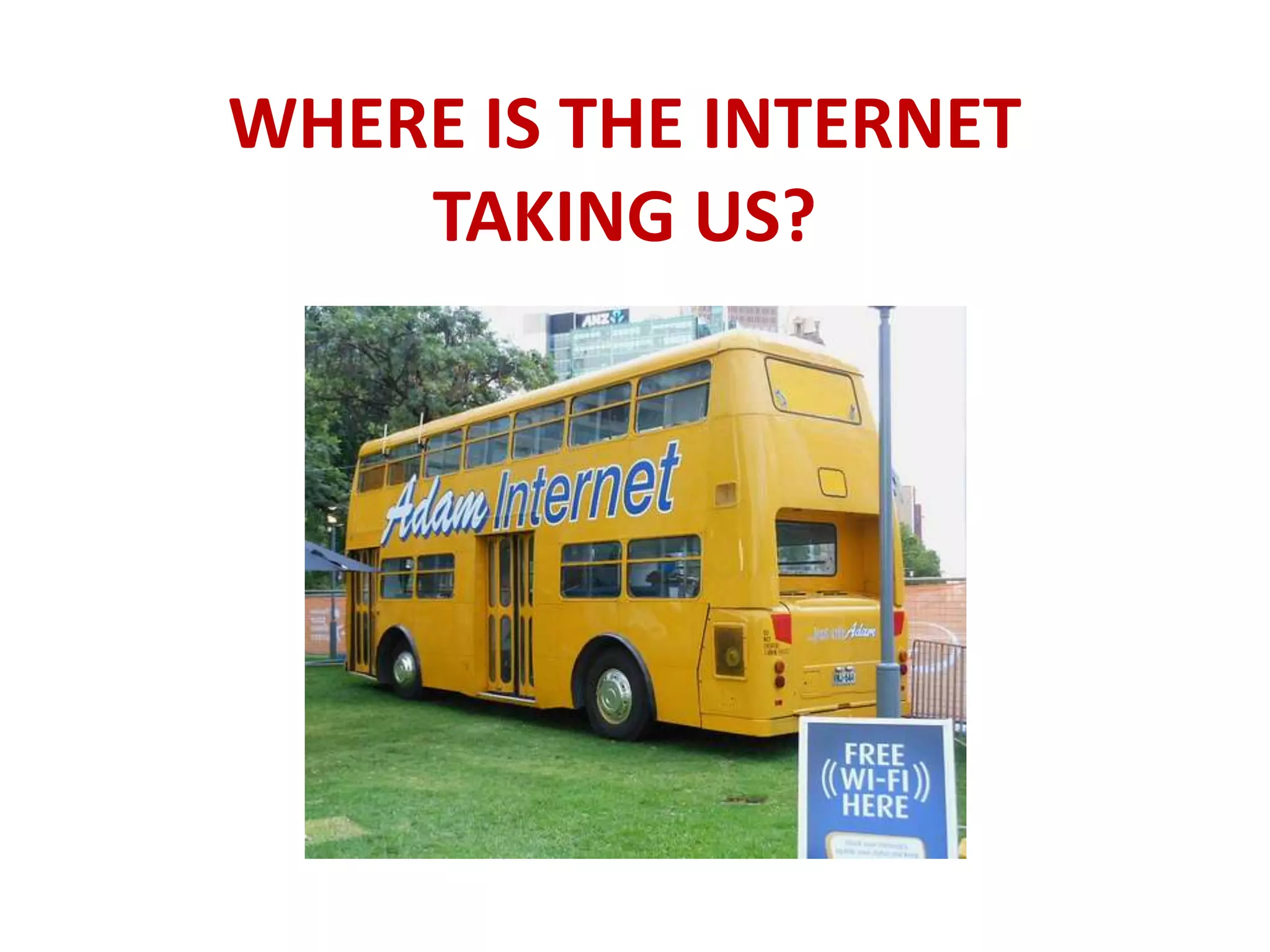
WHERE IS THE INTERNET
TAKING US?
THEORIES ABOUT TECHNOLOGY
1. Technological determinism: technology is an external
agent that acts upon people and changes society.
2. Social construction of technology (SCOT): it is human
decisions and processes that create the technologies we
have, and that the prevailing social milieu has an
influential role in the decisions we make about how we
use that technology.
3. A middle ground between people and machine is the
theory of Social Shaping. Nancy Baym refers to
technologies having ‘logics’ that influence how we use
them. Nicholas Carr calls them ‘ethics’:
“the message that a tool or medium transmits into
the minds and culture of its users”
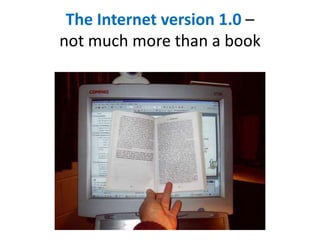
The Internet version 1.0 –
not much more than a book
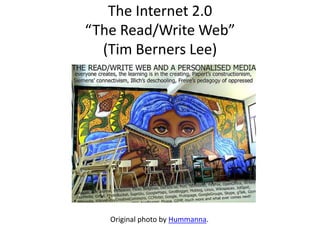
The Internet 2.0
“The Read/Write Web”
(Tim Berners Lee)
Original photo by Hummanna.
eLearning 2.0/Web 2.0
(Stephen Downes)
Elearning 1.0:
• static packaged content
• little true interactivity and learner input and
• very little contact with a teacher
• represented by Learner Management Systems. (eg Blackboard, Moodle, etc)
Elearning 2.0:
• more student-centred
• centred around a Personal Learning Environment using social software.
• students generate and share content.
• they interact not only with teachers and their peers, but with anyone in the
world they can learn from.
(this description courtesy of Sean Fitzgerald)
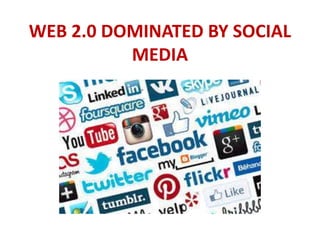
WEB 2.0 DOMINATED BY SOCIAL
MEDIA
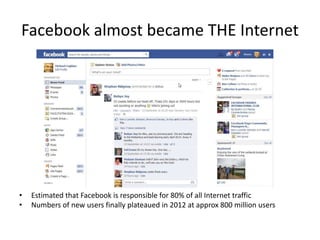
Facebook almost became THE Internet
• Estimated that Facebook is responsible for 80% of all Internet traffic
• Numbers of new users finally plateaued in 2012 at approx 800 million users
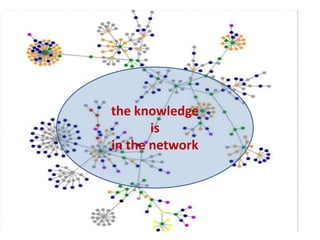
the knowledge
is
in the network
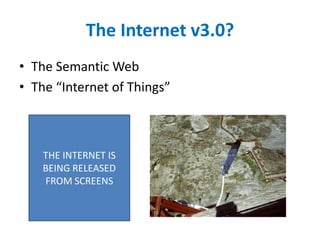
The Internet v3.0?
• The Semantic Web
• The “Internet of Things”
THE INTERNET IS
BEING RELEASED
FROM SCREENS
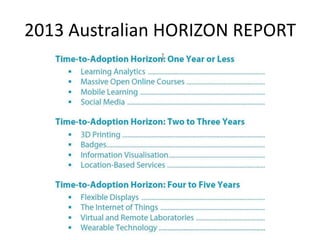
2013 Australian HORIZON REPORT
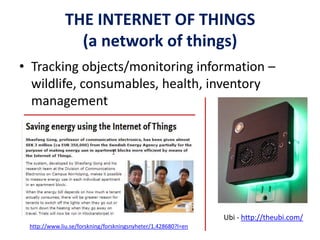
THE INTERNET OF THINGS
(a network of things)
• Tracking objects/monitoring information –
wildlife, consumables, health, inventory
management
Ubi - http://theubi.com/
http://www.liu.se/forskning/forskningsnyheter/1.428680?l=en
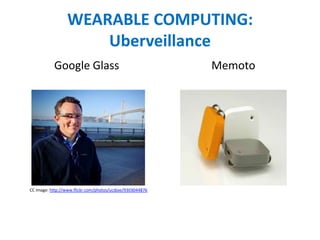
WEARABLE COMPUTING:
Uberveillance
Google Glass Memoto
CC image: http://www.flickr.com/photos/ucdjoe/9303044876
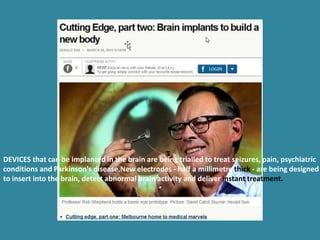
DEVICES that can be implanted in the brain are being trialled to treat seizures, pain, psychiatric
conditions and Parkinson's disease.New electrodes - half a millimetre thick - are being designed
to insert into the brain, detect abnormal brain activity and deliver instant treatment.
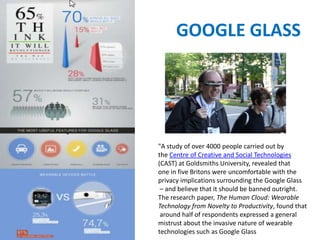
GOOGLE GLASS
"A study of over 4000 people carried out by
the Centre of Creative and Social Technologies
(CAST) at Goldsmiths University, revealed that
one in five Britons were uncomfortable with the
privacy implications surrounding the Google Glass
– and believe that it should be banned outright.
The research paper, The Human Cloud: Wearable
Technology from Novelty to Productivity, found that
around half of respondents expressed a general
mistrust about the invasive nature of wearable
technologies such as Google Glass
ETHICS OR LOGICS OF TECHNOLOGIES
 “the message that a tool or medium transmits
into the minds and culture of its users”
CC image: http://www.flickr.com/photos/librariesrock/6784435650/
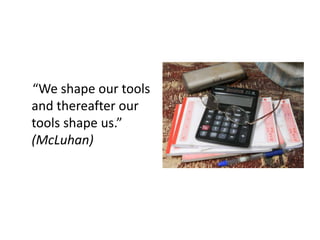
“We shape our tools
and thereafter our
tools shape us.”
(McLuhan)
Microchips in humans?
It’s not IF but WHEN.....
IS PRIVACY DEAD? IS IT A
CONSTITUTIONAL/HUMAN RIGHT?
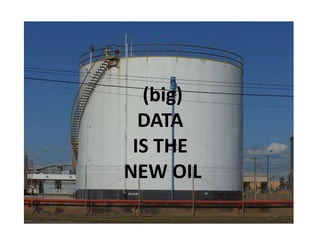
(big)
DATA
IS THE
NEW OIL
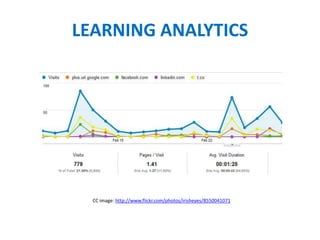
LEARNING ANALYTICS
CC image: http://www.flickr.com/photos/irisheyes/8550041071
THE ROLE OF CREATIVE COMMONS
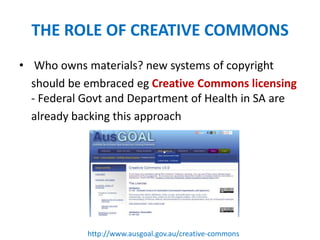
• Who owns materials? new systems of copyright
should be embraced eg Creative Commons licensing
- Federal Govt and Department of Health in SA are
already backing this approach
http://www.ausgoal.gov.au/creative-commons
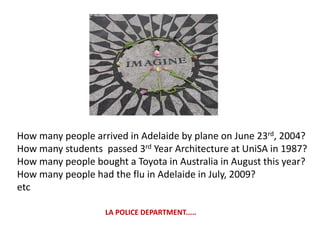
How many people arrived in Adelaide by plane on June 23rd, 2004?
How many students passed 3rd Year Architecture at UniSA in 1987?
How many people bought a Toyota in Australia in August this year?
How many people had the flu in Adelaide in July, 2009?
etc
LA POLICE DEPARTMENT.....
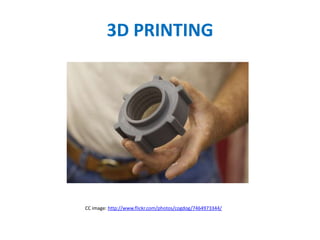
3D PRINTING
CC image: http://www.flickr.com/photos/cogdog/7464973344/
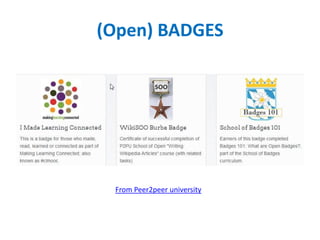
(Open) BADGES
From Peer2peer university
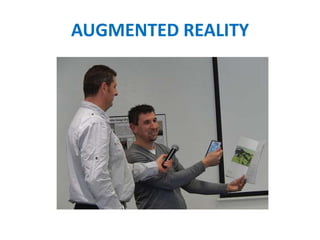
AUGMENTED REALITY
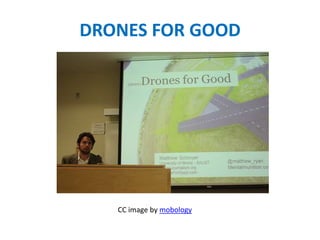
DRONES FOR GOOD
CC image by mobology
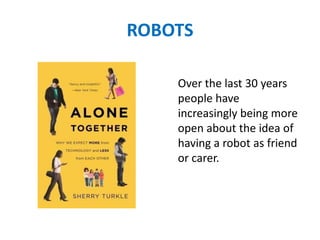
ROBOTS
Over the last 30 years
people have
increasingly being more
open about the idea of
having a robot as friend
or carer.
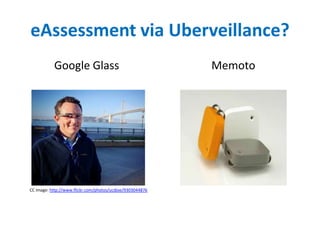
eAssessment via Uberveillance?
Google Glass Memoto
CC image: http://www.flickr.com/photos/ucdjoe/9303044876
IMPORTANT
QUESTIONS/PERSPECTIVES
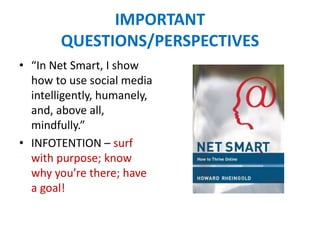
• “In Net Smart, I show
how to use social media
intelligently, humanely,
and, above all,
mindfully.”
• INFOTENTION – surf
with purpose; know
why you’re there; have
a goal!
IMPORTANT
QUESTIONS/PERSPECTIVES
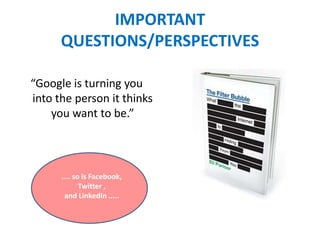
“Google is turning you
into the person it thinks
you want to be.”
.... so is Facebook,
Twitter ,
and LinkedIn .....
FUTURE OF THE INTERNET
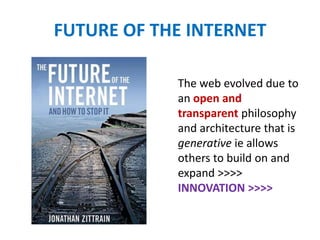
The web evolved due to
an open and
transparent philosophy
and architecture that is
generative ie allows
others to build on and
expand >>>>
INNOVATION >>>>
IF WE CAN DO IT WE WILL.
CC image: http://www.flickr.com/photos/zen/324536244

Where is the internet taking us?

  • 1.
    WHERE IS THEINTERNET TAKING US?
  • 2.
    THEORIES ABOUT TECHNOLOGY 1.Technological determinism: technology is an external agent that acts upon people and changes society. 2. Social construction of technology (SCOT): it is human decisions and processes that create the technologies we have, and that the prevailing social milieu has an influential role in the decisions we make about how we use that technology. 3. A middle ground between people and machine is the theory of Social Shaping. Nancy Baym refers to technologies having ‘logics’ that influence how we use them. Nicholas Carr calls them ‘ethics’: “the message that a tool or medium transmits into the minds and culture of its users”
  • 3.
    The Internet version1.0 – not much more than a book
  • 4.
    The Internet 2.0 “TheRead/Write Web” (Tim Berners Lee) Original photo by Hummanna.
  • 5.
    eLearning 2.0/Web 2.0 (StephenDownes) Elearning 1.0: • static packaged content • little true interactivity and learner input and • very little contact with a teacher • represented by Learner Management Systems. (eg Blackboard, Moodle, etc) Elearning 2.0: • more student-centred • centred around a Personal Learning Environment using social software. • students generate and share content. • they interact not only with teachers and their peers, but with anyone in the world they can learn from. (this description courtesy of Sean Fitzgerald)
  • 6.
    WEB 2.0 DOMINATEDBY SOCIAL MEDIA
  • 7.
    Facebook almost becameTHE Internet • Estimated that Facebook is responsible for 80% of all Internet traffic • Numbers of new users finally plateaued in 2012 at approx 800 million users
  • 8.
  • 9.
    The Internet v3.0? •The Semantic Web • The “Internet of Things” THE INTERNET IS BEING RELEASED FROM SCREENS
  • 11.
  • 12.
    THE INTERNET OFTHINGS (a network of things) • Tracking objects/monitoring information – wildlife, consumables, health, inventory management Ubi - http://theubi.com/ http://www.liu.se/forskning/forskningsnyheter/1.428680?l=en
  • 13.
    WEARABLE COMPUTING: Uberveillance Google GlassMemoto CC image: http://www.flickr.com/photos/ucdjoe/9303044876
  • 14.
    DEVICES that canbe implanted in the brain are being trialled to treat seizures, pain, psychiatric conditions and Parkinson's disease.New electrodes - half a millimetre thick - are being designed to insert into the brain, detect abnormal brain activity and deliver instant treatment.
  • 15.
    GOOGLE GLASS "A studyof over 4000 people carried out by the Centre of Creative and Social Technologies (CAST) at Goldsmiths University, revealed that one in five Britons were uncomfortable with the privacy implications surrounding the Google Glass – and believe that it should be banned outright. The research paper, The Human Cloud: Wearable Technology from Novelty to Productivity, found that around half of respondents expressed a general mistrust about the invasive nature of wearable technologies such as Google Glass
  • 16.
    ETHICS OR LOGICSOF TECHNOLOGIES  “the message that a tool or medium transmits into the minds and culture of its users” CC image: http://www.flickr.com/photos/librariesrock/6784435650/
  • 17.
    “We shape ourtools and thereafter our tools shape us.” (McLuhan)
  • 18.
    Microchips in humans? It’snot IF but WHEN.....
  • 19.
    IS PRIVACY DEAD?IS IT A CONSTITUTIONAL/HUMAN RIGHT?
  • 20.
  • 21.
    LEARNING ANALYTICS CC image:http://www.flickr.com/photos/irisheyes/8550041071
  • 22.
    THE ROLE OFCREATIVE COMMONS • Who owns materials? new systems of copyright should be embraced eg Creative Commons licensing - Federal Govt and Department of Health in SA are already backing this approach http://www.ausgoal.gov.au/creative-commons
  • 23.
    How many peoplearrived in Adelaide by plane on June 23rd, 2004? How many students passed 3rd Year Architecture at UniSA in 1987? How many people bought a Toyota in Australia in August this year? How many people had the flu in Adelaide in July, 2009? etc LA POLICE DEPARTMENT.....
  • 24.
    3D PRINTING CC image:http://www.flickr.com/photos/cogdog/7464973344/
  • 25.
  • 26.
  • 27.
    DRONES FOR GOOD CCimage by mobology
  • 28.
    ROBOTS Over the last30 years people have increasingly being more open about the idea of having a robot as friend or carer.
  • 29.
    eAssessment via Uberveillance? GoogleGlass Memoto CC image: http://www.flickr.com/photos/ucdjoe/9303044876
  • 30.
    IMPORTANT QUESTIONS/PERSPECTIVES • “In NetSmart, I show how to use social media intelligently, humanely, and, above all, mindfully.” • INFOTENTION – surf with purpose; know why you’re there; have a goal!
  • 31.
    IMPORTANT QUESTIONS/PERSPECTIVES “Google is turningyou into the person it thinks you want to be.” .... so is Facebook, Twitter , and LinkedIn .....
  • 32.
    FUTURE OF THEINTERNET The web evolved due to an open and transparent philosophy and architecture that is generative ie allows others to build on and expand >>>> INNOVATION >>>>
  • 33.
    IF WE CANDO IT WE WILL. CC image: http://www.flickr.com/photos/zen/324536244