Conflict Management GEO BABY SNGIST
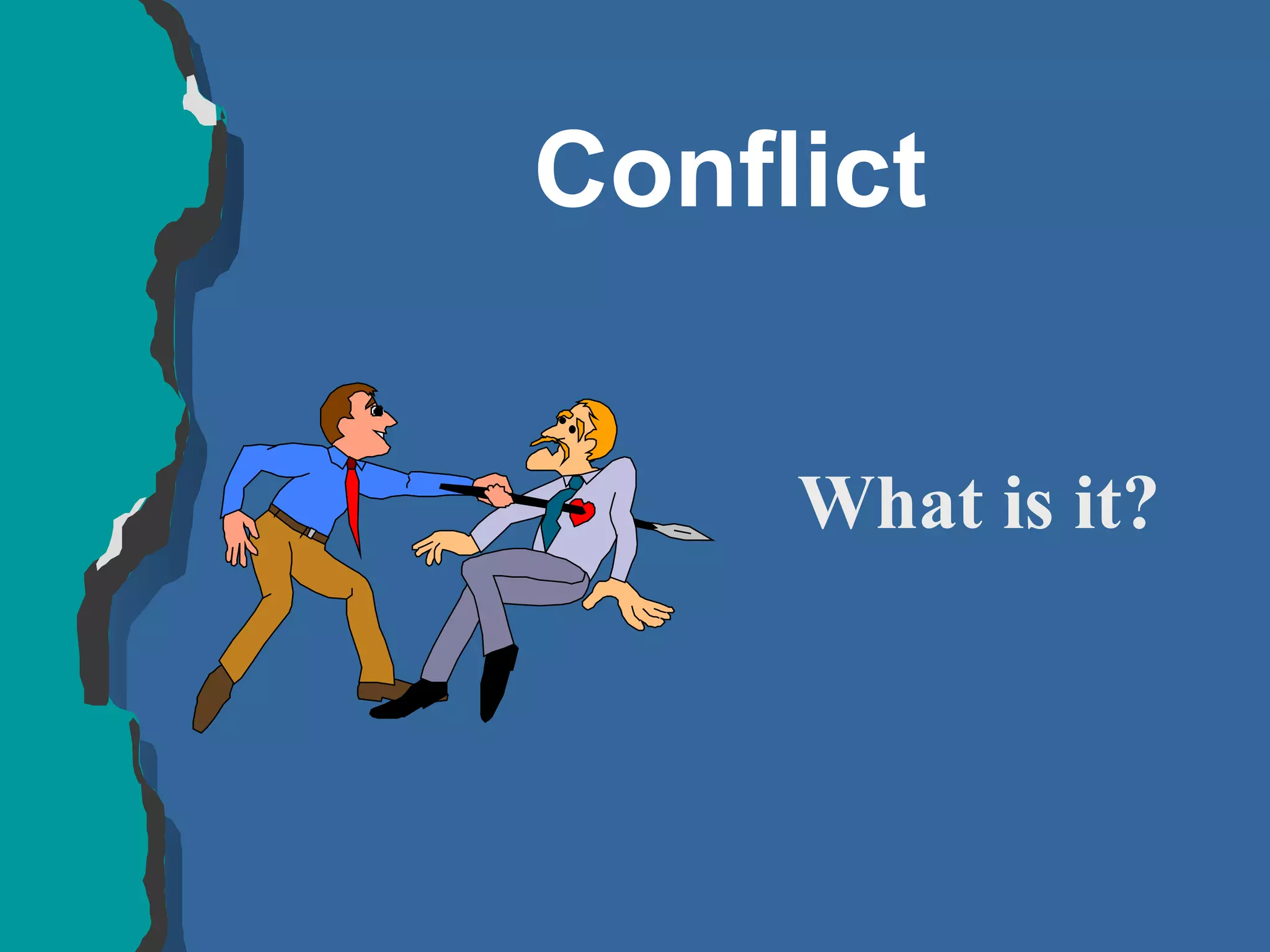
Conflict What is it?
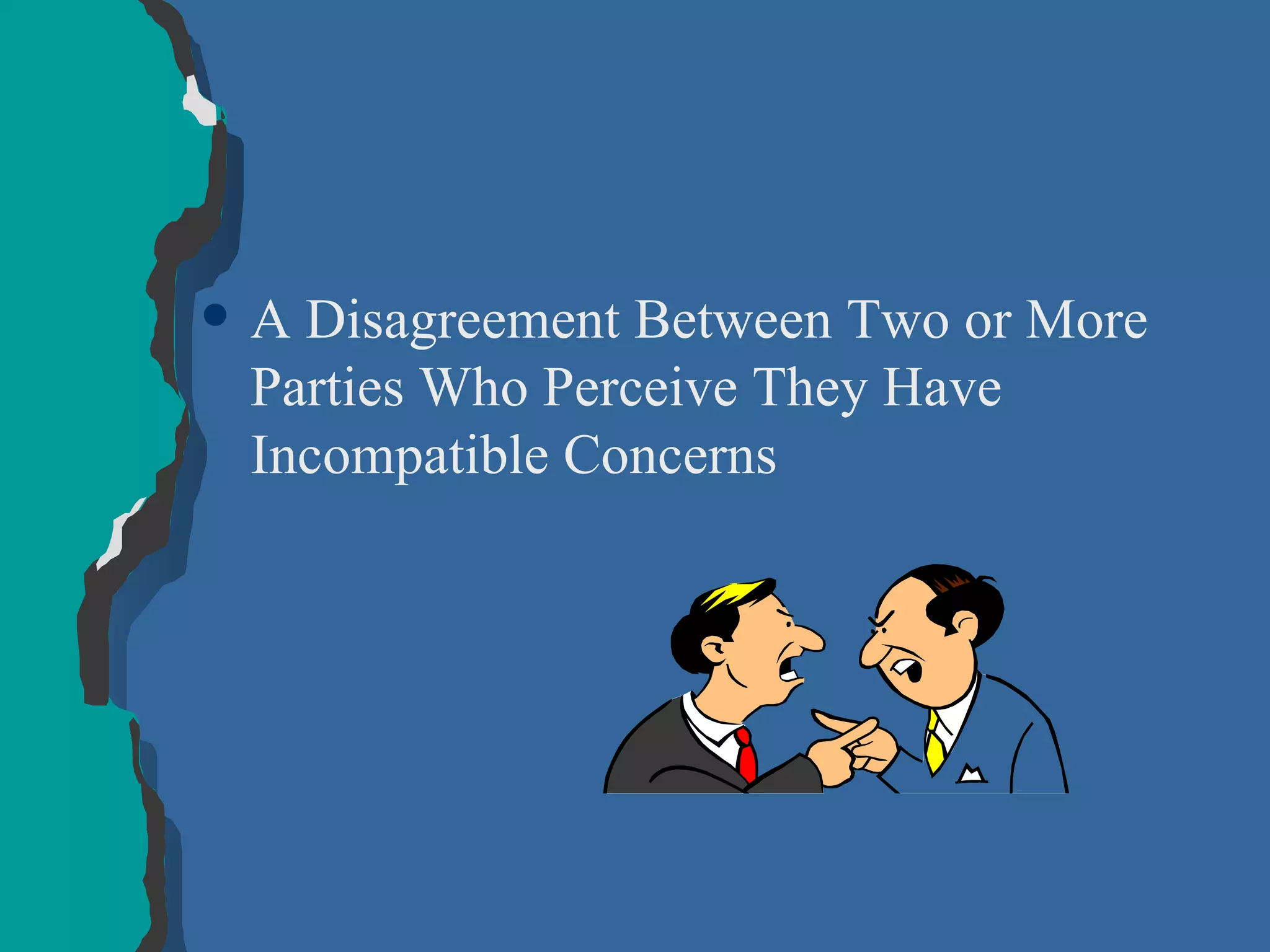
A Disagreement Between Two or More Parties Who Perceive They Have Incompatible Concerns
Conflict Why do we do it?
What we know…. Conflict is a naturally occurring phenomenon for human beings People do not get involved in conflict situations unless they have some stake in the relationship or outcome or both
Facts Methods Goals Values
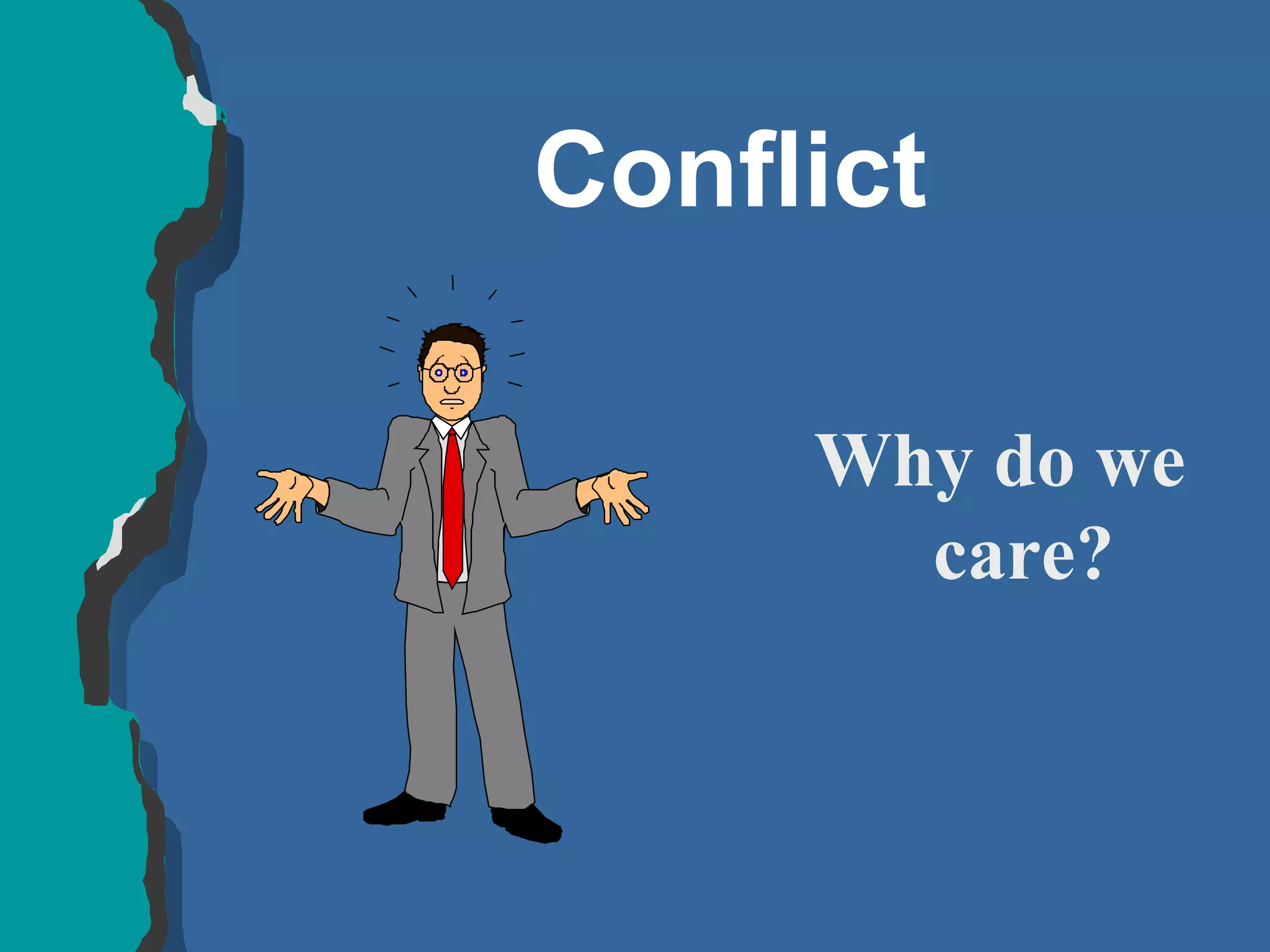
Conflict Why do we care?
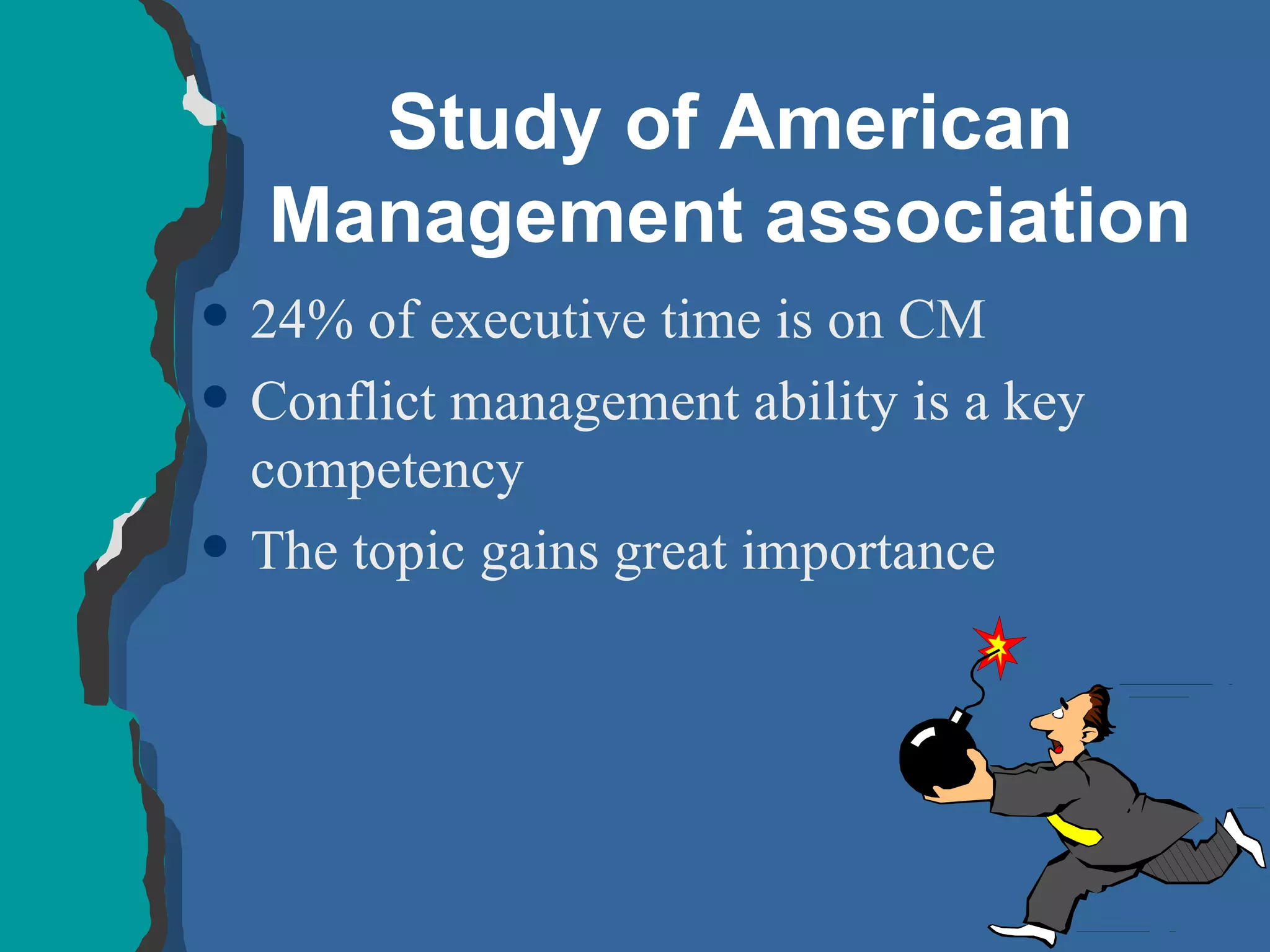
Study of American Management association 24% of executive time is on CM Conflict management ability is a key competency The topic gains great importance
Causes Misunderstanding Personality clashes Value and Goal difference Substandard performance Difference over method Responsibility issues Lack of cooperation
Causes Authority issues Frustration and irritability Competition for limited resources Non-compliance with rules and responsibilities
What we know…. The costs of unmanaged conflict can be high, but the gains from using differences creatively can also be great Conflict can either be functional or dysfunctional
Dysfunctional Diverts energy from real task Destroys morale Polarize individuals and groups Deepens differences Obstruct cooperative action Produce irresponsible actions Create suspision and di
Functional Opens up issue in a confronting manner Develops clarification of an issue Improve problem solving quality Increase involvement Improve communication Initiate growth Strengthens a relationship Increase productivity
First Trick for Conflict Management
Know Yourself
What feelings do you have when you are in conflict situation?
Common Feelings Associated with Conflict Anger Frustration Fear Excitement
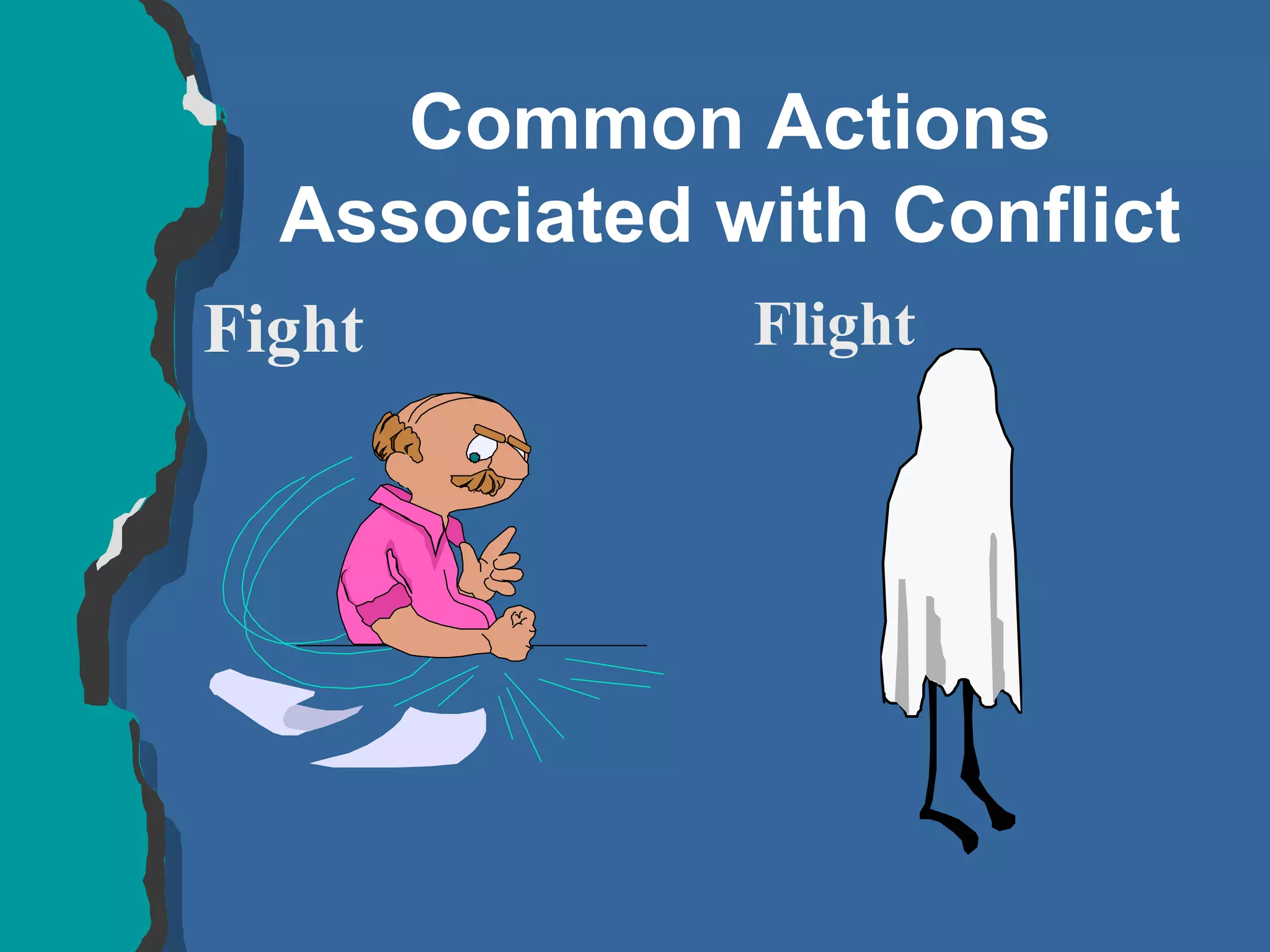
Common Actions Associated with Conflict Fight Flight
Your History with Conflict How was conflict perceived in your family/community? How did your family/community deal with conflict?
You can decide... Understanding the impact of your family and community on your ideas about conflict can allow you to make decisions about how you deal with conflict now We are our history We make our history
What is your conflict style?
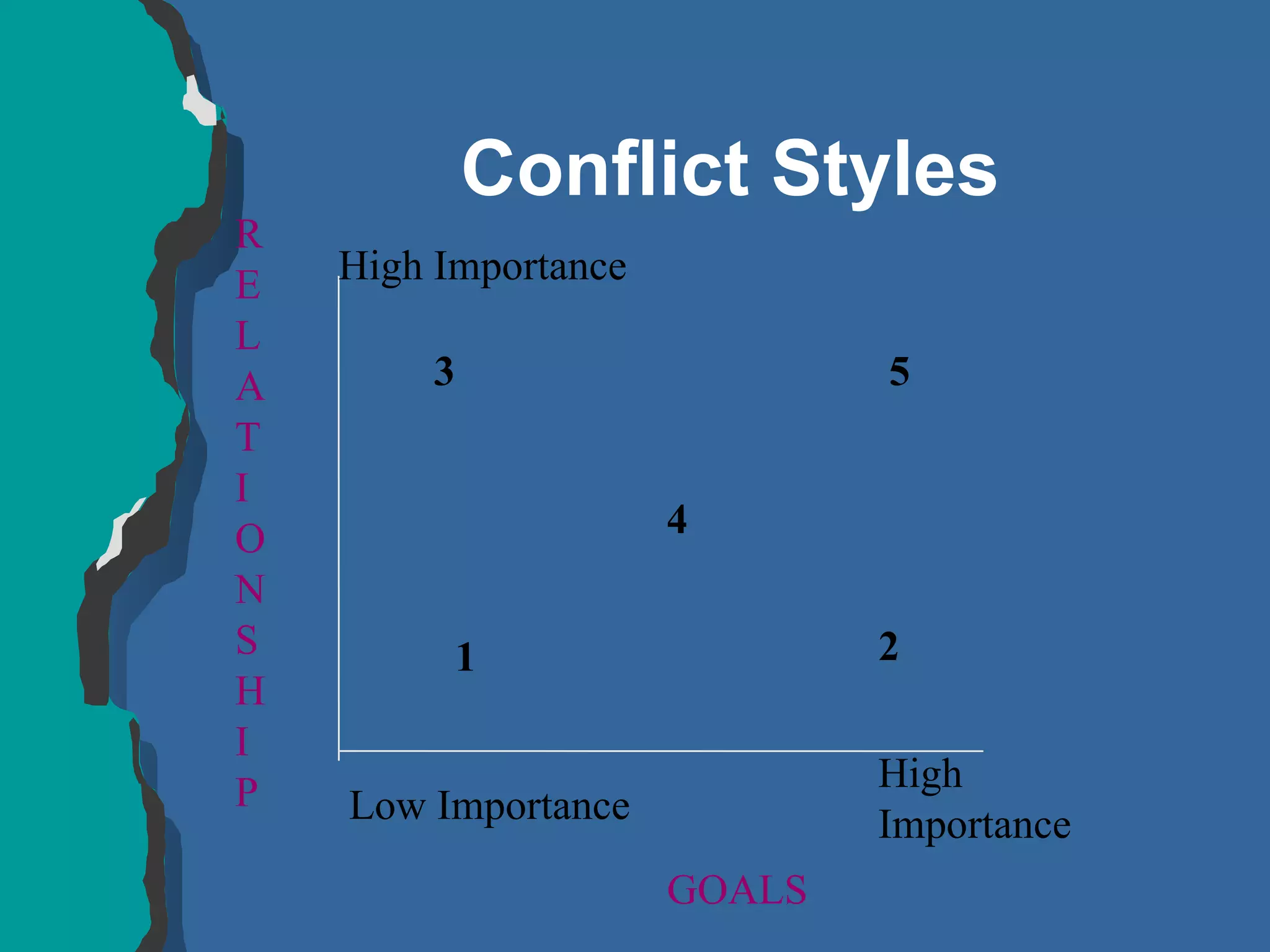
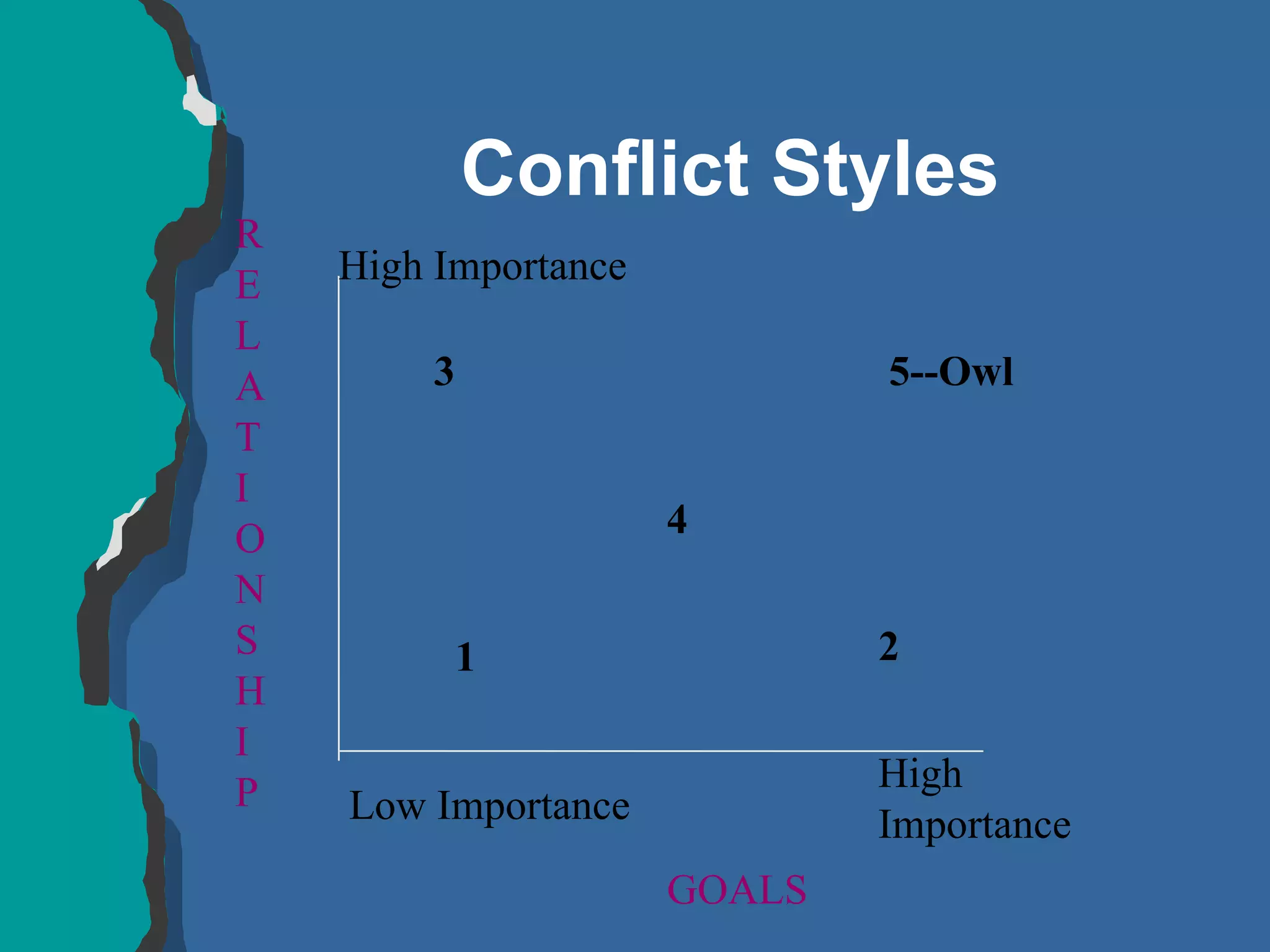
Conflict Styles R E L A T I O N S H I P High Importance Low Importance High Importance GOALS 3 5 1 2 4
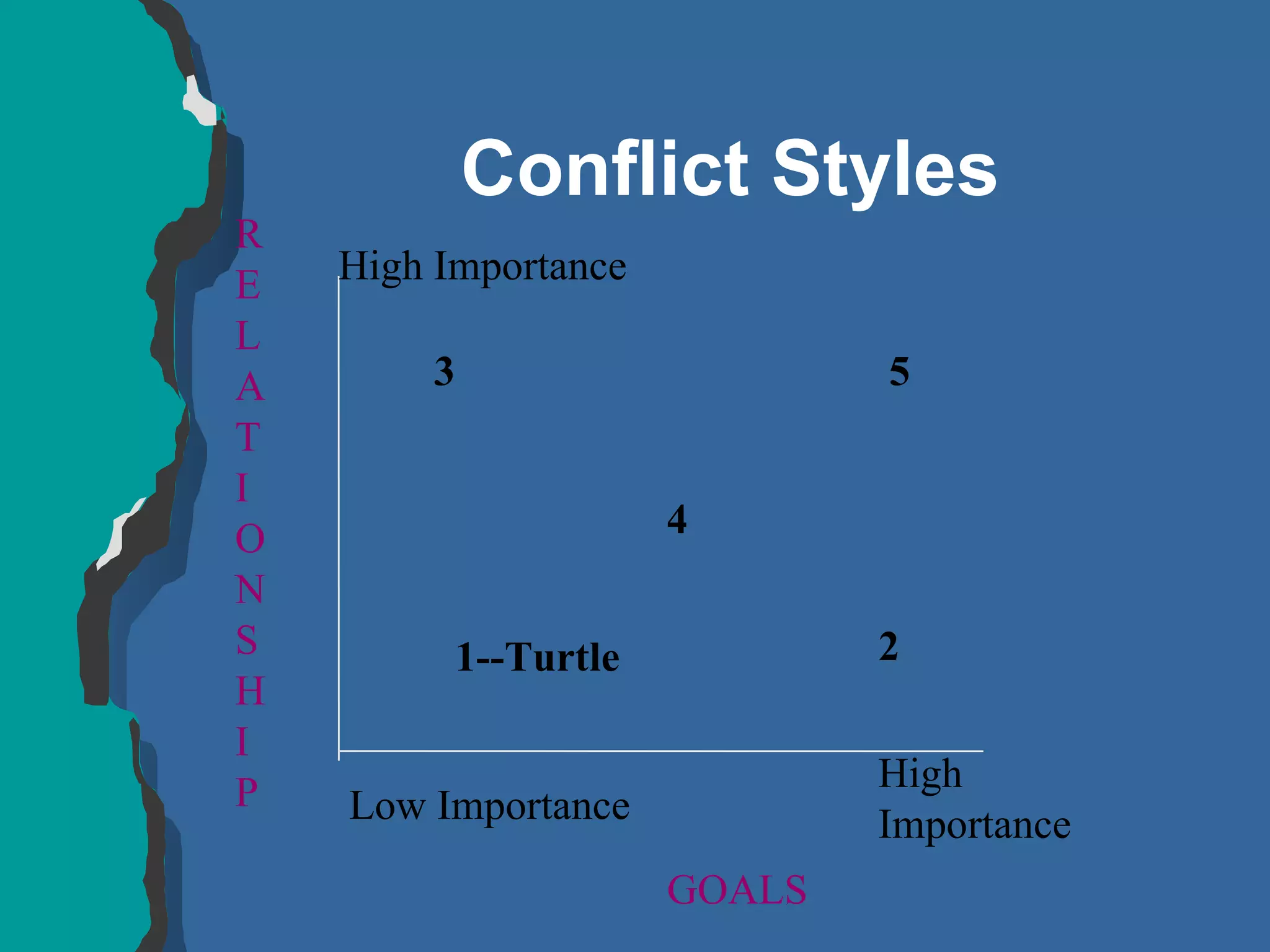
R E L A T I O N S H I P High Importance Low Importance High Importance GOALS 3 5 1--Turtle 2 4 Conflict Styles
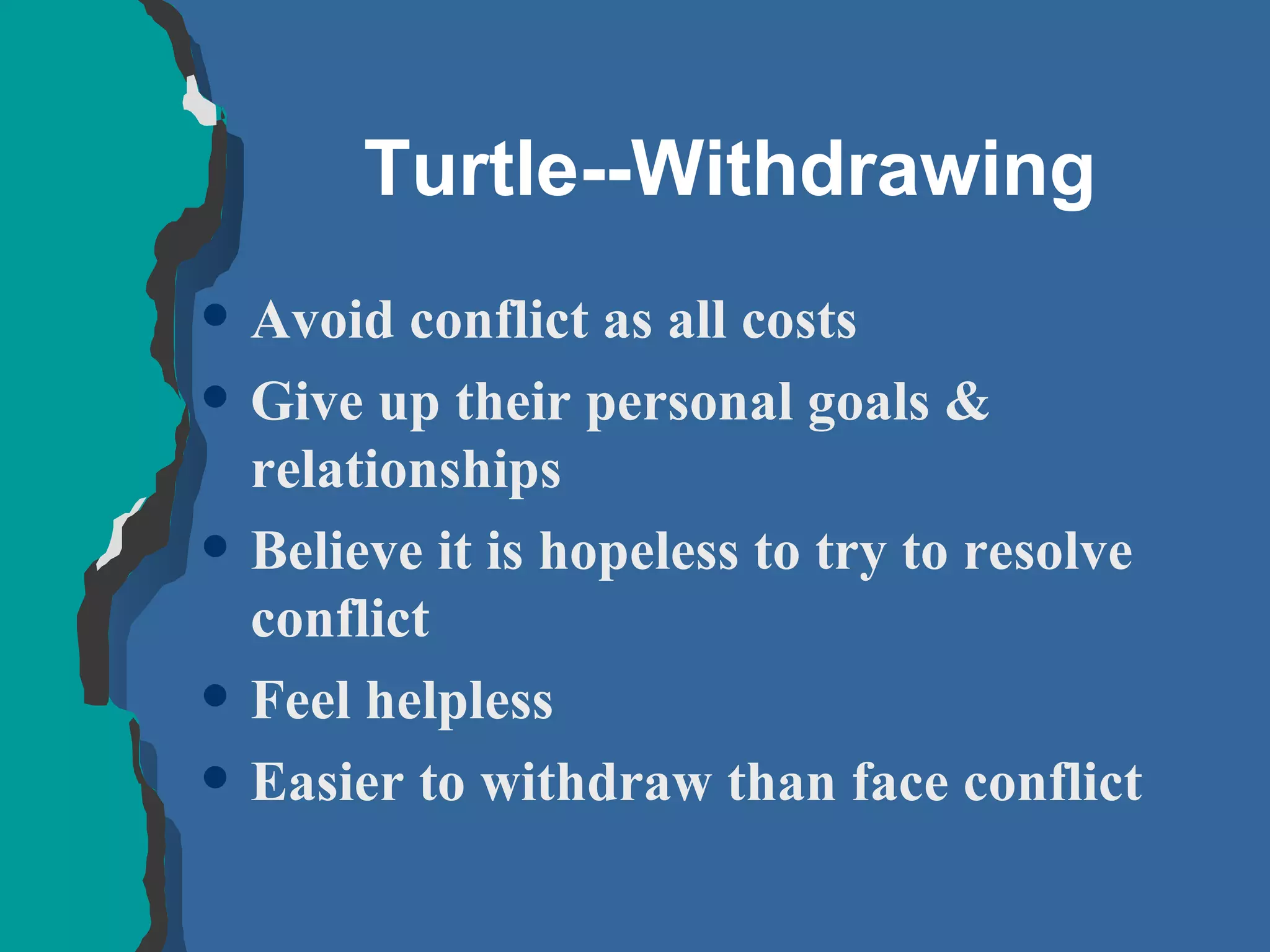
Turtle--Withdrawing Avoid conflict as all costs Give up their personal goals & relationships Believe it is hopeless to try to resolve conflict Feel helpless Easier to withdraw than face conflict
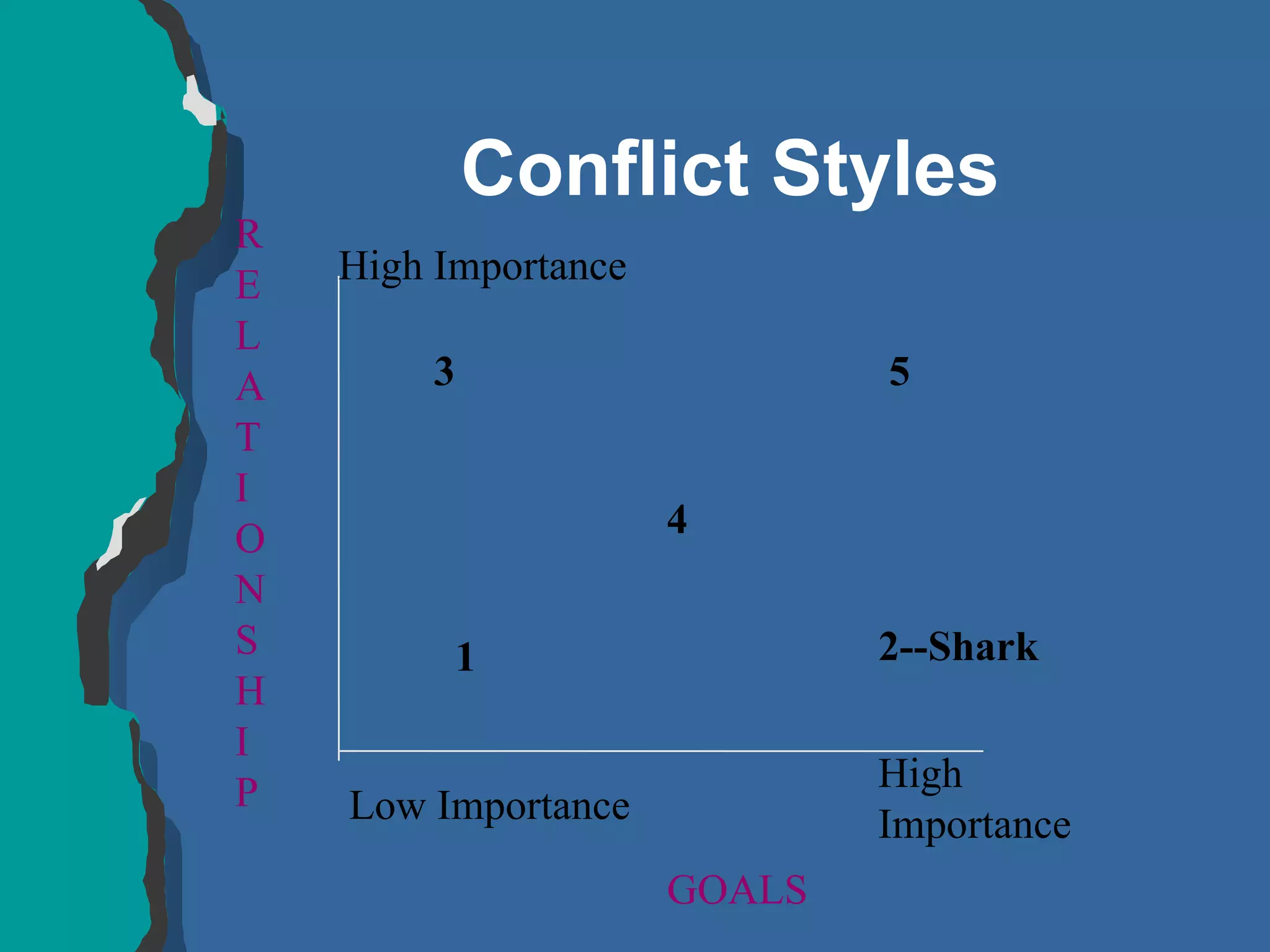
Conflict Styles R E L A T I O N S H I P High Importance Low Importance High Importance GOALS 3 5 1 2--Shark 4
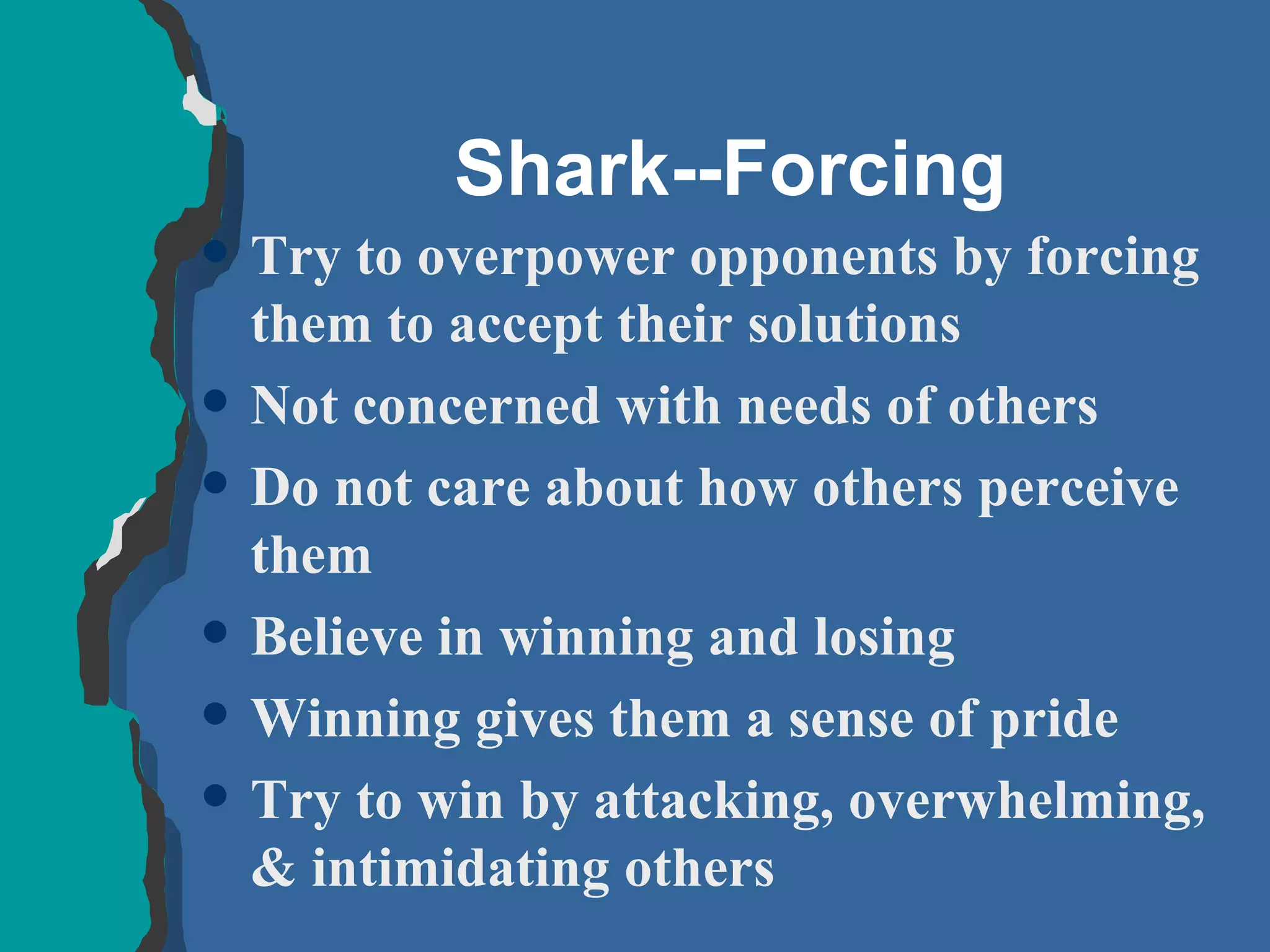
Shark--Forcing Try to overpower opponents by forcing them to accept their solutions Not concerned with needs of others Do not care about how others perceive them Believe in winning and losing Winning gives them a sense of pride Try to win by attacking, overwhelming, & intimidating others
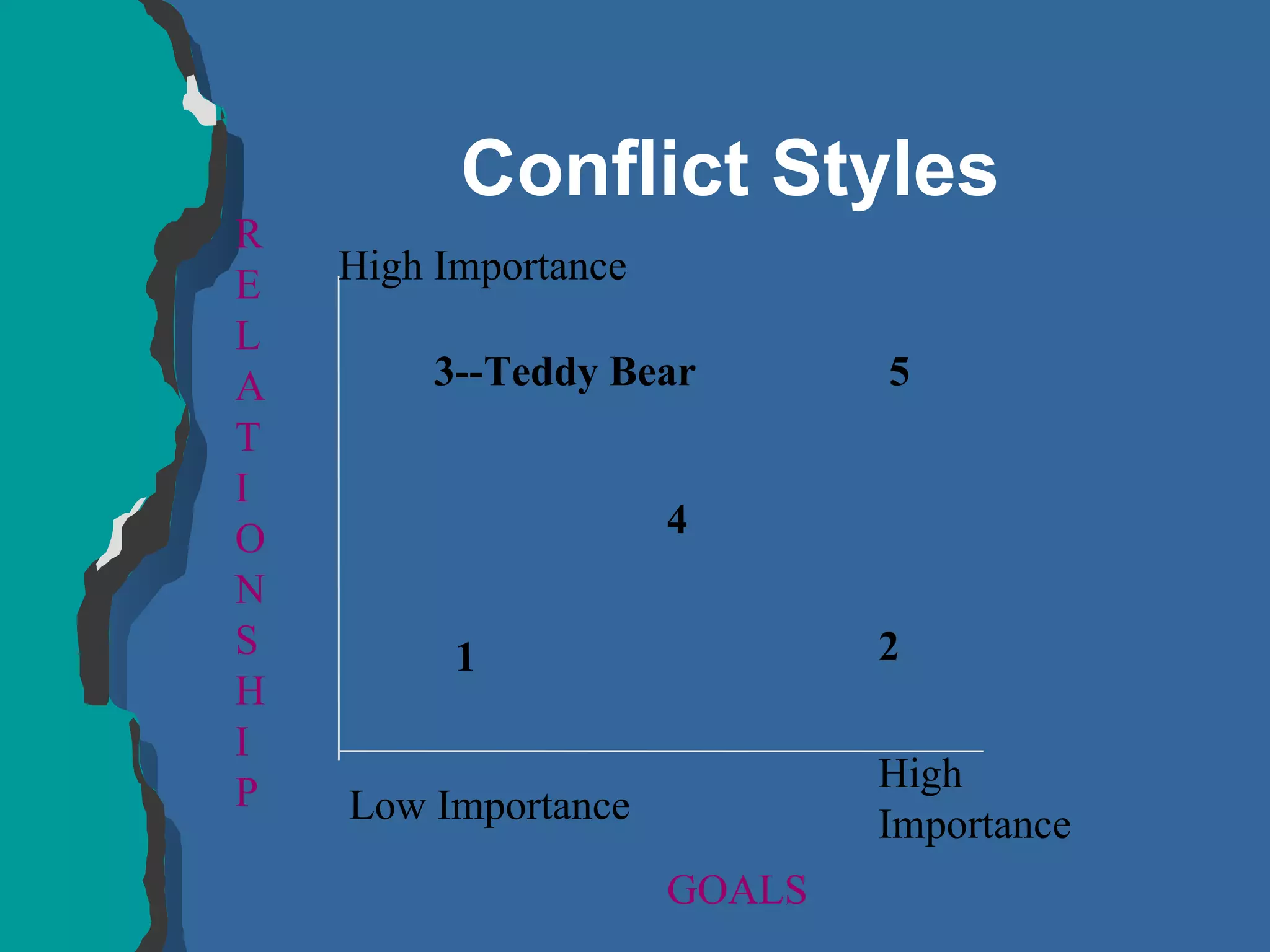
Conflict Styles R E L A T I O N S H I P High Importance Low Importance High Importance GOALS 3--Teddy Bear 5 1 2 4
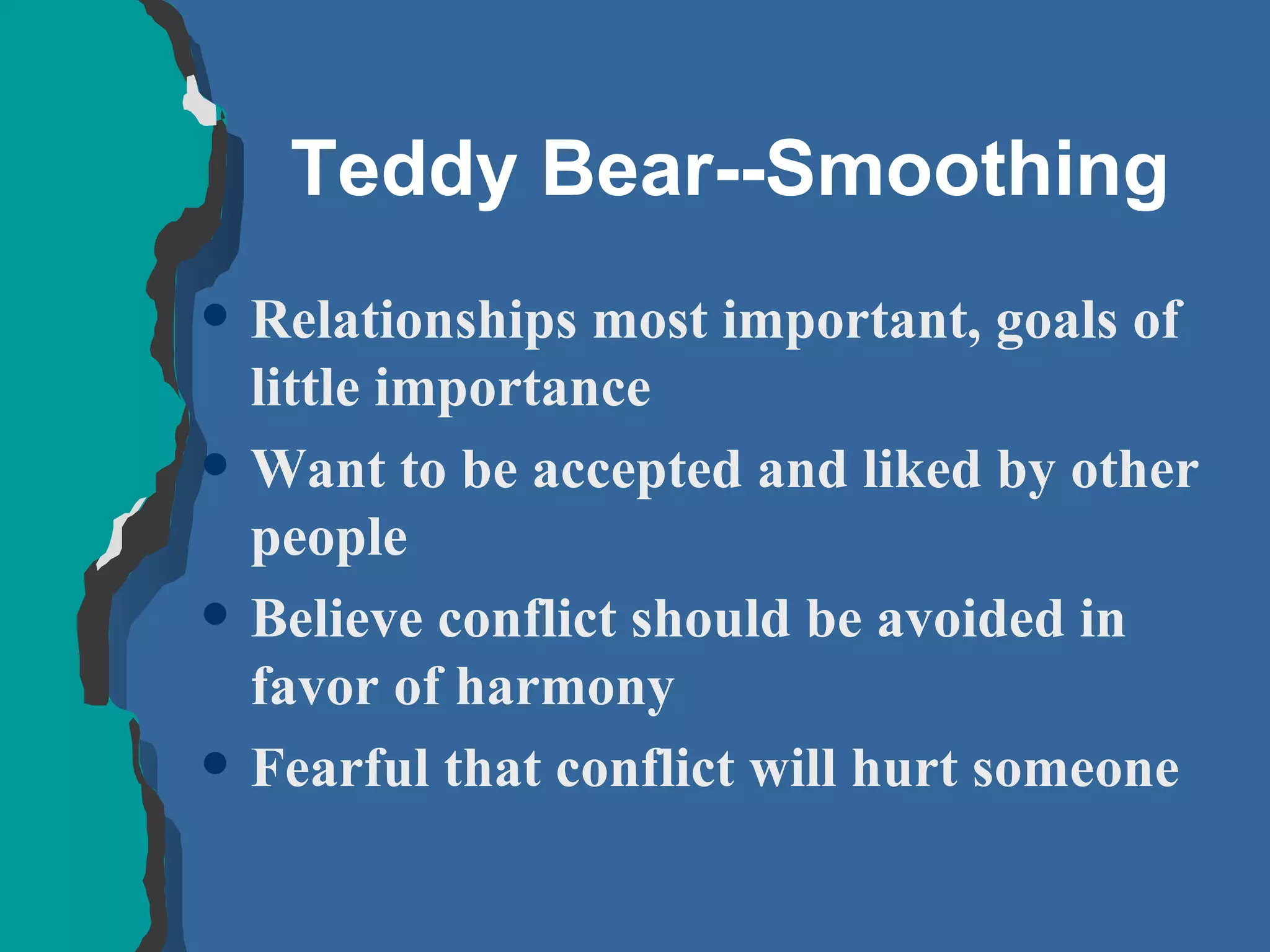
Teddy Bear--Smoothing Relationships most important, goals of little importance Want to be accepted and liked by other people Believe conflict should be avoided in favor of harmony Fearful that conflict will hurt someone
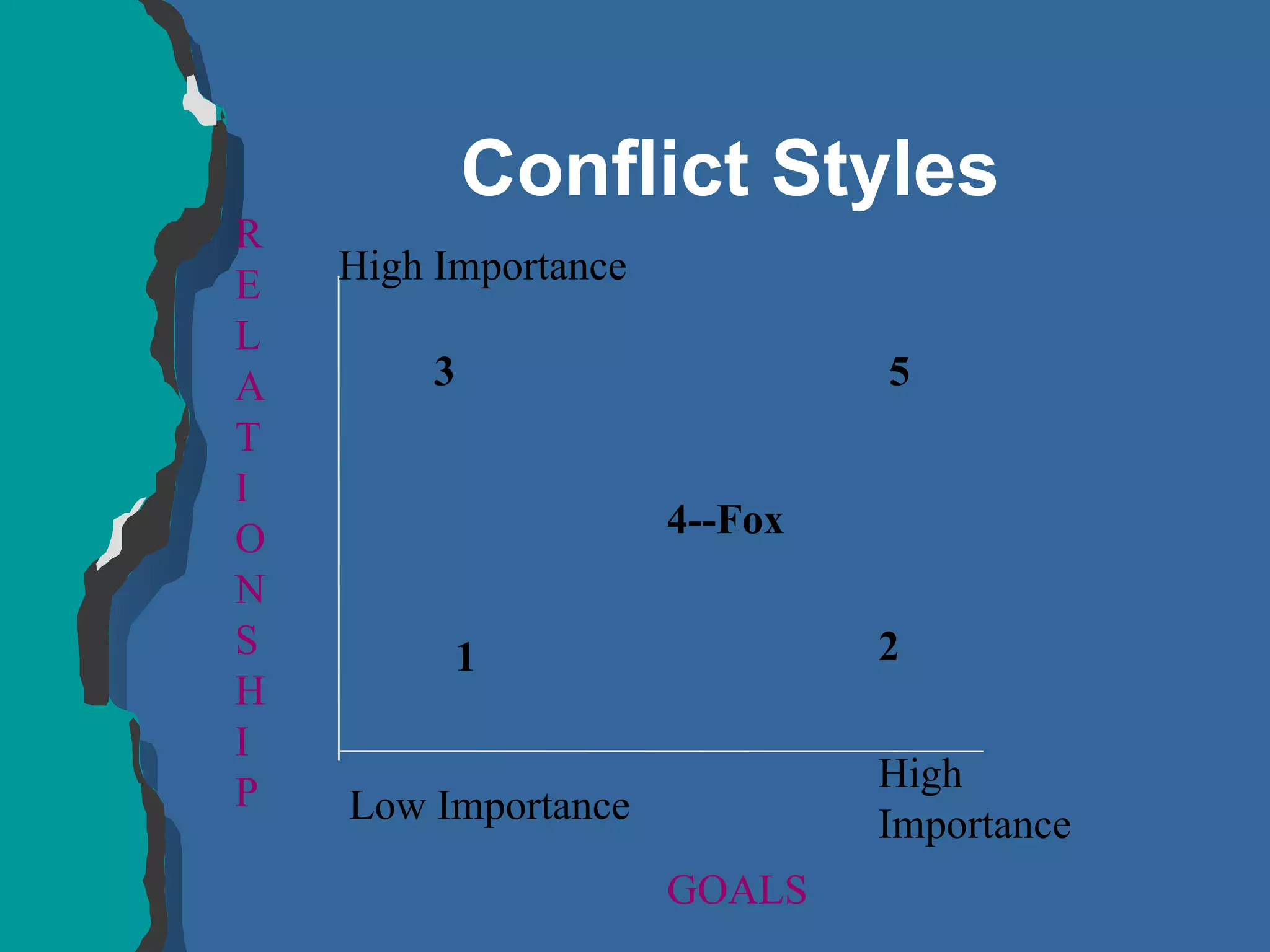
R E L A T I O N S H I P High Importance Low Importance High Importance GOALS 3 5 1 2 4--Fox Conflict Styles
Fox--Compromising Moderately concerned with relationships and goals Willing to sacrifice part of their goals and relationships in order to find agreement for the common good
Conflict Styles R E L A T I O N S H I P High Importance Low Importance High Importance GOALS 3 5--Owl 1 2 4
Owl--Confronting Value their own goals and relationships View conflicts as problems to be solved See conflicts as improving relationships by reducing tension Seek solutions that satisfy both parties Not satisfied until solution is found and tension is reduced
Which style is better?
Some styles are more useful than others when...
Uses of the “Turtle” When issue is trivial When potential damage of confrontation outweighs the benefits To let people cool down & reduce tension When gathering information When others can resolve the conflict more effectively
Uses of the “Shark” When quick, decisive action is vital On important issues where unpopular actions need to be implemented To protect yourself against people who take advantage of noncompetitive behavior
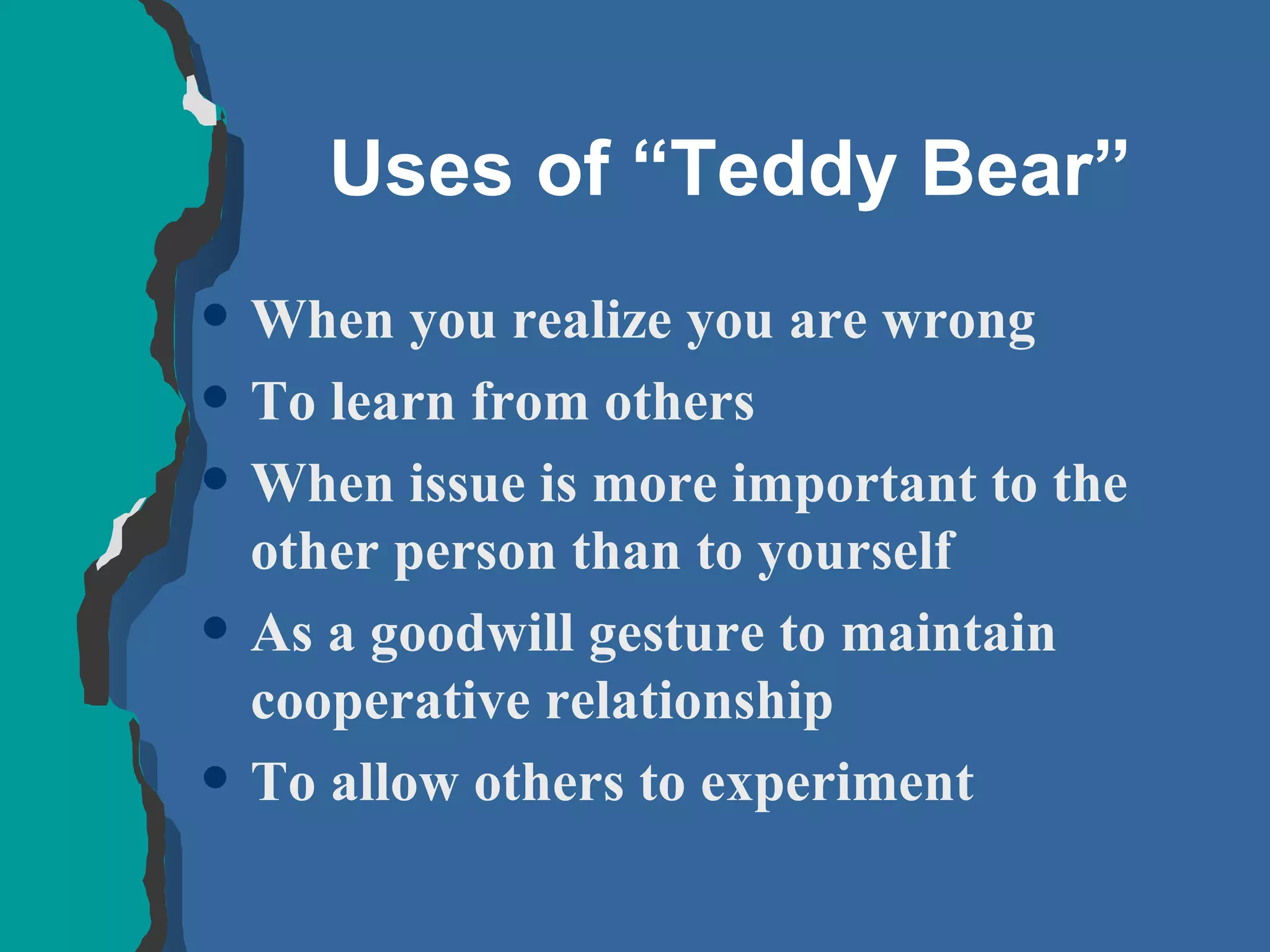
Uses of “Teddy Bear” When you realize you are wrong To learn from others When issue is more important to the other person than to yourself As a goodwill gesture to maintain cooperative relationship To allow others to experiment
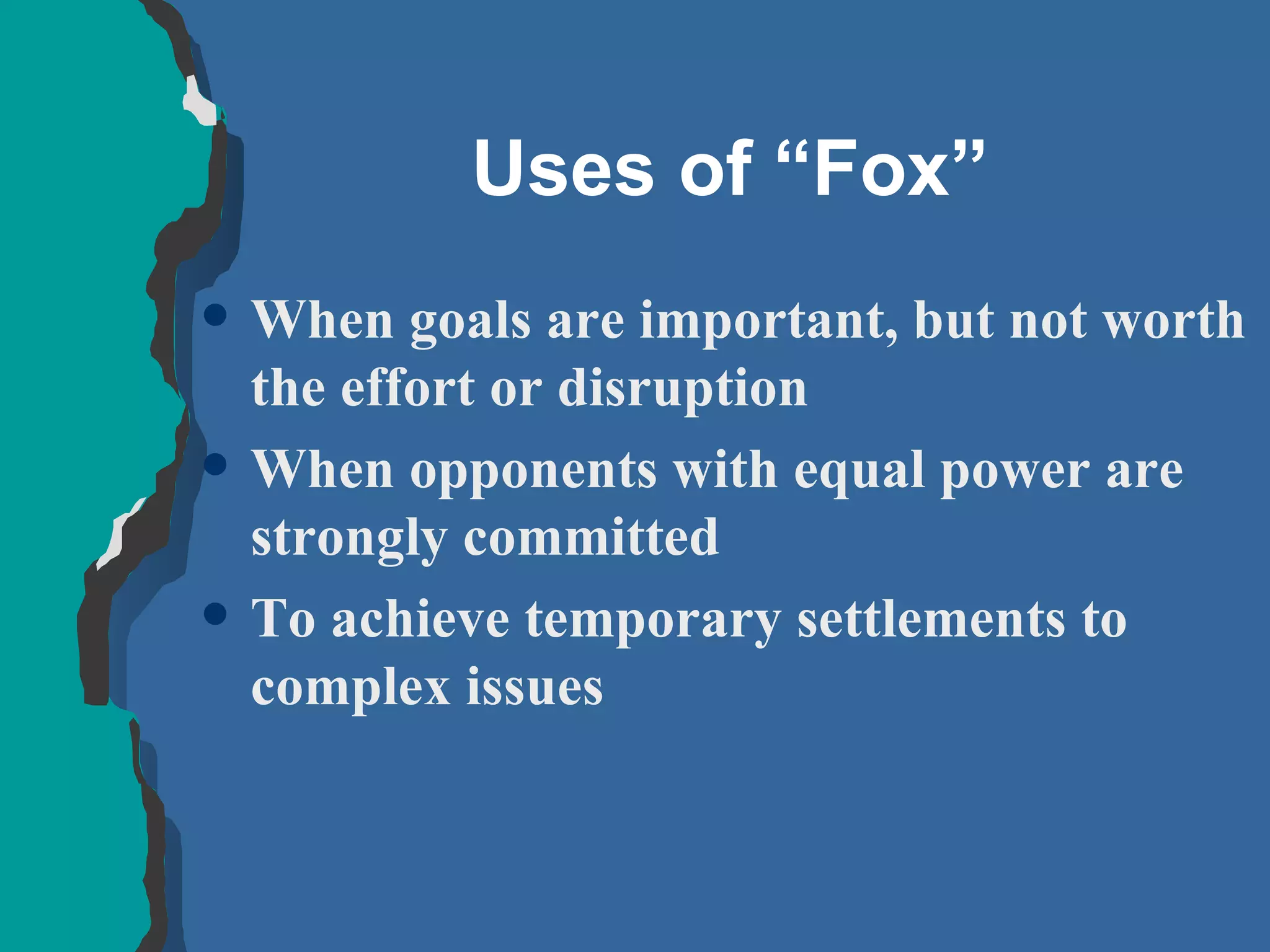
Uses of “Fox” When goals are important, but not worth the effort or disruption  When opponents with equal power are strongly committed  To achieve temporary settlements to complex issues
Uses of “Owl” To find an integrative solution when both sides are too important to compromise When your objective is to learn To work through hard feelings which have been interfering with a relationship
Second Trick for Conflict Management
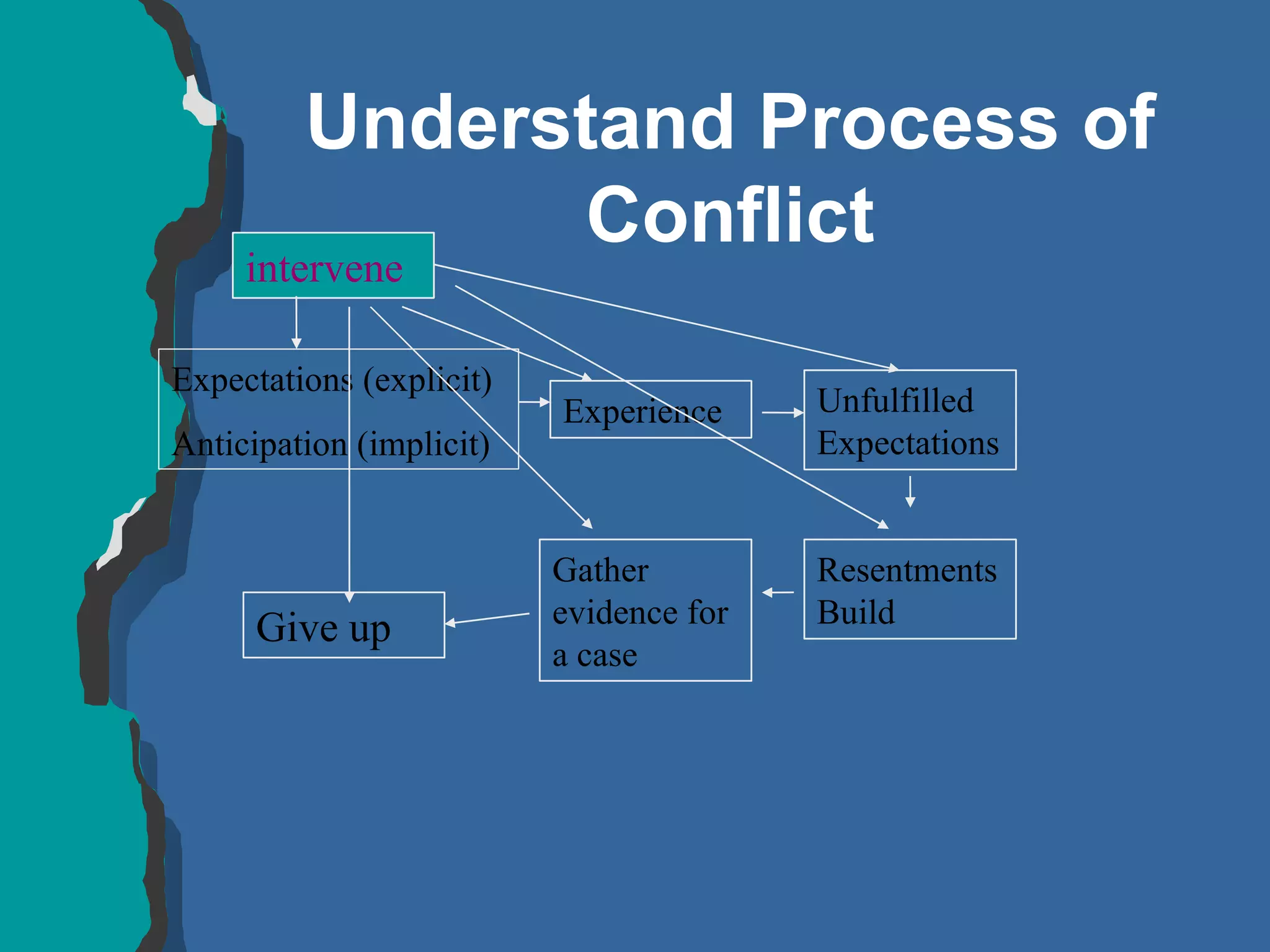
Understand Process of Conflict Expectations (explicit) Anticipation (implicit) Experience Unfulfilled Expectations Resentments Build Gather evidence for a case Give up intervene
Why  & how do we get in conflict situations?
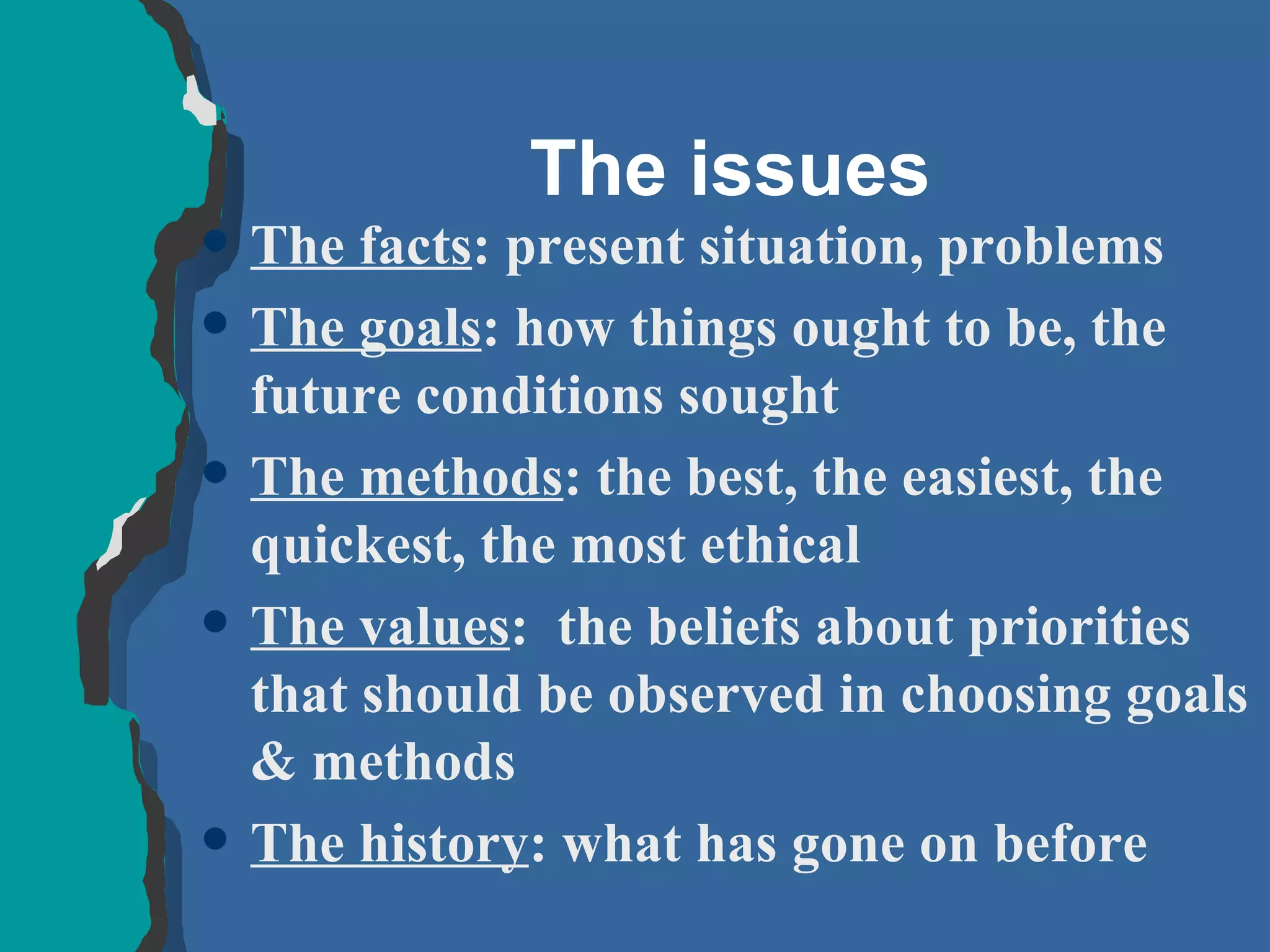
The issues The facts : present situation, problems The goals : how things ought to be, the future conditions sought The methods : the best, the easiest, the quickest, the most ethical The values :  the beliefs about priorities that should be observed in choosing goals & methods The history : what has gone on before
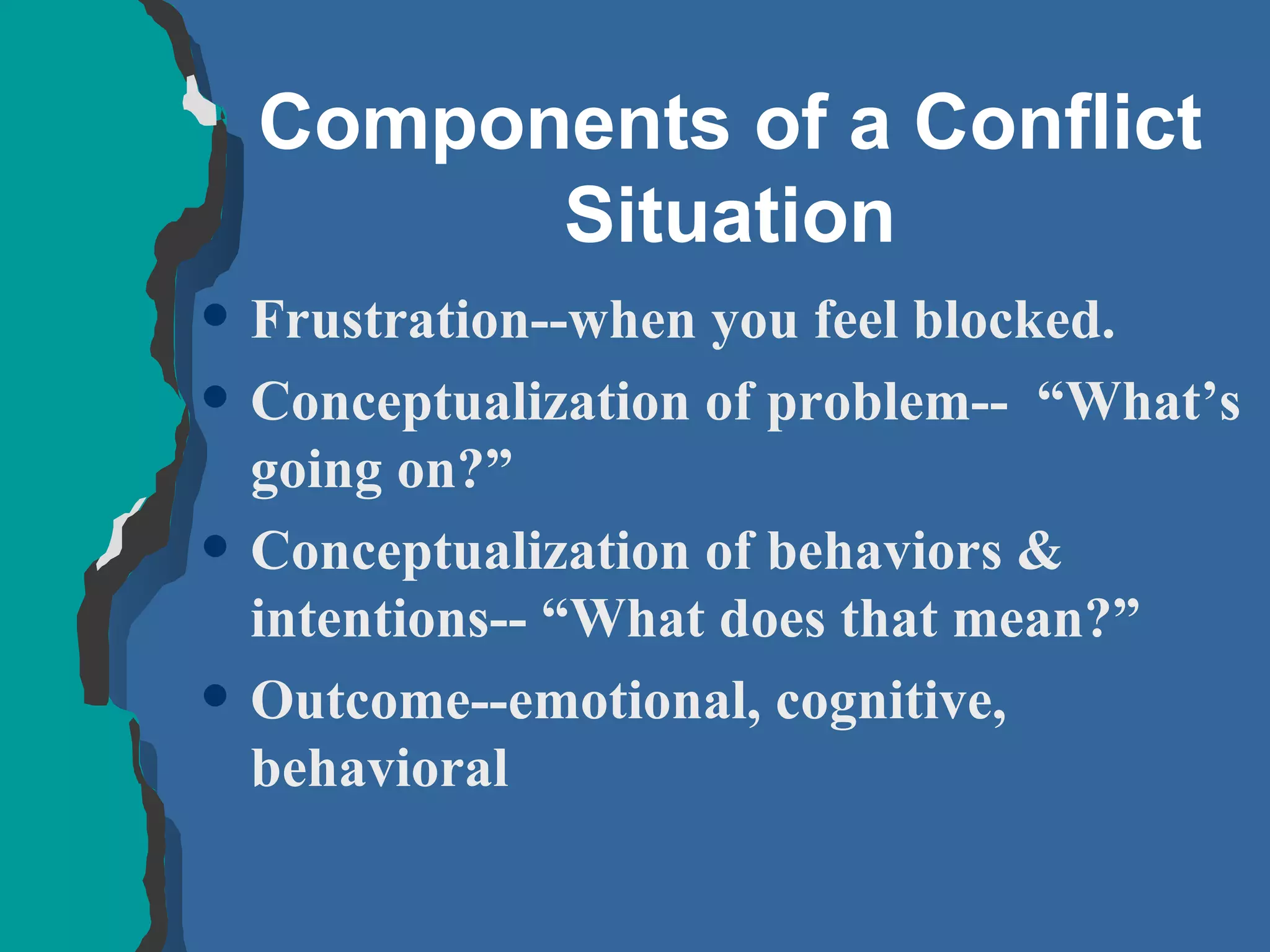
Components of a Conflict Situation Frustration--when you feel blocked.  Conceptualization of problem--  “What’s going on?”  Conceptualization of behaviors & intentions-- “What does that mean?” Outcome--emotional, cognitive, behavioral
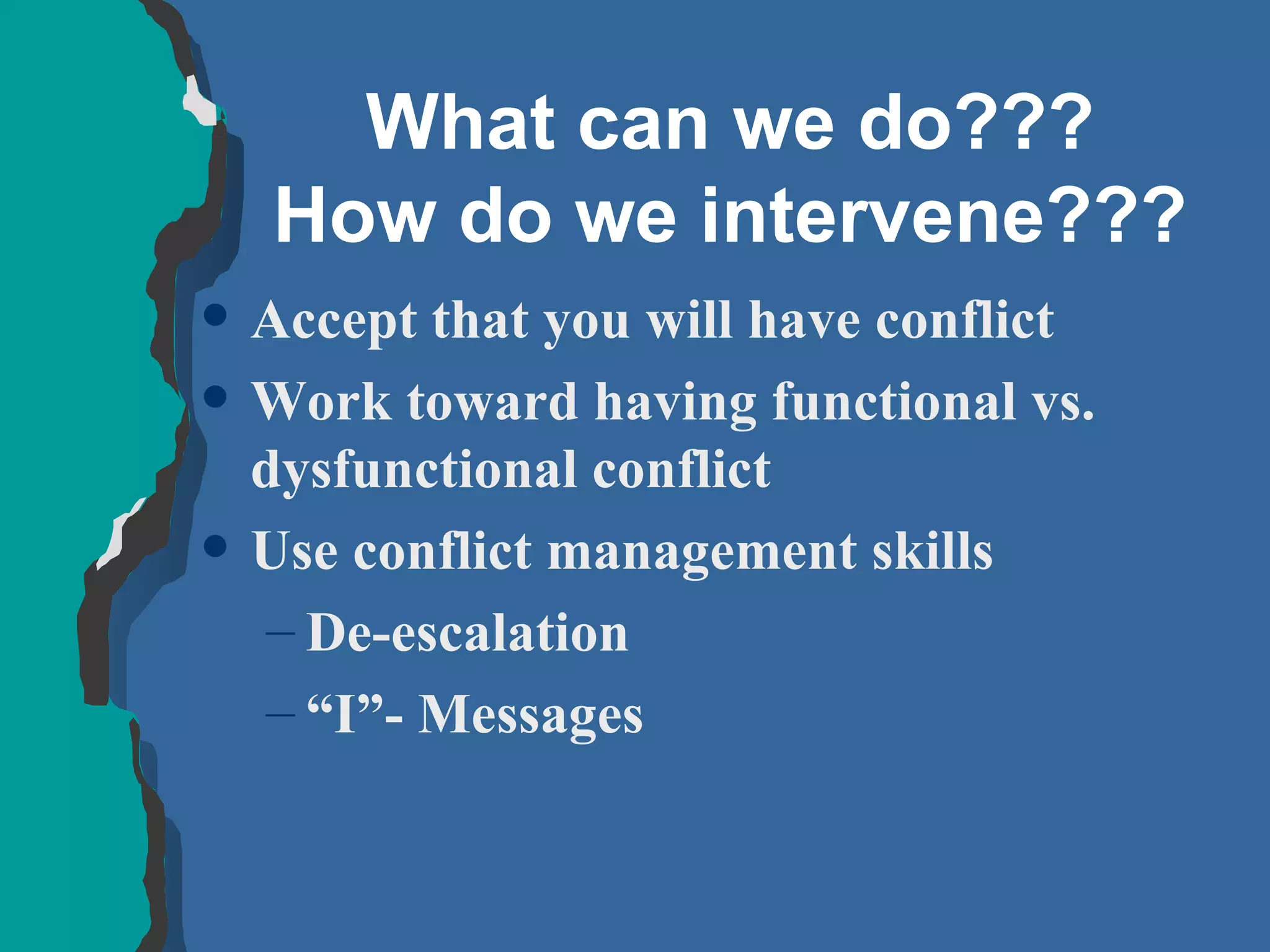
What can we do??? How do we intervene??? Accept that you will have conflict Work toward having functional vs. dysfunctional conflict Use conflict management skills De-escalation “ I”- Messages
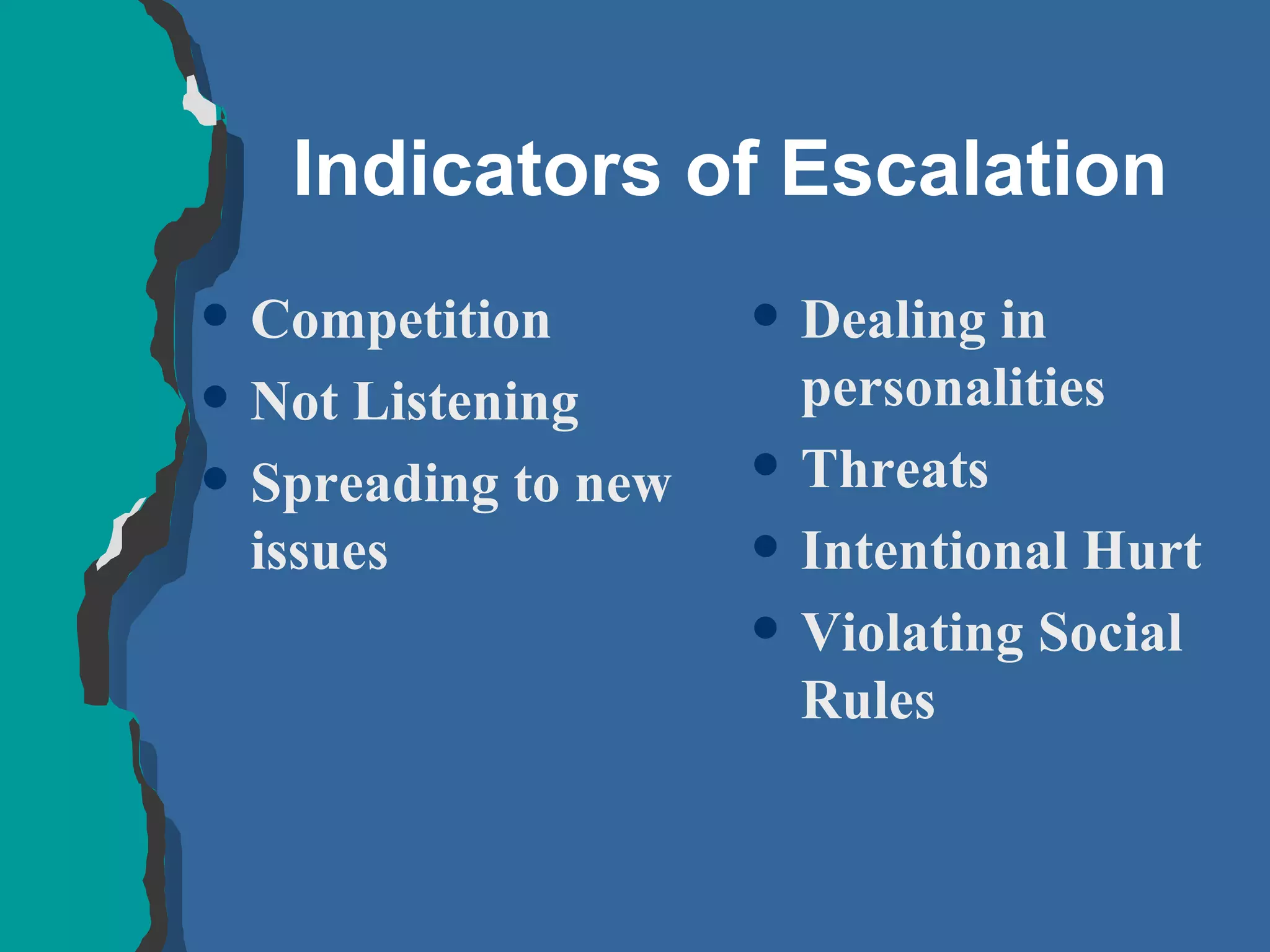
Indicators of Escalation Competition Not Listening Spreading to new issues Dealing in personalities Threats Intentional Hurt Violating Social Rules
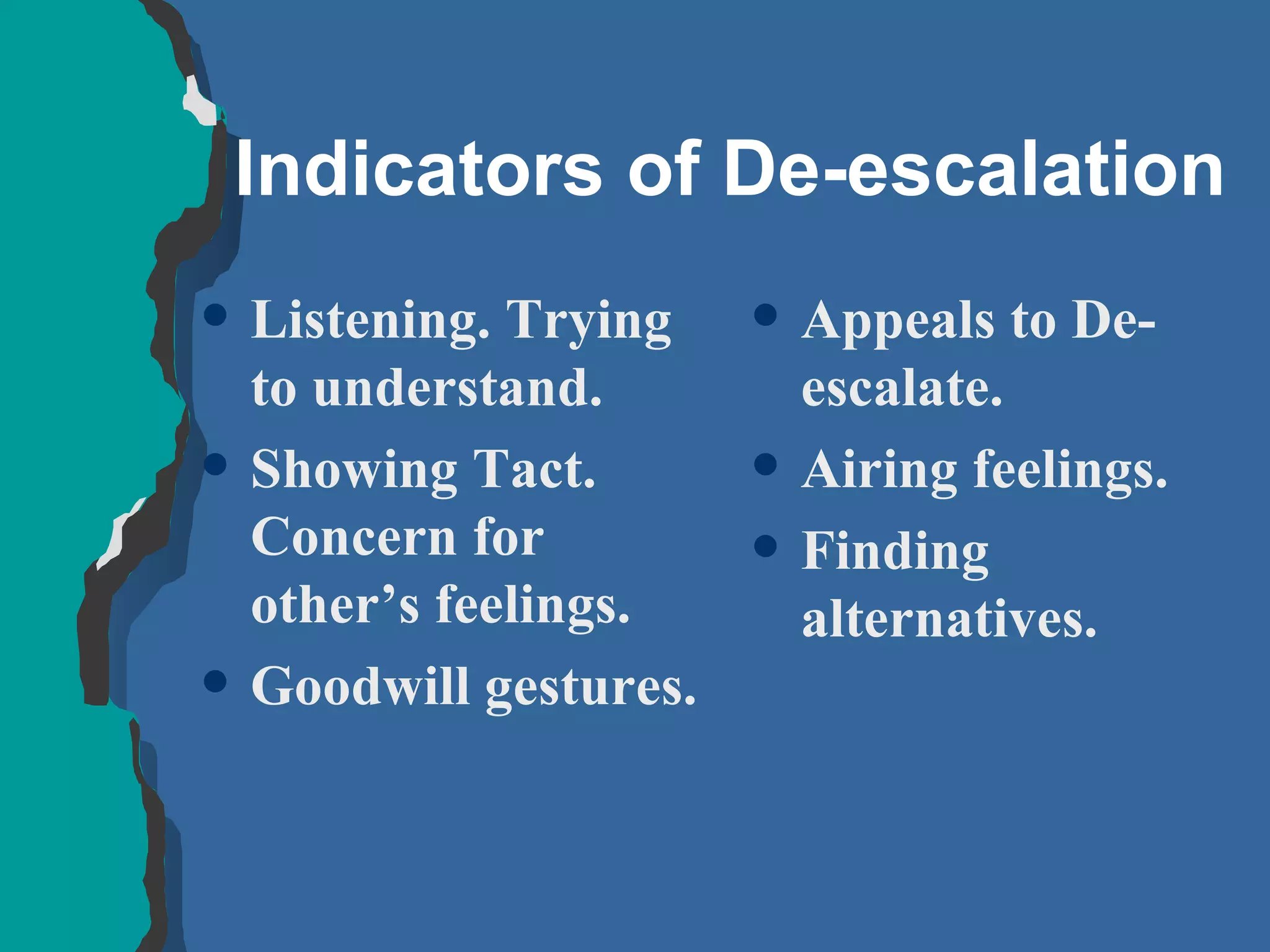
Indicators of De-escalation Listening. Trying to understand. Showing Tact.  Concern for other’s feelings. Goodwill gestures. Appeals to De-escalate. Airing feelings. Finding alternatives.
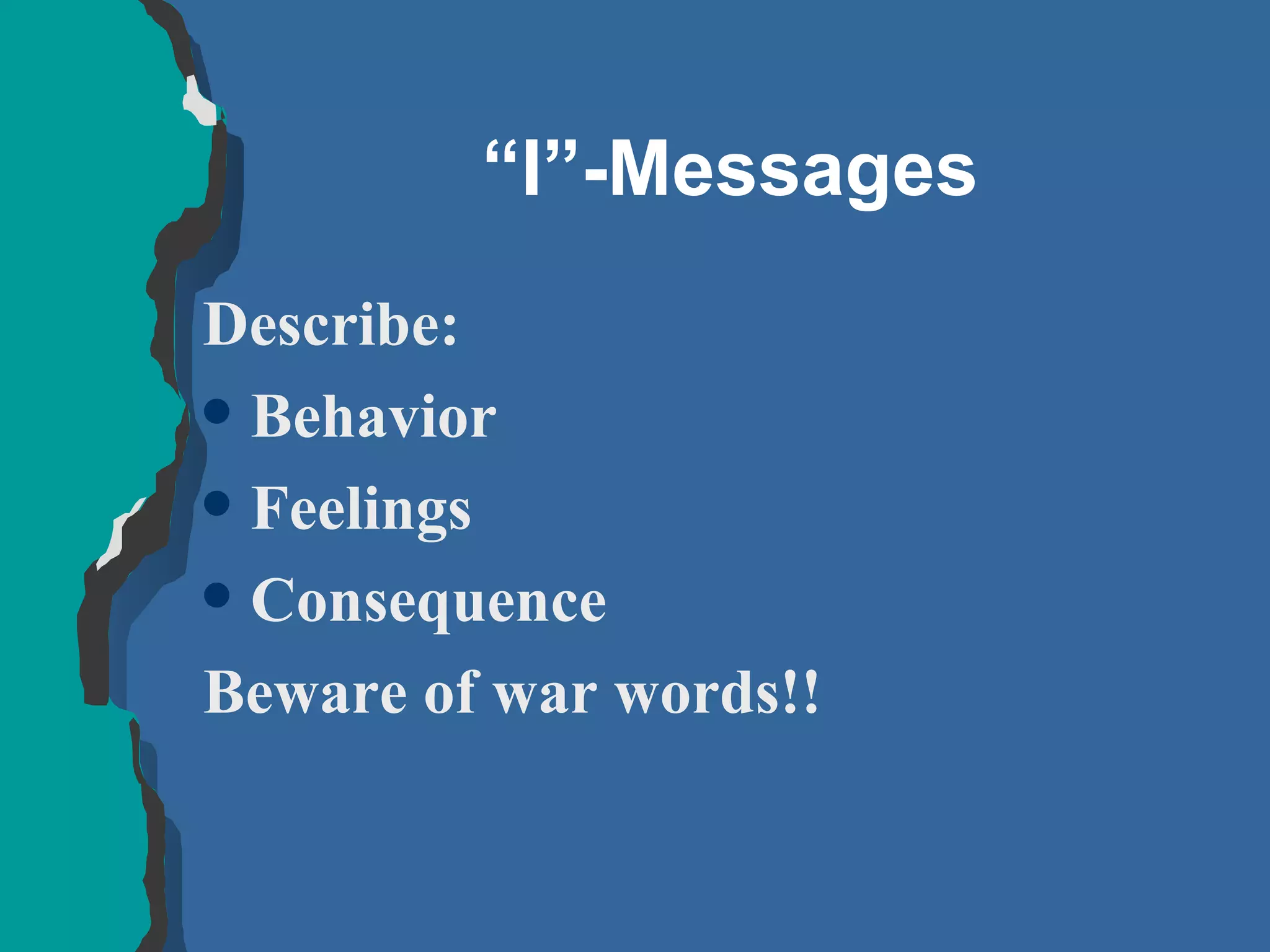
“ I”-Messages Describe: Behavior Feelings Consequence Beware of war words!!
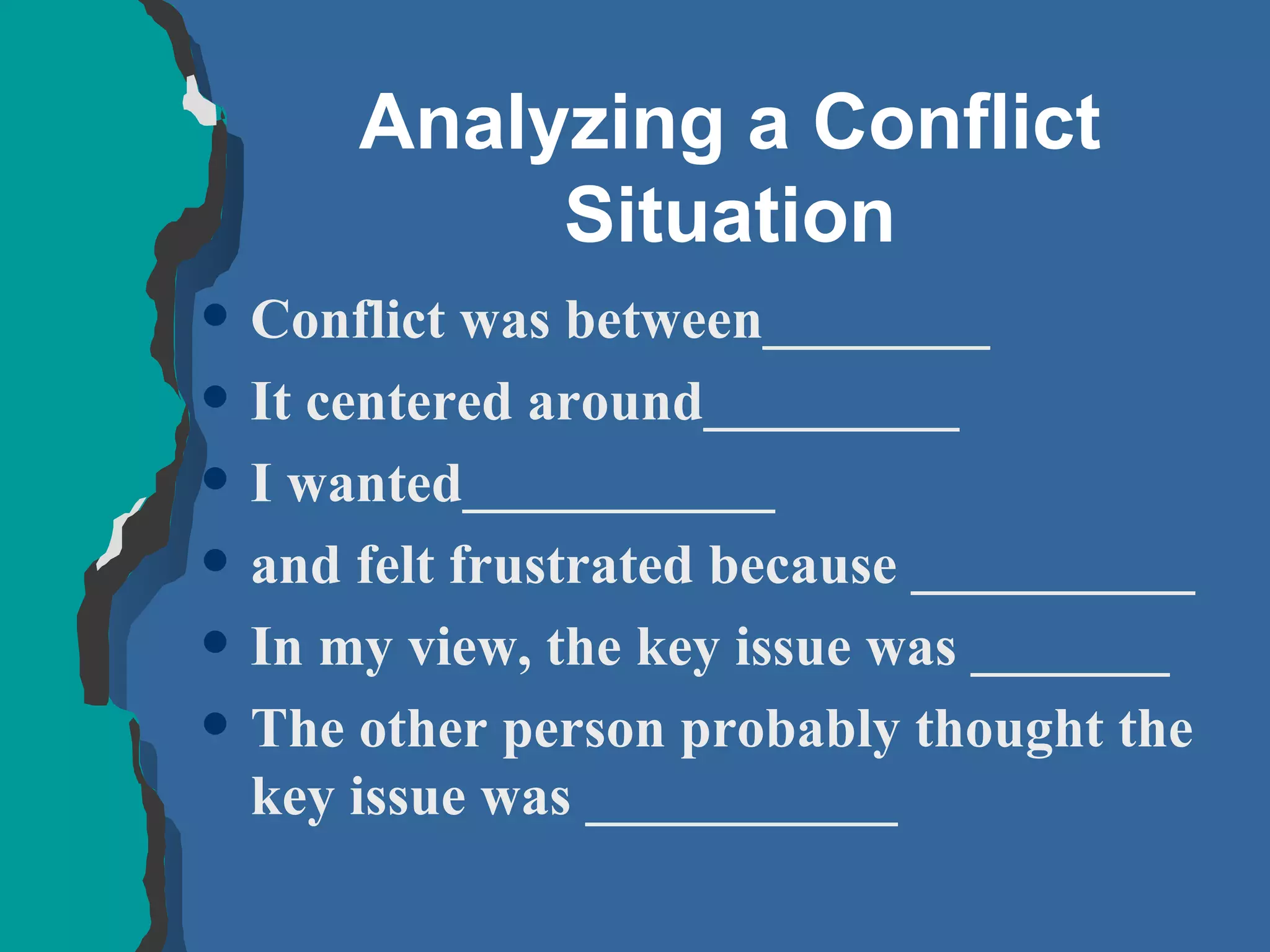
Analyzing a Conflict Situation Conflict was between________ It centered around_________ I wanted___________ and felt frustrated because __________ In my view, the key issue was _______ The other person probably thought the key issue was ___________
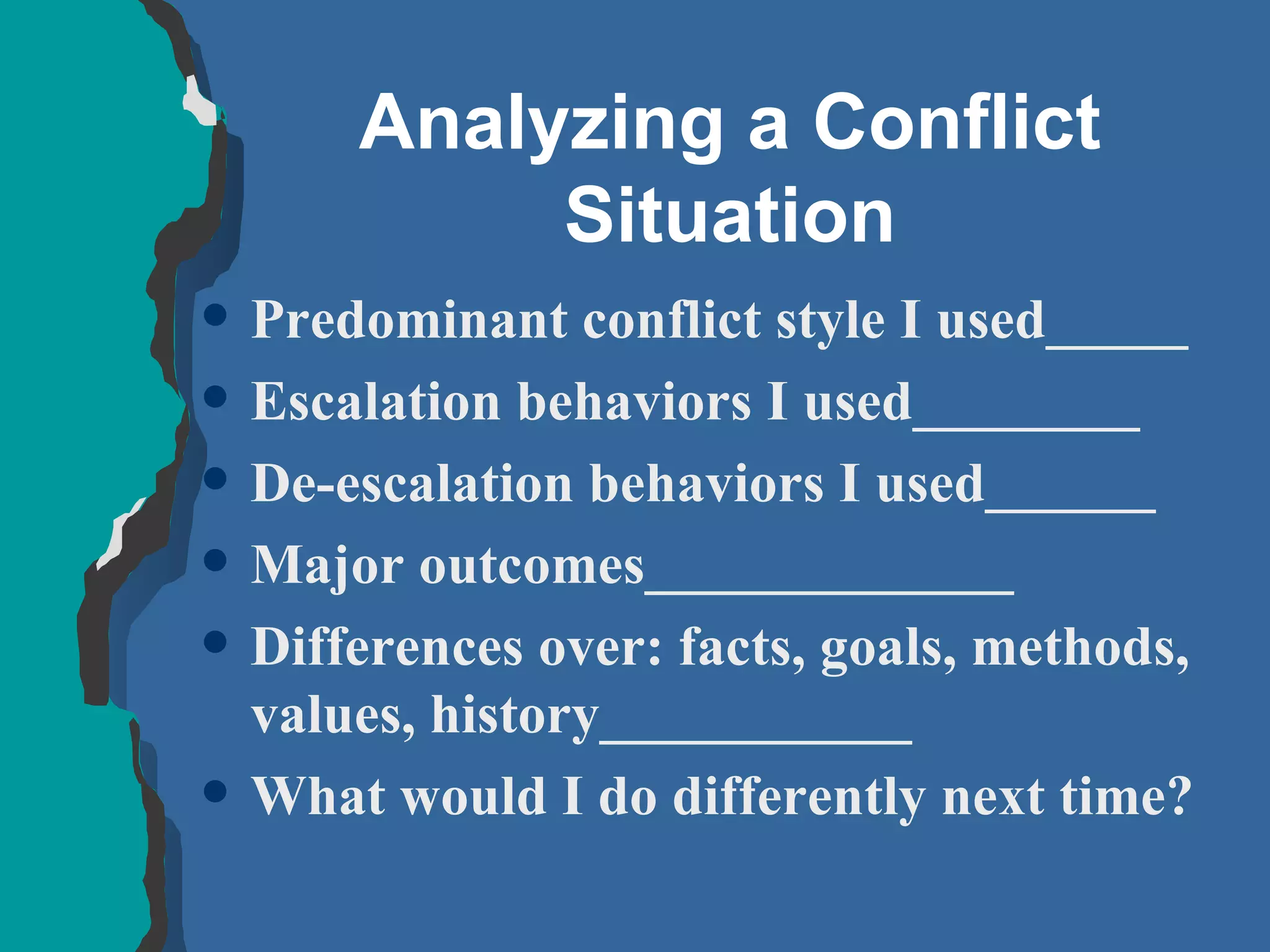
Analyzing a Conflict Situation Predominant conflict style I used_____ Escalation behaviors I used________ De-escalation behaviors I used______ Major outcomes_____________ Differences over: facts, goals, methods, values, history___________ What would I do differently next time?

Conflict Management Compre

  • 1.
  • 2.
  • 3.
    A Disagreement BetweenTwo or More Parties Who Perceive They Have Incompatible Concerns
  • 4.
    Conflict Why dowe do it?
  • 5.
    What we know….Conflict is a naturally occurring phenomenon for human beings People do not get involved in conflict situations unless they have some stake in the relationship or outcome or both
  • 6.
  • 7.
  • 8.
    Study of AmericanManagement association 24% of executive time is on CM Conflict management ability is a key competency The topic gains great importance
  • 9.
    Causes Misunderstanding Personalityclashes Value and Goal difference Substandard performance Difference over method Responsibility issues Lack of cooperation
  • 10.
    Causes Authority issuesFrustration and irritability Competition for limited resources Non-compliance with rules and responsibilities
  • 11.
    What we know….The costs of unmanaged conflict can be high, but the gains from using differences creatively can also be great Conflict can either be functional or dysfunctional
  • 12.
    Dysfunctional Diverts energyfrom real task Destroys morale Polarize individuals and groups Deepens differences Obstruct cooperative action Produce irresponsible actions Create suspision and di
  • 13.
    Functional Opens upissue in a confronting manner Develops clarification of an issue Improve problem solving quality Increase involvement Improve communication Initiate growth Strengthens a relationship Increase productivity
  • 14.
    First Trick forConflict Management
  • 15.
  • 16.
    What feelings doyou have when you are in conflict situation?
  • 17.
    Common Feelings Associatedwith Conflict Anger Frustration Fear Excitement
  • 18.
    Common Actions Associatedwith Conflict Fight Flight
  • 19.
    Your History withConflict How was conflict perceived in your family/community? How did your family/community deal with conflict?
  • 20.
    You can decide...Understanding the impact of your family and community on your ideas about conflict can allow you to make decisions about how you deal with conflict now We are our history We make our history
  • 21.
    What is yourconflict style?
  • 22.
    Conflict Styles RE L A T I O N S H I P High Importance Low Importance High Importance GOALS 3 5 1 2 4
  • 23.
    R E LA T I O N S H I P High Importance Low Importance High Importance GOALS 3 5 1--Turtle 2 4 Conflict Styles
  • 24.
    Turtle--Withdrawing Avoid conflictas all costs Give up their personal goals & relationships Believe it is hopeless to try to resolve conflict Feel helpless Easier to withdraw than face conflict
  • 25.
    Conflict Styles RE L A T I O N S H I P High Importance Low Importance High Importance GOALS 3 5 1 2--Shark 4
  • 26.
    Shark--Forcing Try tooverpower opponents by forcing them to accept their solutions Not concerned with needs of others Do not care about how others perceive them Believe in winning and losing Winning gives them a sense of pride Try to win by attacking, overwhelming, & intimidating others
  • 27.
    Conflict Styles RE L A T I O N S H I P High Importance Low Importance High Importance GOALS 3--Teddy Bear 5 1 2 4
  • 28.
    Teddy Bear--Smoothing Relationshipsmost important, goals of little importance Want to be accepted and liked by other people Believe conflict should be avoided in favor of harmony Fearful that conflict will hurt someone
  • 29.
    R E LA T I O N S H I P High Importance Low Importance High Importance GOALS 3 5 1 2 4--Fox Conflict Styles
  • 30.
    Fox--Compromising Moderately concernedwith relationships and goals Willing to sacrifice part of their goals and relationships in order to find agreement for the common good
  • 31.
    Conflict Styles RE L A T I O N S H I P High Importance Low Importance High Importance GOALS 3 5--Owl 1 2 4
  • 32.
    Owl--Confronting Value theirown goals and relationships View conflicts as problems to be solved See conflicts as improving relationships by reducing tension Seek solutions that satisfy both parties Not satisfied until solution is found and tension is reduced
  • 33.
  • 34.
    Some styles aremore useful than others when...
  • 35.
    Uses of the“Turtle” When issue is trivial When potential damage of confrontation outweighs the benefits To let people cool down & reduce tension When gathering information When others can resolve the conflict more effectively
  • 36.
    Uses of the“Shark” When quick, decisive action is vital On important issues where unpopular actions need to be implemented To protect yourself against people who take advantage of noncompetitive behavior
  • 37.
    Uses of “TeddyBear” When you realize you are wrong To learn from others When issue is more important to the other person than to yourself As a goodwill gesture to maintain cooperative relationship To allow others to experiment
  • 38.
    Uses of “Fox”When goals are important, but not worth the effort or disruption When opponents with equal power are strongly committed To achieve temporary settlements to complex issues
  • 39.
    Uses of “Owl”To find an integrative solution when both sides are too important to compromise When your objective is to learn To work through hard feelings which have been interfering with a relationship
  • 40.
    Second Trick forConflict Management
  • 41.
    Understand Process ofConflict Expectations (explicit) Anticipation (implicit) Experience Unfulfilled Expectations Resentments Build Gather evidence for a case Give up intervene
  • 42.
    Why &how do we get in conflict situations?
  • 43.
    The issues Thefacts : present situation, problems The goals : how things ought to be, the future conditions sought The methods : the best, the easiest, the quickest, the most ethical The values : the beliefs about priorities that should be observed in choosing goals & methods The history : what has gone on before
  • 44.
    Components of aConflict Situation Frustration--when you feel blocked. Conceptualization of problem-- “What’s going on?” Conceptualization of behaviors & intentions-- “What does that mean?” Outcome--emotional, cognitive, behavioral
  • 45.
    What can wedo??? How do we intervene??? Accept that you will have conflict Work toward having functional vs. dysfunctional conflict Use conflict management skills De-escalation “ I”- Messages
  • 46.
    Indicators of EscalationCompetition Not Listening Spreading to new issues Dealing in personalities Threats Intentional Hurt Violating Social Rules
  • 47.
    Indicators of De-escalationListening. Trying to understand. Showing Tact. Concern for other’s feelings. Goodwill gestures. Appeals to De-escalate. Airing feelings. Finding alternatives.
  • 48.
    “ I”-Messages Describe:Behavior Feelings Consequence Beware of war words!!
  • 49.
    Analyzing a ConflictSituation Conflict was between________ It centered around_________ I wanted___________ and felt frustrated because __________ In my view, the key issue was _______ The other person probably thought the key issue was ___________
  • 50.
    Analyzing a ConflictSituation Predominant conflict style I used_____ Escalation behaviors I used________ De-escalation behaviors I used______ Major outcomes_____________ Differences over: facts, goals, methods, values, history___________ What would I do differently next time?