Effective Facilitation in
     Synchronous
    Environments
      (Session 1 of 2)


                            Michael Coghlan
                            NewLearning
                            21/3/13
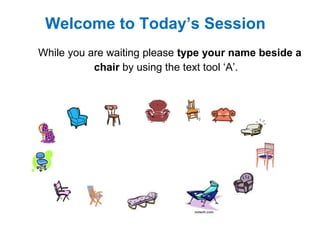
Welcome to Today’s Session
While you are waiting please type your name beside a
           chair by using the text tool „A‟.
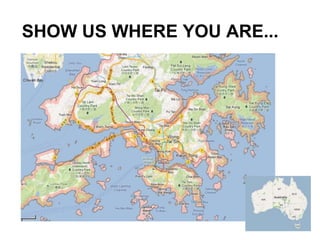
SHOW US WHERE YOU ARE...
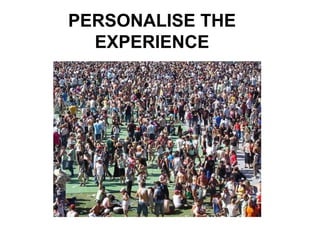
PERSONALISE THE
  EXPERIENCE
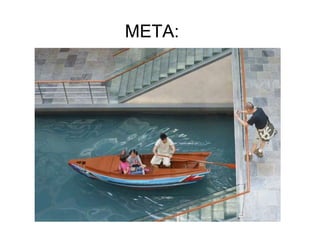
META:
Establish „Modus Operandi‟
(Ground Rules) for the session

•   Questions/Comments: any time?
    Throughout session? At the end? In
    text chat? Via voice? Using
    the hands-up tool?
•   How will you handle the
    text chat? Will you use a co-
    moderator?
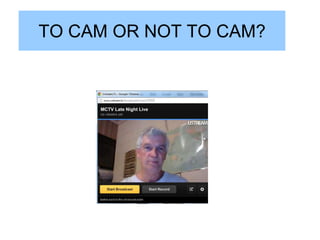
TO CAM OR NOT TO CAM?
USE OF WEBCAMS

•   Use your webcam (or at least show a
    picture) briefly at the start of the session as
    part of the introduction
•   Have students do the same if they have
    them , if they want to, and if bandwidth
    allows
•   I recommend you then turn off webcams to
    conserve bandwidth, but it is a personal
    choice.
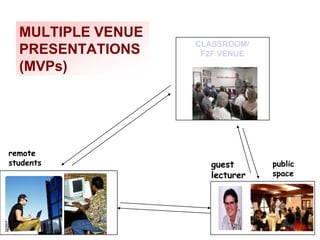
MULTIPLE VENUE
                   CLASSROOM/
  PRESENTATIONS     F2F VENUE
  (MVPs)


remote
students             guest      public
                     lecturer   space
Quiz – Multiple Choice
Are you:

A) In your office?
B) In a computer suite?
C) At home?
D) Other?
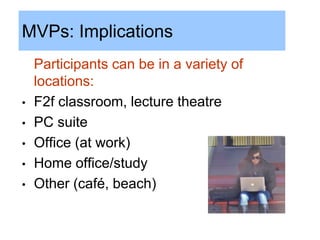
MVPs: Implications
    Participants can be in a variety of
    locations:
•   F2f classroom, lecture theatre
•   PC suite
•   Office (at work)
•   Home office/study
•   Other (café, beach)
WHAT ARE THE CHARACTERISTICS
    OF A GOOD TEACHER?
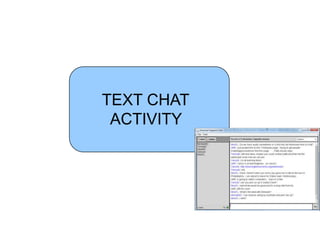
TEXT CHAT
 ACTIVITY
HOW TO IMPROVE THE HKUST
STUDENT EXPERIENCE...
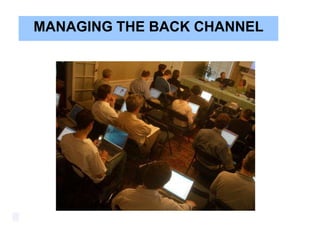
MANAGING THE BACK CHANNEL
Impact for Participants
Advantages        Disadvantages
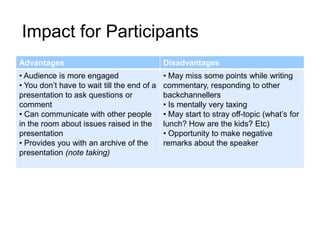
Impact for Participants
Advantages                                   Disadvantages
• Audience is more engaged                   • May miss some points while writing
• You don‟t have to wait till the end of a   commentary, responding to other
presentation to ask questions or             backchannellers
comment                                      • Is mentally very taxing
• Can communicate with other people          • May start to stray off-topic (what‟s for
in the room about issues raised in the       lunch? How are the kids? Etc)
presentation                                 • Opportunity to make negative
• Provides you with an archive of the        remarks about the speaker
presentation (note taking)
Impact for Speaker/Presenter
Advantages       Disadvantages
Impact for Speaker/Presenter
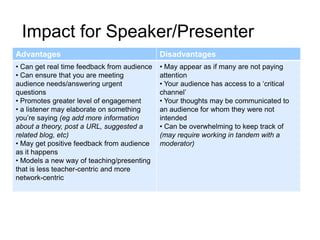
Advantages                                   Disadvantages
• Can get real time feedback from audience   • May appear as if many are not paying
• Can ensure that you are meeting            attention
audience needs/answering urgent              • Your audience has access to a „critical
questions                                    channel‟
• Promotes greater level of engagement       • Your thoughts may be communicated to
• a listener may elaborate on something      an audience for whom they were not
you‟re saying (eg add more information       intended
about a theory, post a URL, suggested a      • Can be overwhelming to keep track of
related blog, etc)                           (may require working in tandem with a
• May get positive feedback from audience    moderator)
as it happens
• Models a new way of teaching/presenting
that is less teacher-centric and more
network-centric
QUICK POLL –
ENCOURAGE
STUDENTS TO USE
TEXT CHAT?
YES OR NO?
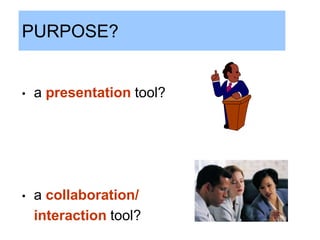
PURPOSE?


•   a presentation tool?


•   a collaboration/
    interaction tool?
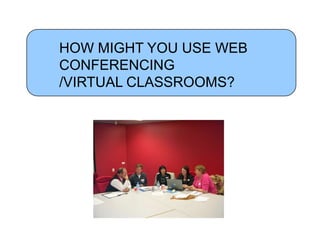
HOW MIGHT YOU USE WEB
CONFERENCING
/VIRTUAL CLASSROOMS?
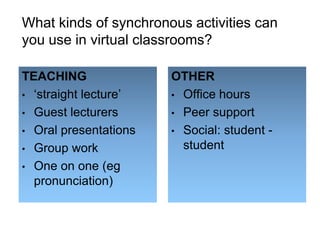
What kinds of synchronous activities can
you use in virtual classrooms?

TEACHING               OTHER
• „straight lecture‟   • Office hours
• Guest lecturers      • Peer support
• Oral presentations   • Social: student -
• Group work             student
• One on one (eg
  pronunciation)
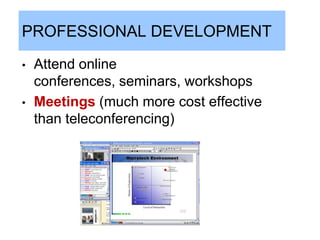
PROFESSIONAL DEVELOPMENT

•   Attend online
    conferences, seminars, workshops
•   Meetings (much more cost effective
    than teleconferencing)
SWOT ANALYSIS
ADVANTAGES/
DISADVANTAGES?
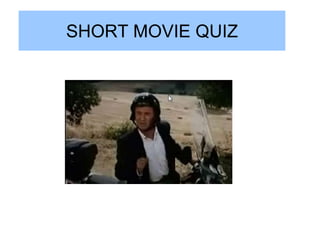
SHORT MOVIE QUIZ
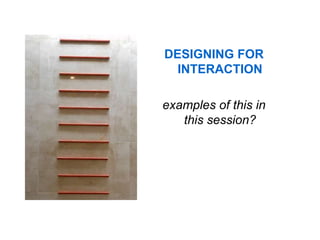
DESIGNING FOR
  INTERACTION

examples of this in
   this session?
RESOURCE


See the wiki at http://synchfacilitation.wikispaces.com/
Next Session (March 28th)

•   Synch v asynch: resolving the tension
•   The synchronous compact
•   More on Designing for interactivity
Contact Details

   MICHAEL COGHLAN
 http://michaelcoghlan.net
e: michaelc@chariot.net.au
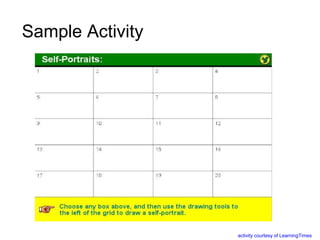
Sample Activity


                  activity courtesy of LearningTimes
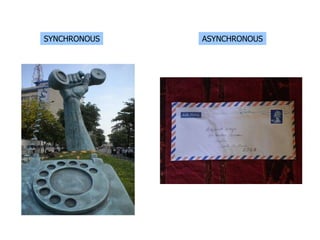
SYNCHRONOUS   ASYNCHRONOUS
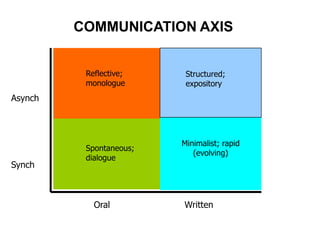
COMMUNICATION AXIS


          Reflective;     Structured;
          monologue       expository
Asynch


                         Minimalist; rapid
          Spontaneous;
                            (evolving)
          dialogue
Synch


            Oral         Written
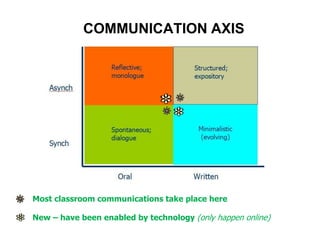
COMMUNICATION AXIS


Most classroom communications take place here

New – have been enabled by technology (only happen online)
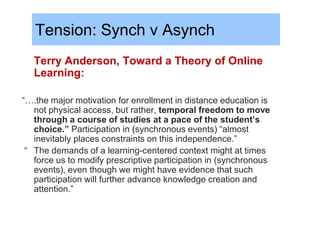
Tension: Synch v Asynch
   Terry Anderson, Toward a Theory of Online
   Learning:

“….the major motivation for enrollment in distance education is
   not physical access, but rather, temporal freedom to move
   through a course of studies at a pace of the student’s
   choice.” Participation in (synchronous events) “almost
   inevitably places constraints on this independence.”
 “ The demands of a learning-centered context might at times
   force us to modify prescriptive participation in (synchronous
   events), even though we might have evidence that such
   participation will further advance knowledge creation and
   attention.”
RESOLVING THE TENSION BETWEEN ASYNCHRONOUS AND
                SYNCHRONOUS APPROACHES


•    don‟t make synch sessions compulsory; use synch for
     those who want it
•    use tools that can record or archive the sessions for
     later retrieval
•    Use in conjunction with asynchronous activity
•    don‟t use synchronous for whole class instruction
•    FLIPPED CLASSROOM

Effective Facilitation in Synchronous Environments pt 1

  • 1.
    Effective Facilitation in Synchronous Environments (Session 1 of 2) Michael Coghlan NewLearning 21/3/13
  • 2.
    Welcome to Today’sSession While you are waiting please type your name beside a chair by using the text tool „A‟.
  • 4.
    SHOW US WHEREYOU ARE...
  • 5.
    PERSONALISE THE EXPERIENCE
  • 6.
  • 7.
    Establish „Modus Operandi‟ (GroundRules) for the session • Questions/Comments: any time? Throughout session? At the end? In text chat? Via voice? Using the hands-up tool? • How will you handle the text chat? Will you use a co- moderator?
  • 8.
    TO CAM ORNOT TO CAM?
  • 9.
    USE OF WEBCAMS • Use your webcam (or at least show a picture) briefly at the start of the session as part of the introduction • Have students do the same if they have them , if they want to, and if bandwidth allows • I recommend you then turn off webcams to conserve bandwidth, but it is a personal choice.
  • 10.
    MULTIPLE VENUE CLASSROOM/ PRESENTATIONS F2F VENUE (MVPs) remote students guest public lecturer space
  • 11.
    Quiz – MultipleChoice Are you: A) In your office? B) In a computer suite? C) At home? D) Other?
  • 12.
    MVPs: Implications Participants can be in a variety of locations: • F2f classroom, lecture theatre • PC suite • Office (at work) • Home office/study • Other (café, beach)
  • 13.
    WHAT ARE THECHARACTERISTICS OF A GOOD TEACHER?
  • 14.
  • 15.
    HOW TO IMPROVETHE HKUST STUDENT EXPERIENCE...
  • 16.
  • 17.
  • 18.
    Impact for Participants Advantages Disadvantages • Audience is more engaged • May miss some points while writing • You don‟t have to wait till the end of a commentary, responding to other presentation to ask questions or backchannellers comment • Is mentally very taxing • Can communicate with other people • May start to stray off-topic (what‟s for in the room about issues raised in the lunch? How are the kids? Etc) presentation • Opportunity to make negative • Provides you with an archive of the remarks about the speaker presentation (note taking)
  • 19.
  • 20.
    Impact for Speaker/Presenter Advantages Disadvantages • Can get real time feedback from audience • May appear as if many are not paying • Can ensure that you are meeting attention audience needs/answering urgent • Your audience has access to a „critical questions channel‟ • Promotes greater level of engagement • Your thoughts may be communicated to • a listener may elaborate on something an audience for whom they were not you‟re saying (eg add more information intended about a theory, post a URL, suggested a • Can be overwhelming to keep track of related blog, etc) (may require working in tandem with a • May get positive feedback from audience moderator) as it happens • Models a new way of teaching/presenting that is less teacher-centric and more network-centric
  • 21.
    QUICK POLL – ENCOURAGE STUDENTSTO USE TEXT CHAT? YES OR NO?
  • 22.
    PURPOSE? • a presentation tool? • a collaboration/ interaction tool?
  • 23.
    HOW MIGHT YOUUSE WEB CONFERENCING /VIRTUAL CLASSROOMS?
  • 24.
    What kinds ofsynchronous activities can you use in virtual classrooms? TEACHING OTHER • „straight lecture‟ • Office hours • Guest lecturers • Peer support • Oral presentations • Social: student - • Group work student • One on one (eg pronunciation)
  • 25.
    PROFESSIONAL DEVELOPMENT • Attend online conferences, seminars, workshops • Meetings (much more cost effective than teleconferencing)
  • 26.
  • 27.
  • 28.
  • 29.
    DESIGNING FOR INTERACTION examples of this in this session?
  • 30.
    RESOURCE See the wikiat http://synchfacilitation.wikispaces.com/
  • 32.
    Next Session (March28th) • Synch v asynch: resolving the tension • The synchronous compact • More on Designing for interactivity
  • 33.
    Contact Details MICHAEL COGHLAN http://michaelcoghlan.net e: michaelc@chariot.net.au
  • 34.
    Sample Activity activity courtesy of LearningTimes
  • 35.
    SYNCHRONOUS ASYNCHRONOUS
  • 36.
    COMMUNICATION AXIS Reflective; Structured; monologue expository Asynch Minimalist; rapid Spontaneous; (evolving) dialogue Synch Oral Written
  • 37.
    COMMUNICATION AXIS Most classroomcommunications take place here New – have been enabled by technology (only happen online)
  • 38.
    Tension: Synch vAsynch Terry Anderson, Toward a Theory of Online Learning: “….the major motivation for enrollment in distance education is not physical access, but rather, temporal freedom to move through a course of studies at a pace of the student’s choice.” Participation in (synchronous events) “almost inevitably places constraints on this independence.” “ The demands of a learning-centered context might at times force us to modify prescriptive participation in (synchronous events), even though we might have evidence that such participation will further advance knowledge creation and attention.”
  • 39.
    RESOLVING THE TENSIONBETWEEN ASYNCHRONOUS AND SYNCHRONOUS APPROACHES • don‟t make synch sessions compulsory; use synch for those who want it • use tools that can record or archive the sessions for later retrieval • Use in conjunction with asynchronous activity • don‟t use synchronous for whole class instruction • FLIPPED CLASSROOM