Conflict Management
Q
Why is learning about conflict management relevant?


A
To help develop and facilitate leadership, team building,
performance management, and conflict management skills.
Nature of Conflict

Responding to Conflict

Handling Grievances
Emotional Stress
Nature of Conflict
Responding to Conflict


                         4
Handling Grievances

Emotional Stress
Conflict


Conflict is a form of relating or
interacting where we find ourselves
(either as individuals or groups) under
some sort of perceived threat to our
personal or collective goals.
These goals are usually to do with our
interpersonal wants. These perceived
threats may be either real or imagined
(Condliffe, 1991, p3).
Sources of Conflict
       (Bisno)


                      Project Sources of Conflict
                            (Thamhain & Wilemon)
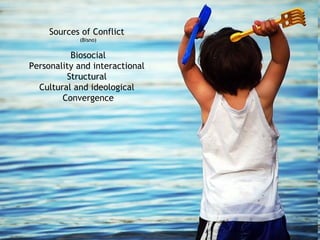
Sources of Conflict
            (Bisno)


          Biosocial
Personality and interactional
         Structural
  Cultural and ideological
        Convergence
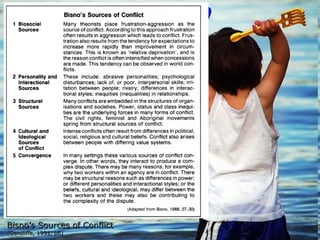
Bisno’s Sources of Conflict
(Condliffe, 1991, p6)
Sources of Conflict
            (Bisno)

          Biosocial
Personality and interactional
         Structural
  Cultural and ideological
        Convergence
Sources of Conflict
            (Bisno)

          Biosocial
Personality and interactional
         Structural
  Cultural and ideological
        Convergence


                                Project Sources of Conflict
                                      (Thamhain & Wilemon)

                                    Project schedules
                                    Project priorities
                                       Workforce
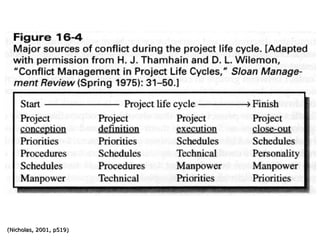
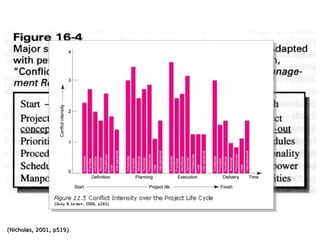
(Nicholas, 2001, p519)
Components of
   Conflict
Components of Conflict


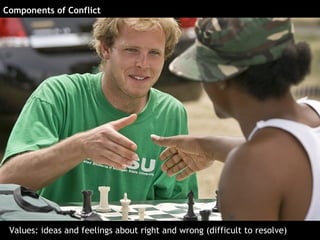
 Values: ideas and feelings about right and wrong (difficult to resolve)
Components of Conflict


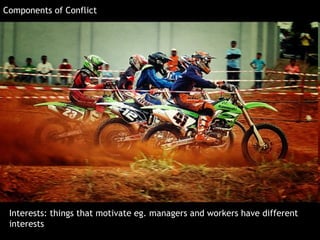
 Interests: things that motivate eg. managers and workers have different
 interests
Components of Conflict


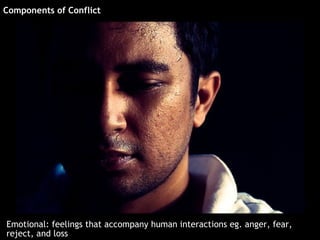
Emotional: feelings that accompany human interactions eg. anger, fear,
reject, and loss
Components of Conflict


             When you have to deal with conflict
             tackle the emotional issues first
                 then address values and interests


 Emotional: feelings that accompany human interactions eg. anger, fear, reject, and loss
 Interests: things that motivate eg. managers and workers have different interests
 Values: ideas and feelings about right and wrong (difficult to resolve)
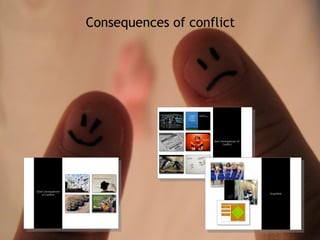
Consequences of conflict
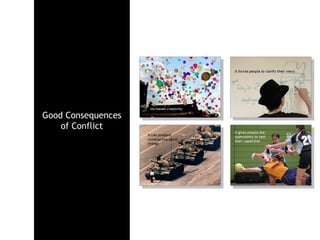
Good Consequences
    of Conflict
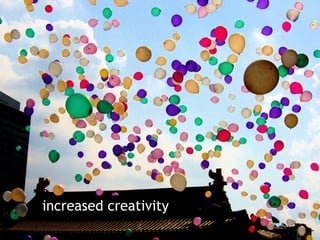
increased creativity
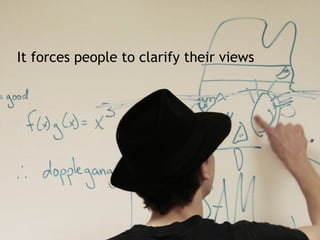
It forces people to clarify their views
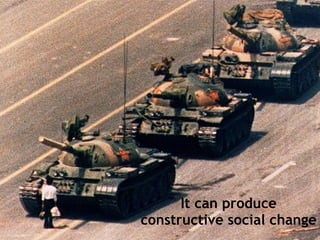
It can produce
constructive social change
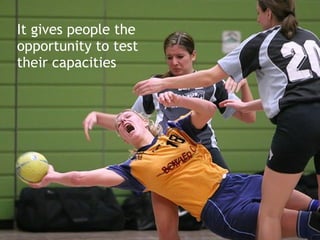
It gives people the
opportunity to test
their capacities
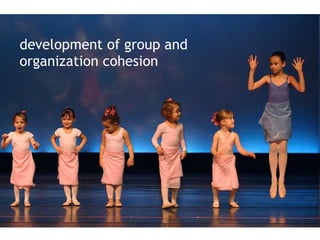
development of group and
organization cohesion
Bad Consequences of
      Conflict
Violence
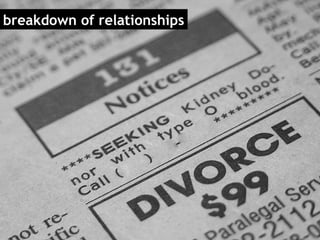
breakdown of relationships
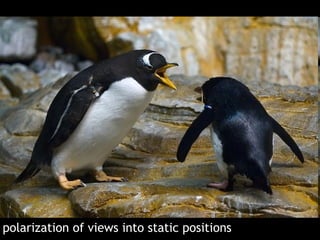
polarization of views into static positions
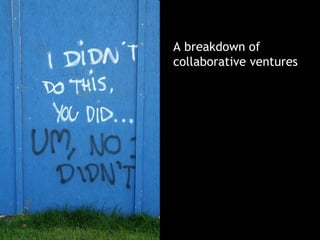
A breakdown of
collaborative ventures
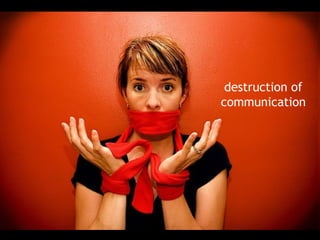
destruction of
communication
Groupthink
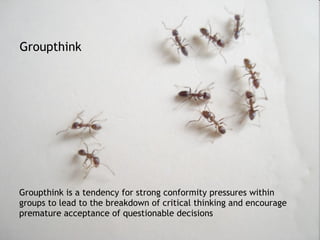
Groupthink


Groupthink is a tendency for strong conformity pressures within
groups to lead to the breakdown of critical thinking and encourage
premature acceptance of questionable decisions
Lack of conflict is a sign of over conformity.
It is unhealthy when there is no conflict
You need
diversity of
  opinion
Consequences of conflict
Nature of Conflict


Responding to Conflict


                         3
Handling Grievances

Emotional Stress
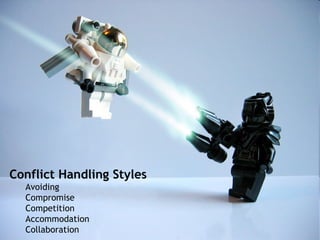
Conflict Handling Styles
  Avoiding
  Compromise
  Competition
  Accommodation
  Collaboration
Which conflict handling
style will you use?
Which conflict handling
style will you use?


Project Managers may have a preferred
style for managing conflict
Which conflict handling
style will you use?


Project Managers may have a preferred
style for managing conflict


You should use different styles depending
on the problem – and get there by using
your ability to read situation
avoiding


 compromise


 competition


accommodation


 collaboration
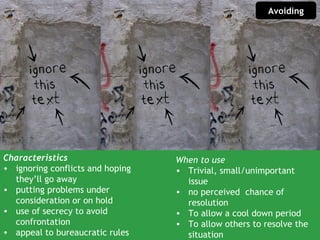
Avoiding


Characteristics                   When to use
• ignoring conflicts and hoping   • Trivial, small/unimportant
  they’ll go away                   issue
• putting problems under          • no perceived chance of
  consideration or on hold          resolution
• use of secrecy to avoid         • To allow a cool down period
  confrontation                   • To allow others to resolve the
• appeal to bureaucratic rules      situation
Compromise


Characteristics             When to use
• negotiation               • goals are important, but not worth effort
• looking for deals and     • opponents with equal power are committed
  trade-offs                  to mutually exclusive goals
• finding satisfactory or   • achieve temporary settlements to issues
  acceptable solutions      • arrive at solutions under time pressure
                            • back-up to collaboration or competition
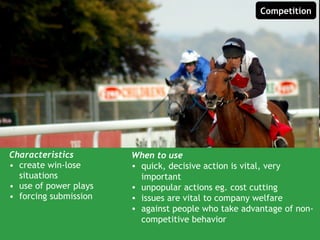
Competition


Characteristics        When to use
• create win-lose      • quick, decisive action is vital, very
  situations             important
• use of power plays   • unpopular actions eg. cost cutting
• forcing submission   • issues are vital to company welfare
                       • against people who take advantage of non-
                         competitive behavior
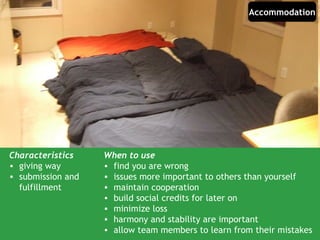
Accommodation


Characteristics    When to use
• giving way       • find you are wrong
• submission and   • issues more important to others than yourself
  fulfillment      • maintain cooperation
                   • build social credits for later on
                   • minimize loss
                   • harmony and stability are important
                   • allow team members to learn from their mistakes
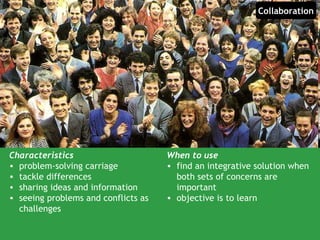
Collaboration


Characteristics                      When to use
• problem-solving carriage           • find an integrative solution when
• tackle differences                   both sets of concerns are
• sharing ideas and information        important
• seeing problems and conflicts as   • objective is to learn
  challenges
2 Methods for Resolving Conflict in a team
• Role Clarification Technique (RAT)
• Intergroup Conflict Resolution
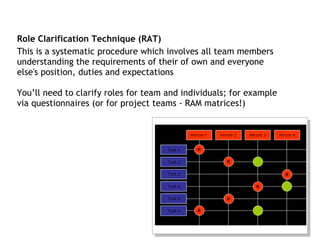
Role Clarification Technique (RAT)
This is a systematic procedure which involves all team members
understanding the requirements of their of own and everyone
else's position, duties and expectations

You’ll need to clarify roles for team and individuals; for example
via questionnaires (or for project teams - RAM matrices!)
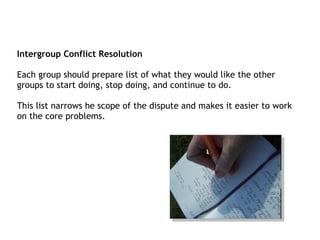
Intergroup Conflict Resolution

Each group should prepare list of what they would like the other
groups to start doing, stop doing, and continue to do.

This list narrows he scope of the dispute and makes it easier to work
on the core problems.
Nature of Conflict

Responding to Conflict


Handling Grievances

Emotional Stress         2
What is a Grievance?
A grievance is any behaviour or action of another member or
members of a team, which has or is likely to have an unreasonable
negative impact on the ability of a team member to undertake their
duties
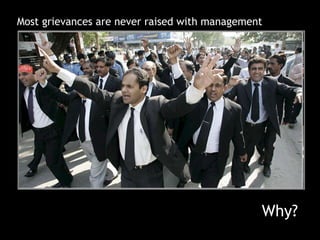
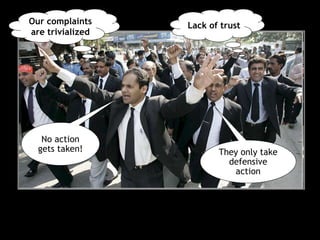
Most grievances are never raised with management


                                               Why?
Our complaints    Lack of trust
are trivialized


   No action
  gets taken!            They only take
                           defensive
                            action
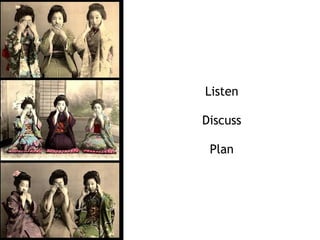
What you should do?
Listen

Discuss

 Plan
Nature of Conflict

Responding to Conflict

Handling Grievances


Emotional Stress         1
Stress
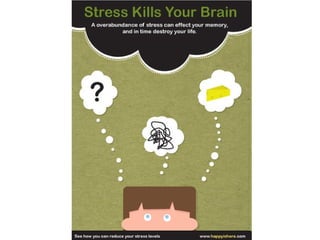
What is Stress?

A pattern of emotional states and physiological reactions occurring
in situations where individuals perceive threats to their important
goals that they feel unable to meet


                                   (Greenberg & Baron, 1993, p257).
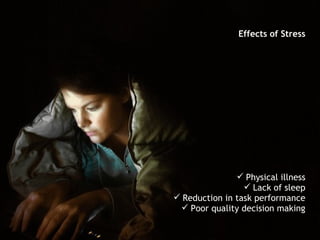
Effects of Stress


                Physical illness
                  Lack of sleep
 Reduction in task performance
  Poor quality decision making
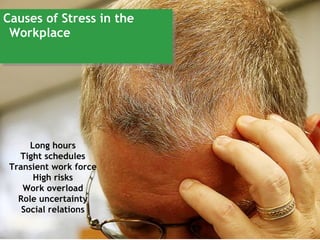
Causes of Stress in the
 Workplace
 Workplace


      Long hours
   Tight schedules
 Transient work force
       High risks
    Work overload
   Role uncertainty
    Social relations
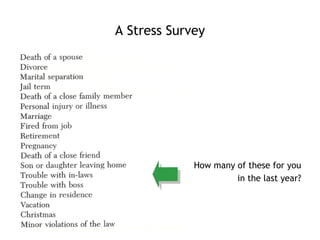
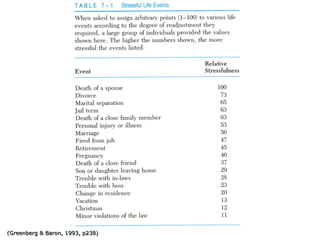
A Stress Survey


             How many of these for you
                      in the last year?
(Greenberg & Baron, 1993, p238)
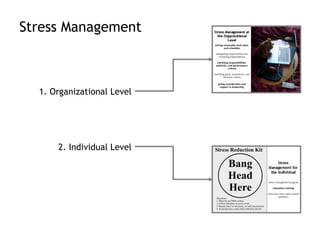
Stress Management


  1. Organizational Level


      2. Individual Level
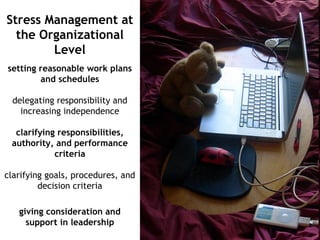
Stress Management at
  the Organizational
        Level
setting reasonable work plans
        and schedules

 delegating responsibility and
   increasing independence

  clarifying responsibilities,
 authority, and performance
            criteria

clarifying goals, procedures, and
         decision criteria

   giving consideration and
     support in leadership
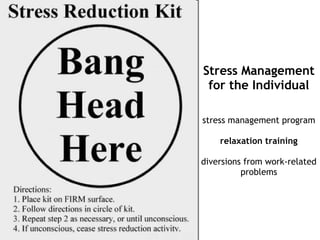
Stress Management
 for the Individual

stress management program

    relaxation training

diversions from work-related
          problems
Review
1. Conflict is the opposition of people or forces that develops into an
   aggressive state or action.
2. Sources of IT project conflict includes; schedules, priorities and
   workforce issues.
3. Conflict can be good and bad.
4. Conflict handling styles include; avoiding, compromise,
   competition, accommodation, and collaboration.
5. Grievance handling strategies include; listen, discuss, and plan.
   Not dealing with grievances can be harmful to projects.
6. Work environment improvements and reducing stress is essential
   to a team’s health and the success of the project.
THANK YOU…


GO OUT TO SERVE AND NOT TO BE SERVED!


nbp2012

Conflict mgt in nursing

  • 1.
  • 2.
    Q Why is learningabout conflict management relevant? A To help develop and facilitate leadership, team building, performance management, and conflict management skills.
  • 3.
    Nature of Conflict Respondingto Conflict Handling Grievances Emotional Stress
  • 4.
    Nature of Conflict Respondingto Conflict 4 Handling Grievances Emotional Stress
  • 5.
    Conflict Conflict is aform of relating or interacting where we find ourselves (either as individuals or groups) under some sort of perceived threat to our personal or collective goals. These goals are usually to do with our interpersonal wants. These perceived threats may be either real or imagined (Condliffe, 1991, p3).
  • 6.
    Sources of Conflict (Bisno) Project Sources of Conflict (Thamhain & Wilemon)
  • 7.
    Sources of Conflict (Bisno) Biosocial Personality and interactional Structural Cultural and ideological Convergence
  • 8.
    Bisno’s Sources ofConflict (Condliffe, 1991, p6)
  • 9.
    Sources of Conflict (Bisno) Biosocial Personality and interactional Structural Cultural and ideological Convergence
  • 10.
    Sources of Conflict (Bisno) Biosocial Personality and interactional Structural Cultural and ideological Convergence Project Sources of Conflict (Thamhain & Wilemon) Project schedules Project priorities Workforce
  • 11.
  • 12.
  • 13.
  • 14.
    Components of Conflict Values: ideas and feelings about right and wrong (difficult to resolve)
  • 15.
    Components of Conflict Interests: things that motivate eg. managers and workers have different interests
  • 16.
    Components of Conflict Emotional:feelings that accompany human interactions eg. anger, fear, reject, and loss
  • 17.
    Components of Conflict When you have to deal with conflict tackle the emotional issues first then address values and interests Emotional: feelings that accompany human interactions eg. anger, fear, reject, and loss Interests: things that motivate eg. managers and workers have different interests Values: ideas and feelings about right and wrong (difficult to resolve)
  • 18.
  • 19.
    Good Consequences of Conflict
  • 20.
  • 21.
    It forces peopleto clarify their views
  • 22.
  • 23.
    It gives peoplethe opportunity to test their capacities
  • 24.
    development of groupand organization cohesion
  • 25.
  • 26.
  • 27.
  • 28.
    polarization of viewsinto static positions
  • 29.
  • 30.
  • 31.
  • 32.
    Groupthink Groupthink is atendency for strong conformity pressures within groups to lead to the breakdown of critical thinking and encourage premature acceptance of questionable decisions
  • 33.
    Lack of conflictis a sign of over conformity.
  • 34.
    It is unhealthywhen there is no conflict
  • 35.
  • 37.
  • 38.
    Nature of Conflict Respondingto Conflict 3 Handling Grievances Emotional Stress
  • 39.
    Conflict Handling Styles Avoiding Compromise Competition Accommodation Collaboration
  • 40.
  • 41.
    Which conflict handling stylewill you use? Project Managers may have a preferred style for managing conflict
  • 42.
    Which conflict handling stylewill you use? Project Managers may have a preferred style for managing conflict You should use different styles depending on the problem – and get there by using your ability to read situation
  • 43.
  • 44.
    Avoiding Characteristics When to use • ignoring conflicts and hoping • Trivial, small/unimportant they’ll go away issue • putting problems under • no perceived chance of consideration or on hold resolution • use of secrecy to avoid • To allow a cool down period confrontation • To allow others to resolve the • appeal to bureaucratic rules situation
  • 45.
    Compromise Characteristics When to use • negotiation • goals are important, but not worth effort • looking for deals and • opponents with equal power are committed trade-offs to mutually exclusive goals • finding satisfactory or • achieve temporary settlements to issues acceptable solutions • arrive at solutions under time pressure • back-up to collaboration or competition
  • 46.
    Competition Characteristics When to use • create win-lose • quick, decisive action is vital, very situations important • use of power plays • unpopular actions eg. cost cutting • forcing submission • issues are vital to company welfare • against people who take advantage of non- competitive behavior
  • 47.
    Accommodation Characteristics When to use • giving way • find you are wrong • submission and • issues more important to others than yourself fulfillment • maintain cooperation • build social credits for later on • minimize loss • harmony and stability are important • allow team members to learn from their mistakes
  • 48.
    Collaboration Characteristics When to use • problem-solving carriage • find an integrative solution when • tackle differences both sets of concerns are • sharing ideas and information important • seeing problems and conflicts as • objective is to learn challenges
  • 49.
    2 Methods forResolving Conflict in a team • Role Clarification Technique (RAT) • Intergroup Conflict Resolution
  • 50.
    Role Clarification Technique(RAT) This is a systematic procedure which involves all team members understanding the requirements of their of own and everyone else's position, duties and expectations You’ll need to clarify roles for team and individuals; for example via questionnaires (or for project teams - RAM matrices!)
  • 51.
    Intergroup Conflict Resolution Eachgroup should prepare list of what they would like the other groups to start doing, stop doing, and continue to do. This list narrows he scope of the dispute and makes it easier to work on the core problems.
  • 52.
    Nature of Conflict Respondingto Conflict Handling Grievances Emotional Stress 2
  • 53.
    What is aGrievance?
  • 54.
    A grievance isany behaviour or action of another member or members of a team, which has or is likely to have an unreasonable negative impact on the ability of a team member to undertake their duties
  • 55.
    Most grievances arenever raised with management Why?
  • 56.
    Our complaints Lack of trust are trivialized No action gets taken! They only take defensive action
  • 57.
  • 58.
  • 59.
    Nature of Conflict Respondingto Conflict Handling Grievances Emotional Stress 1
  • 60.
  • 61.
    What is Stress? Apattern of emotional states and physiological reactions occurring in situations where individuals perceive threats to their important goals that they feel unable to meet (Greenberg & Baron, 1993, p257).
  • 63.
    Effects of Stress  Physical illness  Lack of sleep  Reduction in task performance  Poor quality decision making
  • 64.
    Causes of Stressin the Causes of Stress in the Workplace Workplace Long hours Tight schedules Transient work force High risks Work overload Role uncertainty Social relations
  • 65.
    A Stress Survey How many of these for you in the last year?
  • 66.
  • 67.
    Stress Management 1. Organizational Level 2. Individual Level
  • 68.
    Stress Management at the Organizational Level setting reasonable work plans and schedules delegating responsibility and increasing independence clarifying responsibilities, authority, and performance criteria clarifying goals, procedures, and decision criteria giving consideration and support in leadership
  • 69.
    Stress Management forthe Individual stress management program relaxation training diversions from work-related problems
  • 70.
    Review 1. Conflict isthe opposition of people or forces that develops into an aggressive state or action. 2. Sources of IT project conflict includes; schedules, priorities and workforce issues. 3. Conflict can be good and bad. 4. Conflict handling styles include; avoiding, compromise, competition, accommodation, and collaboration. 5. Grievance handling strategies include; listen, discuss, and plan. Not dealing with grievances can be harmful to projects. 6. Work environment improvements and reducing stress is essential to a team’s health and the success of the project.
  • 71.
    THANK YOU… GO OUTTO SERVE AND NOT TO BE SERVED! nbp2012

Editor's Notes

  • #8 Picture by Tina P.
  • #10 Picture by Tina P.
  • #11 Photo by Isobel T
  • #15 Photo by C.A. Mullhaupt
  • #16 Photo by Shutterhack
  • #17 Anther photo by Shutterhack
  • #22 Picture by kodama
  • #24 Photo by MarkHaertl
  • #28 Picture by Olivander
  • #29 Photo by nouQraz
  • #30 Photo by teaeff
  • #31 Photo by mudkat
  • #36 Photo by Magalie L'Abbé
  • #37 From http://www.betterprojects.net/2007/05/consulting-diamond.html
  • #45 Photo by niznoz
  • #46 Photo by zimbia
  • #48 Photo by Mike Burns
  • #49 Photo by francistoms
  • #50 Photo by estherase
  • #51 Diagram from third edition of this presentation series. http://www.slideshare.net/craigwbrown/the-project-management-process-week-3/
  • #52 Photo by Swiv
  • #58 Picture by the_amanda
  • #59 Photo care of Okinawa Soba
  • #61 Picture from Dave-F
  • #63 Pic from bebop717
  • #64 Photo by Meredith_Farmer
  • #65 Picture by Dave77459 who looks like he has seen better days
  • #69 Photo by jay d