MSC CLINICAL RESEARCH2020-2022- (SEM-2)
PRESENTED BY:
- HETA DESAI (ROLL NO. - 3)
- AVANI PANSURIYA (ROLL NO. - 10)
29-Jul-21 1
CLINICAL RESEARCH PROGRAMS
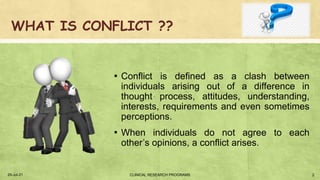
WHAT IS CONFLICT ??
▪ Conflict is defined as a clash between
individuals arising out of a difference in
thought process, attitudes, understanding,
interests, requirements and even sometimes
perceptions.
▪ When individuals do not agree to each
other’s opinions, a conflict arises.
29-Jul-21 2
CLINICAL RESEARCH PROGRAMS
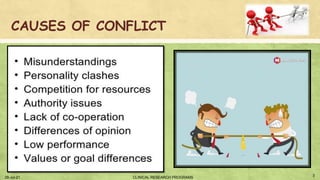
CAUSES OF CONFLICT
29-Jul-21
3
CLINICAL RESEARCH PROGRAMS
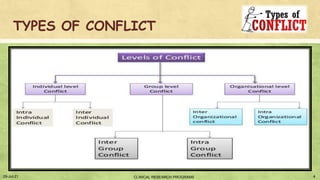
TYPES OF CONFLICT
29-Jul-21 4
CLINICAL RESEARCH PROGRAMS
ORGANIZATIONAL CONFLICT
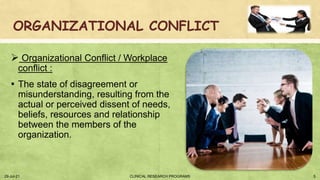
 Organizational Conflict / Workplace
conflict :
▪ The state of disagreement or
misunderstanding, resulting from the
actual or perceived dissent of needs,
beliefs, resources and relationship
between the members of the
organization.
29-Jul-21 5
CLINICAL RESEARCH PROGRAMS
TYPES OF ORGANIZATIONAL CONFLICT
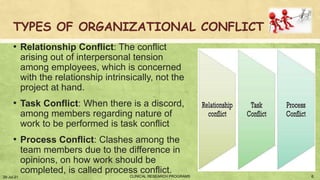
• Relationship Conflict: The conflict
arising out of interpersonal tension
among employees, which is concerned
with the relationship intrinsically, not the
project at hand.
• Task Conflict: When there is a discord,
among members regarding nature of
work to be performed is task conflict
• Process Conflict: Clashes among the
team members due to the difference in
opinions, on how work should be
completed, is called process conflict.
29-Jul-21 6
CLINICAL RESEARCH PROGRAMS
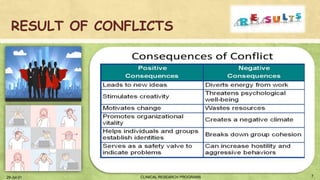
RESULT OF CONFLICTS
29-Jul-21 7
CLINICAL RESEARCH PROGRAMS
WHAT IS CONFLICT RESOLUTION ?
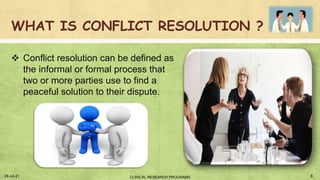
 Conflict resolution can be defined as
the informal or formal process that
two or more parties use to find a
peaceful solution to their dispute.
29-Jul-21 8
CLINICAL RESEARCH PROGRAMS
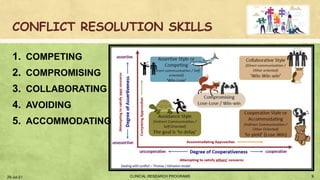
CONFLICT RESOLUTION SKILLS
1. COMPETING
2. COMPROMISING
3. COLLABORATING
4. AVOIDING
5. ACCOMMODATING
29-Jul-21 9
CLINICAL RESEARCH PROGRAMS
1. COMPETING
▪ An uncooperative, overly assertive method used by people
who insist on winning the dispute at all costs.
▪ Not often identified as bringing satisfactory resolutions, as it
doesn’t allow for collaborative problem-solving.
2. COMPROMISING
▪ Compromising seeks a mutual agreement to settle a dispute.
▪ Both parties willingly forfeit some of their conditions in the
interest of reaching an agreement.
▪ This can be a quick way to resolve a conflict without it
becoming a bigger issue.
▪ Can also be used as a temporary method to avoid conflict.
29-Jul-21 10
CLINICAL RESEARCH PROGRAMS
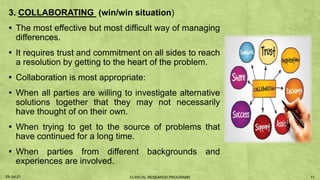
3. COLLABORATING (win/win situation)
▪ The most effective but most difficult way of managing
differences.
▪ It requires trust and commitment on all sides to reach
a resolution by getting to the heart of the problem.
▪ Collaboration is most appropriate:
▪ When all parties are willing to investigate alternative
solutions together that they may not necessarily
have thought of on their own.
▪ When trying to get to the source of problems that
have continued for a long time.
▪ When parties from different backgrounds and
experiences are involved.
29-Jul-21 11
CLINICAL RESEARCH PROGRAMS
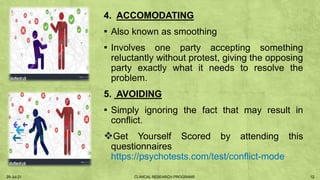
4. ACCOMODATING
▪ Also known as smoothing
▪ Involves one party accepting something
reluctantly without protest, giving the opposing
party exactly what it needs to resolve the
problem.
5. AVOIDING
▪ Simply ignoring the fact that may result in
conflict.
Get Yourself Scored by attending this
questionnaires
https://psychotests.com/test/conflict-mode
29-Jul-21 12
CLINICAL RESEARCH PROGRAMS
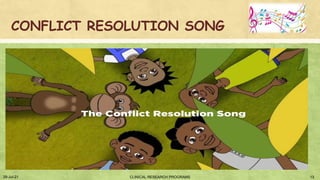
CONFLICT RESOLUTION SONG
29-Jul-21 13
CLINICAL RESEARCH PROGRAMS
REFERENCES
▪ https://www.indeed.com/career-advice/career-development/conflict-resolution-
strategies
▪ https://www.valamis.com/hub/conflict-management-styles
▪ https://brooklynns0.home.blog/2018/10/15/the-how-to-for-collaboration-with-
coworkers-featuring-why-and-how/
▪ https://www.shutterstock.com/image-vector/vector-illustration-avoiding-style-conflict-
resolution-1598415517
▪ https://www.pon.harvard.edu/daily/conflict-resolution/what-is-conflict-resolution-and-
how-does-it-work/
▪ https://www.youtube.com/watch?v=tohexVKfoXg
29-Jul-21 14
CLINICAL RESEARCH PROGRAMS
29-Jul-21 15
CLINICAL RESEARCH PROGRAMS

Conflict resolution

  • 1.
    MSC CLINICAL RESEARCH2020-2022-(SEM-2) PRESENTED BY: - HETA DESAI (ROLL NO. - 3) - AVANI PANSURIYA (ROLL NO. - 10) 29-Jul-21 1 CLINICAL RESEARCH PROGRAMS
  • 2.
    WHAT IS CONFLICT?? ▪ Conflict is defined as a clash between individuals arising out of a difference in thought process, attitudes, understanding, interests, requirements and even sometimes perceptions. ▪ When individuals do not agree to each other’s opinions, a conflict arises. 29-Jul-21 2 CLINICAL RESEARCH PROGRAMS
  • 3.
  • 4.
    TYPES OF CONFLICT 29-Jul-214 CLINICAL RESEARCH PROGRAMS
  • 5.
    ORGANIZATIONAL CONFLICT  OrganizationalConflict / Workplace conflict : ▪ The state of disagreement or misunderstanding, resulting from the actual or perceived dissent of needs, beliefs, resources and relationship between the members of the organization. 29-Jul-21 5 CLINICAL RESEARCH PROGRAMS
  • 6.
    TYPES OF ORGANIZATIONALCONFLICT • Relationship Conflict: The conflict arising out of interpersonal tension among employees, which is concerned with the relationship intrinsically, not the project at hand. • Task Conflict: When there is a discord, among members regarding nature of work to be performed is task conflict • Process Conflict: Clashes among the team members due to the difference in opinions, on how work should be completed, is called process conflict. 29-Jul-21 6 CLINICAL RESEARCH PROGRAMS
  • 7.
    RESULT OF CONFLICTS 29-Jul-217 CLINICAL RESEARCH PROGRAMS
  • 8.
    WHAT IS CONFLICTRESOLUTION ?  Conflict resolution can be defined as the informal or formal process that two or more parties use to find a peaceful solution to their dispute. 29-Jul-21 8 CLINICAL RESEARCH PROGRAMS
  • 9.
    CONFLICT RESOLUTION SKILLS 1.COMPETING 2. COMPROMISING 3. COLLABORATING 4. AVOIDING 5. ACCOMMODATING 29-Jul-21 9 CLINICAL RESEARCH PROGRAMS
  • 10.
    1. COMPETING ▪ Anuncooperative, overly assertive method used by people who insist on winning the dispute at all costs. ▪ Not often identified as bringing satisfactory resolutions, as it doesn’t allow for collaborative problem-solving. 2. COMPROMISING ▪ Compromising seeks a mutual agreement to settle a dispute. ▪ Both parties willingly forfeit some of their conditions in the interest of reaching an agreement. ▪ This can be a quick way to resolve a conflict without it becoming a bigger issue. ▪ Can also be used as a temporary method to avoid conflict. 29-Jul-21 10 CLINICAL RESEARCH PROGRAMS
  • 11.
    3. COLLABORATING (win/winsituation) ▪ The most effective but most difficult way of managing differences. ▪ It requires trust and commitment on all sides to reach a resolution by getting to the heart of the problem. ▪ Collaboration is most appropriate: ▪ When all parties are willing to investigate alternative solutions together that they may not necessarily have thought of on their own. ▪ When trying to get to the source of problems that have continued for a long time. ▪ When parties from different backgrounds and experiences are involved. 29-Jul-21 11 CLINICAL RESEARCH PROGRAMS
  • 12.
    4. ACCOMODATING ▪ Alsoknown as smoothing ▪ Involves one party accepting something reluctantly without protest, giving the opposing party exactly what it needs to resolve the problem. 5. AVOIDING ▪ Simply ignoring the fact that may result in conflict. Get Yourself Scored by attending this questionnaires https://psychotests.com/test/conflict-mode 29-Jul-21 12 CLINICAL RESEARCH PROGRAMS
  • 13.
    CONFLICT RESOLUTION SONG 29-Jul-2113 CLINICAL RESEARCH PROGRAMS
  • 14.
    REFERENCES ▪ https://www.indeed.com/career-advice/career-development/conflict-resolution- strategies ▪ https://www.valamis.com/hub/conflict-management-styles ▪https://brooklynns0.home.blog/2018/10/15/the-how-to-for-collaboration-with- coworkers-featuring-why-and-how/ ▪ https://www.shutterstock.com/image-vector/vector-illustration-avoiding-style-conflict- resolution-1598415517 ▪ https://www.pon.harvard.edu/daily/conflict-resolution/what-is-conflict-resolution-and- how-does-it-work/ ▪ https://www.youtube.com/watch?v=tohexVKfoXg 29-Jul-21 14 CLINICAL RESEARCH PROGRAMS
  • 15.